How Boutique Shops Can Add Local Products Without Buying Inventory
Local makers bring their products to your space, you sell on their behalf, and you take a percentage of every sale. Here is how to add local products with no purchase orders, no minimum quantities, and no stock risk.
Customers walk into boutiques looking for something local, something made nearby, something with a story. You know the demand is real. The problem is just as real: buying that stock upfront ties up cash, fills shelves with product you may not move, and puts all the risk on your side of the counter.
There is a simpler path. Under a consignment or commission placement model, local makers bring their products to your space, you sell them on their behalf, and you take a percentage of each sale. No purchase order. No minimum order quantity. No stock sitting unsold at your expense.
Activate it with a Retail Widget: a printable QR code that handles checkout, tracks live stock, and settles your commission the moment a sale completes. Earn from space you already have without changing your core business at all.
This guide walks you through everything: finding the right local makers, setting up the shelf, activating the Retail Widget, understanding split payouts, and scaling from one maker to many.
Why Boutiques Want Local Products (And Why They Hesitate)
Your instinct to carry local products is commercially sound. Shoppers in independent boutiques are not looking for what they can find at a chain retailer. They want things made close to home. Things with a maker behind them. Things that feel considered rather than mass-produced.
Stocking local goods does three things at once: it differentiates your shop, it builds community goodwill, and it gives customers a reason to come back and tell friends.
There is a revenue angle too. Local products often carry higher perceived value than their price point suggests. A hand-poured candle made three suburbs over, a ceramic mug thrown in a local studio, a botanical skincare product blended in someone's workshop: these carry stories that justify margin. Your shop becomes the discovery channel for work that deserves an audience.
So why do so many boutique owners hesitate?
The inventory risk problem is direct and familiar. Buying stock outright means capital leaves your account before a single sale happens. If a product moves slowly, or a trend shifts, or a maker's quality varies between batches, you absorb the loss. Boutiques run on tight cash flow. Tying up CHF 2,000 or CHF 5,000 in untested product is a real exposure for a small operation.
There is also the operational weight. Managing purchase orders, tracking what sold, issuing payment to makers, reconciling accounts at month-end: all of this adds back-office time to a business that already runs lean.
The zero-inventory model resolves both at once. Products live on your shelf, customers buy them, and your commission settles automatically. The maker owns the stock; you own the relationship with the customer and the location that makes the sale possible.
The Zero-Inventory Model: Consignment and Commission Placement Explained
Consignment and commission placement are two names for the same underlying arrangement, with one small practical distinction.
Consignment means the maker delivers physical goods to your space and retains ownership of those goods until they sell. You hold the product but do not buy it. When a customer purchases an item, the maker receives their share and you receive yours. If the product does not sell within an agreed period, the maker takes it back. No loss on your side.
Commission placement is functionally identical but often describes shorter-duration or percentage-only arrangements where no formal consignment agreement is signed. The maker places product, your space generates the sale, and you earn a flat commission percentage on each transaction. The practical outcome is the same: you receive money only when a sale happens.
In both cases, the stock belongs to the maker. This is the critical point. You are not a buyer; you are a placement partner. You provide location, foot traffic, and context. The maker provides product and absorbs unsold stock risk.
The division of responsibility is clean. The maker is responsible for restocking when levels drop, maintaining product quality, and pricing their goods. You are responsible for displaying the product well, directing customer attention to it, and ensuring the checkout mechanism works. In practice, the same model works for cafes with counter space and any other retailer with a surface they are not fully monetising.
Commission rates typically range from 20 to 40 percent of the sale price, depending on the category and the volume of traffic your space generates. Set the rate before any product arrives, confirm it in a brief written agreement, and you will have a clean foundation for every maker relationship that follows.
How to Find Local Makers Worth Hosting
The best maker placements start with the right sourcing, not the first maker who walks through your door. A structured approach saves you from slow-moving product and mismatched aesthetics.
Start with your existing customer base as a signal. What do they already buy from you? What do they ask about that you do not currently stock? If your regulars lean toward natural beauty products, seek makers in that category first. Alignment between your shop identity and the maker's product removes friction at the point of sale.
From there, look within your immediate geography. Local markets, craft fairs, and pop-up events are the most reliable sourcing channels. A maker who consistently shows up at weekend markets already understands retail, has customer-facing packaging, and can price competently. These are meaningful filters. Someone who has never sold in person yet may not have their product ready for a permanent shelf.
Instagram and local maker directories are secondary but useful. Search your city or region plus the product category and you will surface active makers quickly. Look for consistent posting, clear product photography, and a visible price point. If they cannot communicate their product online, they may struggle to communicate it on your shelf.
Before bringing any maker in, handle the product yourself. Packaging quality, labelling, weight, smell, and finish all matter to customers in the same way they matter to you. Ask for a small sample run rather than committing to a full shelf immediately.
Then, before going live, confirm three things in writing: the commission split, who restocks and when, and the minimum notice period if either party wants to end the arrangement. One page is enough. A clear start avoids an awkward conversation later.
Begin with two or three makers at most. Learn what moves in your space before you expand.
Setting Up the Shelf: Placement, Display, and the Retail Widget
Physical placement matters more than most boutique owners allocate time to think about. Eye-level sells. A product placed at 140 to 160 centimetres from the floor, facing the natural customer flow through your shop, will outsell the same product placed on a lower shelf or tucked in a corner. Give your first maker placement a position you would give your own best product. This is not charity toward the maker; it is how you protect your commission income.
Group the maker's products with some visual breathing room. Overcrowding a display signals discount retail. A tight, curated arrangement of four to six items signals considered curation, which is exactly what boutique customers respond to. Use small signage to name the maker and their location. Customers buy the story as much as the object.
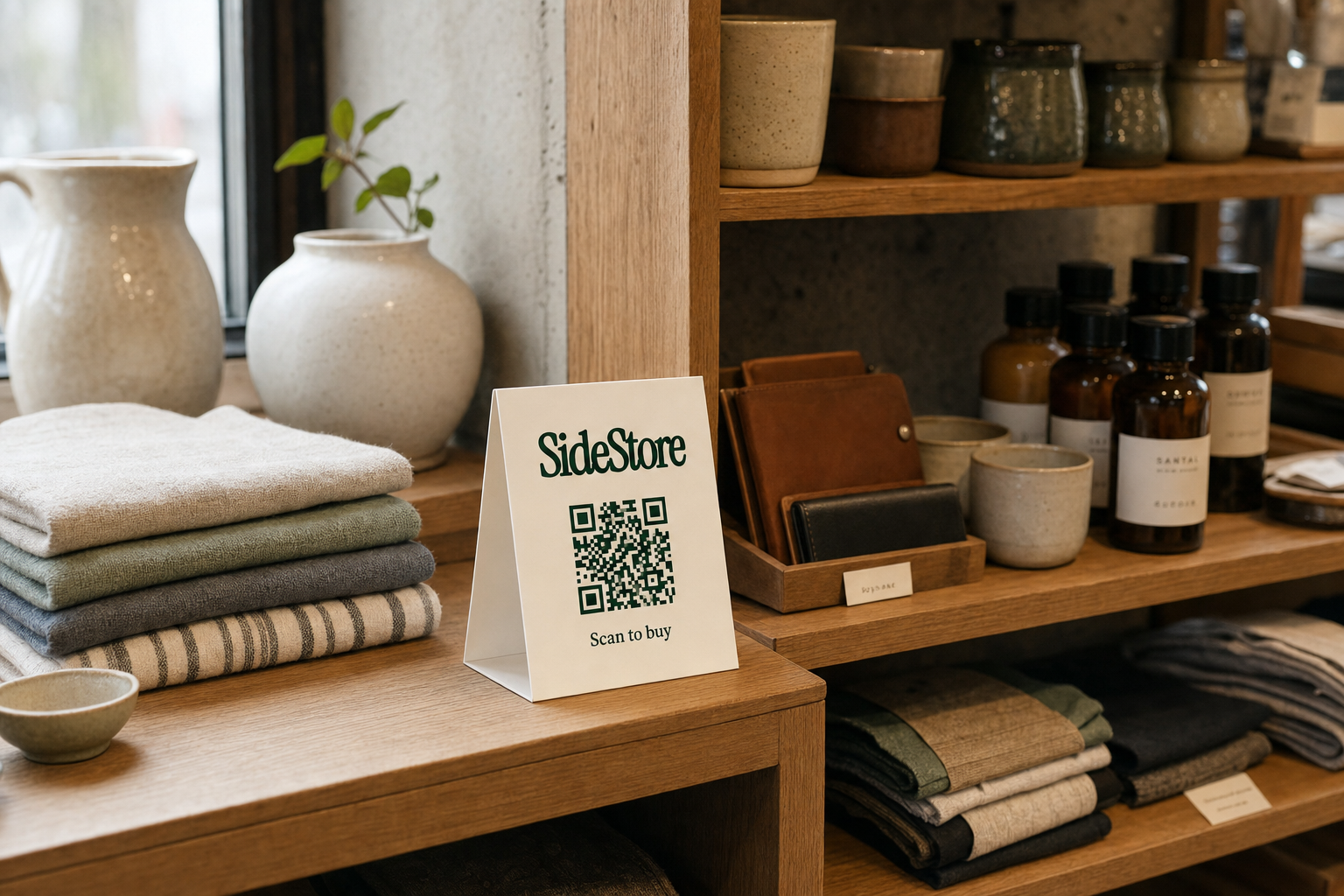
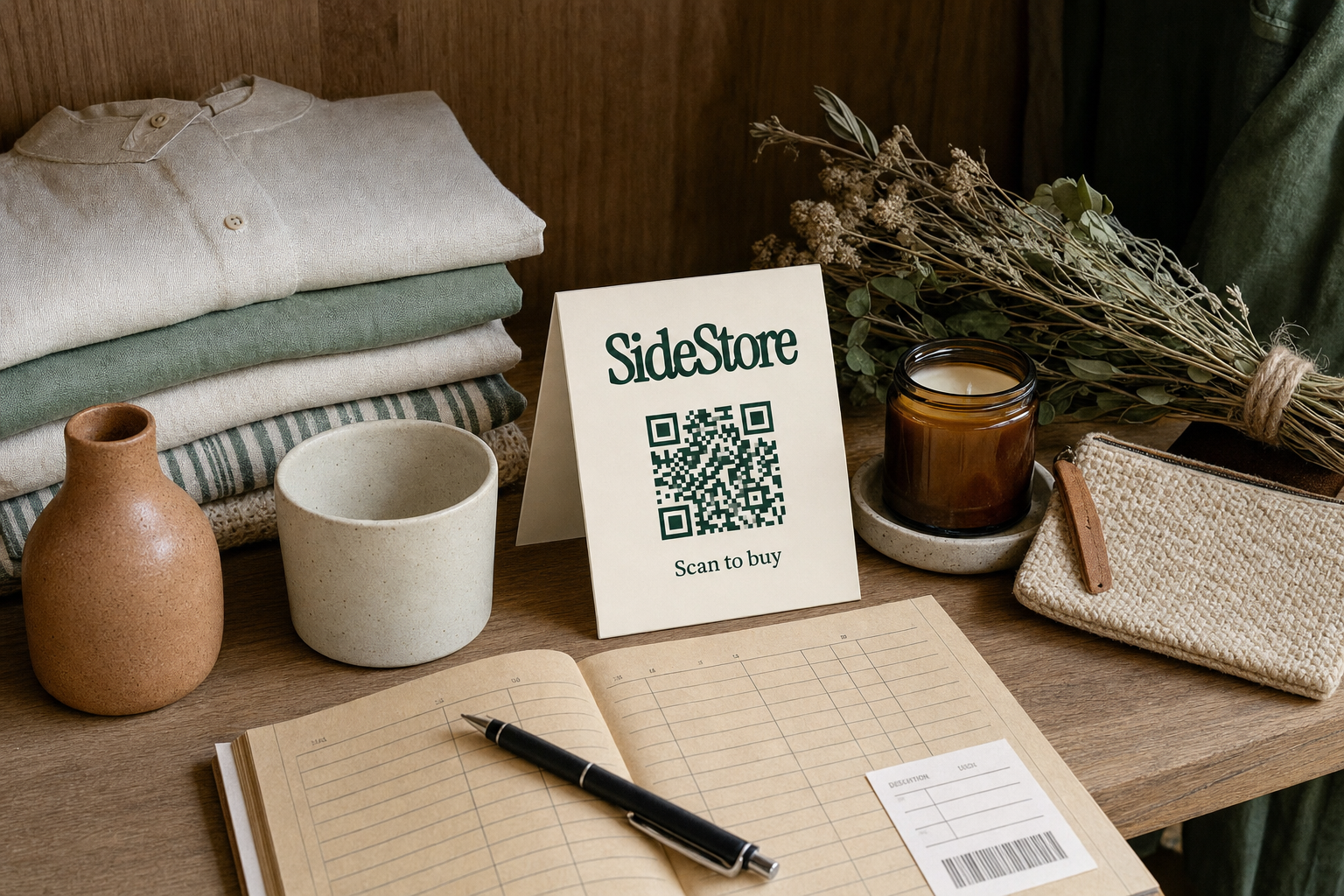
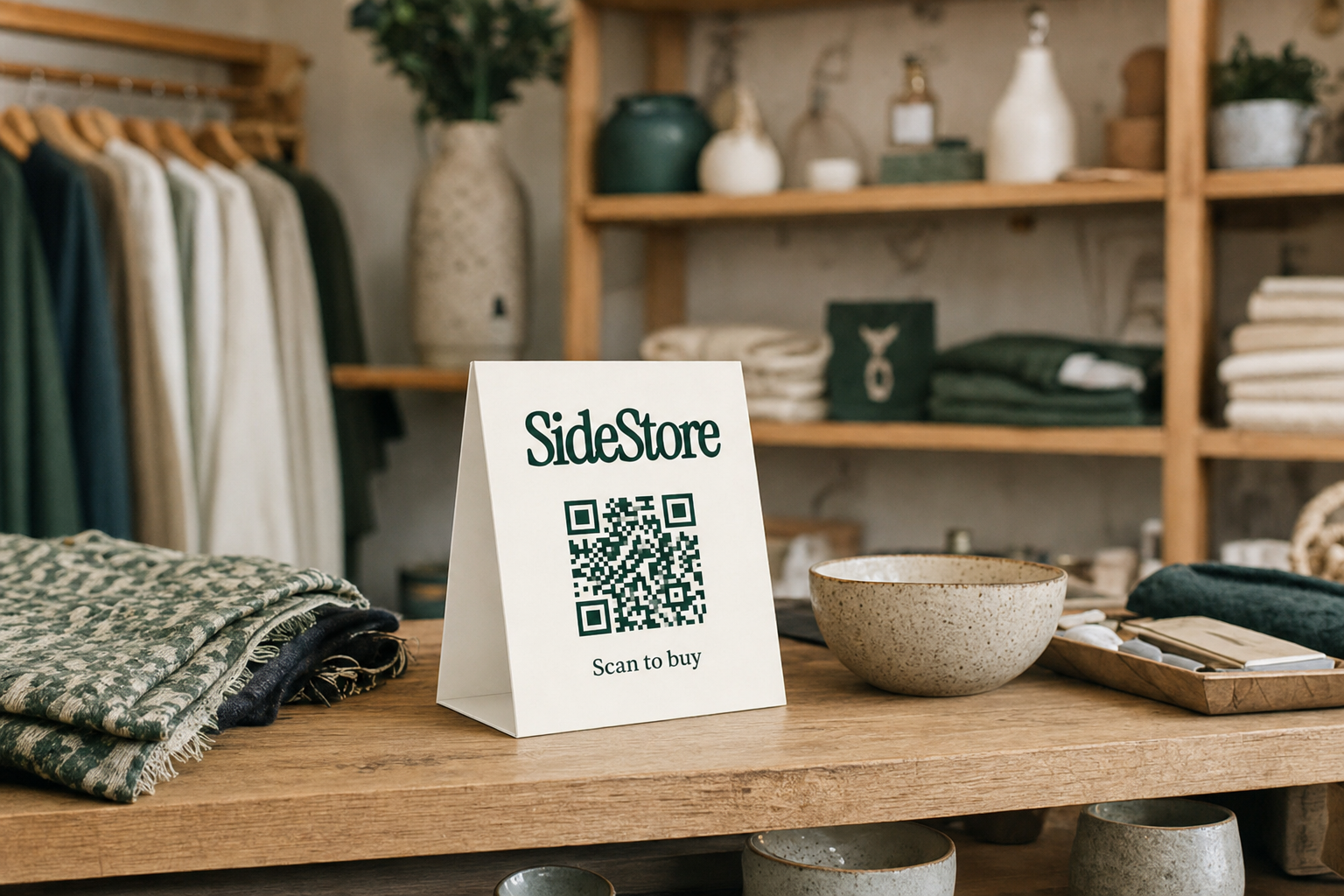
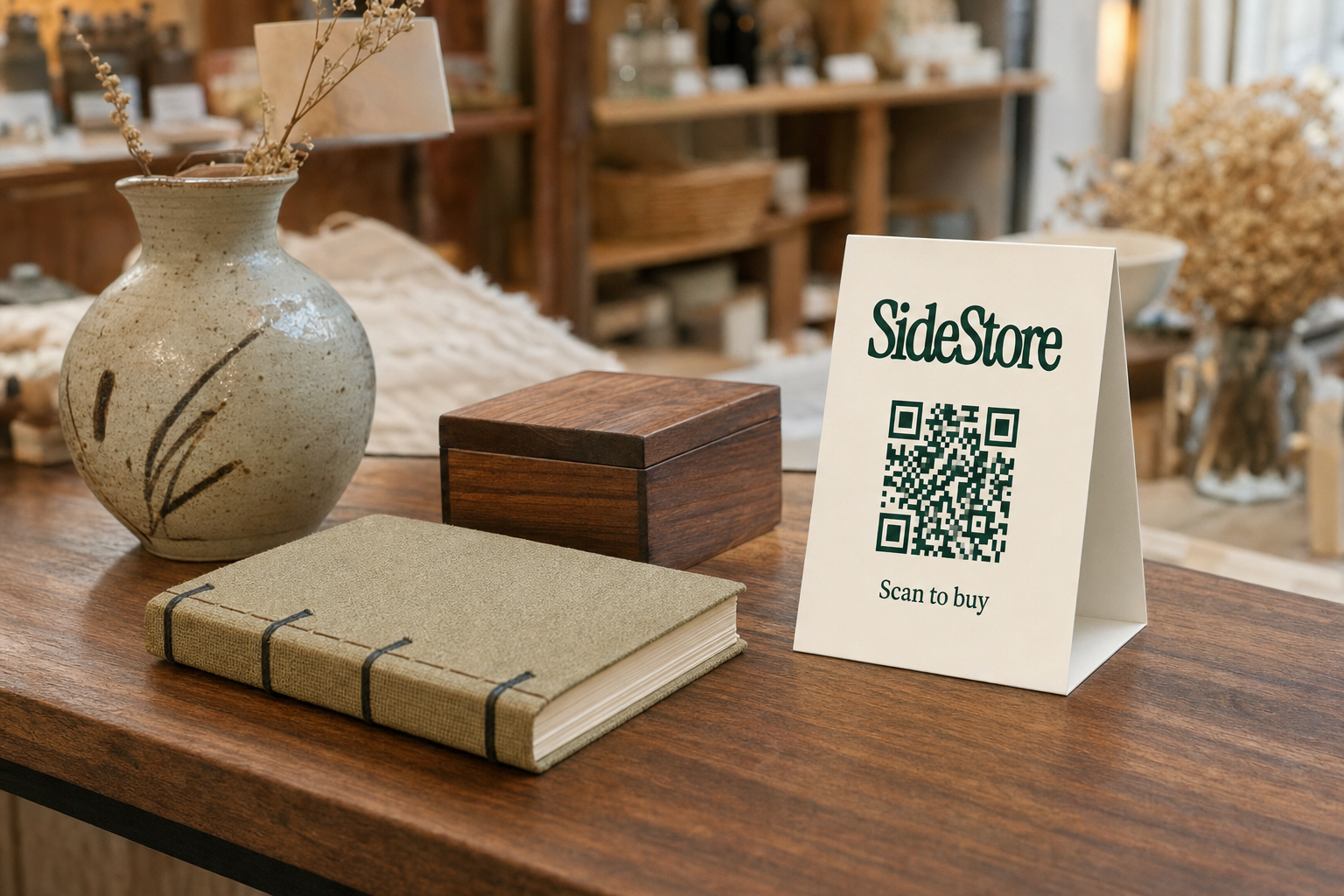
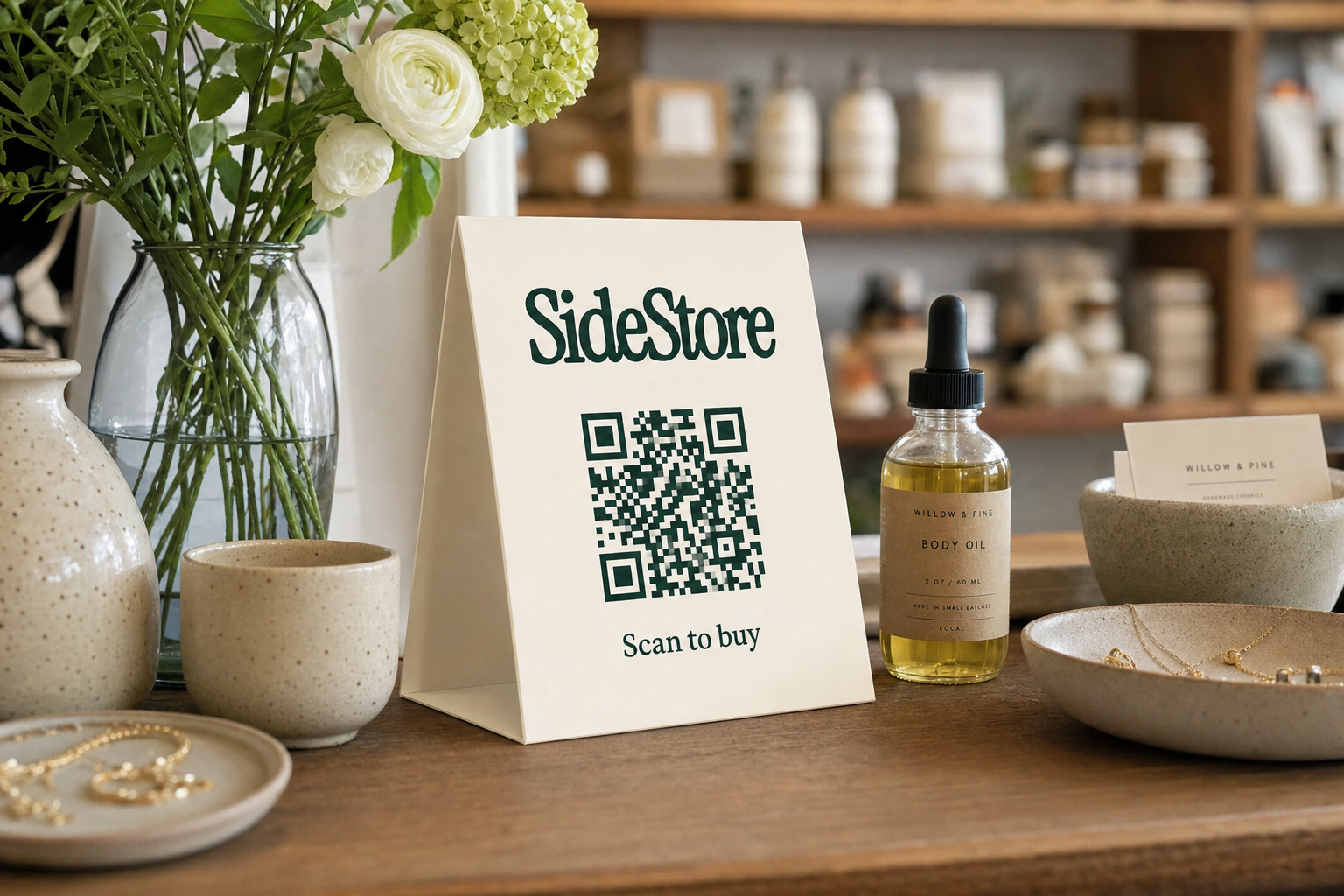
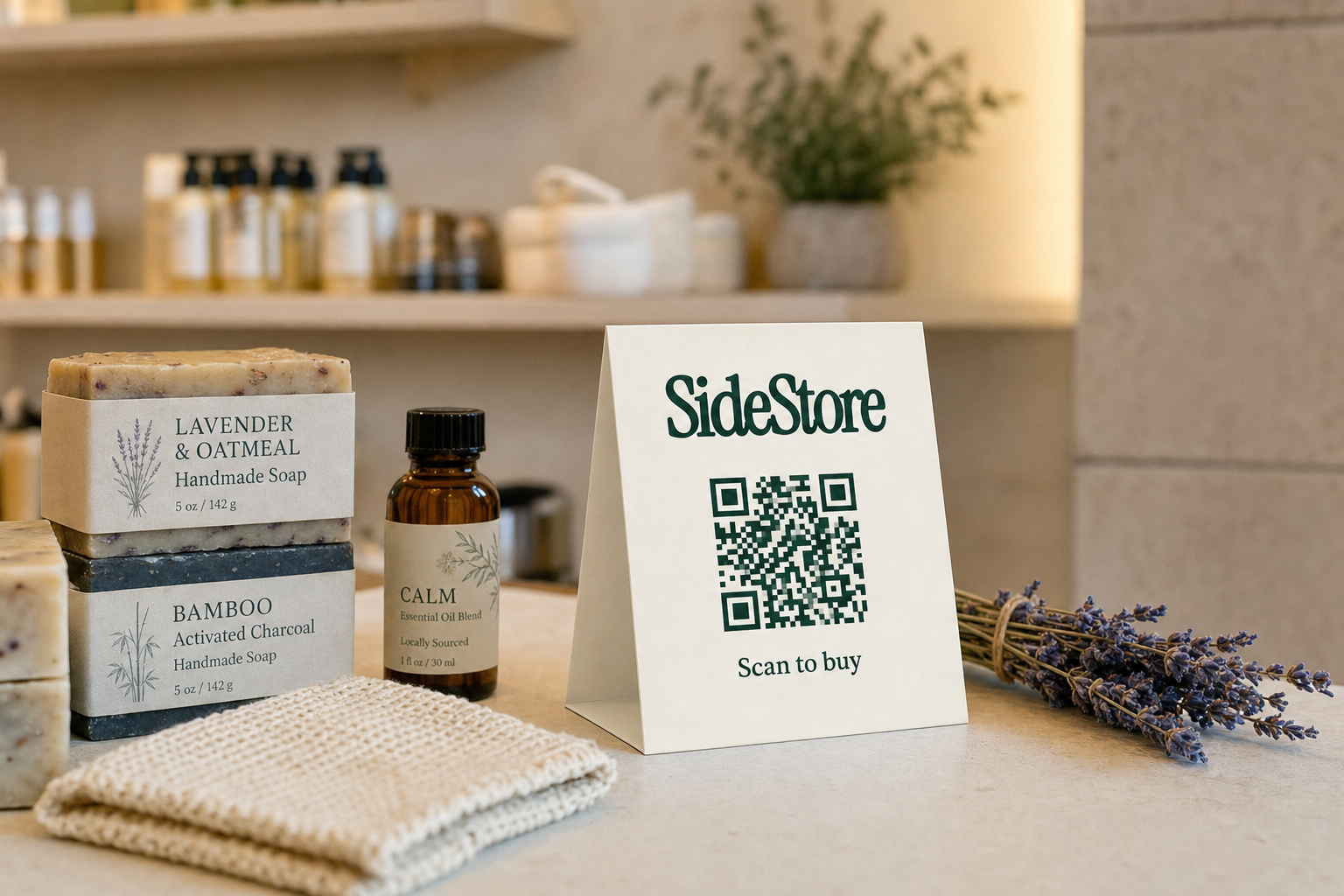
Once the physical display is set, activate it digitally with a Retail Widget. A Retail Widget is a printable card placed at the display point, carrying a QR code unique to that placement. The customer scans it with their phone, sees the product page and current price, and completes payment in seconds. No staff involvement required. No queue at your till for a single item purchase. The checkout is always live, always accurate, and always attributed to the exact shelf that generated the sale.
From the customer's perspective, it feels seamless: scan, confirm, done. From your perspective, something more valuable is happening. Stock tracking updates automatically with each purchase, so you and the maker can both see live inventory levels. Placement attribution records exactly which display drove the transaction, giving you data to act on rather than guesses.
Bed and breakfasts use the same setup for a small retail corner, which demonstrates how the Retail Widget works across very different spaces and customer types. The mechanism is identical; only the product and the audience change.
How Split Payouts Work: Your Commission, Automatically
The part of traditional consignment that eats time is the reconciliation. Someone has to count what sold, calculate the maker's share, and transfer the money. With split payouts, that step does not exist.
Every time a customer completes a purchase through the Retail Widget, the sale amount splits instantly. If a ceramic mug is priced at CHF 48 and your commission is 30 percent, CHF 14.40 settles to your account and CHF 33.60 goes to the maker. Both transactions happen at the moment of sale. No month-end calculation. No chasing invoices. No manual bank transfer.
This matters most when you are hosting multiple makers at once. Imagine six makers, each with products on your shelves, selling across the month. Under a traditional consignment arrangement, that is six separate reconciliations to run. Under split payouts, every transaction is already settled by the time you check your dashboard.
The transparency also builds trust with makers. They can see their sales in real time, which removes the anxiety that often makes makers reluctant to place product with a new host. Hotels use the same split settlement model for lobby retail, handling multiple vendor products simultaneously without adding accounting staff.
For a boutique owner, the practical effect is simple: your commission income accumulates automatically, and you spend zero time on reconciliation.
Managing Multiple Makers From One Dashboard
Once you understand the model with one maker, adding more is the same process repeated. A second maker gets a shelf position, their Retail Widget goes live, and their split payout is configured. The dashboard updates to show a new line of live stock and sales data alongside the first.
The merchant dashboard gives you a single view of every active placement. You can see which maker's products are selling, which shelf position is generating the most scans, and what your current commission balance looks like across all placements combined. You do not need a spreadsheet. You do not need to ask makers how much stock they think remains. The live stock tracking tells you, updated with each transaction.
A practical note on density: more placements do not automatically mean more revenue. A boutique with ten makers crammed onto inadequate shelf space will underperform a boutique with four makers displayed well. Treat your shelf space as a finite and valuable resource. Evaluate each placement against the attribution data: which spots scan most frequently, which products convert, which makers restock reliably. Keep the placements that perform; return shelf space to makers who do not.
This approach is the foundation of turning every unused shelf into a revenue line without adding operational overhead. You are running a distributed retail network from one screen, making decisions based on real data rather than gut feel.
What Revenue to Expect From a Maker Placement
Expectations grounded in realistic numbers serve you better than optimistic projections. Here is a straightforward worked example.
A local ceramics maker places eight products on a mid-shelf position in your boutique, priced between CHF 35 and CHF 65. Average sale price across the range is CHF 48. Your commission rate is 30 percent, giving you CHF 14.40 per sale. If the placement generates 25 sales over the course of a month, your commission income from that one maker is CHF 360 for the month.
That is not transformative on its own. But it requires no stock purchase, no reconciliation time, and no active selling effort beyond the initial display setup. Add four similar placements at similar performance, and your passive commission income from maker placements reaches CHF 1,440 per month.
Results will vary. A placement in a high-traffic boutique in a tourist area will outperform one in a quieter residential neighbourhood. Product category matters: consumables like candles and food products tend to sell faster than durable goods. Seasonal timing affects everything.
What improves performance over time is attribution data. The Retail Widget records every scan and every sale by placement location. Over three months, you will know precisely which shelf position, which product category, and which maker drives the most revenue per square centimetre. You can make restocking decisions, position changes, and new maker selections based on evidence rather than instinct.
Approach the first placement as a learning exercise as much as a revenue exercise. The data you collect in the first 90 days is worth more than any single sale.
How to Get Started: From Empty Shelf to First Sale
The process is more straightforward than most boutique owners anticipate. Start with one maker and follow these six steps.
1. Choose one shelf position. Pick a surface you already have that receives consistent foot traffic. It does not need to be large. A 60-centimetre shelf at eye level is enough to begin.
2. Find one local maker. Use the sourcing approach from the earlier section: local markets first, then maker directories. Choose someone whose product fits your shop's aesthetic and whose packaging is already retail-ready.
3. Agree on terms in writing. Commission percentage, restock responsibility, and notice period. One page. Both parties sign it.
4. Set up the display. The maker delivers their product. You arrange it with breathing room, add maker signage, and confirm the pricing is visible.
5. Activate the Retail Widget. Through the SideStore dashboard, generate a Retail Widget for the placement. Print the QR card and place it at the display. The placement is now live: scan-to-pay is active, stock tracking is running, and placement attribution is recording.
6. Monitor for 30 days. Check the dashboard weekly. Note which products scan, how quickly stock moves, and what your commission balance looks like.
This guide on adding local products without buying inventory gives you the full model in detail. And see how cafes apply the same approach if you want to see how the mechanic scales across different space types.
The first sale will confirm what the model promises: your shelf earns, and your cash stays in your account.
The Boutique That Earns From Every Shelf
The model is simple. Makers place products in your space, customers buy them via scan-to-pay checkout, and your commission settles automatically through split payouts. You take no inventory risk. You do no manual reconciliation. You gain placement attribution data that tells you exactly what is earning and what is not.
This is consignment commerce working in your favour as the host. Your boutique becomes part of a distributed retail network: local makers get distribution without a store of their own, and you get revenue from space you already maintain. The community dimension is real. You are giving locally made work a place to be discovered, and you are building a shop that customers associate with something more than transactions.
Scale it deliberately. One maker first, then three, then however many your shelves can hold well. Hotels apply the same model to lobby and reception space and bed and breakfasts earn from a small retail corner the same way. The mechanism is consistent across every space that has a surface and foot traffic.
Your shelf is already there. Now make it earn.