Sell Through Coffee Retail Shops
A coffee retail shop earns beyond espresso. Learn which products sell, how consignment works in a cafe, and how to set up retail with zero inventory risk.
What Is a Coffee Retail Shop?
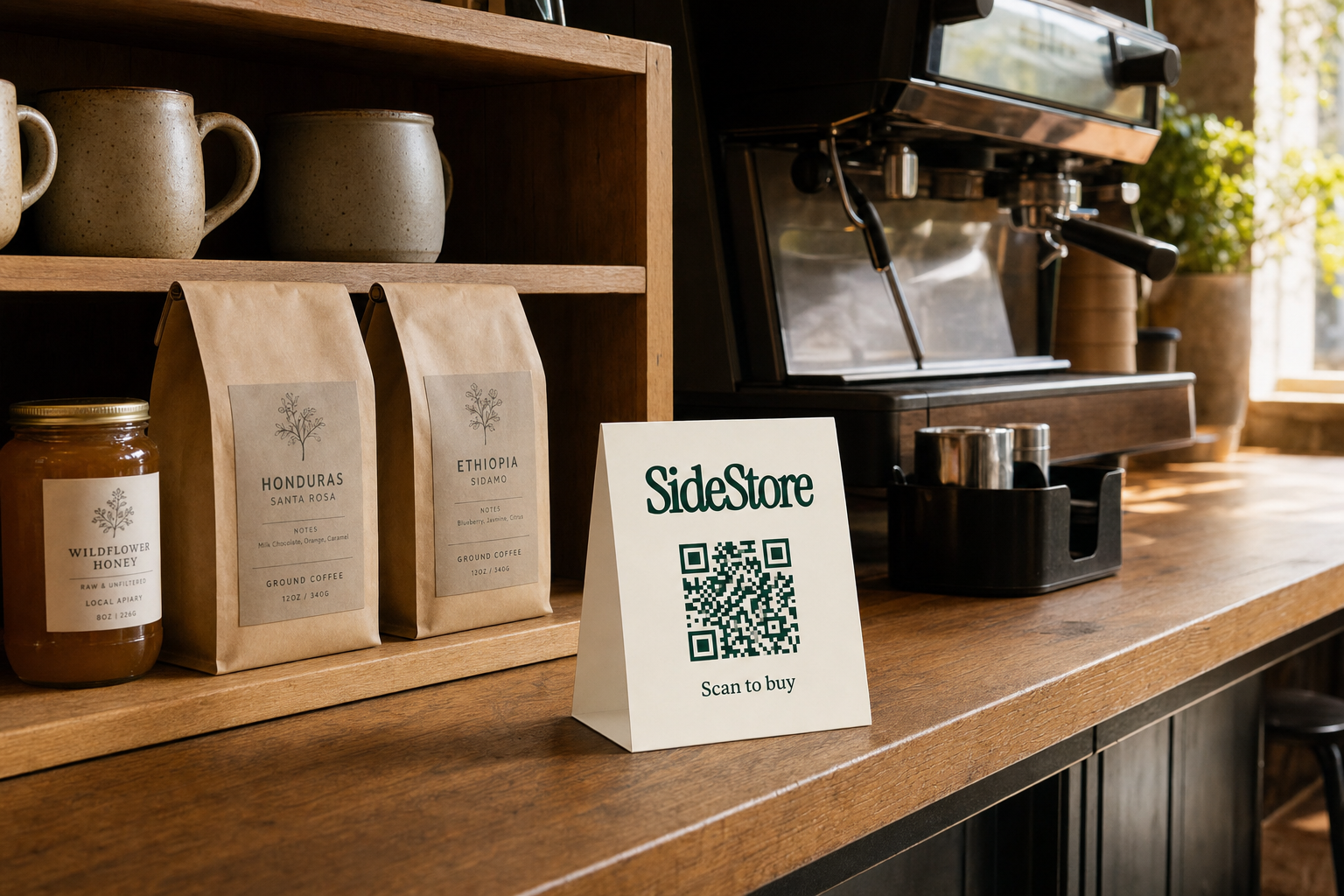
A coffee retail shop is a cafe that sells physical retail products, locally made ceramics, packaged goods, homeware, alongside its core drinks and food menu, using existing space and customer footfall to generate a second revenue stream.
If you already have a cafe, you likely already have the space for this. The counter. The windowsill. The shelving unit that currently collects dust. These are retail surfaces waiting to work.
The question is how to fill them profitably, without buying stock upfront and without adding operational complexity you cannot sustain.
The most practical answer for most cafes is consignment. A local maker places their products in your space. You get paid when those products sell. You earn a percentage of each sale. No purchase orders. No invoices. No unsold stock to write off or return.
This guide covers the full picture: what makes a cafe a coffee retail shop, which products actually sell, how consignment stacks up against other retail models, and how to run placements through SideStore's Retail Widget. It also links to detail on coffee shop profit margin and how cafes can earn from unused shelf space.
What Makes a Coffee Shop a Retail Shop
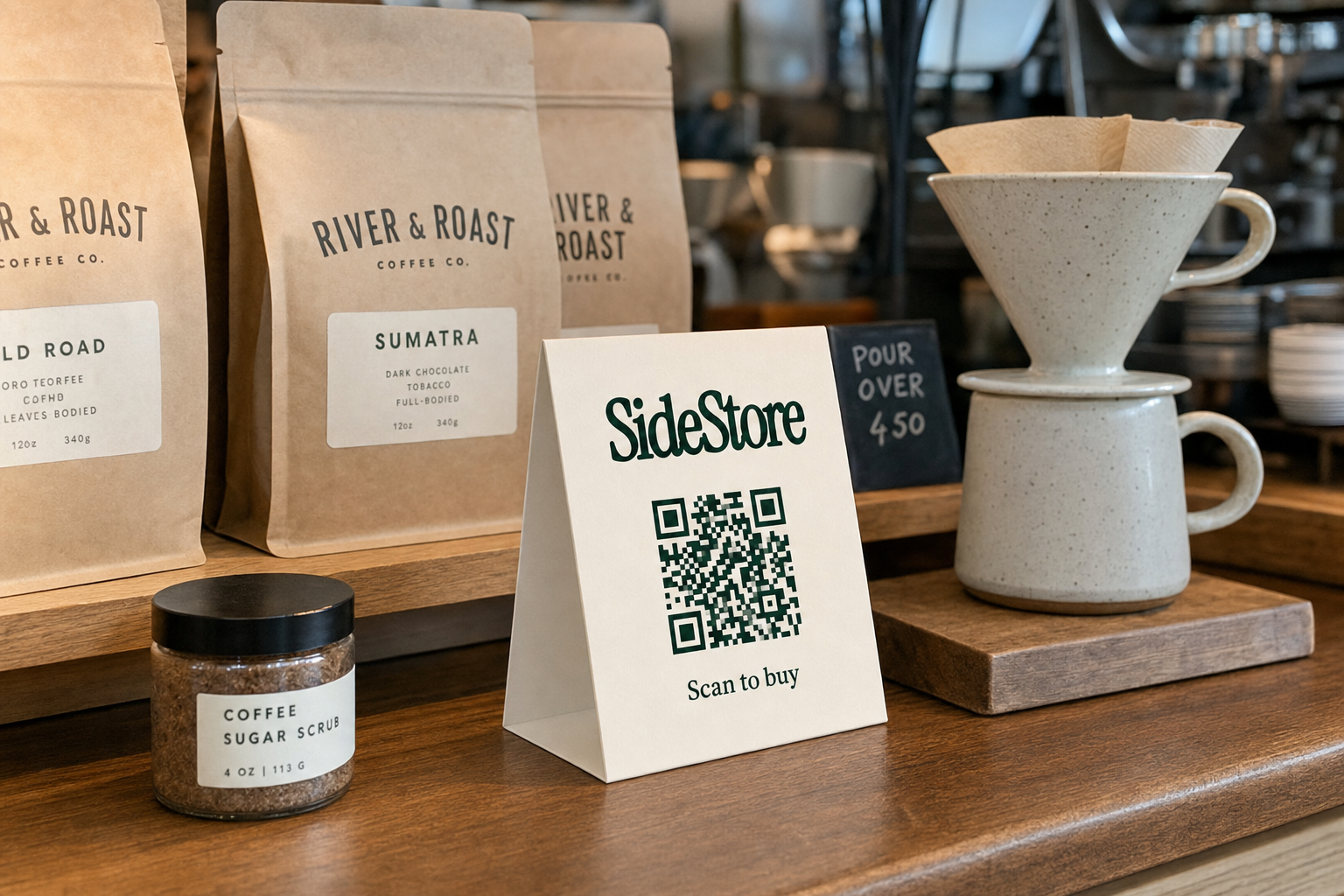
A coffee shop becomes a retail shop the moment it sells physical products that customers can browse, select, and take home. Not just consume on the premises. That single distinction reshapes how you think about floor space, supplier relationships, and revenue.
The difference between a cafe and a coffee retail shop is intentionality. A cafe might have a rack of branded travel mugs near the register, largely as an afterthought. A coffee retail shop curates a selection, positions it where customers naturally look, and has a clear system for restocking and paying the makers who supply it.
Two supply models drive most cafe retail:
Wholesale buy-in means you purchase stock from a supplier at trade price, mark it up, and keep the full margin. The economics look strong on paper. In practice, you carry all the risk: products that do not sell sit on your shelf, tie up cash, and eventually get written off or returned.
Consignment flips that risk entirely. A maker places their products in your space. You sell them. You take a percentage of the sale price, typically 20 to 35 percent, negotiated directly with the maker. You never buy stock. If a product does not sell, the maker takes it back. Your exposure is limited to shelf space and a little time.
For most cafes testing retail for the first time, consignment is the more honest starting point. You are not betting margin on demand you have not yet measured. For mechanics on sharing retail space in practice, that guide covers the full picture. You can also read about how to make money from unused shelf space without stocking a single unit yourself.
Which Products Actually Sell in a Coffee Shop
Products that sell well in a coffee retail shop share three qualities: they are visually appealing at a glance, priced low enough for an impulse decision, and directly connected, physically or emotionally, to the cafe experience itself.
Use this filter before committing shelf space to any product category:
Products that work:
- Locally made ceramics and glassware. A handmade mug or small vase fits the aesthetic of most independent cafes. Customers see it in use, then see it for sale. The connection is immediate.
- Specialty packaged food. Coffee beans, tea blends, honey, preserves, chocolate bars. These sit naturally near the counter and extend the cafe experience into the customer's home.
- Small-batch candles and home fragrance. Price points typically land in the impulse-buy range, and they photograph well for social channels.
- Printed goods. Greeting cards, art prints, notebooks. Low footprint, easy to display, broad appeal.
- Skincare and body products from local makers. Works best in cafes with a wellness or community-first positioning.
Products that rarely work:
- Anything requiring a fitting, demonstration, or detailed explanation at point of sale. Your staff are making coffee, not running consultations.
- High-price items above the threshold where a customer needs to think for more than thirty seconds. Cafe retail is impulse-adjacent, not considered-purchase territory.
- Products with fragile packaging or short shelf life that you are buying as inventory.
If you are sourcing from local makers, the guide on how boutique shops add local products without buying inventory is worth reading before your first maker conversation. And if you want to understand where makers are actively looking for placement, where local makers look for retail placement explains their perspective.
Retail Models for Coffee Shops: A Side-by-Side Comparison
The right retail model for your cafe depends on how much capital you want to deploy, how much risk you can absorb, and how much operational time you have.
| Model | Upfront Cost | Inventory Risk | Margin to Host | Operational Load | Best For |
|---|---|---|---|---|---|
| Wholesale Buy-In | High | Full (you own unsold stock) | High (full retail markup) | Medium (ordering, returns) | Cafes with established demand and buying budget |
| Consignment | None | Zero (maker retains ownership) | Lower (split with maker) | Low (maker manages stock) | Cafes testing retail for the first time |
| Own-Brand Products | Medium to high | Full | Highest (no split) | High (design, production, logistics) | Cafes with strong brand identity and volume |
Consignment wins on risk. You place products on the shelf, observe what sells, and adjust the mix, without writing off a single unit. The trade-off is margin: because you split each sale with the maker, your per-unit take is lower than wholesale. That is the cost of carrying no inventory risk, and for most cafes it is the right trade at the start.
Once you know which product categories move, you can negotiate better splits, bring certain products in on wholesale, or develop your own branded line. But do not start there. Start with consignment, prove the demand, then graduate.
For mechanics, see how consignment works and selling to consignment.
How Consignment Works Inside a Coffee Shop
Consignment inside a cafe works in four operational stages: agreement, placement, sale, and settlement. Each is straightforward, and with the right tools the system runs with minimal daily effort.
Stage 1: Agreement
You and the maker agree on the split. What percentage of each sale goes to you as the host, what goes to the maker. This is negotiated directly. SideStore's Retail Widget lets you model the split before you commit, so both parties see exactly what a sale at any price point means in real numbers.
Stage 2: Placement
The maker brings their products to your cafe. Each product is logged in the Retail Widget: the sale price, the agreed split, and the specific placement location, which shelf, which surface. This is placement attribution. The system knows which products are where and can track performance by location. Stock levels are tracked live from the moment the placement goes active.
Stage 3: Sale
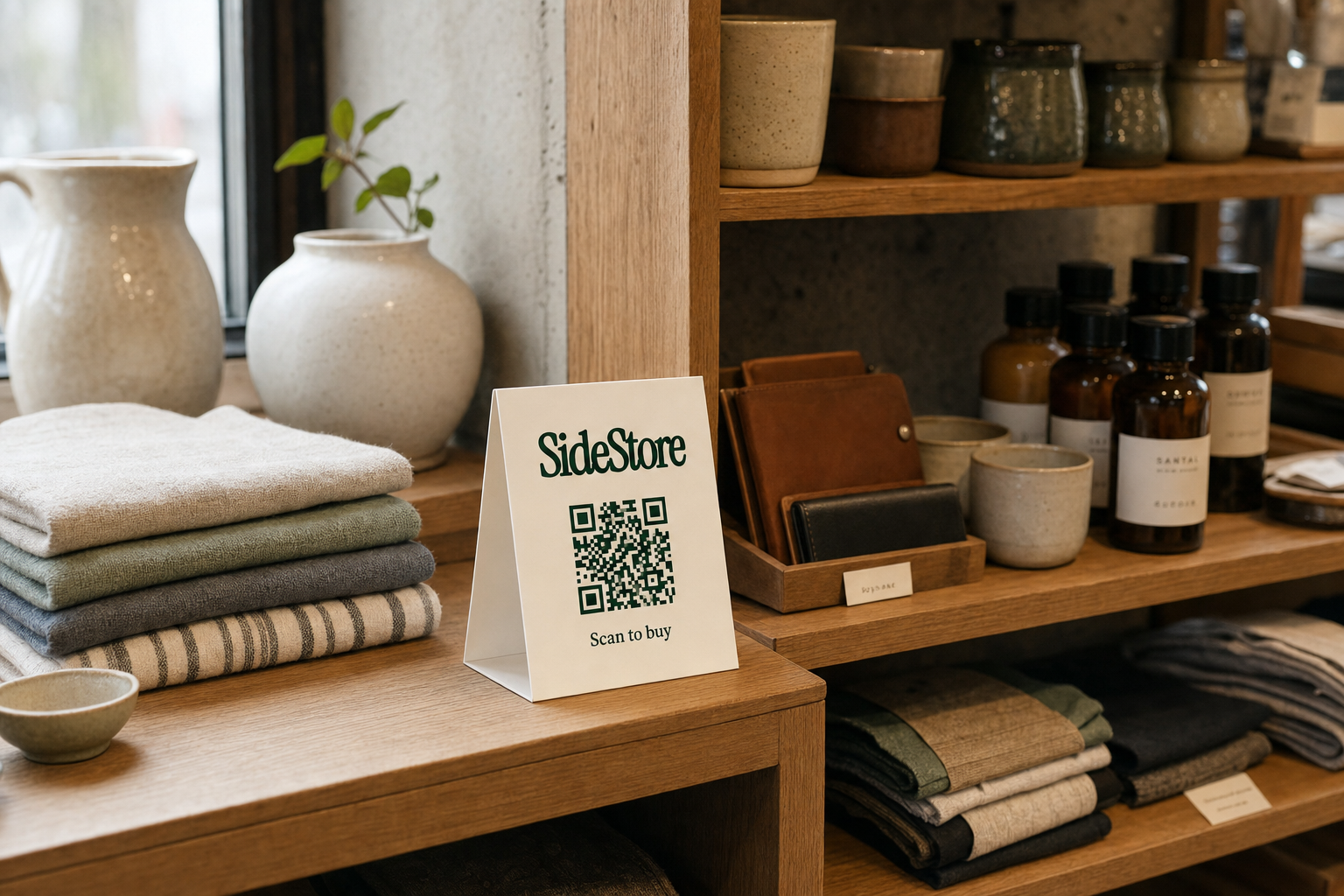
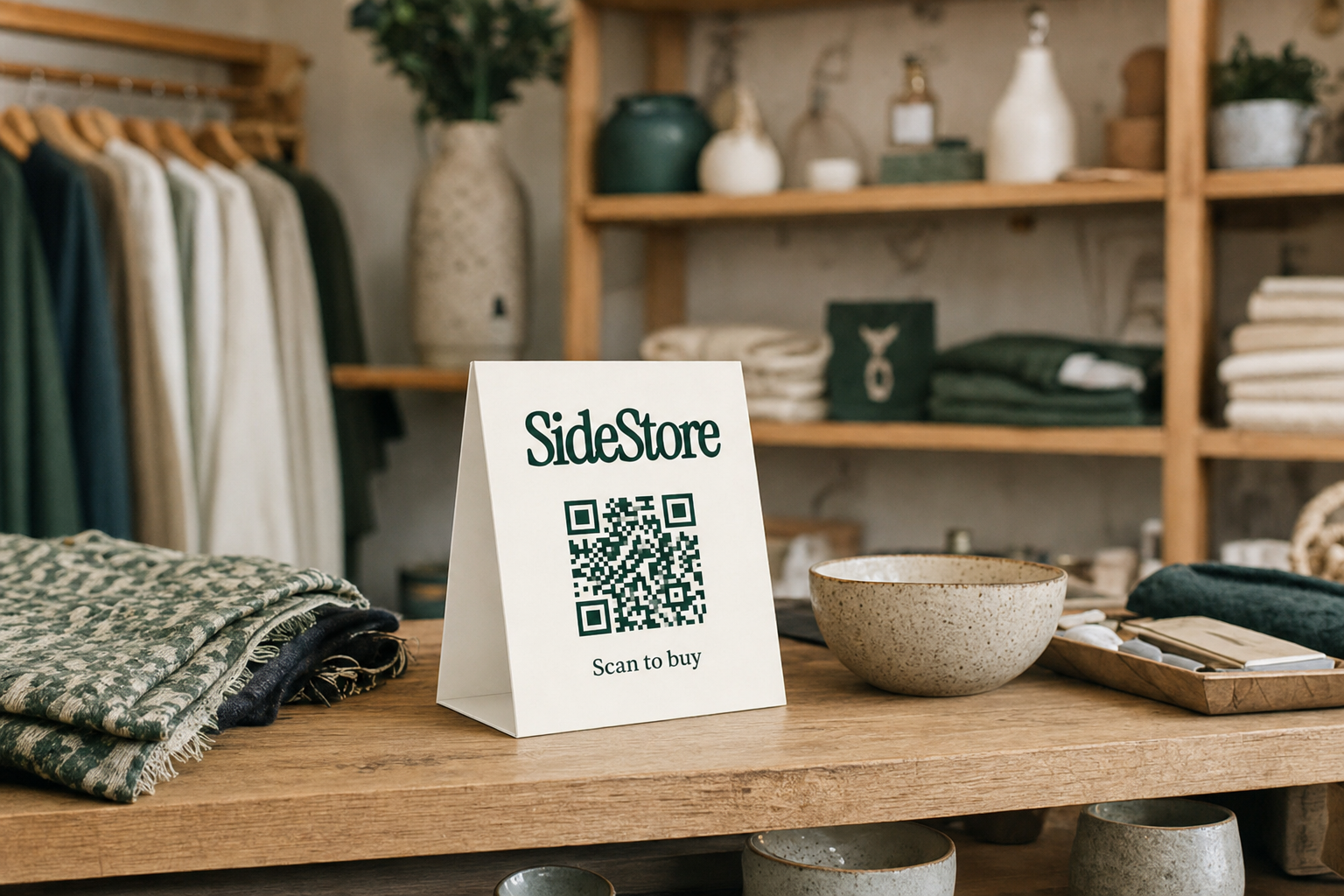
When a customer wants to buy, they can pay via scan-to-pay QR. A maker can print the SideStore QR code card and attach it directly to their product. Alternatively, you as the merchant can display a single SideStore placement card that covers all the products in your placement at once. The QR checkout is one function of the Retail Widget. The Retail Widget is the broader interface that handles the entire consignment placement end to end. For a precise description of how the card works in practice, see how the SideStore QR card works.
Stage 4: Settlement
After each sale, the Retail Widget handles the split payout automatically. The maker's share goes to them; your host cut goes to you. No manual calculation. No month-end spreadsheet. No awkward conversation about who owes what. Live stock tracking updates in real time, so both you and the maker see what is running low without visiting the shelf.
If earning from space you already have still feels abstract, the guide on cafes earning from shelf space puts the full model in concrete terms.
Setting Up the Retail Section in Your Coffee Shop
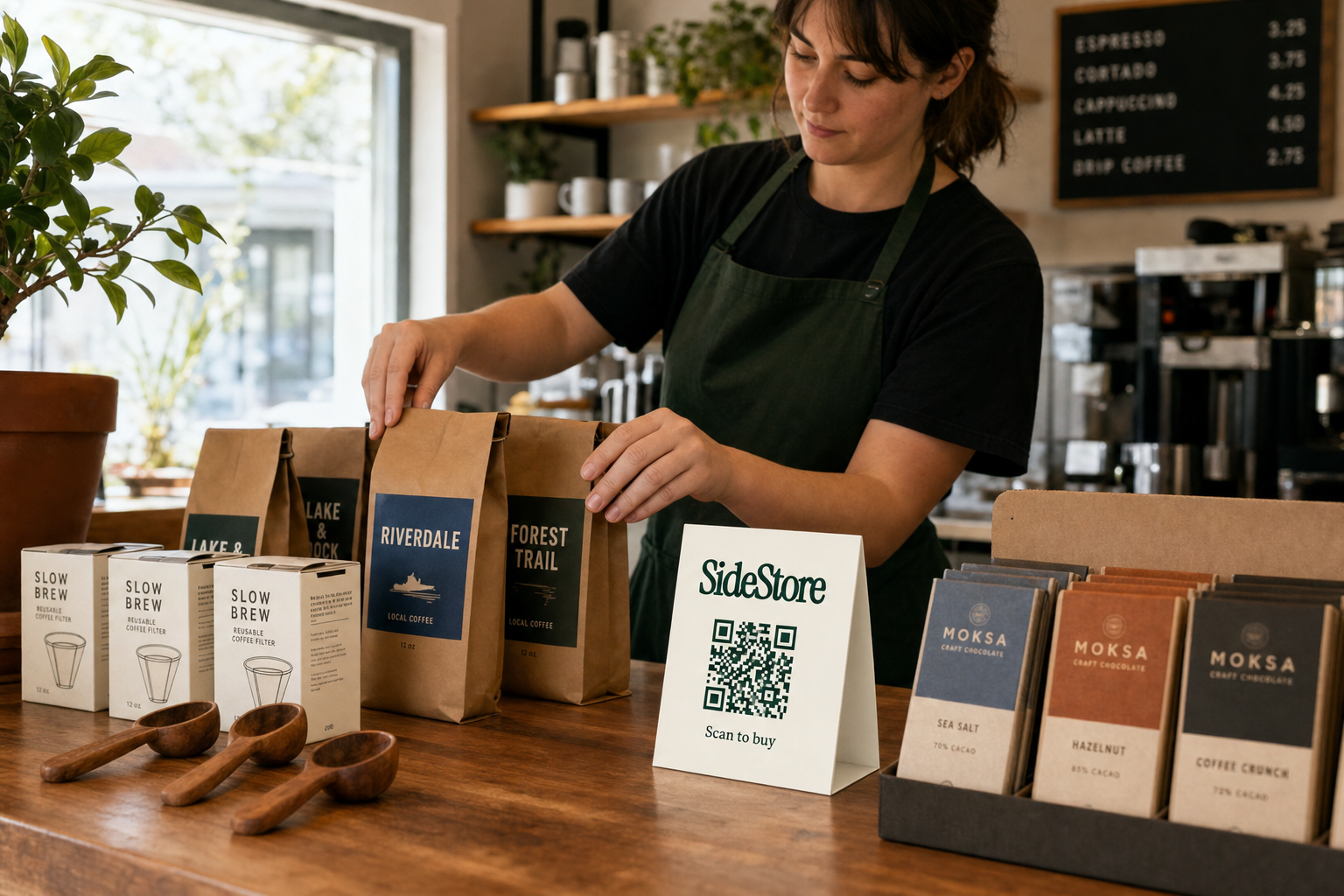
You can set up a functional retail section in a single afternoon, provided you approach it with a clear plan for position, curation, and visibility.
Position matters more than size. Place your retail products where customers already pause: near the counter while they wait for their order, along the wall they face when seated, or beside the exit. A shelf hidden behind the barista station will not sell. Eye level is the minimum; counter height or just above it is better for small items.
Curate tightly. Start with eight to twelve distinct products. A sparse, well-chosen selection reads as intentional. A crammed shelf reads as a clearance sale. Leave enough space between items that each one is visible on its own.
Make the QR visible. If you are running consignment through SideStore, display a single SideStore placement card for your entire selection. Place it at the front edge of the shelf, angled toward the customer. Customers who want to buy without interrupting the queue can scan and pay immediately. This is one function of the Retail Widget, which manages the full placement including stock levels and automatic split payouts in the background.
Use signage to set context. A small card that reads "Made locally, sold here on consignment" tells customers what they are looking at and why it is different from a supermarket shelf. That context converts browsers into buyers.
For setups in other hospitality spaces, see how hotels turn lobby space into retail revenue and how B&Bs set up a small retail corner.
How to Find Local Makers to Fill Your Shelf
The fastest way to fill your cafe retail shelf is to go where local makers already gather and make a direct, specific offer. A vague "we'd love to feature local products" post rarely moves anyone. A concrete proposal does.
Three sourcing channels that work:
1. Local makers' markets and craft fairs. Visit the markets in your area and talk to makers whose aesthetic matches your cafe's. Bring a photo of your space. Tell them exactly what you are offering: "We have shelf space for six to eight products on consignment, 25 percent split to us, no upfront cost to you, and you manage your own restocking." That specificity closes conversations quickly.
2. Instagram and local hashtags. Search your city name combined with "handmade," "ceramics," "small batch," or "local maker." Direct message makers whose work fits. The same specific offer applies. Makers respond well to hosts who have already thought through the mechanics.
3. SideStore's maker network. SideStore connects merchants with makers who are actively looking for placement. If you are running your consignment through the Retail Widget, you have access to a sourcing channel already aligned with the consignment model. Makers on the platform understand split payouts and scan-to-pay, so onboarding is faster.
For a maker's perspective on what they are looking for in a retail host, see how local makers find retail placement and alternatives to weekend markets for makers.
What a Coffee Retail Shop Actually Earns: Revenue and Margin
The honest answer is that cafe retail on consignment is supplementary income, not a business transformation. Setting that expectation correctly matters, because the model only makes sense if you treat it as low-effort margin layered onto what you already do.
Here is a worked example. Say you stock a locally made ceramic mug priced at CHF 45. Your agreed host split is 25 percent. Each sale earns you CHF 11.25. If that mug sells four times a week, a reasonable rate for a well-positioned product in a busy cafe, your weekly host income from that single product is CHF 45. Monthly, that is around CHF 180.
Across eight to twelve products with similar velocity, monthly retail income from consignment could reach CHF 1,000 to CHF 2,000 for a cafe with consistent footfall. That will not replace your espresso revenue. But it costs you no inventory outlay, requires minimal staff time, and uses space that was previously earning nothing.
The margin trade-off is real: a 25 percent consignment split is lower than the margin you would keep buying wholesale and marking up. But you are comparing that lower per-sale return against zero upfront risk, zero unsold stock exposure, and automatic settlement via the Retail Widget. For most cafes starting out, the maths favours consignment.
For the fuller picture of how retail income sits within cafe economics, see coffee shop profit margin, profit from a coffee shop, and average coffee shop profit.
Start With One Shelf
Starting a coffee retail shop operation does not require a renovation or a wholesale budget. It requires one cleared shelf, one maker agreement, and a working scan-to-pay setup.
Three next actions:
- Identify the one surface in your cafe where customers already pause longest. That is your first retail surface.
- Reach out to one local maker whose work fits your aesthetic. Make a specific offer: consignment, a stated split, and a clear restocking arrangement.
- Set up SideStore's Retail Widget for that placement. Model the split, go live with scan-to-pay, and let the automatic split payouts handle settlement from the first sale.
Build a consignment network without opening a store of your own. For further context on running retail in high-footfall spaces, see how high-traffic retailers monetize idle shelf space and boutique shops adding local products without inventory.