Alternatives to Weekend Markets for Artists and Small Brands
Weekend markets have real limits, and you can feel them. Discover six offline and online alternatives that keep selling while you are not present, from consignment and hospitality placements to a distributed consignment network.
You know the weekend market rhythm well: the early alarm, the van loaded in the dark, the stall fee paid before you have sold a single thing. Add travel, setup time, and the ever-present weather risk, and your margin shrinks before the first customer arrives. When the day ends, so does the selling. No residual traffic, no passive income, no data on who bought what. Markets have real charm, and they gave many makers their start, but at some point the effort stops matching the return, and that ceiling is not your imagination.
The alternatives covered here are not online workarounds or clever hacks. They are physical, offline channels that generate sales while you are somewhere else entirely. A product sitting in a cafe earns while you are in your studio. A scan-to-pay card in a hotel lobby works on a Tuesday evening while you are at home with your feet up. That is a structural difference, not a marginal improvement, and it is the difference that lets a maker business grow without swallowing every weekend.
If you have been relying on markets as your primary distribution, the ceiling you keep hitting is real, and you are right to want past it. The fix is to put your products into spaces that already have foot traffic, and to lean on infrastructure that handles checkout and payouts without needing you there.
Every option below can help you sell products without opening a retail store. The real question is which combination fits your production volume, your network, and the time you actually have.
Why Weekend Markets Hit a Ceiling
Markets ask for time in direct proportion to revenue. To double your sales, you attend more markets, which means more weekends, more stall fees, more hours standing behind a table. There is no leverage in the model, and no amount of hustle changes that arithmetic.
Consider the math honestly. A full Saturday market might give you six to eight active selling hours. Strip out setup, packdown, and travel, and your real selling window is tighter still. Miss a week to weather, illness, or a slow event, and that revenue simply does not exist. There is no baseline underneath you.
The deeper problem is attention. A market only works when a customer walks past your specific stall at the exact moment they are in the mood to buy. You are competing with every other stall, every piece of street food, and every distraction in the venue. Your conversion rate is real, but it is bounded by footfall you do not control and a presence you have to maintain in person, every single time.
None of this makes markets worthless. They are genuinely useful for testing products, building local recognition, and finding your first customers. But as a distribution backbone, they put a hard ceiling on how much you can earn relative to the time you pour in. The alternatives below remove the requirement that you be there. That single change is what makes them worth building.
1. Consignment in Independent Retail Stores
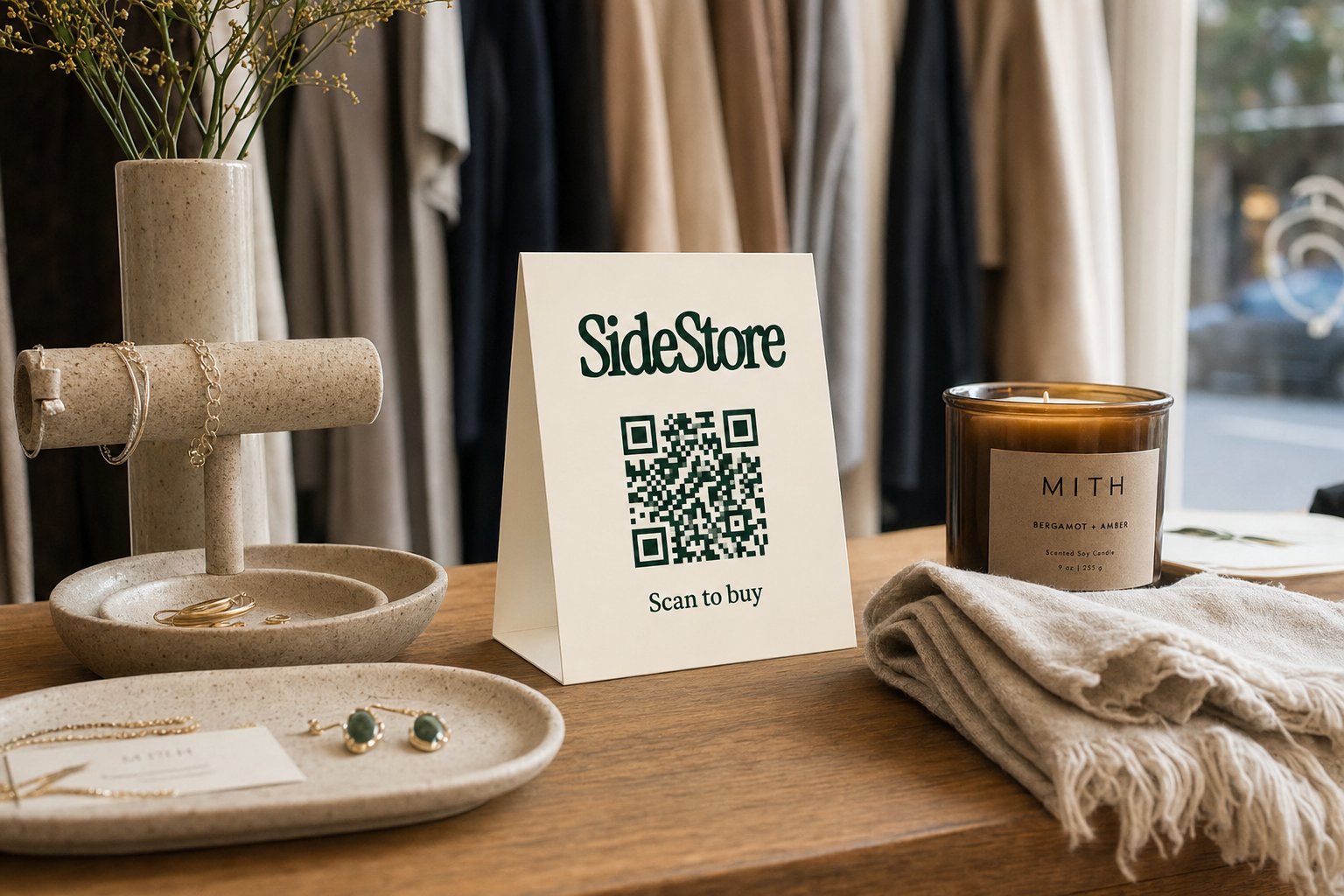
Consignment is a well-established model, and a forgiving one for makers who are still building. A retailer displays your products, takes a percentage of each sale, and you keep ownership of the stock until it sells. Retailers accept it because there is no inventory risk on their side. You accept it because it puts your products in front of foot traffic you did not have to generate yourself.
The friction, traditionally, is real. Payment terms are often monthly and reconciled by hand. You frequently do not know what has sold until a statement arrives or you visit the store. If a product sits on a shelf for two months and nobody tells you, you have tied up stock that could have been earning elsewhere.
Automated split settlement fixes this directly. When a sale is recorded at the point of scan, the payout splits instantly between you and the retailer at your pre-agreed rate. No invoicing, no chasing, no manual reconciliation. The stock count updates in real time, so you always know what is on the shelf without making the trip.
That one infrastructure change is what makes consignment sustainable at scale. Without it, managing three or four placements quietly becomes a part-time admin job, which is the opposite of what you were promised.
For detailed guidance on structuring consignment agreements, read how to sell handmade products in physical stores on consignment. If you are approaching independent retailers, boutique shops adding local products without buying inventory explains the pitch from the retailer's side of the table.
2. Product Placements in Cafes, Hotels, and Hospitality Spaces
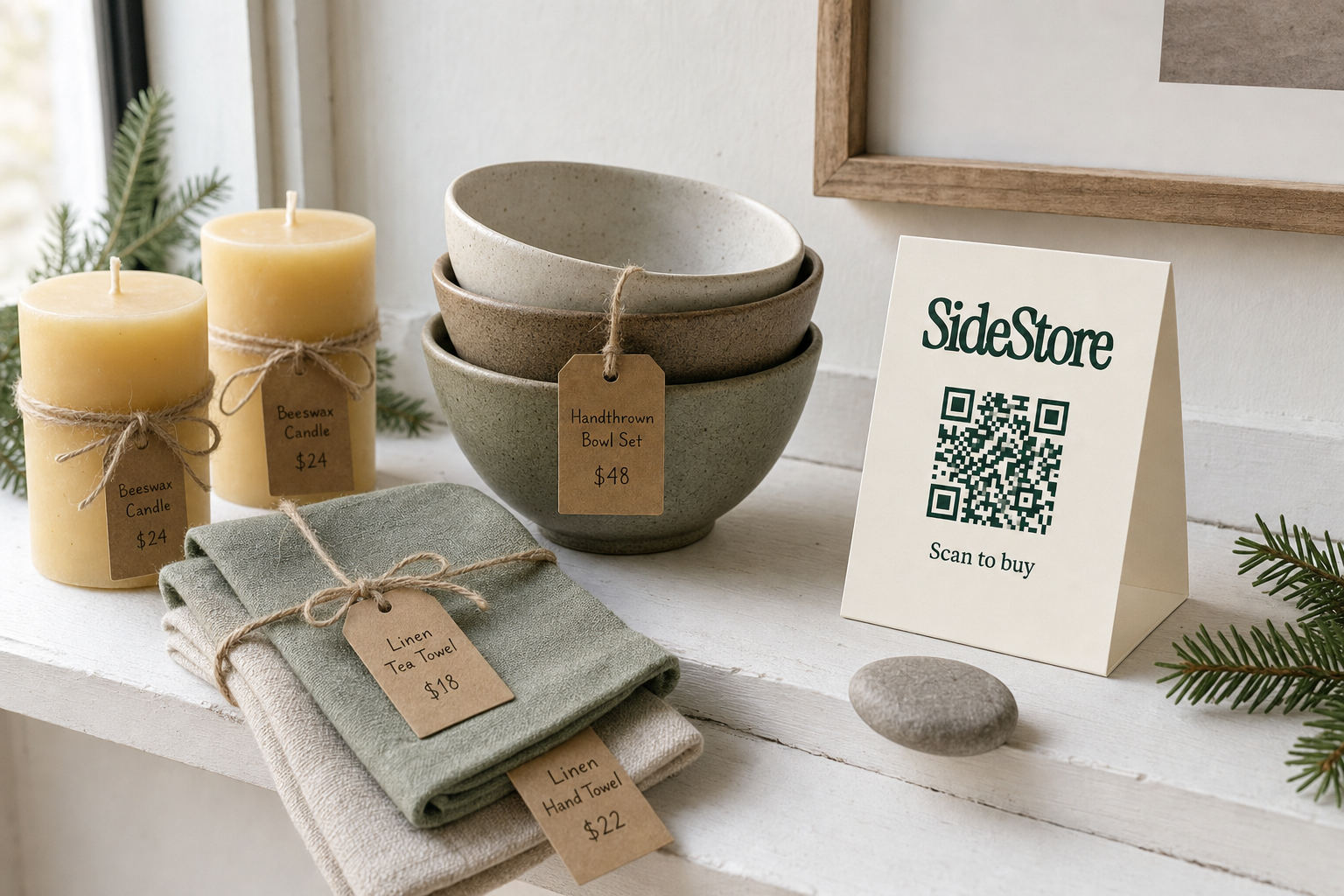
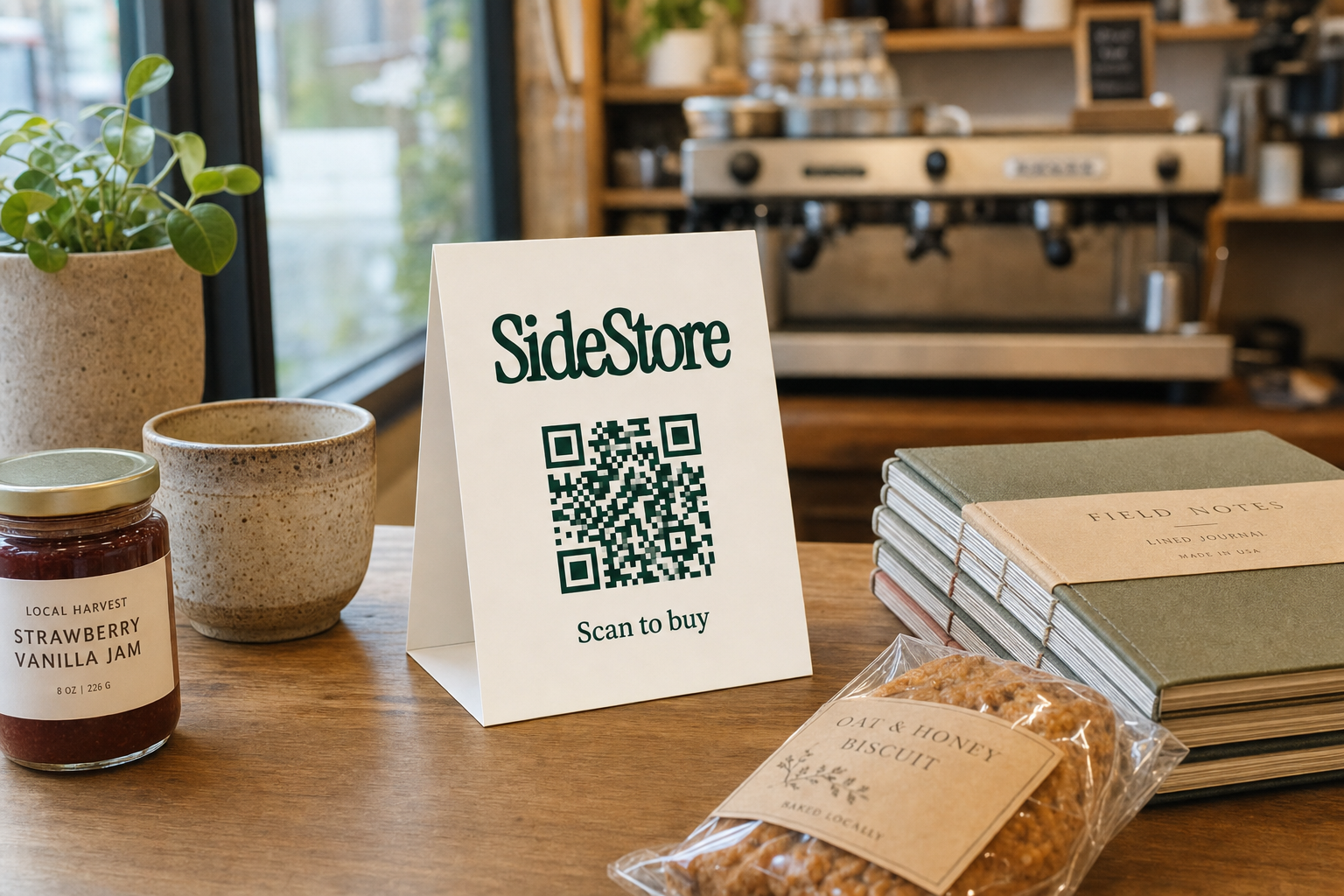
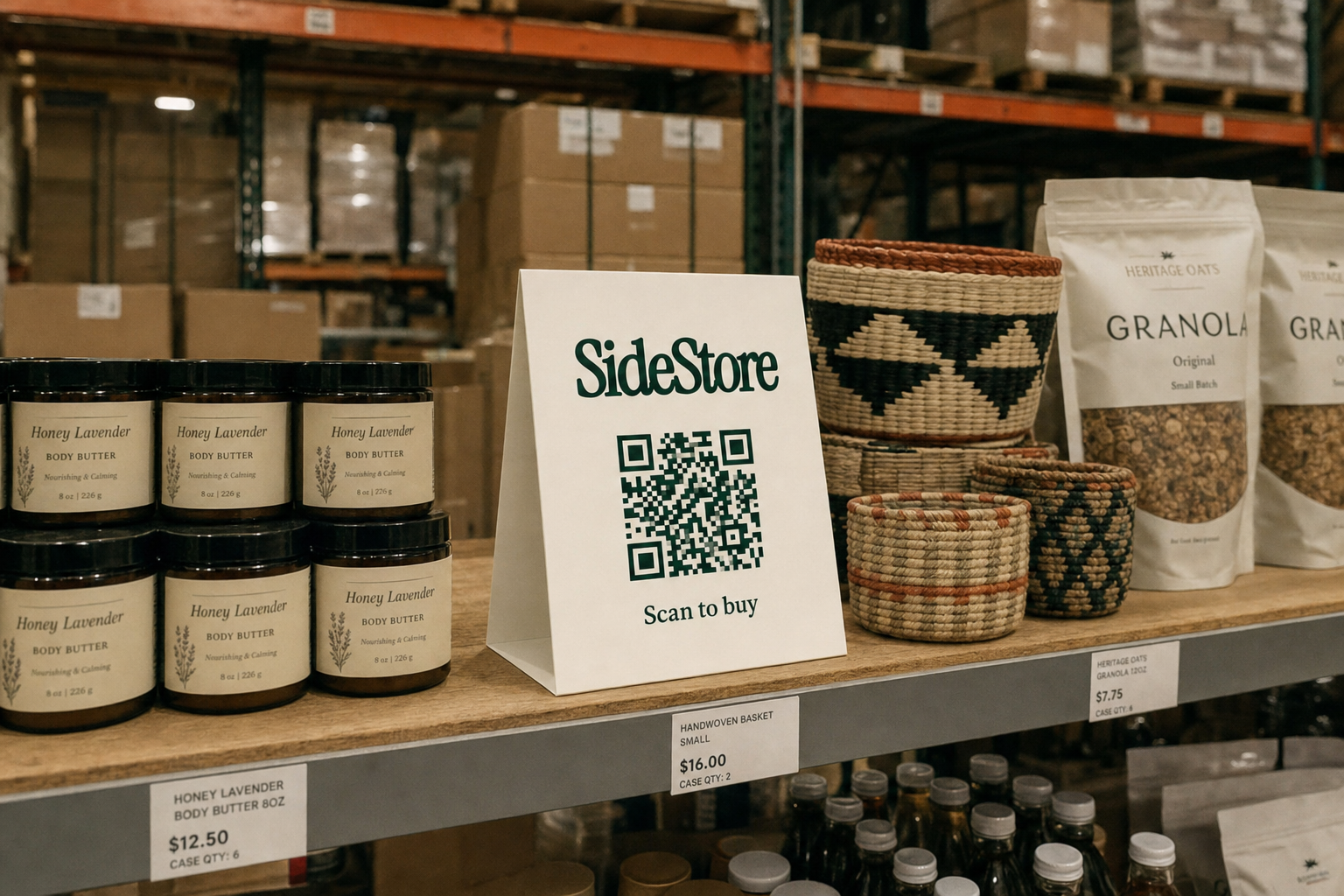
Hospitality placements are one of the most underused channels available to makers, and one of the friendliest to start with. The physical reality is simple: a small shelf, a display ledge, or a counter corner in a cafe or hotel lobby. Your products sit there. A scan-to-pay card, generated from your Retail Widget, sits next to them. A customer notices a ceramic mug, a hand-poured candle, or a print, picks it up, scans the code, and pays. The sale is recorded, the stock count drops by one, and your share of the payout lands in your account.
No cash handling. No staff involvement. No presence required from you.
The host venue earns a split on every sale. They have taken on no inventory risk, bought nothing upfront, and their staff have done nothing beyond tolerating a small shelf that was earning nothing before. For a cafe owner or hotel manager, that is a genuinely easy yes, which makes it an easy ask for you too.
The key is framing the pitch correctly. You are not asking a hospitality business to become a retailer. You are offering them a way to earn from idle space. Bring a little data: how many covers they serve a week, how long customers tend to linger. A cafe with thirty minutes of average dwell time is, quietly, a sales environment.
These articles are worth sharing directly with potential hosts as pitch resources:
- How cafes can earn from unused shelf space
- Bed and breakfasts with a small retail corner
- Hotels turning lobby space into retail revenue
Hospitality spaces have one thing markets never will: consistent, reliable footfall across the whole week, not just on Saturday mornings.
3. A Distributed Consignment Network Across Multiple Venues
One placement is useful. Ten placements is a network, and the economics change completely once you move past a single venue.
A single cafe placement might generate fifteen to twenty sales a month. Passive, yes, but modest. Five cafe placements, two hotel lobbies, and three boutique stores running at the same time give you an entirely different baseline. The selling happens in parallel, across different neighborhoods, different customer profiles, and different days of the week, none of which need you standing there.
The real challenge is management. How do you know which placements are performing? How do you restock without making ten separate trips? How do you track which venue generated which sale? These questions are exactly where makers tend to stall, so it helps to know they are already solved.
This is where SideStore's Retail Widget makes the whole thing concrete. Each placement has its own scan-to-pay checkout and live stock tracking, managed from the one interface. From a single dashboard, you see stock levels across every venue, sales by placement, and payouts attributed to each location. When a venue drops to two units remaining, you know before it sells out. You restock on a planned route rather than in a panic after a missed sale.
The contrast in selling hours is worth stating plainly. A market gives you one day of active selling a week. Ten placements give you ten locations selling in parallel, seven days a week, with you present at none of them. That is what it feels like to finally have leverage.
For the host-side argument on why this model works, see turning unused shelf space into a revenue channel and high-traffic retailers monetizing idle shelf space.
4. Pop-Up Retail and Short-Term Shop Sharing
Pop-ups are a legitimate channel, but they share the core problem of market stalls: they need your presence, and then they end. You cannot run a pop-up from your studio.
That said, they serve specific purposes well, and it is worth being clear about which. A product launch benefits from the concentrated attention and physical experience a pop-up creates. Seasonal moments, especially gifting periods, suit short-term activations. Sharing a space with complementary makers cuts your cost and can build real community buzz.
The honest read is this: pop-ups are a supplement, not a backbone. Use them for visibility, for testing a new neighborhood, or for occasions when in-person energy genuinely moves the needle. Do not lean on them as your primary channel if your goal is passive, scalable revenue, because they will always cost you your presence.
Where pop-ups fall short is exactly where permanent placements shine. A placement in a hotel lobby keeps earning long after your pop-up lease ends. The setup cost is lower, the ongoing effort is minimal, and it does not vanish on a fixed date.
Build the permanent placement network first. Add pop-ups when a specific occasion truly warrants them.
5. Online Channels as a Support Layer, Not a Replacement
Online selling is often the first alternative makers reach for, and it has genuine value. An online store or marketplace listing captures repeat purchases from customers who already found you. It gives you a shelf that never closes. It reaches across distances no physical placement can.
But online does not replicate what a physical placement does for discovery, and it is worth being honest about that so you do not pin all your hopes on it. A customer browsing a cafe is not in purchase-intent mode. They are relaxed, waiting for a coffee, open to something catching their eye. That ambient discovery is something a marketplace listing cannot manufacture. No amount of SEO or advertising fully recreates the moment a customer picks up an object, turns it over, and feels its weight.
The practical model is to treat online as the long tail of your distribution, not the engine. Physical placements create discovery. Your online presence converts the customer who wants a second purchase, or who wants to browse your full range after meeting one piece in a cafe. Run both, but build the physical network first, because that is where new customers actually find you.
6. Wholesale Supply to Independent Retailers
Wholesale is structurally different from both consignment and placement. A retailer buys your products outright at a wholesale price, typically forty to sixty percent of retail, and carries the selling risk themselves. You are paid upfront and have no further operational involvement in that stock.
The operational simplicity is real and, for some makers, a relief. No split tracking, no stock monitoring at the retailer's end, no reconciliation. Once the order ships, your work is done.
The constraint is production. Wholesale asks you to produce in volume, price competitively at wholesale rates, and absorb the margin compression that comes with bulk pricing. For makers with limited capacity or high material costs, the numbers often do not add up yet, and that is nothing to feel behind about.
Wholesale suits makers who have systematized their production, hold consistent quality at volume, and want minimal overhead on distribution. If you are not there yet, consignment and placement give you the same shelf space with kinder economics per unit while you grow into it.
Comparing Your Options: A Practical Summary
Choosing between the alternatives comes down to five honest questions. Here is how the main options compare:
Presence required: Markets and pop-ups need it. Consignment, placement, and wholesale do not.
Upfront risk: Wholesale shifts risk to the retailer immediately. Consignment and placement carry no upfront cost to either party. Pop-ups and markets ask for stall or venue fees before you sell.
Stock visibility: Placement with scan-to-pay infrastructure gives you real-time data. Consignment without automation gives you monthly statements at best. Wholesale gives you none after the sale.
Scalability: Distributed placements across many venues scale in parallel. Markets and pop-ups scale linearly with your time. Wholesale scales with your production capacity.
Margin per unit: Consignment and placement typically keep sixty to seventy percent of retail. Wholesale margins are lower. Market margins swing with stall fees and volume.
The recommendation is direct: start with placements in hospitality and independent retail spaces, use online for the long tail and repeat customers, and layer in wholesale only when your production capacity supports it. Read how local makers can sell without a retail store for a fuller framework you can follow step by step.
How to Start Replacing Markets With Placements
Step 1: Identify five candidate venues in your area. Look for cafes with real dwell time, boutique hotels, independent gift shops, and bed and breakfasts. You want foot traffic, a surface to place products on, and a host who benefits from a little passive income.
Step 2: Pitch the host on the model, not on your products. Lead with their benefit: earn from space you already have, no inventory to buy, no stock risk, and automated split payouts through the Retail Widget. Share how cafes can earn from unused shelf space and boutique shops adding local products without buying inventory directly with prospective hosts.
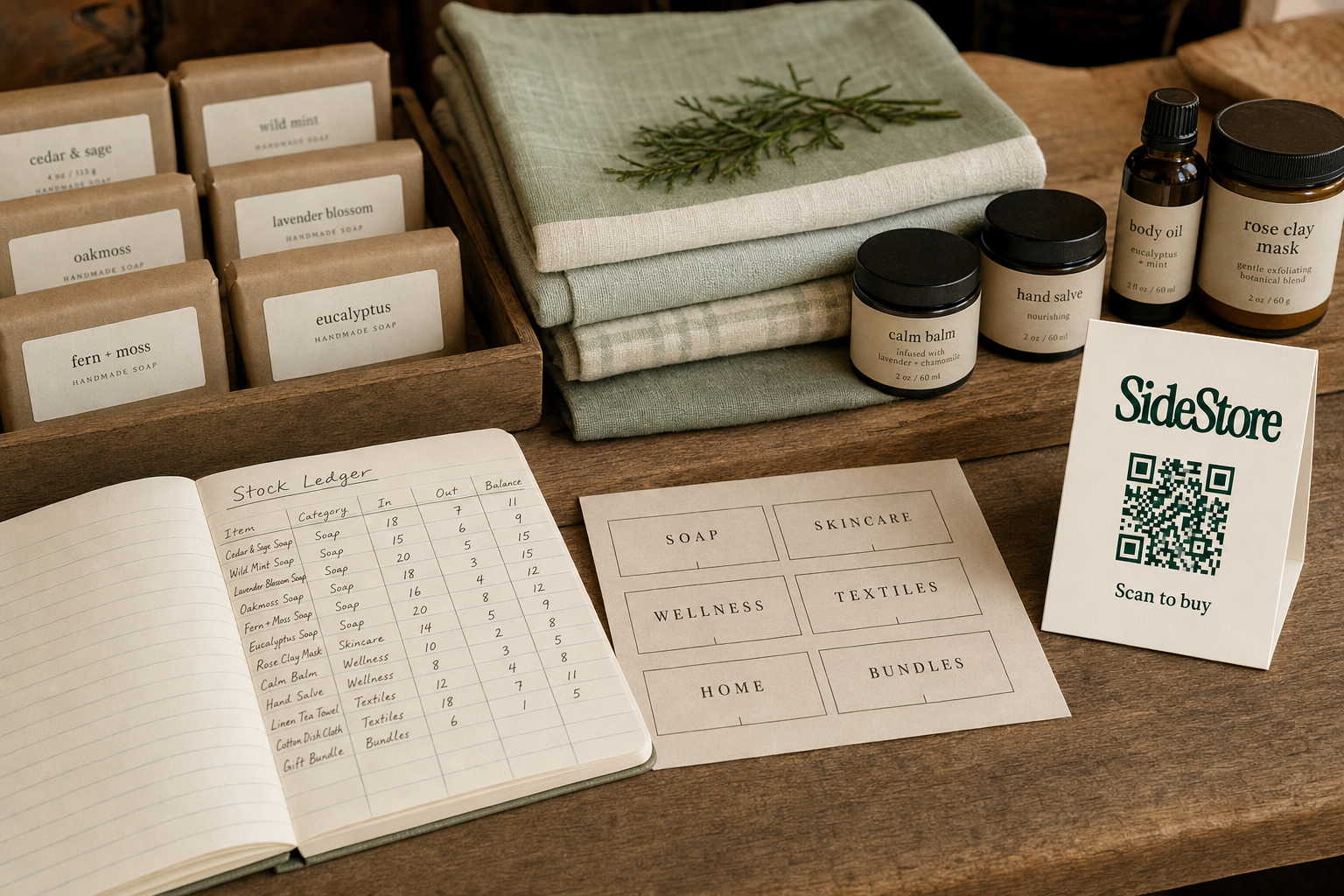
Step 3: Set up the Retail Widget for each placement. Each venue gets its own scan-to-pay checkout, stock allocation, and split payout configuration from the one interface. This takes minutes per location, not hours.
Step 4: Place your products and run a short orientation with the host. Show them where the scan-to-pay card sits, confirm the payout split, and agree a restocking threshold you will both keep an eye on.
Step 5: Monitor from the dashboard and restock on a planned schedule. Check stock levels across all placements weekly. When a venue nears its threshold, schedule a visit. You are running a system now, not attending a market.
The Market Stall Is Optional. The Network Is Not.
Weekend markets earned their place in the maker economy, and there is no shame in loving them. But they are a starting point, not a ceiling. The model here trades the stall for a distributed network of active placements: cafes, boutiques, hotels, any space with foot traffic and a surface to display products. Each placement earns on its own, every day, without you there. The Retail Widget handles checkout, stock tracking, split settlement, and attribution from one dashboard. Start with three placements, learn the system, and build from there. Read how merchant spaces earn from a product placement and how hotel lobby placements work for makers, then go live with your first placement this week. Your work deserves to sell more than one day out of seven.