How to Sell Handmade Products in Physical Stores on Consignment
A warm, practical guide for makers on selling handmade products through consignment in cafes, boutiques, and hotels, using scan-to-pay Retail Widgets that automate stock tracking and split payouts.
If you have ever wanted your work in a shop but flinched at the thought of a lease, staff, and stock you have to pay for before you have sold a thing, consignment is the door built for you. Consignment means placing your products in a store or venue and getting paid when they sell. The merchant takes no financial risk. They stock your items, display them, and pass the sale revenue back to you, keeping an agreed percentage as their fee.
For an independent maker who is still building, that changes everything. It opens physical retail without a lease, without staff, and without fixed costs. Your handmade ceramics, candles, prints, or skincare sit in a cafe, boutique, or hotel lobby and work as quiet distribution points while you are back in the studio. The barrier to entry is low. The reach is not.
But consignment only works well when both sides have clarity: on the split, on the terms, on how stock gets tracked, and on how money moves. Too many makers lose time, products, or revenue to loose agreements and manual admin, and it sours what should be a good relationship. You deserve better than that, and it is entirely avoidable.
This article covers everything you need to sell products without opening a retail store on consignment: what the arrangement actually means, how to find and pitch merchant partners, what belongs in your agreement, how to track and restock across multiple placements, and how the Retail Widget replaces the manual back-and-forth that makes consignment feel like unpaid admin.
What Consignment Actually Means for Handmade Makers
Consignment is a stock-and-split arrangement. You supply the products, the merchant supplies the space, and revenue gets divided when a sale happens. You remain the owner of the inventory until it sells. If it does not sell, it comes back to you. Your risk is capped, and that is the whole appeal for a maker who cannot afford to gamble stock.
This differs fundamentally from wholesale. In wholesale, the retailer buys your stock upfront at a discount, takes on the inventory risk, and keeps all the sale revenue. Consignment keeps that risk with you: you are owed nothing until a customer pays. The trade-off is a higher share of the retail price. Wholesale margins typically sit around 50 percent of retail, while consignment splits usually run 60 to 70 percent to the maker and 30 to 40 percent to the merchant, though this shifts by product and venue.
Your obligations under consignment are real, and it is fair to be clear-eyed about them. You supply the stock, keep it priced clearly, replace damaged or expired items, and restock when inventory runs low. The merchant is not there to manage your side. If you disappear and leave a half-empty shelf, expect the relationship to end, and understandably so.
Consignment also asks for honesty about its limits. It does not guarantee sales. A product sitting in the wrong venue, priced wrong, or displayed poorly will not move no matter how good it is. The placement is only as strong as the fit between your product and the merchant's customers, which is why choosing the right partner matters so much.
For makers exploring alternatives to weekend markets for artists and small brands, consignment offers a route to visibility that does not depend on you being there. Your products keep working while you are not physically present. That is the core appeal, and for many makers it is the first time selling has felt sustainable.
How to Find the Right Merchant Partners for Your Products
The right merchant is not just someone willing to take your products. It is someone whose customers already look like your buyer. Get that match right and the placement almost sells itself.
Start with cafes. A specialty coffee shop with a strong local identity and a display shelf near the counter is a natural home for handmade goods with visual appeal: small prints, ceramic cups, soap bars, packaged foods. Cafes with unused shelf space are often already looking for ways to add interest and a little passive income without buying inventory. You solve a problem for them, at no cost to them.
Next, consider bed and breakfasts. They are often design-led and proudly local, and guests who stay overnight are in a relaxed, browsing mood. A well-placed retail corner with your products feels natural rather than pushy. Bed and breakfasts with a retail corner benefit from stocking items guests want to take home as a memory of their stay. Frame the pitch that way and the conversation shifts from "will you stock my products" to "would your guests appreciate a local gift option."
Hotels work on the same logic at a larger scale. A lobby or reception area sees daily foot traffic from guests who have already spent money to be somewhere interesting. Hotels turning lobby space into retail revenue are increasingly open to consignment precisely because the risk sits entirely with the maker, not with them.
Boutiques are more competitive, but they attract strong purchase intent. Customers arrive ready to buy. Boutique shops adding local products without buying inventory can add genuine curation without committing capital. Frame your pitch around complementing what they already sell, not competing with it.
Finally, high-traffic retailers monetizing idle shelf space often have underused zones near checkouts, entrances, or waiting areas. Volume is high, and these placements reward products with clear price points and immediate visual appeal.
When you arrive at any venue, look for the idle space before you speak. If you can point to exactly where your product would sit and explain why it suits their customer, you make the decision easy for them, and easy is what gets a yes.
How to Pitch Your Products to a Store or Cafe
Pitching can feel like the scary part, especially early on. It does not need to be. A good pitch takes ten minutes, prepares the merchant to say yes, and keeps the operational ask as small as possible.
First, bring samples. Not a catalogue, not a website link, but the actual products the merchant can hold, smell, or try. Physical products sell themselves in ways images never manage. Present them in the packaging you intend to use in-store.
Second, lead with the merchant's benefit, not your origin story. Many makers open by explaining where they started, and it is a lovely story, but merchants are busy. Open with the outcome instead: "This would sit on your counter, your customers buy it themselves, you earn a percentage of every sale, and you carry no stock risk." The idea of earning from unused shelf space captures exactly what you are offering, which is passive revenue from space that currently earns nothing.
Third, show your price point clearly. Consignment works best when the math is transparent. Tell the merchant the retail price, the percentage they keep, and roughly how often you expect to restock. If you are using a Retail Widget that handles checkout and settlement automatically, say so, because it lifts the operational burden off their till and their staff entirely.
Fourth, keep the paperwork light for a first meeting. You will want a formal agreement before product goes on the shelf, but a first meeting is not the moment for a five-page contract. Agree on the principle, agree on the split, and follow up with the agreement before you drop off stock.
Before you leave, confirm the contact name for the agreement, ask where exactly your products would be displayed, and set a date for your first delivery. A clear next step is what turns a friendly chat into a live placement.
What to Include in a Consignment Agreement
A consignment agreement does not need to be long. It needs clarity on six things, and then a little care on two more. A short, plain document protects the relationship as much as it protects you.
The six essentials: the names of both parties, a description of the specific products being placed, the retail price of each product, the revenue split expressed as a percentage to each party, the placement location (the specific store and the agreed display area), and the duration of the agreement with a review or exit clause.
On payment timing, be specific. "Monthly settlement" is not enough. Write the exact date payments are due, the 1st of the following month, for example, and specify the method. Vague payment terms are the single most common source of friction in consignment relationships. If you are using a Retail Widget that settles automatically on each sale, state that in the agreement so the merchant understands they never need to calculate or transfer funds by hand.
On liability, address damaged and stolen goods plainly. Decide in advance who absorbs the cost if a product is broken in the merchant's space or taken without payment. Many makers accept liability for damage below a threshold, one or two items per cycle, and treat it as a normal cost of placement. What matters is agreeing before it happens, not after.
Include a termination clause that gives both parties a minimum notice period, two to four weeks is standard, and confirms that unsold stock is returned to you in its original condition. A short, signed document covering these points keeps the relationship professional and spares you both an awkward conversation later.
Managing Stock and Restocking Across Multiple Placements
With one placement, stock management is simple. With five, it quietly becomes a part-time job unless you build the right system from the start. This is the point where many makers get overwhelmed and stall, so it is worth getting right early.
The core problem is visibility. Without live data, you only know how much stock remains at a location when you physically visit or when a merchant happens to message you. Products run out, the shelf sits empty, and you lose sales you never even hear about. Worse, the merchant's goodwill erodes when their display looks neglected, through no real fault of yours.
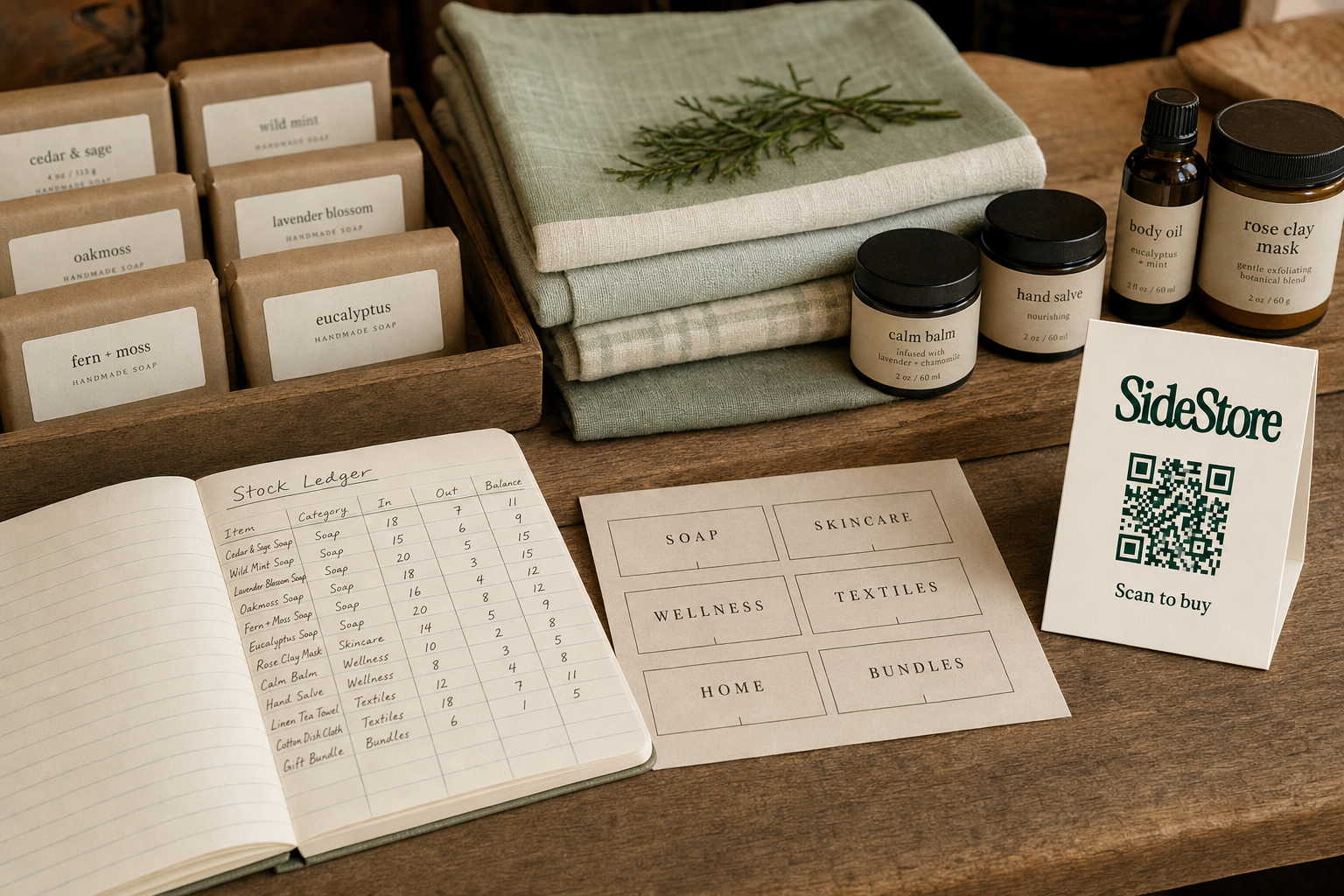
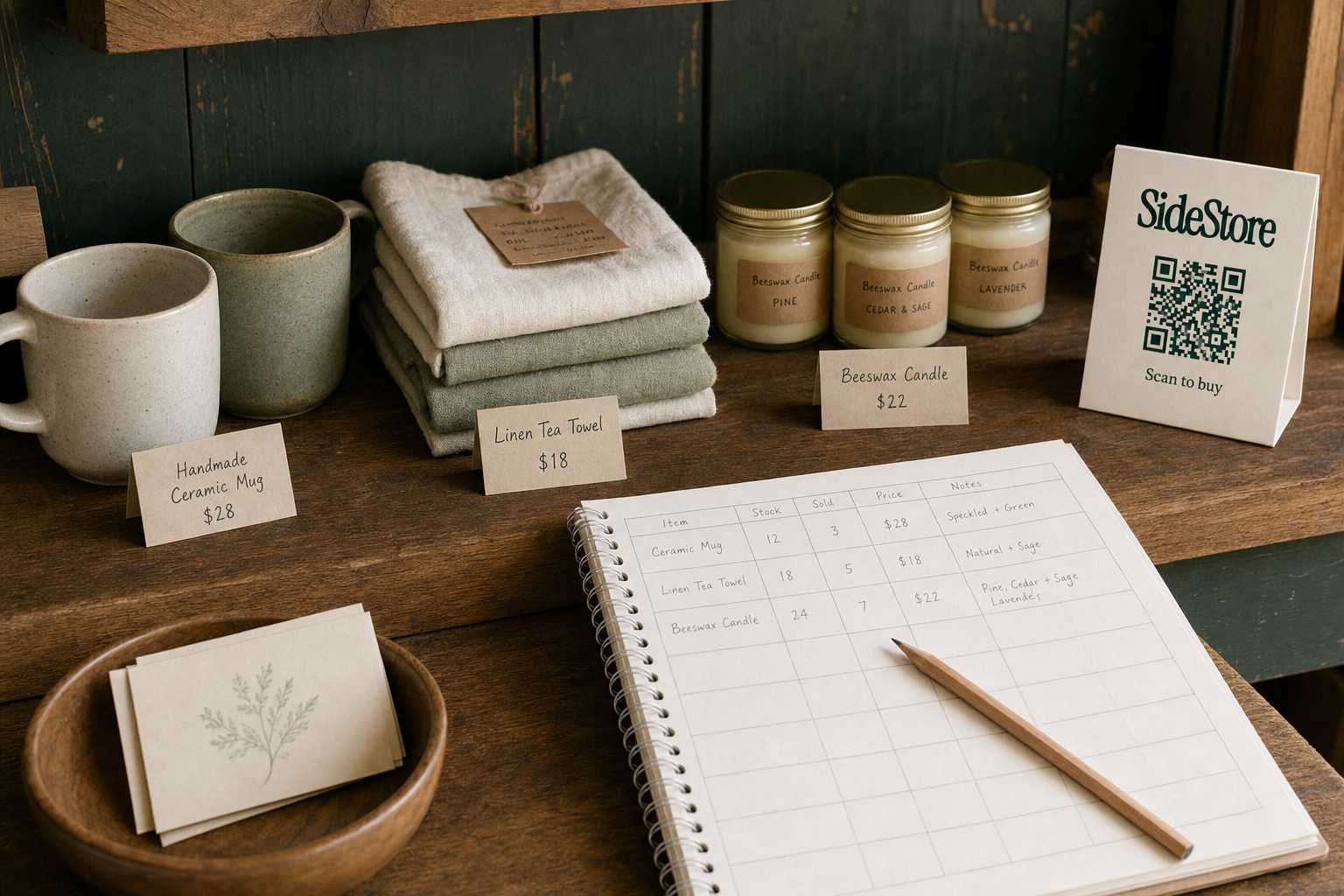
The practical fix is to attach stock tracking to each placement from day one. With SideStore's Retail Widget, every placement carries a live stock count tied to its scan-to-pay checkout. Each scan registers a sale and decrements the inventory in real time. You see exactly how many units remain at each location from your dashboard, without calling anyone or making an unplanned drive across town.
Your restocking becomes data-driven rather than reactive. Set a low-stock threshold for each location, say three units remaining, and let the dashboard surface the alert. Plan your restocking runs around several placements in the same area to keep your logistics sane. Track which placements sell faster so you can weight your stock accordingly: more units to the high performers, lighter stock in slower venues.
Placement attribution tells you not just that a product sold, but where it sold. Over time, that data surfaces which venue types suit your products best, which display positions convert, and which placements are worth renewing. That is intelligence you simply cannot build from a spreadsheet and a monthly check-in call.
Split payouts settle automatically on each sale, so your cash flow no longer waits for your next visit or for a merchant to remember to run a transfer. You get paid as you sell, which is exactly how it should feel.
How Scan-to-Pay and Split Payouts Replace the Merchant Till
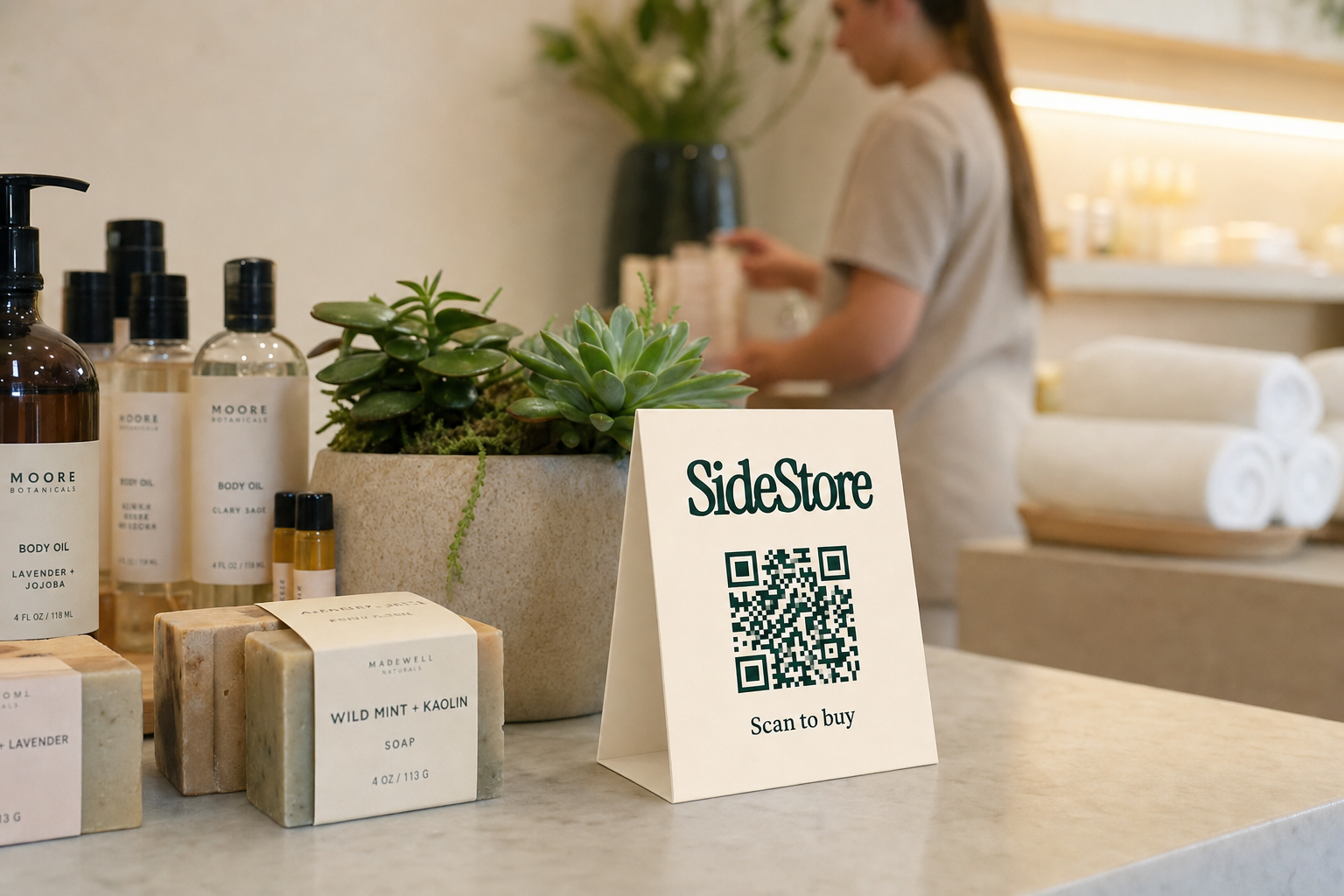
The old way of consignment checkout runs through the merchant's point-of-sale system. A customer picks up your product and takes it to the counter. The merchant rings it in, collects payment, records the sale, and at the end of the month totals up what they owe you. Then they transfer your share, minus their percentage, assuming the record-keeping held up the whole time.
That asks a lot of a merchant who agreed to display your products, not to run your accounts. Errors happen. Sales go unrecorded. Payment timing slips. Staff may not know the right price, or may not realize an item is on consignment at all. Every link in that chain is friction that quietly erodes accuracy and trust, and it is usually the maker who loses out.
The Retail Widget takes the whole transaction out of that chain. Your scan-to-pay code is displayed at the placement point. A customer scans it, sees the product listing, and pays directly through scan-to-pay checkout. The payment is captured, the stock count updates, and split settlement executes automatically: your share to your account, the merchant's percentage to theirs. No manual entry. No end-of-month reconciliation. No awkward chase for payment.
The merchant's only job is to keep the Widget visible. That is a realistic ask, and it is one reason hosts prefer this model: it removes the transaction entirely from their till and their staff. Everyone does less, and everyone trusts the numbers more.
Setting up a Retail Widget for a new placement takes minutes. You set the product, the price, and the split, and the scan-to-pay checkout is generated and ready to display. Once both sides see how simple the setup is, the operational objection to consignment tends to disappear on the spot.
Scaling From One Consignment Spot to a Distributed Retail Network
One placement proves the model. Two placements test your restocking rhythm. Five placements, well managed, are a genuine retail presence, and you built it without a single lease.
The progression is logical, not aspirational. Take what works in your first placement, the product mix, the display format, the pricing, the scan-to-pay setup, and replicate it in the next venue. Each new Retail Widget you deploy adds a node to your distribution network. Each node runs independently, is tracked from the same dashboard, and pays out automatically.
Treat your second and third placements as small experiments with different venue types. A cafe placement and a boutique placement will tell you different things about who buys your products and at what volume. Use that data to focus: lean into the venue type that performs, and quietly deprioritise the ones that do not. You are allowed to let go of what is not working.
As the network grows, the dashboard becomes your store. You see live stock levels, recent sales, placement-level revenue, and outstanding restocks in one place. This is what selling without opening a retail store looks like in practice: a physical presence across many venues, run from software.
You now have the blueprint to build a distributed consignment network without a lease, without staff, and without pinning your products to a single location. Every placement is a storefront. Every scan is a sale. The network grows as far as you choose to place it, on your terms and at your pace.
Start With One Placement, Build From There
Consignment is straightforward when both sides understand their role and the mechanics are handled properly. You supply the products and keep the shelf stocked. The merchant provides the space and the foot traffic. A clear agreement protects both of you. Scan-to-pay and split settlement take the manual work out of checkout and payment, so nothing depends on someone remembering to do the sums.
The biggest mistake makers make is overthinking the first step. Find one merchant whose customers match your product. Agree on a split. Set up a Retail Widget. Go live. That is genuinely all the first move requires.
Everything in this guide to consignment for makers scales from that single starting point. And if weekends feel limiting, alternatives to weekend markets show you how wide the options really are.
Your products deserve to be in front of customers every day, not just on Saturdays. Build a consignment network without opening a store of your own.