Selling on Consignment: Meaning
Selling on consignment means a maker places products in a venue and gets paid only when those products sell. Learn how it works, what agreements should cover, and how to start.
What Consignment Actually Means
Consignment is simple: you place your products in a merchant's space. They sell. You get paid. No upfront cost to them. No inventory risk on either side.
The merchant takes a cut, usually 30 to 40 percent of the sale price, and you keep the rest. That split is negotiated between you and them before anything goes on a shelf. No purchase order. No invoice paid in advance. No stock the host has to own.
It is one of the oldest ways to get physical products into stores, and with the Retail Widget it is one of the most practical ways to sell products without opening a retail store.
If you are an independent maker trying to reach customers beyond your own website or weekend market stall, consignment is worth understanding in full. The mechanics. The real trade-offs. And what actually makes a placement work.
How Consignment Works: Step by Step
Consignment separates ownership from display. You own the stock until a customer buys it. The merchant provides the space and the relationship with the people walking in the door.
Step 1: Supply. You deliver products to the merchant. No money changes hands. You still own the goods.
Step 2: Display. The merchant puts your products on a shelf or counter, priced at a figure you both agree on. They take no financial risk. If nothing sells, they owe you nothing.
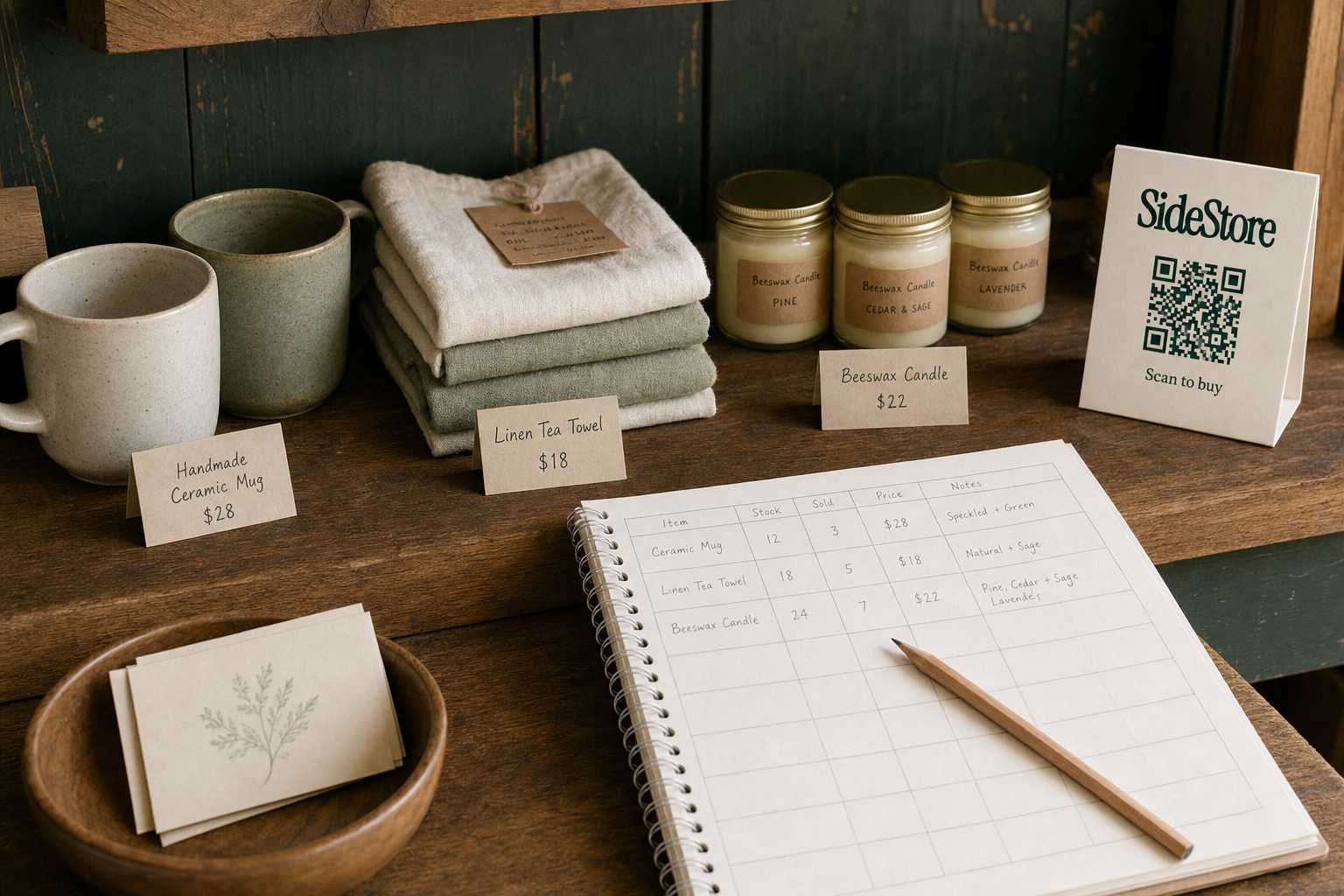
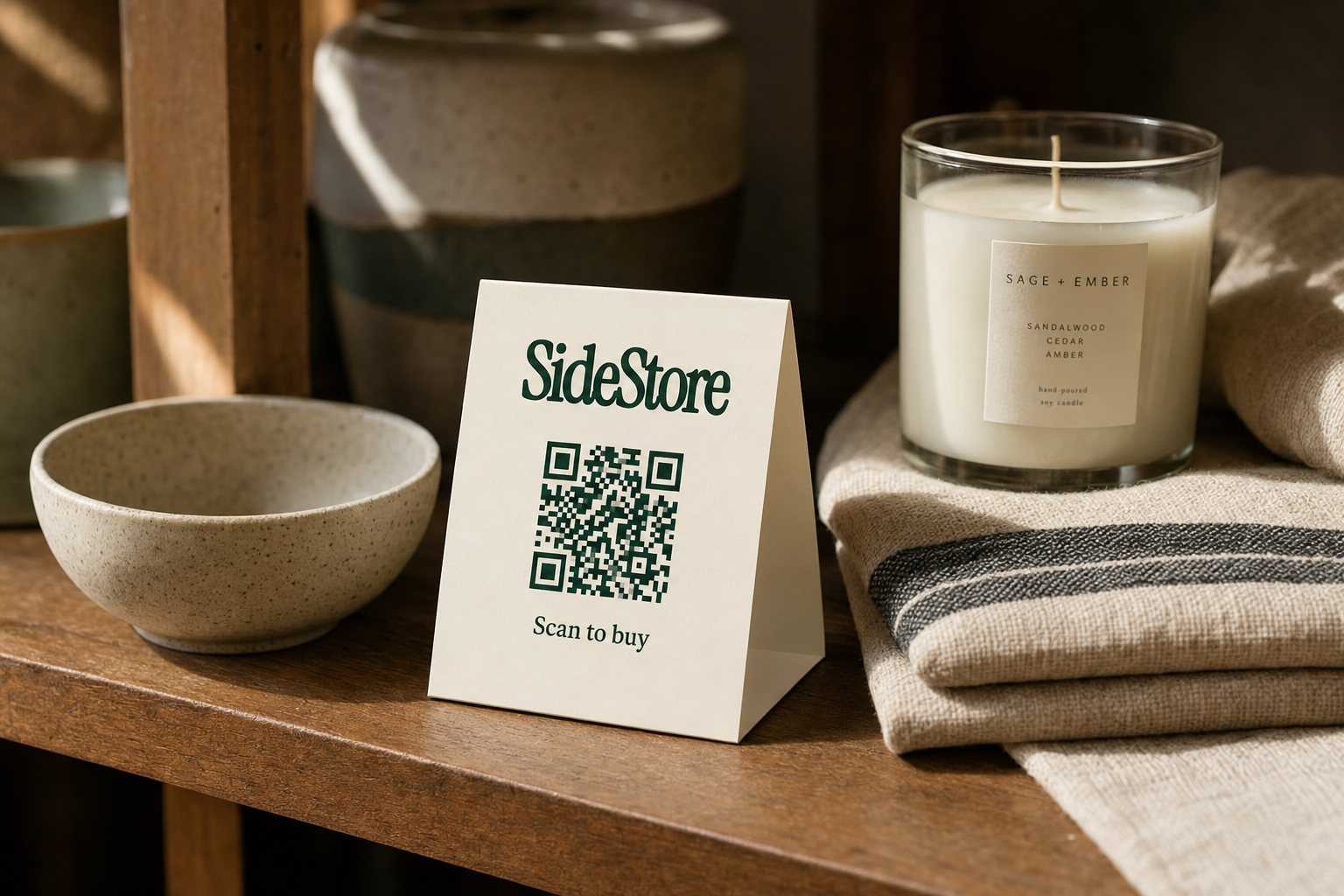
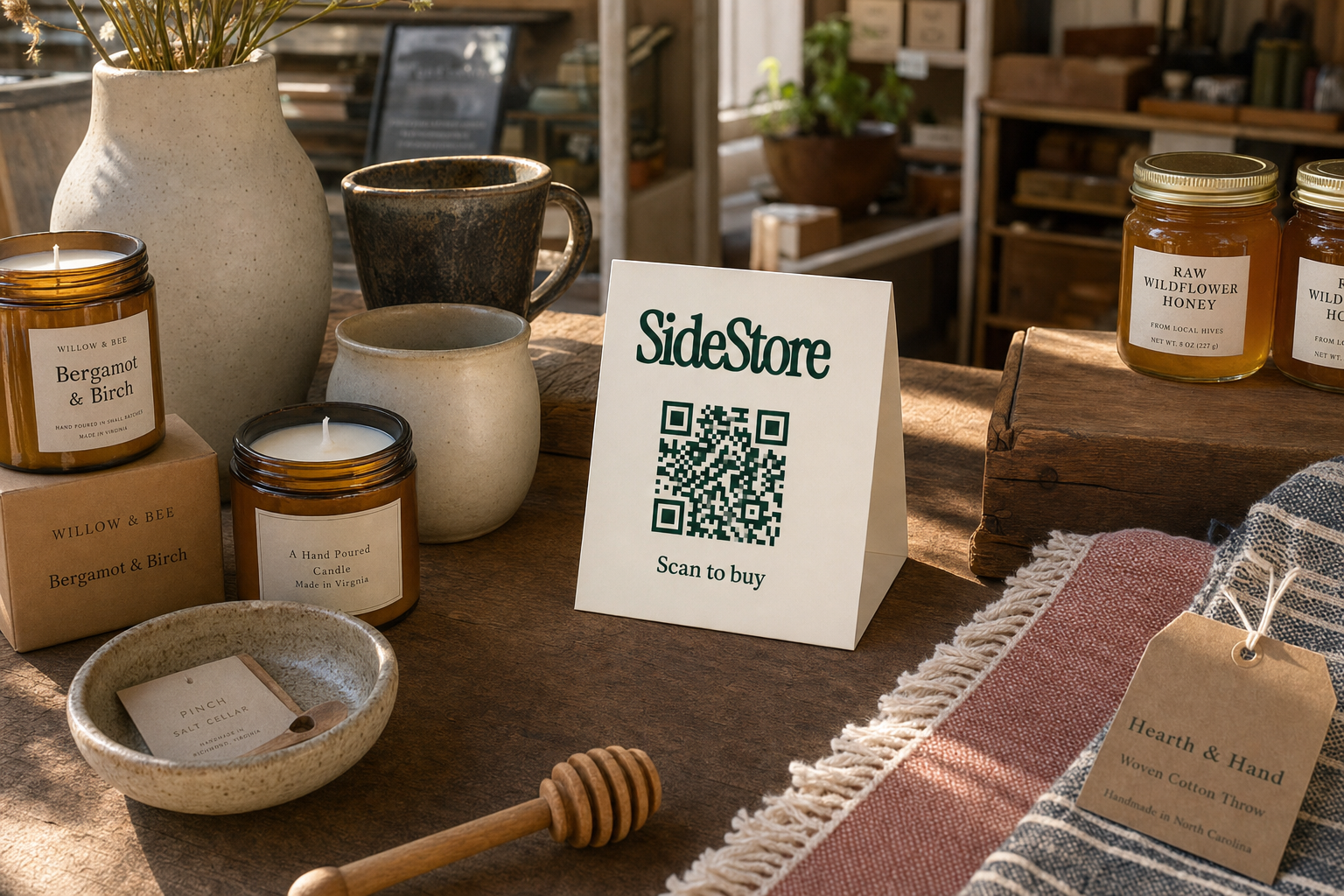
Step 3: Sale. A customer buys. Payment happens at the till or via a scan-to-pay QR card linked to the Retail Widget. The QR card is one function of the Widget, not the whole product. The Retail Widget is the interface that manages your entire placement: pricing, live stock tracking, which venue is selling what, and automatic split settlement between you and the merchant.
Step 4: Split. Sale proceeds divide between you and the merchant at the rate you both agreed to in writing. Nothing is hidden. Nothing is manual.
Step 5: Unsold stock. If products do not sell within the placement period, you collect them back. The merchant owes you nothing for unsold items.
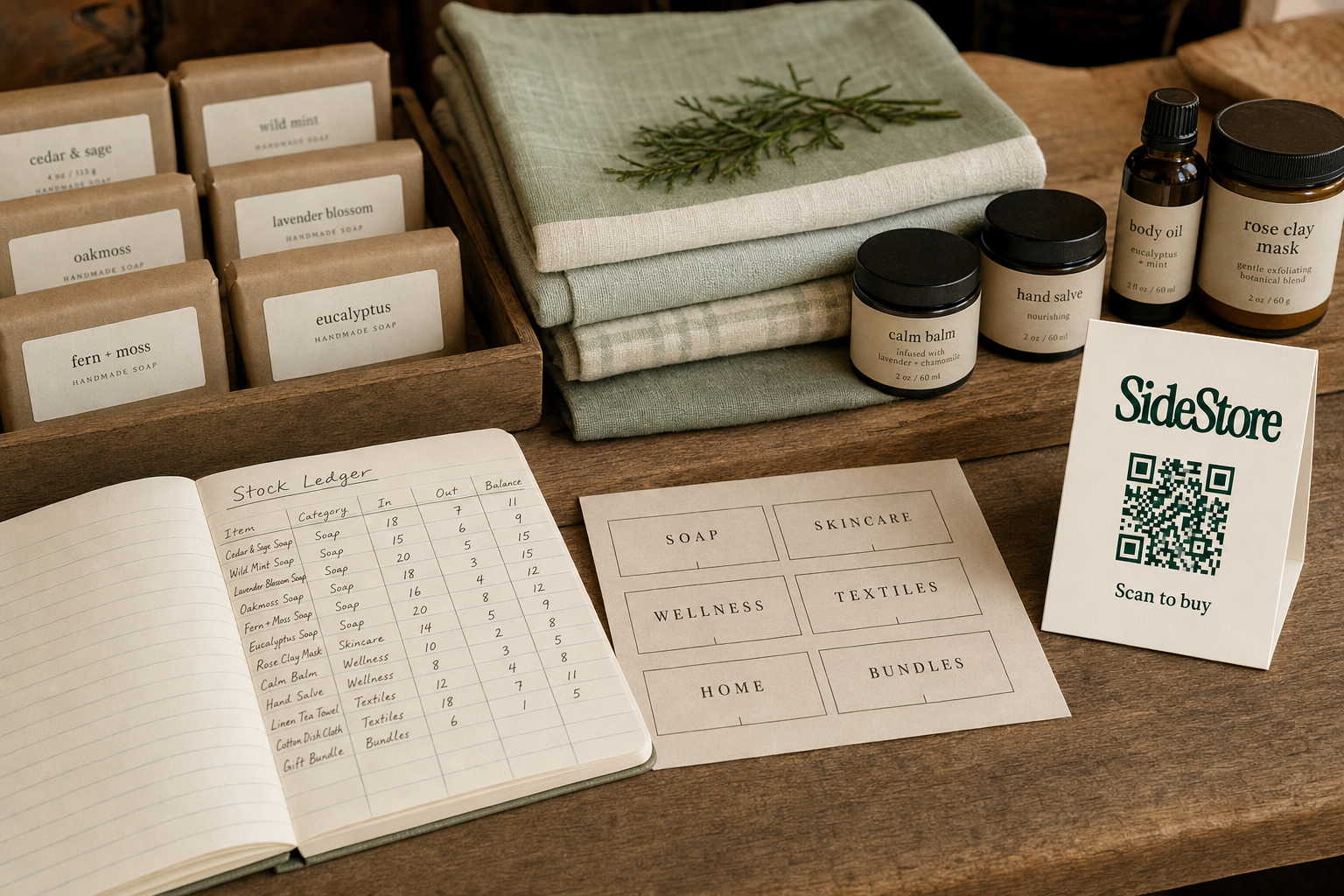
Traditional consignment meant paper logs, spreadsheets, and monthly phone calls to reconcile numbers that probably did not match. The Retail Widget eliminates that entirely. Stock levels update in real time. Settlement is calculated and paid automatically. Learn more in how to sell handmade products in physical stores on consignment, and see exactly how the QR card fits into the Retail Widget in how the SideStore QR card works.
Consignment vs Wholesale: What Is the Real Difference?
Consignment and wholesale both get your products into merchant spaces. They are not the same.
In wholesale, the merchant buys your stock upfront and owns it. They take the financial risk. If it does not sell, that is their loss.
In consignment, you keep ownership until the moment a customer pays. The merchant takes zero risk. They only pay you if the product moves.
| Dimension | Consignment | Wholesale |
|---|---|---|
| Stock ownership | You own it until sold | Merchant owns it after purchase |
| Financial risk | You carry unsold-stock risk | Merchant carries unsold-stock risk |
| Payment timing | You are paid after each sale | Merchant pays you upfront |
| Return of unsold goods | You collect it back | Merchant owns unsold stock; no return |
| Your margin per unit | Higher (no wholesale discount) | Lower (wholesale price is discounted) |
| Host investment | Merchant invests nothing upfront | Merchant commits capital to buy stock |
The trade-off is straightforward. Wholesale gives you immediate, predictable cash but asks the merchant to spend money first. Consignment removes that barrier for them but leaves you carrying stock that might not sell.
For emerging makers who want to earn from unused shelf space without asking merchants to spend money upfront, consignment is the lower-friction entry into physical retail. For established brands with proven sell-through, wholesale may deliver faster cash flow.
What Consignment Offers Makers: Honest Pros and Cons
Consignment is genuinely useful for many makers. It is also not without real cost. The honest version is that it removes the biggest barrier to offline distribution while introducing a different kind of friction: shared revenue and the possibility of stock sitting unsold.
What works about consignment for makers:
- No upfront cost to place. You do not need a large production run or a brand with proven wholesale traction to get on a shelf.
- Real foot traffic. Your products sit in a space with real customers walking past. That visibility is hard to replicate online.
- Higher per-unit margin than wholesale. Because you are not discounting to a wholesale buyer, your cut of the retail price is typically larger.
- Scale without opening stores. Add placements in multiple venues and manage them all from one dashboard using the Retail Widget. You are building a distributed consignment network without the cost or commitment of a physical shop.
What costs you in consignment:
- Revenue is not guaranteed. No sales means no payment. You retrieve unsold stock and try again.
- You own the unsold inventory. The merchant carries zero risk. You carry all of it.
- The merchant takes a cut. Every sale includes a hosting fee. That is the price of access to their space and their customers.
- Managing multiple placements is hard without tools. Tracking stock across venues by hand is slow and error-prone. The Retail Widget fixes this, but without it you are managing spreadsheets.
If you have been relying on weekend markets for sales, consignment offers a more consistent channel. See alternatives to weekend markets for artists and small brands for a fuller comparison of your options.
What Consignment Offers Merchants: Honest Pros and Cons
For merchants, hosting consignment products means earning from space you already have, at no inventory cost and with no stock risk. That is a real advantage. But there are genuine trade-offs.
What works about consignment for merchants:
- Zero upfront investment. You do not buy the products. You display them and earn a percentage of each sale.
- Revenue from space that was empty or decorative. A corner of a cafe, a shelf in a boutique, a display table in a hotel lobby: idle space becomes income.
- No inventory liability. If the products do not sell, you return them and move on. Your cash position is unchanged.
- Product variety without category commitment. You can test whether a type of product appeals to your customers without committing capital to it.
What costs merchants in consignment:
- Dependency on the maker to restock. If a product sells well and the maker is slow to resupply, the shelf sits empty. You lose revenue you cannot replace yourself.
- Product fit is not guaranteed. Not every maker's work suits every venue. A placement that misses with your customers will simply not sell, and you carry the display space cost without return.
- Coordination overhead without tooling. Managing stock levels and payouts across multiple makers can create friction. The Retail Widget removes this, but without it you are juggling multiple makers' needs.
Specific venue types that benefit most include cafes, boutique shops, and hotels. Each has natural display space and steady foot traffic to support a consignment placement.
What to Put in a Consignment Agreement
A consignment agreement is the document that sets the rules before anything goes on a shelf. Getting it right prevents the most common disputes: who gets paid what, when, and what happens to stock that does not sell.
Note: This is not legal advice. Consult a qualified professional for your specific situation.
At minimum, your agreement should name:
- Split rate. The exact percentage each party receives from each sale. State the maker's share and the merchant's share as specific numbers, not ranges.
- Placement duration. How long the products stay in the venue before the arrangement is reviewed or unsold stock is returned.
- Unsold stock policy. Who collects the items, by what date, and what happens if collection is delayed.
- Payment frequency. How often the maker receives their share of sales: weekly, fortnightly, or monthly.
- Liability for loss or damage. Which party is responsible if products are stolen, broken, or lost in the merchant's space.
- Pricing authority. Whether the maker or the merchant sets the retail price, and under what conditions it can change.
When you run a placement through the Retail Widget, the split rate is built into the system at setup. Settlement is calculated and paid automatically at each sale. That removes the most common source of payment disputes: the spreadsheet reconciliation that never quite adds up. The agreement still matters on paper, but the tooling enforces the financial terms on every transaction.
For venue-specific context on how agreements tend to work in practice, see how bed and breakfasts can earn from a small retail corner and how high-traffic retailers can monetise idle shelf space.
How to Start Selling on Consignment
You do not need a large catalogue, an established brand, or a minimum order to start. You need a product, a venue that fits it, and a clear agreement. Here is the sequence.
1. Price your product correctly. Know your cost per unit. Price it at a retail level that accommodates the consignment split and still works financially for you. If the merchant takes 35 percent and you want to make profit, the retail price has to support it. Do the math before you approach anyone.
2. Find venues that match your product. Think about where your customer already spends time. A ceramics maker belongs in a boutique or a design-led cafe, not a sports shop. Product-venue fit is the single biggest driver of consignment sell-through. Get this right and the rest follows.
3. Approach the merchant with a concrete proposal. Describe the product, the quantity you would place, the retail price, your proposed split, and how long you want the placement to run. Merchants with idle shelf space respond well to proposals that are specific and low-risk for them. Make their job easier, not harder.
4. Agree the terms in writing. Cover the six points listed above. Keep the document short and plain. Both parties sign before any stock moves. This protects you both.
5. Go live and manage from one dashboard. Place the stock, activate the Retail Widget, and your placement is live. As you add more venues, the same dashboard tracks stock, sales, and payouts across every location. That is how a distributed consignment network scales: not by opening more stores, but by adding more placements.
Start with one venue. A single well-matched placement, managed cleanly, teaches you more about consignment than a dozen poorly matched ones. Read how to sell handmade products in physical stores on consignment for the full placement process, and sell products without opening a retail store for a wider view of offline distribution options.
Frequently Asked Questions About Selling on Consignment
What percentage do consignment shops take?
Consignment splits are negotiated. Common arrangements give the maker between 60 and 70 percent of the sale price, with the merchant keeping the remainder as a hosting fee. Specialist venues, high-footfall locations, or spaces with strong product fit may negotiate differently. There is no universal standard.
What happens to unsold consignment items?
Unsold items go back to the maker. The merchant does not own the stock and owes no payment for products that did not sell. Your consignment agreement should specify a clear collection date and who arranges the return.
Is consignment the same as wholesale?
No. In wholesale, the merchant buys your stock upfront and owns it. In consignment, you keep ownership until a customer purchases the product. Wholesale gives you faster, predictable cash. Consignment removes the upfront cost barrier for the merchant. They are distinct models with different risk profiles.
Selling on Consignment: Your Clearest Path to Offline Distribution
Consignment selling means placing your products in a merchant's space, keeping ownership until they sell, and splitting the proceeds at the point of sale. That is the definition. It is also why the model endures: it aligns the interests of maker and merchant around a shared outcome rather than a speculative purchase.
For makers, consignment is an entry point into physical retail that does not require minimum orders, a wholesale pitch, or the capital to open your own shop. For merchants, it is a way to activate idle shelf space and earn from foot traffic they already have, without buying inventory.
The difference between a consignment arrangement that works and one that stalls usually comes down to three things: product-venue fit, a clear written agreement, and the tooling to manage the placement without manual overhead. The Retail Widget handles the third. The section above on agreements handles the second. Your own judgment about where your customer already shops handles the first.
If you are exploring your options as a maker, alternatives to weekend markets is a useful next read.
And if you are ready to place: build a consignment network without opening a store of your own.