How to Get Your Skincare Products into Salons: Consignment Placement for Beauty Makers
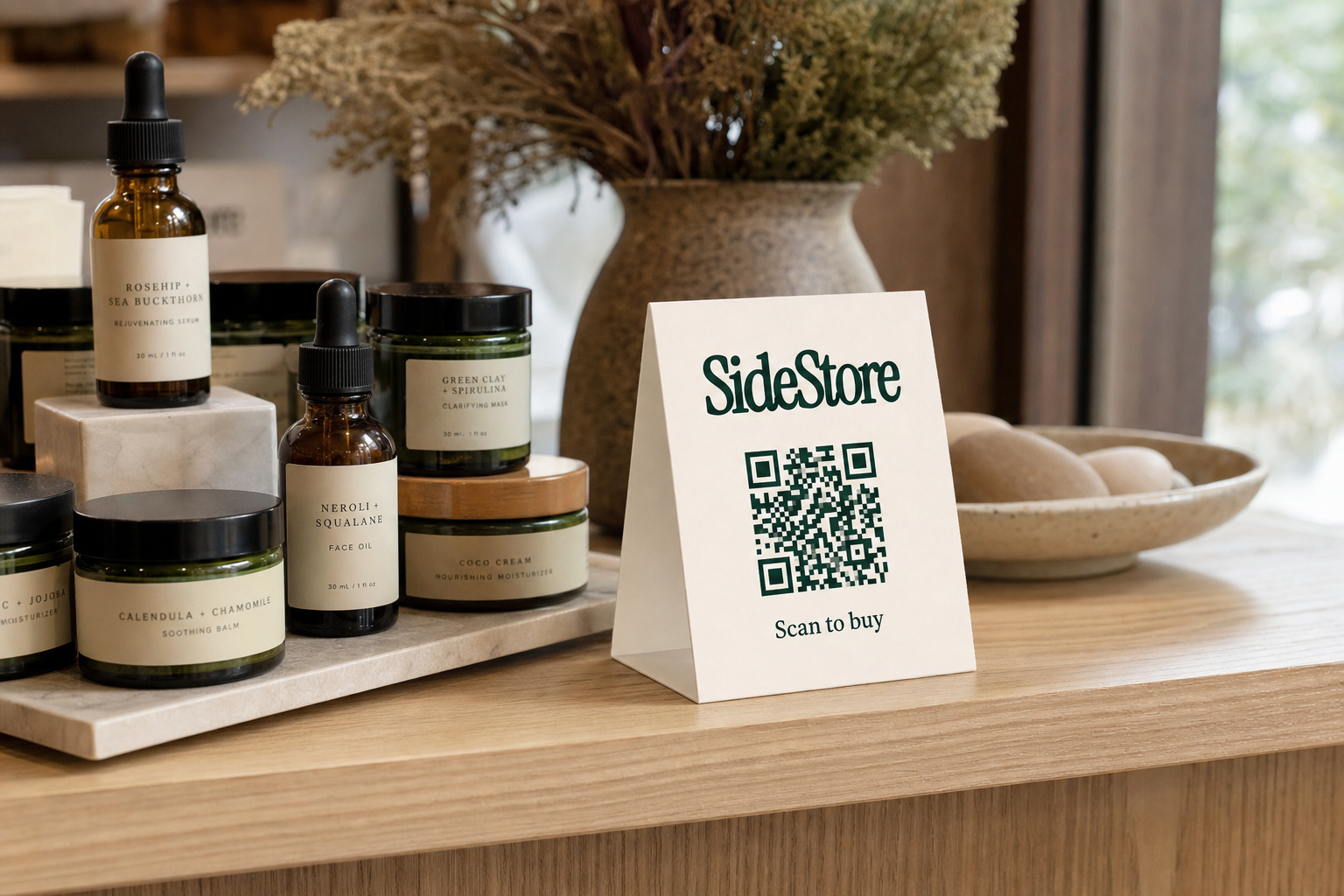
Getting your skincare products into salons means placing them on consignment: your products sit on their shelves, clients browse and buy, and you receive your agreed share of each sale. No upfront wholesale purchase. No renting a chair or counter space. You get your work in front of beauty-focused buyers without opening a store of your own.
The path is straightforward. You approach a salon owner, agree on a split (commonly 60 to 70 percent to you, 30 to 40 percent to the host), leave a small starting range of products, and set up a way to track sales and trigger payouts. The Retail Widget handles that last part: scan-to-pay checkout, live stock tracking, and automatic split settlement, all in one interface.
Salons are underused as a distribution channel for independent skincare makers. Clients arrive with time to browse, trust the space they are already in, and are receptive to product recommendations from stylists who can speak to what they sell. That combination is genuinely hard to find in most other retail settings.
If you are new to consignment, start with how to sell through someone else's store for the foundational mechanics, then return here for salon-specific guidance.
Why Salons Work as a First Channel for Skincare Makers
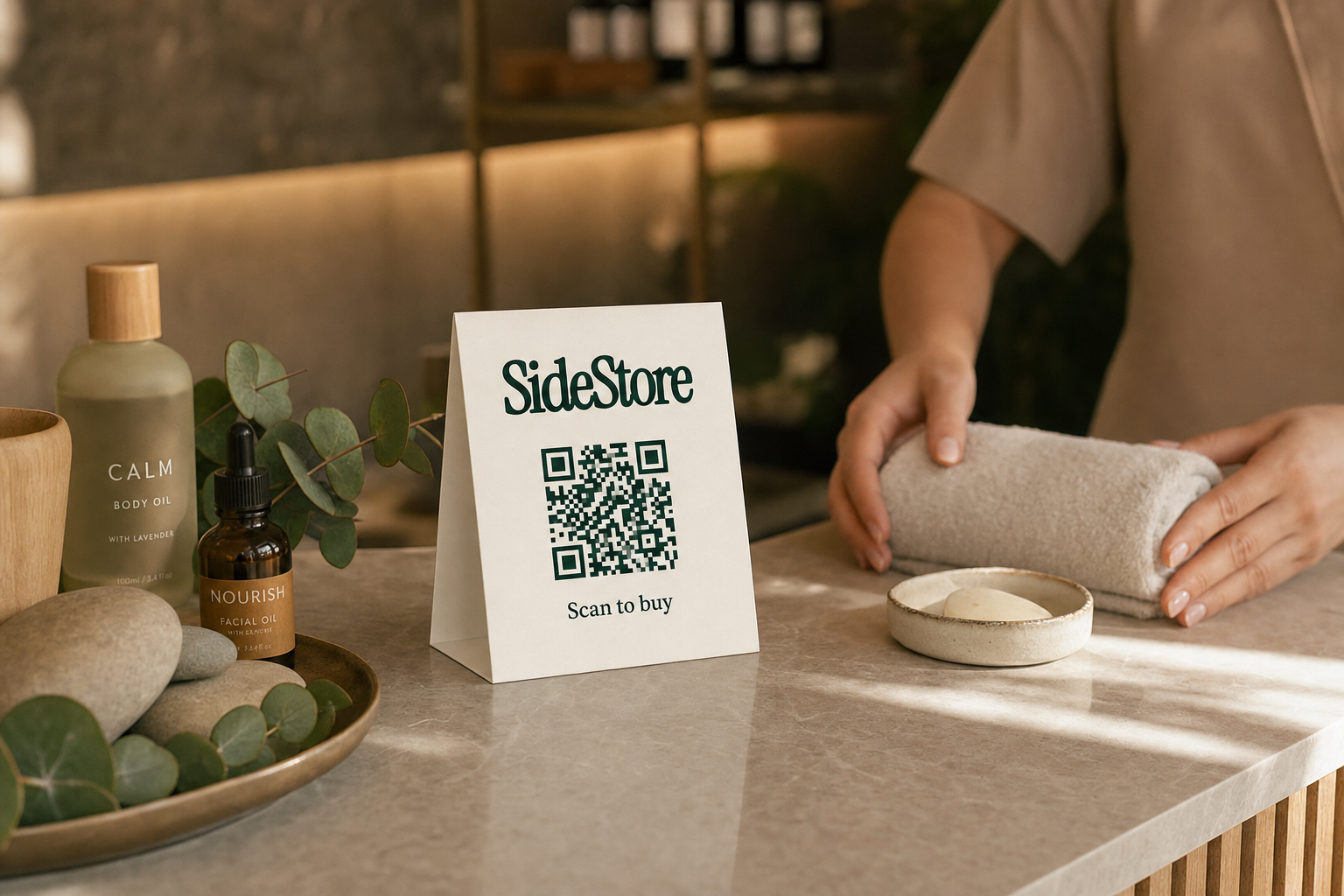
Salons work because clients arrive primed to spend on personal care and have time to consider a new product while they wait. A client sitting in a chair for forty minutes is a captive, receptive audience in a way that a supermarket shopper simply is not.
The trust dynamic is also different. Clients already trust the salon's aesthetic and, often, the stylist's recommendations. When your serum or facial oil sits beside the products a stylist already uses, it inherits that credibility. You are not a stranger on a shelf; you are a product the salon has chosen to carry.
From a logistics standpoint, salons are manageable. A single location has predictable foot traffic, a clear decision-maker (usually the owner), and a natural feedback loop: stylists notice what clients ask about and what stays on the shelf. That ground-level insight is genuinely valuable when you are refining your range.
There is also a compounding effect. One happy salon placement leads to referrals to neighbouring salons or to the owner mentioning your brand to their supplier network. Consignment is a low-risk entry point for both you and the salon, which makes that first "yes" easier to get than a wholesale commitment.
The placement model works equally well for makers working in adjacent categories. How the same placement model applies to handmade jewelry is worth reading if you make accessories alongside your skincare range.
How to Approach and Pitch a Salon Owner
The most effective approach is to show up with a clear offer, not a sales pitch. Salon owners are busy, protective of their space, and have probably been approached by wholesale reps before. Consignment is different, and making that difference plain is the whole game.
Follow this sequence:
1. Research before you reach out. Visit the salon as a client or study its social presence. Understand the aesthetic, the price point of existing retail, and the client demographic. A pitch that reflects knowledge of the salon lands differently from a cold email.
2. Request a short meeting, not a product drop-off. Ask for ten minutes in person, ideally not during peak hours. Explain that you make skincare products and want to explore a consignment arrangement, meaning no upfront cost to them. That phrase removes the usual objection immediately.
3. Bring a tight edit of your range. Three to five products maximum. Too many options create hesitation. Choose items with the clearest use case for a salon client: a post-treatment oil, a fragrance-free moisturiser, a lip treatment.
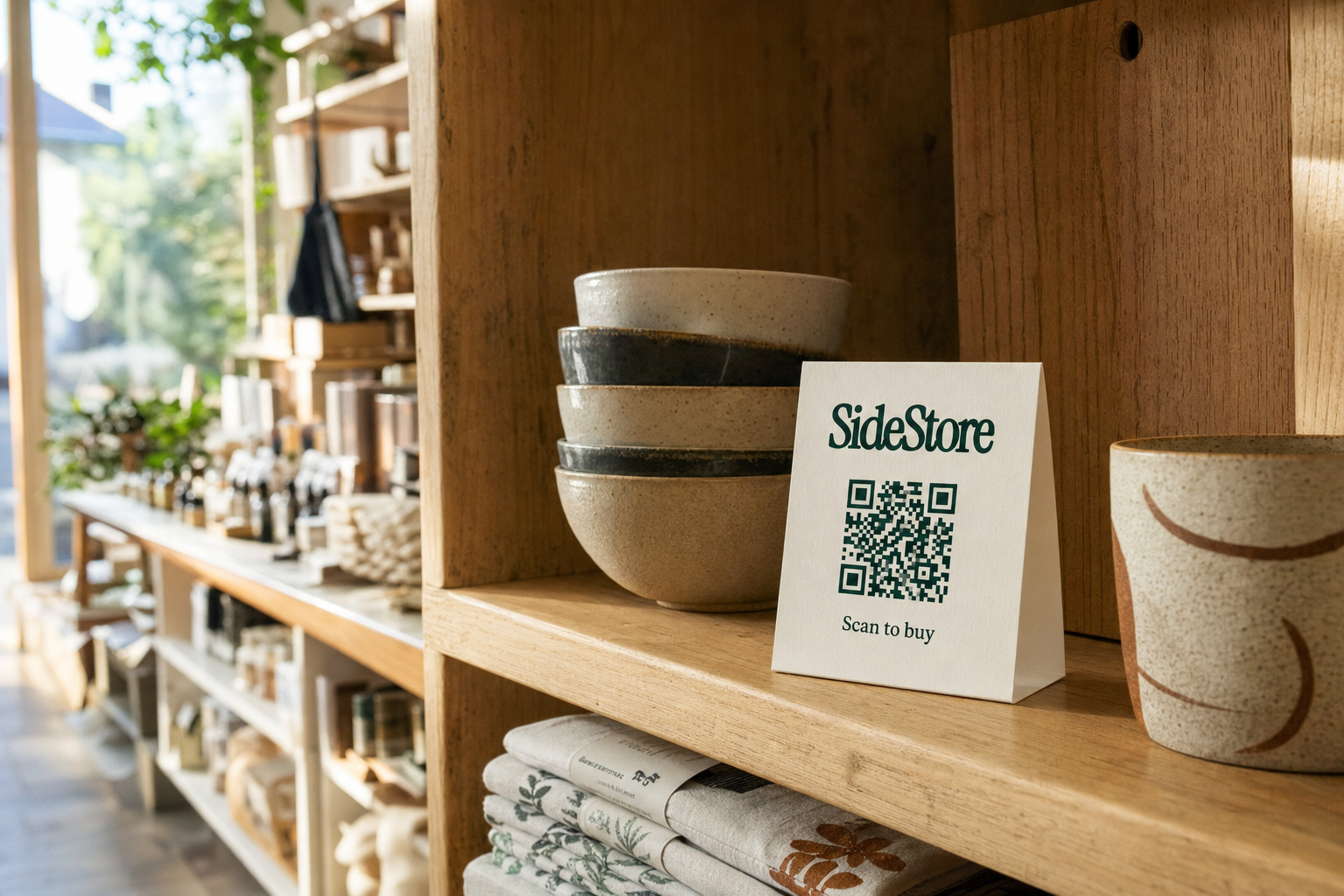
4. Leave a printed QR card. Print the SideStore QR code card and show the owner how the scan-to-pay checkout works. Be clear: the QR card is one function of the Retail Widget, the interface that manages the whole consignment placement, including stock tracking and split payouts. It gives the salon a frictionless way for clients to pay without training staff on new systems.
5. Name the split and the terms upfront. Owners respect directness. State what percentage you propose, how often payouts happen, and how long the initial trial period runs. One month is a reasonable starting point.
For broader context on pitching local shops for consignment placement, the same principles apply across retail formats.
Consignment Percentage: What Split Is Fair in a Salon Setting?
The average consignment percentage in a salon setting typically falls between 30 and 40 percent to the host, with 60 to 70 percent retained by the maker. That range is widely accepted in consignment practice across beauty and lifestyle retail. Some high-footfall urban salons may ask for 40 to 45 percent; smaller independent salons are often comfortable at 30 percent.
Your starting position should reflect your margin. Work backwards from your cost of goods before you agree to any split.
A concrete example:
- Retail price of your face oil: £32
- Consignment split: 70% maker / 30% salon
- Your payout per unit sold: £22.40
- Salon's share per unit: £9.60
- If 10 units sell in a month: you receive £224, the salon earns £96
At those numbers, the salon earns nearly £100 for doing nothing beyond providing the shelf space and the footfall. That is a genuine incentive, not a token gesture. And you keep the majority of the retail price without holding a lease or paying a wholesale discount.
The split you offer also signals how you value the relationship. Offering 25 percent to a host when typical consignment percentages run at 30 to 40 percent will read as undervaluing their contribution. Go in at the lower end of the typical range and leave room to negotiate upward slightly if the salon has unusually high traffic or a strong existing retail reputation.
For more detail on structuring a consignment split with any retail partner, the fundamentals apply across all product categories.
Consignment Split Models at a Glance
Different consignment splits suit different situations. The table below summarises the most common models so you can identify which fits your salon placement before the conversation begins.
| Model | Maker Share | Host Share | Best When | Typical Product |
|---|---|---|---|---|
| Standard consignment | 70% | 30% | Smaller salon, lower footfall, starter placement | Handmade skincare, candles, accessories |
| Mid-range split | 65% | 35% | Established independent salon with loyal client base | Skincare ranges, facial oils, serums |
| High-footfall split | 60% | 40% | High-traffic urban salon or spa with strong retail record | Premium skincare, curated beauty sets |
| Negotiated premium | 55% | 45% | Destination salon, strong editorial or press presence | Limited edition or luxury beauty products |
| Jewelry/accessories | 70% | 30% | Salon carrying lifestyle accessories alongside beauty | Handmade jewelry, hair accessories |
These figures represent common practice in consignment commerce, not fixed rules. Every placement is a negotiation. Use the table as a reference point when a salon owner pushes back on your proposed split, not as a ceiling. Your margin, your product category, and the specific salon's footfall all affect what is workable.
What Your Consignment Agreement Must Cover
A consignment agreement must cover five core clauses to protect both you and the salon owner. Without a written agreement, disputes about unsold stock, payment timing, or product damage have no clear resolution. A brief, plain-language document is enough.
1. Ownership of stock. State clearly that the products remain your property until they are sold. This matters if the salon closes or if stock goes missing.
2. Split percentage and payout schedule. Name the exact percentage and specify when payouts happen: monthly, on the first of each month, or triggered automatically through the Retail Widget. Ambiguity here causes most consignment disputes.
3. Inventory reporting. Agree how stock counts are reported and how often. Consignment inventory software that automates split tracking removes this burden; if you are using the Retail Widget, live stock tracking is built in.
4. Product care and placement. Specify where products must be stored and displayed, any temperature or light requirements for your formulations, and who is responsible for damaged or expired stock.
5. Term and exit clause. Set an initial trial period and a clear process for either party to end the arrangement, including how unsold stock is returned and within what timeframe.
Consult a local legal professional for country-specific requirements, particularly around product liability, cosmetics regulation, and commercial contract law. Requirements vary significantly by market.
Managing Your Salon Placements Without the Admin Overhead
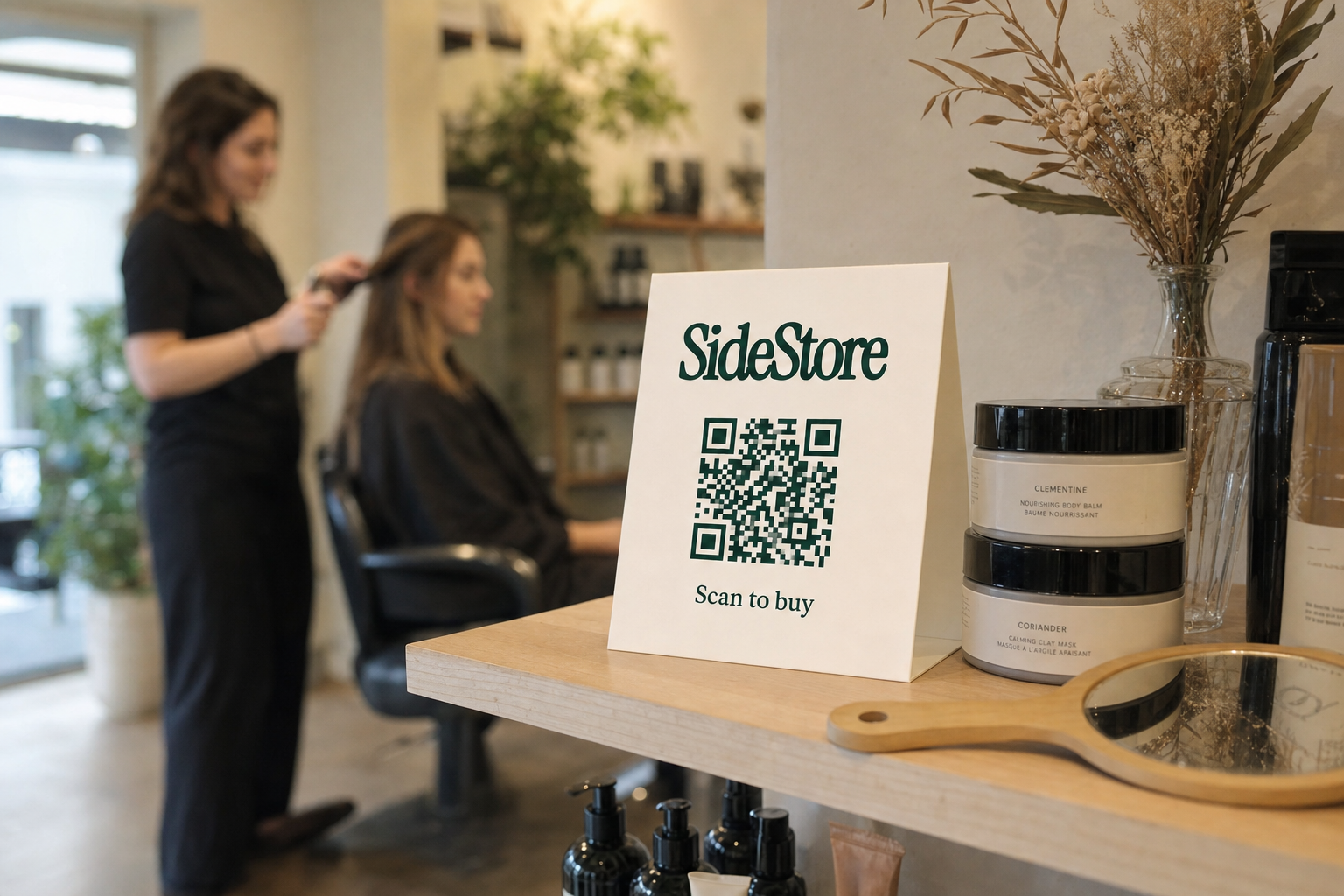
Managing more than one salon placement without drowning in admin requires a system, not a spreadsheet. Once you have two or three active placements, tracking stock across locations manually becomes a source of errors: you restock a salon that still has inventory, or you miss a payout because you cannot reconcile which sale came from which location.
The Retail Widget addresses this directly. Each placement gets its own live stock count, updated every time a client scans the QR code and completes a purchase. You see which salon sold what, when, and how much you are owed, from a single dashboard. Automatic split payouts mean the salon owner receives their share without you needing to calculate and transfer it manually each month.
The scan-to-pay QR checkout is one function of the Retail Widget. The Widget itself is the interface that manages your entire consignment placement: modelling the split, activating the placement, tracking inventory, attributing sales to each location, and settling payouts. The QR card is how clients pay in-salon without the owner needing a separate point-of-sale setup.
Placement attribution is the feature that makes scaling honest. When you run five salon placements, you need to know which location generates consistent sales and which is underperforming. That data informs your restocking decisions and, eventually, where you invest more product.
For a broader look at what to look for in consignment inventory software and how boutique inventory systems handle multi-location stock, both articles cover the operational mechanics in more detail.
How to Sell Jewelry Through Beauty Salons: The Same Model Applies
Selling jewelry through beauty salons works on exactly the same consignment placement model as skincare. Clients who visit a salon are already in a personal-care mindset, open to small purchases, and browsing in a low-pressure environment. A set of handmade earrings or a delicate hair comb sits naturally alongside skincare products, particularly in salons with a lifestyle or wellness aesthetic.
The pitch to a salon owner follows the same sequence: research the salon, propose a consignment split, bring a tight edited selection, and set up the Retail Widget to handle checkout and payouts. Jewelry tends to carry a higher retail price than individual skincare units, which can make the salon's share per item more compelling even at a standard 30 percent split.
The main practical difference is display. Jewelry needs a small stand or tray; skincare can sit flat on a shelf. Raise this in your initial conversation and offer to bring your own display unit. Removing friction for the salon owner makes a "yes" easier.
For detailed placement guidance specific to jewelry, how to sell handmade jewelry in boutiques covers the full process, from pitch to payout, and applies directly to salon placements.
From One Salon to a Distributed Consignment Network
Scaling from one salon placement to many is a matter of replicating a proven system, not reinventing it each time. Once your first placement is generating consistent sales and the split settlement is running smoothly, you have a template you can deploy to the next salon with minimal additional effort.
Follow this expansion sequence:
1. Validate the first placement over at least four weeks. Confirm that sell-through is steady, payouts are arriving correctly, and the salon owner is satisfied. A happy first host is your best reference for the next conversation.
2. Identify your next ten target salons. Use the same research criteria you applied to your first pitch: aesthetic fit, price-point alignment, client demographic. Build a shortlist before you start outreach, so you are working systematically rather than reactively.
3. Use placement attribution to prioritise restocking. SideStore's placement attribution feature shows you which locations sell fastest. That data tells you where to concentrate your product supply and which placements may need a different product edit.
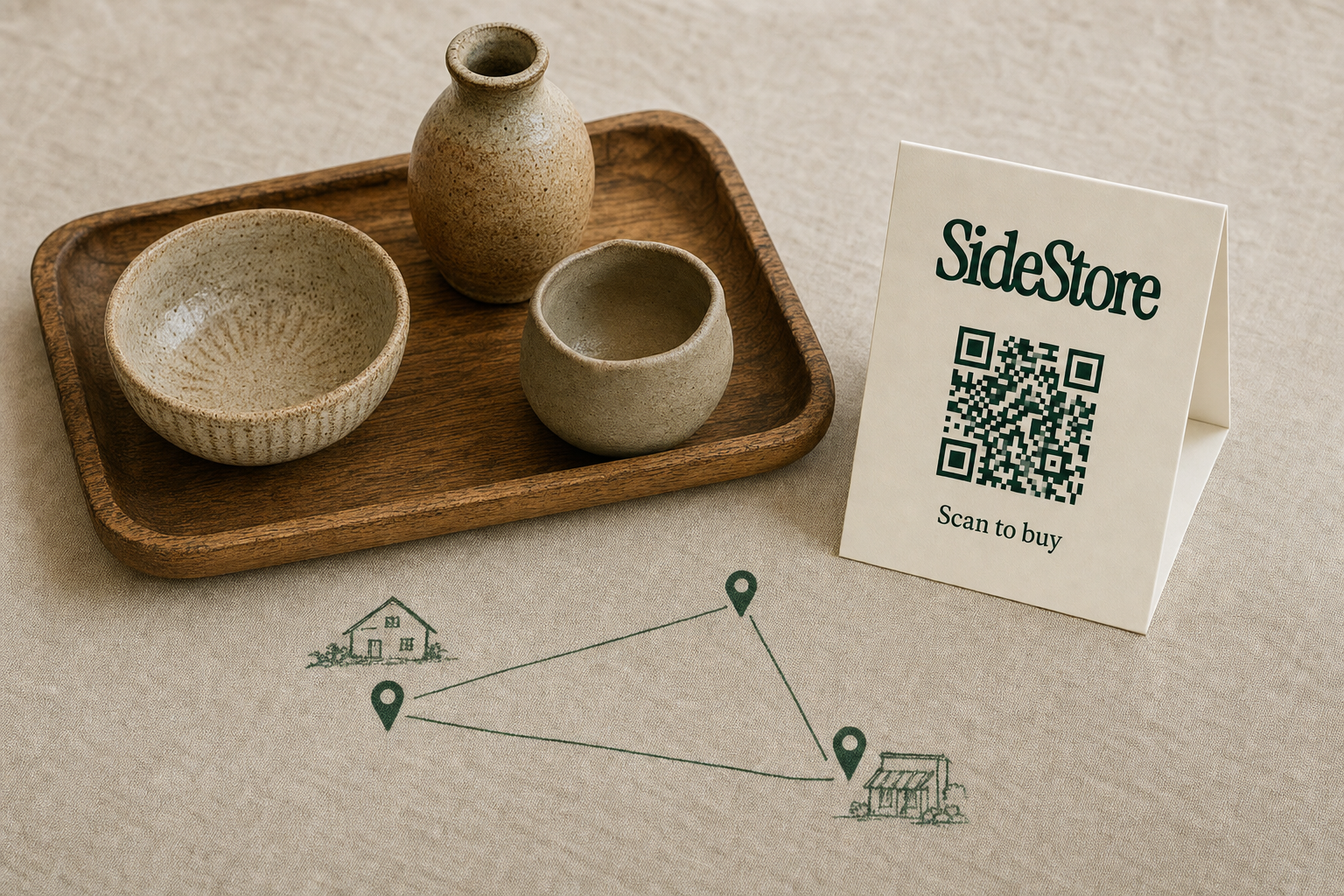
4. Treat each new placement as a node, not a one-off deal. A distributed consignment network is a structure you manage from one dashboard, not a collection of individual arrangements you track separately. The Retail Widget is built for this: every new salon placement you activate is visible alongside the others, with its own stock count and payout record.
Consignment placement costs a fraction of what pop-up retail requires in time, fees, and logistics. And the channel is not limited to salons: placing products in local shops beyond salons shows how the same model extends across other retail formats.
Frequently Asked Questions
What percentage do salons take on consignment products?
Salons commonly take between 30 and 40 percent of the retail price, retaining the rest for the maker. Smaller independent salons often accept 30 percent; high-footfall or destination salons may negotiate up to 40 to 45 percent. Your margin determines how much you can offer without eroding your income.
Do I need a licence to sell skincare products in a salon?
In most markets, handmade or manufactured cosmetics must meet specific safety and labelling requirements before they can be sold commercially, including through a salon. Requirements vary significantly by country and product category. Consult a regulatory specialist for your market before placing products on any shelf.
Can I sell handmade beauty products in a salon on consignment?
Yes. Handmade beauty products are well suited to salon consignment, provided they meet the cosmetics regulations in your market. The consignment model is particularly practical for small-batch makers because it requires no upfront purchase from the salon and lets you test which products sell before committing to larger production runs.
How do I get paid from a consignment placement in a salon?
Payment depends on the agreement and the tools you use. With the Retail Widget, automatic split payouts settle your share directly when a sale occurs, without requiring manual reconciliation. Without software, you and the salon owner agree on a payout schedule, typically monthly, based on a sales report. The full guide to selling through someone else's store covers payment mechanics in detail.
How many products should I start with in a salon consignment placement?
Start with three to five products. A tight edit is easier for the salon to display, easier for clients to choose from, and easier for you to restock and track. Once sell-through is consistent, you can expand the range based on what the data shows is moving.
Start with One Salon. Build from There.
Pick one salon that fits your aesthetic, prepare a concise pitch, and propose a consignment arrangement that costs the owner nothing upfront. Set up the Retail Widget to handle stock tracking and split payouts from day one. Prove the model works in one location, then replicate it. For placement advice for jewelry makers in boutiques and salons, the same principles apply across product types.
Build a consignment network without opening a store of your own.