How to Sell Through Someone Else's Store: A Maker's Guide to Retail Partnerships
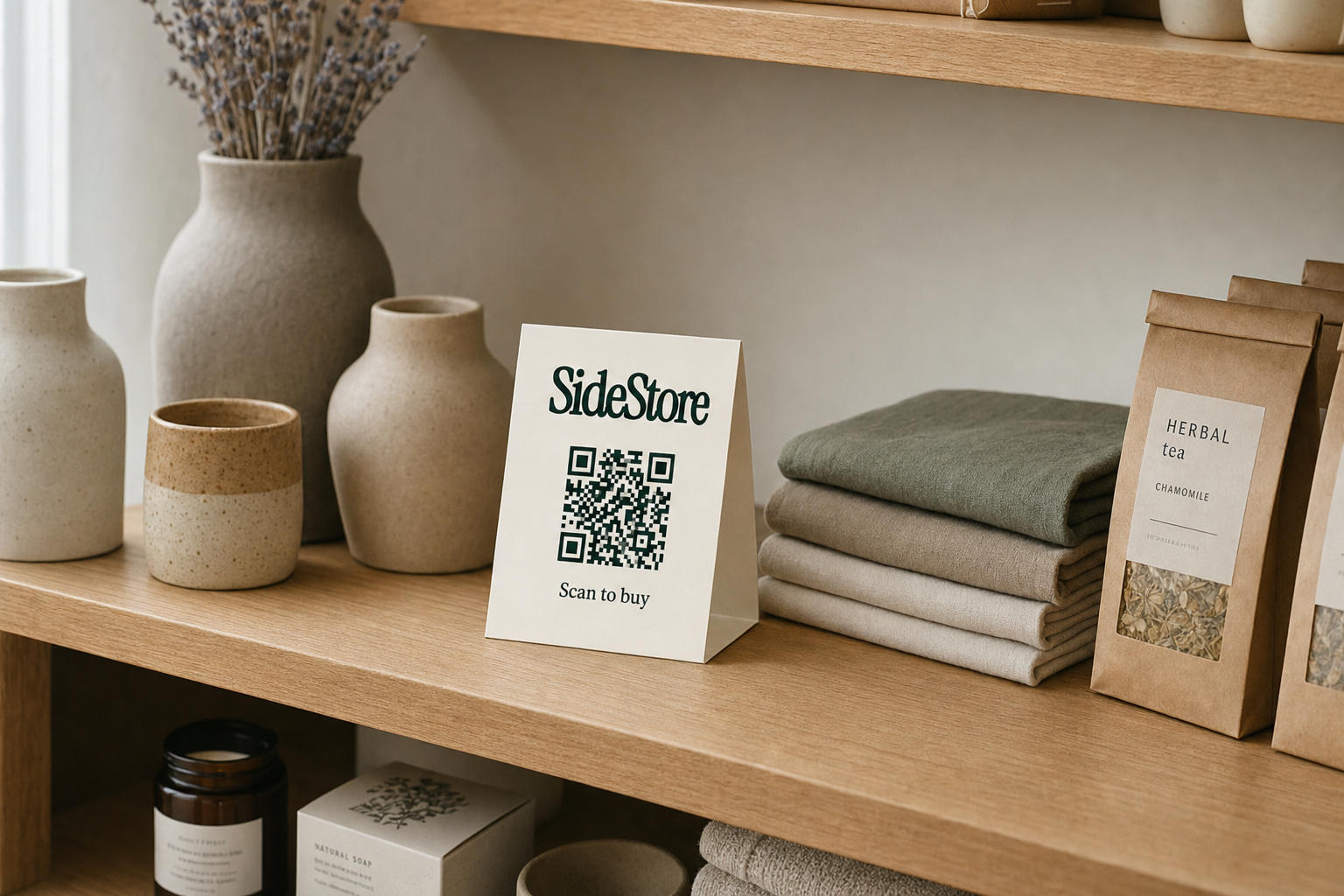
Selling through someone else's store means placing your products inside an existing retail space, a boutique, cafe, hotel, or gallery, and earning money when those products sell. No lease. No storefront of your own. If you want to know how to make this work, the answer is straightforward: find a retailer whose customers want what you make, agree on how you both get paid, write it down, and manage the placement properly once you go live.
You do not need a track record, a warehouse, or a sales team to start. What you need is a product that belongs in a specific shop, a credible first conversation, and clarity on the commercial model. Consignment, where you keep ownership of your stock and get paid only when it sells, is often the lowest-friction entry point because it removes the retailer's financial risk entirely. Learn how retail space sharing works before your first approach, and you will walk in better prepared than most makers do.
Why Sell Through Someone Else's Store at All
The honest case for retail partnerships is straightforward: you reach customers you cannot reach online, in spaces they already trust, without the overhead of a lease.
Independent makers face a real distribution problem. Sell direct, your website, markets, pop-ups, and you keep more margin but reach fewer people. Sell through retailers and you hit customers who browse in person, who browse with intent, and who often buy on the spot. That impulse discovery is hard to replicate online, especially for tactile products: ceramics, jewellery, skincare, food.
But the real costs matter equally. You will share margin with the host, either by selling at a wholesale discount or by splitting consignment proceeds. Managing stock across locations takes time and attention. A placement can go cold fast; products sit unseen for weeks before you notice. Relationships need ongoing care, not just a signed agreement.
The benefit calculation depends on the venue. A boutique with a curated buying audience and a system that tracks sales accurately is a different proposition from a busy counter with no tracking. Similarly, understanding how coffee shops earn from floor space helps you see why a cafe owner might welcome consignment: it adds income without the purchasing commitment that wholesale demands.
For makers who are not yet established, consignment partnerships make strong sense. You test markets, gather real sell-through data, and build a retail presence without committing to a lease or a production run. It is not passive income and it is not instant scale, but it is a realistic, low-cost path to physical retail presence.
Consignment vs Wholesale: Which Model Fits You
The choice between consignment and wholesale comes down to one question: who holds the financial risk if stock does not sell?
In consignment, you do. In wholesale, the retailer does, but they pay you upfront at a lower price to compensate for that risk.
Both models have legitimate uses. Wholesale suits makers who produce in volume, can price confidently, and accept a lower per-unit return in exchange for certainty and simplicity. Consignment suits makers testing a new market, building retail relationships, or working with products that need longer to sell.
Before you choose, understand the breakdown. Typical consignment splits run somewhere in the range of 60/40 to 70/30 in the maker's favour, though these vary by category, venue type, and how much the host contributes to display and promotion. They are common ranges, not industry standards, and any specific split is negotiable. Understanding how to price products for boutique retail before you sit down matters more than knowing the average.
| Dimension | Consignment | Wholesale |
|---|---|---|
| Upfront payment to maker | None, paid when stock sells | Yes, retailer pays on delivery or invoice |
| Stock ownership | You retain it until sale | Transfers to retailer on purchase |
| Unsold-stock risk | You bear it | Retailer bears it |
| Typical margin or split | Common range: 60/40 to 70/30 maker/host | Retailer typically buys at 40, 55% of retail price |
| Admin overhead | Higher, tracking, reconciliation, restocking | Lower after initial order; reorders are retailer-led |
| Best fit for | New markets, test placements, tactile or considered products | Proven sellers, volume production, established retail relationships |
One dimension that table cannot fully capture is operational load. Traditional consignment came with significant paperwork: handwritten stock sheets, monthly reconciliation calls, and disputes over what sold and when. Modern platforms like SideStore's Retail Widget handle live stock tracking and automatic split payouts, which removes much of that burden. If you plan to run stock across multiple boutique locations, a digital consignment tool is not a luxury, it is what makes the model workable at any scale beyond a single placement.
Choose wholesale when you want simplicity and certainty. Choose consignment when you want access without upfront financial exposure, and when you have a way to manage the ongoing tracking honestly.
How to Find the Right Store for Your Products
The right retail partner is not the most prestigious shop in your city. It is the shop whose existing customers are most likely to buy what you make.
Start with customer fit, not prestige. A placement in a boutique whose buyers want handmade ceramics will outperform a placement in a design store that mainly sells lifestyle prints, even if the design store has more foot traffic. Alignment between your product category and the host's existing curation is the single most reliable predictor of sell-through.
Use this filter framework before you approach any shop:
- Category match. Does the shop already sell products in your category or closely adjacent ones? If yes, buyers are primed. If not, you will be educating the customer and the host simultaneously.
- Price point alignment. Do your retail prices sit comfortably within the shop's existing range? A wide gap creates friction at the point of sale.
- Display space. Does the shop have a surface, shelf, or fixture where your product would sit naturally? Visit in person before you pitch.
- Host openness to consignment. Some retailers only stock wholesale. Knowing this before your first email saves both parties time.
- Foot traffic pattern. High footfall does not always mean high conversion. A slower boutique with a loyal, returning customer base can outperform a busy shop whose visitors browse without buying.
Non-traditional host venues are worth serious consideration. Why coffee shops make natural consignment hosts matters: a cafe has daily returning customers, a transaction environment already in place, and idle counter or shelf space that earns nothing by default. The economics of a coffee shop floor make it clear why a host would welcome a no-risk placement that generates a share of each sale.
Once you have a shortlist of three to five venues that pass this filter, you are ready to make contact. Read how retail space sharing works in practice to understand the host's perspective before your first conversation.
How to Approach a Local Shop: What to Say and When
The most effective approach to a local shop is brief, specific, and led by what is in it for the host. A cold approach that opens with your product's story before establishing the commercial case rarely lands well.
Follow this sequence:
- Visit first, pitch second. Buy something small, observe the layout, note what they already stock. This gives you specific detail to reference in your message and signals that you take the shop seriously.
- Send a short, direct email. Do not pitch in person on your first visit unless the owner invites it. Email gives them time to consider without pressure.
- Follow up once, then respect the answer. If you hear nothing after seven to ten days, one brief follow-up is appropriate. Beyond that, move on.
- Prepare a simple one-page overview. Product photos, retail price, your proposed split, and a line about your return or pull-back policy if stock does not sell.
- Ask for a trial, not a commitment. Proposing a four-to-six week trial placement removes the perceived risk for the host and often gets a faster yes than asking for an ongoing arrangement.
Email framework:
- Subject line: Your product type + their shop name (specific, not generic)
- Opening sentence: One line on why their shop specifically
- Lines two and three: What the product is, who buys it, what it costs the customer
- Line four: Your proposed model (consignment, proposed split, trial period)
- Closing line: A single, low-friction ask ("Would a short call or a visit work for you this week?")
Keep the whole email under 150 words. Owners are busy.
Three common objections and how to handle them:
- "We only do wholesale." Accept it gracefully and ask if they would reconsider for a short trial at no financial risk. If the answer is still no, this shop requires a different approach, and that is fine.
- "We don't have the space right now." Ask what the right time would be, leave your one-pager, and follow up in six to eight weeks. This is often a soft no, but occasionally it is genuinely true.
- "We already have a supplier for that category." Ask whether they are open to complementary products that sit alongside what they carry. If not, thank them and move on. Knowing what a boutique owner looks for before stocking new products helps you pre-empt this objection in your opening email.
What to Include in a Retail Partnership Agreement
Every retail placement, even a short trial, should be documented in writing. A simple written agreement protects both parties and prevents the ambiguity that most consignment disputes come from.
You do not need a lawyer to draft a basic consignment agreement, though legal advice is worth seeking if your product category involves liability (food, skincare, or anything with a safety dimension). What you need is a document both parties have signed and can refer back to.
Include the following:
- Product description and quantity. Name each product by SKU or description, specify the number of units placed, and note the date of placement.
- Retail price. State the price at which the product will be sold to the end customer. Specify whether the host may discount without your approval.
- Commission split. State the exact percentage each party receives per sale, and whether that is calculated on the gross sale price or net of payment processing fees.
- Payment schedule. Specify how often the host will settle with you: weekly, fortnightly, or monthly, and the method (bank transfer, platform payout, etc.).
- Stock reconciliation. Agree how stock will be counted and verified, and how frequently. This is the clause that prevents the most common consignment disputes. Read about tracking consignment stock across locations to understand what good tracking looks like.
- Unsold stock and pull-back rights. State your right to retrieve unsold stock after a defined period, and give reasonable notice terms for both parties to exit the arrangement.
- Damage and loss policy. Agree who bears responsibility for stock that is damaged or goes missing while in the host's space.
- Exclusivity (or lack of it). Clarify whether the host has exclusive rights to sell your product in their area, or whether you are free to place with other venues simultaneously.
- Trial or renewal terms. If this is a trial placement, state the end date and what happens at review.
A one-page document covering these nine points is enough for most first placements.
Managing Your Placement Once You Are Live
Getting into a shop is not the finish line. The placement succeeds or fails based on what you do after you go live.
Your four active responsibilities once a placement is running:
- Restock promptly. A gap on the shelf earns nothing and signals to the host that you are unreliable. Set a restocking threshold (for example, when stock drops below three units) and act on it without waiting to be chased.
- Review sales data regularly. Whether the host sends you a weekly report or you track it through a platform, check your sell-through numbers at a consistent interval. Slow movement in the first four weeks is a signal to act, not to wait.
- Maintain the relationship. Visit the space periodically. Ask how the product is displaying, whether customers ask questions, and whether any adjustments to placement or signage would help. Hosts remember the makers who show interest.
- Know when to exit. If sell-through is consistently low after a reasonable trial period, pull back cleanly. An honest exit preserves the relationship for a future product or a better season.
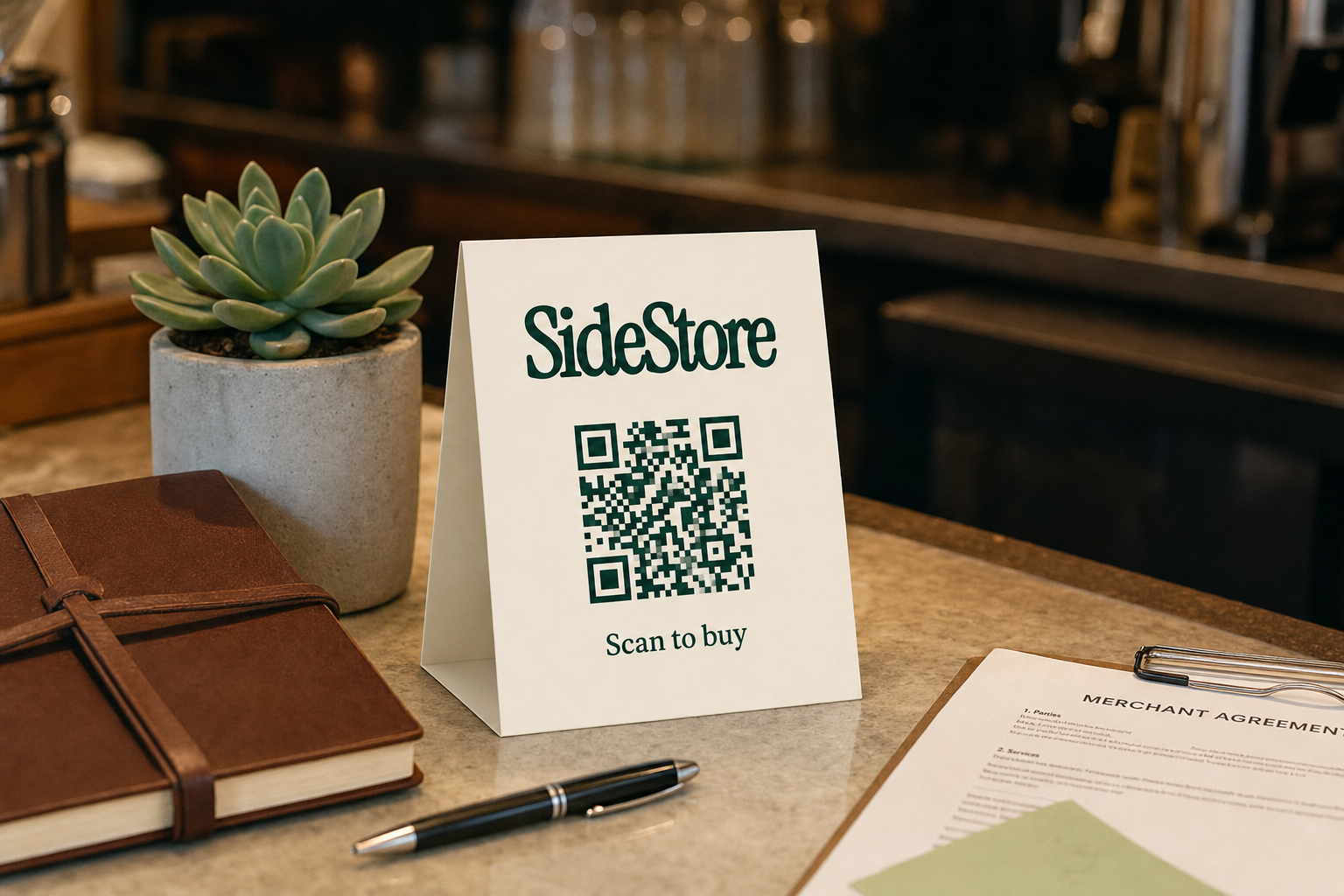
Managing this across more than one venue adds complexity quickly. Reading about managing inventory across multiple boutique locations gives you a practical framework before complexity becomes a problem. SideStore's Retail Widget addresses this directly: it tracks live stock levels across each placement, records each sale and the location it came from, and handles automatic split payouts to the host without you needing to reconcile spreadsheets manually. If you are running more than two or three placements simultaneously, a system that tracks placements live is not optional, it is what keeps the model honest.
Frequently Asked Questions
Makers new to retail partnerships share a predictable set of concerns. The five questions below cover the ones that come up most often, with honest answers that reflect the variability you should expect rather than tidy guarantees.
How do I get my products into stores with no track record? Start with consignment, which removes the financial risk for the retailer. Bring strong product photography, a clear retail price, and a proposed split in writing. A short trial offer (four to six weeks) is often more persuasive than asking for an ongoing arrangement when you cannot yet point to sales data.
What is a fair consignment split? A common range is 60/40 to 70/30 in the maker's favour, but the right split depends on your product's margin, the host's contribution to display and promotion, and what the local market will bear. Negotiate from your own margin needs first, not from what you assume the average is.
Do I need a contract to sell on consignment? Yes. Even a one-page document signed by both parties is far better than a verbal agreement. Without it, stock reconciliation, payment terms, and pull-back rights are all subject to memory and goodwill, and both run out at the worst moments.
Can I sell in multiple stores at the same time? Yes, and many makers build their retail presence this way. The key is having a tracking system that shows you stock levels and sales by location. Without that, managing more than two or three placements becomes guesswork. Non-traditional retail hosts, including spaces described in how non-traditional retail spaces approach partnerships, are often more flexible than conventional boutiques about simultaneous placements.
What happens to my products if a store closes? Because you retain ownership of unsold stock under consignment, you have the right to retrieve it. In practice, an unexpected closure can mean chasing product from a chaotic situation. A good agreement includes a clause specifying retrieval rights and a timeline, which gives you a clearer footing if you ever need to act on it.
Your First Placement: What to Do This Week
Starting your first retail placement this week is achievable with five concrete steps, none of which require a large time commitment or any upfront spend.
Here is what to do:
- Identify three potential hosts. Use the filter framework from the finding-the-right-store section: category match, price alignment, display space, and openness to consignment. Start with how to find retail space to place your products if you need a structured approach.
- Visit each venue in person. Observe the layout, buy something small, and make a mental note of where your product would sit. This visit informs your pitch.
- Write a one-page product overview. Include product photos, retail price, your proposed consignment split, and your pull-back policy. Keep it to one page.
- Send your first approach email. Use the framework from the approach section: specific, brief, and led by the host's benefit. Target your first email this week, not next month.
- Set up your tracking before your product goes live. Agree on how stock will be counted and reconciled from day one. Track your consignment stock live using SideStore's Retail Widget, which handles live inventory, sale recording by placement, and automatic split payouts without manual spreadsheets.
The primary principle in retail partnerships is fit, and fit is discovered through doing. Put your product in front of one real host and the rest of the learning follows.