How to Start a Non-Profit Coffee Shop
Learn how to start a non-profit coffee shop: legal structure, 501(c)(3) filing, board setup, funding models, and how to activate retail shelf space without buying inventory.
A non-profit coffee shop is a café structured as a 501(c)(3) tax-exempt organization, where net revenue funds a charitable mission rather than distributing profit to owners or shareholders.
To start a non-profit coffee shop, you need to complete five steps: define your mission and incorporate as a non-profit entity, build a board of directors with governing bylaws, construct a multi-stream funding model, set up café operations that cover their own costs, and activate your retail space as a low-risk earned income layer. The process typically takes 9 to 18 months from first filing to opening day, with the IRS determination letter being the main variable.
Understanding your coffee shop profit margins before you open is not optional, non-profit status does not change your cost structure, and a café that cannot cover rent and labour cannot fund a mission. The steps below are sequential. Follow them in order.
Non-Profit Coffee Shop vs Social Enterprise: Know the Difference Before You File
Which structure is right for you depends on whether you need grant funding and donor accountability. A non-profit coffee shop can accept tax-deductible donations and apply for most charitable grants; a social enterprise café cannot. Here is how they differ across the attributes that matter most at filing time.
| Attribute | Non-Profit Coffee Shop | Social Enterprise Café |
|---|---|---|
| Legal structure | 501(c)(3) public charity (US) | LLC, B-Corp, or CIC (UK) |
| Tax-exempt status | Yes, federal and often state | No, standard business tax applies |
| Profit distribution | Prohibited, surplus must serve the mission | Permitted within structure rules |
| Funding sources | Grants, donations, earned income | Equity, loans, earned income |
| Governance requirements | Board of directors, bylaws, Form 990 | Depends on entity type |
| Accountability | IRS reporting, public disclosure | Investors or certification body |
The non-profit route gives you access to foundation grants and individual donations that are tax-deductible for the donor. That is a meaningful funding advantage in the early years before coffee sales reach scale. The trade-off is ongoing compliance: annual Form 990 filings, board meeting minutes, and a public support test that must be met each year.
A social enterprise café operates more like a standard business. You can take a salary structured like any other founder, distribute surplus to shareholders if your entity allows it, and pivot your model without board approval. You lose grant eligibility, but you gain operational flexibility.
Most mission-led cafés that need community anchor funding choose the non-profit structure. If your model is primarily commercial with a social layer, a B-Corp or benefit LLC may serve you better. Check your coffee shop profit and loss statement projections against both models before you file.
Step 1: Define Your Mission and Choose a Legal Structure
Before you brew a single cup, you need a one-sentence mission and a legal entity. These two decisions determine your funding access and your compliance obligations from day one, and changing either after filing is costly and slow.
Write a one-sentence mission statement. It must name the population you serve, the problem you address, and the mechanism (the café). Example form: "We operate a community coffee shop to provide employment training for adults with barriers to work." Vague missions invite IRS scrutiny and fail grant applications.
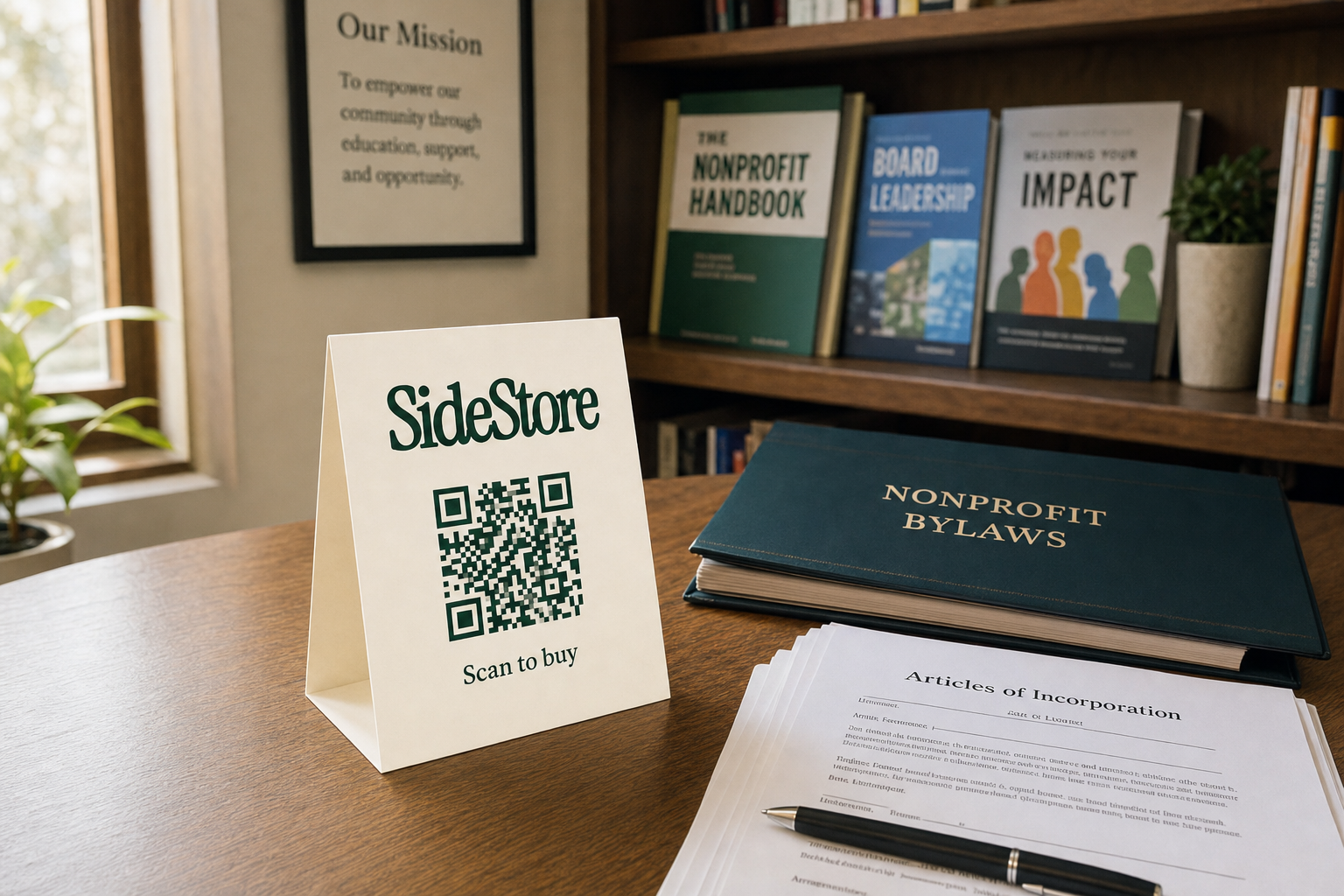
Incorporate at the state level. File Articles of Incorporation with your state's Secretary of State office as a non-profit corporation. Filing fees vary by state, typically in the range of $25 to $100. You need this entity before you can apply for federal tax-exempt status.
Obtain an EIN. Apply for an Employer Identification Number from the IRS, this is free and can be done online in minutes. You cannot file for 501(c)(3) status without it.
File for 501(c)(3) status with the IRS. You have two options:
- Form 1023-EZ: A streamlined online application available to organizations expecting less than $50,000 in annual gross receipts in their first three years. The IRS processes these faster, often within a few weeks to a few months, though timelines vary and the IRS does not guarantee a processing window.
- Form 1023: The full application, required for larger or more complex organizations. IRS-published processing times have historically run three to six months or longer; check the IRS website for current estimates at the time you file.
Apply for state and local tax exemptions. Federal 501(c)(3) status does not automatically exempt you from state sales tax or property tax. File separately with your state revenue agency once you have your IRS determination letter.
Step 2: Build a Board of Directors and Governance Framework
A board of directors is not optional. It is a legal requirement for non-profit status and a key credibility signal to grant funders. Without a functioning board and documented bylaws, your 501(c)(3) application will not succeed.
Most states require a minimum of three directors for a non-profit corporation. IRS Form 1023 asks you to list all directors by name and confirm that no more than 49 percent of the board consists of "interested persons" (staff, relatives of staff, or anyone who receives compensation from the organization). In practice, a strong founding board has five to seven members with a mix of skills: legal, financial, community relationships, and operational.
What your bylaws must cover:
- Officer roles and election procedures
- Meeting frequency and quorum requirements
- Conflict of interest policy
- Amendment procedures
For bylaw templates and governance guidance, SCORE (score.org) offers free mentoring and document templates, and the National Council of Nonprofits publishes governance checklists and sample policies. Both are free to access and widely used by new non-profit founders.
Recruit board members before you file Form 1023, not after. The IRS will ask who they are, what they do professionally, and whether any of them have a financial relationship with the organization. A board assembled on paper the day before filing reads as exactly that. Recruit people who will actually show up to quarterly meetings, review financial statements, and sign off on annual filings.
Step 3: Build a Funding Model That Survives on More Than Coffee Sales
Coffee sales alone rarely sustain a non-profit café. You need at least two or three revenue streams operating from day one, because your mission spending adds a cost layer that a standard commercial café does not carry.
Here are the four revenue streams worth building into your model from the start:
Earned income from café sales. Coffee, food, and beverages are your base. They should cover COGS and the majority of labour. Do not build a model that requires grants to pay the barista.
Individual donations and membership programs. A "community membership" or monthly giving programme converts regular customers into donors. These contributions are tax-deductible for the donor, which is one of the practical advantages of your 501(c)(3) status.
Grants. Foundation grants and government community grants are available to 501(c)(3) organizations that align with funders' priorities (workforce development, food access, youth employment, and so on). Grant revenue is valuable but unreliable year-to-year, budget it as supplemental, not foundational.
Consignment retail as an earned income layer. Your café's shelf space is a low-risk revenue stream waiting to be activated. By hosting independent makers' products on consignment as an earned income layer, you earn a percentage of each sale without purchasing any inventory. There is no stock risk and no upfront cost. For a more detailed look at how coffee shop retail can generate supplemental income, and to benchmark your revenue expectations against average coffee shop revenue, both are worth reading before you model your financials.
To illustrate the model: a café generating $12,000 per month in coffee sales, $1,500 in donations, $800 in grant disbursements, and $400 in consignment retail commissions has four income lines. That is an illustrative example, not a guarantee, your numbers will depend on location, foot traffic, and execution.
From Idea to Open: A Realistic Milestone Timeline
Opening a non-profit coffee shop typically takes 9 to 18 months from concept to first customer. The IRS determination letter is the single biggest variable. Here is the phase-by-phase sequence.
| Phase | Action | Realistic Timeline | Who Owns It | Success Metric |
|---|---|---|---|---|
| 1. Foundation | Write mission, recruit board, draft bylaws | Months 1-2 | Founder + board | Bylaws signed, board minutes recorded |
| 2. Legal filing | State incorporation + IRS Form 1023 or 1023-EZ | Months 2-4 | Founder + attorney | EIN issued, 1023 submitted |
| 3. IRS determination | Waiting period for tax-exempt status | Months 3-10 | IRS | Determination letter received |
| 4. Fundraising | Grants, donations, lease deposit | Months 4-10 | Board + founder | Operating capital secured |
| 5. Build-out | Site selection, fit-out, equipment | Months 8-14 | Founder + contractors | Health permit, lease signed |
| 6. Soft launch | Staff hired, systems live, consignment placed | Month 14-18 | Founder + staff | First paying customer |
Note on the IRS determination bottleneck: Form 1023-EZ applications have historically processed faster than full Form 1023 applications, but neither comes with a guaranteed turnaround. The IRS publishes current processing times on its website. Budget for up to 6 months on a 1023-EZ and up to 12 months or more on the full Form 1023. You can operate before the determination letter arrives, but you cannot accept tax-deductible donations or apply for most grants until it does.
Step 4: Run a Café That Actually Covers Its Costs
Non-profit status does not reduce your café's cost structure. Rent, labour, and cost of goods sold are identical whether you filed as a 501(c)(3) or an LLC. The compliance layer adds work; it does not add subsidy.
The break-even formula every café operator should know is straightforward:
Monthly fixed costs ÷ average transaction value = minimum monthly transactions to break even
If your monthly fixed costs are $8,000 (rent, utilities, insurance, base staffing) and your average transaction is $6.50, you need at least 1,231 transactions per month before you cover fixed costs, and that is before variable costs like coffee, milk, and cups.
Gross margins on espresso drinks are generally cited in the 60-70% range in industry discussions, meaning a $5 flat white may cost around $1.50-$2.00 to produce. Net margins for coffee shops are a different story. Published industry benchmarks suggest net margins typically land between 2.5% and 6.5% for well-run independent cafés, though individual results vary considerably by location, lease terms, and staffing model. Treat these as directional ranges, not targets.
For a non-profit, net surplus above operating costs flows to your mission, not to owners. That is the point. But a café running at a loss cannot fund anything. Study coffee shop profit margins in detail, model how much profit a coffee shop makes at your expected volume, and consider adding a coffee retail shop layer and consignment placements to diversify revenue before you sign a lease.
Step 5: Activate Your Retail Space Without Buying Inventory
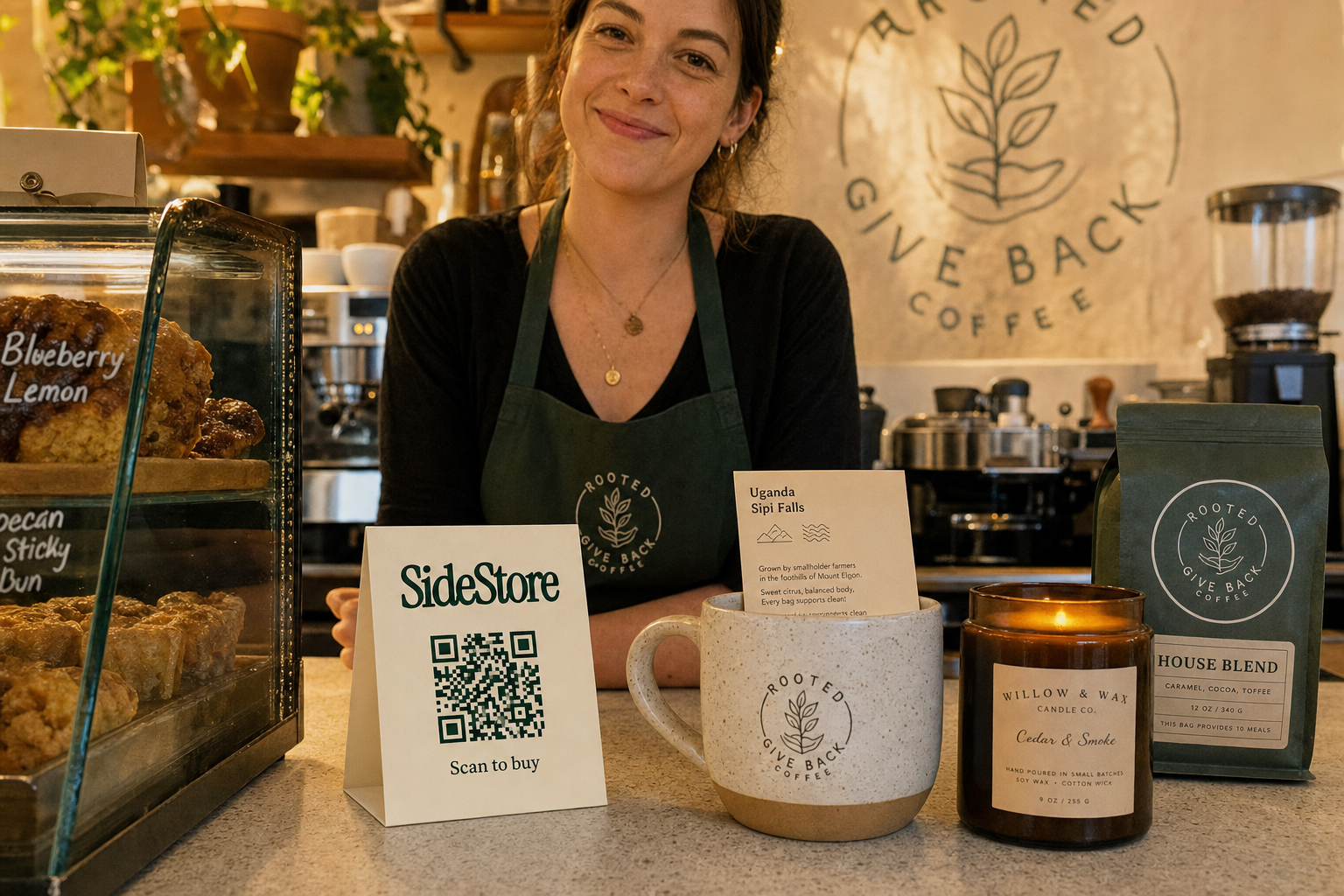
The shelf space your café already has is an untapped earned income source. Consignment lets you fill it without buying a single unit of stock, which matters particularly for a non-profit that cannot afford inventory write-offs.
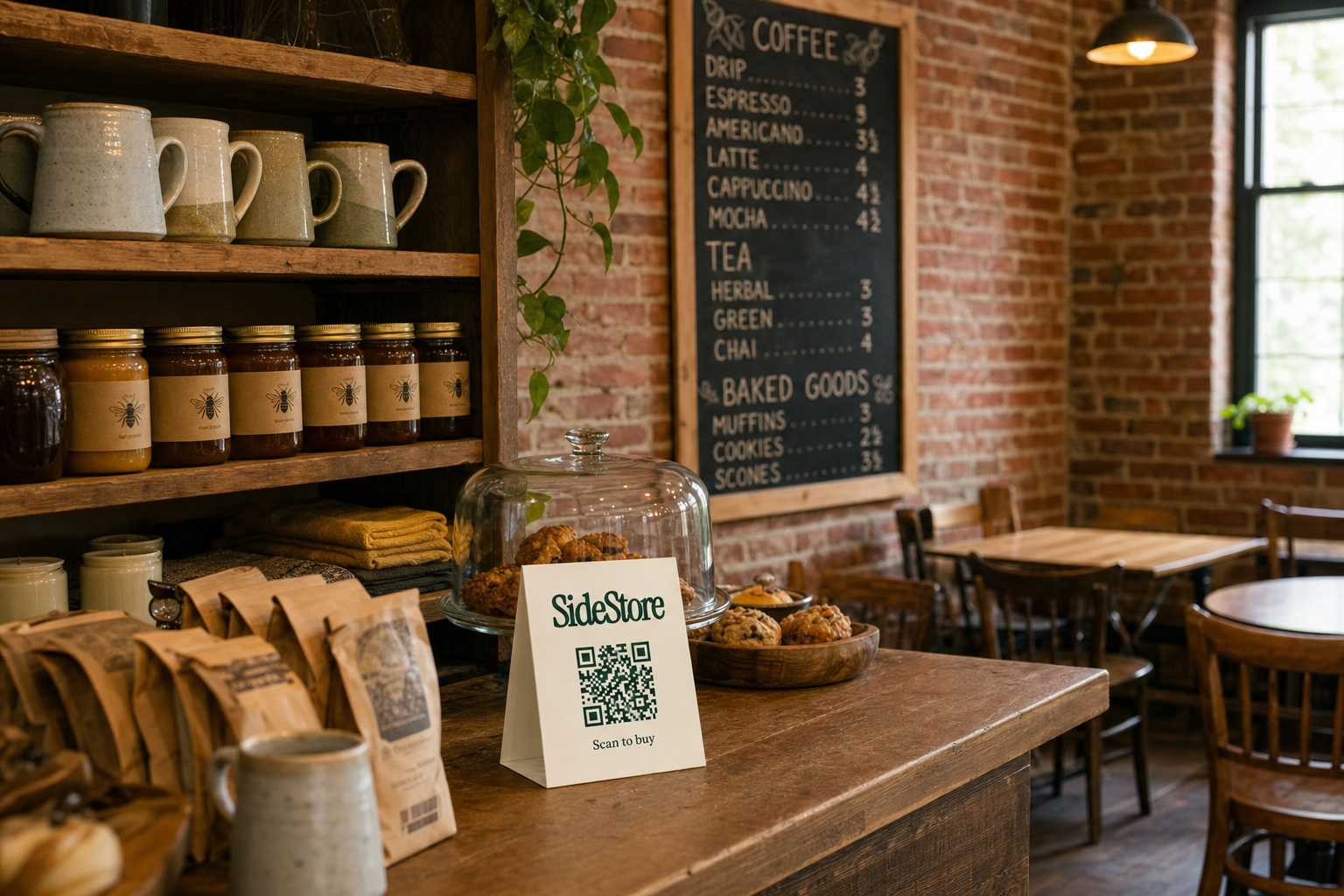
With consignment, independent makers place their products in your café, candles, ceramics, locally roasted coffee bags, printed goods, and you earn a split of each sale. You carry no inventory risk. If a product does not sell, the maker retrieves it. Your financial exposure is zero.
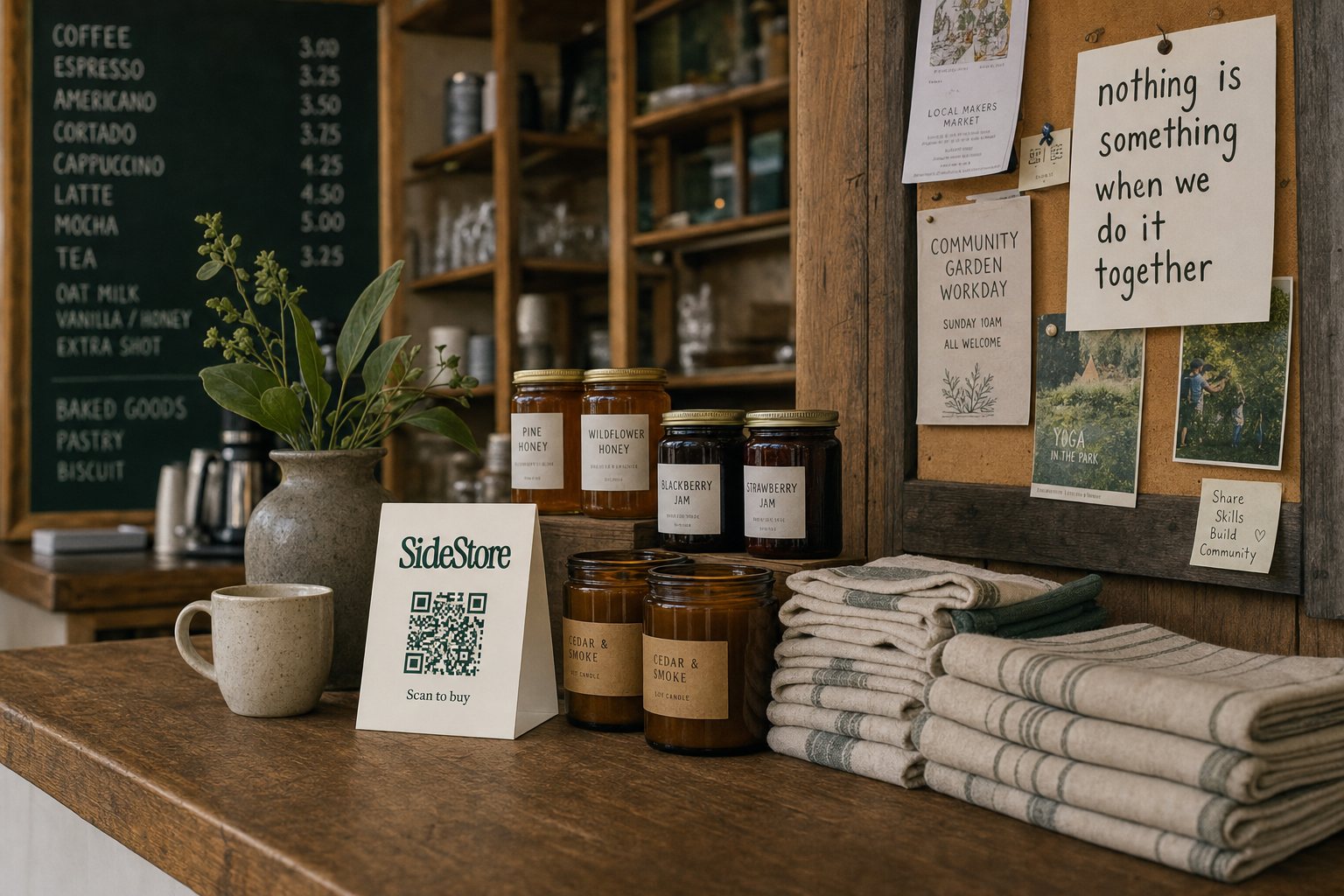
SideStore's Retail Widget handles the operational side. It gives each placement scan-to-pay checkout via a printable QR card, live stock tracking so you always know what is on your shelf, placement attribution so you can see which products are earning their space, and automatic split payouts that settle the maker's share and your host commission without manual calculation. The QR checkout is one function of the Retail Widget. The Widget manages the full placement lifecycle: from setting up the consignment terms to tracking stock to settling payments.
For a practical introduction to sharing retail space with independent makers, and a detailed look at selling through consignment, both articles give you the operational context. You can also explore the broader range of additional profit streams for a coffee shop to see where consignment fits alongside other earned income options.
Ongoing Compliance: What You Must Do After You Open
Getting tax-exempt status is not the finish line. Annual Form 990 filings and board governance obligations begin the moment you open, and failure to meet them has real consequences.
Form 990 filing requirements by size:
- Organizations with gross receipts under $50,000: File Form 990-N (the e-Postcard) annually.
- Gross receipts between $50,000 and $200,000 (and assets under $500,000): File Form 990-EZ.
- Gross receipts over $200,000 or assets over $500,000: File the full Form 990.
The IRS will automatically revoke a non-profit's tax-exempt status if it fails to file a required Form 990 for three consecutive years. Reinstatement is possible but involves a new application and, in some cases, back taxes. This is not a theoretical risk, the IRS has revoked the status of a significant number of small organizations for precisely this reason.
The public support test requires that your organization receive a substantial portion of its funding from the general public or government sources (rather than a small number of private donors), typically assessed over a five-year rolling period. If you rely too heavily on a single donor or grant source, you may shift to private foundation status, which carries stricter rules.
Keep board meeting minutes, maintain a conflict of interest policy, and track your coffee shop financials rigorously from day one.
Frequently Asked Questions
The most common questions about non-profit coffee shops come down to money, taxes, and what you can and cannot do within the structure. Here are direct answers to the questions that come up most often.
Can a non-profit coffee shop pay its founder or staff? Yes. A non-profit can pay reasonable compensation to employees, including the founder, for services actually rendered. The IRS applies a "reasonable compensation" standard, pay must reflect what a similarly qualified person would earn for the same work in a comparable organization. Excessive compensation triggers private benefit rules and can jeopardize tax-exempt status.
How much does it cost to start a non-profit coffee shop? Startup costs vary widely by location and build-out requirements. State incorporation fees are generally modest (often under $100), and IRS Form 1023-EZ carries a filing fee set by the IRS (check the current fee schedule on the IRS website). Café fit-out, equipment, deposits, and pre-opening costs are the dominant expenses and are comparable to any independent coffee shop. Consignment retail costs nothing to add, that is the point.
Can a non-profit coffee shop sell alcohol? Yes, with appropriate licensing. Non-profit status does not prohibit alcohol sales. However, unrelated business income, revenue from activities not substantially related to your charitable mission, may be subject to Unrelated Business Income Tax (UBIT). Consult a tax advisor to determine whether alcohol sales in your specific model would be considered unrelated business income.
Do non-profit coffee shops pay taxes? Not on mission-related income. Federal income tax exemption applies to income from activities that further your exempt purpose. Income from activities unrelated to your mission is subject to UBIT. You may also owe state sales tax depending on your state's exemption rules. Check average coffee shop profit benchmarks to understand the tax-impacted margins you are working with, and explore starting a retail operation without inventory for parallel context on low-cost revenue models.
The Short Version: What You Need to Open a Non-Profit Coffee Shop
You can open a non-profit coffee shop. The path is clear, the steps are sequential, and the main variable is how long the IRS takes to issue your determination letter. Everything else is within your control.
Here is the complete sequence in brief:
- Step 1: Write a one-sentence mission and incorporate as a non-profit at the state level, then file IRS Form 1023 or 1023-EZ.
- Step 2: Recruit a board of at least three directors and execute bylaws before your IRS application.
- Step 3: Build a funding model with at least three revenue streams, earned income, donations, and consignment commerce as a zero-inventory retail layer.
- Step 4: Model your break-even transaction volume before you sign a lease; non-profit status does not reduce your fixed costs.
- Step 5: Activate your shelf space through consignment placements and track managing retail inventory from day one.
Your concrete next action: write the mission statement first, then check whether Form 1023-EZ or the full Form 1023 applies to your projected revenue in year one. Everything else follows from those two decisions.