title: Average Revenue of a Coffee Shop description: Find out what coffee shops actually earn, from kiosks at $75K to full-service cafes at $500K, plus cost structure, profit margins, and how idle shelf space adds income without inventory risk. date: 2026-07-23 category: Merchants tags: [coffee shop revenue, cafe income, coffee shop profit margin, consignment, retail widget] primaryKeyword: average revenue of a coffee shop
A kiosk brings in roughly $75,000 to $150,000 a year. A full-service cafe might hit $200,000 to $500,000. That range is your starting point if you're benchmarking your own shop or thinking about opening one.
These numbers are gross revenue. What matters more is what stays in your pocket once the bills are paid. Most independent cafes keep between 2.5 and 6.5 percent of gross as net profit. That $400,000 top line sounds solid until you see $380,000 walk out the door in wages, rent, and coffee beans.
This guide covers three things: what gross revenue looks like across different shop formats, how costs actually break down, and what your net profit margin truly is once expenses are deducted. Understanding the gap between top-line revenue and actual profit is where real planning happens.
Coffee Shop Revenue by Format
Revenue shifts substantially depending on how you run your shop. A kiosk has fewer seats, lower overhead, and a faster transaction tempo. But it has a hard ceiling on how many customers you can serve. A full-service cafe can capture more revenue per customer, but it carries far more fixed cost.
Here is how the four main formats typically compare, expressed as approximate annual gross revenue ranges for independent operators. These numbers draw from general industry observation, not guaranteed benchmarks.
Kiosk or cart: Roughly $75,000 to $150,000 per year. The strength is low overhead. No seating, minimal staff, small footprint. The ceiling exists because you can only process so many transactions from a single-barista setup. High-volume locations (train stations, hospital corridors) push toward the top of that range.
Drive-through: A purpose-built drive-through lands between $200,000 and $500,000 annually when well-sited. Throughput drives the engine. A single lane can serve 150 to 250 cars per day in a good location, and the average ticket is often higher than a counter-service cafe because customers order quickly and add items at the window.
Counter-service cafe: The most common independent format, typically producing $150,000 to $350,000 per year. Revenue depends on seat count, neighborhood density, and whether you attract a sit-and-work crowd that keeps tables occupied across multiple day-parts.
Full-service cafe: Full table service with dedicated front-of-house staff can push annual gross toward $350,000 to $600,000. But it carries the heaviest labor and rent costs of any format. A coffee retail shop model (one that blends counter service with retail product sales) can outperform a pure-beverage full-service cafe at the same square footage.
One caution: higher gross revenue does not automatically produce higher net profit. A drive-through doing $450,000 in a high-rent suburban corridor may net less than a kiosk doing $120,000 in a low-cost location. Format shapes revenue potential. Location and cost discipline shape what you keep.
Coffee Shop Revenue Benchmarks at a Glance
This table gives you a quick reference for all four formats. These are approximate benchmarks for independent operators; franchise economics differ because of royalty fees, mandated suppliers, and marketing levies that meaningfully change both gross revenue and margin.
| Format | Annual Gross Revenue (Est.) | Avg Daily Revenue (Est.) | Primary Revenue Driver | Profit Margin Range |
|---|---|---|---|---|
| Kiosk / Cart | $75K, $150K | $205, $410 | Transaction volume, location foot traffic | 6, 12% |
| Drive-Through | $200K, $500K | $550, $1,370 | Car throughput, average ticket | 4, 10% |
| Counter-Service Cafe | $150K, $350K | $410, $960 | Dwell time, day-part coverage | 3, 8% |
| Full-Service Cafe | $350K, $600K | $960, $1,640 | Table turns, food attachment | 2.5, 6.5% |
These figures reflect independent shop benchmarks based on general industry observation. Franchise operations sit in a different model: corporate fees and required purchasing agreements alter both the top-line opportunity and the cost base in ways that make direct comparison unreliable.
What Drives (and Caps) Coffee Shop Revenue
Four variables control where your shop lands within its format's revenue range. Understanding each one lets you intervene deliberately rather than accept a passive outcome.
Location and foot traffic. This is the ceiling-setter. A counter-service cafe in a commuter corridor with 2,000 daily pedestrian passes has a structurally different revenue ceiling than the same format on a residential side street. You cannot compensate for poor foot traffic with great coffee alone.
Average ticket size. Small increases per transaction compound quickly. If you add a pastry attachment to 40 percent of 150 daily orders at an average pastry price of $4.50, that is $99 in additional daily revenue. Roughly $36,000 per year from one attachment behavior. Training staff to suggest food items is one of the highest-return changes a cafe can make.
Throughput and hours. The number of hours you are open and how efficiently you move customers through the queue both act as multipliers. Extending morning hours by one hour in a location with strong pre-work foot traffic can add 20 to 40 transactions before your typical open time.
Product mix beyond espresso. Beverages typically carry the highest margin, but they also face the sharpest competition. Shops that build revenue from multiple categories (food, packaged goods, merchandise, non-beverage retail) tend to be more resilient when beverage volume dips seasonally.
Non-beverage retail and consignment are consistently underused in independent cafes. Counter and shelf space that currently displays nothing can generate passive income with no inventory purchase required. If you want to understand the mechanics, see how cafes can make money from unused shelf space and make money from unused shelf space. The short version: a maker places products in your space on consignment, you earn a percentage when they sell, and you carry zero stock risk.
Cost Structure: Where Coffee Shop Revenue Goes
Gross revenue tells you how big your business is. Cost structure tells you whether it is viable. For most independent cafes, four cost buckets absorb between 85 and 97 percent of gross revenue. What remains is the net margin that surprises many first-time operators.
Here is how those buckets typically look as a percentage of gross revenue:
- Cost of goods sold (COGS): 28, 35%. This covers coffee, milk, syrups, food, and packaging. Specialty ingredients and food-forward menus push toward the top.
- Labor: 35, 40%. This is the largest single line item for most cafes. It includes wages, payroll taxes, and any benefits.
- Rent: 8, 15%. This varies widely by market. Urban high-street locations sit at or above the top of this range.
- Overhead (utilities, insurance, equipment maintenance, software, marketing): 5, 10%.
Applied to a $300,000 gross revenue example: COGS at 32% takes $96,000. Labor at 38% takes $114,000. Rent at 12% takes $36,000. Overhead at 7% takes $21,000. Total costs: $267,000. Net profit: $33,000, or 11 percent. That sits above the typical range and assumes disciplined management across all four categories.
In practice, the industry norm for independent cafes sits at 2.5 to 6.5 percent net margin. A 10 percent net margin is achievable but is an outlier, not a default expectation. Shops that hit it usually have favorable rent terms, strong food attachment, or meaningful non-beverage retail revenue.
For a deeper look at the numbers, see the breakdown in coffee shop profit margin and the practical levers covered in how to increase profit from a coffee shop.
Adding Retail Revenue Without Adding Inventory Risk
Idle shelf or counter space is a revenue asset that most cafes leave dormant. You do not need to become a retailer to change that. Consignment placements let you earn from that space without buying inventory.
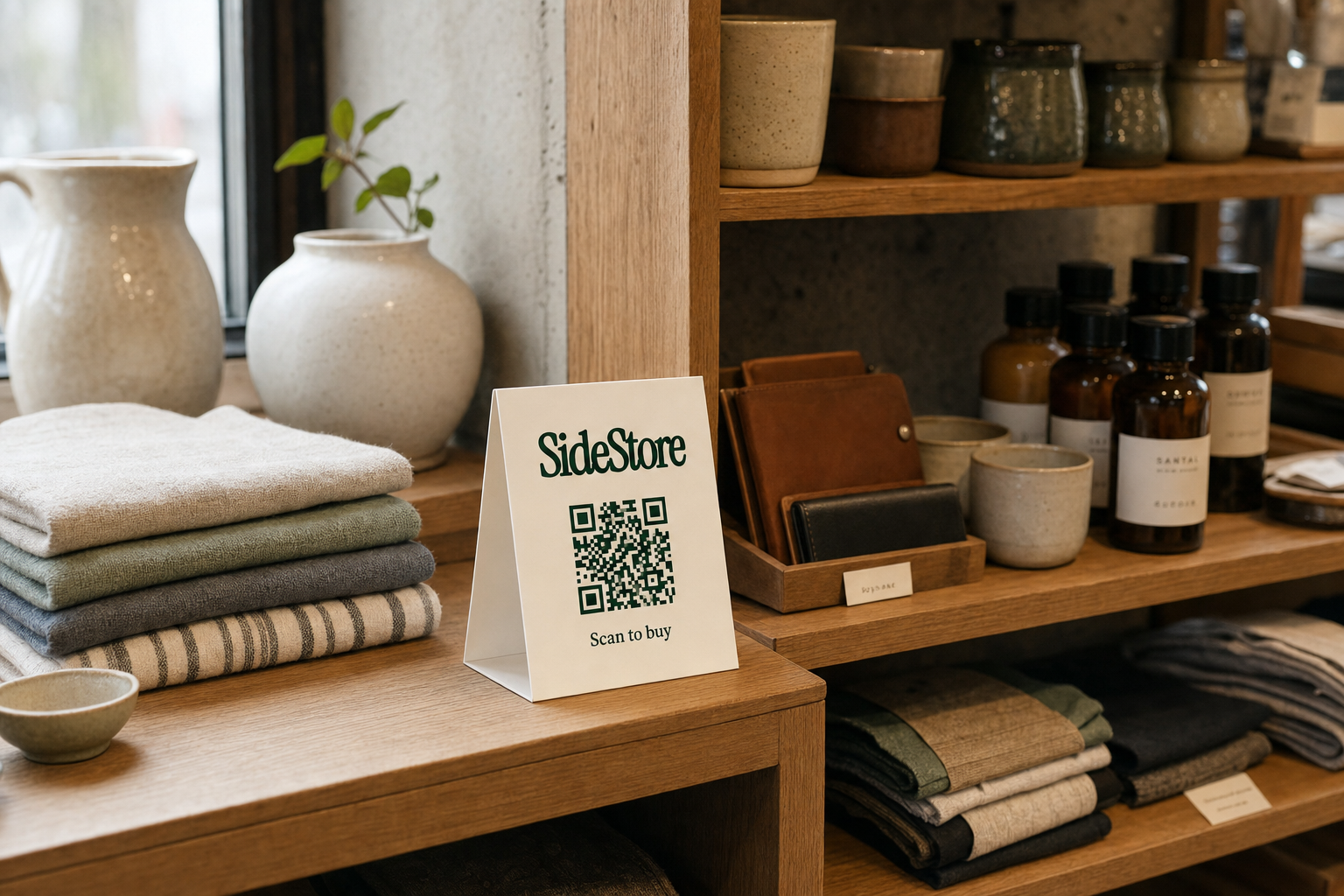
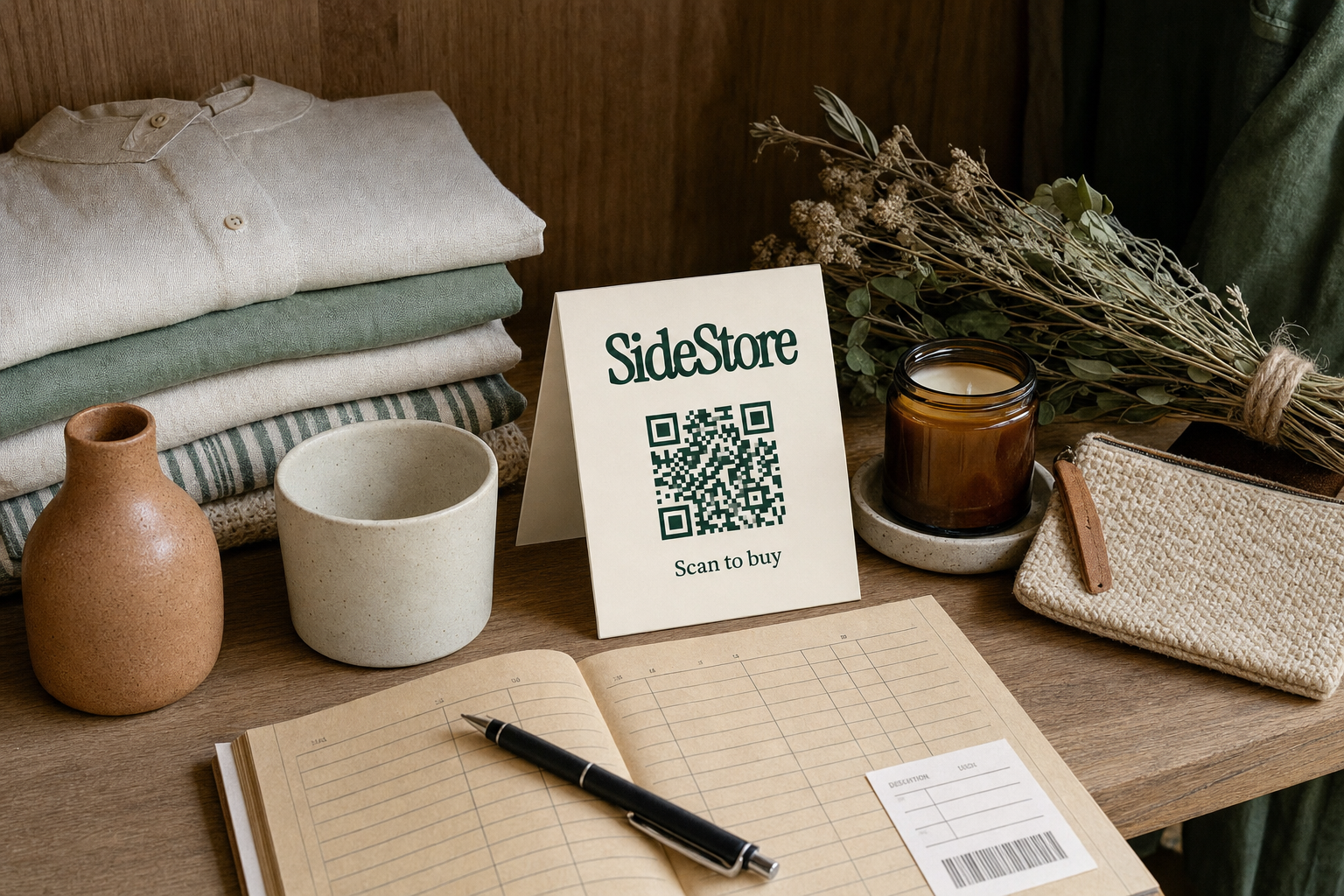
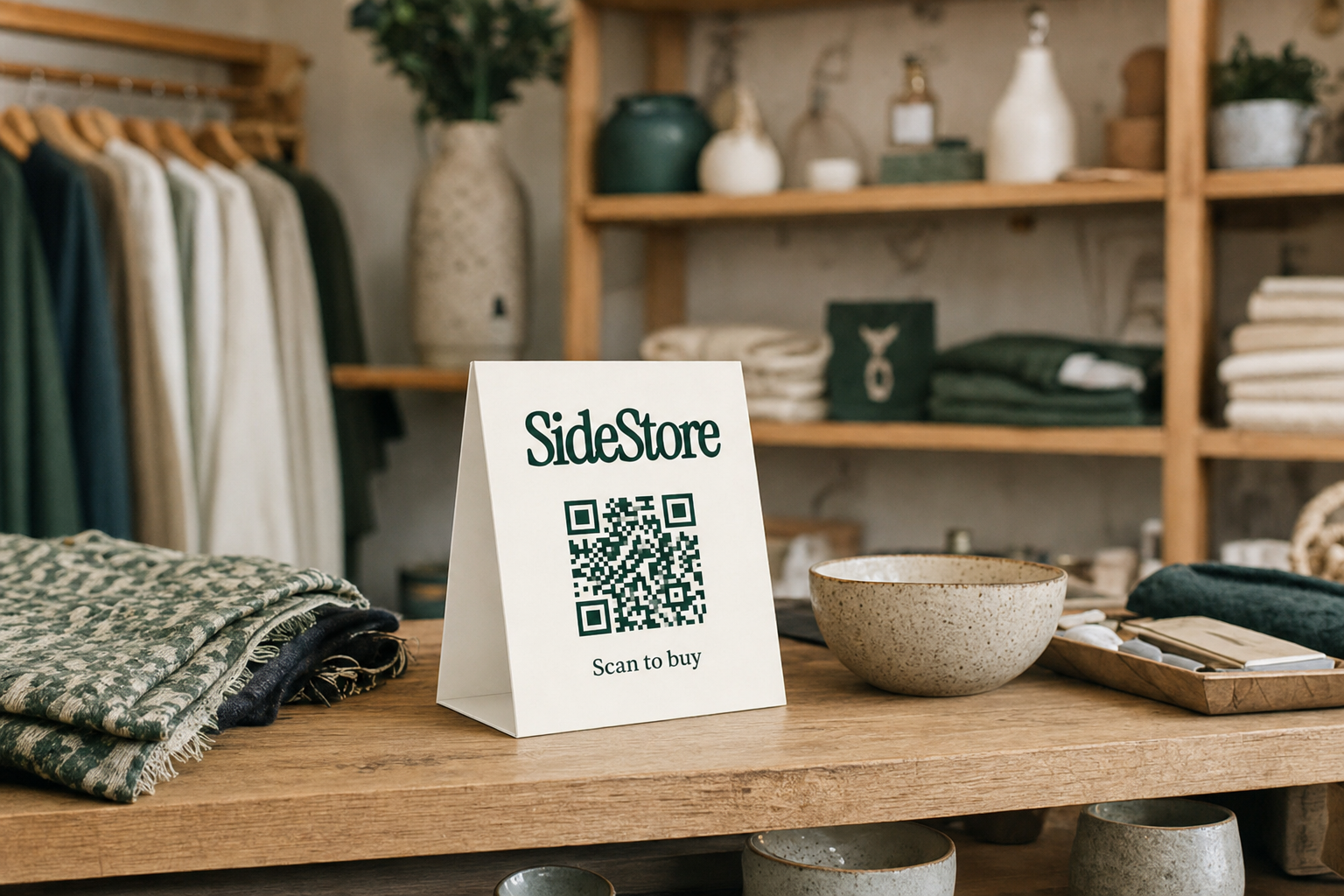
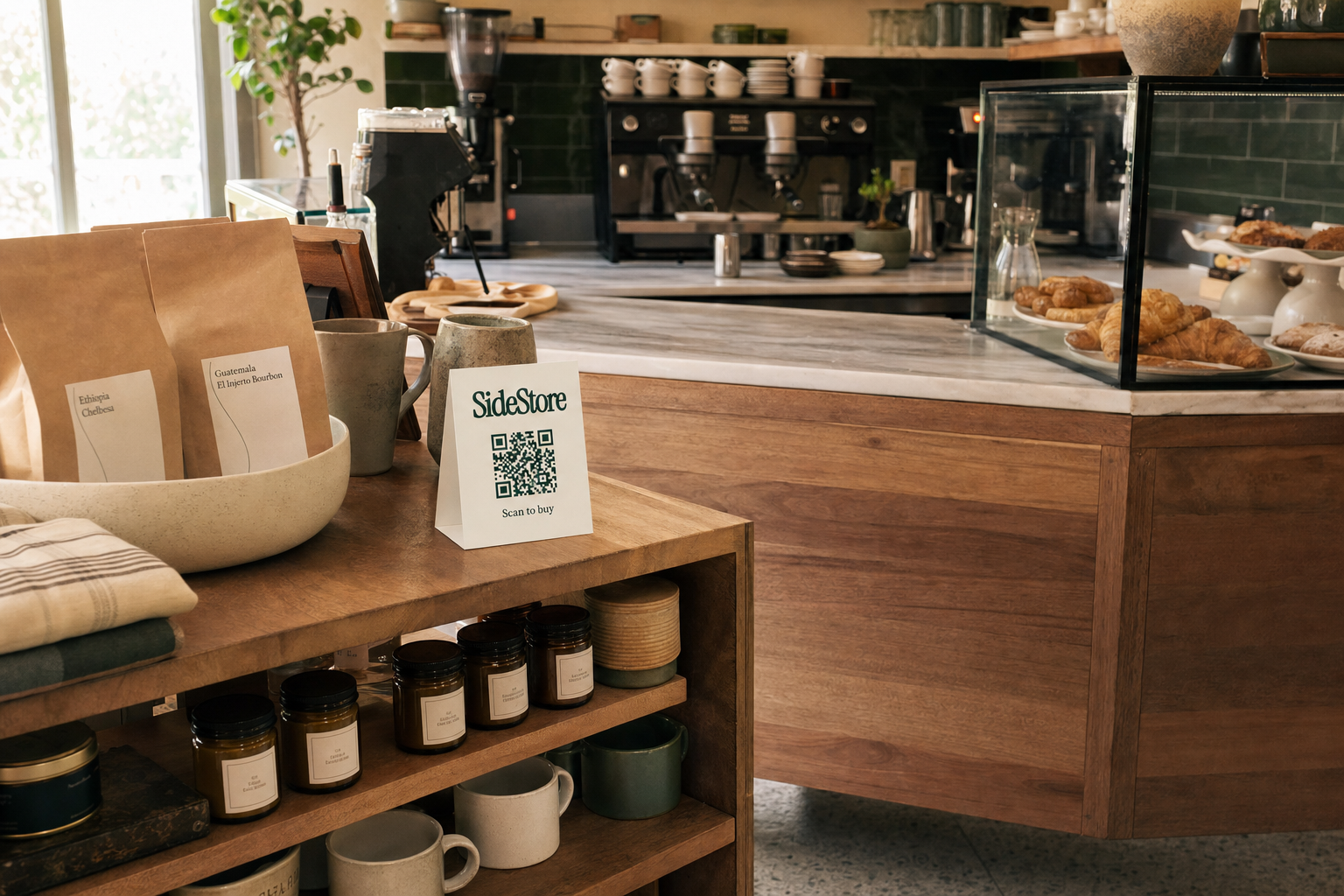
Here is how the model works. An independent maker (a candle-maker, a ceramicist, a small-batch food producer) places their products in your cafe on consignment. You display the products. When a customer buys one, you receive a percentage of the sale. The Retail Widget handles checkout (including a scan-to-pay QR card that a customer scans to purchase), live stock tracking, and automatic split payouts to both you and the maker. You never touch inventory risk, reorder decisions, or payment reconciliation.
The revenue implication is concrete. Three consignment placements, each averaging two sales per day at an average product price of $25, with a 30 percent host split, produces $45 per day. Roughly $16,200 per year from a single shelf section that was previously generating nothing.
A single counter shelf is enough to start. You do not need dedicated display furniture or a retail background. The QR checkout is one function of the Retail Widget, which is the broader interface for managing placements end to end. For the full picture, see how cafes can make money from unused shelf space, selling on consignment, how the SideStore QR card works, and sharing retail space.
Practical Ways to Increase Coffee Shop Revenue
Revenue growth in a cafe comes from five levers, and the best sequence to tackle them runs roughly in order of how quickly each pays back.
1. Extend morning hours. Pre-work and commute traffic is often the highest-transaction-rate period of the day. If you currently open at 7am and your neighborhood has meaningful foot traffic from 6am, one additional hour could add 20 to 40 transactions daily. The math on that, at a $6 average ticket, is $120 to $240 per day.
2. Add food via consignment. Partnering with a local baker on a consignment basis means you can offer fresh pastries, bread, or packaged snacks without purchasing inventory. Your cafe gets a percentage of every sale. This directly lifts average ticket without adding a kitchen or a food-prep team. For context on what boutique inventory looks like in a consignment context, that link gives useful framing.
3. Introduce a loyalty mechanic. A simple stamp card or digital loyalty program increases visit frequency. Even modest frequency gains (say, one additional visit per month from a portion of your regular base) compound meaningfully across a year.
4. Activate shelf space with consignment placements. As outlined above, idle display space converts to passive revenue with no inventory commitment. If you want to understand how other high-footfall venues approach this, monetize idle shelf space covers the mechanics in detail.
5. Review pricing. Many independent cafes have not adjusted prices in line with ingredient and labor cost increases. A $0.25 to $0.50 increase across core beverages, at 150 daily transactions, adds $37 to $75 per day. Roughly $13,500 to $27,000 per year. Customer retention impact from modest price increases is typically lower than operators expect.
Frequently Asked Questions
The questions below reflect what operators and prospective cafe owners most commonly want to know about coffee shop revenue. Answers are stated as benchmarks and ranges; exact outcomes depend on your specific format, location, and cost base.
Is $300,000 a good annual revenue for a coffee shop?
For a counter-service or full-service independent cafe, $300,000 in annual gross revenue is solidly within the typical range. Whether it is "good" depends on your cost structure. At a 5% net margin, $300,000 gross produces $15,000 net profit. That is modest. At 10%, it produces $30,000, which is more meaningful but requires tight cost management. The gross figure alone does not tell you much without the margin attached.
How much does a coffee shop make per day on average?
Daily revenue depends heavily on format. A kiosk might average $200 to $400 per day. A counter-service cafe might see $400 to $960. A well-run drive-through can reach $1,000 to $1,500. These are estimates. A slow Monday looks very different from a Saturday morning in a busy neighborhood.
What percentage of coffee shop revenue is profit?
Net profit margins for independent cafes typically run between 2.5% and 6.5% of gross revenue. Reaching 10% is possible but uncommon and usually requires favorable rent, strong food attachment, or supplemental retail revenue. For a detailed breakdown, see coffee shop profit margin.
How long does it take a coffee shop to become profitable?
Most independent cafes take 12 to 24 months to reach consistent monthly profitability, assuming the location is well-chosen and initial setup costs are financed rather than drawn from operating cash. Shops with lower buildout costs and strong opening-day foot traffic can reach breakeven faster. High buildout debt extends the timeline considerably.
Can a single coffee shop make $1 million a year?
A single-location independent cafe reaching $1 million in annual revenue is rare. It generally requires a very high-volume location, extended operating hours, a strong food program, and possibly retail revenue. Multi-format or multi-location operations are more likely paths to that number than a single counter-service shop.
What the Numbers Tell You (and What to Do Next)
The average revenue of a coffee shop ranges widely by format, from $75,000 for a modest kiosk to $500,000 or more for a high-volume full-service cafe. Format itself is the single biggest structural determinant of your revenue ceiling. Net margins are thin by design. 2.5 to 6.5 percent is the honest norm, not a performance failure. The shops that consistently outperform on net profit add revenue streams that do not require proportional increases in labor or COGS.
If you have idle shelf or counter space in your cafe, consignment placements are a direct way to generate retail revenue without buying inventory. Start with one shelf and one maker. The Retail Widget handles the rest.
Explore make money from unused shelf space, understand the practicalities of sharing retail space, and see how other independent venues are learning to add local products without buying inventory.