Coffee shop profit margins typically run 2, 6% net. Learn what drives them, where the money goes, and how to improve yours with zero inventory risk.
Most independent coffee shops land between 2% and 6% net profit, though individual results vary considerably by location, format, and how tightly the business is managed. Gross margins on espresso drinks alone can reach 70, 80%, but the gap between those beverage margins and actual take-home profit is where most operators get surprised. Understanding that gap is the practical work of running a café.
If you want a fuller treatment of what drives individual location results, the coffee shop profit margin guide covers the mechanics in detail. For operators who also sell packaged beans or merchandise, the coffee retail shop article addresses how retail product mix changes the margin picture.
The sections below cover the cost structure, realistic benchmarks by business type, and the specific levers that actually shift the number.
Gross Margin vs Net Margin: What Coffee Shops Actually Mean
Gross margin and net margin measure different things, and confusing them leads to bad decisions. Gross margin is revenue minus the direct cost of the product you sold: beans, milk, cups. Net margin is what remains after every other expense: rent, wages, utilities, insurance, and loan repayments.
A concrete example makes the gap clear. Say your café takes in CHF 20,000 in a month. Your cost of goods (coffee, milk, syrups, packaging) runs CHF 4,000. That gives you a gross margin of 80%. Healthy on paper. But then rent takes CHF 4,500, wages take CHF 8,000, utilities and insurance add CHF 1,500, and miscellaneous costs add another CHF 1,200. Total overheads: CHF 15,200. Subtract that from your CHF 16,000 gross profit and your net margin is CHF 800, or 4%.
That is not failure. That is a fairly typical independent café result. The problem is that operators who focus only on beverage margins mistake gross health for net health. They see 80% on drinks and wonder why the bank account barely moves.
Every revenue stream you add that does not significantly increase labour or rent widens the net margin without touching the gross. Consignment retail, for example, earns revenue from space you already pay for. How cafes can make money from unused shelf space explains exactly how that model works in practice.
The Coffee Shop Cost Structure: Where the Margin Goes
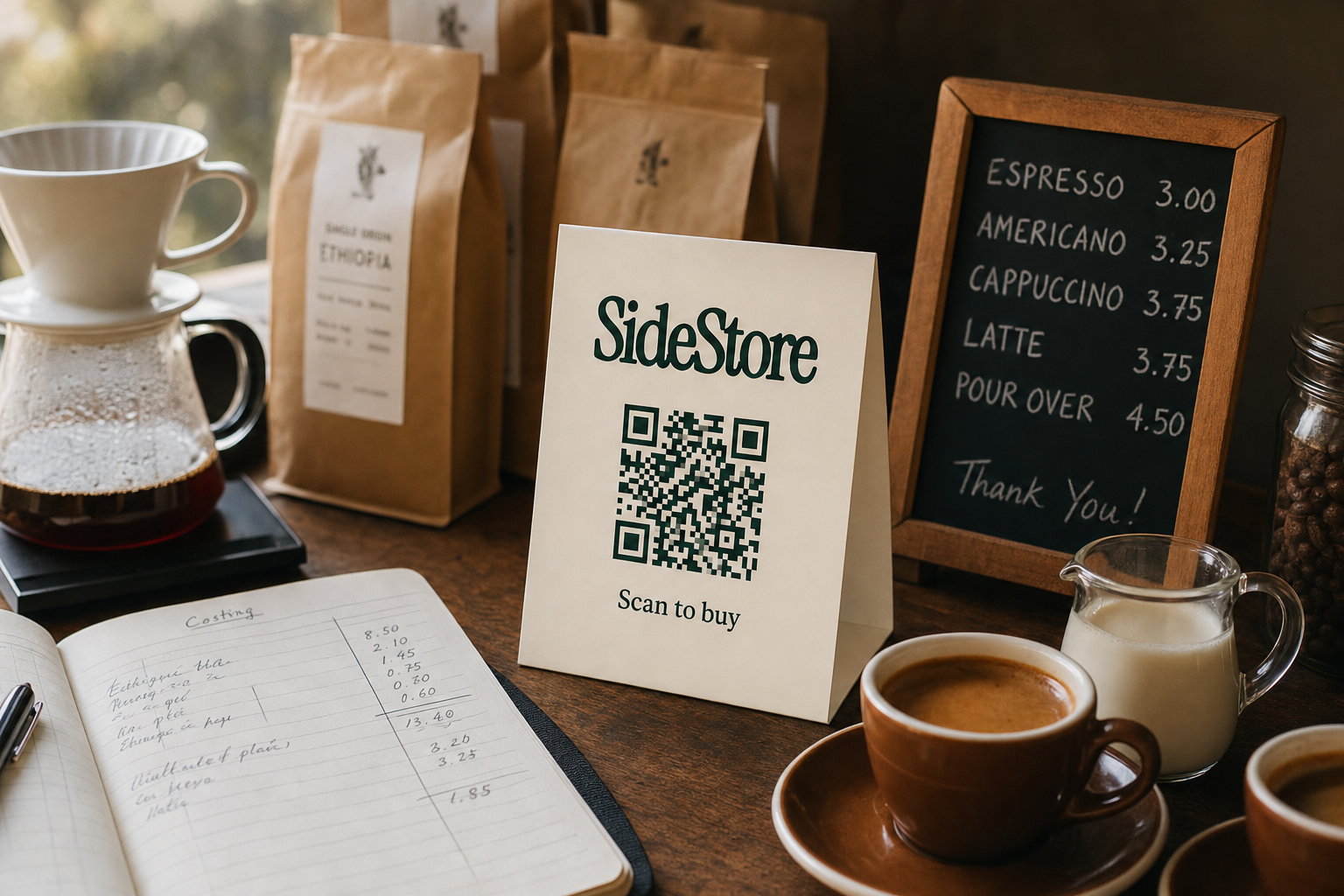
Most of a coffee shop's revenue disappears before you see a penny of profit. The typical breakdown: cost of goods runs 25, 35% of revenue, labour 30, 35%, rent 10, 20%, and utilities, insurance, and miscellaneous overheads consume another 10, 15%. Add those up and you have committed 75, 95% of every pound or franc you take in before the month ends.
Cost of goods sold (COGS): 25, 35%
Espresso drinks have excellent raw-material margins, but food items, bottled drinks, and packaged products carry heavier input costs. The more food you serve, the higher your blended COGS. Waste compounds this. A café that bins unsold pastries daily erodes its COGS efficiency without realising it.
Labour: 30, 35%
This is the hardest cost to cut. You cannot halve your floor team without reducing service quality or operating hours, both of which hit revenue. Owner-operators often undercount this cost by not paying themselves a market salary. If you are behind the bar forty hours a week, your labour line should reflect that. Omitting owner wages produces a margin figure that flatters the business and misleads any decision about expansion or pricing.
Rent: 10, 20%
Location drives foot traffic, and foot traffic drives revenue. High-street rent is expensive for a reason. The problem is that rent is fixed: a bad month does not reduce it. For this reason, operators in high-rent locations need higher average transaction values to maintain margin.
Utilities, insurance, maintenance: 10, 15%
These costs are relatively stable but often underestimated during the business planning stage. Equipment maintenance on espresso machines is a real and recurring line item.
Adding revenue from space you already pay for is one of the most efficient ways to improve net margin without touching any of the above. Make money from unused shelf space covers the practical options.
Coffee Shop Margin Benchmarks by Business Type
What counts as a realistic profit margin depends significantly on the type of coffee business you run. A kiosk and a full-service café face completely different cost structures, so comparing their margins directly without context is misleading.
The table below shows industry-typical ranges for net margin by business format. These are observed ranges, not guarantees. Your specific location, lease terms, and management decisions will move the number inside or outside these bands.
| Business Type | Typical Net Margin | Primary Margin Risk | One Key Advantage |
|---|---|---|---|
| Espresso kiosk / cart | 10, 18% | Weather and footfall dependency | Very low rent and labour costs |
| Drive-through only | 8, 15% | High build-out and equipment cost | High throughput, low dwell time |
| Independent café (counter service) | 3, 7% | Rent and labour as fixed costs | Flexible product mix and retail add-ons |
| Full-service café / brunch spot | 2, 5% | Labour-intensive, high food waste | Higher average transaction value |
| Café with consignment retail shelf | 4, 9%* | Requires maker partnerships to maintain | Near-zero-cost revenue from existing space |
| Coffee shop franchise | 4, 8% | Royalty fees reduce top-line conversion | Brand recognition drives consistent volume |
*Consignment retail margin is additive and requires no inventory purchase from the host. The margin uplift depends on product mix and sales volume in the placement.
The pattern is straightforward: formats with lower fixed costs tend to produce higher net margins. The café-with-retail-shelf entry shows what operators who use cafes earning from unused shelf space and sharing retail space models are already seeing. The consignment model requires no stock purchase and no operational complexity, which is why it adds to net margin rather than just shifting costs around.
Six Levers That Actually Move a Coffee Shop's Margin
The most effective ways to improve a coffee shop's profit margin fall into two categories: reducing what you spend, or earning more from what you already have. The second category is typically faster and carries less operational risk. Here are six levers, each with a realistic trade-off.
1. Raise average transaction value
Upselling a syrup shot, a pastry, or an oat milk upgrade adds revenue with near-zero additional cost. If your average ticket is CHF 5.50 and you move it to CHF 6.20, and you serve 80 covers a day, that is roughly CHF 500 extra per month on the same fixed-cost base. The trade-off: this requires consistent staff training and a team that is comfortable with light upselling without seeming pushy.
2. Reduce food waste
If you are binning pastries at close, your ordering process needs adjustment. Bake-to-order, reduced SKU count, or tighter par levels can reduce COGS by 2, 5 percentage points in food-heavy operations. The trade-off: fewer options may reduce dwell time and average spend for some customers.
3. Review pricing annually
Many independent cafés have not raised prices in two or more years. Input costs, rent, and wages have likely risen. A 5, 10% price adjustment on your core drinks, communicated plainly, is usually absorbed by loyal customers better than operators expect. The trade-off: some price-sensitive customers will reduce visit frequency.
4. Optimise operating hours
If your last two trading hours produce less revenue than the staff cost to run them, closing earlier improves net margin. Data from your POS system tells you this exactly. The trade-off: reduced hours may affect regulars who depend on those windows.
5. Reduce COGS through supplier review
Annual supplier renegotiation is standard commercial practice. If you have grown volume, ask for it. The trade-off: switching suppliers to save margin is only worthwhile if quality is maintained. A drop in espresso quality will hurt revenue more than the COGS saving helps.
6. Add consignment retail revenue
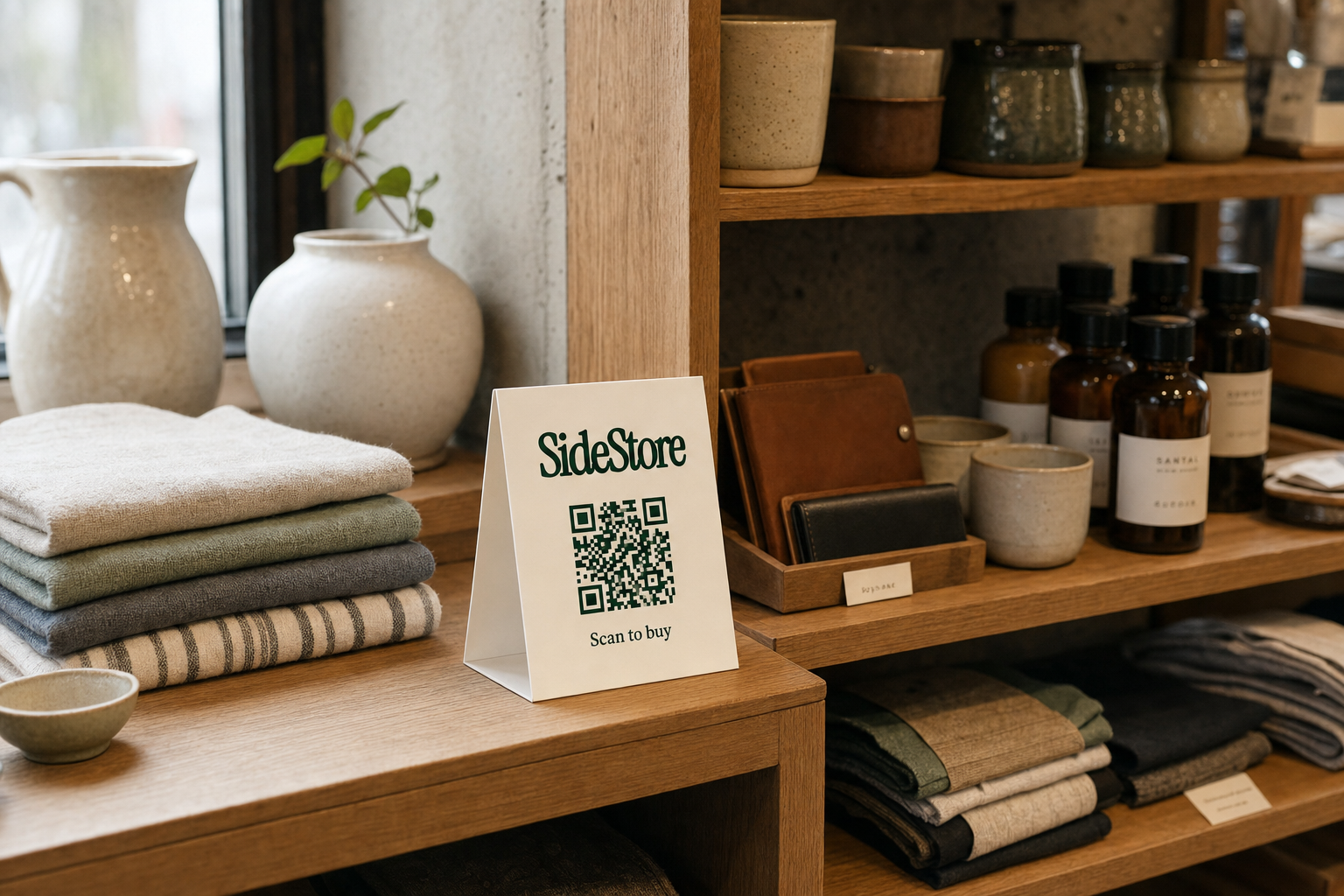
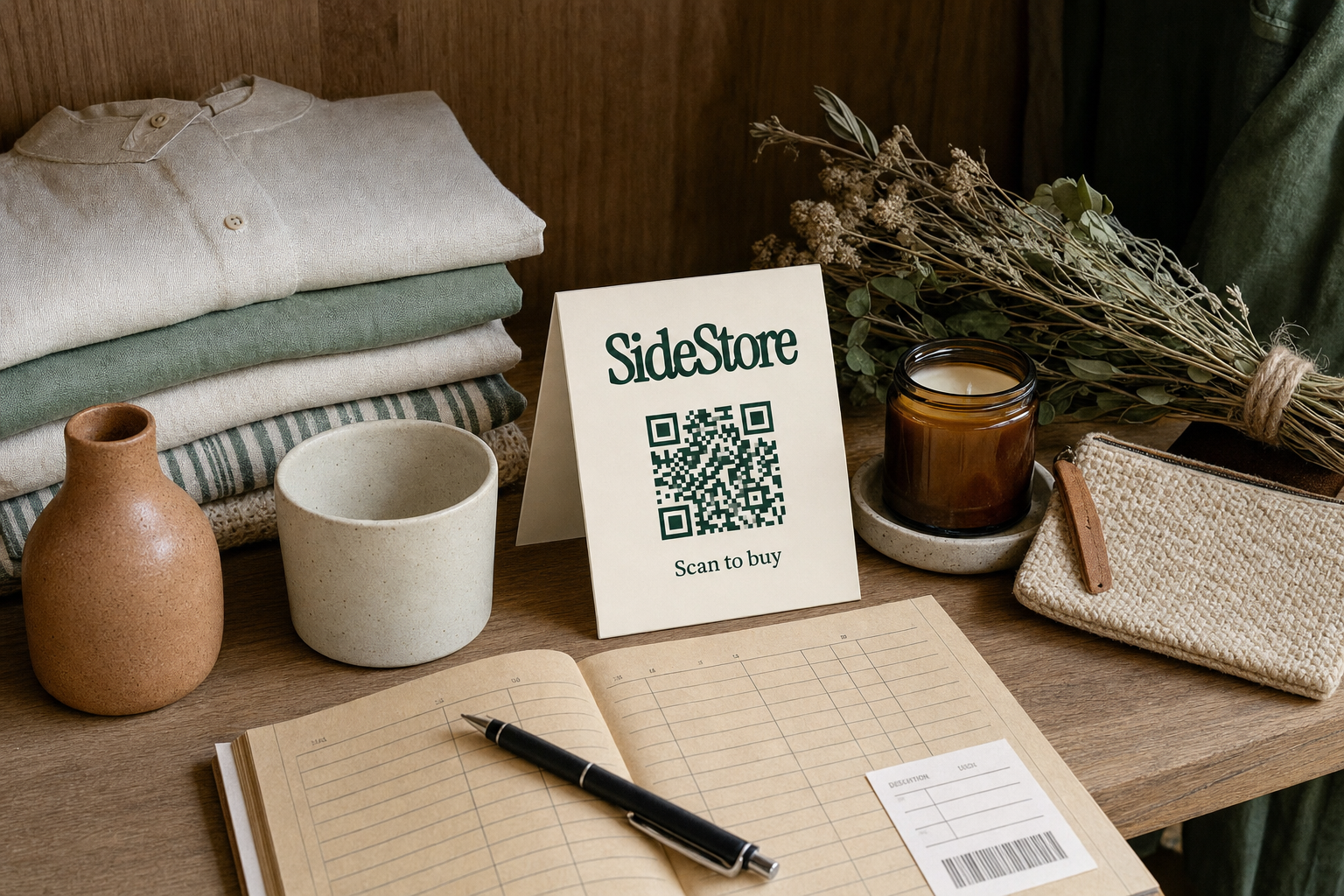
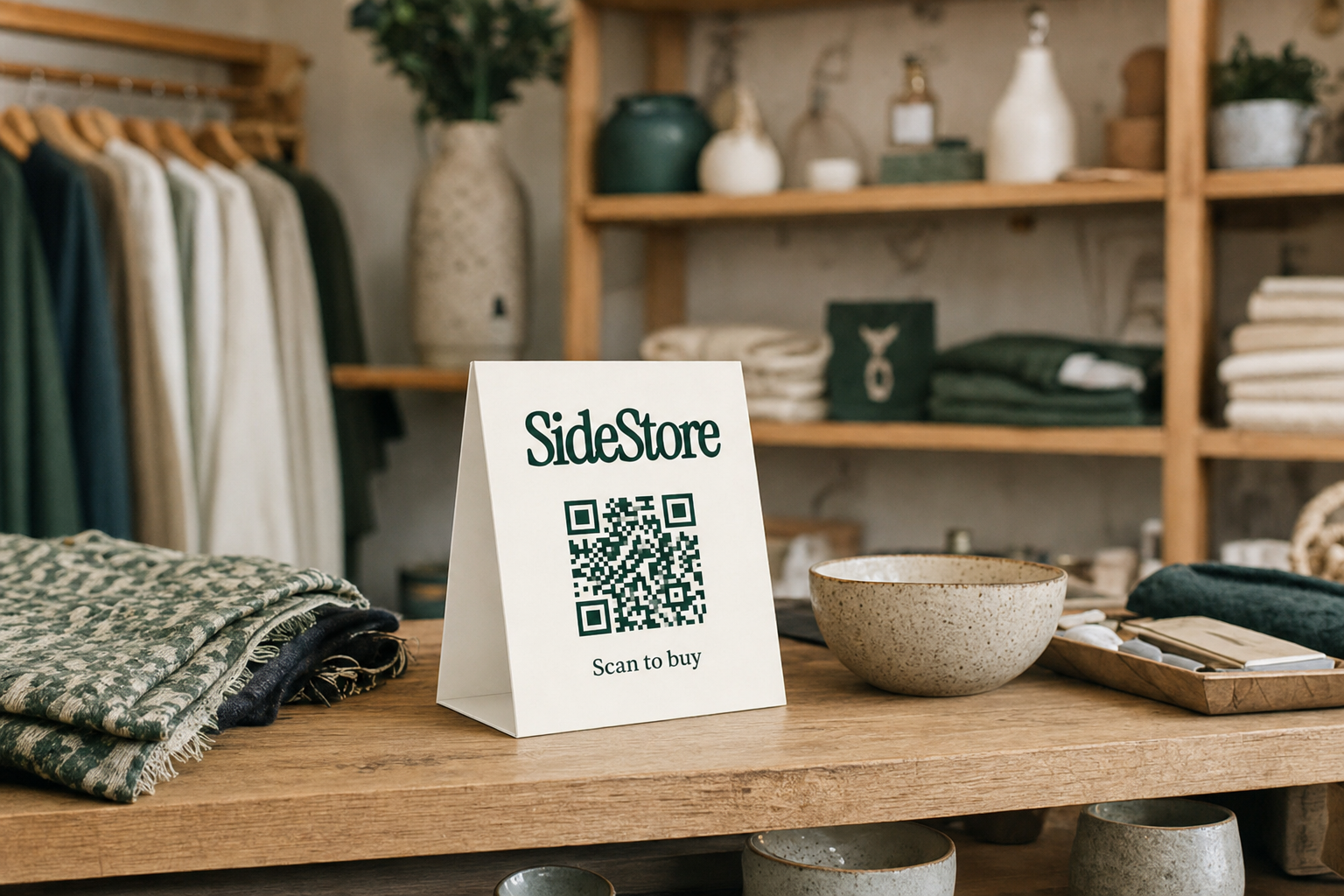
This is the lever with the lowest trade-off. Consignment means a maker places products on your shelf and gets paid when they sell. You earn a split of each sale with no inventory purchase, no stock risk, and near-zero additional labour. SideStore's Retail Widget is the interface that manages this end to end: it handles live stock tracking, placement attribution, and automatic split payouts. Scan-to-pay via a printable QR checkout is one function of the Retail Widget, not the whole product. You can learn how the SideStore QR card works and how consignment works to evaluate whether the model fits your space.
How cafes can earn from unused shelf space gives a full operational picture of running a consignment placement.
Consignment Retail: Revenue From Shelf Space You Already Have
Consignment retail improves a coffee shop's margin by generating revenue from space the café already pays for, with no inventory cost, no stock risk, and near-zero additional labour. The host café earns a percentage of each sale. The maker earns the remainder. Nobody buys stock upfront.
Here is a concrete example. Say you host three local makers on a small shelf near your counter. Each maker has products priced between CHF 18 and CHF 45. You agree on a 25% host split. If the shelf moves CHF 800 worth of product in a month, you earn CHF 200 with no purchasing cost and no warehouse risk. Over twelve months, that is CHF 2,400 added to net profit from space that was previously contributing nothing.
The Retail Widget from SideStore is the interface that makes this manageable at scale. It handles the consignment placement end to end: live stock tracking so you know when a product needs restocking, placement attribution so you can see which shelf or location is performing, and automatic split payouts so there is no manual accounting between you and the maker. The scan-to-pay QR checkout is one function of the Retail Widget. A maker can attach a printed QR card to their product, or you can display a single SideStore card for all products in your placement. Either way, the SideStore QR card handles checkout without requiring your staff to manage the transaction.
For cafés with two or three shelves of dead display space, this is a realistic margin improvement with a short setup time. The model works equally well for other venue types. How hotels turn lobby space into retail revenue shows the same logic applied to a different merchant context.
If you want to understand the full opportunity, monetising idle shelf space and how cafes can make money from unused shelf space are the right starting points.
Four Margin Mistakes Coffee Shops Make Repeatedly
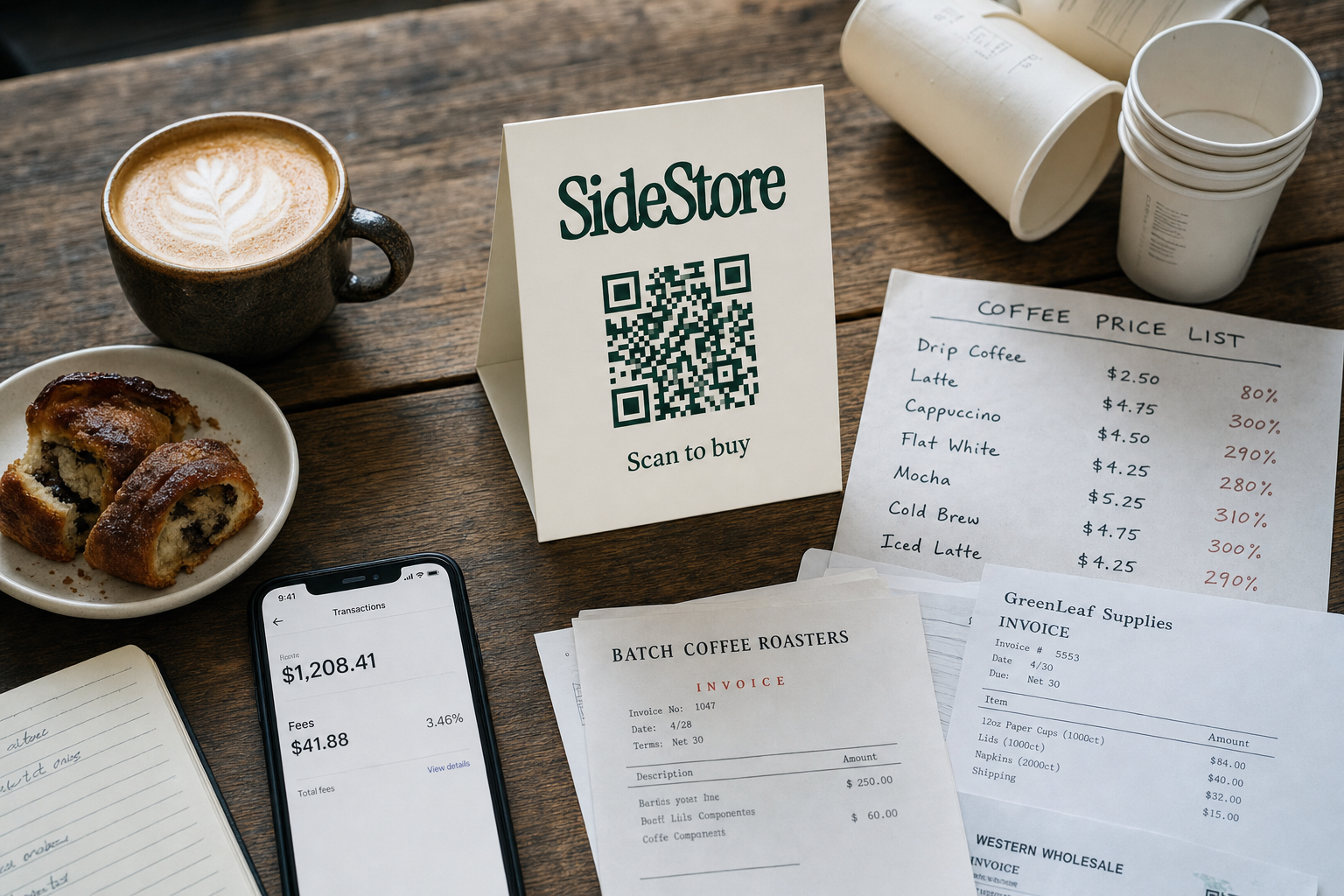
The most common margin mistakes in coffee shops are not dramatic failures. They are quiet, structural errors that compound month by month. Recognising them early is the practical work of margin management.
Mistake 1: Not counting owner labour as a cost
If you work in your own café without paying yourself a salary, your profit figures are misleading. A business that appears to make CHF 3,000 profit a month may actually be compensating an owner who works 50 hours a week at below minimum wage. Track this. The real coffee shop profit margin includes the cost of your own time.
Mistake 2: Treating revenue growth as margin improvement
More revenue is not more profit if costs scale with it. Hiring an extra barista to serve more customers may produce no net margin gain if the labour cost matches the revenue gain. Before you add capacity, model whether the additional revenue converts to profit.
Mistake 3: Ignoring slow SKUs
A pastry that moves two units a day and has a 40% wastage rate is not a profitable menu item. Tracking SKU-level margin is standard in food retail. Many café operators skip it and carry underperforming items for years.
Mistake 4: Leaving physical space unmonetised
Counter space, windowsills, and shelving near the queue are high-attention real estate. If they are displaying nothing, or displaying items you bought and are struggling to sell, you are paying rent on space that generates no return. Adding local products without buying inventory shows how consignment solves this without stock risk.
Frequently Asked Questions: Coffee Shop Profit Margins
What is a good profit margin for a coffee shop?
A net profit margin of 6, 10% is considered strong for an independent café. Most independent operators land between 2% and 6%. Kiosks and drive-throughs with lower fixed costs can reach 10, 18%. Anything above 10% for a full-service café with staff and a lease is genuinely exceptional.
Is owning a coffee shop profitable?
Owning a coffee shop can be profitable, but the margins are thin and the work is significant. Most operators who sustain healthy margins do so through tight cost control, above-average transaction values, and additional revenue streams beyond coffee. For high-traffic venues, how high-traffic retailers monetise idle shelf space illustrates how retail revenue adds to the picture with no inventory risk.
What percentage of coffee shop revenue is profit?
For most independent coffee shops, between 2% and 6% of total revenue becomes net profit. That means for every CHF 100 in sales, CHF 2 to CHF 6 is retained after all costs. Gross margin on espresso drinks is much higher, often 70, 80%, but rent, labour, and overheads consume the difference.
How can a coffee shop increase its profit margin without raising prices?
The most immediate options are reducing waste, optimising operating hours based on POS data, and adding zero-inventory revenue streams like consignment retail. How bed and breakfasts make money from a retail corner shows the same consignment logic applied in a smaller venue, with comparable margin mechanics.
The Margin Picture, Plainly Put
Coffee shop profit margins are thin by design, not by accident. The cost structure of the business commits most revenue before you ever count profit. Managing margin means controlling what you can, specifically labour efficiency, COGS, and operating hours, while adding revenue streams that do not add proportional cost.
Consignment retail is the most direct example. It earns from space you already pay for, with no stock to buy and no extra staff time to manage it. If you have a shelf that is not earning, that is the practical next step.
Start with how cafes can make money from unused shelf space or read the full primer on consignment commerce to understand the model before you commit.