Run a Non-Profit Coffee Shop
What is a non-profit coffee shop, how does it make money, and is it worth starting one? The complete guide to legal structure, revenue models, and practical next steps.

A non-profit coffee shop is a café business structured as a non-profit organisation, meaning any surplus revenue is reinvested into a defined charitable or community mission rather than distributed to owners or shareholders.
Yes, a coffee shop can legally operate as a non-profit. The café serves customers, generates revenue from coffee sales and related products, and uses that income to fund its mission. The surplus distribution rule is the defining constraint: profits cannot flow to private individuals. Everything else, staffing, pricing, menu, retail offerings, can look much like a conventional café.
Before you commit to this structure, understand how coffee shop profit margins work in general. The non-profit model does not escape thin margins; it just redirects what remains. You should also look at the broader coffee retail shop model to understand what operational levers are available to you regardless of legal structure.
What Actually Makes a Coffee Shop Non-Profit
A non-profit coffee shop differs from a regular one by its incorporation structure, its treatment of surplus revenue, and its public accountability obligations. Not by how well it pulls an espresso shot.
In most jurisdictions, a non-profit must be incorporated under a specific legal vehicle: a charitable company, a community interest company, a non-profit corporation, or an equivalent form depending on where you operate. Requirements vary by country and region, so you will need local legal advice. The universal principle remains the same: the organisation has a stated public or community purpose, and no surplus can be distributed to founders, directors, or shareholders as profit.
Many people conflate two different models here. A social enterprise café typically operates as a for-profit company that pursues a social mission alongside profit. A non-profit café is legally prohibited from distributing surplus at all. In practice, both can look identical from the customer's side of the counter. The difference lives in the articles of incorporation, the governance structure, and the tax filings.
Non-profit status does not mean the café avoids commercial reality. It still needs to cover rent, wages, ingredients, equipment, and insurance. Revenue generation is not optional; it is required. The legal constraint is on what happens to any surplus, not on whether surplus can exist in the first place.
One important detail: non-profit status does not automatically mean tax-exempt on all income. Many jurisdictions apply unrelated business income tax to revenue streams that fall outside the stated charitable purpose. A café selling coffee to the public as its primary mission is generally fine, but ancillary revenue from retail sales or events may be scrutinised differently. Check with a qualified accountant familiar with non-profit law in your jurisdiction.
Consignment as a revenue model is one supplemental stream that tends to sit cleanly within a community mission, a point worth returning to in the revenue section below.
How a Non-Profit Coffee Shop Makes Money
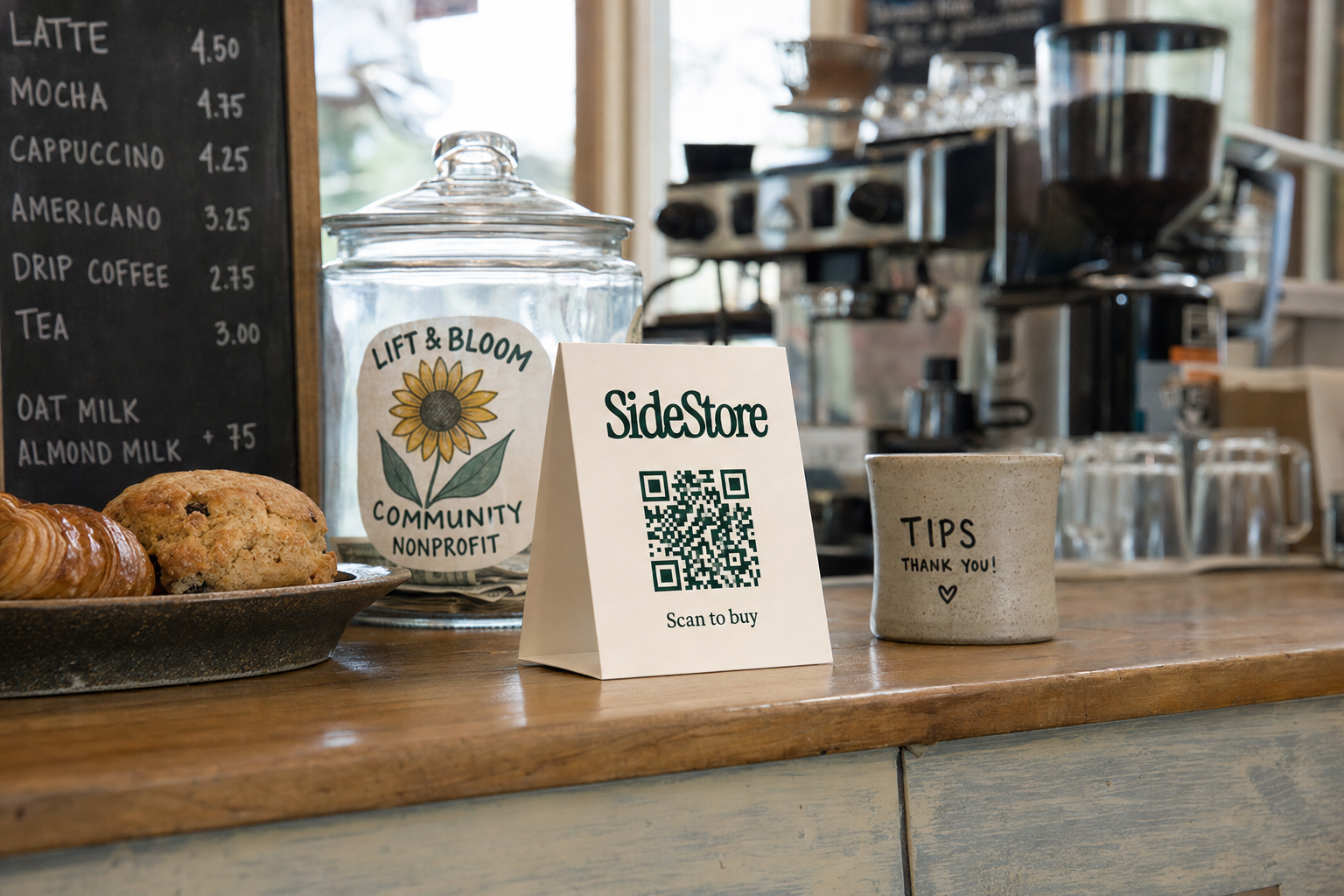
A non-profit café generates revenue from the same sources as any café. It just reinvests the surplus rather than distributing it.
The most reliable revenue stream is straightforward: beverage and food sales. Coffee, tea, pastries, and light meals form the operational core. Consistent footfall determines whether the margin covers costs. Secondary streams, roughly in order of reliability, include:
Grants and donations. Because the organisation holds non-profit status, it is eligible for grants from foundations, local government programmes, and community funds that a regular café cannot access. Donations from individual supporters are also possible, and in many jurisdictions are tax-deductible for the donor. This is one of the genuine structural advantages of the non-profit form.
Event hire and programming. Community-focused cafés often double as event venues: workshops, meetups, exhibition openings, classes. Hiring the space generates income that is tightly aligned with the mission.
Membership or subscription models. Some non-profit cafés offer community memberships, giving members discounts or reserved access in exchange for a monthly contribution that supports operational stability.
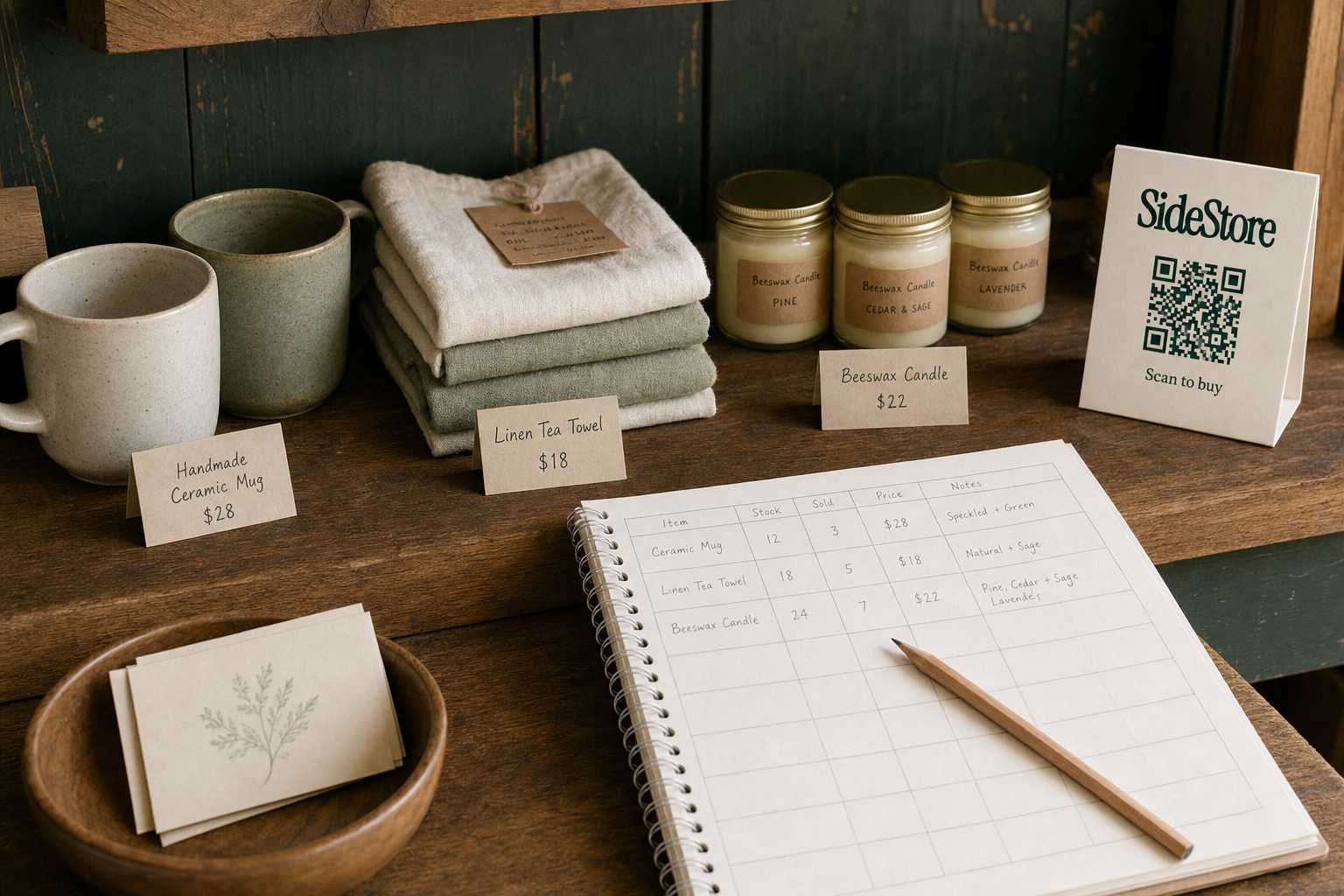
Consignment retail. This is the supplemental stream most cafés overlook. If you have shelf space, a display area, or even a counter corner, you can host locally made products on consignment and earn a split of each sale. You carry no inventory risk because the maker owns the stock until it sells. With how cafes can make money from unused shelf space as a starting point, the mechanics are straightforward. The earning from idle shelf space model is particularly well-suited to a non-profit café because it aligns with community and maker-support missions.
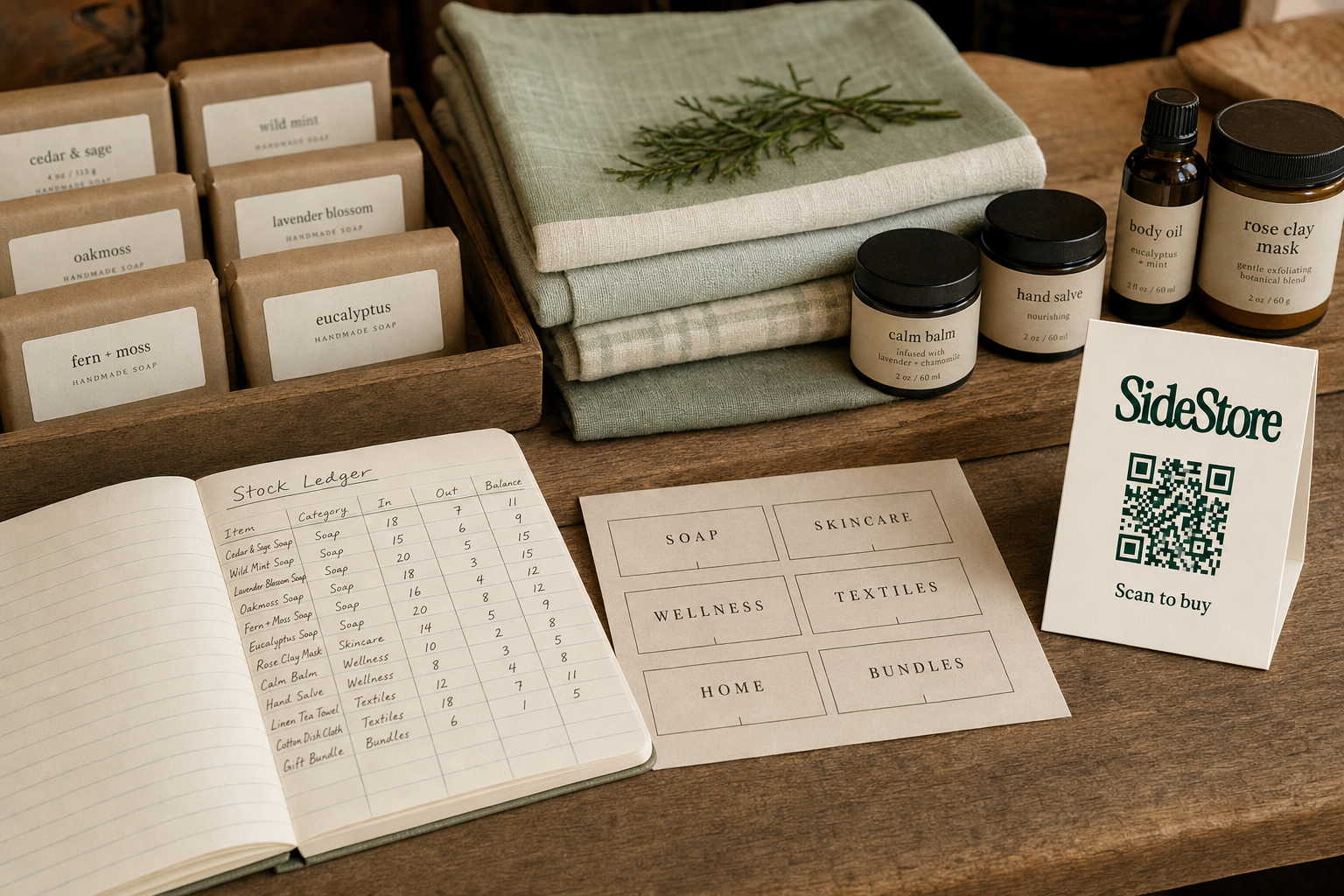
SideStore's Retail Widget handles the operational side: scan-to-pay via a printable QR card, live stock tracking, and automatic split payouts between maker and host. How the SideStore QR card works explains the checkout mechanism specifically. The QR card is one function of the Retail Widget; the Widget itself manages the full consignment placement from setup through settlement.
Non-Profit Coffee Shop: Pros, Cons, and Trade-Offs
The non-profit model offers real structural advantages for a community-focused café, but it imposes constraints that a conventional operator can avoid. Whether the trade-off is worth it depends on your mission and your tolerance for compliance overhead.
| Dimension | Advantage | Limitation |
|---|---|---|
| Tax status | Potential exemption from income tax on surplus; varies by jurisdiction | Unrelated business income may still be taxed; requires ongoing filings |
| Funding access | Eligible for grants, community funds, and tax-deductible donations | Grant cycles are slow and competitive; funding is never guaranteed |
| Staff motivation | Mission alignment often attracts committed staff and volunteers | Cannot compete on salary with commercial employers |
| Operational flexibility | Can pursue mission activities (events, workshops) aligned with purpose | Major operational changes may require board approval or regulatory sign-off |
| Public trust | Non-profit status signals community commitment and can drive loyalty | Any governance failure is reputationally amplified |
| Revenue ceiling | No ceiling on revenue generation; growth is permitted and encouraged | Surplus cannot be reinvested in private wealth; personal financial upside is limited |
| Compliance burden | Established frameworks for non-profit governance exist in most jurisdictions | Annual reporting, board governance, and audit requirements add administrative cost |
The non-profit model fits when the café exists primarily to serve a community purpose and the founder is not seeking a personal financial return. It fits mission-driven operators who want access to grant funding and who are comfortable with governance structures, public reporting, and board oversight.
It does not fit when the founder wants flexibility to extract profit, pivot the business freely, or scale toward a private exit. In those cases, a social enterprise structure often serves the underlying purpose just as well without the regulatory constraints. Typical coffee shop profit margins are already thin; adding compliance overhead without a funding advantage rarely makes sense unless the mission genuinely requires it.
How to Start a Non-Profit Coffee Shop: Seven Core Steps
Starting a non-profit coffee shop requires the same operational groundwork as any café, plus an additional legal and governance layer that most first-time operators underestimate.
1. Define the mission precisely.
Non-profit registration requires a stated charitable or community purpose. "Serving good coffee" is not enough. "Providing affordable workspace and community programming for young people in [your area]" is the kind of specificity that satisfies regulators and grant-makers. Write the mission statement before you draft any other document.
2. Choose your legal vehicle.
Depending on your jurisdiction, options include charitable incorporated organisations, non-profit corporations, community interest companies, associations, and others. Each has different governance requirements, tax implications, and fundraising permissions. Engage a solicitor or non-profit specialist early; the cost of getting this right is far lower than the cost of reincorporating later.
3. Assemble a founding board.
Most non-profit structures require a board of directors or trustees who are legally accountable for the organisation's conduct. Choose people with complementary skills: finance, hospitality, legal, and community knowledge. A functional board is an asset; a rubber-stamp board is a liability.
4. Model the unit economics honestly.
For example: if your café serves 150 customers per day at an average spend of 6 currency units, that is 900 units per day in gross revenue. If your cost of goods runs at roughly 35 percent and fixed costs account for another 50 percent, you are left with around 15 percent of gross as potential surplus before any grants or donations. These are illustrative numbers only; your actual figures will depend entirely on location, wages, and lease terms. The point is to run this model before you incorporate, not after. Thin margins mean the café is not self-sustaining without supplemental income or grant support.
5. Secure your premises and licensing.
Food hygiene certifications, a premises licence if you serve alcohol, planning permissions if you are changing the use of a building, and employer liability insurance are all required regardless of legal structure. Non-profit status does not waive any operational regulatory obligation.
6. Add a consignment retail line from day one.
Hosting locally made products on consignment through SideStore costs you nothing in inventory. Local makers place their products in your space via the Retail Widget; customers scan to pay; the split payout settles automatically. It supports how local makers can sell without opening a store and aligns directly with a community mission. You can start with adding local products without buying inventory and build from there. The selling to consignment partners model is well-established; the Retail Widget makes the mechanics manageable at small scale.
7. File for non-profit or charitable status.
Once incorporated, you apply for tax-exempt status with the relevant authority. In many jurisdictions this is a separate application from incorporation itself and can take several months. Plan your launch timeline accordingly, and do not assume tax-exempt status is automatic from the date of incorporation.
Consignment Retail: A Revenue Line Built for Your Mission
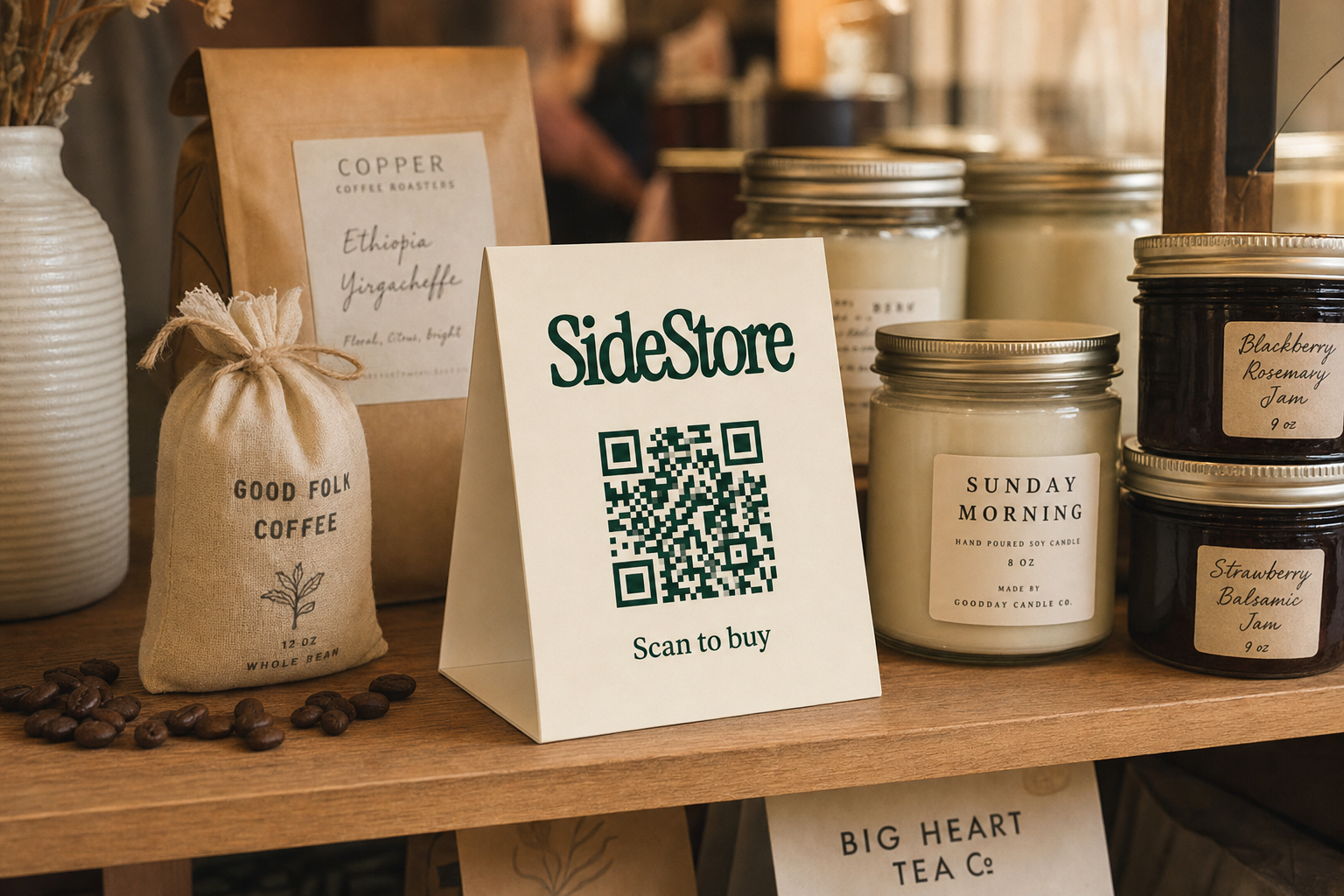
Consignment retail fits a non-profit café's model precisely because it generates host revenue without inventory risk, aligns with community and maker-support missions, and requires minimal operational overhead once set up.
Here is how it works through SideStore. A local maker places their products in your café using the Retail Widget, which is SideStore's consignment-management interface. The Widget handles the full placement: the maker's products are listed, assigned to your venue, and tracked in real time. You display the products alongside a SideStore QR card, which customers scan to browse and pay. The scan-to-pay QR checkout is one function of the Retail Widget, not the product itself. The Widget also manages live stock tracking, so you always know what is on your shelf, and placement attribution, so each sale is correctly assigned to your venue. When a sale completes, the split payout settles automatically between the maker and you as the host.
You set the host split as part of the consignment arrangement. The maker gets paid when the product sells; you earn your share without touching the till. You carry no inventory to buy in, no stock risk to absorb, and no manual reconciliation to do at month end.
For a non-profit café, this is a meaningful supplemental revenue line that directly supports selling handmade products in physical stores on consignment. It gives local makers an alternative to weekend markets and extends your community footprint without adding operational complexity. Monetising idle shelf space in high-traffic venues is the broader principle; a non-profit café with consistent daily footfall is exactly the kind of venue where that principle converts into real income.
Frequently Asked Questions
Can a coffee shop legally be a non-profit?
Yes. A coffee shop can be incorporated as a non-profit organisation in most jurisdictions, provided it has a defined public or community purpose and does not distribute surplus revenue to private individuals. The café operates commercially, serves customers, and generates revenue in the normal way. The legal constraint applies to what happens to any surplus, not to whether the business can trade.
Do non-profit coffee shops pay taxes?
It depends on the jurisdiction and the nature of the income. Many non-profit organisations receive exemption from income tax on surplus that arises from activities directly related to their charitable purpose. However, income from activities deemed unrelated to that purpose, sometimes called unrelated business income, can still be taxable. You will also typically pay payroll taxes and may be liable for sales or VAT on goods sold. Non-profit status is not a blanket tax waiver; consult a local accountant familiar with non-profit law.
Can the founder of a non-profit coffee shop pay themselves?
Yes, within limits. Non-profit status prohibits surplus distribution to private individuals, but it does not prohibit reasonable compensation for work performed. A founder can draw a salary for their role as café manager, director, or other employed position, provided the compensation is documented, proportionate to the role, and approved by the board. What you cannot do is pay yourself a dividend or take a share of profits. The board is responsible for ensuring compensation is reasonable and properly governed.
How is a non-profit coffee shop different from a social enterprise?
A social enterprise is typically a for-profit business that pursues a social mission alongside profit generation. A non-profit coffee shop is legally prohibited from distributing any surplus to owners or shareholders. In practice, both can look identical to customers. The difference is in the legal structure, governance obligations, and what happens to surplus revenue. Social enterprises offer more operational flexibility and personal financial upside; non-profits offer access to grant funding and tax advantages that social enterprises generally cannot access. Neither is inherently better; the right choice depends on your mission and financial goals.
Can a non-profit café sell locally made products?
Yes, and it is one of the most mission-aligned revenue lines available. Hosting locally made products on consignment, for example through SideStore's Retail Widget, generates a host revenue split with no inventory risk. This supports local makers and generates supplemental income for the café simultaneously. For more on running a retail model without buying inventory, the consignment mechanic is the key principle.
The Bottom Line: Running a Non-Profit Coffee Shop
A non-profit coffee shop is viable, legally sound, and genuinely valuable for community-focused operators. But it is not simpler than running a regular café. It adds governance, compliance, and reporting obligations on top of an already operationally demanding business.
The three non-negotiables are: a clearly defined and legally compliant charitable purpose, a functioning board that takes its governance responsibilities seriously, and a revenue model that covers costs without depending entirely on grants that may not materialise.
On that third point, consignment retail is an actionable first step you can take before you are fully operational. Identify two or three local makers, set up a SideStore placement using the Retail Widget, and start generating a host revenue split from shelf space you would otherwise leave empty. Consignment inventory options for retail hosts show what that looks like in practice, and running a retail corner in a hospitality space demonstrates how other community-facing venues have made it work.
Your next concrete action: draft your mission statement, then book an hour with a non-profit solicitor in your jurisdiction. Everything else follows from those two steps.