Buying Inventory for Online Boutique
Learn the four sourcing models for buying inventory for an online boutique, wholesale, dropshipping, print-on-demand, and consignment, with honest trade-offs on cost, risk, and margin.
What Does Buying Inventory for an Online Boutique Actually Mean?
Buying inventory for an online boutique means acquiring physical products to sell, and your sourcing model determines how much capital you tie up, who holds the stock risk, and how much margin you keep.
Get this decision right and your boutique has room to breathe. Get it wrong and you are sitting on dead stock before your first quarter is out. The four main sourcing models are wholesale, dropshipping, print-on-demand, and consignment. Each one moves the risk and the cost to a different party. Wholesale gives you the best margin but asks for cash upfront. Dropshipping needs no stock but compresses your margin and hands fulfilment control to a third party. Print-on-demand suits branded products but carries similar margin constraints. Consignment lets you place products in physical spaces without buying stock at all.
Before you commit capital, it is worth understanding how much inventory to start with, and whether you even need to hold stock from day one. If the latter is your situation, read about how to start an online boutique with no inventory first.
The Four Sourcing Models: What Each One Actually Costs You
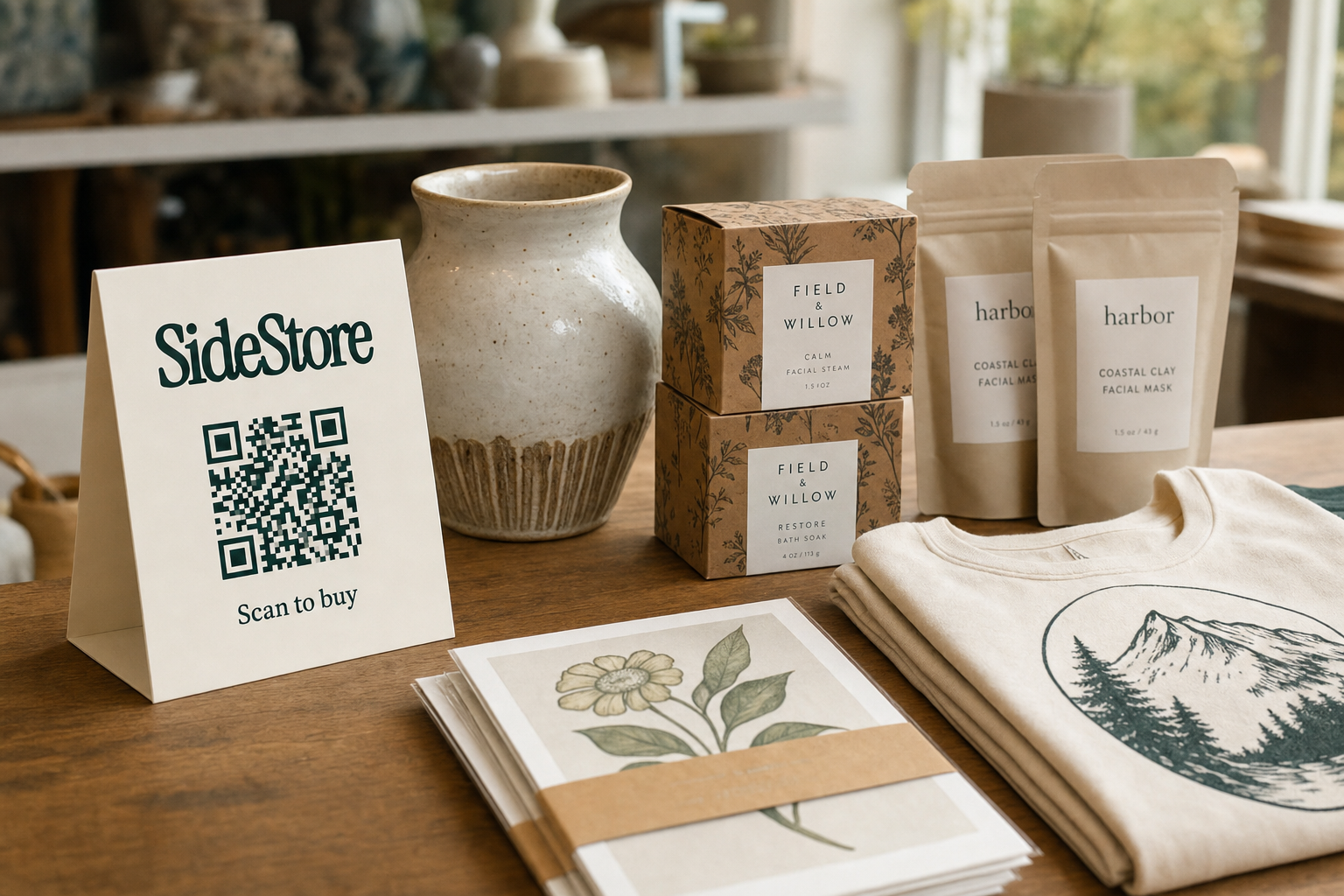
Four sourcing models dominate boutique retail: wholesale, dropshipping, print-on-demand, and consignment. Each one sits at a different point on the risk-versus-return spectrum, and choosing the wrong one for your stage of business is one of the fastest ways to destroy cash flow.
Wholesale means buying stock in bulk from a manufacturer or distributor at a price below retail, then selling at a markup. Gross margins typically range from 40% to 60% depending on the product category, though fashion and accessories can push higher. The trade-off is minimum order quantities (MOQs): most wholesale suppliers require a minimum purchase, which can range from a few hundred to several thousand pounds or dollars depending on the supplier and category. You hold the stock, you bear the risk, and you control fulfilment.
Dropshipping removes the inventory problem entirely. You list products you do not own; when a customer orders, the supplier ships directly. Margins are thinner, often 15% to 30%, because the supplier is doing the warehousing and shipping work. You also give up fulfilment control, which means packaging quality, shipping speed, and stock availability are all outside your hands.
Print-on-demand is a variant of dropshipping suited to branded or custom merchandise. Margins sit in a similar compressed range. It works well for testing designs before committing to a wholesale run, but the per-unit cost is high compared to a wholesale order.
Consignment is the lowest-risk physical distribution model. You place products in a merchant space, a café, boutique, or hotel, and pay nothing upfront. You earn only when a product sells, and the merchant earns a split of the sale price. There is no MOQ and no dead stock cost. The trade-off is that you share margin with the host, and you need to find merchant partners willing to carry your products.
If running a boutique without holding inventory is a goal, consignment and dropshipping are your two realistic paths. For a deeper look at how the consignment side of that works in practice, see the guide on selling on consignment.
Sourcing Model Comparison: Risk, Capital, and Margin at a Glance
When you compare sourcing models side by side, three dimensions matter most: how much capital you need before your first sale, who absorbs the loss if products do not sell, and what gross margin you can realistically expect. The table below gives you an honest read across all four models.
| Sourcing Model | Upfront Capital Required | Who Holds Stock Risk | Typical Gross Margin | Best For |
|---|---|---|---|---|
| Wholesale | High (MOQ purchases) | You, the buyer | Moderate to high (often 40, 60%, category-dependent) | Established boutiques with cash flow and proven demand |
| Dropshipping | Low (listing costs only) | Supplier | Low to moderate (often 15, 30%) | Boutiques testing products without committing to stock |
| Print-on-demand | Low (design costs only) | Supplier | Low to moderate | Custom or branded merchandise, design-led boutiques |
| Consignment | None | Maker or supplier | Variable (you share with host merchant) | Physical distribution without premises or upfront stock |
No sourcing model is universally superior. The right choice depends on your available capital, your category, and how confident you are in demand. For boutique inventory already produced and available to purchase, see boutique inventory for sale as a starting point for wholesale sourcing options.
Buying Wholesale: How to Approach Suppliers Without Overpaying or Overcommitting
Wholesale works when you have verified demand and enough cash to meet MOQs without stretching your working capital to the breaking point. The mistake most new boutique owners make is treating the catalogue price as the true cost. It is not.
Step 1: Find legitimate suppliers. Trade directories, industry trade shows, and brand websites are the three most reliable starting points. Avoid any supplier you found only through a social media ad without being able to verify their physical address, reviews, and return policy.
Step 2: Understand MOQs before you fall in love with a product. MOQs vary enormously by category. A stationery supplier might ask for a minimum of 12 units per SKU. A garment manufacturer might ask for 50 units per colourway. Ask what the MOQ is, what the reorder minimum is, and whether you can mix styles within an MOQ to reduce concentration risk.
Step 3: Calculate your true landed cost. The per-unit wholesale price is only part of what you pay. Add shipping and freight costs, import duties if sourcing internationally, packaging, and any warehousing costs before you arrive at a landed cost. Then back-calculate your retail price to confirm you have the margin you think you do. If landed cost plus your operating overhead leaves less than 40% gross margin, the unit economics are usually too tight for a boutique model.
Step 4: Read payment terms carefully. Net-30 and Net-60 terms are common with established suppliers, meaning you have 30 or 60 days after delivery to pay. Some suppliers require payment in full upfront, especially for first orders. Understand exactly when cash leaves your account relative to when you expect to start selling.
Step 5: Start smaller than you think you need to. Before you place a large wholesale order, check how to right-size your starting inventory and read the guide on how much inventory you need to start a boutique. Overbuying on a first wholesale order is one of the most common and most expensive mistakes in boutique retail.
Consignment: Selling Into Physical Spaces Without Buying Stock
Consignment is a sourcing and distribution model where a maker places products in a merchant space, pays nothing upfront, and earns only when a product sells. The merchant earns a share of each sale. If the product does not sell, the maker takes it back, there is no cost to the host and no stranded cash for the maker.
For an online boutique owner who also makes or curates products, consignment into physical spaces is a legitimate way to build offline distribution without opening a store. You place your products in cafes, independent retailers, hotels, or any merchant with available shelf space. Those products earn while you are focused on your online channel.
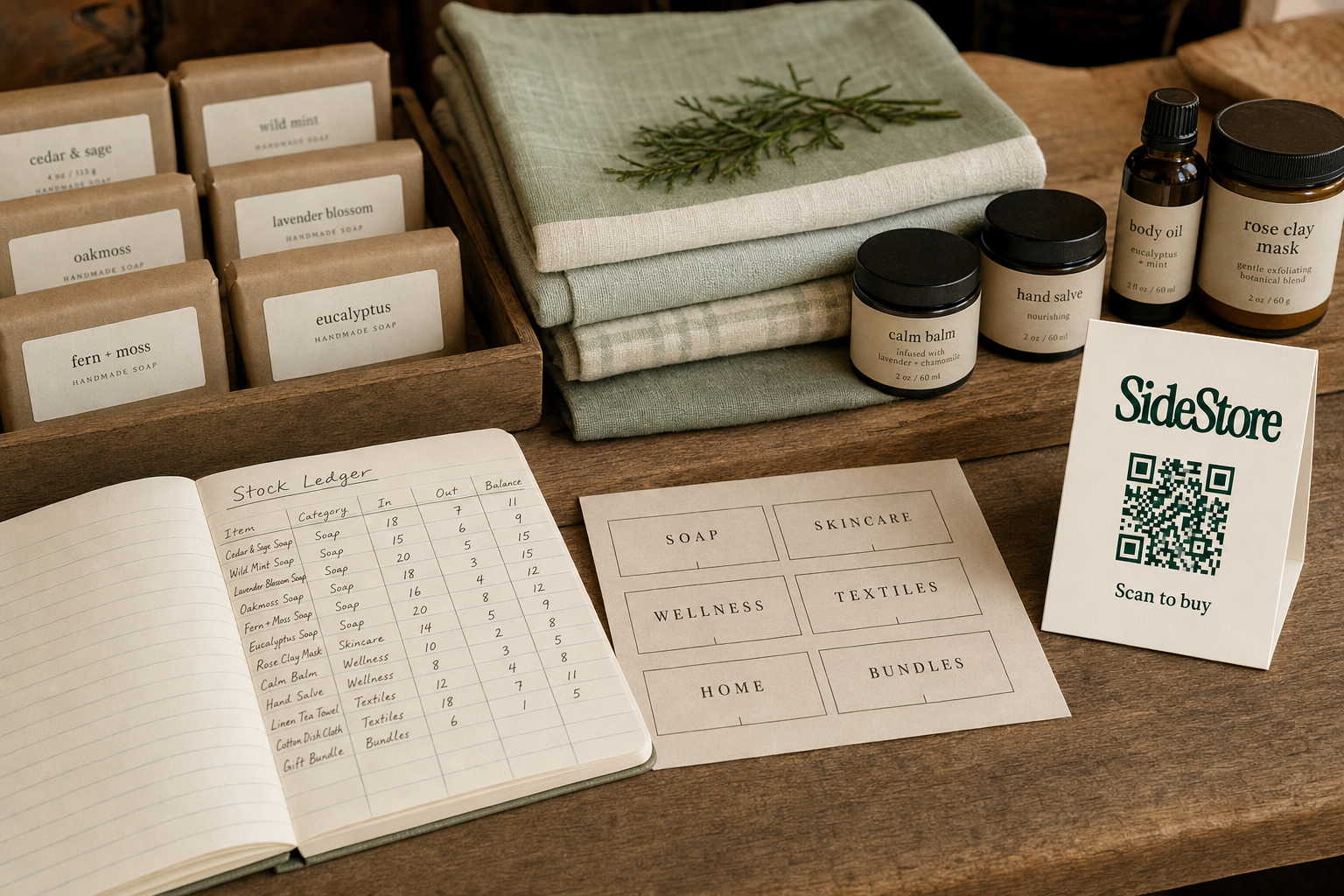
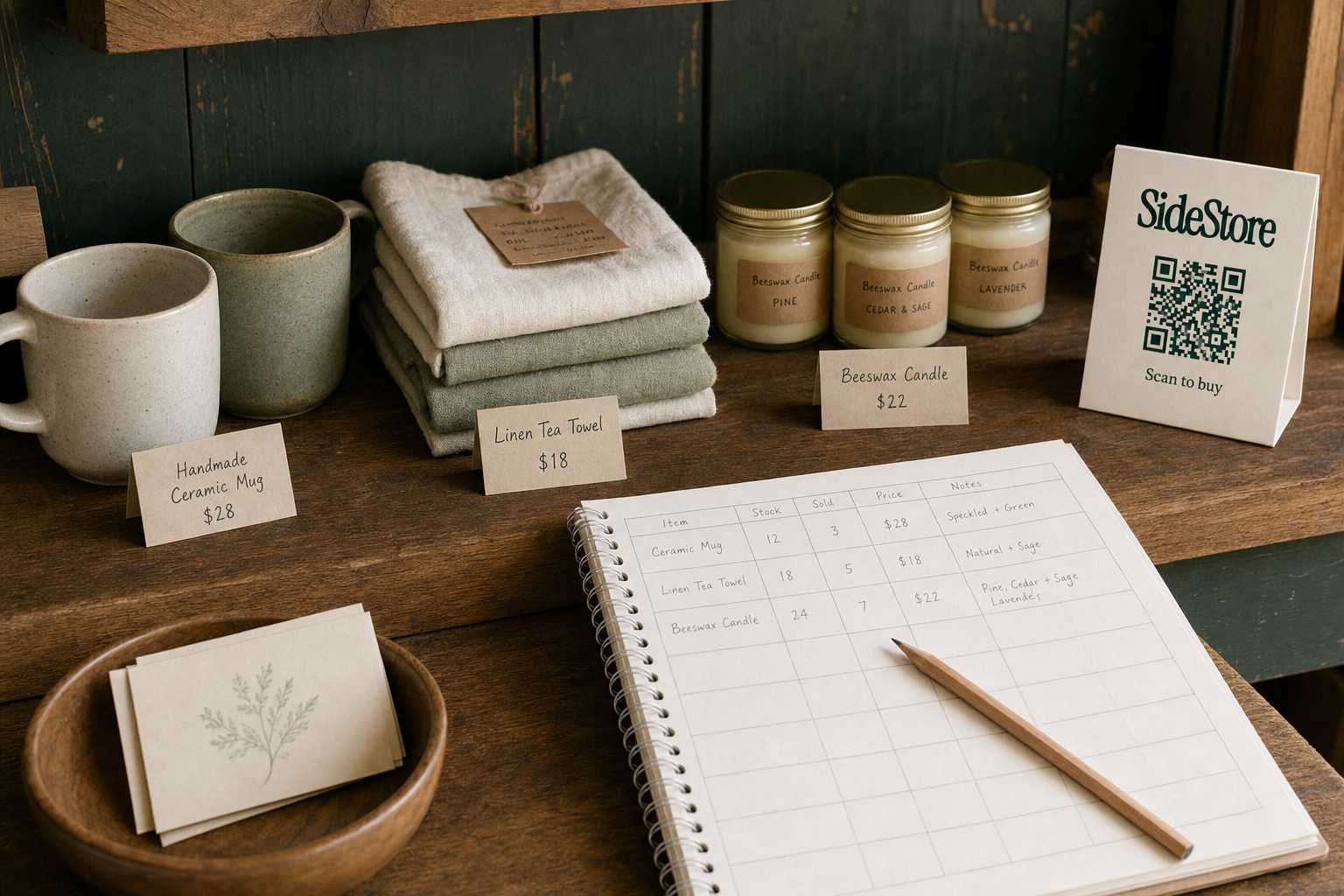
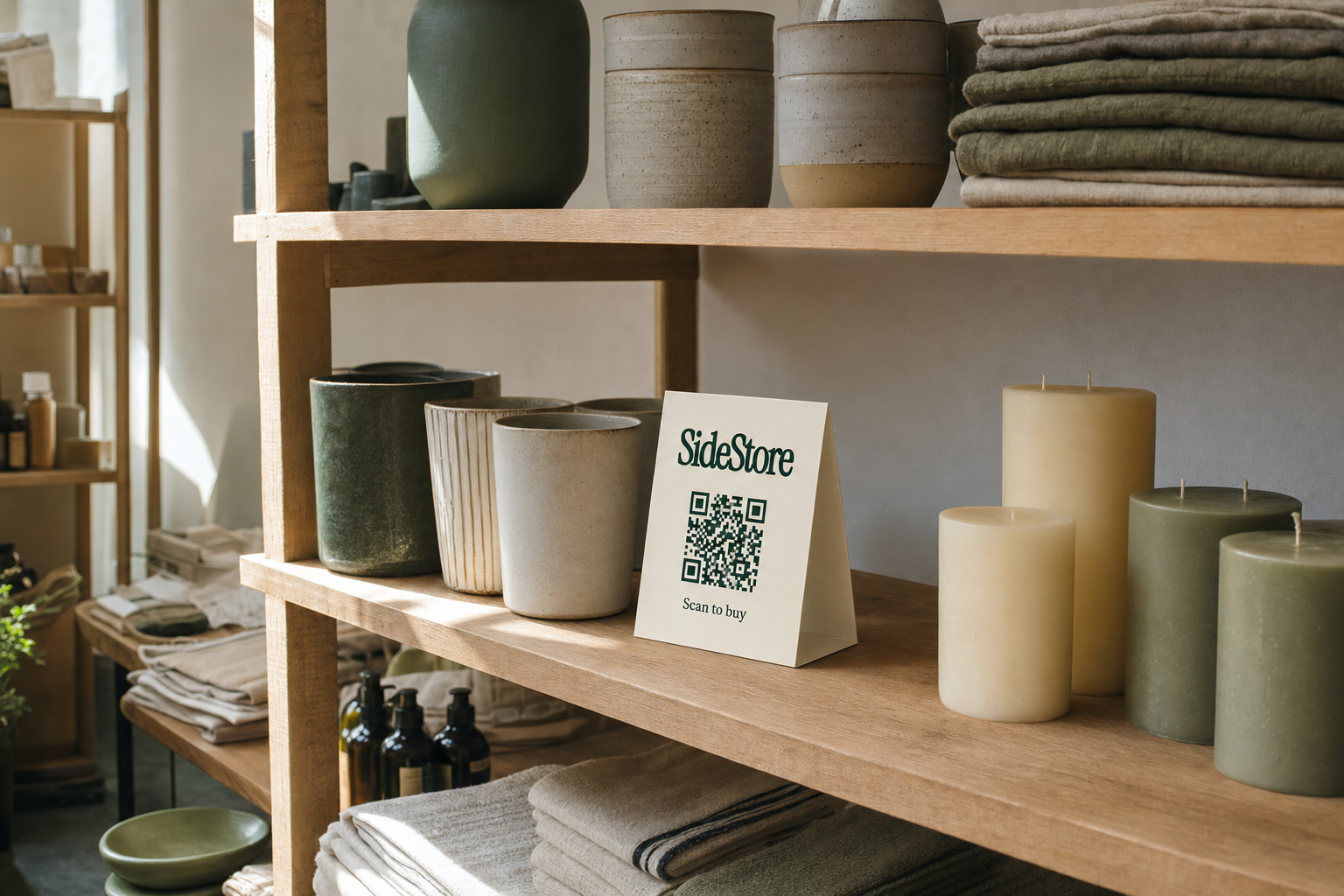
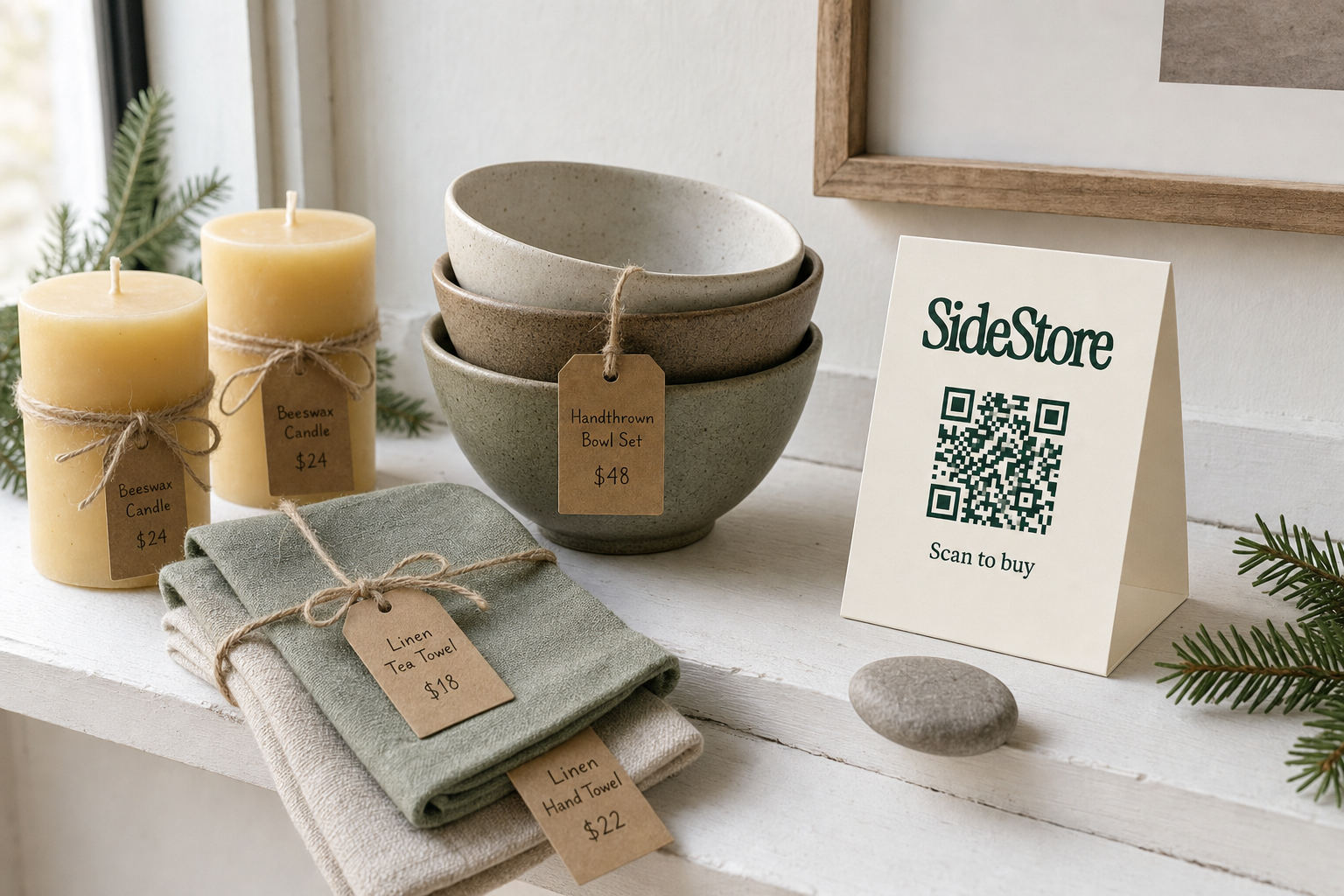
SideStore's Retail Widget is the consignment-management interface that makes this practical at scale. It handles checkout (including a scan-to-pay QR that customers use to purchase directly from the shelf), live stock tracking across every placement, placement attribution so you know which merchant location is selling, and automatic split payouts so both you and your merchant host get paid correctly without manual reconciliation. The QR checkout is one function of the Retail Widget, not the whole product. The Widget is the end-to-end interface for managing a consignment placement.
What consignment does not offer is control over presentation, merchandising, or the customer experience in the host's space. You are relying on the merchant to display your products well and the foot traffic to find them. That is the honest trade-off.
For context on what the model involves day to day, read selling through consignment and what selling on consignment means. If you have been using weekend markets for physical sales and want a lower-effort alternative, see alternatives to weekend markets.
Managing Inventory and Cash Flow Once You Are Live
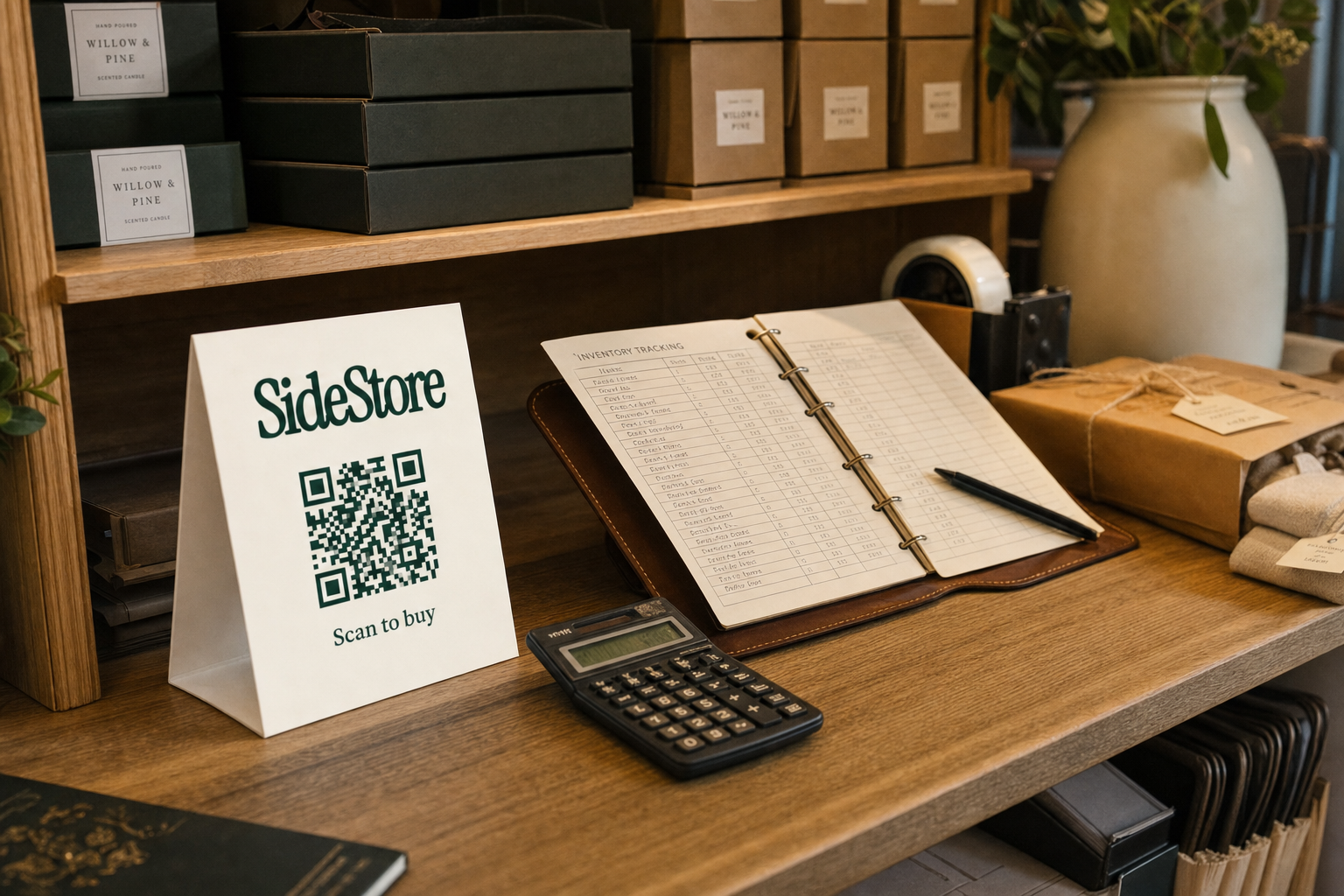
Once your boutique is live, inventory management is not a periodic task. It is an ongoing discipline that directly determines whether your cash flow is healthy or constantly stressed.
The most useful metric to track is your sell-through rate. The formula is straightforward:
Sell-through rate = (units sold ÷ units stocked) × 100
A sell-through rate of 80% is widely cited as a healthy target for boutique retail, though this varies significantly by category and seasonality. Fashion boutiques with seasonal ranges may accept lower sell-through on end-of-season SKUs. A rate consistently below 60% is a signal that you have bought too much or bought the wrong product.
Track sell-through by SKU, not just in aggregate. An overall rate of 75% can hide one product line moving at 95% (you are leaving money on the table by not reordering) and another moving at 40% (you have a slow-stock problem that is tying up cash).
Reorder points matter as much as sell-through. Set a stock level at which you trigger a reorder, and calculate it based on your supplier's lead time plus a buffer. Running out of your best-sellers because you reordered too late is as damaging as sitting on dead stock.
When products stop moving, act early. Markdown before the stock is fully stale. Consider placing slow stock into physical consignment spaces, where a different audience and a different context might convert what your online channel could not. For a structured approach to this, read how to get rid of boutique inventory that isn't moving, and see how to offload excess boutique inventory for practical options.
Five Buying Mistakes That Kill Boutique Margins Before Year One
Most boutique margin problems trace back to buying decisions made before the first product was listed. These are the five that appear most often, and each one has a specific fix.
Mistake 1: Buying to fill a catalogue, not to satisfy demand. New boutique owners often buy wide, many SKUs, small quantities of each, to look like an established store. The fix: buy narrow and deep on the SKUs you have evidence for, and expand only when sell-through justifies it.
Mistake 2: Ignoring landed cost. The wholesale price on the invoice is not what the product costs you. Shipping, duties, packaging, and storage all add to your cost base. The fix: build a simple landed cost calculator before you place any order. Read how much inventory you need to start a boutique as a starting framework.
Mistake 3: Accepting the MOQ without negotiating. Many suppliers, especially smaller ones, will negotiate MOQs for new accounts, particularly if you pay upfront or commit to a follow-on order. The fix: ask. The worst outcome is the same MOQ you already had.
Mistake 4: Tying cash to seasonal stock too early. Buying next season's stock before the current season's sell-through is confirmed is a fast way to end up with two seasons of dead stock simultaneously. The fix: wait until current-season sell-through is above your target before committing to forward orders.
Mistake 5: No plan for unsold stock. Most first-time buyers do not think about exit before they buy. Dead stock is not just a financial loss; it occupies space and mental energy. The fix: decide before you order what you will do if 30% of a line does not sell. Markdown schedule, consignment placement, or liquidation, pick one in advance.
Frequently Asked Questions
The most common questions about buying inventory for a boutique come down to four things: how much money you need, where other boutique owners actually source, how wholesale differs from consignment, and whether you can start without buying stock at all. Here are direct answers.
How much money do I need to buy inventory for an online boutique?
There is no single number, because it depends on your sourcing model and category. A wholesale-based boutique typically needs enough to meet supplier MOQs across your opening range, which could be anywhere from a few hundred to several thousand pounds or dollars. Dropshipping and print-on-demand can reduce that upfront requirement significantly, sometimes to near zero for the stock itself. Define your model before you set a budget.
Where do boutique owners buy their inventory?
Most wholesale-based boutique owners source from trade directories, manufacturer websites, and industry trade shows. Some source from wholesalers who aggregate multiple brands. The right source depends on your category, your price point, and whether you need exclusivity.
What is the difference between wholesale and consignment for a boutique?
Wholesale means you buy stock upfront, own it, and keep the full retail margin when it sells. Consignment means a maker places products with you (or you place your products with a merchant) with no upfront payment; the revenue is split on sale, and unsold stock returns to the maker. Wholesale offers higher margin and full control. Consignment carries no stock risk and no upfront cost.
Can I start a boutique without buying any inventory?
Yes. Dropshipping, print-on-demand, and consignment are all models that allow you to sell without holding stock. Read start a boutique without buying inventory for a full breakdown of each approach, or see the guide on how to run an online boutique without inventory if you want to compare models before committing.
The Decision: Which Sourcing Model Fits Where You Are Right Now
The right sourcing model for buying inventory for an online boutique is determined by three things: how much capital you have available, how confident you are in demand, and how much operational control you need. No single model is right for every stage.
If you have cash and proven demand, wholesale gives you the margin to build a sustainable business. If you are still validating, dropshipping or print-on-demand buys you time without tying up capital. If you produce or curate physical products and want offline distribution without premises, consignment into merchant spaces is a serious option, not a fallback.
Start with the model that matches your current constraints. Add models as your business grows and your confidence in demand increases. Read the guide on how consignment selling works if that path interests you, or see alternatives to weekend markets for small brands for practical routes into physical retail without fixed overheads.
Build a consignment network without opening a store of your own.