An online boutique with no inventory is a retail business where the seller never purchases or warehouses stock upfront, products are either fulfilled by a third party on demand, manufactured only after a sale, or placed in a physical space on consignment where the maker retains ownership until a customer buys.
To start one, choose a model that fits your product type, set up a way for customers to find and buy from you, and arrange a fulfillment or placement structure that removes the need to buy stock in advance. That last point matters more than most guides admit: the right model depends on whether you make things yourself, source them, or want to sell in the physical world as well as online. If you make physical handmade goods, selling through consignment is often a more honest fit than dropshipping, and if you rely on weekend markets, there are alternatives to weekend markets worth knowing before you commit to any single channel.
The Three No-Inventory Models: Dropshipping, Print-on-Demand, and Consignment
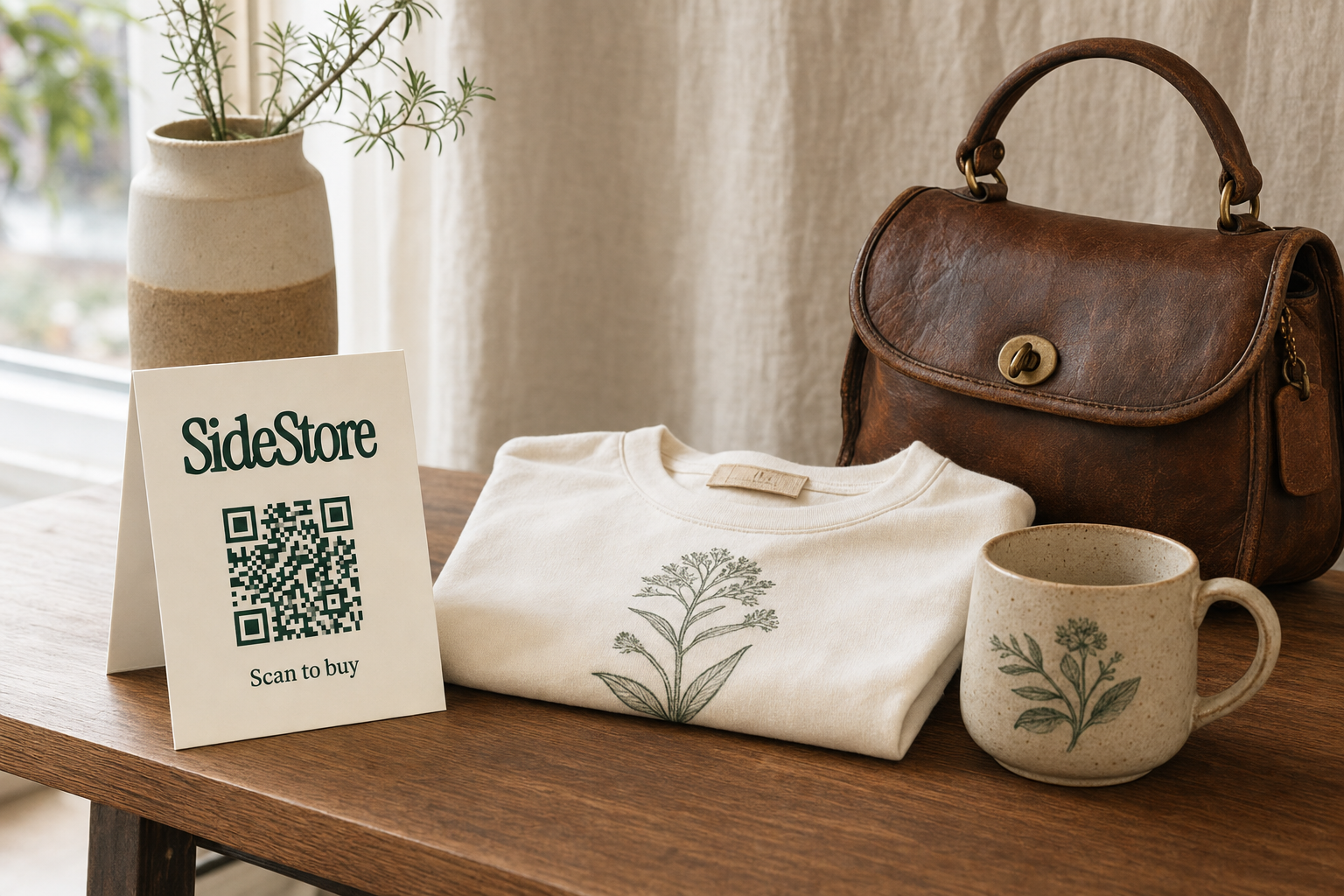
Three models genuinely let you sell without holding stock: dropshipping, print-on-demand, and consignment. Each works differently, suits different product types, and carries its own trade-offs. Choose poorly and you waste months. Choose well and the friction disappears.
Dropshipping means you list products from a supplier's catalog on your online store. When a customer orders, the supplier ships directly to them. You never touch the stock. The barrier to entry is low and your catalog is wide. But margins are thin, you have no control over quality or shipping times, and your brand becomes invisible, you are reselling someone else's goods, not your own.
Print-on-demand lets a fulfillment partner print your design on a product (t-shirt, tote, mug) only after a sale arrives. You own the design, your brand is visible, and margins beat generic dropshipping. The catch: you are still dependent on a third-party's product quality, and handmade or craft goods simply cannot be replicated this way. A ceramic artist cannot print-on-demand a mug. A textile designer cannot print-on-demand a woven piece.
Consignment is the model most guides skip over entirely. You produce or source your own products, then place them in a physical merchant space, a cafe, boutique, hotel, or any retailer with available shelf space. The merchant hosts your products at no cost to either party upfront. You get paid when something sells; the merchant earns a share of each sale. You retain ownership of unsold stock. For an independent maker with distinctive physical goods, this is real offline distribution. What consignment means in practice is worth reading before you commit.
The honest constraint of consignment: it requires active placement work. You need to find merchant partners, deliver stock, and manage replenishment. It is not as passive as listing products online. But for makers who want their goods in front of real, local customers, without the overhead of a store, it is a model that how local makers can sell without opening a retail store explores in detail.
Comparing Your Options: A Side-by-Side Overview
Before committing to a model, ask the questions that actually matter to a maker. Upfront cost, who holds the stock, and whether your brand identity survives the model. The table below gives you the honest comparison.
| Model | Upfront cost | Who holds stock | Maker identity preserved | Suits physical handmade products | Key constraint |
|---|---|---|---|---|---|
| Dropshipping | Minimal (store fees only) | Supplier warehouse | No, you resell supplier goods | Rarely | Thin margins, no product control |
| Print-on-demand | Minimal (design costs) | Fulfillment partner | Partially, design is yours | No, limited to printable formats | Product quality not in your hands |
| Consignment | Production cost only | Maker retains ownership until sale | Yes, fully your product | Yes, ideal for handmade goods | Requires active placement outreach |
Consignment is the only model where ownership stays with the maker until a sale completes. If you make physical goods and want your name on them, it is the most honest fit, though it asks more of you operationally. For a deeper look at how placement works, see selling to consignment.
How to Set Up Your No-Inventory Boutique: Step by Step
Setting up a no-inventory boutique takes six concrete steps. Complete them in order and you avoid the most common early mistakes, chasing the wrong model, approaching merchants without a clear pitch, or going live before your operations can support even one placement.
Step 1: Decide what you are actually selling. Define your product and confirm it exists as a physical object you make or source yourself, a design you can put on a printable product, or a supplier catalog item. This choice determines your model. Handmade goods point to consignment. Designs point to print-on-demand. Sourced catalog items point to dropshipping.
Step 2: Choose your model based on what your product actually is. Do not reverse-engineer your product to fit a model. If you handcraft ceramic pieces, dropshipping is irrelevant. Match model to product, not trend to aspiration.
Step 3: Set up a simple product-facing presence online. This does not need to be a full e-commerce store at launch. A clean, linkable product page or profile that shows what you make, your price range, and how someone can buy is enough to start. You need somewhere to point merchant partners and customers alike.
Step 4: Identify your first placement venue. Before you think about scale, focus on one merchant space that makes sense for your product. A local cafe, a boutique with complementary stock, a bed and breakfast with a small retail display, any venue with foot traffic and available shelf space is a candidate. Section 5 covers outreach in detail.
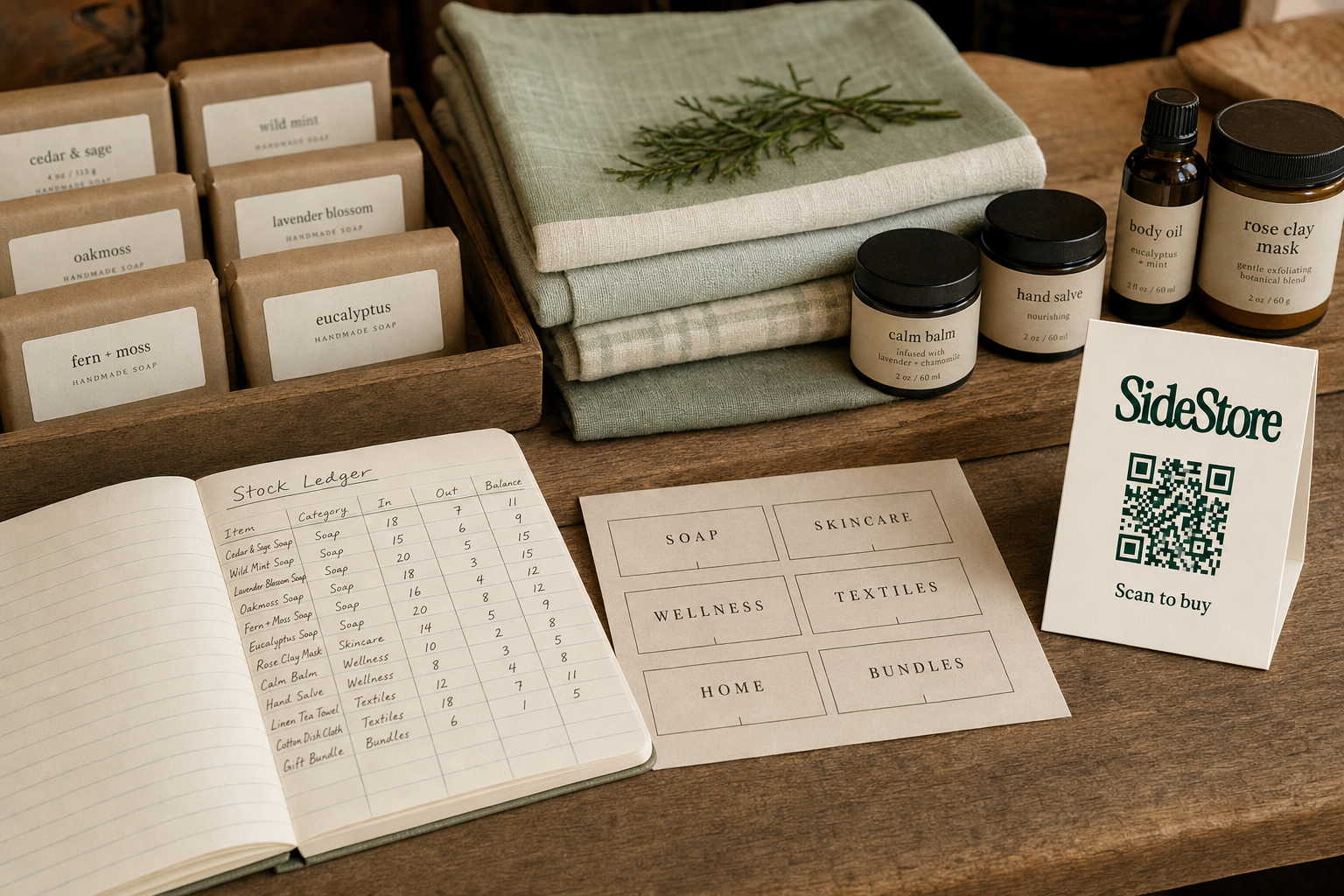
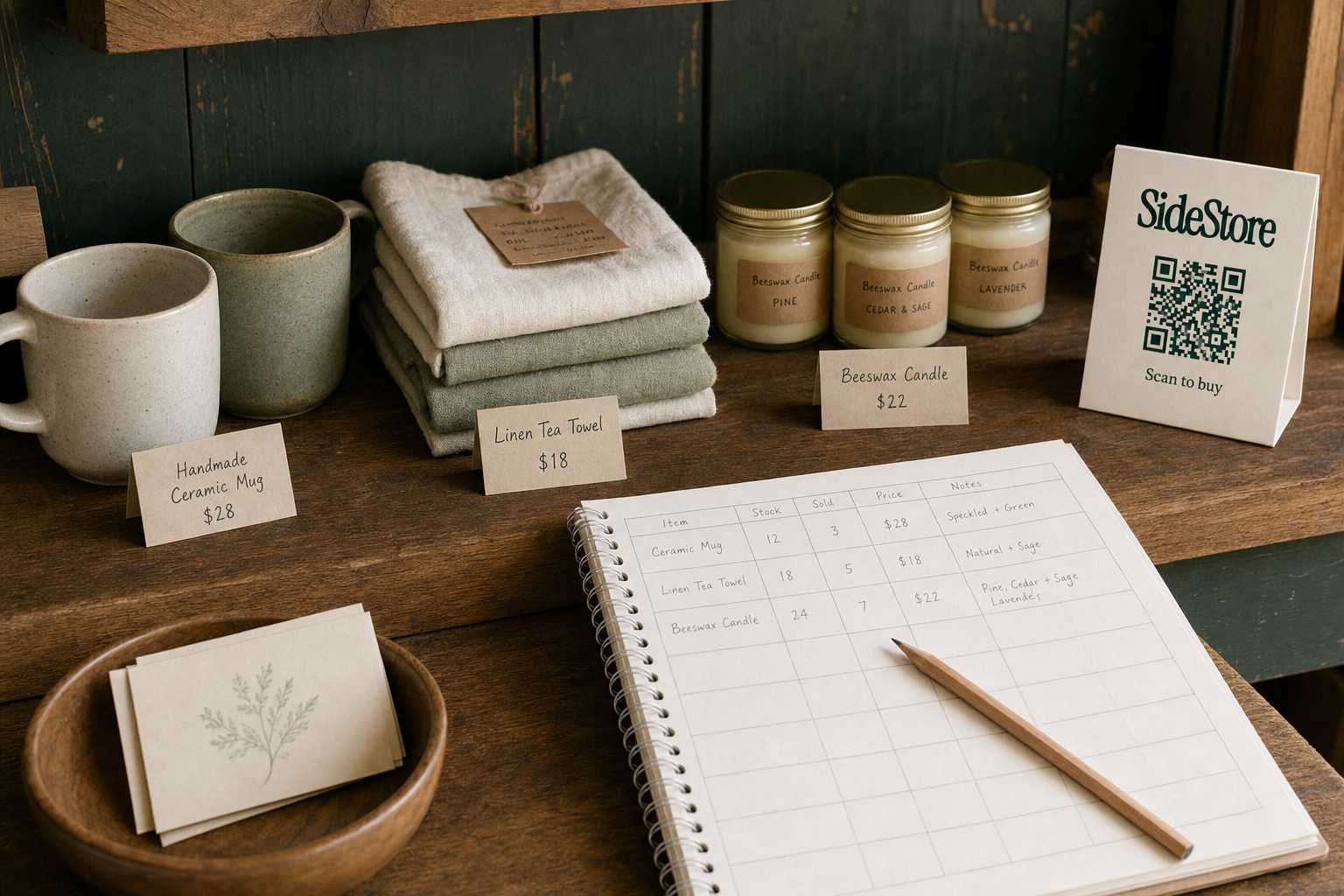
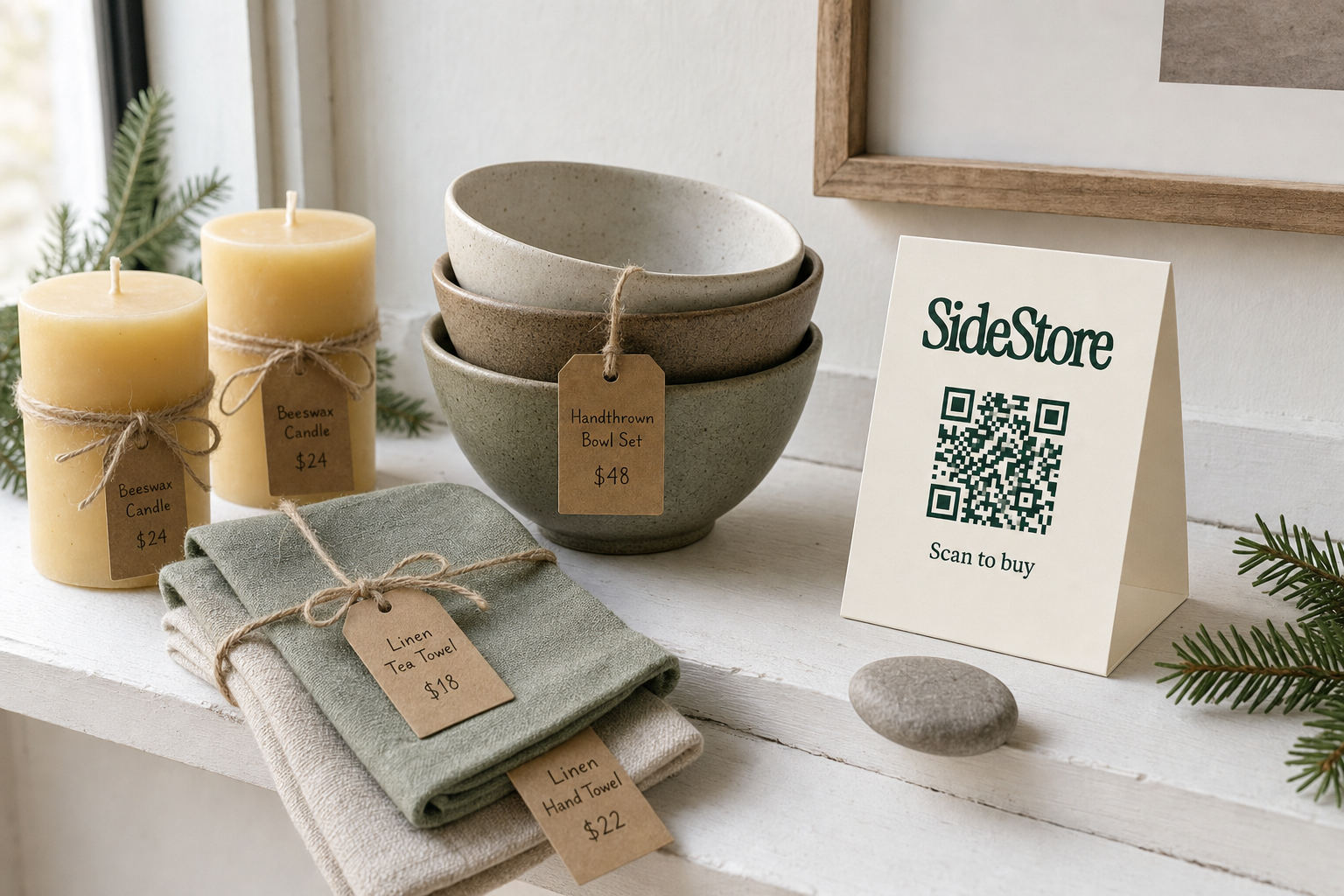
Step 5: Set up the Retail Widget for that placement. The SideStore Retail Widget is the interface that places and manages your product on consignment. It handles checkout via a printable scan-to-pay QR card, tracks live stock across placements, attributes each sale to the correct location, and runs automatic split payouts between you and the merchant. The QR card is one function of the Widget, not the whole product, it is simply the physical checkout mechanism a customer uses in-store. How the SideStore QR card works explains the checkout flow. For the merchant's perspective on hosting products without buying inventory, how boutique shops add local products without buying inventory is a useful read.
Step 6: Go live, observe, and adjust before adding more placements. Let your first placement run for several weeks before placing in a second venue. Understand what sells, what does not, and what replenishment looks like in practice. Scale when the first placement works, not before.
Finding Merchant Partners: Where to Place Your Products
The hardest practical step in consignment is finding merchants willing to host your products. The good news: many venues already have shelf space sitting idle and no system to monetize it. Your pitch is as much about their benefit as yours.
Four venue types consistently work well as first placements:
Cafes and coffee shops. High daily foot traffic, often short dwell time but repeat visits. Small, well-priced items, candles, cards, ceramics, packaged foods, move well in these spaces. See how cafes earn from unused shelf space to understand what makes the offer compelling from their side.
Independent boutiques. These already curate physical products and often welcome makers whose work complements their existing range without competing directly. Come with products in hand.
Hotels. Lobbies and reception areas carry guest foot traffic around the clock. Locally made goods appeal particularly to visiting customers looking for something distinctive. How hotels turn lobby space into retail revenue covers the mechanics of this placement type.
Bed and breakfasts. Smaller venues with highly attentive guest experiences. Guests often have time to browse and a reason to buy locally. How bed and breakfasts make money from a small retail corner makes the case from the host's perspective.
Your outreach framework: Arrive with a small sample of your products, a printed one-page overview of what you make and how consignment works, and a clear proposal that names the split arrangement and explains that the merchant carries no upfront cost and no stock risk. Be specific about what you are asking for, a particular shelf or display area, a trial period, a minimum number of units. Merchants respond to clarity. On the split: consignment arrangements vary, so be ready to discuss and agree a split that works for both parties rather than quoting a figure before the conversation has started.
Managing Inventory, Checkout, and Payouts Across Multiple Placements
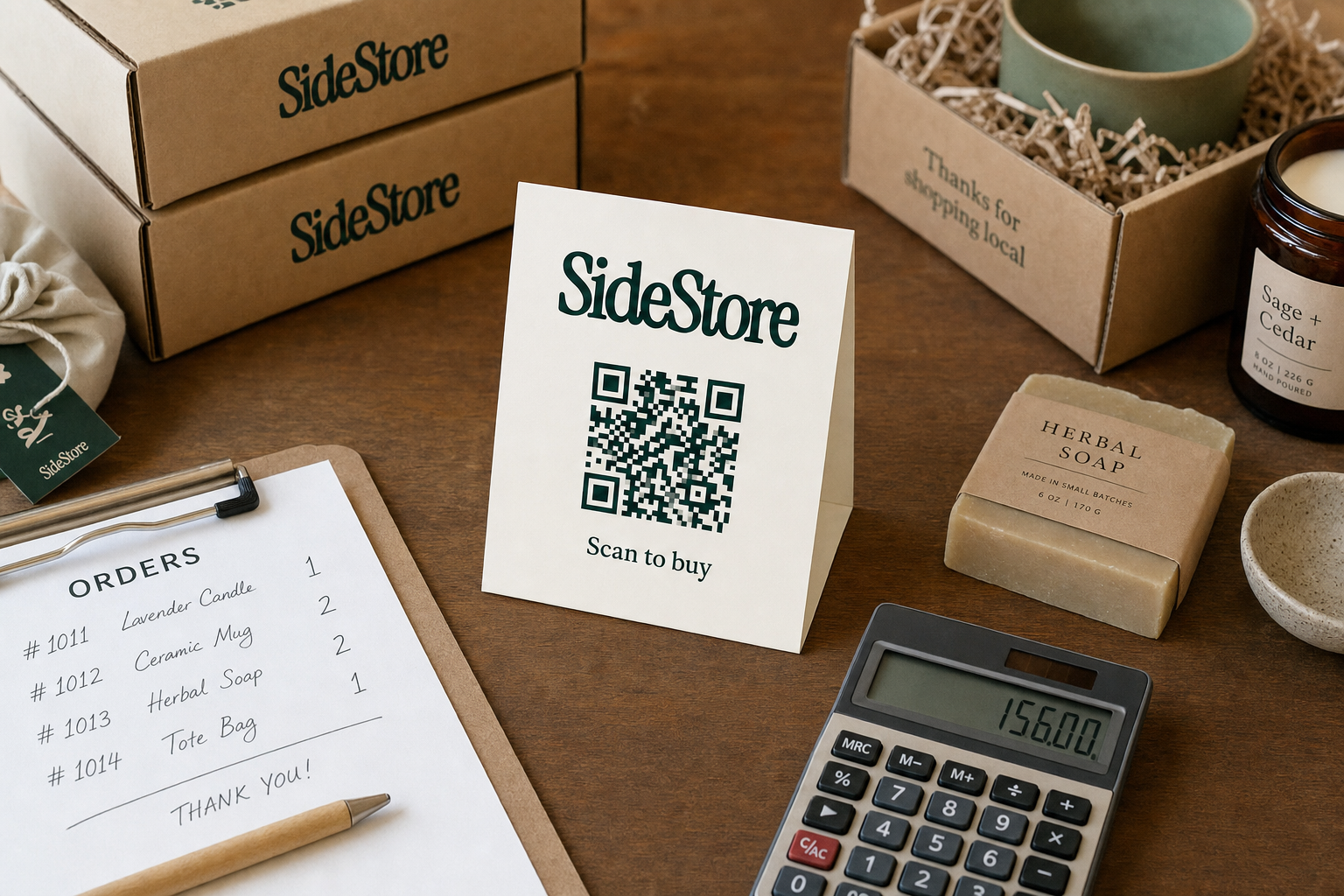
Once you have more than one placement running, the operational load multiplies fast. Stock levels diverge across venues, sales happen without you present, and tracking which placement generated which revenue becomes genuinely difficult without the right system. Get this wrong and you run out of stock silently, settle payouts manually, or lose track of which venues are performing.
The SideStore Retail Widget addresses each of these points directly.
Stock tracking. The Widget monitors live stock levels for each placement independently. When a product sells at one venue, its count updates in your dashboard without manual entry. You see which placements are running low and can prioritize replenishment trips accordingly.
Placement attribution. Every sale is tagged to the specific venue where it occurred. This means you can compare performance across locations over time, identifying which cafe or boutique generates the most sales and adjusting your distribution accordingly.
Automatic split payouts. When a customer completes a purchase, the Widget calculates and routes the agreed split between you and the merchant automatically. There is no need to invoice the merchant after the fact or track what is owed manually.
The QR card in context. The printable scan-to-pay QR is the in-store checkout mechanism, a customer scans it to complete a purchase. It is one function of the Retail Widget, not the whole product. The Widget's value is in the full consignment management layer: placement, stock, attribution, and settlement together. For more context on building this kind of distributed operation, see starting a boutique without inventory and boutique inventory considerations.
Common Mistakes When Starting Without Inventory (And How to Avoid Them)
Starting a no-inventory boutique is genuinely achievable, but most early stumbles follow predictable patterns. These mistakes are common, not signs you have chosen the wrong path. Recognizing them before they happen saves time.
Mistake 1: Choosing a model that does not fit your product. Makers who produce handmade goods sometimes start with dropshipping because guides make it sound easier. It is not easier if your product is not a supplier's catalog item. Correction: match your model to what you actually make, not to what is most covered online.
Mistake 2: Approaching merchants without a prepared pitch. Turning up without samples, without a clear explanation of consignment terms, and without a proposed split arrangement signals unpreparedness. Correction: bring products, a one-page overview, and a concrete proposal.
Mistake 3: Scaling placements before the first one works. Adding four venues when the first is barely managed stretches your stock and attention thin. Correction: let one placement run and stabilize before adding the next.
Mistake 4: Ignoring replenishment logistics. Stock runs out at physical locations without warning if you have no tracking in place. Customers who find empty shelves do not wait. Correction: use the Retail Widget's live stock tracking so you know when to replenish before a venue goes bare.
Mistake 5: Treating unsold stock as a loss. Consignment means unsold products come back to you. This is not failure, it is data. Correction: review what did not sell and adjust your placement strategy, your pricing, or your product mix. For structured guidance on this, managing surplus boutique inventory is a practical resource.
Frequently Asked Questions
These questions come up consistently for makers exploring how to start an online boutique with no inventory.
Can I really start an online boutique with no upfront inventory cost? Yes, with the right model. Consignment requires you to produce or source your products first, that production cost is real. But you do not pay for shelf space, and you do not buy stock speculatively to sit in a store. The merchant hosts your products at no upfront cost to either party, and you get paid only when something sells.
What is consignment and how does it differ from dropshipping? Consignment means you place your own products in a physical venue and get paid when they sell, retaining ownership of unsold stock until it sells or is returned. Dropshipping means you list a supplier's products in an online store and the supplier ships directly to your customer. In consignment, the products are yours; in dropshipping, they are not. The meaning of selling on consignment covers this in full.
How do I price my products if I do not know the consignment split yet? Price your product at the full retail value you want to receive, then negotiate the split from there. Know your floor, the minimum per-unit return that covers your production cost and leaves a margin, and work backwards. Do not discount your retail price to accommodate a split before you have agreed one.
How many placements should I start with? One. A single well-managed placement teaches you more about replenishment, product performance, and merchant relationships than three poorly managed ones. Add placements when the first is running smoothly and you have the stock and time to support another.
What does the SideStore Retail Widget actually do? The Retail Widget is the interface for placing and managing products on consignment. It handles checkout via a printable scan-to-pay QR, tracks live stock across all your placements, attributes each sale to the correct venue, and runs automatic split payouts between maker and merchant. The QR checkout is one function of the Widget, the Widget itself manages the entire consignment placement end to end.
Start Small, Place Deliberately, Scale When It Works
You do not need to hold stock to run a boutique, but you do need to choose your model deliberately. Dropshipping and print-on-demand suit certain product types. Consignment suits makers who produce physical goods and want offline distribution without fixed costs. Each is right for something, but not everything.
Your next concrete action: identify one merchant venue near you with available shelf space, prepare three to five products and a clear one-page pitch, and request a trial placement. Do not wait until you have optimized everything. A single live placement, tracked properly through the Retail Widget, will tell you more than any amount of planning.
If you want to understand the mechanics before your first conversation with a merchant, how consignment works in practice is the place to start. And if weekend markets have been your only offline channel, the alternatives to weekend markets for makers shows you what else is available.
Build a consignment network without opening a store of your own.