Purchasing inventory for a boutique means selecting, sourcing, and paying for the products you intend to sell. The decisions you make before you place a single order will determine your cash flow, your margins, and how much risk you carry on the shelf.
Most boutique owners focus almost entirely on finding suppliers and skip the planning that comes before. That is where cash gets trapped.
The core sequence is simple: define your product mix, choose a sourcing channel (wholesale, trade shows, maker-direct, or consignment), negotiate terms and order quantities, then manage what lands on the shelf. Before you commit to any order, know how much inventory you need to start and get clear on what type of stock you are actually looking for. If you want to browse options first, boutique inventory for sale shows you what is typically available across categories. The right sourcing strategy is the one your cash flow can survive, not the one with the most impressive brand names.
Define Your Product Mix Before You Spend a Dollar
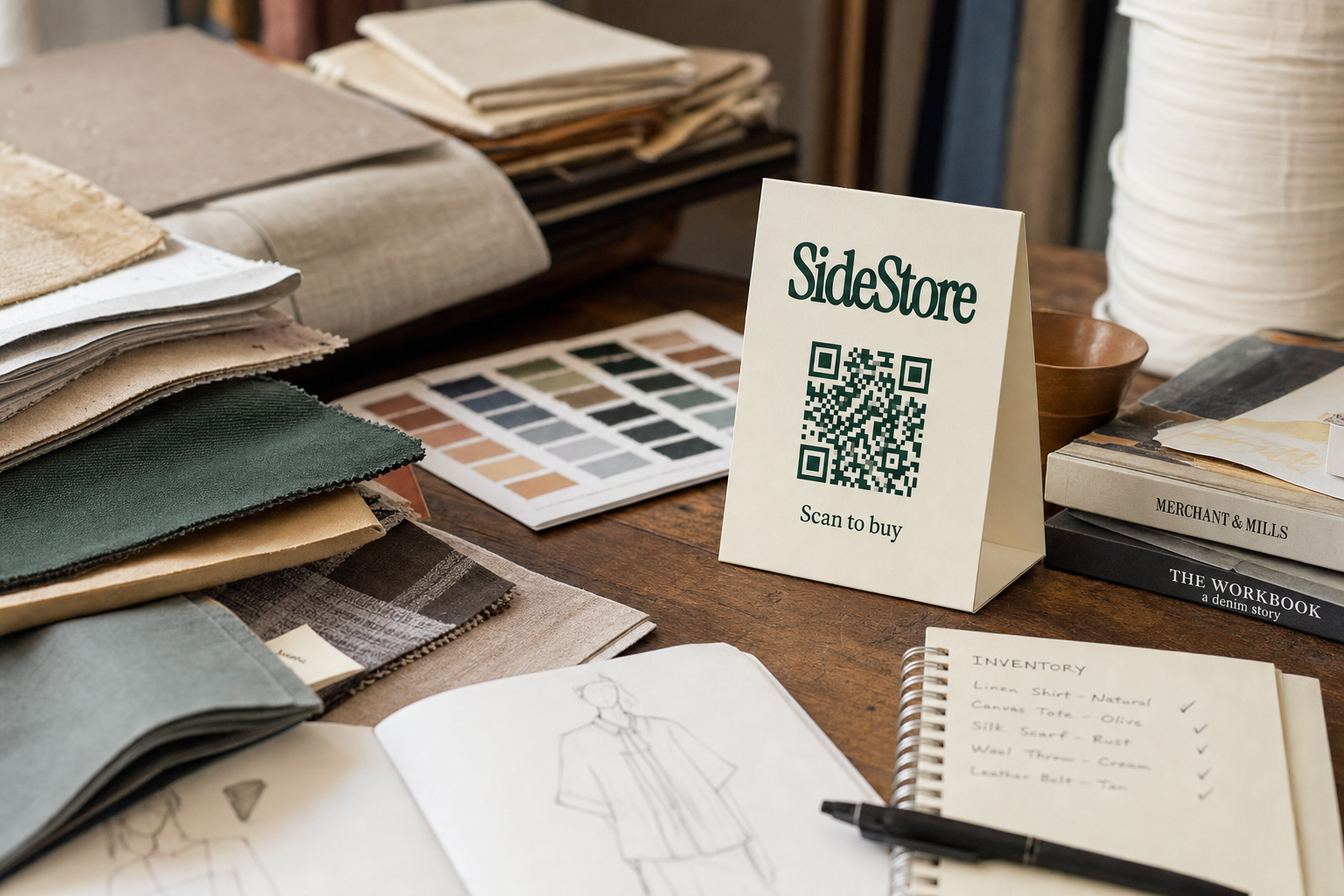
Before you spend anything, answer two questions: what is the core of your boutique's offer, and what are the edges?
Your core products are the items customers expect every time they walk in. They are reliable sellers that anchor your identity. Your edge products are the surprises: limited runs, seasonal pieces, or local makers that give the shop personality.
This core-and-edge framework matters because each category should be sourced differently. Core lines justify the cash commitment of a wholesale minimum order. Edge lines do not. They are better tested on consignment or in small direct buys, so you are not left holding excess stock if a trend passes.
Write down your core categories first: three to five product types maximum. Then identify two or three edge slots you want to rotate. Knowing how much inventory to start with will help you match those slots to a realistic opening budget.
A clear product mix prevents the most common boutique mistake: buying by feel in the moment and ending up with a shop that has no coherent identity and shelves full of slow movers.
With your mix defined, you are ready to choose where and how to source each category.
The Four Main Sourcing Channels for Boutique Inventory
You have four practical options for sourcing boutique inventory. Each has a different upfront cost, risk profile, and margin structure. The right channel depends on whether you are sourcing a core line or an edge slot.
1. Wholesale suppliers sell to you in bulk at a cost below retail. You pay upfront, own the stock, and keep the full retail margin when it sells. The trade-off is a minimum order quantity (MOQ) and the full financial risk if the product does not move.
2. Trade shows (such as regional gift fairs and fashion markets) let you see and touch products before ordering. Many exhibitors accept orders on the spot and ship later. Travel and attendance costs add to your per-unit expense, but the curation and discovery value is real.
3. Independent maker direct means buying from artisans, designers, or small-batch producers without a wholesaler in the middle. MOQs are often lower, margins vary widely, and you can sometimes negotiate consignment terms directly. The product is usually distinctive, a genuine differentiator for your shelves.
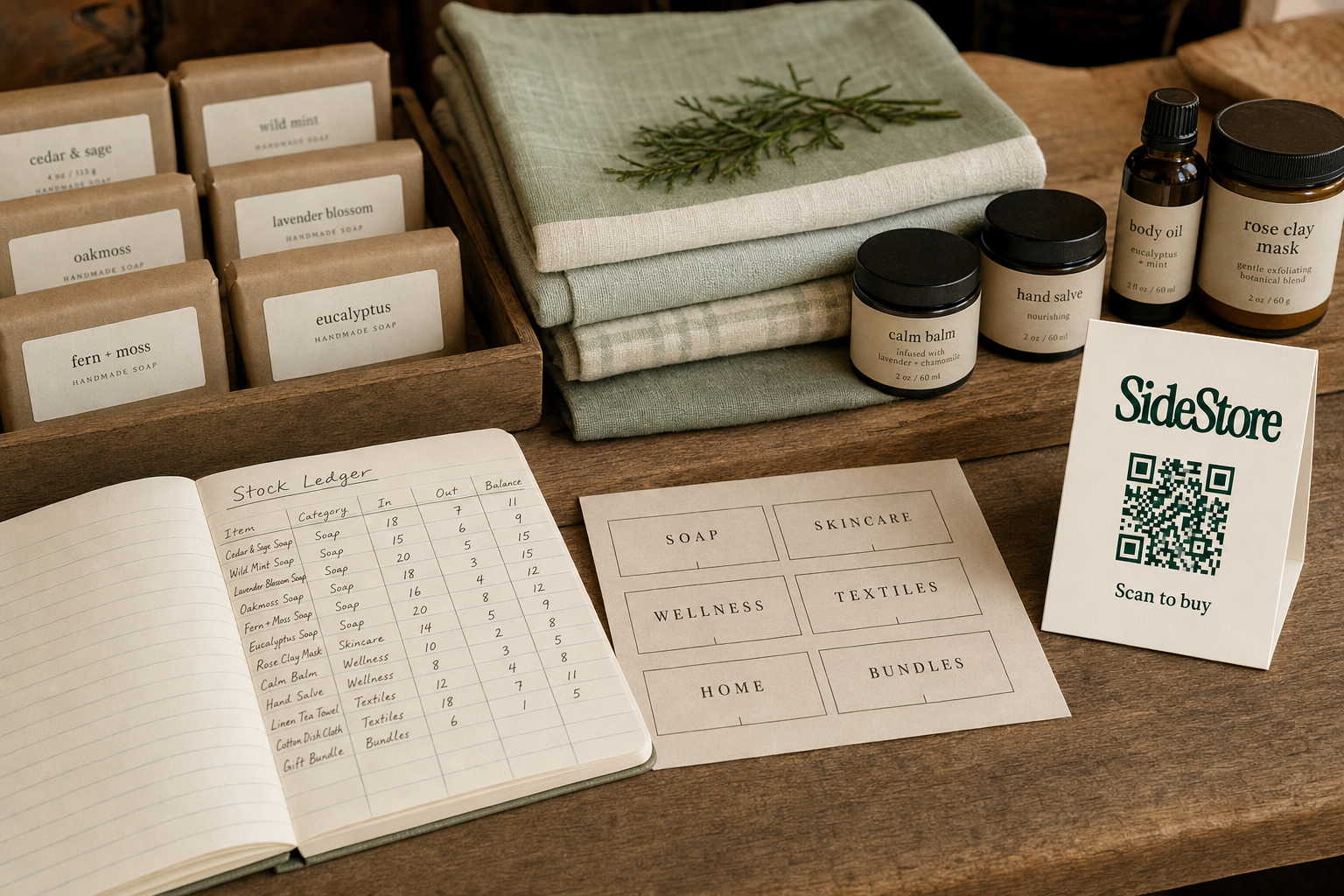
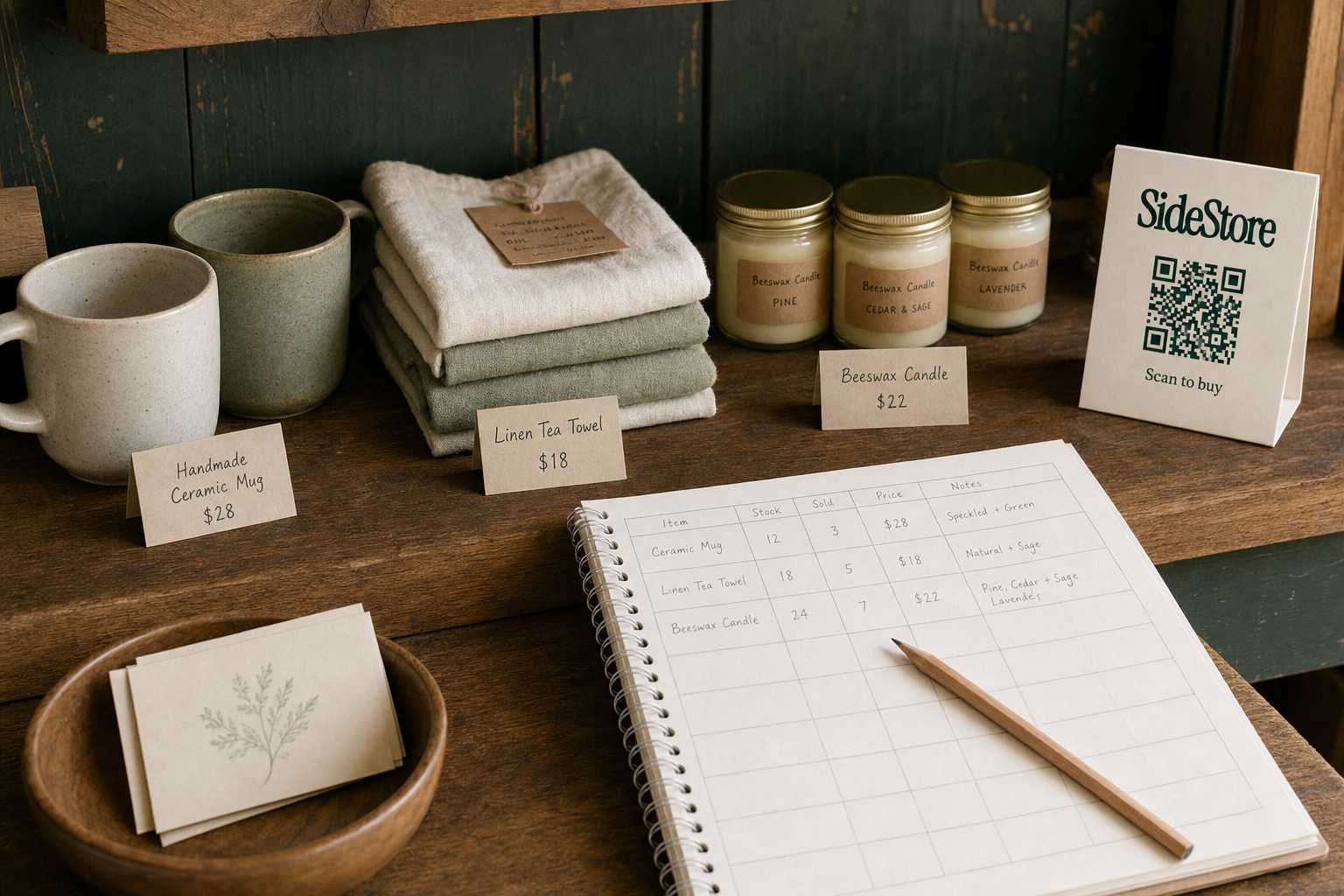
4. Consignment via SideStore means a maker places their products in your space at no cost to you. You stock the shelf without buying the stock. The Retail Widget, SideStore's consignment-management interface, handles checkout via a printable QR card, tracks live stock levels, and pays out your split automatically when a sale is made. To understand how consignment works in practice, or to clarify what consignment means as a commercial arrangement, both links cover the mechanics in detail.
Sourcing Channel Comparison: Cost, Risk, and Margin at a Glance
How do the four channels actually compare when you put them side by side?
| Channel | Upfront Cost | Stock Risk | Typical Gross Margin | Minimum Order | Best Fit |
|---|---|---|---|---|---|
| Wholesale Supplier | Medium, High | High (you own unsold stock) | 40, 60% (varies by category) | Often high (case or unit minimums) | Core, proven lines |
| Trade Show Purchase | Medium (+ travel) | High (you own unsold stock) | 40, 60% (varies by category) | Varies, many exhibitors flexible | Discovery and core buying |
| Independent Maker Direct | Low, Medium | Medium (lower MOQs typical) | Varies widely | Often low or negotiable | Edge and distinctive lines |
| Consignment (SideStore) | Zero | Zero (maker retains ownership) | Lower per-unit split, but no capital at risk | None | Edge, test, and new-maker slots |
Margins in the table are illustrative ranges; actual figures vary significantly by product category, supplier relationship, and geography. Verify current terms directly with any supplier before committing. For more on how revenue is structured when selling through consignment, see the linked guide.
How Wholesale Buying Works, and Where It Can Go Wrong
Wholesale buying is straightforward in principle: you buy products below retail price, sell them at retail, and keep the difference. What most boutique owners underestimate is the cash timing. You pay upfront, sometimes 30 to 90 days before the product reaches your shelf, and you carry that cost whether or not the product sells.
Platforms such as Faire and Tundra have made wholesale more accessible for independent boutiques by lowering some minimum order barriers and offering net payment terms on first orders. That said, terms change and vary by brand. Always verify current MOQs and payment conditions directly with each supplier or platform before placing an order.
The practical risk is dead stock. If a product sits, you have tied up cash that could have funded your next buy. The smarter sequence is to test a new product category via consignment or a very small direct buy first. If it sells at a rate you are happy with, then place a wholesale order. This test-before-you-wholesale rule is especially important for seasonal or trend-led categories, where what looks compelling in March may be difficult to shift by June.
When dead stock does accumulate despite your best planning, knowing how to get rid of slow-moving boutique inventory before it drags your margins down is the practical next step.
Consignment: Stock Your Shelves With Zero Upfront Cost
Consignment is a sourcing model in which a maker places their products in your boutique and you pay them only when those products sell. You carry no upfront cost and hold no stock risk. The maker retains ownership of unsold units.
For a boutique, this changes the economics of your edge slots entirely. Instead of committing £200 or £500 to test whether a new candle brand or print-maker resonates with your customers, you place the product on consignment and find out for free. If it sells, you restock. If it does not, the maker collects their product and you have lost nothing.
SideStore's Retail Widget is the interface that makes this manageable at scale. It is not simply a QR code. The Widget handles the full consignment placement: a maker or merchant can print a SideStore QR card to attach to a product or display for a whole placement, live stock levels update automatically as items sell, placement attribution records which product sold in which location, and split payouts go to both the maker and the host without any manual reconciliation. You see your share in your dashboard; the maker sees theirs. No invoice chasing, no end-of-month calculation.
The honest trade-off: your per-unit take on a consignment sale is lower than on a wholesale product you bought and priced yourself. You are sharing the margin with the maker in exchange for carrying none of the risk. For edge slots and test products, that trade is almost always worth making.
Consignment is also how spaces that are not traditional boutiques build retail income without inventory overhead: cafes earning from unused shelf space, hotels turning lobby areas into retail revenue, and makers looking for alternatives to weekend markets.
Within your core-and-edge framework, consignment is the natural home for the edge. Reserve your wholesale budget for what you already know sells.
Budgeting for Boutique Inventory: How Much to Spend and When
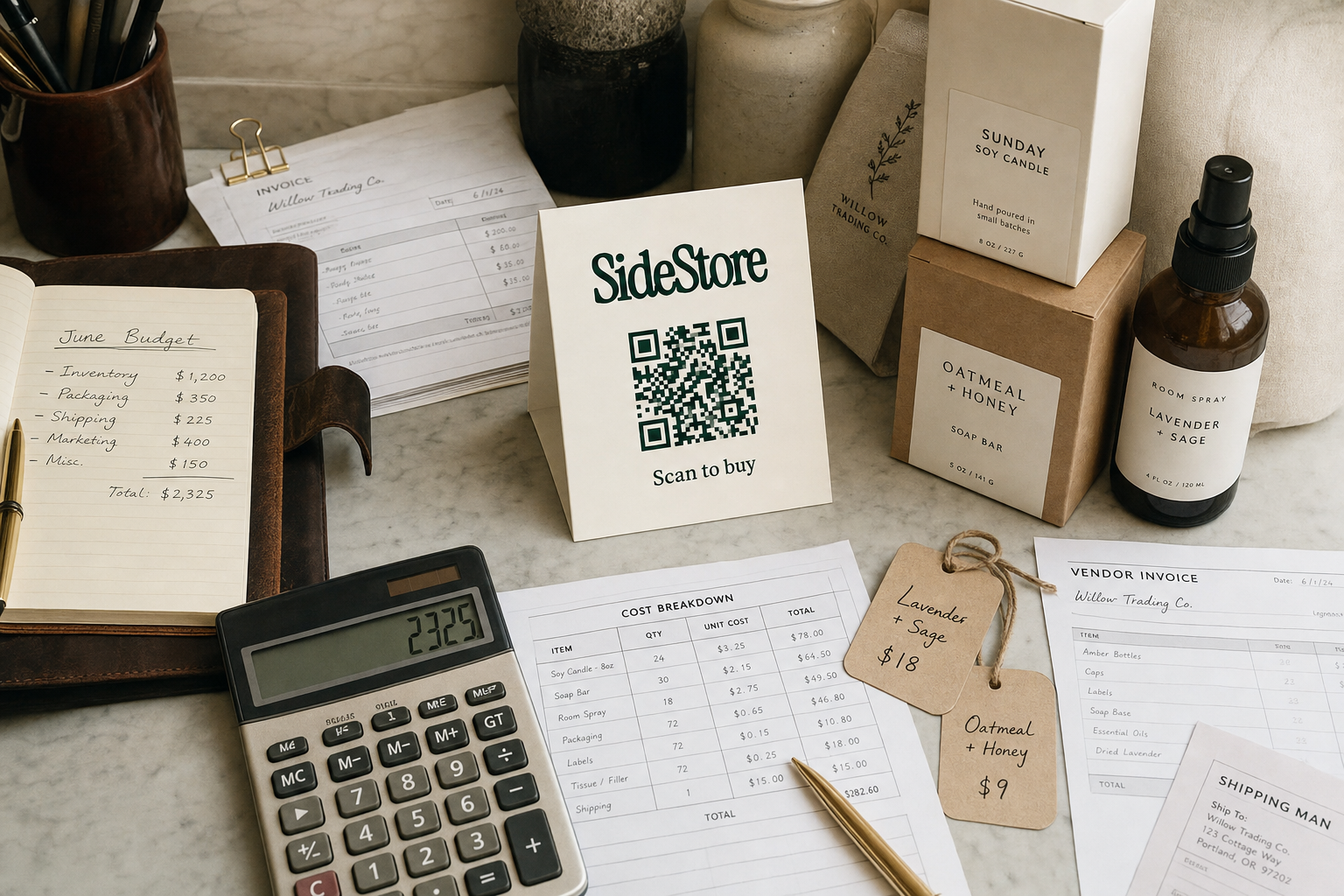
The most common cash trap in boutique buying is spending too much too early on stock that moves too slowly. The discipline that prevents it is open-to-buy budgeting: a simple system where you only commit to new inventory spend up to the amount your projected sales will cover within a defined period.
Open-to-buy is worth defining once, plainly. It is the difference between what you plan to sell in a period and what you already have available to sell. If your plan says you will sell £3,000 of stock this month and you already have £2,000 in inventory, your open-to-buy is £1,000. That is the maximum you should be ordering right now.
How you split that budget across channels depends on your stage and your product mix. A new boutique with little sales data should weight more of its budget toward consignment and small direct buys, reserving wholesale commitment for only the one or two core lines you are most confident in. As sell-through data accumulates, you can shift spend toward wholesale on the proven movers.
If you are at the very early stage, exploring how to start a boutique with no inventory or how to launch without holding stock will give you a clearer picture of what is structurally possible before your first order.
The concrete sequence: test via consignment first, confirm sell-through rate, then place the wholesale order. That order goes in with real data behind it, not a hunch.
Managing Inventory After You Have Stocked the Shelf
Once stock is on the shelf, your job shifts from buying to tracking. Three metrics tell you almost everything you need to know about how your inventory is performing.
1. Sell-through rate, the percentage of a product's stock that has sold within a set period. A high rate means the product is working. A low rate is a warning you need to act on before it becomes dead stock.
2. Weeks cover, how many weeks of sales your current stock level will sustain at the current rate. Too many weeks of cover means cash is tied up; too few means you risk running out before a reorder arrives.
3. Gross margin per unit, what you actually earn on each sale after the cost of goods. Track this per product, not just in aggregate. A best-selling product with a thin margin may be doing less for your business than a slower-moving product with a strong one.
For consignment placements managed through SideStore, the Retail Widget tracks live stock levels automatically. One less thing to manage manually. As stock sells via the QR checkout, your inventory count updates in real time.
When a product's sell-through rate consistently underperforms, act quickly. The guide on how to clear slow-moving boutique inventory covers your options. And if you are looking to offload or acquire stock between boutiques, boutique inventory for sale is a useful reference point.
Frequently Asked Questions
Boutique owners tend to ask the same practical questions about inventory purchasing, not because the topic is complicated, but because the answers depend on sourcing channel and business stage in ways most guides do not make explicit.
How much does it cost to buy inventory for a boutique?
There is no universal figure. A small boutique opening with a curated mix and consignment-heavy approach can get product onto shelves with a very modest cash outlay, sometimes a few hundred pounds or dollars for direct buys, with consignment lines costing nothing upfront. A wholesale-first approach at even modest MOQs can require several thousand before a single item sells. The range is genuinely wide; your budget should be set by your open-to-buy discipline, not by what you feel you need to fill the shop.
Where do boutique owners buy their inventory?
Most boutiques use a mix: wholesale platforms (Faire, Tundra, and regional equivalents), trade shows and gift fairs, direct relationships with independent makers, and increasingly, consignment arrangements where makers place products at no cost to the host. No single channel is right for all products. Match the channel to the role the product plays in your mix.
What is consignment inventory for a boutique?
Consignment inventory is stock a maker places in your boutique that you do not pay for upfront. You stock the shelf; the maker retains ownership. When a product sells, the revenue is split between you and the maker. See how consignment works and what selling on consignment means for the full mechanics.
How do I find makers to stock in my boutique on consignment?
Local craft markets, regional trade shows, and maker directories are a starting point. SideStore connects boutiques with makers who are actively seeking consignment placements, and the Retail Widget handles the commercial arrangement automatically. No bespoke contracts or manual payout calculations needed.
What happens if consignment stock does not sell in my boutique?
The maker collects their unsold products. You owe nothing. That is the structural advantage of consignment: slow-moving stock costs you shelf space and attention, not capital. If a consignment product consistently underperforms, replace it with something that better suits your customer.
The Right Mix Is the One Your Cash Flow Can Survive
The single most important thing to remember about how to purchase inventory for a boutique is this: buying is not the goal, selling is. Every wholesale order you place is a cash commitment you are making before the market has given you its verdict.
Test on consignment first. Confirm the sell-through rate. Then commit to the wholesale order on the lines that have already proven themselves. That sequence protects your cash and sharpens your buying over time.
The concrete next step: set up a consignment placement via SideStore, stock your edge slots with zero upfront cost, and use real sales data to guide your first wholesale buy. If you are still at the planning stage, starting a boutique without holding inventory shows you what that looks like in practice.
Build a consignment network without opening a store of your own.