How to Price Inventory for Boutique
Learn how to price boutique inventory correctly, from calculating true cost of goods to consignment-adjusted markup formulas that protect your margin.

Pricing inventory for a boutique is the process of setting a retail price that covers your full production cost, accounts for any platform or host split, and still returns a sustainable margin on every unit sold. Start from your landed cost, the real, all-in cost per unit including materials, labour, and packaging, then apply a markup formula suited to your selling model. If you sell through your own space, keystone (2x cost) is a workable floor. If you are placing on consignment, you need a higher multiplier to stay profitable after the host split. Choose your formula first, apply psychological finishing touches second. Understanding your boutique inventory structure and knowing how much inventory to start a boutique before you set prices will save you from the most common boutique margin errors.
Know Your True Cost of Goods Before You Set a Single Price
Your cost of goods is every expense that exists in a unit before it reaches the shelf. Underestimating it is the single fastest way to price yourself into a loss, because a markup applied to an incomplete cost base is a formula built on sand.
Cost of goods typically has three layers:
Layer 1, Materials. The raw inputs that go into each unit. Example: CHF 8.00 in fabric, thread, and dye per item.
Layer 2, Labour. The time you spend making, finishing, and quality-checking the product. This is the layer most boutique makers omit entirely. If you spend 45 minutes on a unit and value your time at CHF 20 per hour, that is CHF 15.00 of labour cost per item. Skipping it does not make it disappear, it just means you are subsidising your buyers with your own unpaid time.
Layer 3, Packaging. Tissue paper, boxes, swing tags, stickers, postage padding. Example: CHF 2.50 per unit.
Add them together:
CHF 8.00 (materials) + CHF 15.00 (labour) + CHF 2.50 (packaging) = CHF 25.50 landed cost
That CHF 25.50 is your landed cost, the number your markup must start from, not the materials cost alone. Everything downstream, from your retail price to your consignment split, is a percentage of this figure. Get it wrong here and every price you set is wrong.
For makers thinking about how much inventory to start with, knowing your landed cost per unit also tells you exactly what your opening stock is worth at cost, which helps you plan cash flow before you place a single item.
The Markup Formulas Every Boutique Owner Needs
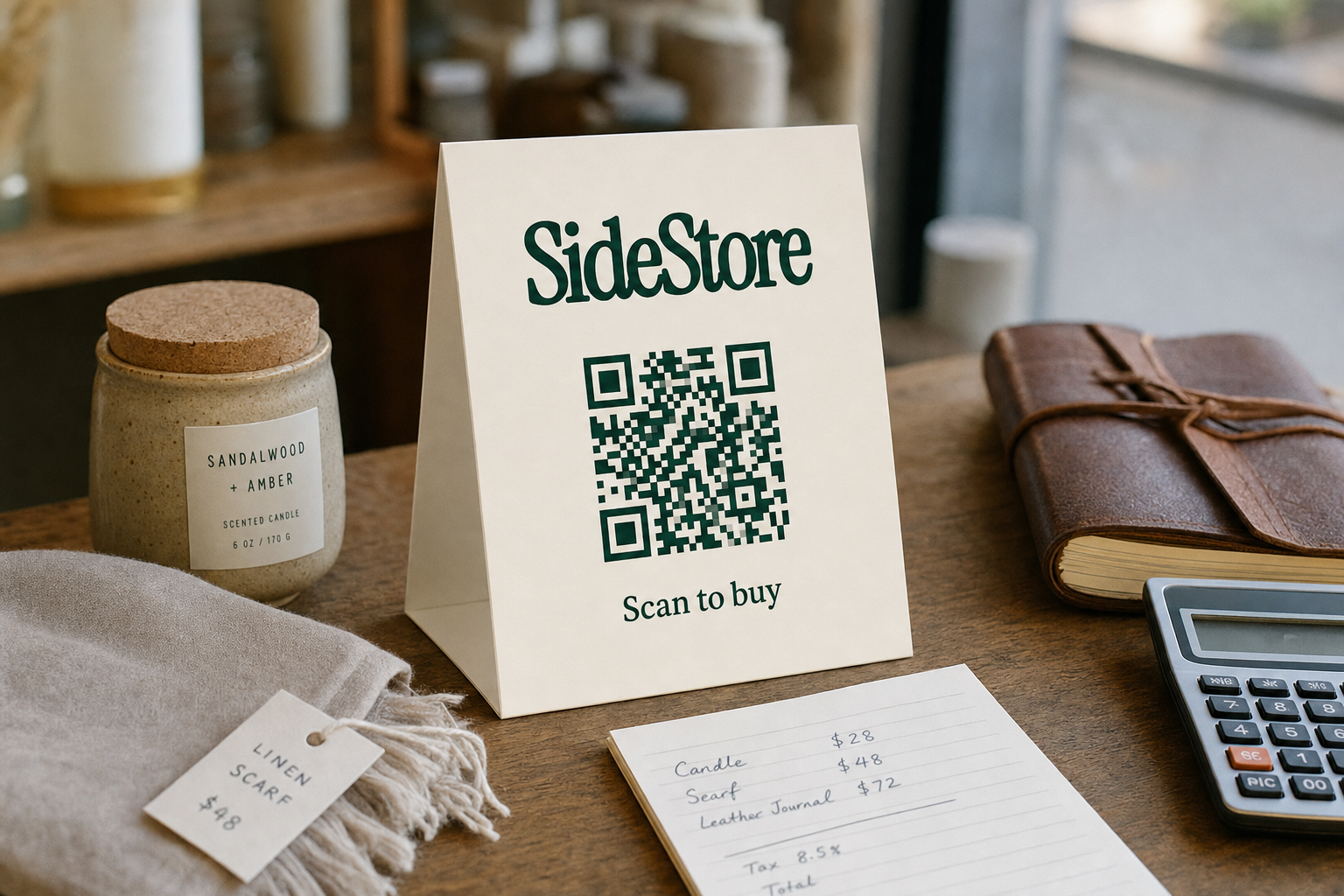
Is keystone markup enough for a boutique? For a straightforward own-store setup it can work as a starting point, but the moment a host or platform takes a cut of your sale, keystone frequently leaves you with a margin too thin to sustain the business.
Keystone defined:
Retail Price = Cost x 2
Applied to the CHF 25.50 landed cost above: retail price = CHF 51.00. Gross margin = CHF 25.50.
That looks fine in isolation. Now apply it to a consignment scenario.
The consignment margin collapse:
Say you place your CHF 51.00 item in a merchant's space and agree a 30/70 split: the host keeps 30%, you receive 70%.
Your revenue = CHF 51.00 x 0.70 = CHF 35.70 Less landed cost = CHF 35.70 - CHF 25.50 = CHF 10.20 gross profit
That is a gross margin of roughly 20% on the retail price, a figure that typically does not cover transport to the placement, replacement packaging, or any failed stock that does not sell. Keystone built for an own-store model simply does not hold up on consignment.
Consignment-adjusted formula:
Retail Price = Landed Cost / (1 - Host Split %) / Target Net Margin Multiplier
Working example with a 30% host split and a target 40% net margin after the split:
CHF 25.50 / (1 - 0.30) = CHF 36.43 (cost grossed up for split) CHF 36.43 / (1 - 0.40) = CHF 60.71 minimum retail price
Round to CHF 61.00 or CHF 59.90 depending on your psychological pricing approach (covered below).
Value-based pricing applies on top of any formula when your product carries strong perceived value, craft, provenance, scarcity. If buyers consistently pay more than your formula floor without objection, that is a signal to test a higher price, not a reason to feel guilty. For more on the consignment model itself, see selling on consignment and selling through consignment.
Pricing Scenarios Side by Side: Which Model Applies to You?
Pricing differs depending on your selling model because the cost base, the parties taking a cut, and the margin targets are structurally different in each case. The table below makes this concrete so you can identify your scenario and apply the right method.
| Scenario | Cost Base | Host/Platform Cut | Minimum Markup Needed | Best Pricing Method |
|---|---|---|---|---|
| Own boutique (bricks and mortar) | Landed cost + rent allocation | 0% | 2.0x, 2.5x (keystone or slightly above) | Cost-plus with keystone floor |
| Consignment placement | Landed cost only | 20%, 40% of retail (host split) | 2.5x, 3.5x depending on split | Consignment-adjusted formula |
| Online-only (own store/platform) | Landed cost + platform fees + shipping | 5%, 15% platform/payment fees | 2.2x, 2.8x | Cost-plus with platform fee gross-up |
| Mixed model (own store + consignment placements) | Landed cost; varies by channel | Varies: 0% own store, 20%, 40% consignment | Blended: price for worst case (highest split) | Value-based floor; apply split formula to consignment items |
Numbers in this table use representative ranges as starting-point guidance, not guaranteed industry benchmarks. Your actual split rate will depend on the individual merchant agreement.
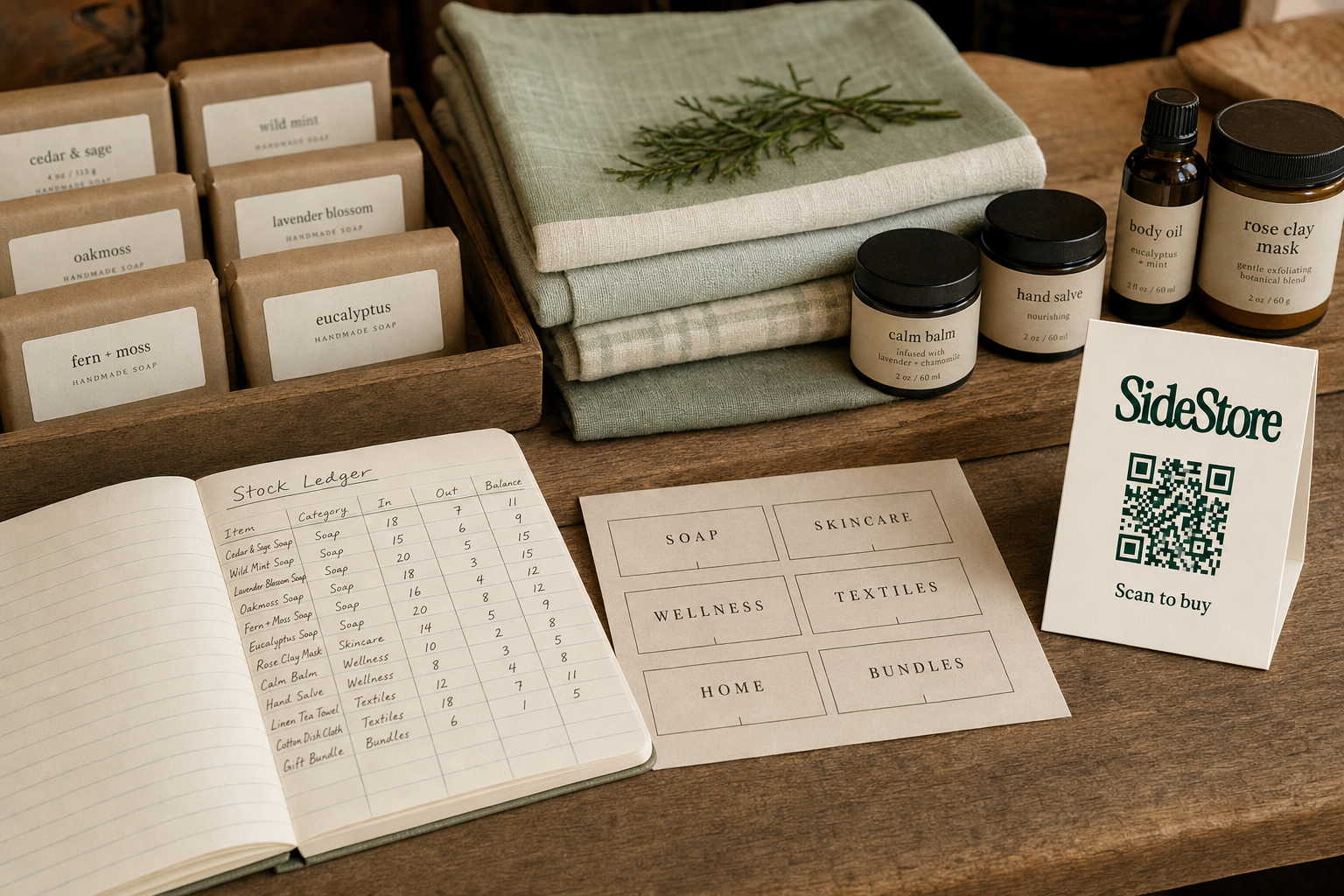
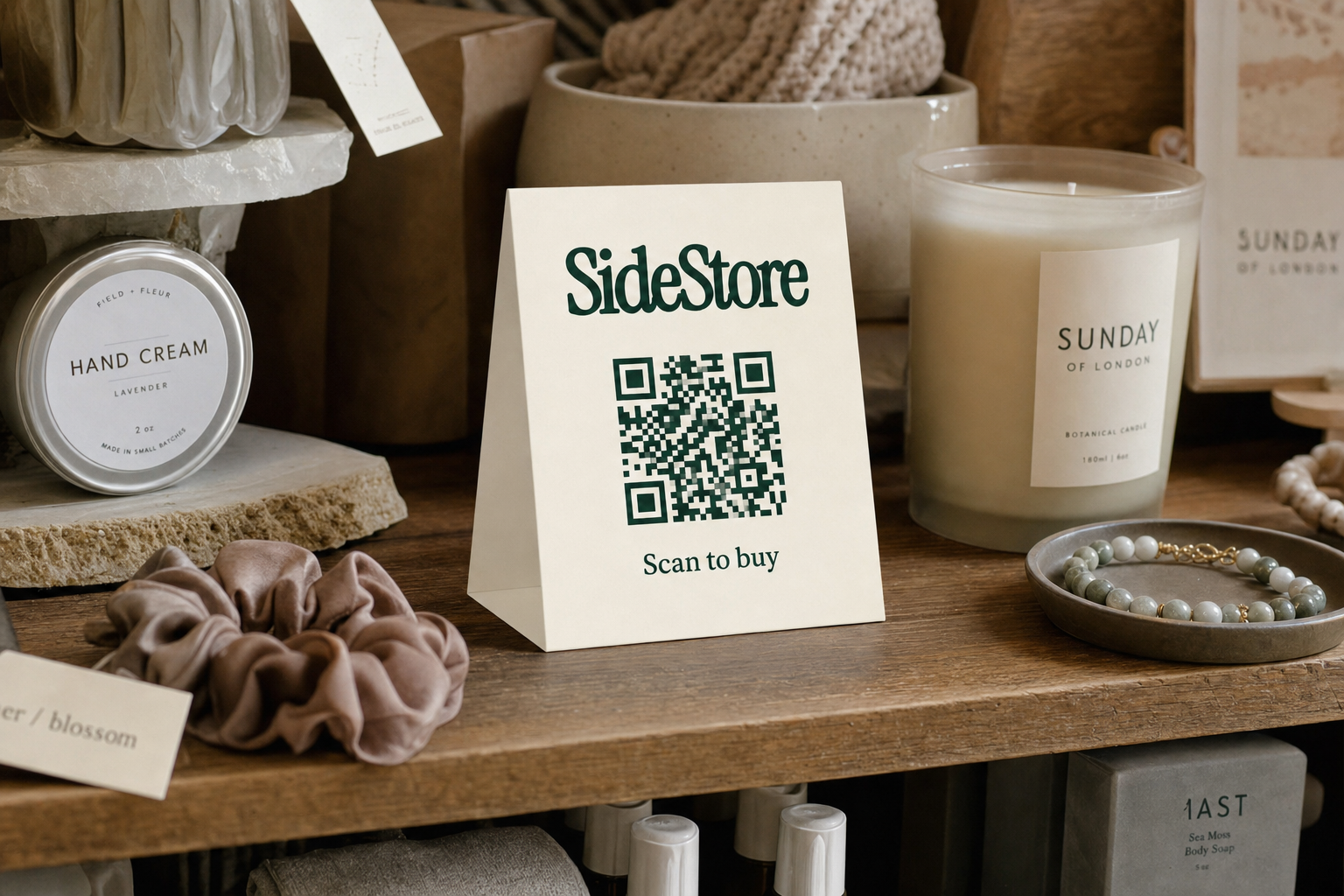
The consignment row maps directly to the SideStore model. When you place products through SideStore, the Retail Widget handles automatic split settlement at the agreed rate, so the host receives their share and you receive yours without manual invoicing. That means your consignment-adjusted retail price feeds directly into a system that executes the split accurately on every sale. If you are exploring starting an online boutique with no inventory or running a boutique without inventory, the consignment row is your reference point.
Psychological Pricing: Small Adjustments That Lift Perceived Value
Yes, the number on the tag changes buyer behaviour, but the effect depends on price point and product type, and it only works when the underlying cost formula is already sound. Psychological pricing is a finishing layer, not a substitute for accurate costing.
Two approaches apply in boutique retail:
Charm pricing (ending in .90 or .95) signals everyday value and works well for items priced below CHF 50, volume-oriented lines, and products where the buyer is comparing you to similar alternatives on price. CHF 19.90 reads noticeably cheaper than CHF 20.00 to a browsing customer, even when the difference is trivial.
Prestige pricing (round numbers: CHF 60, CHF 85, CHF 120) signals craft, quality, and intentionality. Use it for handmade or limited-run pieces where the story behind the product is part of what you are selling. A round number at the higher end of your formula range reinforces the perceived value that justifies the price; a .99 ending on the same item undermines it.
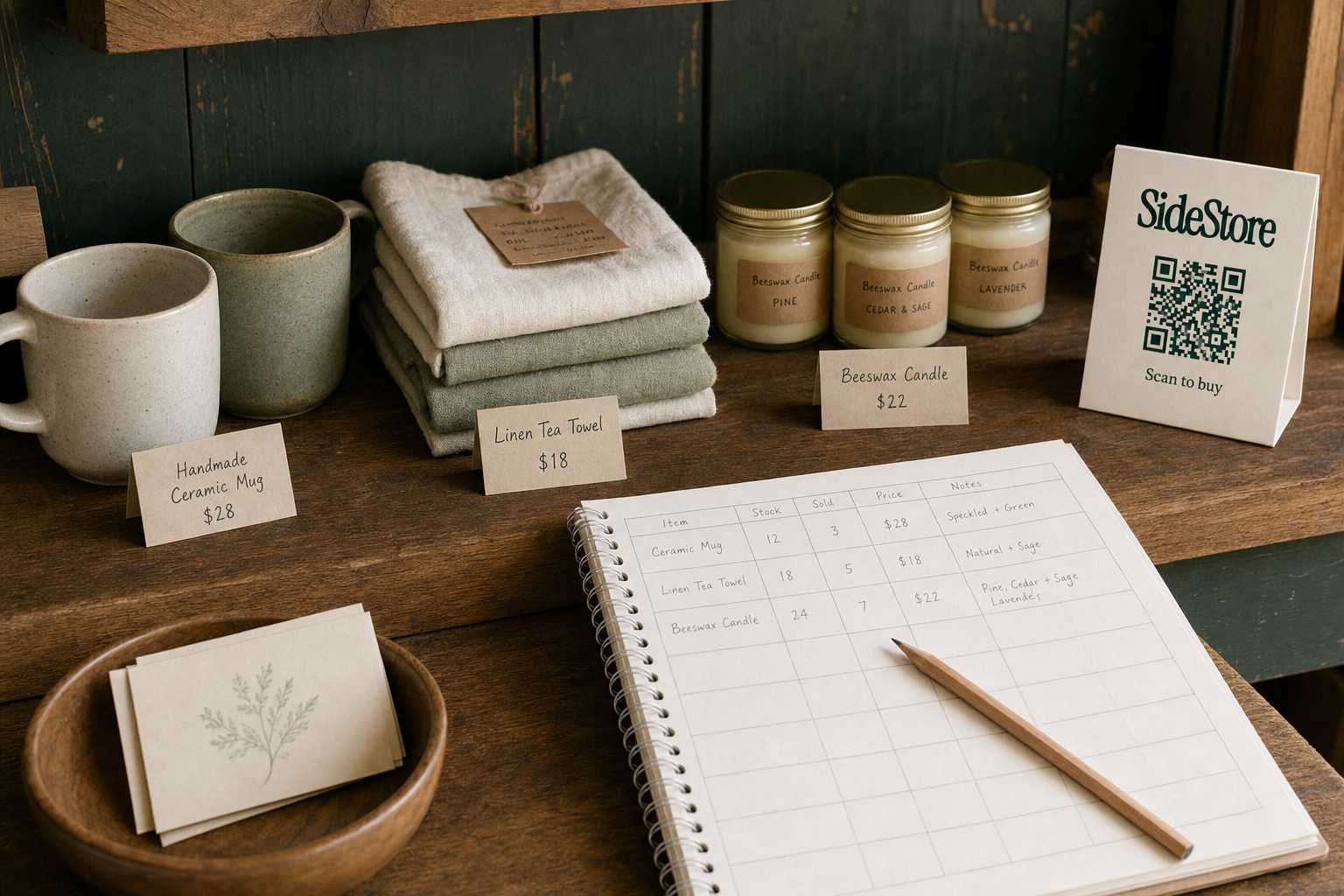
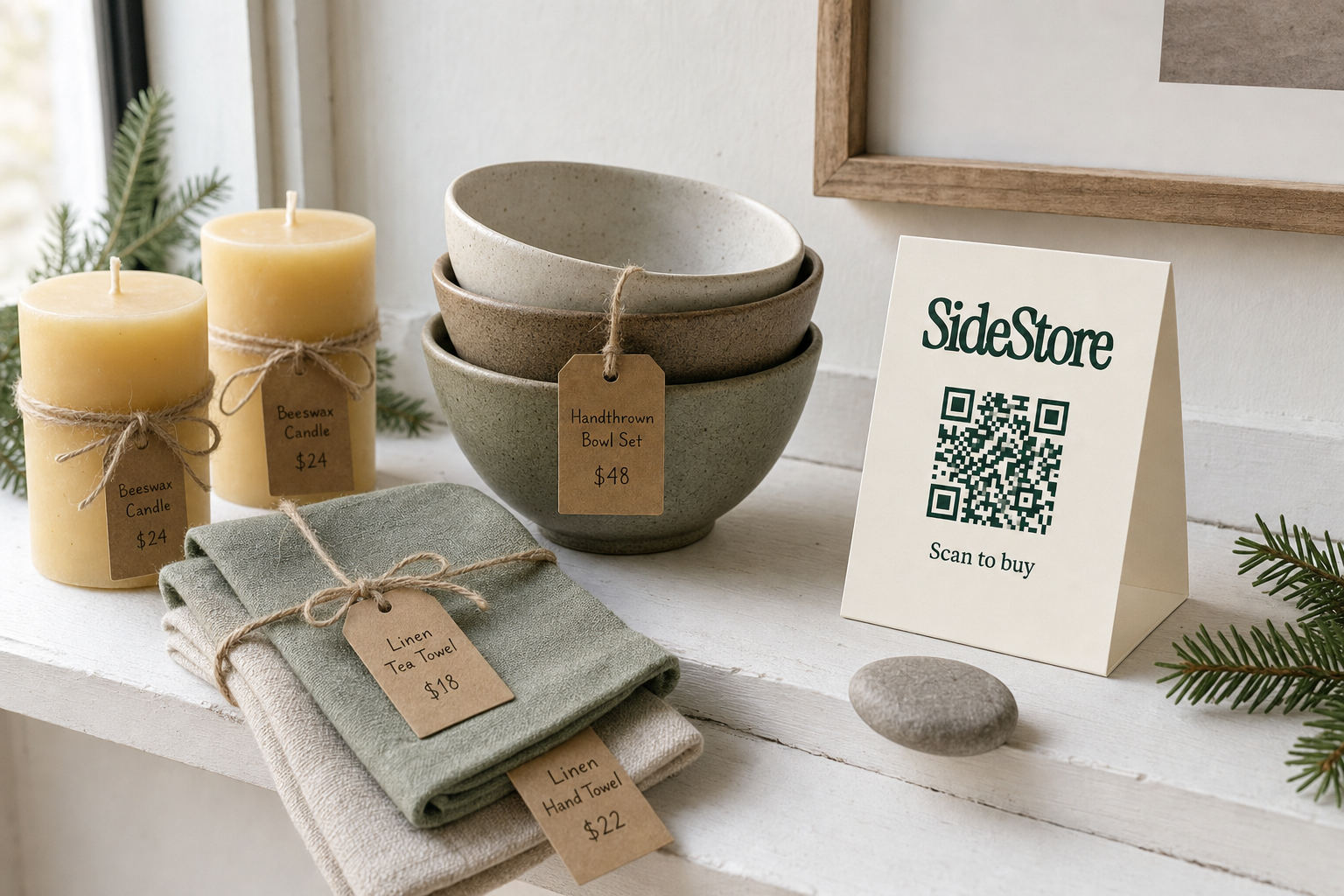
A practical rule: if your formula gives you a floor of CHF 58.50 on a handcrafted ceramic piece, price at CHF 60.00 (prestige). If your formula gives you CHF 17.80 on a printed card set, price at CHF 17.90 (charm). Neither adjustment is large enough to damage your margin. Both are large enough to affect how the buyer reads the product.
Pricing When You Do Not Own the Shelf: Consignment-Specific Rules
When you are placing on consignment in a merchant's space, pricing changes because you are working with a revenue share from day one rather than keeping the full retail amount. This is the reality of accessing distribution without owning a storefront, and it is worth naming plainly: it adds a constraint, but it also removes the fixed costs, rent, staffing, fit-out, that make a bricks-and-mortar opening so risky.
The core strategy is to price for the worst-case split. If you think your host split might range between 25% and 35% across different venues, build your retail price to work at 35%. That way you are never caught short when a new placement has a higher rate.
Beyond the split itself, you need feedback, real data on which placements are selling and which are sitting still. This is where the SideStore Retail Widget earns its keep. It provides live placement attribution data: you can see which merchant location sold units, at what rate, and how much stock remains. That makes pricing a continuous feedback loop rather than a one-time guess. When a placement is moving stock fast, it tells you the price may have room to go up. When stock stalls across multiple placements, it tells you something needs to change, the price, the product, or the placement itself.
A monthly review cadence works well for most consignment makers: pull your Retail Widget data at the start of each month, check sell-through rate by placement, and make any price adjustments before restocking.
Finding the right spaces to place in is its own challenge. See alternatives to weekend markets for a broader view of distribution options, and explore how cafes earn from shelf space or hotels earn from lobby retail if you are identifying potential merchant partners.
Six Pricing Mistakes Boutique Owners Make (and How to Avoid Them)
Boutique pricing fails most often not from lack of effort but from systematic blind spots that compound over time, a small error in the cost base becomes a significant loss across hundreds of units. These are the six most common mistakes and the correction for each.
Ignoring your own labour. Your time is a real cost. Include it at a realistic hourly rate in your landed cost before you set any price.
Starting from a competitor's retail price instead of your own cost. Competitor prices tell you the market ceiling, not your margin. Always build from your cost base upward.
Applying keystone to a consignment model. A 2x markup loses margin fast when a host takes 30%+ of the retail price. Use the consignment-adjusted formula instead.
Failing to review prices after the first season. Costs change, materials, packaging, shipping rates. A price set at launch can become a loss-maker within six months without review. See guidance on clearing boutique inventory that isn't moving to understand what stale pricing leads to.
Discounting without a strategy. Random markdowns train customers to wait for sales and compress your perceived value. If you discount, do it deliberately and with a clear end date.
Undercharging because you doubt your work is worth more. This one is worth naming directly: many makers price low not because the numbers demand it, but because charging a fair rate feels presumptuous. It is not. If your cost formula produces a retail price of CHF 75, that is what the product costs to make and sell sustainably. Charging less does not make you more accessible, it makes you less viable.
When and How to Adjust Your Prices After Launch
You should change a price when the data gives you a clear signal, not on instinct, not because a competitor moved, and not just because time has passed. Four concrete triggers justify a price review:
Your landed cost has increased. Materials, labour rates, or packaging costs have risen since you last priced the item. The retail price must follow.
Sell-through is consistently faster than your restock rate. If stock runs out before you can replenish, the price is likely set below what the market would pay. Test a modest increase.
Stock is stalling across multiple placements. When a product sits at several locations for more than six to eight weeks without moving, a price issue is one possible cause, though product-market fit and placement quality are also worth examining.
A new placement has a different host split. A higher or lower split changes your effective margin at the current retail price. Recalculate before you commit stock.
The SideStore Retail Widget's live stock tracking removes the need for manual counting across placements. You see sell-through in real time, which means you can act on trigger two and three above without waiting for an end-of-month stock count. For ongoing managing boutique inventory the data is already there; your job is to review it on a set cadence and act when the numbers move.
A simple rule: review prices monthly, make structural changes (cost increases, new splits) immediately, and never let a price run more than one full season without a deliberate check.
Frequently Asked Questions About Boutique Inventory Pricing
The questions boutique owners ask most about pricing tend to cluster around three themes: what margin is realistic, how to handle handmade goods, and how markup and margin differ in practice. The answers below address those directly, plus the consignment-versus-wholesale distinction that trips up many makers placing stock for the first time.
What is a good profit margin for a boutique? Gross margin, revenue minus cost of goods, before operating expenses, typically runs between 40% and 60% for boutique retail, though the right number for you depends on your operating costs and selling model. On consignment, aim for a gross margin after the host split of at least 35% to leave room for restocking, transport, and any unsold stock. Use these as planning benchmarks, not guarantees.
How do I price handmade items for a boutique? Start from your full landed cost including labour at a fair hourly rate, apply a markup that covers your selling model's split or platform fees, and then consider value-based pricing if your product carries strong perceived value through craft or provenance. Round numbers (prestige pricing) tend to suit handmade goods better than charm endings because they signal intentionality rather than discount.
What is the difference between markup and margin? Markup is calculated on cost; margin is calculated on price. Example with a CHF 25 cost and CHF 60 retail price: markup = (60 - 25) / 25 = 140%. Margin = (60 - 25) / 60 = 58%. They describe the same profit in different directions. Use margin when you are talking about percentage of revenue; use markup when you are working from cost upward.
How does consignment pricing differ from wholesale pricing? In wholesale, you sell stock to a retailer upfront at a discounted price and get paid immediately regardless of whether the retailer sells the goods. In consignment, your product sits in the merchant's space and you only get paid when it sells, with the host taking a percentage of the retail price at the point of sale. Consignment means no upfront payment and no guaranteed revenue, but it also means no inventory risk for the host and lower barrier to placement. For a full explanation of how the model works, see how consignment selling works.
Price With Intention, Not Instinct
The most important pricing action you can take today is to calculate your real landed cost, materials, labour, packaging, before you touch any markup formula. Everything else follows from that number. Once you have an accurate cost base, apply the formula that matches your selling model: keystone for an own-store setup, the consignment-adjusted formula if you are placing in merchant spaces. Then apply psychological finishing touches to the resulting price point.
For makers distributing through consignment placements, the SideStore Retail Widget handles the operational layer: automatic split settlement, live stock tracking, and placement attribution data that turns pricing into a continuous feedback loop rather than a one-time decision. You set the price; the Widget tells you how it is performing across every placement, in real time.
Pricing is not a fixed decision made at launch. It is a discipline, one that gets sharper as you gather more data from more placements. If you want to understand the distribution model that makes consignment pricing relevant, learn how consignment selling works, and explore the full range of distribution alternatives for independent makers to find where your products belong.