How to Sell Retail Products in a Salon: A Maker's Guide to Beauty-Space Placement
Selling retail products in a salon means placing your goods on a salon's shelves on consignment: the salon hosts the stock, earns a percentage on each sale, and you get paid when a client buys. No storefront required on your end. No upfront payment from the salon.
One important distinction before anything else: this article is about placing physical products inside a salon as a retail channel. It is not about selling a salon business. That confusion comes up often enough to be worth naming directly.
If you make something physical, candles, botanical skincare, ceramic accessories, and you're trying to reach customers without renting your own space, salon consignment is one of the most accessible routes into offline retail. Salons already have shelves, foot traffic, and clients who linger. The model is straightforward: you supply the product, the salon sells it, and you split the revenue. Selling through someone else's store on consignment is how many independent makers build real distribution before they have the scale to stock wholesale.
Why a Salon Is One of the Best Places to Sell Maker Products
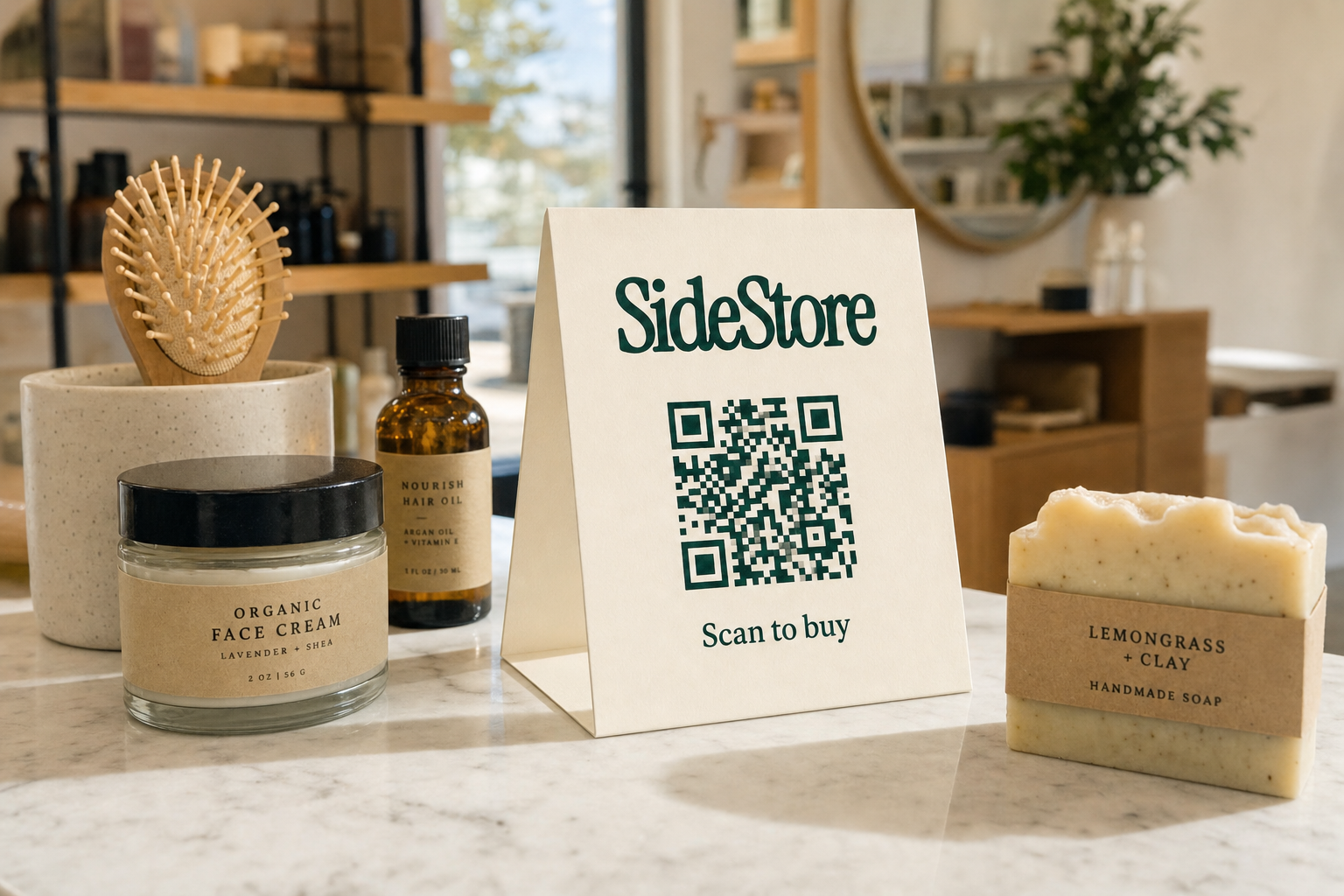
Salons are exceptionally strong retail environments because clients sit still, in a relaxed and trusting setting, for extended periods. That combination is rare in retail and genuinely valuable for makers.
A hair appointment typically runs 45 minutes to two hours. A nail appointment runs 60 to 90 minutes. A facial or beauty treatment can run 60 minutes or longer. During that time, a client is not rushing past a shelf, they are looking at the room, talking to their technician, and open to noticing things. Shelf products in that environment get real attention, not a passing glance.
The trust transfer matters too. Clients trust their stylist, nail tech, or aesthetician. When a product sits in that person's space, or when they mention it in passing, that endorsement carries weight that a cold advertisement cannot replicate. You are not interrupting anyone. You are simply present in a space where the client's guard is already down.
The range of salon types that fit this model is broader than most makers assume:
- Hair salons (independent and small chains)
- Nail salons and nail bars
- Beauty and facial studios
- Brow and lash bars
- Massage studios and day spas
All of these share the dwell-time advantage and the trust dynamic. Most already stock some retail products, which means the concept of shelf placement is not foreign to the owner. That lowers the pitch barrier considerably compared to, say, a restaurant or a coworking space.
The same principle applies to almost any small-format, high-quality maker product. For your immediate purpose, the point is simpler: salons are ready environments, and that readiness works in your favour.
What Products Are Easiest to Sell in a Salon Setting
The easiest products to sell in a salon are those that feel native to the space, require no explanation, and can be purchased on impulse during an appointment. Candles, botanical skincare, handmade jewellery, art cards, ceramics, and small textile goods all perform well. They fit the salon's aesthetic, they are giftable, and a client waiting for her colour to process has both the time and the inclination to pick one up.
Product categories that tend to work:
- Soy or botanical candles. These align naturally with the sensory environment of a salon. Scented, well-packaged, and priced in the £18-40 range, they are strong impulse buys.
- Botanical or artisan skincare. Face oils, balms, hand creams, and lip treatments sit well beside professional beauty services. One honest flag: if your product makes specific cosmetic claims, check the compliance requirements in your territory before placing it. Regulations around cosmetic products vary, and a salon owner will ask.
- Handmade jewellery. Small, wearable, and giftable. Earrings and rings work especially well in nail and beauty studios where clients are already focused on their appearance.
- Art cards and prints. Low price point, low footprint, easy restock. They perform best as an add-on alongside a higher-value product.
- Ceramics and small homewares. Pinch pots, ring dishes, hand-thrown cups. These appeal to the same client who chooses a boutique salon over a chain.
- Textile accessories. Scrunchies, headbands, small pouches. These sell well in hair salons, where they are directly relevant to the service.
What does not tend to work: large, fragile items that consume significant shelf space; products with short shelf lives requiring refrigeration; anything that needs a detailed explanation to convert a sale; or products priced above the salon's average service ticket without a clear gifting angle.
What salons look for in a retail partner is reliability: consistent stock, clean presentation, and no admin burden on their side. They want to know that if a product sells, you will replenish it promptly. Products that fit naturally on the shelf and arrive display-ready make you easy to say yes to.
How Salon Consignment Works: The Mechanics
Salon consignment works like this: you supply the stock, the salon displays and sells it, and when a product sells you split the revenue according to an agreed rate. The salon pays nothing upfront and carries no inventory risk. You receive payment only when a sale happens.
That structure removes the two biggest objections a salon owner has: "I can't afford to buy stock" and "I don't want to be stuck with unsold goods." Consignment answers both.
On the revenue split: the most common range for salon consignment is 60/40 to 70/30, with the maker keeping the larger share. A 65/35 split (maker/salon) is a reasonable starting point for most product categories. The exact split should reflect your margins, the salon's foot traffic, and how much display prominence they are offering you. A prime shelf near the reception desk justifies a slightly more generous salon share than a shelf in a back corridor.
On sell-through: aim for 30-50% sell-through in the first 60-90 days as a working reference. If you are well below that range, the product, price point, or positioning needs reviewing. If you are above it, that is a strong signal to restock promptly and consider extending the placement or negotiating for more shelf space. Treat these as planning benchmarks, not guarantees, every salon and every product is different.
Where the Retail Widget comes in: the Retail Widget is the interface that handles the operational side of a consignment placement. You set up your product, model the split, and print a scan-to-pay QR card that attaches to the product or sits on the shelf. The QR checkout is one function of the Widget, not the whole product. The full system covers live stock tracking, placement attribution (so you know which salon sold what), and automatic split settlement direct to both parties when a sale happens.
A proper written consignment agreement matters from day one. For what to include, see consignment agreement for artists and consignment stock terms and conditions. For tools that help you track stock across placements, consignment inventory software is worth reviewing before you scale.
Salon Types at a Glance: What Fits Where
Not every product fits every salon type. Matching your product to the right environment before you pitch saves time for everyone. The table below is a practical matching tool: find your product category in the "Best Product Fit" column, then look left to understand the client profile and dwell time you are working with.
| Salon Type | Avg. Dwell Time | Client Profile | Best Product Fit | Placement Notes |
|---|---|---|---|---|
| Hair Salon | 45 min - 2 hrs | Broad demographic; repeat clients | Candles, botanical skincare, textile accessories, art cards | Reception and waiting area work well; mirror-side shelves if permitted |
| Nail Salon | 60 - 90 min | Predominantly female; gift-minded | Jewellery, small ceramics, lip balms, art cards | Counter display near drying station; small footprint essential |
| Beauty / Facial Studio | 60 - 90 min | Skincare-focused; higher spend | Artisan skincare, botanical oils, candles, ceramics | Treatment room shelf or reception display; premium positioning suits |
| Brow & Lash Bar | 30 - 60 min | Appearance-focused; trend-aware | Jewellery, small accessories, art prints | Compact display near payment point; fast-turnover product performs |
| Massage Studio | 60 - 90 min | Wellness-oriented; sensory-aware | Candles, botanicals, small ceramics, textile goods | Relaxed browse environment; avoid anything loud or heavily branded |
Use this table as a first filter. If your product appears in the "Best Product Fit" column for a given salon type, that is a reasonable match to pursue. If it does not appear for a type you were considering, that is a prompt to think carefully about whether it belongs in that environment, not an automatic no.
How to Approach a Salon Owner About Stocking Your Products
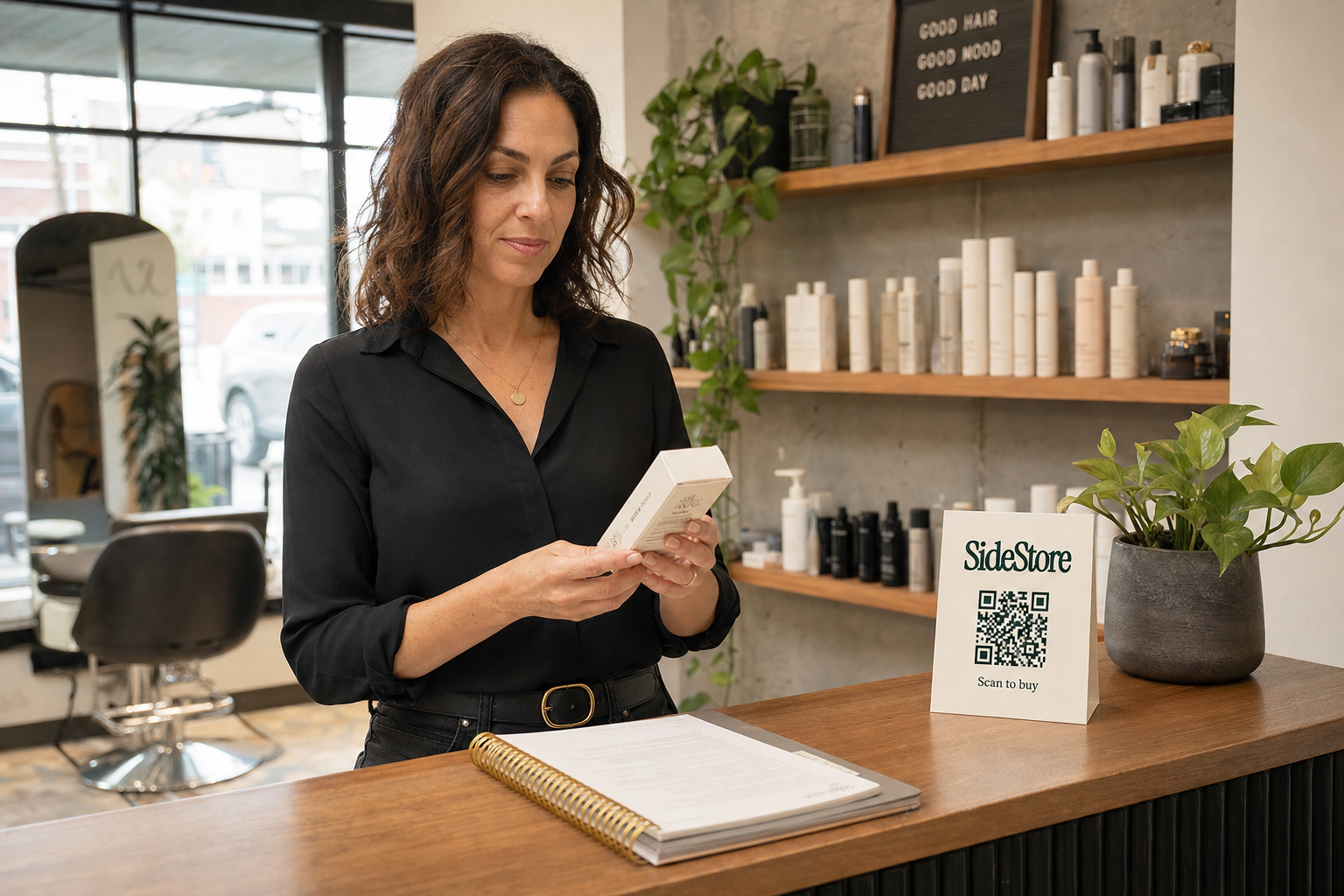
The most effective pitch to a salon owner leads with what they gain, not with what you make. Salon owners are busy, their margins are thin, and they have heard plenty of supplier pitches. Start from their position: no upfront cost, no inventory risk, a share of every sale, and no extra admin on their side.
Here is a practical step-by-step approach:
1. Qualify the salon before you contact them. Visit in person or review their social presence. Is the aesthetic a fit for your product? Are their clients likely to be your buyers? Do they already stock retail products? If yes on all three, proceed.
2. Prepare a one-page placement brief. Keep it short. Include a photograph of the product styled on a shelf, your suggested retail price, the proposed split, and how you handle restocking. Name the Retail Widget and explain that checkout and settlement are handled automatically, this is the "no admin" reassurance in concrete terms.
3. Contact the owner directly. Email or visit in person. A direct message via Instagram also works well for smaller independents. Do not pitch through a receptionist unless you have no other option. Address the owner by name. Reference a specific detail about their salon to show you have paid attention.
4. Frame the offer around their benefit. Say something like: "I would like to place [product] in your salon on consignment. You carry no risk, no upfront cost, and you earn [X]% of every sale. I handle checkout and settlements through SideStore, so there is nothing extra for you to manage."
5. Handle the common objections. "We don't have room", offer to bring a compact display. "We already stock other products", position yours as complementary, not competitive. "What if it doesn't sell?", remind them that on consignment, unsold stock is simply returned. No loss to them.
6. Follow up once. If you do not hear back within ten days, follow up once. After that, move on to the next salon on your list. A no today is not a no forever.
On marketing and promotion: provide display materials, a price tag, and a brief product description card. Offer your social media handle for them to tag. Do not expect the salon to do your marketing, but organic mentions happen when a client asks about a product they noticed. Make it easy for staff to explain what it is in one sentence.
Managing Salon Retail Placements with the Retail Widget
Once a salon agrees to host your product, the Retail Widget handles the operational mechanics so neither you nor the salon owner carries an admin burden.
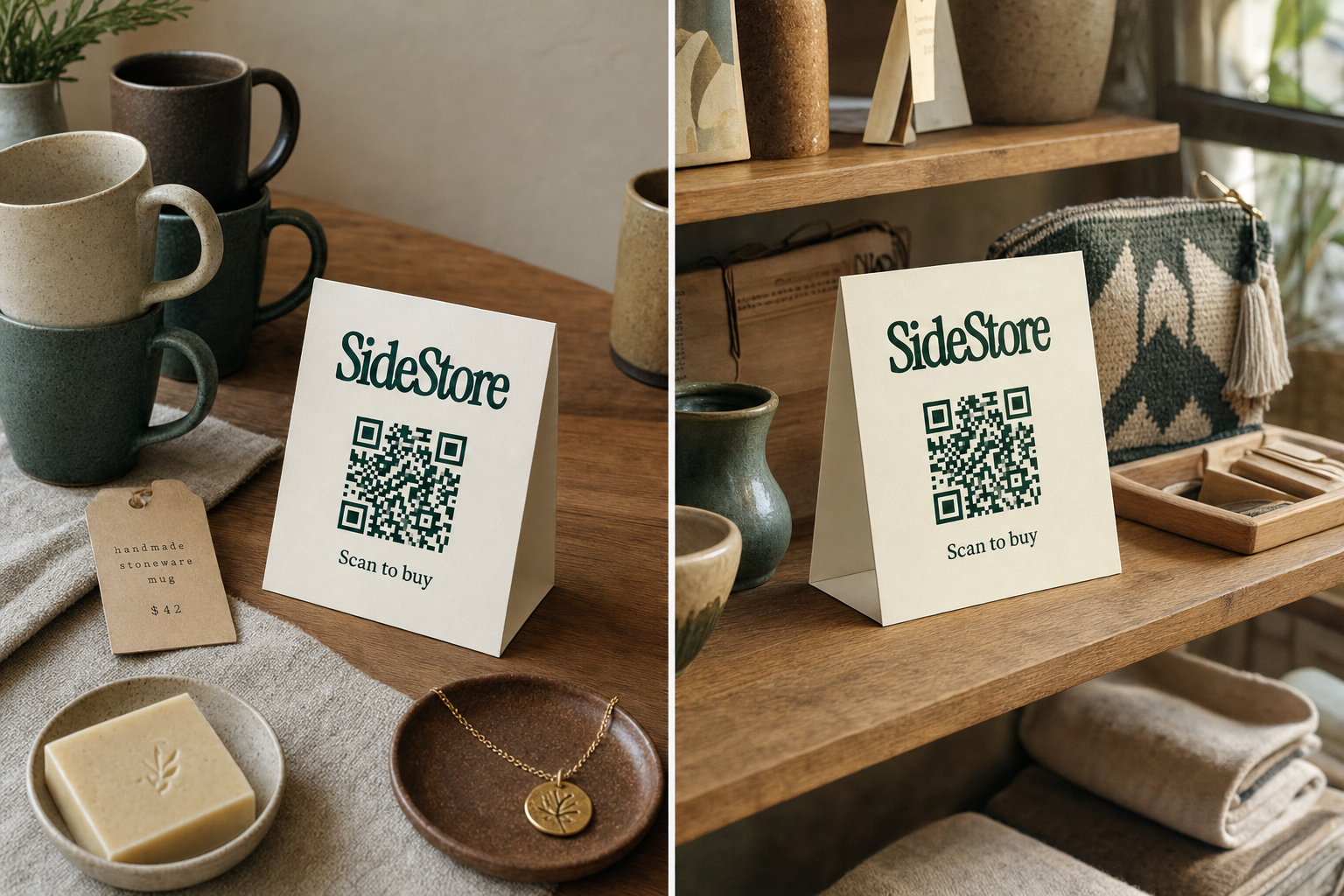
Set up the placement in the SideStore dashboard: enter the product, set the retail price, and agree the split with the salon. The Retail Widget then generates a printable QR card. You can attach the QR card directly to the product, or the salon can display a single card that covers all the products in their placement. When a client scans and pays, the transaction is recorded, stock is decremented, and the split settlement is processed automatically. No invoice to chase. No cash to reconcile at month end.
The QR checkout is one function of the Retail Widget. The full system also tracks live stock levels by placement, so you know from the dashboard when a particular salon is running low and needs a restock, without calling anyone. Placement attribution is built in: if you have products in five salons, you can see which location is selling and which is not.
That multi-placement view matters. One of the advantages of building a consignment network through SideStore is that scaling from one salon to ten does not add proportional operational complexity. The dashboard manages all placements in one place.
For the salon owner, there is no e-commerce setup required. The salon hosts the physical product; you manage everything else remotely. This answers the question many salon owners have about selling retail products "online", the answer is that they do not need to. The Retail Widget handles the transaction at the point of physical display.
Frequently Asked Questions
These are the questions makers and salon owners ask most often about salon retail placement.
What products are easiest to sell in a salon setting?
Candles, handmade jewellery, botanical skincare, art cards, and small ceramics consistently perform well in salon environments. They are giftable, require no explanation, and fit naturally in a space where clients are already paying attention to their appearance and wellbeing. Compact size and clean packaging matter as much as the product itself.
How can salon owners sell retail products online?
Salon owners who host products through SideStore do not need to set up their own e-commerce. The maker manages the product listing and the Retail Widget handles checkout at the physical point of display via scan-to-pay. The salon earns its split automatically on each sale, with no online store required on their side. This makes consignment a genuinely low-effort revenue stream for the host.
What should salons look for in retail partnerships?
A good retail partner supplies products that fit the salon's aesthetic, arrives with display-ready stock, handles their own restocking promptly, and creates no admin burden. Consignment terms (no upfront cost, no inventory risk, automatic split settlement via the Retail Widget) satisfy the main practical concerns. Reliability and clean presentation are what convert a trial placement into a long-term arrangement.
Which fragrance and beauty products tend to sell best for independent retailers?
Botanical candles, hand creams, face oils, and lip balms tend to sell well in beauty-space environments. The sensory alignment with the salon context helps. If your product makes specific cosmetic claims, check the compliance requirements in your territory first. Fragrance products without claims, such as candles and room sprays, generally carry fewer regulatory hurdles for new makers.
What sell-through percentage should new salon retailers aim for?
Use 30-50% sell-through in the first 60-90 days as a working reference point. Below that range, review the product's price point or placement position. Above it, restock promptly and consider expanding the placement. These are planning benchmarks based on common consignment practice, not guarantees, every product and every salon is different.
How to market and promote salon retail offerings?
Provide the salon with a small display stand, a price card, and a one-line product description. Include your social media handle so the salon can tag you if they choose to post. Do not expect the salon to run campaigns for you, but organic mentions from staff and signage do happen. Your job is to make the product self-explanatory on the shelf.
Can salon owners stock products on consignment?
Yes. Consignment is how many salons already handle third-party retail. The salon carries no upfront cost and no inventory risk; unsold stock is returned to the maker. A written consignment agreement template protects both parties. The broader salon consignment mechanics are covered in detail above.
On the common confusion: "selling products in a salon" in this context always means placing physical goods on consignment inside a salon's space. It does not mean selling the salon business itself. If you arrived here looking for how to sell a salon as a going concern, that is a different topic entirely, handled by business brokers, not makers.
Start Small, Place Smart
The clearest path to selling retail products in a salon is also the simplest one: find one salon whose clients match your buyer, pitch the placement benefit first, and go live with the Retail Widget handling checkout, stock tracking, and split settlement from day one.
Three things make this work: a product that fits the space, a pitch that leads with the salon's benefit rather than your own story, and a system that removes operational friction for both parties. The Retail Widget provides the third. You provide the first two.
The model scales naturally. One placement is a proof of concept. Five placements, across hair salons, nail studios, and beauty spaces, becomes a real distribution network, and the SideStore dashboard manages all of them without adding proportional complexity.
Your next step is concrete: pick three salons whose aesthetic matches your product, draft a one-page placement brief, and make contact this week. You do not need a storefront, a wholesale account, or a large production run to start.
Place the product. Let the shelf do the work.