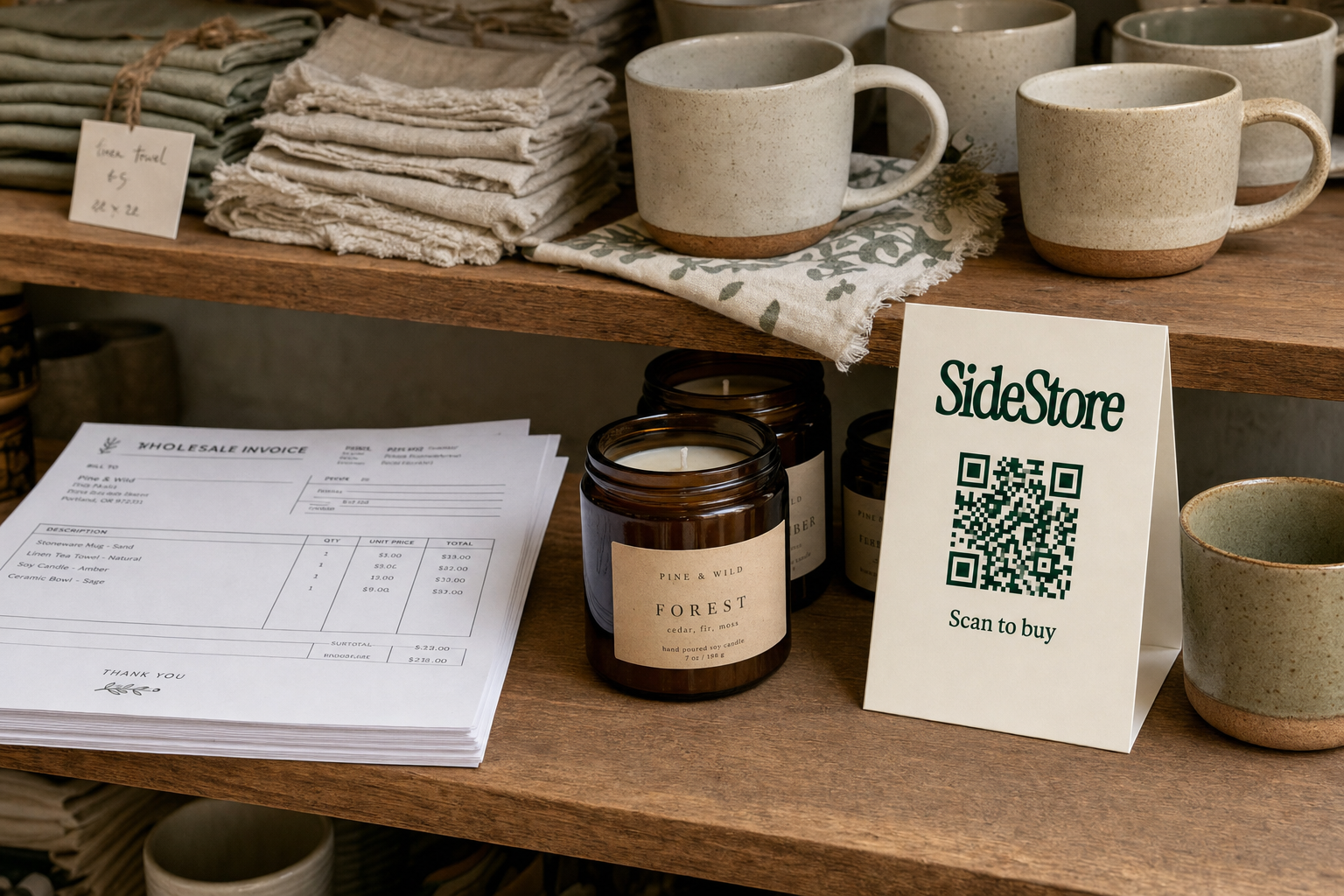
Digital Marketplace vs Physical Retail: Why Independent Makers Need Both Channels
A digital marketplace gives you reach, but one channel is a single point of failure. Learn why consignment placement is the low-risk way to add physical retail.
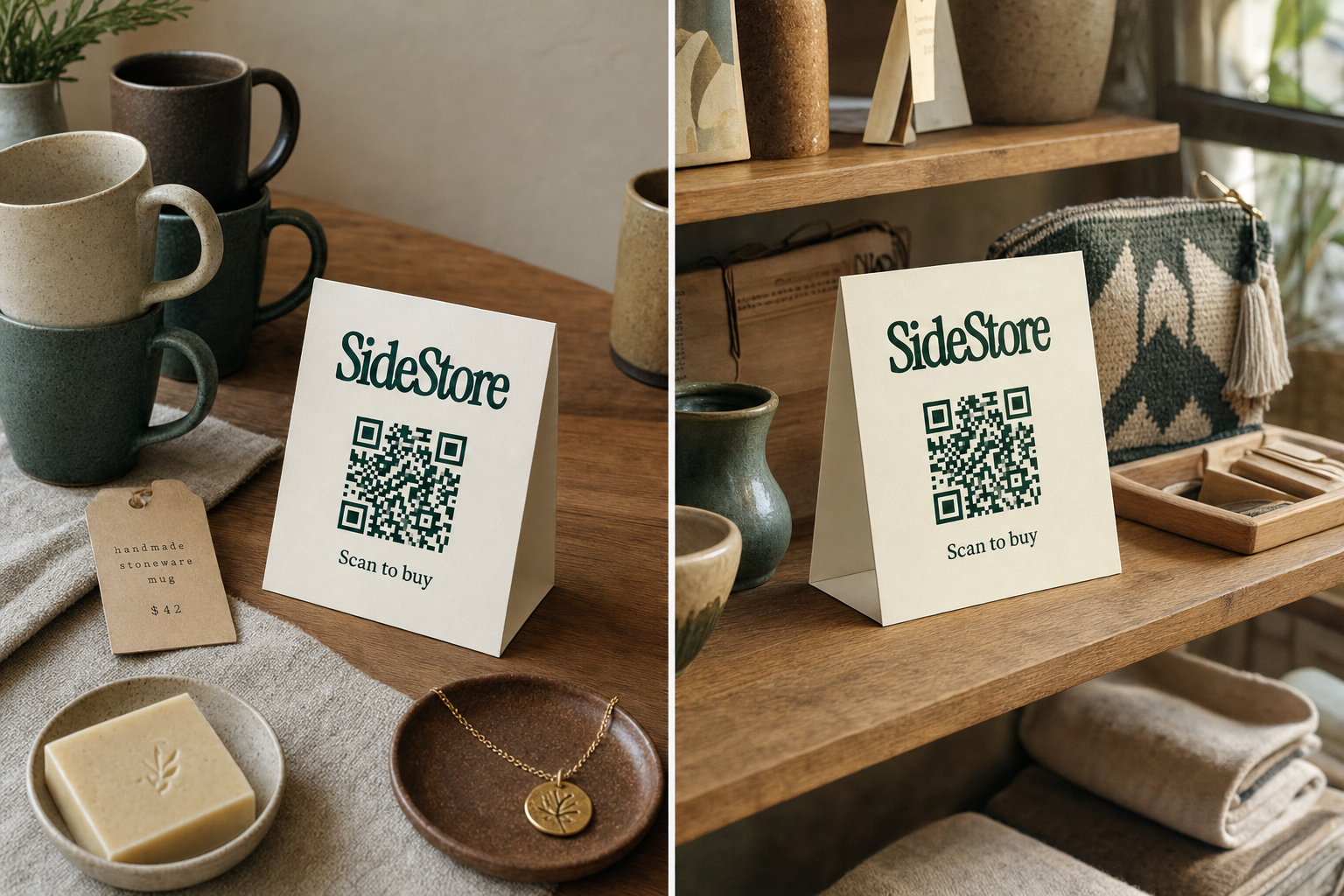
A digital marketplace is an online platform where multiple sellers list and sell products or services to buyers, with the platform operator managing transactions, discovery, and often fulfilment. If you sell on Etsy, Amazon Handmade, or Faire, you are already operating inside a digital marketplace. The core question for independent makers in 2026 is not whether to use one, but whether to rely on one alone.
Many makers use "digital marketplace" and "online marketplace" as synonyms, and in most practical contexts they are. This article addresses that distinction directly, then makes the case that your digital channel and a physical consignment channel work better together than either does alone. If you have ever wondered whether how to sell products without social media or whether a platform algorithm is the only route to customers, the answer is no. Physical placement, structured correctly, adds a second discovery channel without doubling your costs.
For a detailed breakdown of what distinguishes live-selling tools from placement-based models, see live selling platforms vs consignment placement.
What Is a Digital Marketplace?
A digital marketplace is a platform that connects multiple independent sellers with buyers in a single online environment, handling payments, search, and often trust and dispute resolution. The platform earns revenue through listing fees, transaction commissions, or subscriptions. Sellers bring the inventory; the platform brings the audience.
Concrete examples: Etsy connects craft makers with consumers looking for handmade goods. Amazon Marketplace lets third-party sellers list alongside Amazon's own inventory. Faire connects wholesale makers with independent retailers. Each is a digital marketplace because multiple sellers compete for buyer attention within a single managed environment.
Two confusions worth clearing up.
First, "digital marketplace" and "online marketplace" are largely interchangeable. Some writers distinguish them by saying "digital marketplace" refers specifically to platforms selling digital goods (software, music, fonts), while "online marketplace" covers physical products sold via the internet. In practice, the terms overlap heavily. For this article, digital marketplace means any multi-seller online platform regardless of whether the goods are physical or digital.
Second, digital marketplaces are not the same as digital marketing platforms. Google Ads, Meta Ads Manager, and Mailchimp are marketing platforms: tools for reaching an audience. A marketplace hosts transactions. The distinction matters because ad spend on a marketing platform does not replace the discovery infrastructure a marketplace provides, and confusing the two leads makers to overspend on ads while underbuilding their distribution.
If you are thinking about routes beyond your own platform, how to sell through someone else's store covers the mechanics of placement-based selling in detail.
Digital Marketplace vs Physical Retail: What Each Channel Actually Does
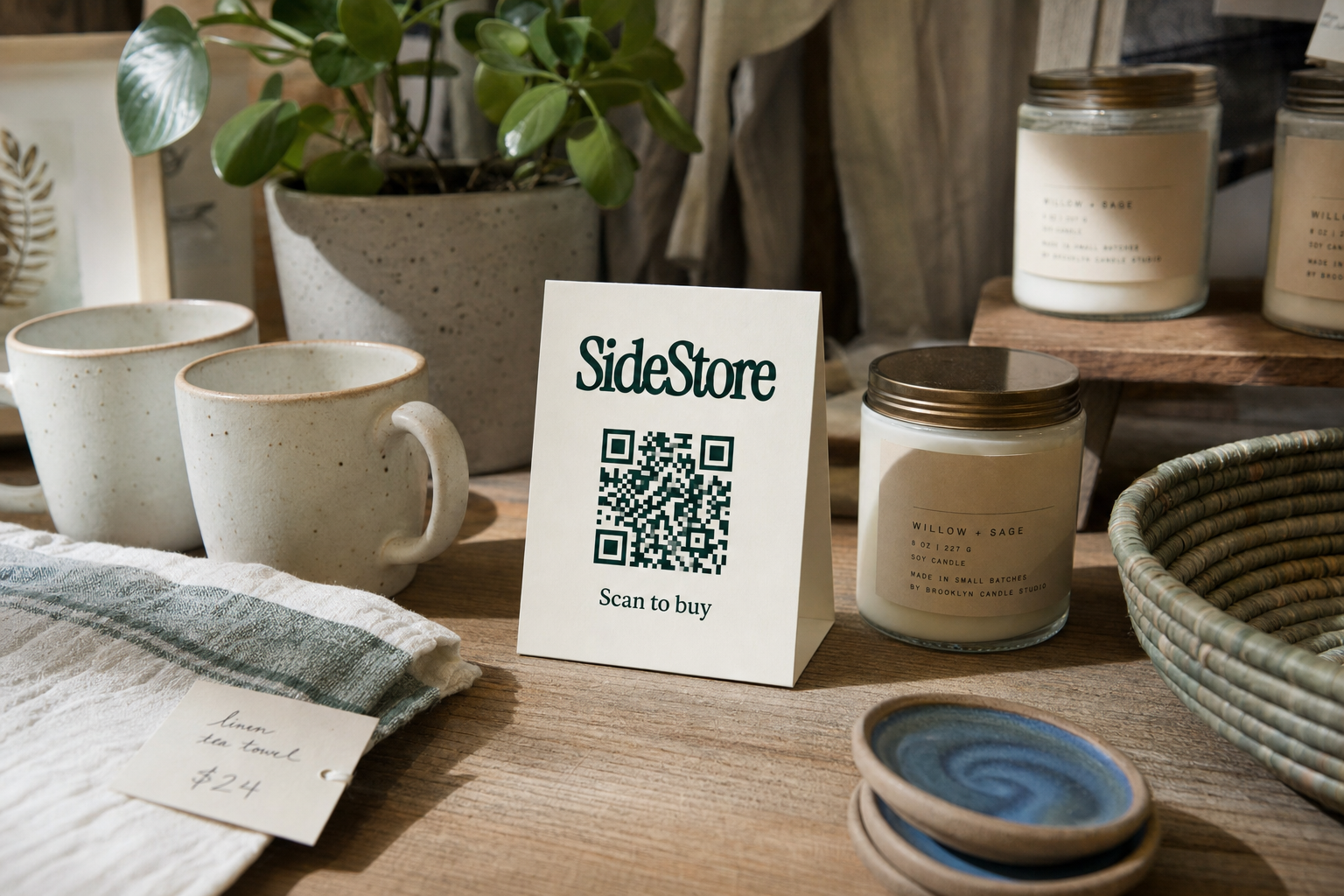
Each selling channel does a different job. A digital marketplace delivers global reach through algorithmic discovery. Physical retail delivers local trust through tactile, in-person experience. Neither does the other's job well.
| Channel | Reach | Fees / Costs | Discovery Type | Inventory Risk | Setup Complexity | Control |
|---|---|---|---|---|---|---|
| Digital Marketplace | Global / broad | 5, 20% transaction fees + listing | Algorithm and search | Maker holds stock | Medium | Low, platform sets rules |
| Physical Retail (traditional) | Local / foot traffic | Wholesale margin (40, 60% of RRP) | Browse and touch | Retailer buys upfront | High, lease, fit-out | Medium |
| Physical Consignment (SideStore) | Local / curated venues | Split payout on sale only | Browse, scan-to-pay | No upfront purchase by host | Low, no lease required | High, maker sets price |
The table exposes a structural risk most makers overlook: when your entire revenue depends on one digital marketplace's algorithm, a single policy change, fee increase, or category suppression can cut your income without warning. Many makers who built strong Etsy shops in earlier years found that abrupt fee restructures forced a full rethink of their pricing. That is a dependency risk, not a business model.
Physical discovery also works differently. A customer who picks up your ceramic mug in a hotel lobby and scans a QR code to buy it has had a sensory experience your product listing cannot replicate. That encounter creates a different quality of trust. The offline customer acquisition for makers and how shared retail networks support local economies articles expand on how that trust translates into repeat buying and community embeddedness.
Why Selling Only on a Digital Marketplace Leaves Makers Exposed
Relying on a single digital marketplace as your only sales channel creates three structural problems that compound over time.
Fee compounding. Most digital marketplaces charge a transaction fee, a payment processing fee, and sometimes a listing fee simultaneously. At 6, 8% combined, that is manageable. Add an offsite advertising levy and the occasional currency conversion fee, and your effective cost per sale climbs quietly. When you scale volume, the absolute amount lost to fees scales with it.
Discoverability ceiling. Every marketplace has a finite pool of buyers searching within it, and you compete with every other seller in your category for the same algorithmic slots. Early movers with strong review counts have a structural advantage. Newer makers or those in crowded niches face a discoverability ceiling that more listing optimisation alone cannot break. Ad spend on the platform can lift you temporarily, but it is not a substitute for a channel with different discovery mechanics.
Brand dilution. On a marketplace, your product sits inside the platform's brand identity. The checkout is the marketplace's checkout. The post-purchase email is the marketplace's email. Buyers remember the platform more readily than the maker behind the product. Building a following that is portable, one that follows you if you move channels, is genuinely difficult from inside a marketplace.
The temptation is to solve all three problems with more ad spend. That is the trap. Ads on a marketing platform amplify reach; they do not fix fee structures, discoverability mechanics, or brand ownership. A second physical channel does. For makers interested in low-commitment physical presence before committing to a full placement strategy, what is a pop-up store and pop-up retail space for rent are worth reading alongside this article.
How Physical Consignment Gives Makers a Second Channel Without a Second Set of Overheads
Consignment is straightforward: you place your products in a merchant's space, and you get paid when they sell. The merchant takes no inventory risk because they do not buy stock upfront. You take no lease risk because you are not renting a shop. Payment flows automatically on each sale, split between you and the host.
That model is exactly what SideStore is built for, and the Retail Widget is the interface that makes it operational. The Retail Widget is not simply a QR code. It is the full consignment-management interface: it handles product placement setup, live stock tracking, placement attribution (so you know which venue sold what), scan-to-pay checkout via a printable QR card, and automatic split payouts to both you and the host merchant. The QR checkout is one function within that interface, not the whole product.
Practical host types worth approaching include independent cafes (high foot traffic, browsing customers with time to pause), boutique hotels (guests in a relaxed, purchasing mindset), hair salons and nail studios (captive audience with 45, 90 minutes to notice a shelf), and independent clothing boutiques. Each host earns from idle shelf space with no inventory to purchase and no extra staff required to manage the checkout, because the Retail Widget handles it.
This is a second distribution channel with a materially different cost structure from your digital marketplace fees. You pay nothing until a product sells. For specific placement contexts, how to sell art prints in cafes and how to sell retail products in a salon give practical guidance. Before approaching any host, review consignment stock terms and conditions so your agreement is clear from the start.
Running a Digital Marketplace and Physical Consignment at the Same Time
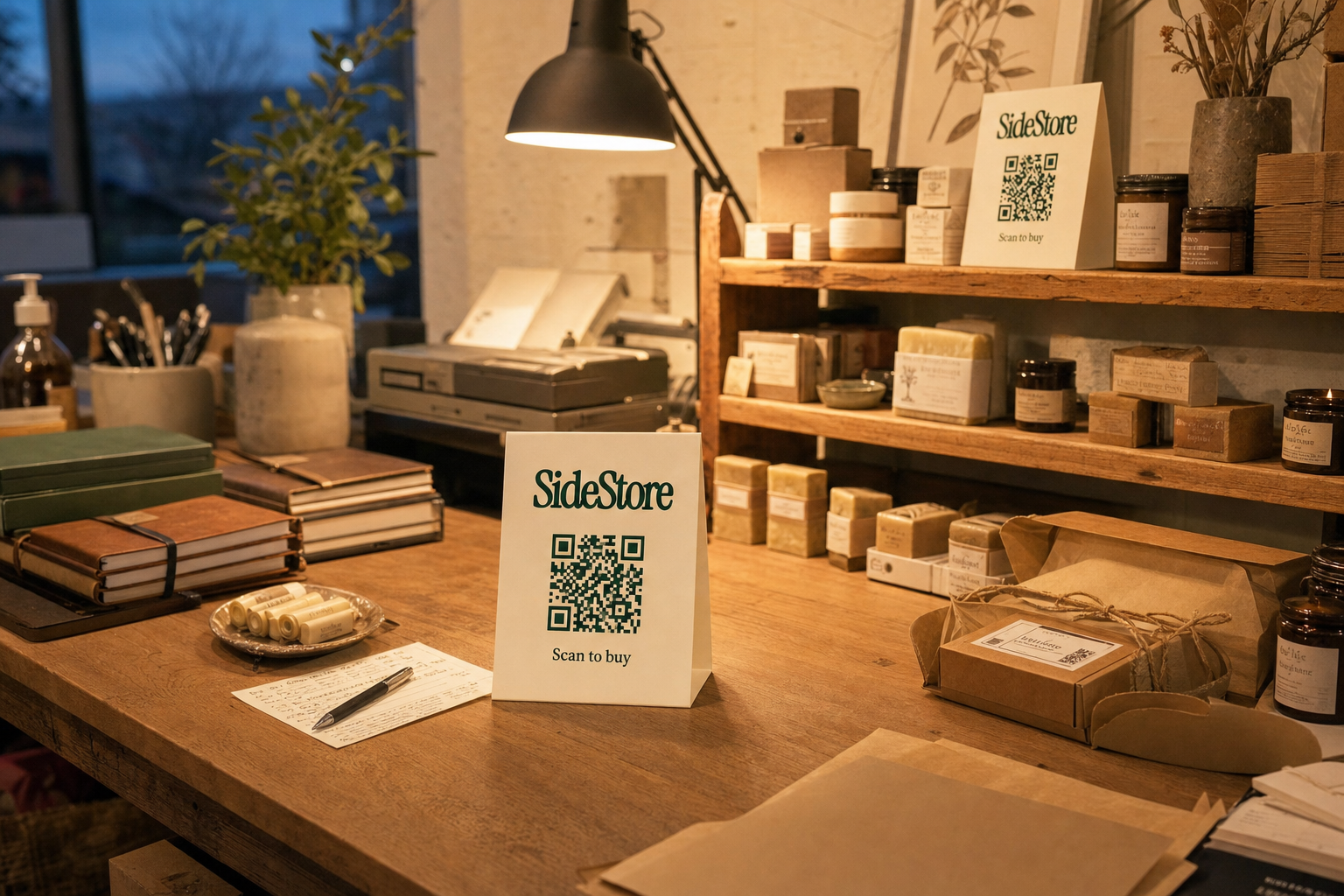
You can operate both channels simultaneously, and they reinforce rather than compete with each other. The practical sequence is straightforward.
Start with what your data already tells you. Your digital marketplace analytics show you which products sell consistently, which price points convert, and which listings generate the most repeat buyers. Use that data to identify your strongest two or three products for physical placement. Do not guess; let sales history guide your first consignment run.
Identify relevant venues. Think about where your existing customers spend time offline. If you sell wellness products, independent spas and yoga studios are more relevant than a city-centre coffee chain. Match the placement to the buyer profile you already know from your online channel.
Set up each placement through SideStore. The Retail Widget handles the consignment mechanics from setup through to split settlement. You print the QR card, the host displays it, and stock levels update in real time as sales come in. No manual reconciliation. No chasing payments.
Let the channels feed each other. A customer who discovers your product physically and buys via scan-to-pay may later look for your digital marketplace listing to leave a review or reorder. A customer who finds you online may notice that you stock in a local venue and visit in person. Neither channel cannibalises the other when the product and pricing are consistent.
Before approaching hosts, read how to approach a local shop about stocking your products. If you are considering whether cafes qualify as retail venues for this purpose, is a coffee shop considered retail answers that directly.
Frequently Asked Questions
The questions below address the most common confusions readers bring to this topic, including the difference between digital and online marketplaces and the distinction between marketplaces and marketing tools.
What is a digital marketplace? A digital marketplace is an online platform where multiple sellers offer products or services to buyers, with the platform managing discovery, transactions, and often trust. Examples include Etsy, Amazon Marketplace, and Faire. The platform earns through fees or commissions; sellers bring the inventory.
What is the difference between a digital marketplace and an online marketplace? In everyday use, the terms are near-synonyms. Some writers reserve "digital marketplace" for platforms selling digital goods (fonts, software, stock photography) and use "online marketplace" for platforms selling physical goods online. In practice, most industry sources use both terms interchangeably. If a source makes a distinction, check their definition; there is no universal standard.
Which platforms are best for selling digital products? For purely digital goods, Gumroad, Creative Market, and Etsy's digital downloads category are well-established. For physical handmade products, Etsy and Amazon Handmade are the most trafficked. For wholesale placement with independent retailers, Faire is the leading platform.
What are examples of digital marketplaces? Etsy, Amazon Marketplace, Faire (wholesale), eBay, Not On The High Street, and Folksy are all digital marketplaces. Each serves a different buyer profile and applies different fee structures.
How do digital marketplace platforms for procurement work? In a b2c e-commerce context, procurement marketplaces (such as Faire for retail buyers) allow buyers to browse from multiple suppliers in one interface, place orders, and manage supplier relationships without direct contact at each step. The platform handles invoicing and payment terms.
What are the top digital marketing platforms available? Digital marketing platforms, which are distinct from digital marketplaces, include Google Ads, Meta Ads Manager, Mailchimp, and Klaviyo. These are tools for reaching audiences, not environments for hosting transactions. For a comparison of live-selling tools and placement-based models, see live selling platforms vs consignment.
The Case for Running Both
A digital marketplace gives you reach and transaction infrastructure. Physical consignment gives you tactile discovery, local trust, and a revenue stream that does not depend on the same algorithm. Together, they form a distribution network no single channel can replicate alone.
If your products already sell online, you have the validation you need to begin physical placement. Selling through someone else's store and offline customer acquisition explain the mechanics. When you are ready to place, SideStore handles the consignment logistics from first placement to automatic split payout.