Offline Customer Acquisition for Makers: How Physical Placement Builds a Loyal Buyer Base
Offline customer acquisition is straightforward: it's when a real person encounters your product in a real space, picks it up, and buys it. Not through a social ad, not through a search ranking, but face to face with your work.
That clarity matters because offline acquisition isn't guesswork. It's a set of repeatable channels, each with its own cost structure and risk profile. Consignment placement. Craft markets. Pop-up shops. Wholesale to a retailer. Distributed retail networks. The best channel depends on your margins, your available time, and how much capital you can risk.
This guide covers the full picture: what offline acquisition actually is, a side-by-side comparison of your main channels, what a reasonable customer acquisition cost looks like for a maker, and why consignment placement through the SideStore Retail Widget works as a practical, measurable alternative to pop-ups. If you want to sell products without social media, physical placement is the most direct path.
What Does Offline Customer Acquisition Mean?
Offline customer acquisition means gaining new buyers through in-person contact, not through digital ads or social media posts. A shopper who walks past your product on a café counter, picks it up, and pays for it has been acquired offline, full stop.
The term gets confused with offline customer service, which is entirely different. Customer service is how you support buyers after the sale, face to face or otherwise. Customer acquisition is the process of winning new customers in the first place. Mixing them up leads makers to invest in retention tactics before they even have a buyer base.
For makers, the main offline acquisition channels are:
- Consignment placement: your products sit in a merchant space (a café, boutique, hotel, or retailer) and sell without you present. No upfront cost to the host; they earn a split of each sale.
- Craft markets and trade fairs: you attend in person, demo your work, and convert visitors into buyers.
- Pop-up shops: a temporary, branded retail moment, usually leased for a weekend or short run.
- Wholesale into retail: you sell a batch to a stockist at a discount, and they sell it to their customers.
Each creates a physical encounter between your product and a potential buyer. That encounter is the acquisition moment.
Consignment placement stands out because it happens without you. Your product does the work inside someone else's shared retail network, earning visibility and trust from the host's existing foot traffic.
What Is a Reasonable Customer Acquisition Cost for Makers?
Customer acquisition cost (CAC) is the total you spend to win one paying customer. For makers, a reasonable CAC depends on your product's average order value and margin. Working principle: your CAC should sit comfortably below the gross profit on a first purchase, with repeat buyers bringing that cost down over time.
Comparing three common channels shows the structural difference:
Pop-up shop: You pay a pitch or rental fee before you sell a single unit. Fees vary by location and duration, but many makers report spending several hundred to several thousand on a weekend event, plus time, travel, display materials, and packaging. If foot traffic is low, the cost per customer climbs fast. Full detail on pop-up retail space costs and risks is worth reading before you commit.
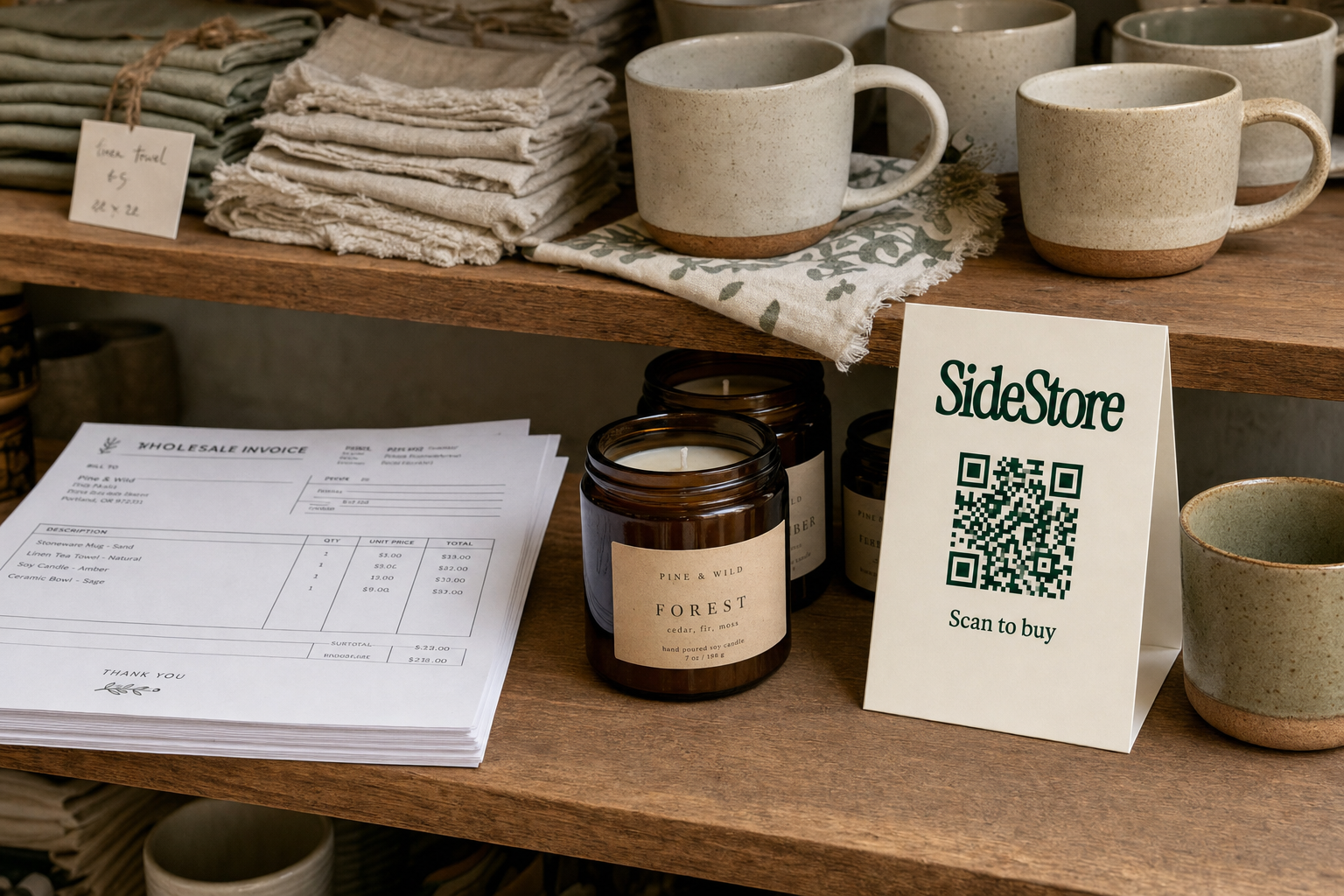
Consignment placement: Your upfront cost is zero. You supply stock, the merchant provides the space, and the Retail Widget handles checkout and automatic split payouts. You pay the host's commission only when a product sells, making CAC a direct function of your payout split rather than a fixed sunk cost. For makers with limited capital, this structure is hard to beat. Understanding what retail hosts typically earn also helps you model a competitive split.
Paid social: Advertising on social platforms can scale quickly, but cost-per-click and conversion rates fluctuate. Many makers find paid social works better for warming an audience than for closing a first purchase, especially for tactile, handmade products where physical handling drives the final decision.
Before choosing any channel, model your own unit economics. Take your retail price, subtract materials, packaging, and the channel's cost, and see what margin remains per sale. If a pop-up weekend costs you more than the realistic gross profit from that event, consignment is almost certainly the lower-risk starting point.
Offline Acquisition Channels Compared: Which Approach Fits Your Reality?
For most makers, the right channel is the one that delivers new customers at a cost and effort level your business can actually sustain. That usually means low upfront exposure and a cost structure tied to actual sales, not to attendance or hope.
The table below maps the five most relevant channels:
| Channel | Upfront Cost | Effort to Set Up | Ongoing Management | Acquisition Mechanic | Best For |
|---|---|---|---|---|---|
| Consignment placement | Low (stock only) | Medium (find host, set up Retail Widget) | Low (stock replenishment, data review) | Host's foot traffic encounters product in-situ | Makers wanting passive, distributed reach |
| Pop-up shop | High (pitch fee, display, travel) | High (logistics, staffing, setup) | High (every event is a fresh setup) | Direct maker-to-buyer encounter | Makers with capital, demo-heavy products |
| Craft markets / fairs | Medium (stall fee, display) | Medium | High (every event is manual) | Browsing visitors, maker presence | Early-stage community building |
| Wholesale to retailer | Low-medium (discounted stock) | Medium (negotiation, terms) | Low once agreed | Retailer's customers discover product | Makers with margin to discount |
| Paid social advertising | Variable (ad spend) | Low-medium | High (creative, targeting, optimisation) | Digital discovery, online checkout | Makers with a proven product and strong photography |
Key trade-offs:
Consignment placement is the clearest alternative to pop-up shops for makers who lack capital or can't commit to event schedules. If a particular placement underperforms, you withdraw stock and try a different host, rather than writing off a weekend's rental fee.
Paid social for tactile goods has a real weakness. A handmade ceramic or small-batch candle often needs to be held before a buyer commits. Physical placement puts the product in the buyer's hand inside a space they already trust.
Wholesale offers simplicity but compresses your margin permanently on every unit that goes through that stockist. Consignment preserves your retail price while letting you sell through someone else's store without the discount.
How Physical Placement Acquires Customers: The Consignment Mechanic Explained
Physical placement acquires customers by embedding your product inside a merchant's existing foot traffic, so new buyers encounter it in a context of ambient trust, without you needing to be present or running any advertising.
The acquisition loop works in a clear sequence:
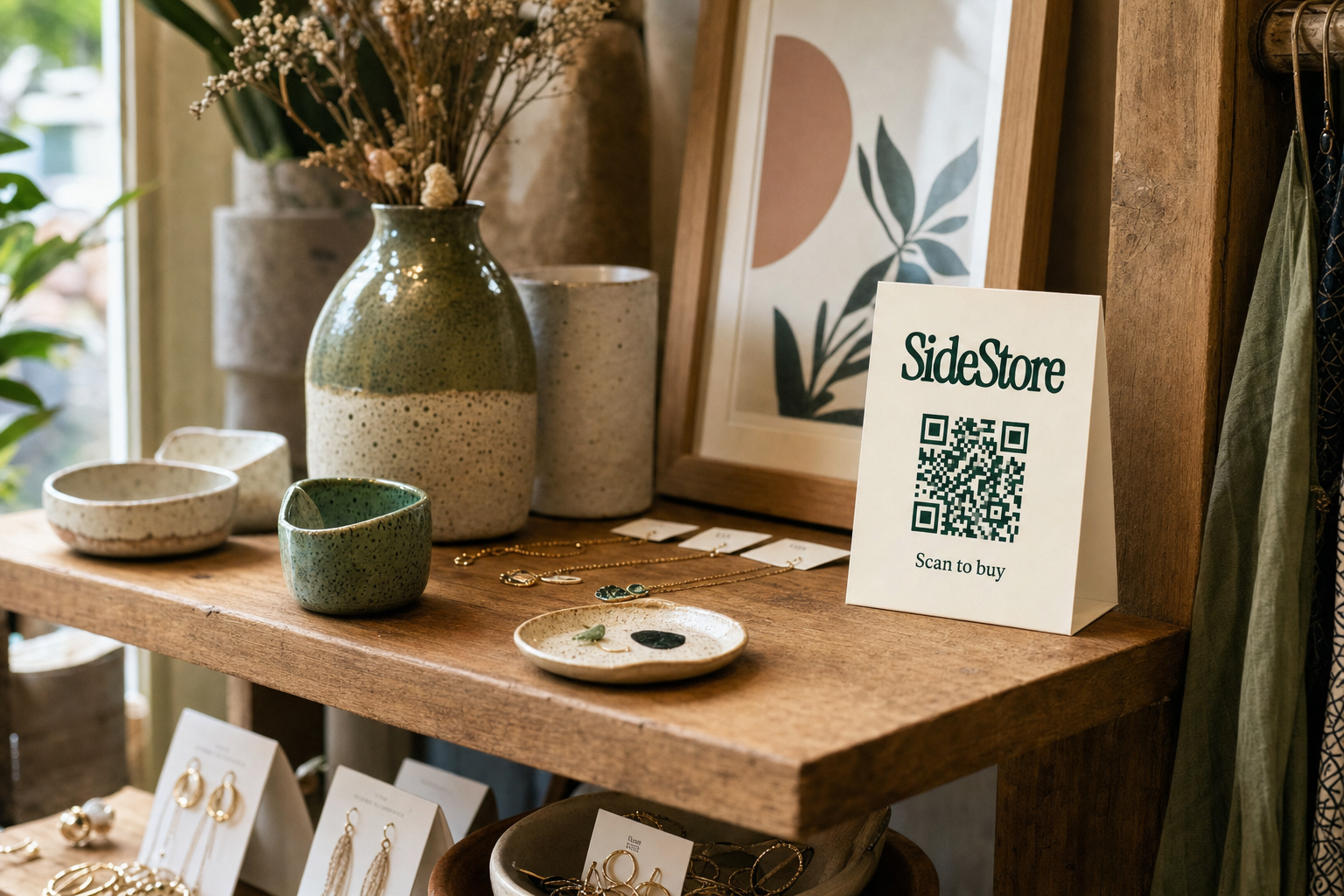
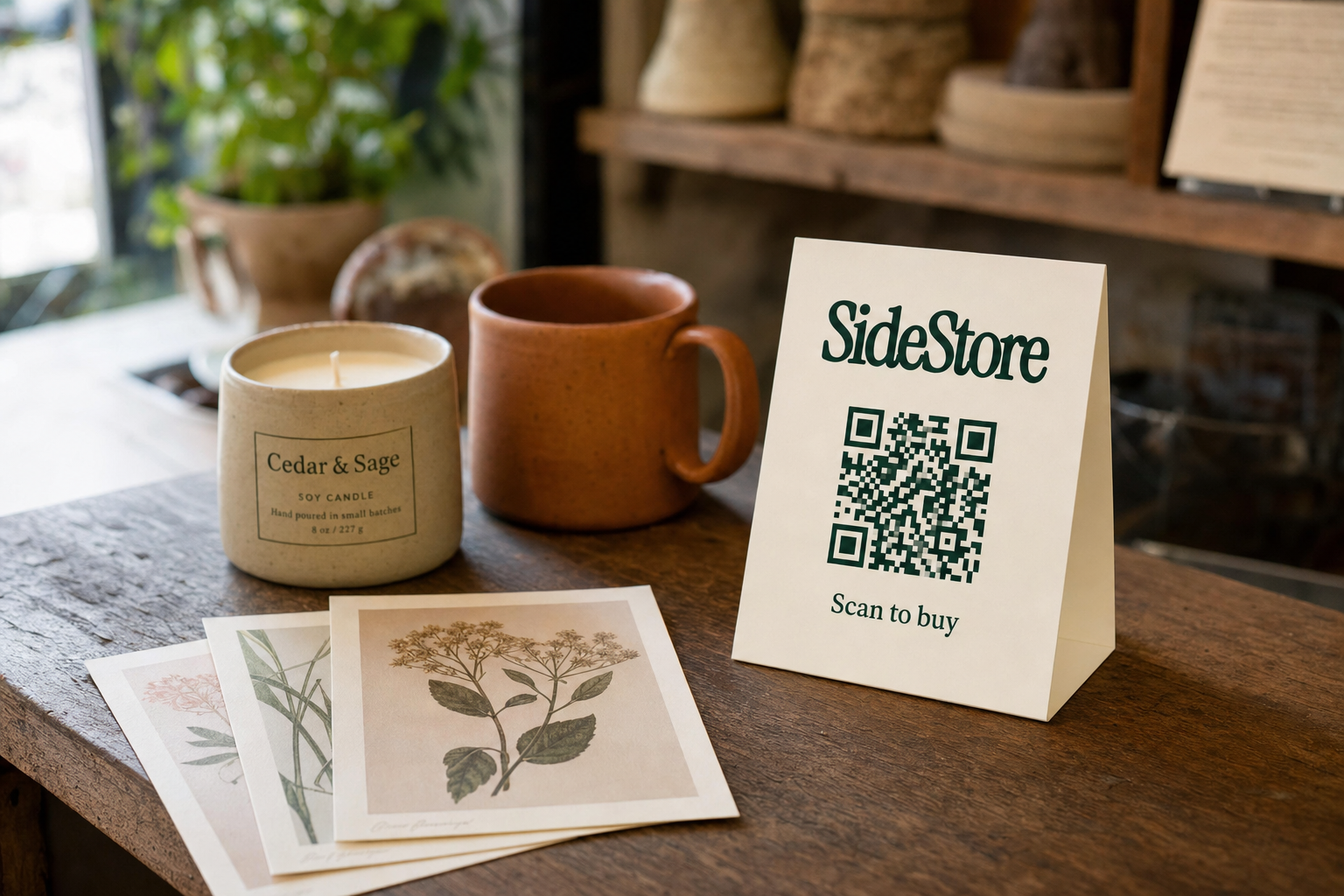
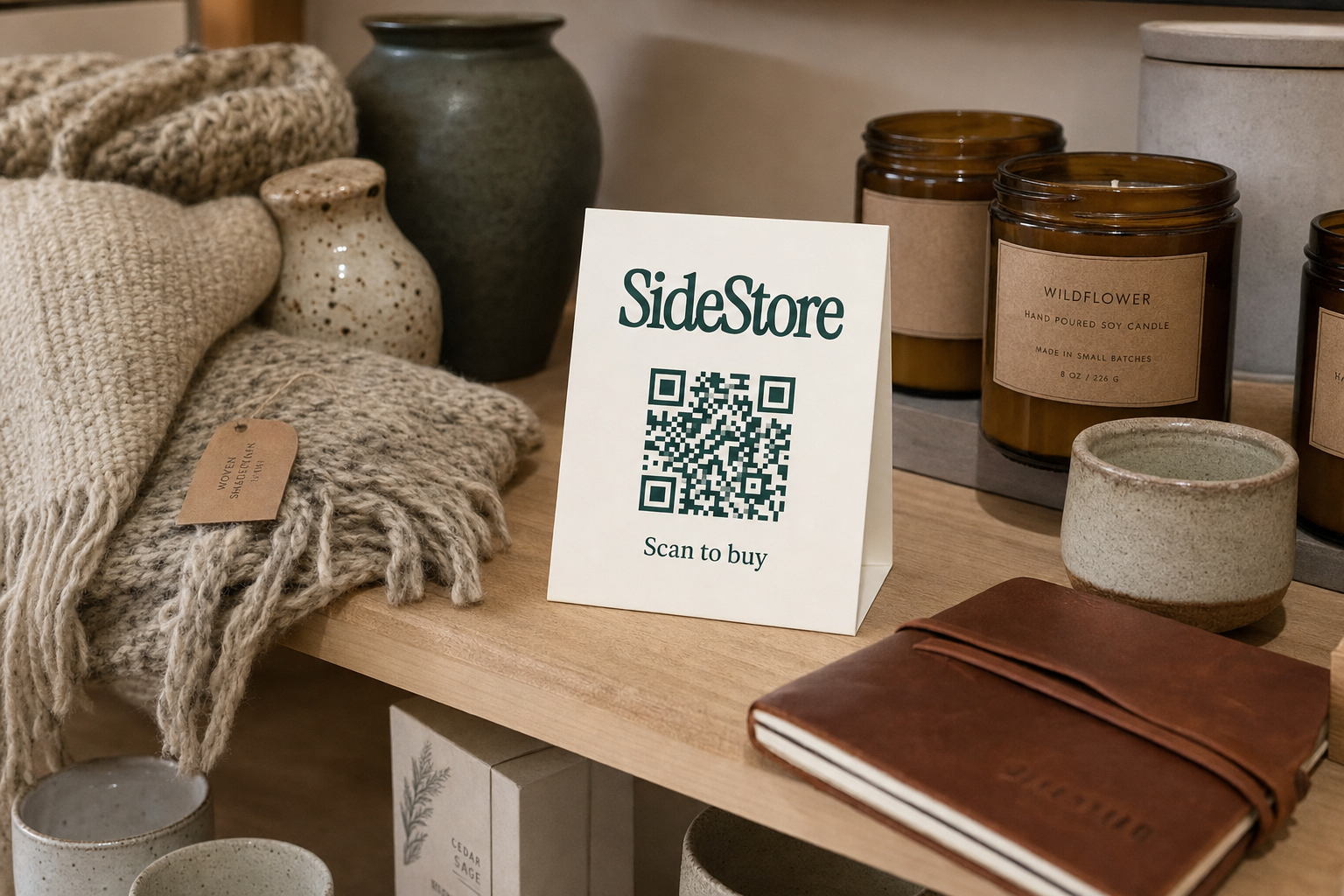
Step 1: Placement. You place stock with a merchant through the SideStore Retail Widget. The Widget is the interface for placing and managing a product on consignment end to end. It handles checkout (including a scan-to-pay QR that a customer can use to purchase directly), live stock tracking, placement attribution, and automatic split payouts to you and the host.
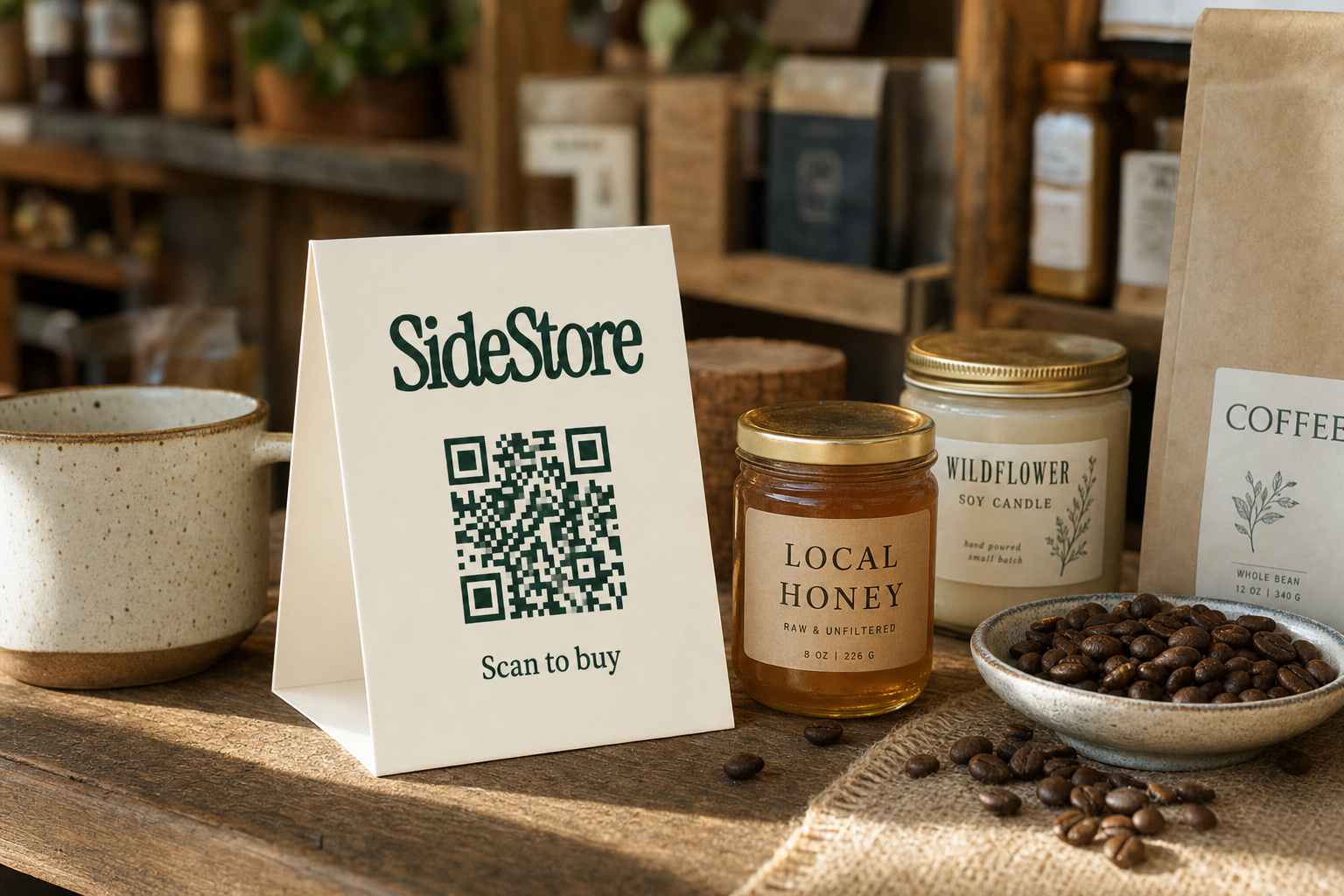
Step 2: Discovery. A customer already in the merchant's space, spending time there because they trust it, notices your product on the counter or shelf. This is passive discovery, the kind that costs you nothing.
Step 3: Purchase consideration. The customer picks up your product, reads your label, and holds it. This tactile moment is structurally different from scrolling past a social ad. Physical handling resolves uncertainty faster than an image ever does.
Step 4: Checkout. The customer either pays through the host's normal till or scans the QR card for scan-to-pay checkout. Either way, the Retail Widget records the sale, attributes it to that specific placement, and triggers the split payout automatically.
Step 5: Attribution and restocking. You see which placements are selling, which are slow, and where to send more stock. This data loop makes physical placement measurable, which most makers assume it isn't.
This is why café counters and boutique shelves function as acquisition surfaces. Thinking about products that sell well on a café counter and whether a coffee shop counts as a retail channel helps you identify the right host types for your category. If you make art prints, the mechanics are identical: selling art prints in cafes follows this exact loop.
The structural advantage over social media discovery is trust transfer. When your product sits inside a space a customer already frequents, the host's credibility extends to you. That's hard to manufacture online.
How to Develop an Offline Customer Acquisition Strategy as a Maker
Developing an offline customer acquisition strategy means choosing the right channels, modelling your costs, approaching the right hosts, and building the systems that let you manage multiple placements without losing control. Here's a practical five-step process.
Step 1: Define your acquisition goal. Before you place a single product, decide what a new customer is worth to you. Estimate your average order value, your repeat purchase rate if you know it, and your margin per unit. This tells you the maximum you can spend acquiring each customer and still grow. Without this number, every channel decision is guesswork.
Step 2: Choose your primary channel. Use the comparison table above. If you have limited capital and need to sell products without a store, consignment placement in high-traffic merchant spaces is the lowest-risk starting point. It lets you build a distributed placement network, with stock in multiple locations, without the fixed costs of a lease or the event costs of a pop-up.
Step 3: Approach the right merchant spaces. Lead with the host benefit, not your product. A café owner's question isn't "do I like these products?" It's "will this earn me something without creating work?" Position your consignment pitch around zero inventory risk, automatic split payouts via the Retail Widget, and effortless checkout. Detailed guidance on how to approach a local shop about stocking your products covers the practical conversation.
Step 4: Set up the terms and infrastructure. Before going live in any placement, agree on the split, the restocking cadence, and who handles unsold stock. Review consignment agreement terms to cover before you go live to make sure nothing is ambiguous. Use consignment inventory software to track stock across all your placements from a single dashboard, so you're not emailing hosts for updates.
Step 5: Review placement attribution data and iterate. After four to eight weeks in a placement, look at the data. Which locations are converting? Which are not? Move stock toward productive placements and withdraw from underperforming ones. This iteration cycle separates a deliberate acquisition strategy from simply putting products in shops and hoping. The Retail Widget's placement attribution makes this data available without any manual counting.
The outcome of this process, done consistently, is a distributed consignment network across multiple merchant spaces. You sell products without a store, without a social media following, and without attending a single event.
Why Physical Placement Builds a Loyal Buyer Base, Not Just a One-Time Sale
Physical placement builds repeat buyers because it creates a recurring encounter point. A customer who bought your candle from their regular café will walk past that spot again, see fresh stock, and buy a second time without any additional marketing effort from you.
That's the structural difference between physical placement and social media acquisition. Social media can reach a large audience, but once someone has scrolled past your content, there's no physical anchor to bring them back. The algorithm decides whether they see you again. With physical placement, geography is the algorithm: the café customer returns to the café.
The repeat-purchase mechanic works like this. A buyer who purchased in a familiar space already knows where to find your product. If the host keeps your stock available, the path to repurchase is effortless. Over multiple placements in different locations, you create a network of encounter points, and buyers who travel or live across those areas encounter you more than once, in different contexts.
Placement attribution data in the Retail Widget supports loyalty tracking at the placement level. You can see which host locations generate repeat purchase behaviour versus one-time sales, and prioritise restocking accordingly.
One honest caveat: physical placement creates the conditions for loyalty, but doesn't guarantee it. A buyer who loved your product once still needs a reason to return, whether that's consistent quality, seasonal restocking, or a genuinely useful item they reach for regularly. The placement is the opportunity; the product has to earn the repeat sale. Understanding how local retail networks build buyer trust gives useful context for what makes the difference.
Frequently Asked Questions
These are the questions makers most commonly ask about offline customer acquisition. Where numbers are given, they're hedged because reliable universal figures don't exist for independent makers; your own unit economics always take precedence.
What does customer acquisition mean? Customer acquisition is converting a person who doesn't currently buy from you into a paying customer. It covers every channel, tactic, and touchpoint that results in a first purchase, from a product spotted on a café shelf to a social media ad that leads to checkout. It's distinct from retention, which focuses on buyers you already have.
What is a reasonable customer acquisition cost? There's no universal figure. Many makers aim for a CAC well below the gross profit on a first transaction, with lower repeat-purchase cost over time. Your CAC depends on your product margin, your channel costs, and your conversion rate. Consignment placement typically has a lower upfront CAC than pop-ups because your cost is tied to actual sales, not sunk event fees.
What are examples of offline marketing approaches? Offline marketing for makers includes consignment placement in merchant spaces, craft market stalls, pop-up retail events, wholesale placement in retail stores, product samples in complementary businesses, and flyer or postcard distribution in high-traffic areas. For makers wanting to sell products without social media, consignment and wholesale are the most scalable of these.
What is the 10/5/3 rule in customer service? The 10/5/3 rule is a customer service standard, not an acquisition strategy, and the two are often confused. It describes staff behaviour during customer encounters: acknowledge a customer at ten feet, smile and make eye contact at five feet, and speak a greeting at three feet. It's relevant to in-store experience and retention, not to acquiring new customers in the first place.
How do you develop an offline customer acquisition strategy? Start by modelling your CAC ceiling from your product margin. Then choose one primary offline channel, approach suitable merchant spaces or events, set up clear consignment or wholesale terms, and use placement attribution data to identify what's working. Withdraw stock from underperforming locations and concentrate on productive ones. Iteration over four to eight weeks produces a strategy; a single placement is just a test.
The Straightforward Path to Offline Customer Acquisition
Offline customer acquisition, done well, is about choosing channels that fit your capital, your product, and your capacity for ongoing management, then running them with enough consistency to build data.
For most independent makers, consignment placement is the most practical starting point. It removes upfront cost, embeds your products in trusted merchant spaces, and gives you the attribution data to know what's working. The Retail Widget handles checkout, stock tracking, and split payouts automatically, so your job is to place well, supply reliably, and iterate on the results.
To move forward: map the merchant spaces in your area with relevant foot traffic, review how to sell through someone else's store for the mechanics, then approach the right merchant spaces with a host-first pitch.
Build a consignment network without opening a store of your own.