How to Sell Products Without Social Media: Physical Placement as the Alternative Channel
Selling products without social media means building revenue through channels that don't depend on follower counts, algorithm reach, or paid ads. You can do this through physical consignment placements, marketplace listings, direct email outreach, and wholesale relationships.
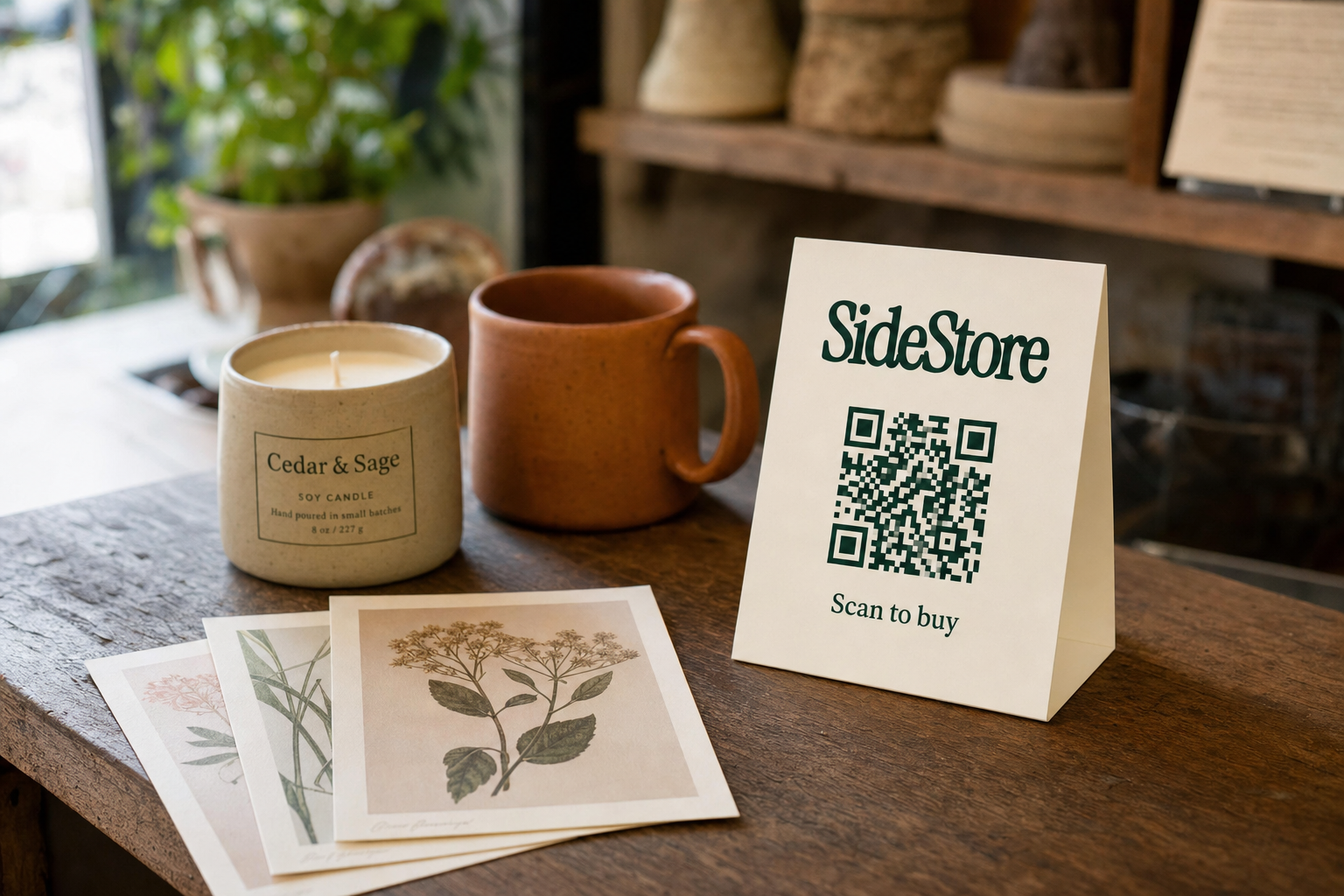
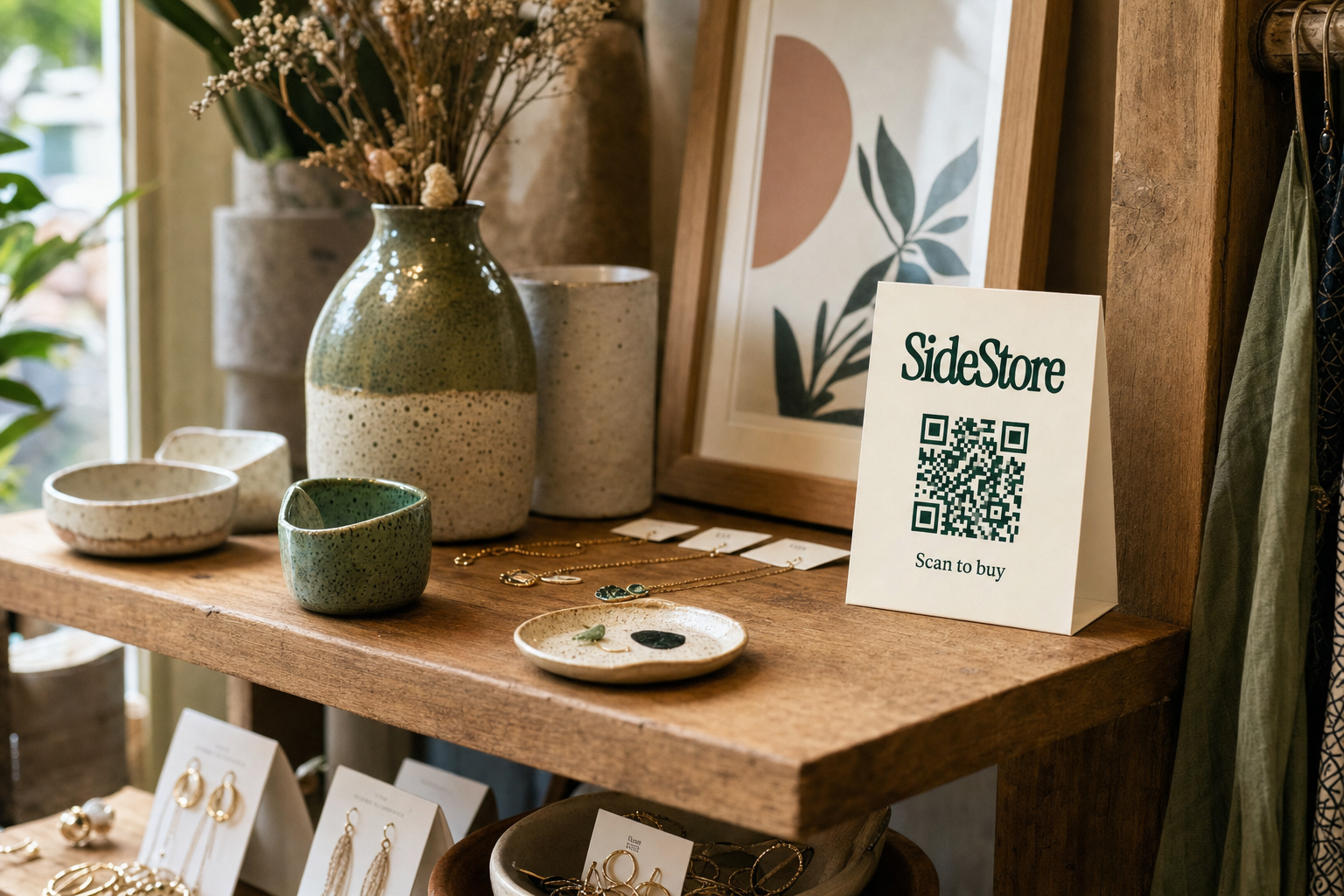
If you make physical products, the most scalable non-social channel available right now is consignment. Place your products in merchant spaces, the merchant provides the shelf, the Retail Widget handles checkout and automatic split payouts, and you get paid when items sell. No store of your own required.
This guide covers:
- Why social media is a difficult first channel for new makers
- A direct comparison of the main non-social sales channels
- How physical consignment works and how to secure placements
- Which merchants to approach and how
- Digital alternatives like Etsy, Faire, and Gumroad
- How to scale from one placement to a distributed network
- FAQ answers to the most common reader questions
Why Social Media Is a Difficult First Channel for New Makers
Social media rewards existing audiences. Without followers, your posts reach almost nobody. Building that audience from zero typically takes months of consistent work before a single product sale results from it. For a new maker, that's a long, uncertain runway.
This is worth saying plainly: the assumption that social media is the only viable sales channel is wrong, and it costs money. It pushes makers to spend time on content creation before they've validated whether anyone actually wants their product. Many sellers report spending significant time on Instagram or TikTok without seeing sales that match the effort, especially in the first months when the account has no reach.
The structural problem is simple. Social media is a discovery tool that compounds slowly. It favors accounts that already have engagement, because engagement signals to the algorithm that the content is worth sharing. New accounts start with nothing. Paid promotion can speed things up, but now you're spending money before you know your margins work.
The alternative logic is to start where buyers already are: physical spaces with foot traffic, online marketplaces with built-in search, and email lists you build through real relationships. These channels don't require a following. They require placement, positioning, and a clear product.
Selling through someone else's store is one of the most underused strategies for early-stage makers, precisely because it sidesteps the cold-start problem that makes social media so hard. You inherit the merchant's existing customer base instead of building your own from nothing.
The question isn't whether you should ever use social media. It's whether social media should be your first channel, your primary channel, or your only channel. For most makers starting out, the honest answer to all three is no.
Comparing the Main Non-Social Sales Channels: What Each One Costs and Delivers
Several channel options exist for selling products without social media. They differ substantially in upfront cost, ongoing effort, and reach.
| Channel | Upfront Cost | Ongoing Effort | Reach | Best For |
|---|---|---|---|---|
| Physical consignment (via SideStore) | Low (stock only, no fees to host) | Low (Retail Widget manages checkout, stock, payouts) | Local to regional via multiple placements | Physical product makers seeking scalable offline distribution |
| Etsy / online marketplace | Low (listing fees) | Medium (SEO, photography, customer service) | Global, algorithm-dependent | Makers who want online reach without a personal website |
| Faire (wholesale marketplace) | Low to medium (samples may help) | Medium (buyer relationships, order fulfilment) | Wholesale buyers, boutiques | Makers ready to sell in volume at trade margins |
| Pop-up retail events | Medium to high (pitch fees, setup, travel) | High (each event is a standalone operation) | Local, event-duration only | Makers testing new products or markets |
| Email / direct outreach | Low (list-building tools) | Medium (regular sends, list growth) | Limited to list size, high conversion potential | Makers with an existing customer base or mailing list |
| Wholesale to retailers | Low (relationship cost only) | High (negotiation, invoicing, restock logistics) | Regional to national | Established makers with proven product lines |
Pop-up events have appeal as a test ground, but the economics matter: what pop-up retail space costs and what to watch out for needs serious examination before you budget a season around events. Before approaching any retailer, understand consignment agreement terms every maker should know to protect yourself from unfavorable deals.
The pattern is clear. Physical consignment, when managed through a platform that automates the operations, offers the lowest ongoing effort relative to reach across multiple placements. Marketplaces deliver global reach but put you in competition with thousands of similar listings.
Physical Consignment: How to Place Your Products in Merchant Spaces Without a Store
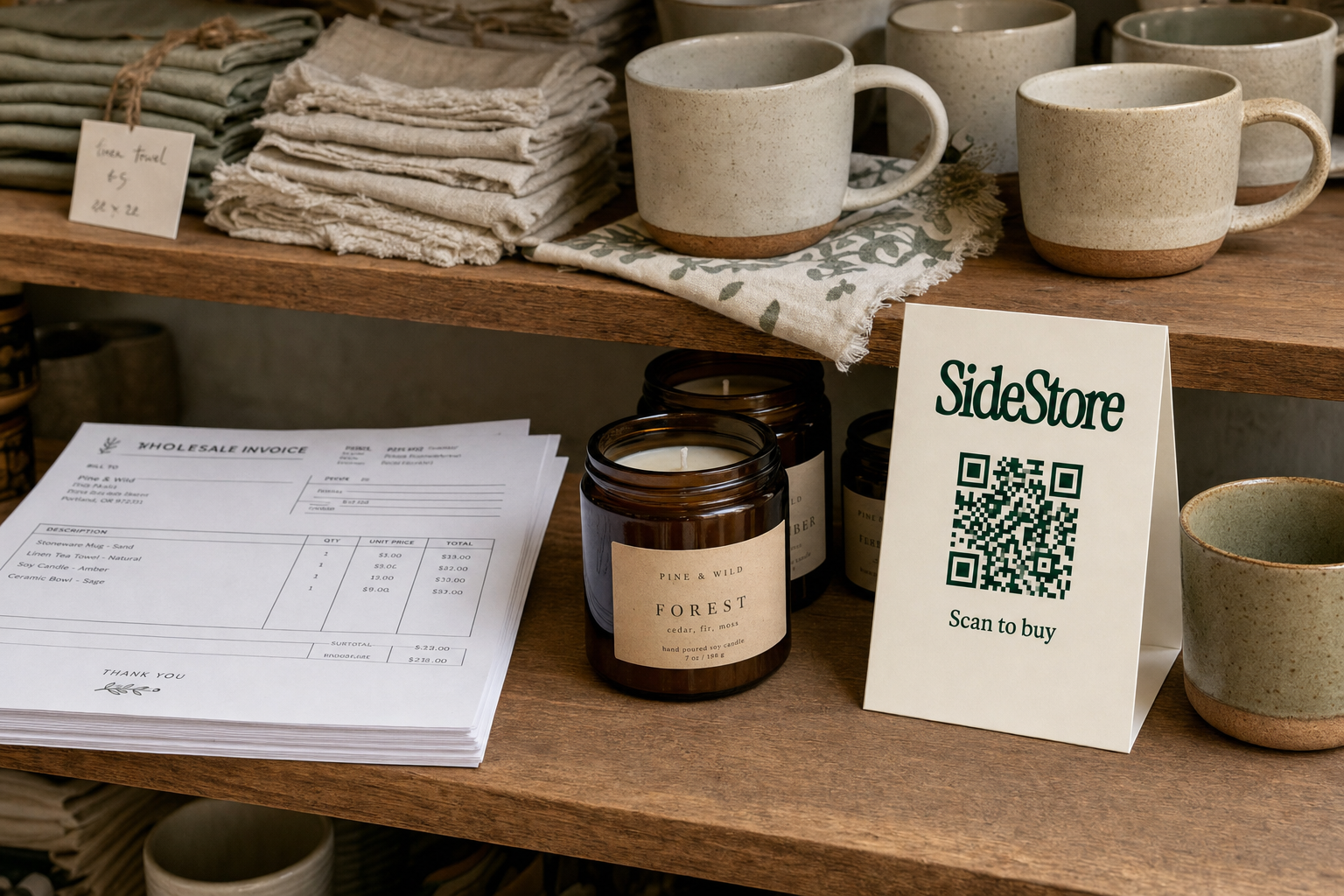
Physical consignment is straightforward. You supply the products. A merchant provides the shelf space. You get paid when items sell, with no upfront cost to the merchant and no inventory risk on their side. The Retail Widget manages checkout, live stock tracking, placement attribution, and automatic split payouts. Neither party needs to handle transactions manually.
Here's how it works in practice:
You supply the stock. You deliver a defined quantity of your product to a merchant. The merchant doesn't buy the stock upfront. They agree to display it.
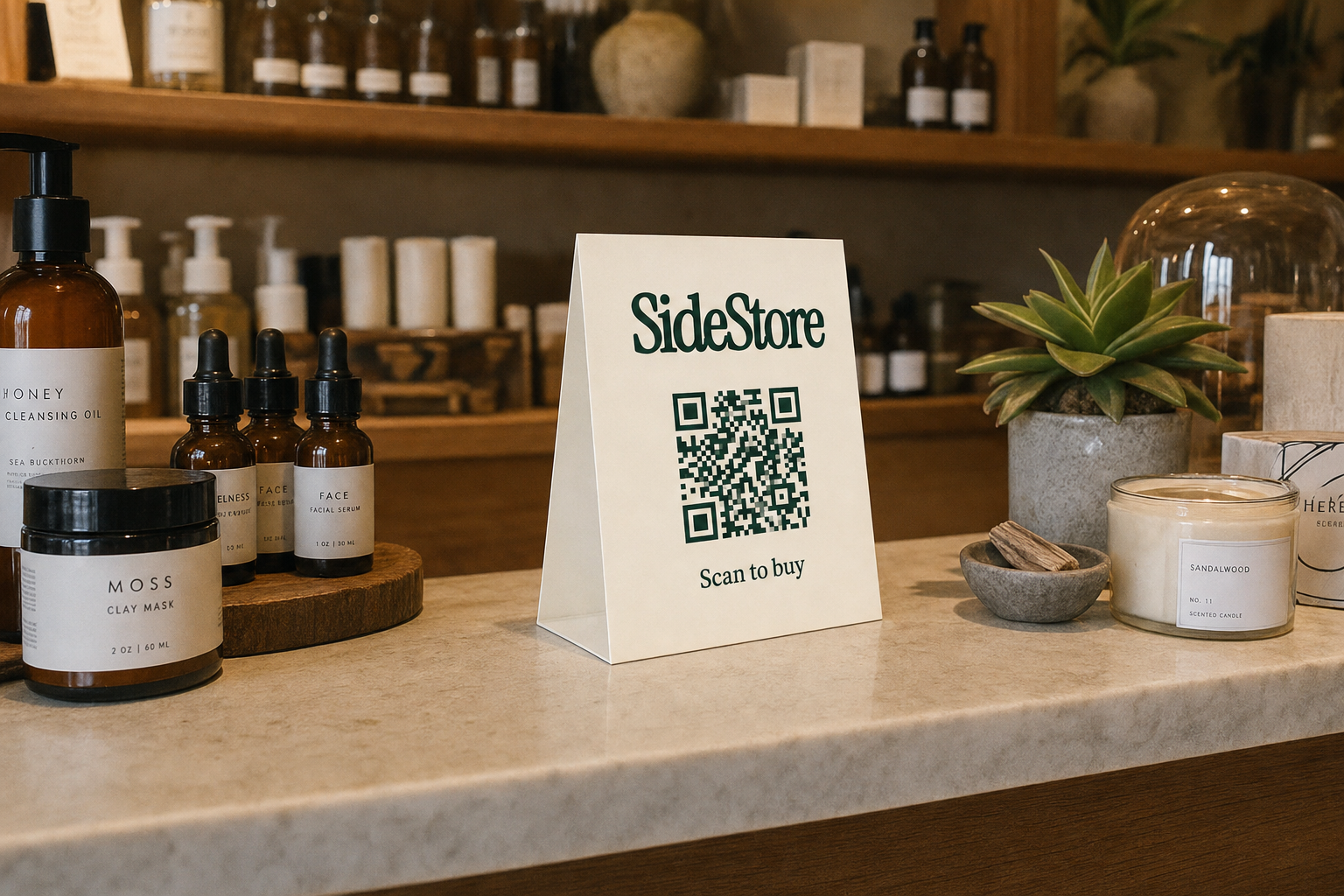
The Retail Widget activates the placement. Once live, the Widget handles the customer-facing checkout. Customers can scan a QR code to pay. The scan-to-pay QR is one function of the Retail Widget, not the entire product. The Widget also tracks what's in stock at that location in real time, so you always know what has sold and what needs restocking without calling the merchant.
Payouts split automatically. When a product sells, the Retail Widget calculates the agreed split and settles both parties. You receive your maker share; the merchant receives their host commission. No chasing invoices.
Multiple placements compound. One placement in one café reaches that café's customers. Three placements in three different venues, each with distinct foot traffic, builds a distribution footprint that no single social media account would reliably replicate for a new maker. This is a distributed consignment network: offline presence at scale, managed from one dashboard.
This model is covered in depth in a maker's guide to retail partnerships. The operational layer, specifically live stock tracking across locations, is what makes it manageable without a dedicated logistics team. Consignment inventory software that handles live stock tracking removes the spreadsheet burden that causes most makers to cap at one or two placements.
The relevance here is direct: each merchant brings their own regular customer base. You're not building an audience. You're entering one that already exists, with a product the merchant has agreed fits their space. For context on how shared retail networks support local economies and why merchants benefit from hosting, that matters when you pitch.
Which Merchants Are Best for Consignment Placement (and How to Approach Them)
The best merchants for consignment placement have high foot traffic, a customer base aligned with your product, and available shelf or counter space they're not fully using. In practice, this means cafés, independent boutiques, hotel lobbies, bookshops, and lifestyle retailers.
Evaluate a specific merchant before you approach them:
Check alignment first. Walk in as a customer. Does the space already carry products adjacent to yours? A café that sells locally made candles will be faster to convince for another locally made, giftable product than one that sells nothing retail at all.
Assess the display space. Counter space, windowsills, and shelving near the till are the highest-converting positions. If you can see idle space where your product fits neatly, that's a strong pitch point.
Observe dwell time. Customers who sit and spend time browse and purchase incidental products more than those rushing through in two minutes.
Once you've identified a shortlist, use this approach:
- Visit as a customer first. Understand the space, the staff, and customer rhythm before you introduce yourself.
- Request a brief conversation with the owner or manager, not staff. Stocking decisions rarely go to floor staff.
- Lead with the merchant's benefit. Frame your pitch around what they gain: commission from sales, no inventory to buy, no stock risk, and the Retail Widget handling checkout and payouts automatically.
- Bring a physical sample and a one-page overview. Concrete product in hand closes faster than a brochure or link.
- Propose a small trial placement. Limited initial quantity reduces perceived risk on both sides and gives you proof of sell-through to negotiate from.
The detailed pitch framework is in how to approach a local shop about stocking your products. For specific categories, how to sell art prints in cafes covers that product type, and why coffee shops count as retail spaces for makers addresses whether a café is a viable partner.
No cold-calling experience required. The pitch works because you're offering the merchant an asset, not asking for a favor. Space that earns nothing is costing them opportunity. You're offering to change that, with no risk to them.
Non-Social Digital Channels: Marketplaces, Email, and Platforms That Work Without Followers
You can sell products online without social media by using platforms with built-in discovery: Etsy, Faire, and Gumroad all attract buyers without requiring a social following.
Etsy is a marketplace for handmade, vintage, and craft products. Sellers report that Etsy's internal search functions as an organic discovery channel. Well-optimized listings attract buyers without external promotion. The trade-off is competition: categories get saturated, and Etsy controls the algorithm, fees, and platform direction. Dependency on any single marketplace carries risk.
Faire connects independent makers with wholesale buyers, primarily independent boutiques and gift shops. Sellers report reaching retail buyers who would otherwise require direct relationship-building. The trade-off is margin: wholesale pricing means significantly lower revenue per unit, requiring volume to compensate.
Gumroad is built for digital products: downloads, patterns, templates, and similar formats. Sellers use Gumroad to distribute digital products independently, without a website or social presence. It handles payment and delivery in one place. For physical product makers, it's less relevant unless you also sell digital accompaniments.
Email outreach is the highest-conversion digital channel for makers with any list at all, however small. It's also the only channel you fully own. Unlike marketplace listings, your email list can't be algorithmed away.
The honest comparison: marketplaces trade platform dependency for built-in reach. Physical consignment placement through SideStore is platform-free in a different way. Your products sit in a physical space the merchant owns, the Retail Widget manages the transaction, and no third-party algorithm decides whether customers see your product. The customer is simply in the room with it.
For makers selling handmade jewellery in boutiques, combining a Faire listing with physical consignment placements covers both wholesale discovery and direct-to-consumer sales without a social presence.
From One Placement to Many: Building a Consignment Network That Replaces a Social Following
A single consignment placement earns you access to one merchant's customer base. A network of placements earns you consistent exposure across multiple locations, multiple customer demographics, and multiple daily footfall cycles. That cumulative reach is the offline equivalent of a social following, and it grows without content creation.
Here's a five-step scaling sequence:
- Prove the first placement. Secure one merchant, go live with the Retail Widget, and track sell-through over four to eight weeks. Actual sales data from a real placement is the most credible thing you'll bring to your next pitch.
- Identify your next two merchants using placement attribution data. The SideStore dashboard shows which placements perform and which product configurations sell. Use that signal to select your next locations strategically.
- Standardise your replenishment process. As placements grow, ad-hoc restocking becomes a bottleneck. Establish a fixed restock schedule and minimum stock threshold for each location before adding a third.
- Expand into adjacent venue categories. If your first placement is in a café, your next might be a bookshop or hotel. Different venues reach different customer segments.
- Let the dashboard manage complexity. Consignment inventory software for managing multiple placements is what makes five or ten locations manageable by one person. Without it, you're logging into each placement relationship manually.
Placement attribution is the data signal that tells you where to invest next. If one venue consistently sells out and another rarely converts, that's not random. It tells you something about customer alignment that no social media metric can replicate for physical products.
This is also the model described in shared retail networks and why they support local economies: distributed, locally rooted, and resilient because no single point of failure takes down the whole network.
Frequently Asked Questions: Selling Without Social Media
These are the questions makers most commonly ask when looking for alternatives to social media as a primary sales channel.
What are alternative advertising methods beyond social media platforms?
Alternative advertising methods include physical placement in retail spaces, listings on marketplace platforms like Etsy and Faire, email newsletters to a direct list, participation in local markets and trade events, and editorial outreach to product-focused media and blogs. Each reaches buyers through a different mechanism. Physical placement reaches buyers at point of presence. Marketplaces reach buyers actively searching. Email reaches buyers who've already expressed interest. None of them require a social following.
How can someone sell digital products without relying on social media?
Sellers use Gumroad to distribute digital products independently, handling both payment and delivery without a website or social media account. Etsy also supports downloadable digital products with its own internal search discovery. Building an email list, even a small one, is the most durable digital channel because it's not subject to algorithm changes. Choose platforms where buyers already search for what you make.
Is it possible to run a profitable online business without social media followers?
Yes. Sellers build revenue through marketplace search, wholesale relationships, and consignment placements without meaningful social media presence. Growth tends to be slower early on without the virality potential social platforms occasionally deliver. The upside is that revenue built through owned channels and physical placements is more predictable and less vulnerable to platform policy changes.
How do beginners establish sales when they lack an existing audience?
The most direct path is to enter spaces where an audience already exists. Physical consignment places your product in a merchant's space, inheriting that merchant's foot traffic. Marketplace listings place your product in front of active searchers. Both generate your first sales without requiring you to build an audience first. Understanding what a consignment agreement should include before you approach your first merchant protects your interests from the start.
Can products be sold through platforms like Etsy without social media promotion?
Yes. Etsy has internal search and browse functionality. Sellers report that well-photographed, accurately titled listings attract buyers organically through Etsy search alone. Social media promotion can accelerate visibility on Etsy, but it's not required. Strong SEO within the listing, clear product photography, and competitive pricing matter more at the listing level than your social following.
What approaches work for selling online without building a social media presence?
Marketplace listings with optimized search metadata, direct email outreach to potential buyers or stockists, wholesale pitches through platforms like Faire, and physical consignment placements all generate sales without a social presence. The most resilient approach combines at least two of these channels so that no single platform dependency determines your revenue. For physical product makers, pairing marketplace listings with consignment placements covers both online discovery and offline purchase.
How can digital products be marketed without spending money on social media?
Digital products can be marketed through free listings on Gumroad, Etsy's digital category, and similar platforms that carry their own search traffic. Guest contributions to newsletters or blogs in your niche, direct outreach to small communities or forums where your target buyer gathers, and building a simple email list from early customers are all low-cost approaches. For makers curious about what hosts earn from retail placements in a coffee shop setting, the hybrid model of digital plus physical distribution is also worth considering.
Start With One Placement, Not One More Platform
The clearest next step for any maker asking how to sell products without social media is to identify one merchant, make one approach, and place one product on consignment. That single placement gives you real sell-through data, a working proof of concept, and the first unit of a distribution network, without a social following, without a store, and without upfront inventory cost to the merchant.
The two-track approach in this guide combines physical consignment placements with marketplace listings on platforms like Etsy or Faire. Together, they cover offline discovery and online search without requiring you to perform for an algorithm.
To go from reading to doing: how to approach a local shop about stocking your products is the practical next step. And a maker's complete guide to selling through someone else's store covers the full mechanics of building that distribution relationship over time.
One placement. Then the next.