Pop-Up Retail Space for Rent: What It Costs, What to Watch Out For, and a Lower-Risk Alternative
Renting pop-up retail space costs $150, $500/day in most markets. Learn real cost ranges by city, hidden fees to expect, and when consignment placement beats a short-term lease.
What Is Pop-Up Retail Space for Rent?
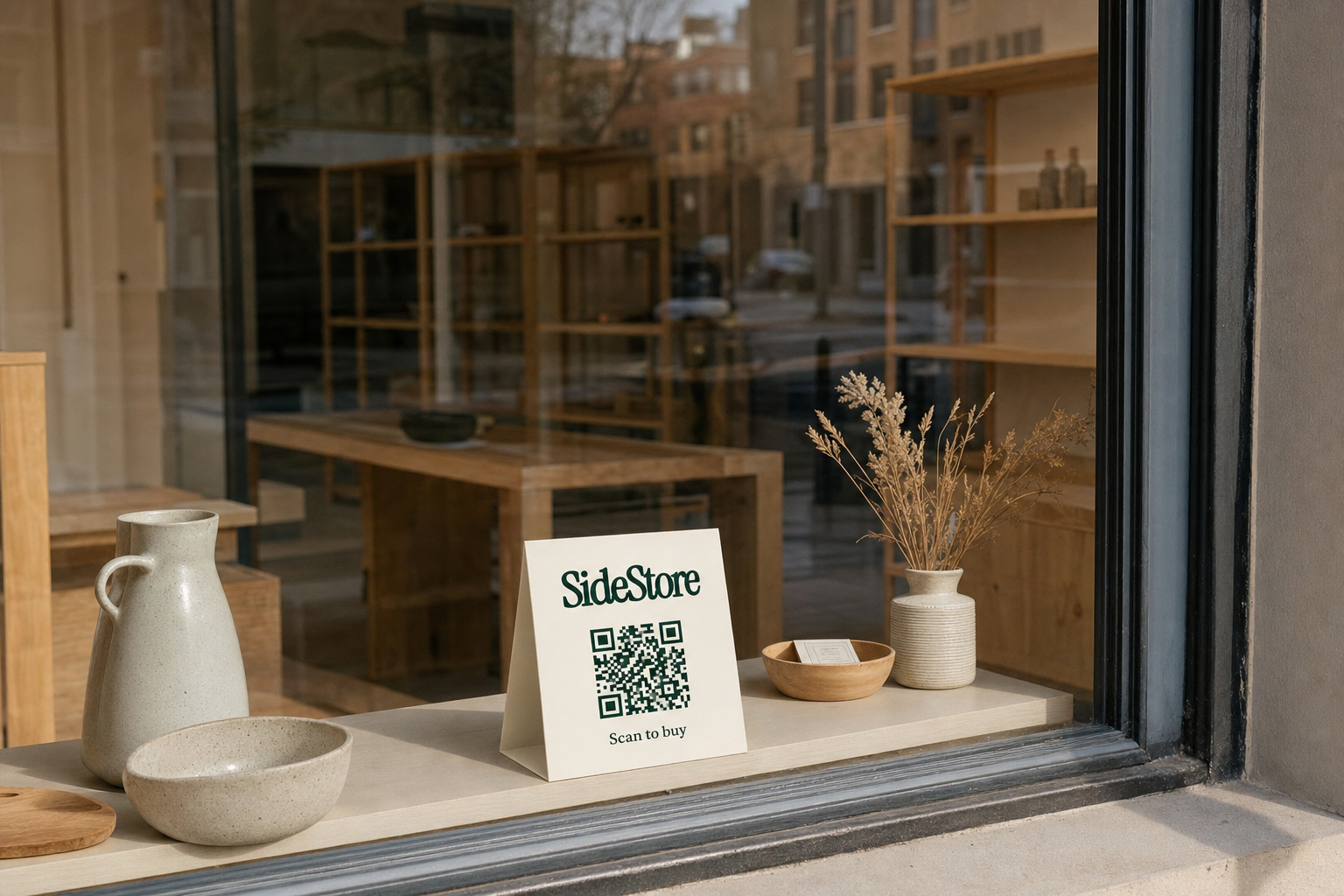
Pop-up retail space for rent is a short-term commercial space, a vacant storefront, a shared retail floor, or a dedicated events venue, leased by the day, week, or month to let a brand or maker sell physical products without a long-term lease commitment.
Expect to pay roughly $150 to $500 per day for a modest space in a mid-tier market, or $500 to $2,000 per day in high-traffic urban locations like New York or Los Angeles. Week-long rentals often carry a slight discount per day, and monthly arrangements can drop the daily rate further, though they add deposit and utility obligations that push the true cost up quickly.
Pop-up retail suits makers who want to test a new market, move seasonal stock, or build brand visibility in a physical location for a defined period. The trade-off is real: you carry all the overhead risk, even if sales underperform. Before you commit to a rental, it is worth understanding exactly what you are paying for, what questions to ask, and whether a consignment placement in an existing merchant space would serve you better at this stage. For a broader overview, see pop-up retail: what it is and what it costs.
What Pop-Up Retail Space Actually Costs

Pop-up retail space costs vary dramatically by city, foot traffic, and the type of venue. A shared retail floor in a regional city might run $100 to $200 per day; a solo storefront on a prime street in Los Angeles or Seattle can exceed $1,500 per day before you account for a single additional expense.
Base Rental Rates by Market Tier
Here are illustrative ranges based on general market knowledge. Treat them as planning benchmarks, not guarantees, rates shift with season, demand, and individual landlord expectations.
Tier 1 markets (New York, Los Angeles, San Francisco, Chicago):
- Daily rate: $500 to $2,000+
- Weekly rate: $2,500 to $10,000
- Monthly rate: $8,000 to $35,000+
Tier 2 markets (Seattle, Austin, Denver, Portland, Miami):
- Daily rate: $200 to $800
- Weekly rate: $1,000 to $4,500
- Monthly rate: $4,000 to $15,000
Tier 3 markets (mid-size and regional cities):
- Daily rate: $80 to $300
- Weekly rate: $400 to $1,500
- Monthly rate: $1,500 to $6,000
Pop-up retail space in Los Angeles sits at the high end of the Tier 1 range for flagship areas like Melrose or Venice Beach. Seattle's Capitol Hill and Pike Place corridors behave like Tier 2 on a good day and Tier 1 during peak season.
Hidden Fees That Inflate Your True Cost
The base rent is rarely the whole story. Before you sign anything, build these into your budget:
- Security deposit: Typically one to four weeks of rent, paid upfront and held until after your tenancy ends.
- Cleaning fee: A flat charge at checkout, often $150 to $500 depending on space size.
- Utilities: Electricity, heating, and Wi-Fi may be billed separately or metered against your usage.
- Staffing: If you cannot be present personally, a part-time sales assistant adds $15 to $25 per hour.
- Fixtures and display: Shelving, clothing rails, display tables, and signage are rarely included. Budget $200 to $2,000 to set up even a basic layout.
- Insurance: Most landlords require a general liability certificate before you take possession (more on this in the FAQ).
- Platform or listing fees: Marketplaces that connect you to pop-up spaces typically take 5 to 15 percent of the rental value as their fee.
- Credit card processing: If the space does not include a point-of-sale setup, you need your own, factor in hardware and per-transaction fees.
Add these together and a $300-per-day rental can realistically cost $550 to $700 per day in total outlay before a single product sells. That is the number to plan against, not the headline rate.
Where to Find Pop-Up Retail Space Near You
The five most reliable channels for finding pop-up retail space are: dedicated pop-up marketplaces, commercial real estate agents, direct landlord outreach, shared retail concepts, and local business improvement districts.
1. Dedicated pop-up platforms Several online platforms specialise in connecting makers and brands with short-term retail space. These aggregate vacant storefronts and shared retail floors in most major cities. Search filters typically let you narrow by city, size, and available dates. Availability in markets like pop-up retail space Seattle and pop-up retail space Los Angeles tends to be reasonable, though peak-season inventory moves fast.
2. Commercial real estate brokers Brokers who specialise in short-term or flexible commercial tenancy can surface spaces that never appear on public listings. This route works better for week-long or monthly arrangements than single-day bookings.
3. Direct landlord outreach If you have a specific street or neighbourhood in mind, look for vacant storefronts and contact the building management directly. Landlords with long-vacant units are often open to short-term arrangements at rates below what a marketplace would advertise.
4. Shared retail concepts Permanent retailers sometimes rent out a portion of their floor to a rotating guest brand. You share the foot traffic and the space but carry lower overhead than a solo tenancy. This model is common in independent boutiques and concept stores.
5. Local business improvement districts (BIDs) Many city BIDs maintain programmes that connect local makers with temporary retail space, sometimes at subsidised rates. Check the BID website for your target neighbourhood.
One alternative worth considering before you book any of the above: selling through someone else's store on consignment lets you access retail foot traffic without taking on a lease at all. It is not the right fit for every situation, but it removes the rental risk entirely.
What to Check Before You Sign a Short-Term Lease
Before signing any pop-up rental agreement, check six things: the all-in cost, the exit terms, who holds liability, what fixtures are included, whether the foot traffic claim is verifiable, and what happens if the space becomes unavailable at short notice.
Short-term leases look simple on the surface. They are not. Each of the following items has caused real problems for makers who skipped the due-diligence step.
Confirm the all-in daily cost in writing. Ask the landlord or platform to itemise every charge, base rent, deposit, cleaning, utilities, and any platform fee. Do not rely on the headline rate. Get the total in a single written figure before you commit.
Read the exit and cancellation clause carefully. What happens if you need to leave early? What happens if the landlord cancels on you? A one-sided cancellation clause can mean losing your deposit with no recourse. Look for mutual cancellation rights and a clear refund policy.
Clarify who holds general liability. Most landlords require you to carry general liability insurance for the duration of your tenancy. Some venues offer a short-term policy you can add at checkout; others expect you to arrive with a certificate of insurance already issued. Confirm this before your move-in date, not on it.
Inventory what fixtures and equipment are included. Walk through the space virtually or in person before signing. Ask specifically: Is there a point-of-sale terminal? Are there display tables, shelving, or hanging rails? Is the Wi-Fi included? Arriving to an empty room when you expected a furnished retail floor is an avoidable problem.
Ask how foot traffic is measured and by whom. A landlord who quotes a foot-traffic figure has probably measured it, but ask when, and how. Weekend foot traffic can differ dramatically from weekday numbers. If your pop-up runs Monday to Wednesday, a weekend-derived count is not a reliable benchmark.
Get clarity on what you can and cannot alter. Signage, window displays, floor coverings, and wall fixtures all sit in a grey area. Some landlords are flexible; others have strict rules about what you can attach to surfaces or display in windows. Know the limits before you set up, not after.
If any of these points makes you reconsider the rental model entirely, it is worth reading up on consignment vs wholesale: which model suits your stage before you proceed.
Pop-Up Rental vs Consignment Placement: A Side-by-Side Comparison
The clearest way to choose between a pop-up rental and a consignment placement is to compare them across the dimensions that matter most to an early-stage maker: upfront cost, risk, operational effort, and scalability.
| Dimension | Pop-Up Rental | Consignment Placement |
|---|---|---|
| Upfront cost | High (deposit, rent, fixtures, insurance) | None, products placed at no cost to you |
| Revenue risk | You pay rent whether or not products sell | You pay nothing if products do not sell |
| Setup complexity | High (lease, insurance, staffing, display) | Low (place products, set up Retail Widget) |
| Duration flexibility | Fixed term; exit clauses vary | Ongoing; adjust or withdraw placements |
| Brand control | Full control of the environment | Shared space with other products |
| Foot traffic source | You attract it yourself | Merchant's existing customer base |
| Scalability | Each new location requires a new lease | Add locations through the same dashboard |
| Inventory tracking | Manual, or via your own POS system | Live stock tracking via Retail Widget |
| Payout mechanics | You collect all sales revenue directly | Automatic split payout to maker and host |
| Best for | Established brand, tested product, defined market | Early-stage maker, new market, limited capital |
A pop-up rental makes sense when you have a proven product, a marketing budget to drive foot traffic, and the operational capacity to staff and manage a standalone space. The full-environment control and direct customer relationship justify the overhead at that stage.
Consignment placement through an existing merchant suits a maker who wants to test offline distribution without absorbing rental risk. The merchant's foot traffic is already there. Consignment inventory software handles stock tracking across multiple placements, and boutique inventory systems give host merchants visibility into what is on their shelf without extra administrative work. Neither party carries the financial exposure of a lease.
Pros and Cons of Renting a Pop-Up Space
Renting pop-up retail space gives you complete control over your environment, your brand presentation, and the customer experience, but it front-loads cost and risk in a way that many early-stage makers underestimate.
Pros
- Full brand environment. You design the layout, the displays, the signage, and the customer journey from door to checkout without negotiating with a host.
- Direct customer relationships. Every transaction is yours. You collect the data, the email address, and the repeat-purchase relationship.
- Defined sales window. A pop-up creates urgency. Customers know it is temporary, which can accelerate purchasing decisions.
- Market validation. Running a pop-up in a new city gives you concrete sales data for that market before you commit to anything permanent.
- Press and social visibility. A well-executed retail pop up shop frequently attracts local media and social coverage in a way that a consignment shelf placement does not.
Cons
- High fixed cost regardless of sales. Rent, deposit, and setup costs are due whether you sell out or sell nothing. A slow weekend can put you significantly in the red.
- Operational load. Staffing, setup, breakdown, and compliance add hours before and after your selling window. Solo makers often find this unsustainable.
- Insurance and legal exposure. You hold liability for the space. A slip-and-fall incident or a property damage claim becomes your problem.
- Short-term and non-scalable. Each new location is a new lease negotiation, a new deposit, and a new setup operation. There is no compounding effect.
For a full breakdown of pop-up retail costs and models, including what different types of events-based retail look like in practice, that guide covers the landscape in detail.
The Lower-Risk Alternative: Consignment Placement Through Existing Merchant Spaces
If the overhead and risk of a pop-up rental feel disproportionate to where you are right now, consignment placement is not a compromise, it is a different model with a different risk profile, and for an early-stage maker it is often the more rational starting point.
Getting your products into physical retail is genuinely hard. Wholesale buyers want minimums you may not be able to meet. Long-term leases require capital you may not have. Pop-up rentals carry costs that can wipe out a week's margin in a single slow day. This is the reality for most independent makers, and it is worth naming plainly rather than glossing over it.
Consignment placement changes the equation. You place your products in an existing merchant space, a cafe, a boutique, a hotel, a high-foot-traffic retailer, and those products sit on the shelf at no upfront cost to either you or the host. When a product sells, the revenue is automatically split between you and the merchant. Neither party carries inventory risk. Neither party holds a lease they need to justify.
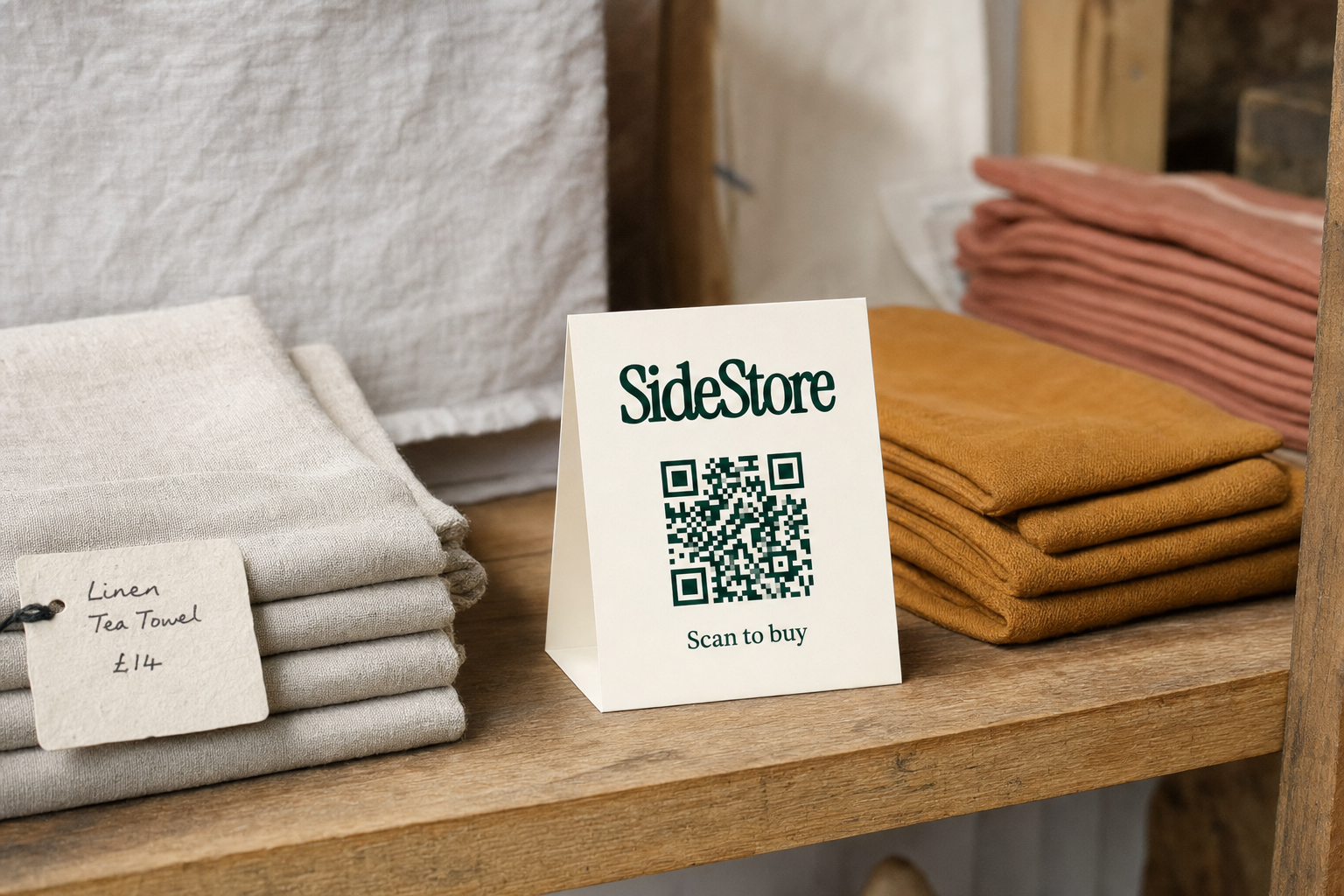
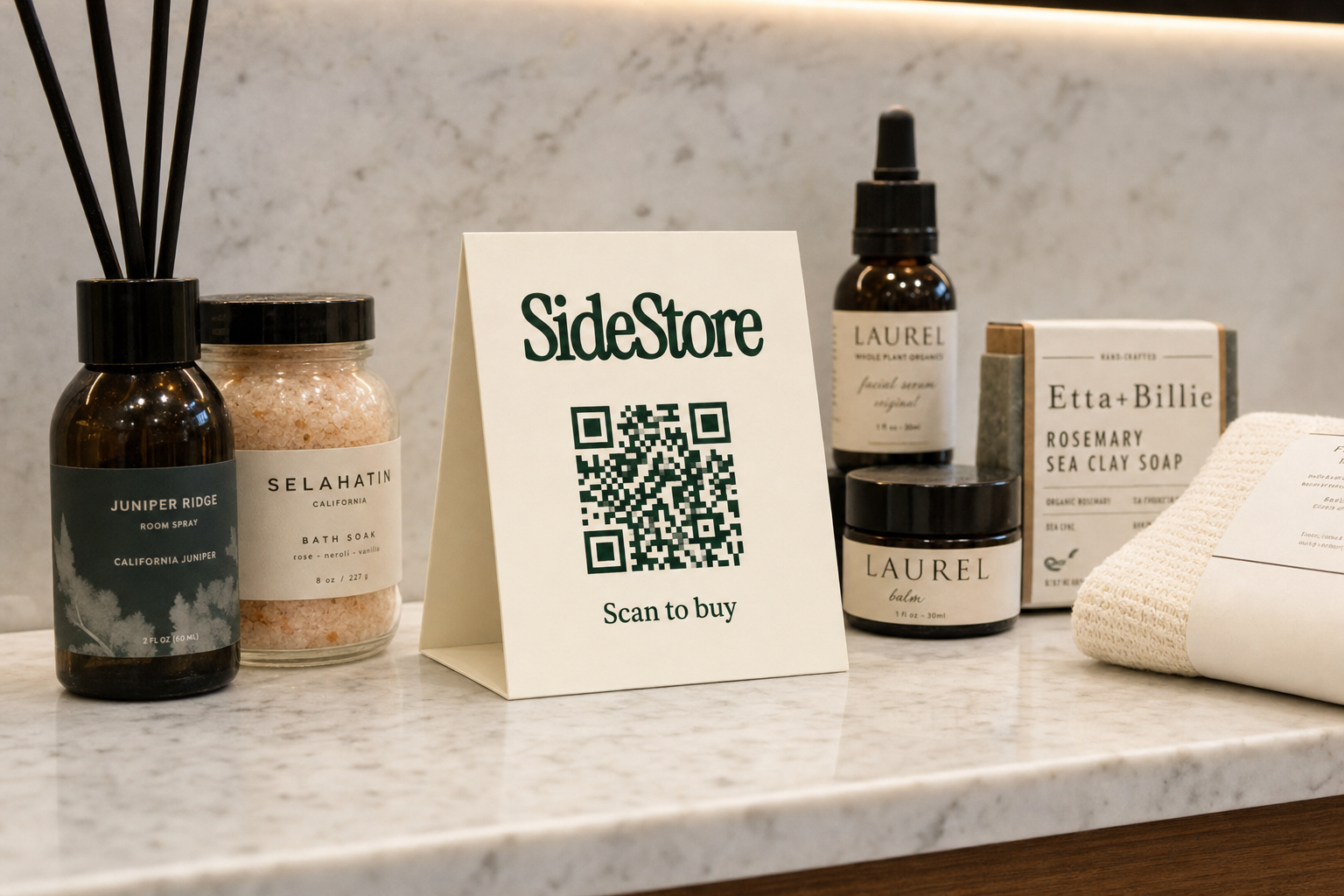
SideStore's Retail Widget is the interface that makes this work end to end. It handles checkout (including a printable scan-to-pay QR card that can be attached to individual products or displayed as a single card for all products in a placement), live stock tracking so you always know what is on each shelf, placement attribution so you can see which locations are performing, and automatic split payouts so the settlement happens without manual calculation. The QR checkout is one function of the Retail Widget, not the whole product. The Widget manages the entire placement lifecycle.
From a single dashboard, you can manage placements across multiple merchant spaces simultaneously. Add a new location and it behaves like every other placement in your network: tracked, attributed, and automatically settled.
For makers interested in specific product categories, these guides cover the placement mechanics in detail: placing art prints in local shops on consignment, selling art prints in cafes, and placing handmade jewelry in boutiques.
The model does not give you full brand-environment control, and it does not create the same urgency as a time-limited pop-up. But it does let you build distributed offline distribution without opening a store of your own, and without carrying the financial exposure of a lease.
When to Choose a Pop-Up Rental, and When to Start With Consignment
Choose a pop-up rental if you have a proven product, a marketing plan to drive foot traffic, and the capital to absorb a slow week without disrupting your business. Choose consignment placement first if you are still validating demand, working with limited capital, or trying to reach multiple markets simultaneously without multiplying your overhead.
If you have tested your product and know it sells offline: a pop-up rental lets you build brand presence, create urgency, and own the customer relationship in a defined window. The cost is justified when the product-market fit is already confirmed.
If you are entering a new market or a new product category: consignment placement lets you test real customer response with no rental cost at stake. A merchant's existing foot traffic gives you genuine exposure without requiring you to build an audience from scratch.
If you want to reach five cities in the next six months: renting pop-up retail space in five cities sequentially means five deposits, five lease negotiations, and five setup operations. Consignment placements across five merchant spaces can be deployed and managed from one dashboard, at a fraction of the operational cost.
If cash flow is tight: the distinction is simple. A pop-up rental draws cash before you sell a single unit. A consignment placement draws nothing until a product sells.
For merchants considering whether to host placements and what they earn from doing so, what merchants earn from hosting placements and coffee shop profit margins give the host-side numbers in detail.
Frequently Asked Questions About Pop-Up Retail Space for Rent
Here are direct answers to the questions people most commonly ask when researching pop up retail space for rent. Each answer is written to stand on its own without surrounding context.
How much does it cost to rent a pop-up shop space?
Pop-up shop rental costs range from roughly $100 to $300 per day in smaller regional markets, $200 to $800 per day in mid-tier cities like Seattle or Denver, and $500 to $2,000+ per day in major markets like New York or Los Angeles. These are base rates only. When you add deposit, insurance, staffing, fixtures, and any platform listing fee, the true daily cost is typically 50 to 100 percent higher than the headline rate.
Do I need insurance for a pop-up shop?
Yes, in almost every case. Most landlords and venues require a general liability insurance certificate before you take possession of the space. Some short-term rental platforms offer a policy you can add at booking; others expect you to arrive with your own. Public liability coverage protects you if a customer is injured on the premises or if you cause damage to the space. Do not assume it is covered by the landlord's policy, it is not.
What is the difference between a pop-up shop and a market stall?
A pop-up shop typically occupies a dedicated enclosed space, a storefront, a room, or a defined section of a larger retail floor, for a fixed short-term period. A market stall is an open or semi-open pitch within a managed market event, typically rented by the day and shared with other vendors in the same event. Market stalls carry lower overhead but also less brand-environment control. Pop-up shops offer more immersive brand presentation but at significantly higher cost.
Can I rent retail space for just one day?
Yes. Many pop-up platforms and shared retail concepts offer single-day bookings, though availability is limited in high-demand periods and the per-day rate for a one-day booking is usually higher than for a multi-day arrangement. In some markets, a single-day rental in a premium location can cost as much as a week-long arrangement elsewhere.
Is consignment a good alternative to renting retail space?
For makers who are validating demand or working with limited capital, consignment is often a better starting point than renting pop-up space. You place products in an existing merchant space, pay nothing upfront, and earn when products sell. The merchant earns a split of each sale too. What a merchant earns from a consignment placement explains the host-side economics in plain terms. Consignment does not give you full brand-environment control, but it removes rental risk entirely.
The Decision in Plain Terms
Pop-up retail space for rent works when you have a proven product, the capital to carry overhead, and a clear plan to drive foot traffic. It is not the right starting point for every maker, and the hidden costs make it more expensive than it looks on a listing page.
If you are at an earlier stage, testing a new product, entering a new market, or scaling across multiple cities without multiplying your overhead, consignment placement through existing merchant spaces is the lower-risk path. No lease, no deposit, no fixtures bill.
How to sell through someone else's store and consignment vs wholesale cover the mechanics in full.
Build a consignment network without opening a store of your own.