Is a Coffee Shop Considered Retail? What the Answer Means for Makers and Hosts
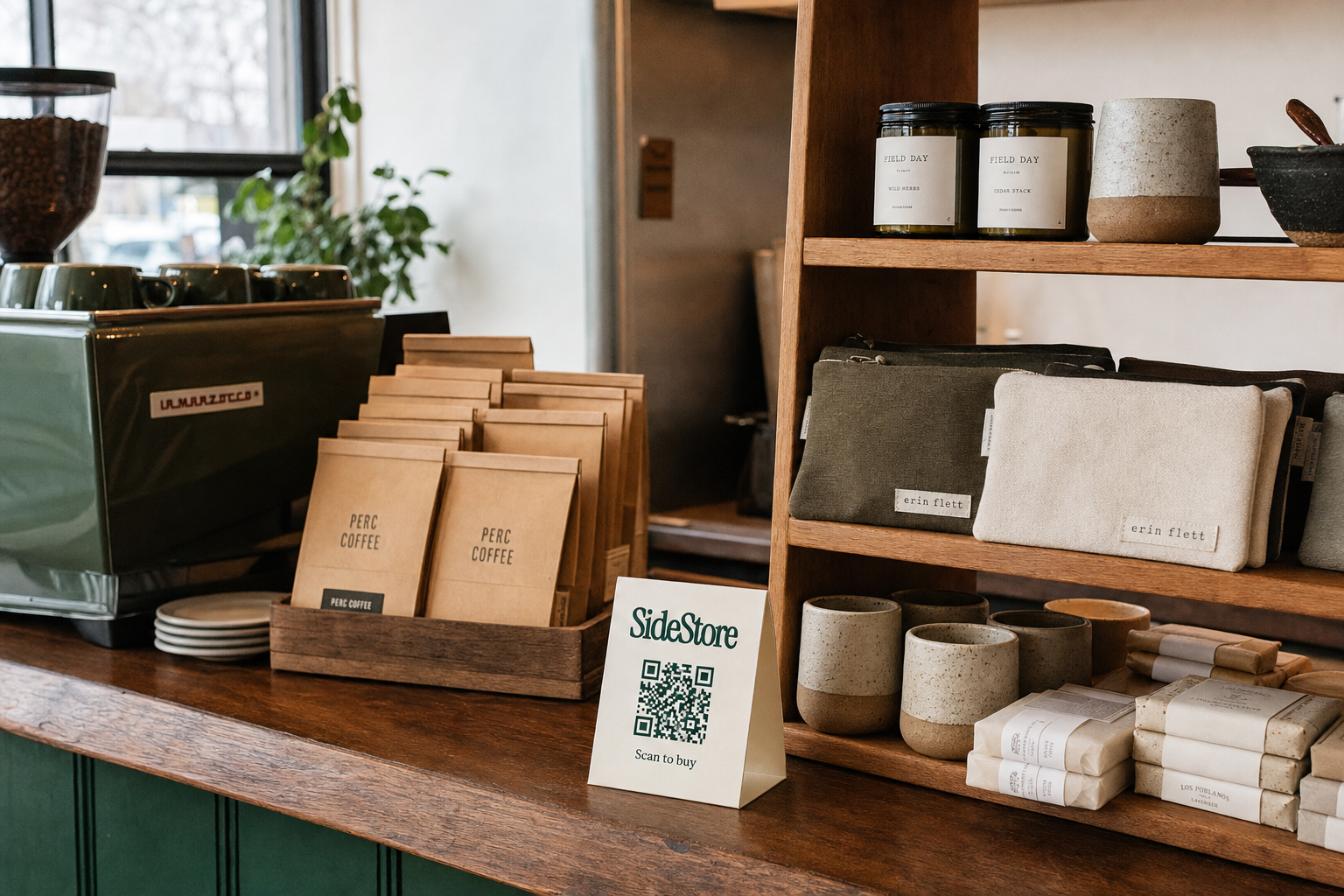
A coffee shop is a hybrid business. It operates primarily as a food service or hospitality venue but becomes a retail business the moment it sells physical goods that customers take away unopened or unconsumed. Most coffee shops sit somewhere between those two poles, which is why the classification question matters, and why the answer is almost always "it depends."
For practical purposes: a coffee shop that only serves drinks and prepared food is classified as a food service or restaurant-type business. One that also sells bagged coffee beans, packaged goods, branded merchandise, or handmade products made by independent makers is operating a retail function alongside its hospitality function. Whether that triggers formal retail registration, separate sales tax treatment, or additional licensing depends on your jurisdiction, not on a universal rule.
If you run a coffee shop and you're wondering whether to add a retail layer, coffee shop profit margins are worth reviewing first. If you're a maker thinking about placing products in a cafe, the mechanics of retail space sharing are directly relevant to how that arrangement works in practice.
Retail vs Food Service: What the Classification Actually Means
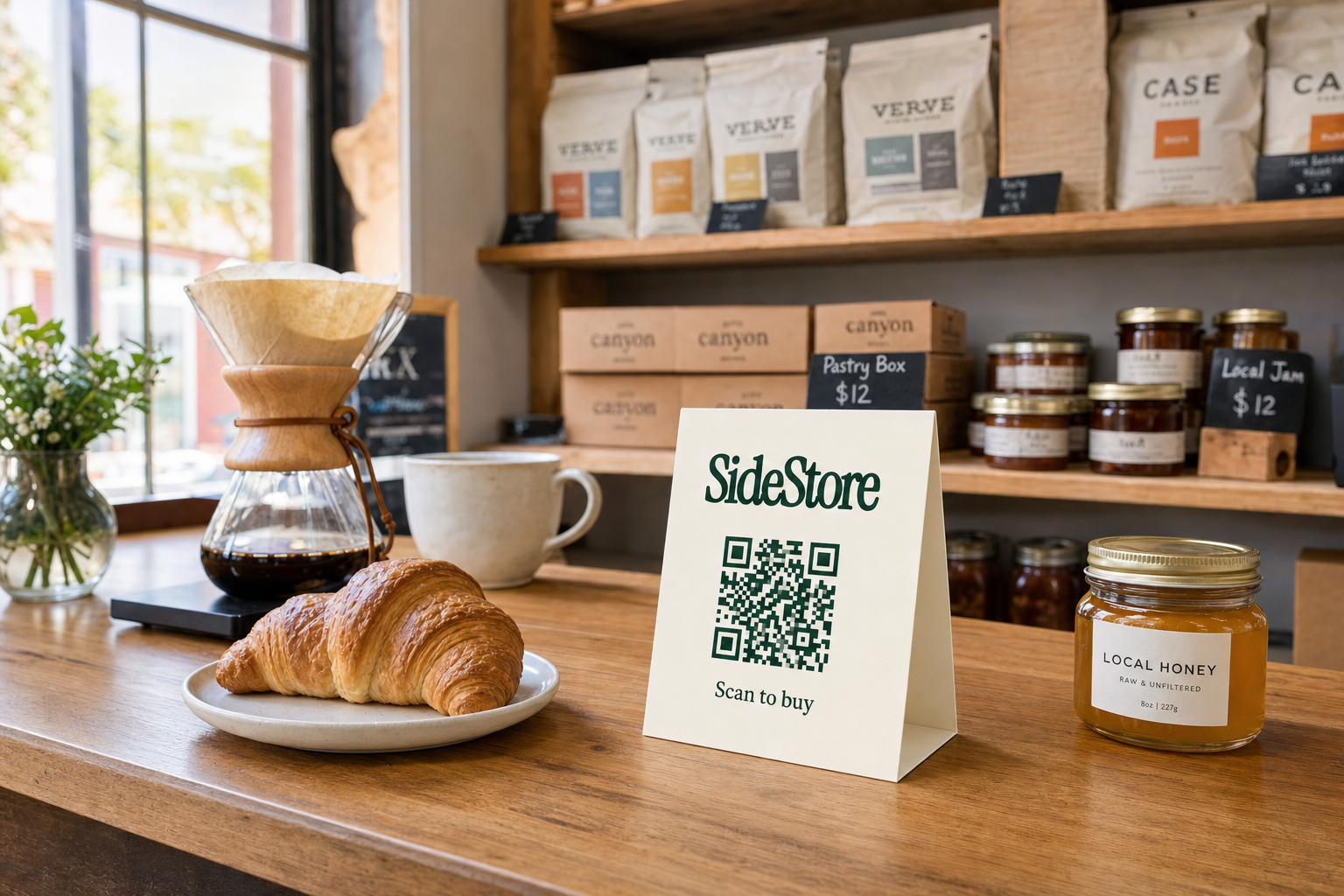
The distinction between retail and food service is functional, not arbitrary. Retail means selling physical goods that a customer takes away to use or consume later. Food service means selling prepared food and drink for immediate consumption on or off the premises. A coffee shop that serves espresso and nothing else is a food service business. One that sells a bag of single-origin beans, a candle made by a local artisan, or a printed tote is acting as a retailer for those items.
Most licensing frameworks distinguish between the two because they carry different compliance obligations. Food service typically requires a food handler's permit, health inspections, and in many jurisdictions a separate food premises licence. Retail typically requires a business registration, and in many places a distinct sales tax or VAT registration depending on what goods you sell and at what value.
The hybrid model, a cafe that does both, is increasingly common. Many small operators add packaged goods or maker products to a counter or shelf without fully considering what that triggers. The practical implication: your food service licence alone may not cover packaged goods sold for off-premises consumption. Check with your local business licensing authority and, if relevant, your tax authority, before adding physical goods to your offer.
Understanding how much profit a coffee shop makes in each revenue stream helps you assess whether the additional compliance is worth the return. A clean coffee shop profit and loss statement that separates food service revenue from retail product revenue will also make your obligations easier to track and defend if you're ever audited.
When a Coffee Shop Counts as a Retail Business
A coffee shop crosses into retail territory under specific, identifiable conditions. The most common triggers are: selling packaged goods that leave the premises unconsumed, stocking third-party products for resale, or hosting maker products on consignment. When any of these apply, the coffee shop is functioning as a retailer for those goods, regardless of its primary classification.
Concrete conditions that typically trigger retail classification include:
- Selling bagged or jarred goods (coffee beans, loose-leaf tea, honey, preserves) that a customer takes home
- Stocking branded merchandise such as cups, tote bags, or apparel associated with the cafe or a supplier
- Reselling third-party products at a marked-up price
- Hosting maker products on consignment, where independent artisans, artists, or designers place their work in the venue and get paid when it sells
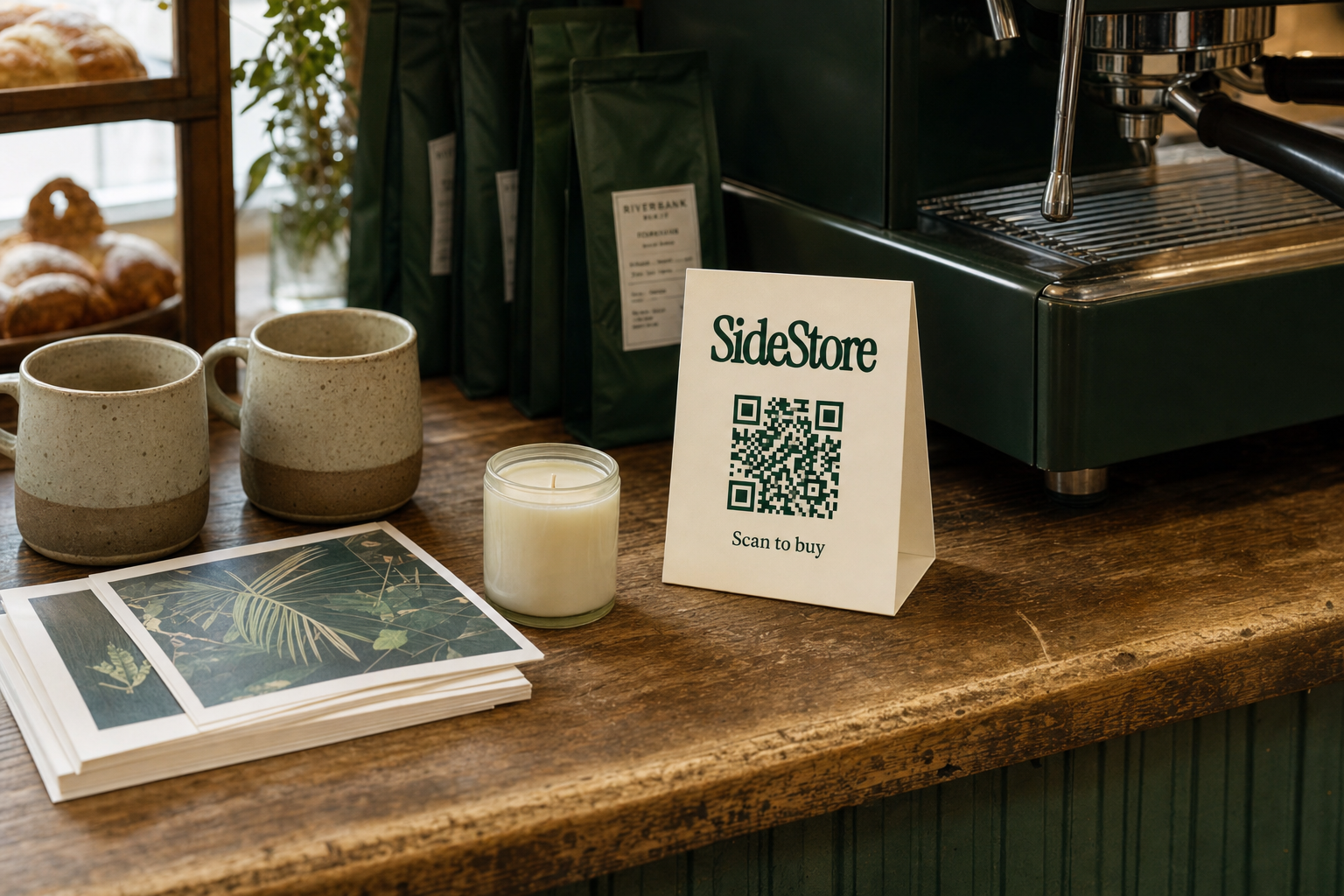
Consignment is the clearest example of a coffee shop acting as a retail host. Under a consignment arrangement, the cafe takes on no inventory cost and holds no stock risk. The maker supplies the product; the host provides the shelf space; the Retail Widget handles checkout, stock tracking, and automatic split payouts. The coffee shop earns from space it already has without becoming a traditional retailer in the operational sense.
Whether consignment income is classified as retail revenue, commission, or rental income varies by jurisdiction. Confirm the treatment with a local adviser rather than assume one way or the other.
For makers, selling art prints in cafes is a practical entry point into this kind of placement. For a broader view of how shared retail models work, the mechanics translate directly to a cafe-as-host context.
Coffee Shop Business Models: A Classification Comparison
Not all coffee shops are classified the same way, and the model you operate determines which obligations and opportunities apply. The table below covers the common configurations.
| Business Model | Primary Classification | Sells Physical Goods? | Retail Registration Likely? | Inventory Risk to Host |
|---|---|---|---|---|
| Pure beverage cafe (drinks only) | Food service | No | No | None |
| Cafe with packaged goods for sale | Food service + retail | Yes (own stock) | Yes, for goods sold | Full (host buys stock) |
| Cafe hosting maker products on consignment | Food service + retail host | Yes (third-party stock) | Varies by jurisdiction | None (maker retains risk) |
| Dedicated retail store with in-house coffee bar | Retail primary | Yes | Yes | Full (host buys stock) |
The consignment row stands out: it is the only model where the coffee shop earns retail-style income without carrying inventory risk. The maker supplies and owns the stock; the host earns a split payout when a product sells. That is a meaningfully different financial exposure than buying wholesale and hoping it moves.
If you're considering adding product revenue without the stock commitment, consignment inventory software explains how the tracking side works. For context on how product revenue sits alongside drinks revenue, average revenue of a coffee shop gives you a baseline for comparison.
Coffee Shop Inside a Retail Store: Which Classification Applies?
When a coffee shop operates inside a retail store, the classification question reverses: the host is the retailer, and the cafe is the embedded food service tenant. The primary business registration belongs to the retail host; the cafe typically holds its own food service licence, either as a separate legal entity or as a licensed department within the host's operation.
Two legal structures are common here. The first is a concession arrangement, where the cafe operates as an independent entity that rents or licenses space from the retailer, holds its own licences, and files its own accounts. The second is an internal department model, where the cafe is part of the retailer's own operation, licenced under the retailer's food premises permit if local rules allow it. Which structure applies depends on local licensing requirements and the commercial agreement between the two parties.
For makers, a retail store with an embedded coffee shop is a particularly useful placement venue. Foot traffic is retail-grade. Dwell time is extended because customers queue, wait, and browse. A product placed on consignment in that kind of space benefits from both the retail impulse purchase environment and the slower pace of a cafe visit.
The mechanics of retail space sharing arrangements apply directly to this setup. So does the broader question of how shared retail networks support local economies, which covers why distributed placement models across mixed venues tend to outperform single-location strategies.
What the Retail Classification Means for Coffee Shop Owners
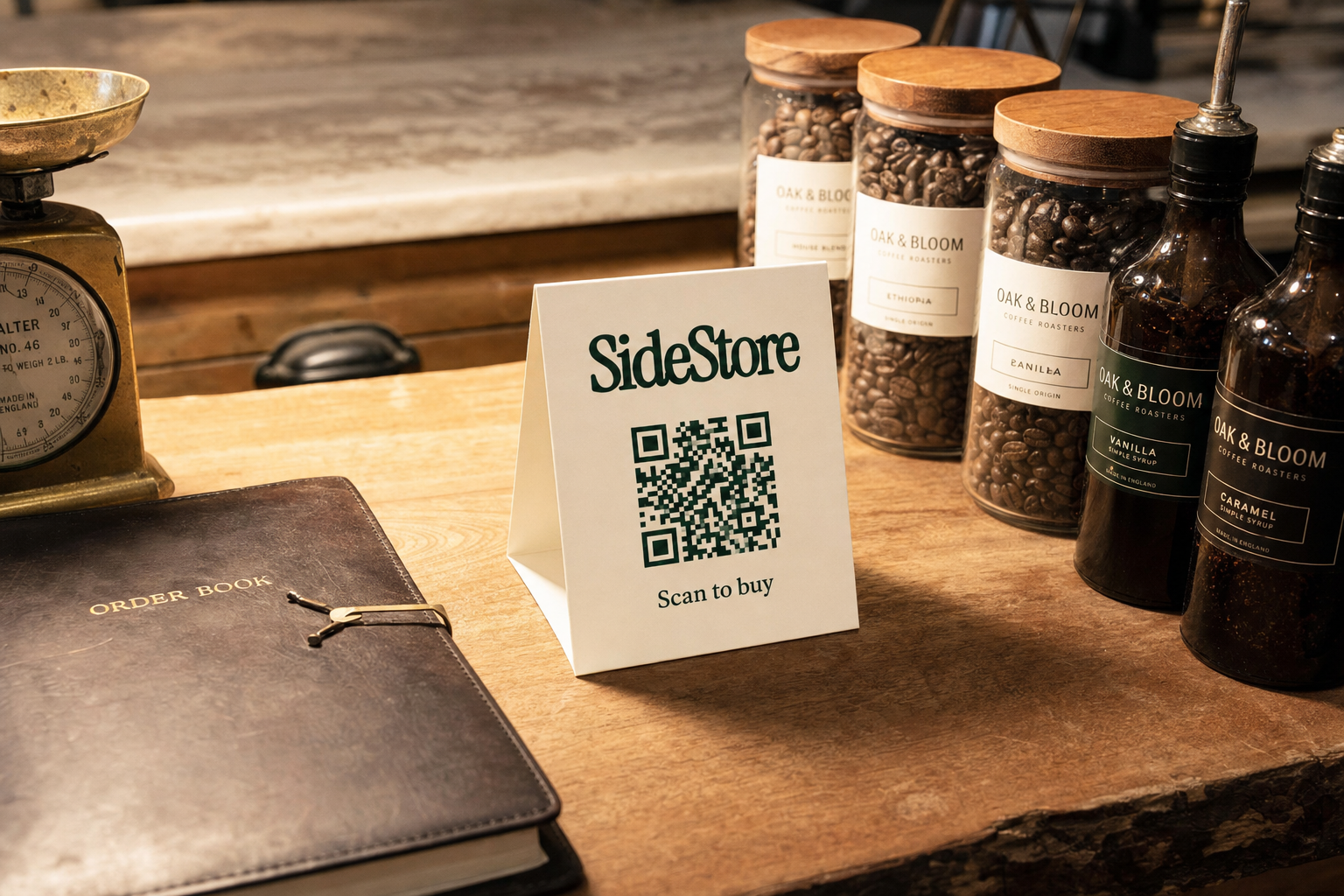
If your coffee shop is adding a retail layer, three practical implications deserve immediate attention. Get these right and you protect your margins. Get them wrong and you're handling compliance after the fact.
Registration check. Your existing food service or hospitality licence may not cover the sale of packaged goods or third-party products. Before you put anything on a shelf for sale, confirm with your local authority whether your current registration covers retail goods or whether a separate retail registration is required. This is not a universal rule, it varies, but failing to check is the risk.
Sales tax or VAT distinction. In many jurisdictions, food and drink sold for immediate consumption is taxed differently from packaged goods sold for off-premises use. A bag of coffee beans may attract a different rate than an espresso. If you introduce maker products on consignment, the tax treatment of the host's share of each sale may differ again. Flag this to your accountant before you go live, not after your first quarter ends.
Clean revenue records. A split between food service revenue and retail product revenue matters for your own analysis as much as for compliance. Knowing which category contributes what to your bottom line lets you make clearer decisions about shelf space, product mix, and whether consignment placements are actually earning. The Retail Widget handles checkout, live stock tracking, placement attribution, and automatic split payouts per product, so the record-keeping for consignment placements is built in. The scan-to-pay QR is one function of the Retail Widget, not the whole product.
For a full picture of how retail revenue affects your overall position, revisit how much profit a coffee shop makes and average profit for a coffee shop.
What the Retail Classification Means for Makers Seeking Placement
For makers, the classification question resolves simply: a coffee shop is a legitimate placement venue, and in many cases a very good one. You do not need to wait for a boutique or gallery to say yes. A cafe with shelf space or a counter corner is a real retail opportunity, and it operates under a consignment model that costs the host nothing upfront, which makes the conversation easier than you might expect.
Getting distribution without fixed costs is genuinely hard when you are not yet established. Most traditional retail buyers want proven sellers. Coffee shops, operating in a hybrid space between hospitality and retail, are often more open to trying something new because the risk to them is low. That is the opening worth using.
When you approach a cafe host, look for a few things: consistent foot traffic, a customer profile that matches your product, and enough counter or shelf space to display your work properly. An organised host who is willing to track what sells is worth more than a high-traffic location where your product disappears into clutter.
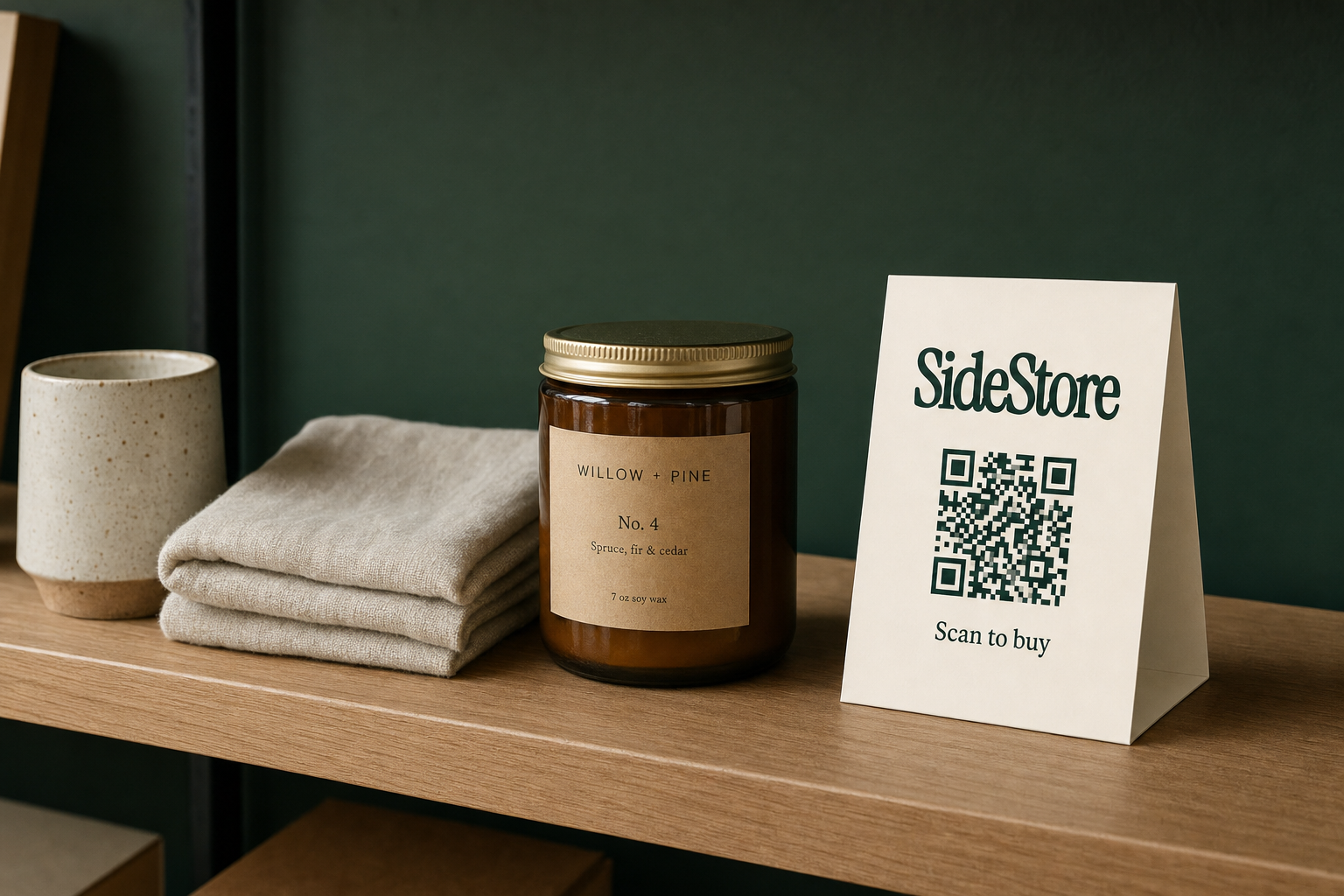
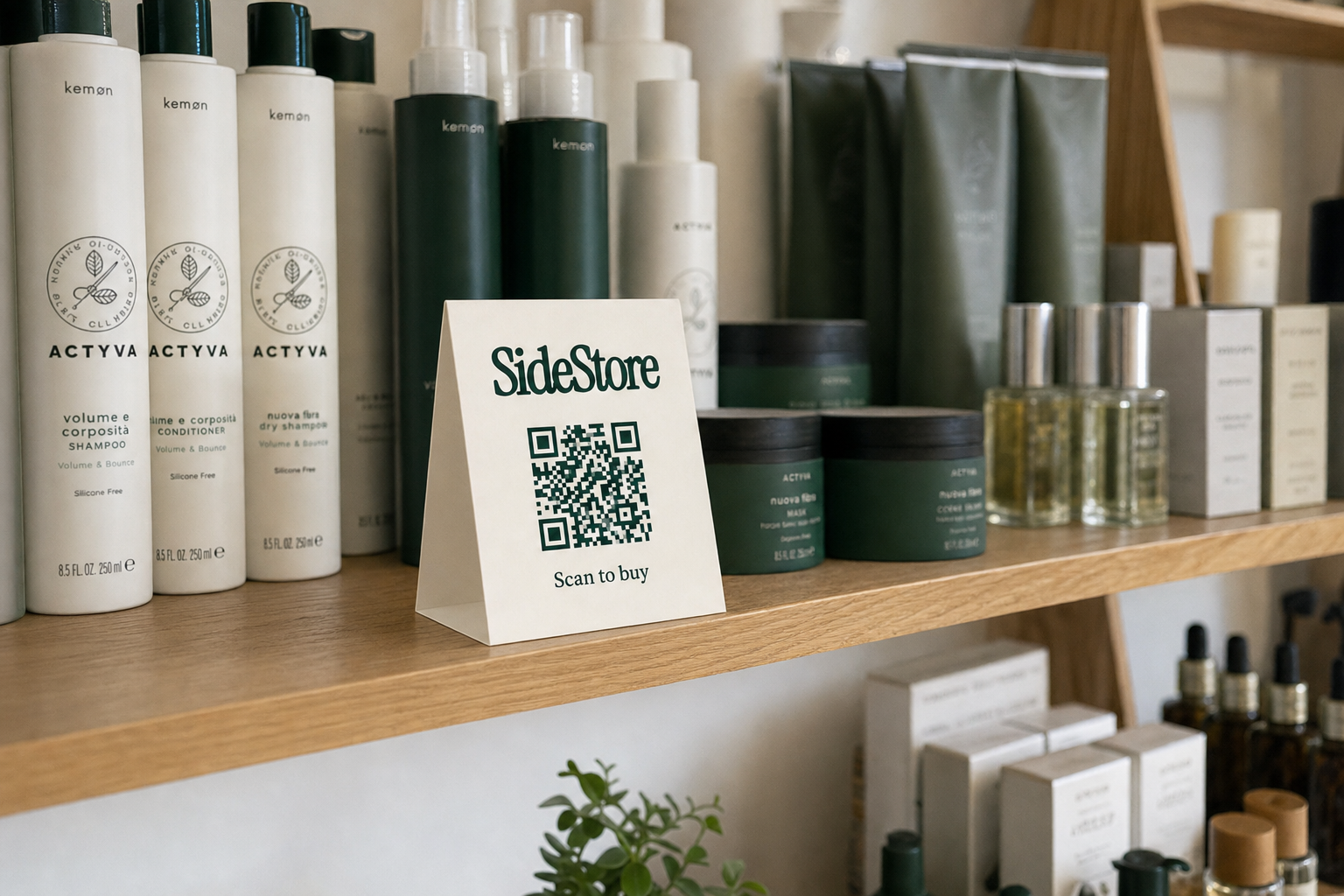
Through SideStore's Retail Widget, the mechanics you can expect are: a scan-to-pay QR checkout attached to the product or displayed at the placement, live stock tracking so you always know what remains on shelf, placement attribution that records which venue drove each sale, and automatic split payouts to you and the host when a product sells. You don't have to chase settlement or reconcile sales manually.
How to approach a local shop about stocking your products is a practical starting point. How to sell through someone else's store covers the mechanics of the arrangement. And how to sell art prints in cafes focuses specifically on the cafe placement context.
Frequently Asked Questions
These are the questions about coffee shop retail classification that come up most often. Each stands alone, so use it without the surrounding context.
Is a coffee shop considered a retail business?
A coffee shop is considered a retail business when it sells physical goods that customers take away, such as packaged food, drink, or maker products. If it only serves prepared food and drinks for immediate consumption, it is classified as a food service or restaurant-type business. Many cafes operate as both simultaneously.
Is a coffee shop retail or restaurant?
A coffee shop is typically classified closer to a restaurant or food service business than to a retail store, because its primary activity is serving prepared food and drink. However, it becomes a retail business for regulatory purposes when it sells packaged or physical goods for off-premises use. The classification is functional, not fixed.
Can a coffee shop sell retail products?
Yes. A coffee shop can sell retail products, including packaged goods and maker products placed on consignment. Whether doing so requires a separate retail registration or different tax treatment depends on your jurisdiction. Confirm the requirements with your local licensing authority before adding physical goods to your offer. For structured tracking of those products, boutique inventory tracking covers the practical approach.
What type of business is a coffee shop classified as?
A coffee shop is most commonly classified as a food service or hospitality business. If it also sells physical goods, it may carry a dual classification covering both food service and retail, or the retail activity may be treated as ancillary to its primary operation. Local business registration frameworks differ significantly on this point.
Do coffee shops need a retail licence to sell packaged goods?
In many jurisdictions, selling packaged goods alongside a food service operation does require a separate retail registration or licence, particularly if the goods are taxed differently from prepared food. Rules vary substantially by country, state, and municipality. If you're considering how to start a non-profit coffee shop or any other variant, the licensing question applies equally, and local authority guidance is the only reliable source.
The Classification Question Is the Wrong Starting Point
Whether a coffee shop is technically classified as retail matters for compliance, but it is not where the opportunity begins. The practical question is simpler: does your space earn from every surface it has? For most cafes, the answer is no.
A counter corner, a wall shelf, or a small display unit can generate split-payout revenue from maker products placed on consignment, with no inventory to buy, no stock risk to carry, and the Retail Widget handling settlement automatically. For makers, a cafe with good foot traffic and a willing host is a real distribution channel, not a workaround.
Concrete next steps for coffee shop owners: check your local retail registration requirements, separate your food service and product revenue in your accounts from day one, and explore whether consignment placements fit your space and customer base.
For makers: identify cafes whose customers match your product, approach the host with the consignment mechanics clearly explained, and set up your placement through the Retail Widget so both parties see live sales and stock data from the start.
If you're exploring adjacent formats, selling handmade products in boutiques, selling local products to hotels, and pop-up retail space as an alternative all expand the placement picture.
Build a consignment network without opening a store of your own.