Products to Sell in a Beauty Salon: What Sells Well and How to Stock Without Buying Upfront
Products to sell in a beauty salon are retail items displayed and sold alongside professional services, designed to increase revenue per client visit without adding chair time. The strongest performers are haircare, skincare, nail care, fragrance, and wellness accessories. Salons that stock retail thoughtfully earn meaningful revenue from floor space that would otherwise sit idle between appointments.
The real challenge most salon owners face is not deciding what to stock, but affording to stock it. Buying wholesale inventory carries genuine risk: products that move slowly tie up cash, and unsold stock is nearly impossible to liquidate without cutting below margin. That risk is avoidable. Under consignment, a maker or brand places products in your salon and you earn a split payout only when something sells. No purchase order. No write-off risk. No dead stock.
Before choosing what to sell, understand sell-through rate benchmarks for retail so you can evaluate which categories will move reliably in your specific salon context.
Is Operating a Beauty Salon Retail Section a Profitable Business Move?
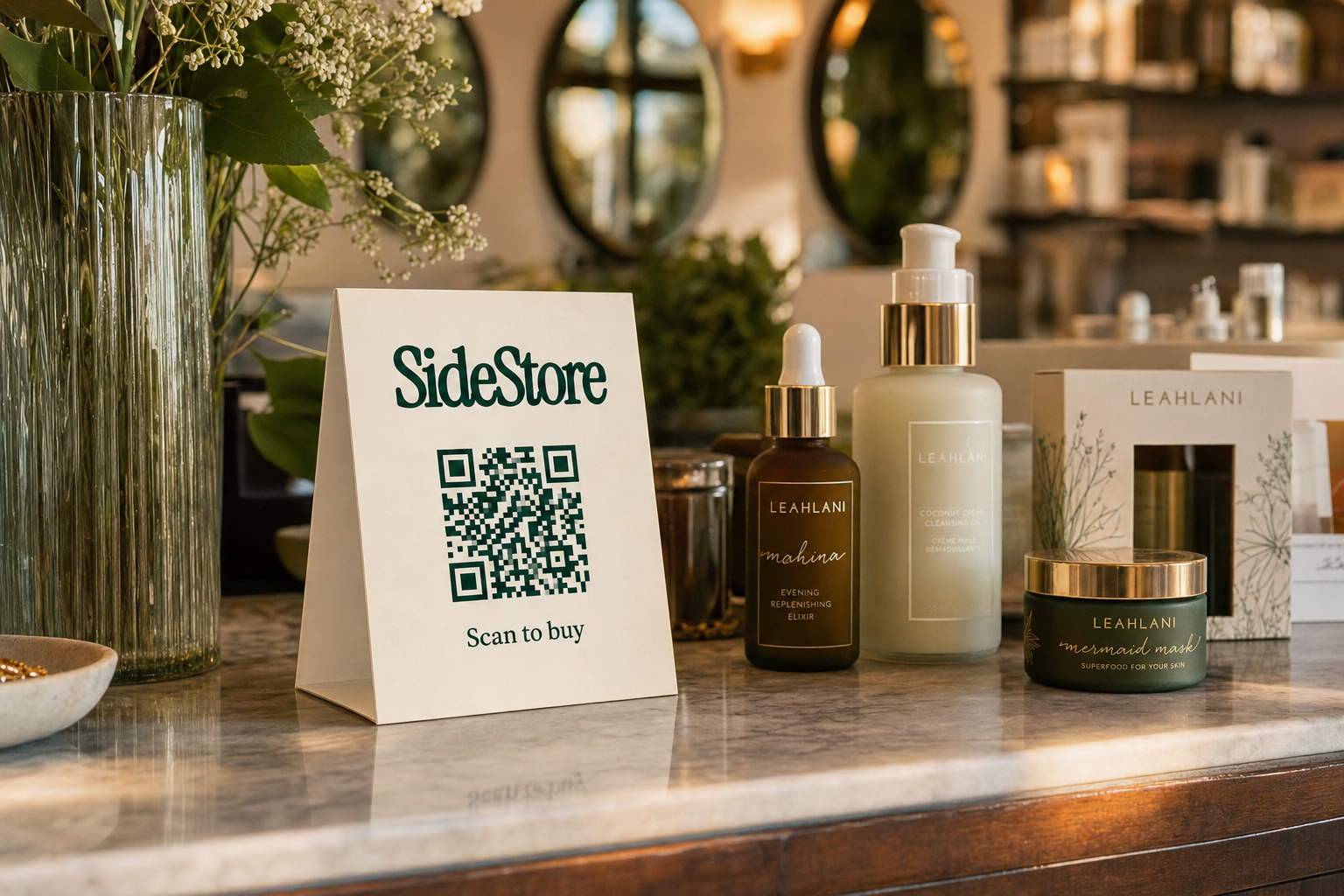
Adding a retail section to a beauty salon is profitable when the products align with what clients are already asking for after their treatment, and when the stocking model does not require a large upfront capital commitment. Salon retail can realistically convert a passive waiting area or reception shelf into a consistent secondary revenue stream.
Here is the honest qualification: profitability depends on margin, sell-through rate, and how much capital you sink into inventory before you know what sells. Many salon owners report trying wholesale buying once, sitting on slow-moving stock for months, and abandoning retail altogether. That outcome is almost entirely a stocking-model problem, not a product problem.
The fix is simple: separate "what should I sell?" from "how should I acquire the stock?" Buying upfront makes sense when you have strong proof of demand. For everything else, consignment lets you place products on your shelves without a purchase order. You earn a pre-agreed percentage when items sell. The maker carries the inventory risk.
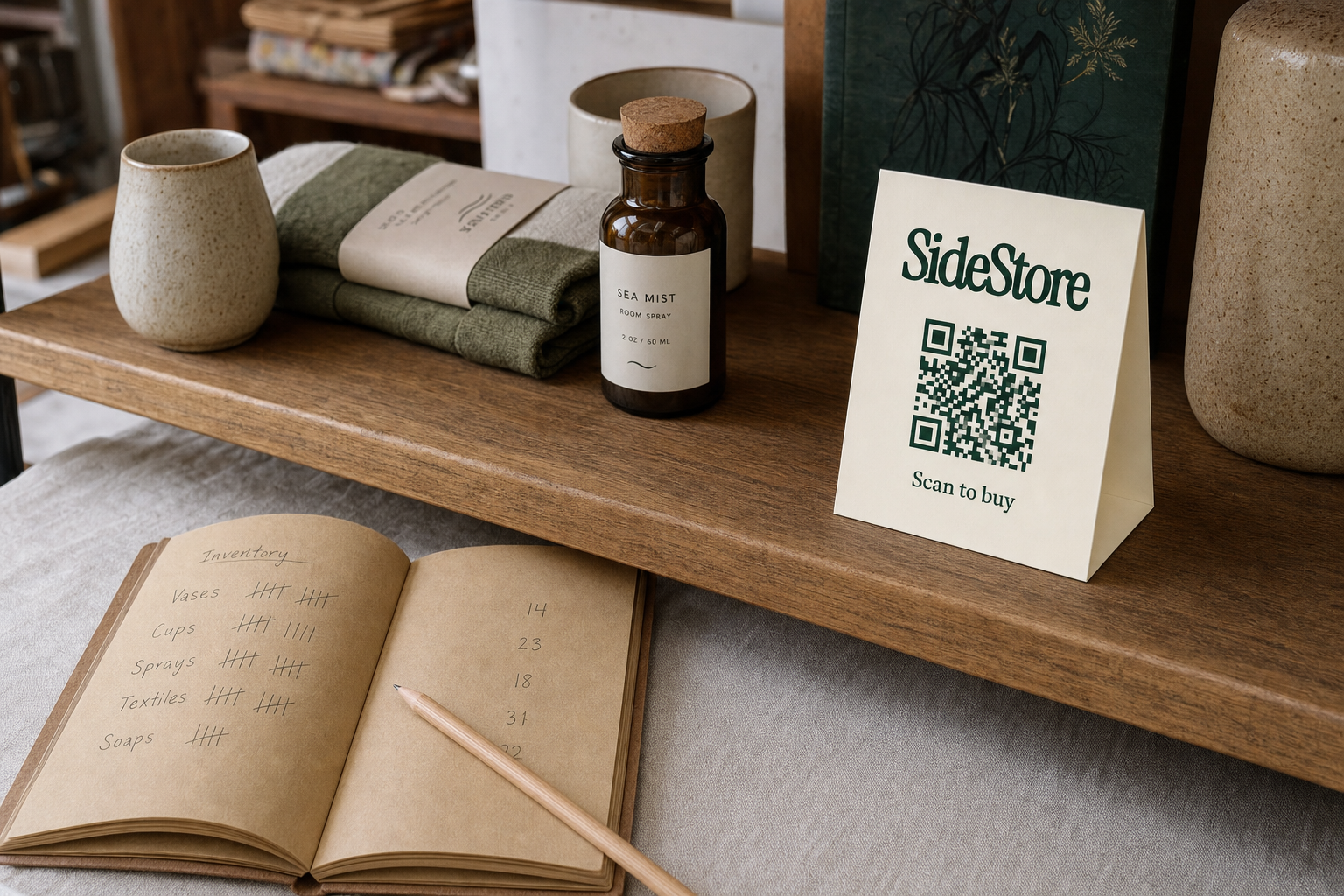
This matters for cash flow. A salon's fixed costs are already substantial: rent, wages, product for professional use. Adding a retail inventory line on top of those costs, with no guarantee of sell-through, is a real business risk. Managing a retail inventory list thoughtfully is the foundation; knowing you can test categories without capital exposure makes that process much lower-stakes.
When consignment retail works, salons report it becoming self-sustaining: popular products restock themselves via the maker, slow products get replaced without a write-off, and the salon pays nothing until a sale clears. Clearing unsold boutique inventory is a problem that consignment hosts largely sidestep.
Which Product Categories Sell Most Strongly in a Beauty Salon?
The strongest-selling salon retail categories share one mechanic: the client has just experienced the product in some form, either on their hair, skin, or nails, and wants to maintain that result at home. Impulse is low when a product is unfamiliar; it rises sharply when the stylist or therapist has just applied it.
Haircare products are the most reliably high-converting category. Shampoos, conditioners, masks, and styling products sell because clients feel the difference immediately. The stylist's recommendation at the chair is the most powerful sales tool in the room. Stock the same product the stylist just used, and conversion is straightforward.
Skincare and facial care works especially well in salons offering facials, brow services, or skin treatments. Serums, moisturisers, SPF, and facial mists perform because the aesthetician has credible voice recommending them. Salons without a skin service still sell skincare, but conversion rates are lower because the credibility bridge is shorter.
Nail care retail, including base coats, cuticle oils, nail hardeners, and hand creams, converts strongly after manicure appointments. The client's hands are already in focus. Hand cream in particular is an accessible price point that many salons overlook.
Fragrance and home wellness is an underused category in most salons. This is a genuine gap. Many salons create a distinctive ambient scent through diffusers or candles, but few retail those same products. Clients who comment on a scent during their visit are warm buyers if the product is on a shelf with a price on it. Independent fragrance and candle makers are ideal consignment partners: their products are light, margin-positive for the host, and often unavailable in mass retail.
Accessories and tools, including brushes, combs, hair ties, and reusable applicators, are lower-value per unit but move consistently and require almost no conversation to sell. They sit well near checkout.
Understanding sell-through rate by category matters because each category moves at a different pace. Haircare tends to be faster-moving; fragrance and home wellness can be slower but carries higher margins. Managing multi-category retail inventory becomes relevant once you are stocking more than two or three product lines, because the replenishment cadences differ significantly.
What Professional Products Do Cosmetologists Use, and Which Should You Stock for Retail?
Cosmetologists work with a wide range of professional-grade products during treatments: colour developers, bond-building treatments, keratin systems, professional shampoos and conditioners, toning glosses, cuticle removers, and high-performance serums. Not all of these translate into a viable retail line, and knowing the difference will save you a significant stocking mistake.
Products that translate well into retail are those with a clear home-use equivalent, a consumable format, and a price the client cannot easily beat on their phone while sitting in your chair. Salon-grade shampoos and conditioners, leave-in treatments, styling products, scalp serums, cuticle oils, and professional-finish nail care products all meet that test. Clients understand what they are buying and can see a direct link between the professional service they just received and the product on the shelf.
Products that do not translate well include professional concentrates, colour developers, bleach powders, and anything requiring trained application. These belong behind the professional counter, not on a retail shelf. Stocking them creates confusion, occasional client misuse, and often a liability question.
The common mistake is attempting to retail professional-only lines at recommended retail prices when the same products are available on e-commerce platforms at a discount. If a client can find your professional product faster and cheaper on their phone, you have already lost the sale. The stronger approach is to stock either exclusive or hard-to-find lines, or work with independent makers who sell through existing retail spaces and whose products are not widely available online. Scarcity and exclusivity convert; commodity pricematching does not.
Which of These Products Work Well on a Consignment Model?
Products that suit a consignment model in a salon are those that sit well on a shelf, sell through gradually over weeks rather than days, carry enough margin to support a host split, and do not require refrigeration, specialist storage, or high-frequency restocking. In a salon context, that describes most haircare, skincare, fragrance, and wellness accessories.
The consignment fit criteria come down to four questions: Is the product durable enough to sit on a shelf without degrading? Is the margin wide enough to split between the maker and the salon host? Does the product need active selling, or does the salon environment do much of the work? Can the maker handle restocking without requiring constant coordination from the salon?
Fragrance and candles score well on all four counts. So do branded haircare accessories, cuticle oils, scalp treatments, and locally made skincare. Mass-market commodities score poorly because margin compression leaves little room for a split.
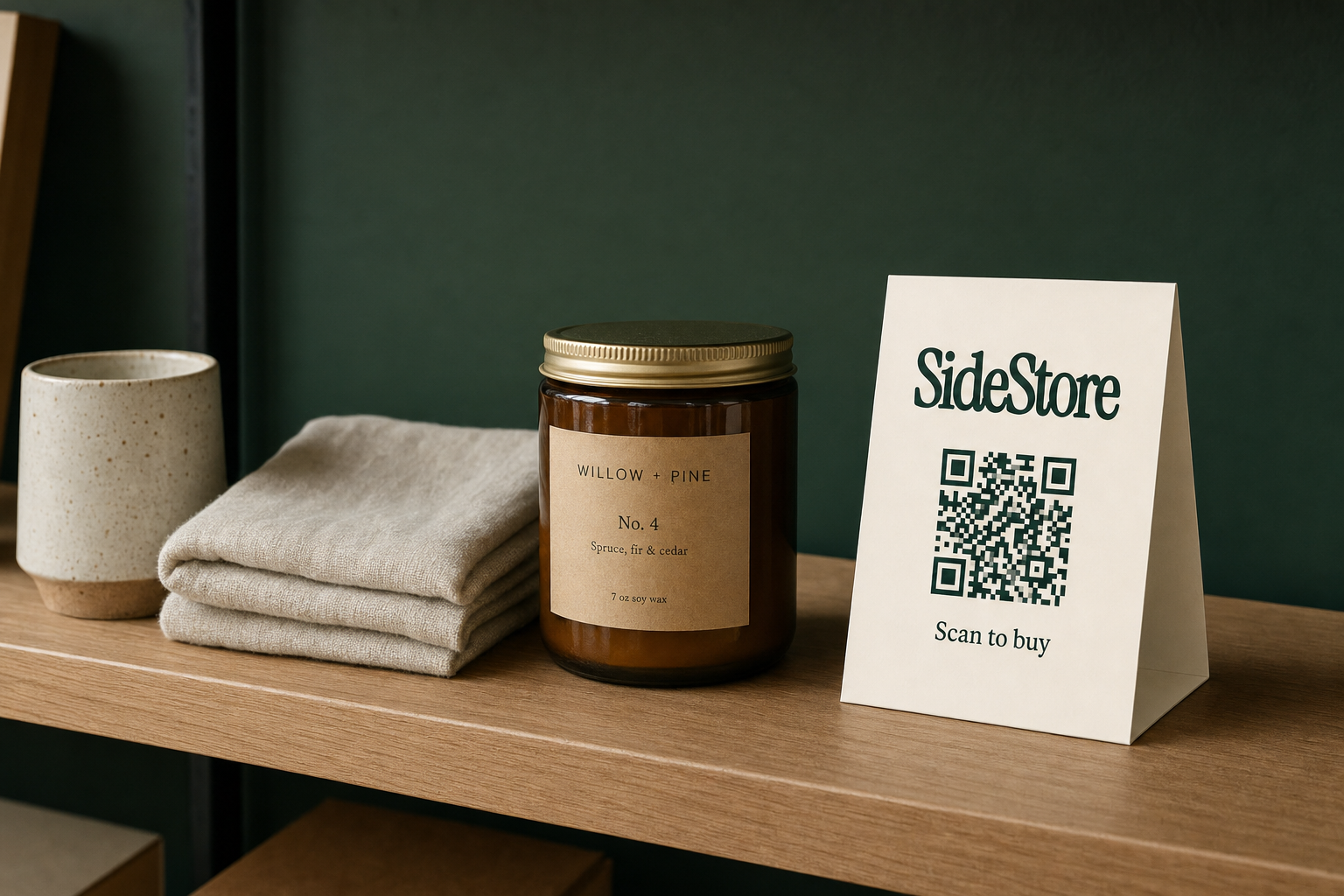
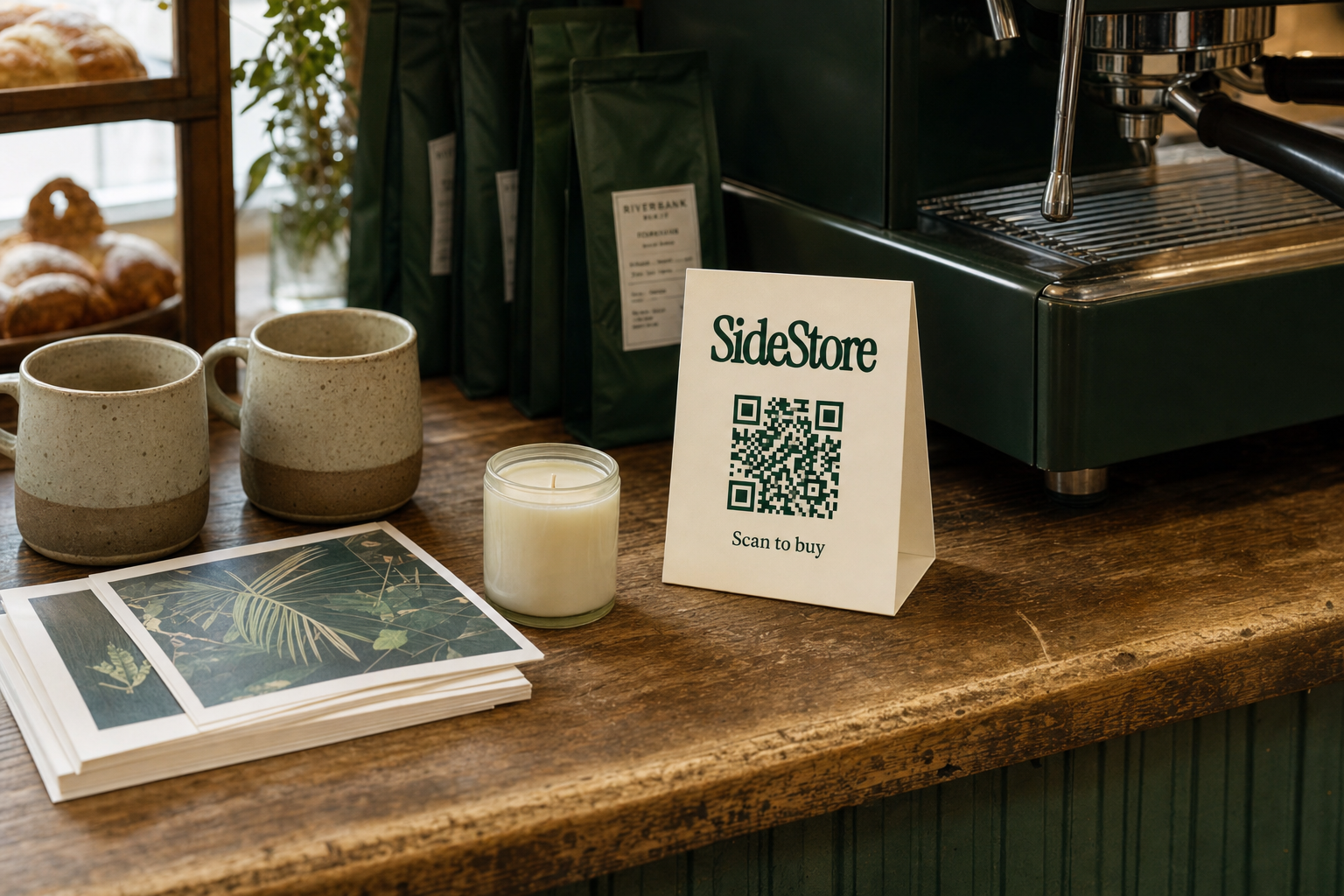
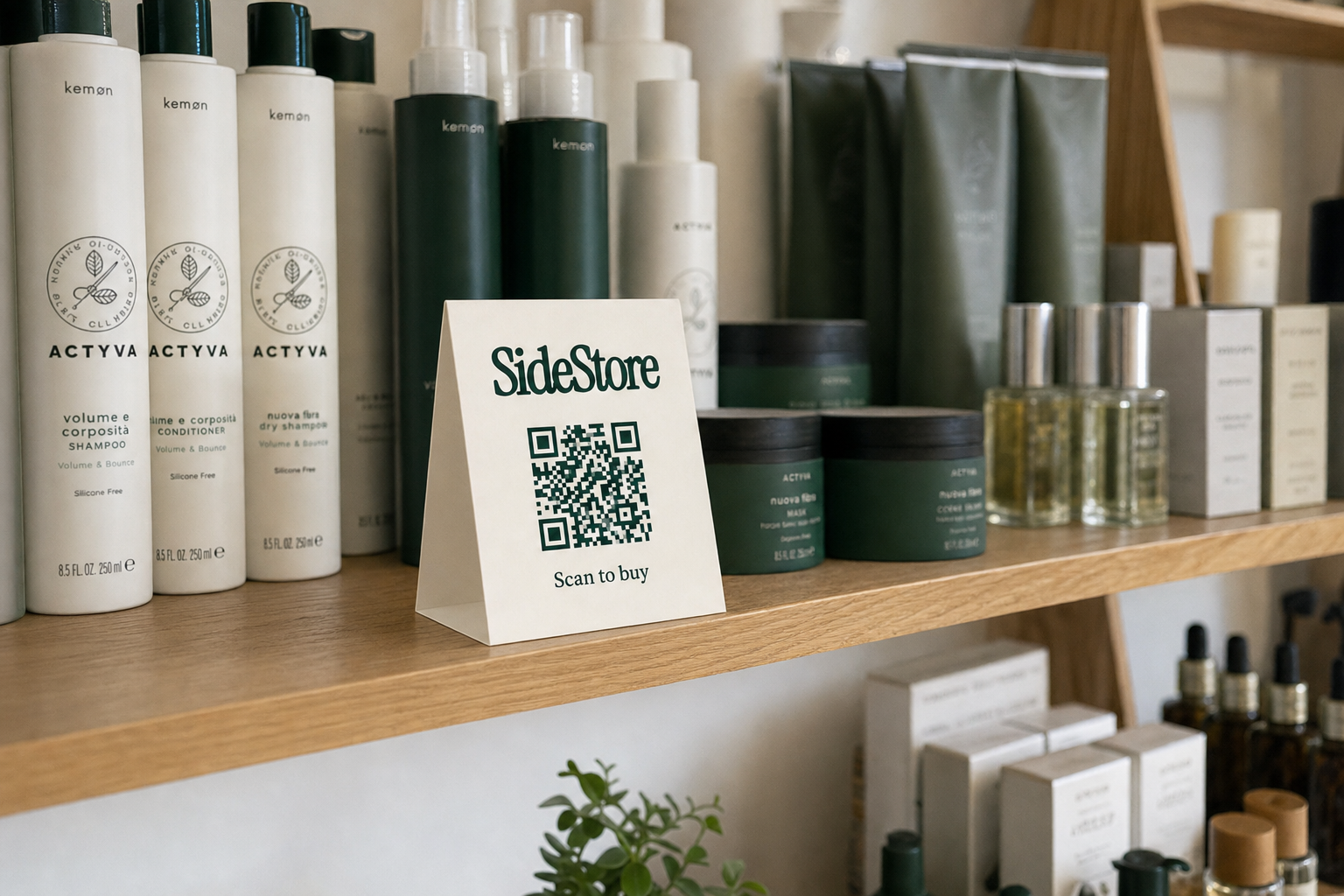
The mechanics of a consignment arrangement need formal setup. With SideStore's Retail Widget, a maker places products in your salon and the Widget handles checkout, live stock tracking, placement attribution, and automatic split payouts. When a product sells, the agreed percentage goes to your account without any manual reconciliation. The scan-to-pay QR function means clients can complete a purchase by scanning a single card displayed with the placement, even if your team is occupied with another client.
For salons new to consignment, understand what a consignment agreement should cover before products arrive on your shelf. Knowing what split percentage is standard in consignment helps you evaluate whether an individual maker's terms are reasonable. If you are also a maker looking at salon placement from the supply side, how makers approach shops about stocking their products gives you the full picture.
Salon Retail Categories at a Glance: What Sells, What Suits Consignment, and What to Watch
Use this table to prioritise which products to bring in first and which stocking model to apply to each.
| Product Category | Sells Well In Salon? | Suits Consignment? | Typical Retail Price Range | Key Risk |
|---|---|---|---|---|
| Shampoo & conditioner | Yes | Yes | £12, £35 per unit | Available online at lower price |
| Styling products | Yes | Yes | £10, £28 per unit | Brand loyalty can be strong |
| Scalp treatments & serums | Yes | Yes | £18, £55 per unit | Slower mover; needs stylist recommendation |
| Skincare & facial care | Yes (with skin service) | Yes | £15, £60 per unit | Lower conversion without a skin service |
| Cuticle & nail care | Yes | Yes | £8, £22 per unit | Low margin per unit; volume-dependent |
| Hand cream | Yes | Yes | £10, £25 per unit | Commodity competition |
| Fragrance & candles | Underused but strong | Yes | £18, £65 per unit | Slower turn; needs good display |
| Hair accessories & tools | Yes | Moderate | £5, £20 per unit | Very low margin; high volume needed |
| Professional colour / developer | No | No | N/A | Liability and misuse risk |
| Supplements & ingestibles | Weak | Weak | £20, £45 per unit | Regulatory complexity |
The pattern is clear. Products that extend a professional service result at home convert reliably, and most suit consignment. Professional-only formulations and ingestibles should stay off the retail shelf entirely. Fragrance and wellness are the most underused opportunity in most salons. See sell-through benchmarks by category to set realistic expectations for each line.
How to Stock Your Salon Without Buying Upfront
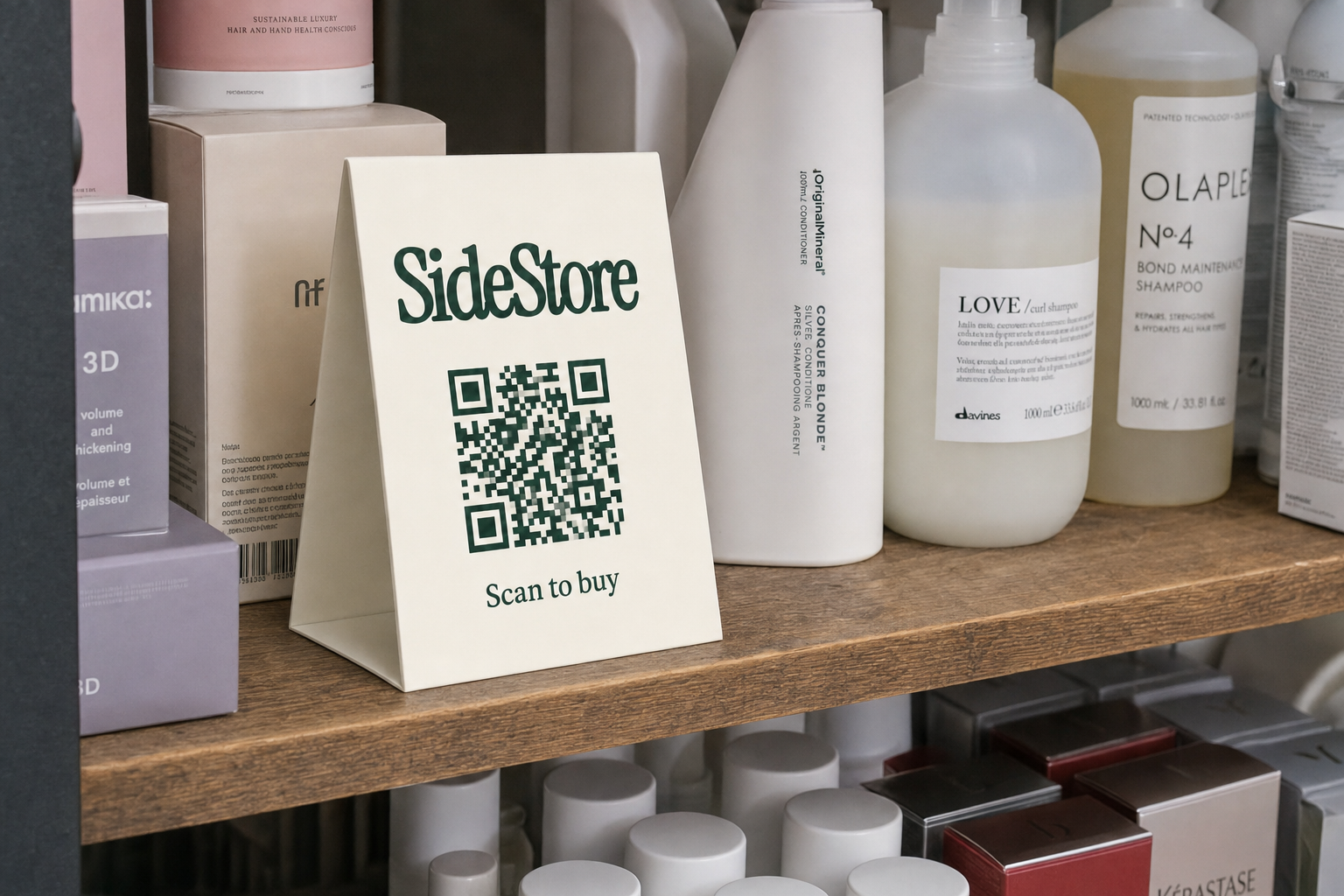
Stocking your salon on consignment is straightforward when the process is set up properly from the start. The mistake many salons make is treating consignment informally, a handshake arrangement with a friend's brand, no written terms, no tracking. That creates disputes over stock, missed payouts, and shelves that go unreplaced when products sell. Structure it properly and it runs with almost no management overhead.
1. Decide which shelf space you are allocating. Before approaching any maker or brand, identify the physical space: how many shelves, what dimensions, what visibility from the reception or waiting area. Makers need this information to decide whether a placement is viable for them.
2. Define your split terms in writing before any stock arrives. A standard consignment split for a salon host sits in a range you can research by reviewing what every consignment agreement clause should cover. The agreement should specify the split percentage, how payouts are triggered, who handles restocking, and what happens to unsold stock after a defined period.
3. Choose makers whose products match the categories that convert in your context. Refer to the table in the previous section. Prioritise haircare and skincare for immediate conversion; add fragrance and wellness as a secondary layer once the primary shelf is performing.
4. Set up the placement through SideStore's Retail Widget. The Retail Widget manages the full consignment placement: checkout (including a scan-to-pay QR that clients can use independently), live stock tracking, placement attribution, and automatic split payouts to both you and the maker. You do not need to manually calculate splits or chase payments. Consignment inventory software for managing placements like SideStore replaces the spreadsheet-and-invoice approach that most informal consignment arrangements rely on.
5. Display the QR card prominently alongside the products. The card is the checkout trigger. When a client wants to buy, they scan, pay, and the sale is recorded. You receive your split automatically.
6. Review sell-through after four to six weeks. Slow categories get replaced; strong categories get expanded. Because you have not bought the stock, there is no sunk cost preventing honest evaluation. Makers who want to approach boutiques about stocking products understand that host feedback after a trial period is part of the arrangement.
How to Sell Products in a Salon: Merchandising and the Salon Team's Role
Selling products in a salon is primarily a merchandising and team-behaviour question, not a product sourcing question. The right products on the wrong shelf, or with a team that never mentions them, will move slowly regardless of their quality. Many salons report that a single stylist mentioning a product at the chair drives the majority of retail sales for that product.
Placement at eye level matters. Products displayed behind the reception desk at foot level or stacked in a back-room shelf get ignored. Eye-level placement near the reception or adjacent to waiting seating converts significantly better. Clients who are waiting have time to browse; that time is a selling window.
The team introduction is the strongest conversion tool in the room. A stylist saying "I used this treatment on your ends today, we stock it over there" at the end of a service is more effective than any display or signage. This does not require a hard sales approach. It is simply a service extension: letting the client know they can maintain the result at home.
The scan-to-pay function within the Retail Widget removes friction at the point of decision. A client who wants to buy while their stylist is finishing another client does not need to wait. They scan the QR card displayed with the product, pay directly, and the sale is logged automatically. Many salons report that this removes the "I'll come back for it" problem that causes most almost-sales to evaporate.
For context on how non-traditional retail spaces handle product placement, how non-traditional retail spaces handle product placement and how shared retail placements benefit local businesses both offer useful reference points for setting up a salon retail placement that runs without adding staff workload.
Frequently Asked Questions
These answers address the most common questions salon owners and operators ask when evaluating retail products and stocking models.
Is operating a beauty salon a profitable business venture?
Beauty salons can be profitable, but margins on services alone are tight because revenue is capped by chair hours and staff capacity. Adding a retail dimension, particularly through consignment, creates a margin layer that does not require additional labour. The retail profitability question depends heavily on sell-through rate, the split terms you negotiate, and whether you carry inventory risk or transfer it to the maker.
Which product categories sell most strongly in the beauty industry?
Haircare is the consistently highest-converting category in most salons, followed by skincare (strongest where facial services are offered), nail and cuticle care, and fragrance or home wellness. The common mechanic across all strong-performing categories is that the client has experienced the product during their service, reducing purchase hesitation significantly.
What professional products do cosmetologists typically use in treatments?
Cosmetologists typically work with bond-building treatments, colour developers, toning glosses, keratin systems, professional shampoos and conditioners, high-performance scalp serums, and cuticle care products. Not all of these are appropriate for retail: professional-only formulations, colour developers, and anything requiring trained application should stay off the retail shelf.
What range of services and offerings can a beauty salon provide?
Salons vary widely, but a full-service salon typically offers hair cutting and colouring, blowouts and styling, scalp treatments, brow and lash services, facials, manicures and pedicures, and waxing. Retail is an additive offering that complements every service category by giving clients a way to maintain results between visits.
Which fragrance product types perform best for independent retailers stocking wholesale beauty items?
Candles, room diffusers, and roll-on personal fragrances perform most consistently in salon-adjacent retail. These formats work because they are accessible price points, require no explanation, and often match the ambient scent a client experienced during their visit. They also suit consignment well: high margin, durable, and available from independent makers not stocked in mass retail. See standard consignment split percentages to understand what a maker arrangement typically looks like.
What products work well on a consignment sales model?
Products that suit consignment are durable, margin-positive, and do not require specialist storage or constant supervision. In a salon context, that includes haircare accessories, cuticle oils, scalp serums, fragrance, candles, and branded skincare from independent makers. Alternatives to buying retail shelf space outright cover a range of low-commitment models, of which consignment is the most operationally straightforward for an established salon with existing foot traffic.
What to Do Next
If your salon has shelf space sitting idle, the next step is simple: activate it without buying stock.
- Map the physical space you can allocate to retail, including shelf dimensions and visibility from reception.
- Identify two or three product categories from the comparison table above that match the services you already offer.
- Set up a SideStore consignment placement through the Retail Widget. It handles checkout, live stock tracking, and automatic split payouts from day one. See how other retail spaces activate placements on consignment and lower-risk alternatives to renting pop-up retail space for further context.
Build a consignment network without opening a store of your own.