How to Approach a Local Shop About Stocking Your Products (without Getting Ignored)

Approaching a local shop about stocking your products means identifying the right retailers, preparing a credible pitch with materials in hand, and proposing terms that remove the risk for the shop owner. Start by targeting shops whose existing customers already match yours. Go in with a line sheet, a sample, and a clear consignment proposal. Lead with the zero-risk angle: consignment means the shop pays you only when something sells, so there is no upfront cost and no inventory risk on their side.
That framing matters more than almost anything else you say, because a shop owner's first instinct is to protect their cash flow. When you remove the financial risk from the equation, you change the conversation entirely. This guide covers three things: how to find and approach the right shops, what to prepare before you walk through the door, and how to structure retail partnerships for makers so they last beyond the first placement. For a deeper look at the terms involved, see the consignment vs wholesale breakdown.
Choose Shops That Already Sell to Your Customer
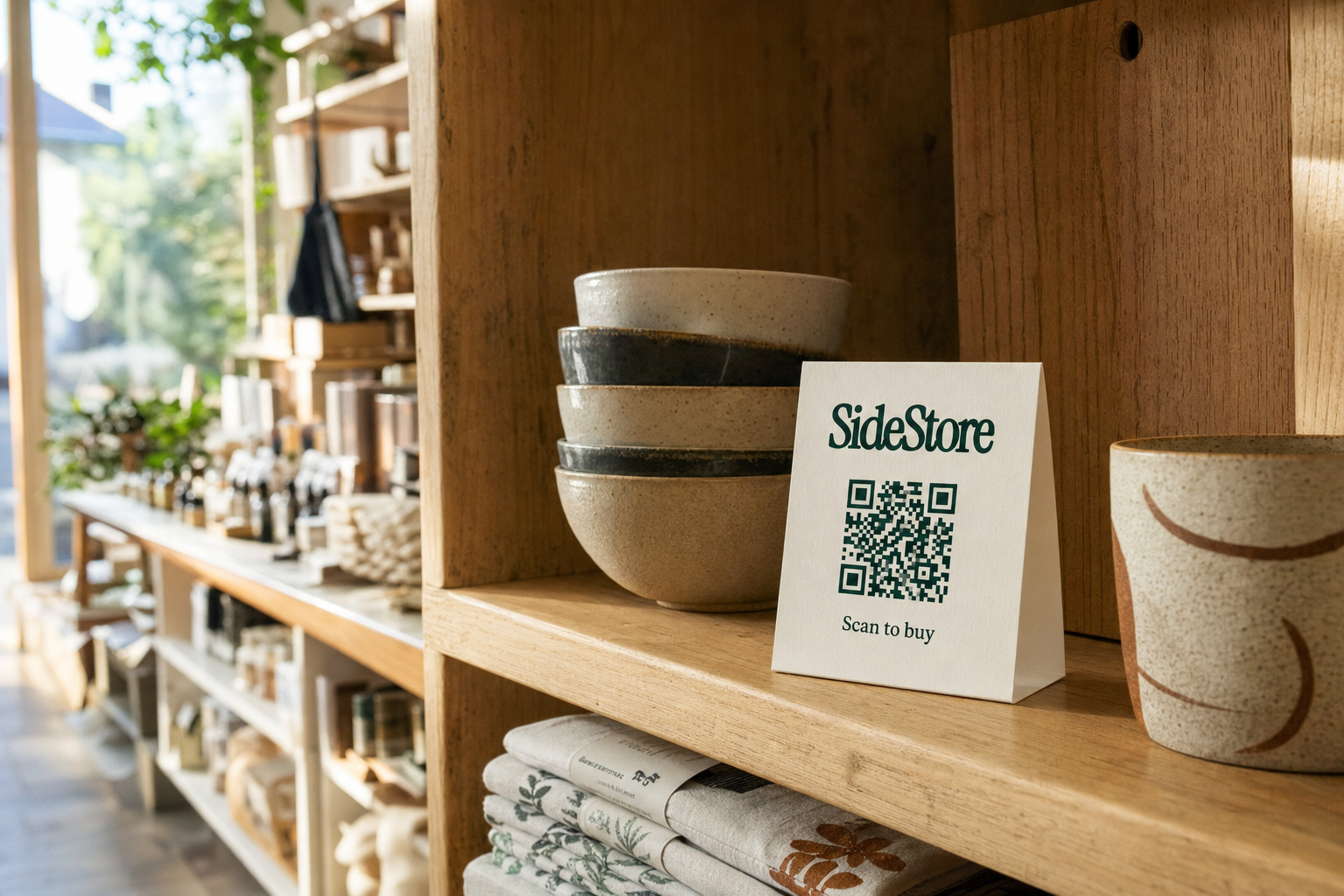
Target shops whose existing customer base already buys what you make. That is the only filter that matters at the start. A beautiful boutique that sells high-end homewares is not the right fit for your handmade ceramic mugs if their customers come in for fashion jewellery. Alignment between your product and their buyer saves both of you time.
Walk in as a customer. Look at what is already on the shelves. Ask yourself: would someone who buys that also buy mine? If the answer is yes, it goes on your shortlist.
Three shop types tend to be the most receptive to new maker products:
Boutiques and independent gift shops. These spaces are built around curation. The owner's whole identity is tied to stocking interesting, original things. A well-presented maker product fits their narrative. See the guide on pitching handmade jewelry to boutiques for a category-specific walkthrough.
Cafes, coffee shops, and hospitality venues. People linger here. Dwell time is high, which means browsers become buyers more often than in a fast-turnover retail environment. A well-placed product near the counter or on a side shelf catches attention during the ten minutes someone waits for their order. For a full breakdown of this channel, read the guide on selling through cafes.
Hotels and bed and breakfasts. Guests are in a buying mindset. They are on holiday or travelling for pleasure, often looking for something local to take home. A small, well-packaged maker product with a local story is exactly what sells in this context.
Keep your initial shortlist to five to eight shops. A focused approach to a handful of genuinely aligned spaces will produce better results than sending a generic email to thirty. Quality of fit beats volume of outreach every time.
Prepare Your Pitch Materials Before You Walk In
What you need to prepare before approaching a shop is a line sheet, at least one sample of your product, and a simple consignment proposal. Arriving without these is the most common mistake makers make. Preparation signals to a shop owner that you are serious, organised, and easy to work with.
Here is what each item needs to cover.
Your line sheet is a single-page (or two-page) product overview designed for the buyer, not the consumer. It should be clean, professional, and easy to scan. Include:
- Product name and a brief description (one to two sentences)
- A clear product photograph on a neutral background
- Wholesale price and recommended retail price (if you are open to wholesale)
- Consignment split you are proposing (for example, 60% to you, 40% to the shop)
- Minimum quantities, if any
- Lead time for restocking
- Your contact details and website or social handle
- Any relevant certifications, materials, or origin story if it adds value to the sale
Keep the line sheet to one or two pages. A buyer looking at twenty suppliers does not have time to read a brochure. A clean, well-laid-out single page is more persuasive than a folder full of information.
A physical sample is non-negotiable. Shop owners make decisions with their hands as much as their eyes. They want to feel the weight of a ceramic piece, smell a candle, or see how a print looks in different lighting. If your product is too large or too expensive to leave behind, bring a scaled version or a high-quality photograph mounted on card. Never arrive empty-handed.
A consignment proposal one-pager sets out the basic terms you are offering: your proposed split, how stock will be tracked, how and when you will settle payment, and what happens if something is damaged or does not sell within an agreed window. A clear, plain-language page that shows you have thought through the practicalities is enough to open the conversation. See the breakdown of how consignment splits typically work and the full guide on getting art prints into local shops for category examples.
How to Make the Approach (and What to Actually Say)
The best way to start the conversation with a shop owner is to ask for five minutes at a quiet moment, state who you are and what you make, and lead with the benefit to the shop rather than the story of your product. That sequence matters more than any script.
Cold walk-in versus scheduled meeting. Both work, but they require different openers. A cold walk-in is appropriate for smaller independent shops where the owner is likely on the floor during trading hours. Go mid-morning on a weekday, avoid the lunch rush, and avoid Saturdays entirely. A scheduled meeting is better for boutiques with a clear buyer or manager structure. A brief email or phone call asking for a fifteen-minute conversation about a potential product partnership is all you need to get on the calendar.
The three-element opening. Whether you are walking in cold or sitting down for a scheduled meeting, structure your opening around three elements:
- Who you are and what you make, specific and brief. "I make hand-poured soy candles in small batches here in [city]."
- Why this shop in particular, show you have paid attention. "I've been a customer here for a while and noticed your customers tend to go for locally made, natural products."
- The offer, framed as zero risk, lead with consignment. "I'm not asking you to buy stock upfront. I'd place a small number of pieces on consignment, you only pay me when something sells."
That third element is the one that keeps the conversation going. Most shop owners have had negative experiences with slow-moving stock they bought outright. Consignment removes that fear entirely. Understand the mechanics of how retail partnerships with shops work so you can answer any follow-up questions with confidence.
Be ready to leave materials and go. Not every first conversation ends in a yes. Sometimes the owner needs to think, check their shelf space, or talk to a partner. Leave your line sheet and sample if they are happy to hold it. A maker who can say "take the week to think it over, I'll follow up on Thursday" comes across as confident rather than desperate. That matters.
Consignment or Wholesale: Which Terms Should You Propose?
For a first approach to a shop that does not know you, propose consignment. It removes the financial barrier for the shop and gets your product onto the shelf faster than any other route. Wholesale is a better conversation once you have proven the product sells.
Here is the core trade-off laid out plainly:
| Term | Who holds stock risk | Who pays upfront | Typical split or margin | Best for | Biggest risk |
|---|---|---|---|---|---|
| Consignment | Maker | Nobody, shop pays on sale | Commonly 50/50 to 70/30 maker-favoured | First placements, unproven products, low-volume makers | Slow stock turns; payment delays if tracking is informal |
| Wholesale | Shop | Shop pays maker upfront | Shop typically marks up 2x to 2.5x cost price | Proven sellers, high-volume production, established makers | Shop buys and holds; if it does not sell, the shop absorbs the loss |
The consignment-first strategy works because it answers the shop owner's primary objection before they raise it. You are asking them for shelf space, not cash. That is a fundamentally easier yes to give. See the full comparison of consignment vs wholesale for a complete breakdown of when each model applies.
When wholesale makes sense. Once a product has sold consistently through one or two placements over two to three months, you have real sales data. At that point, you can approach the same shop or new shops with evidence: "This sold twelve units in eight weeks on consignment at [shop name]. I'm happy to discuss a wholesale arrangement if you'd prefer to hold stock outright." Data converts the conversation.
The trial-to-wholesale sequence. Start on consignment with a small number of units. After a defined trial period, review the sales together. If the product is moving, propose a wholesale order for the next cycle. This sequence lets the shop feel comfortable with the product before committing cash, and it gives you a natural moment to renegotiate terms from a position of strength.
The Consignment Agreement: What Should You Put in Writing?
A consignment agreement is a written record of the terms both parties have agreed to: who owns the stock, how sales are tracked, what the split is, and how payment is made. You need one for every placement. A handshake is a starting point, not a safeguard.
Every consignment agreement should include at minimum:
- Ownership clause, stock remains the maker's property until sold
- Consignment split, exact percentages for maker and shop, stated clearly
- Payment schedule, how often the shop settles (monthly is common), and by what method
- Stock quantities and restocking terms, how many units are placed, and who initiates a reorder
- Duration and review period, a defined trial window (sixty or ninety days is reasonable for a first placement)
- Damage and loss policy, who is responsible if a unit is damaged, stolen, or goes missing
The stock-tracking problem is where informal consignment arrangements break down. If neither party has a reliable count of what sold, disputes follow. You need a shared record that both you and the shop can access without relying on memory or a spreadsheet that only one person updates.
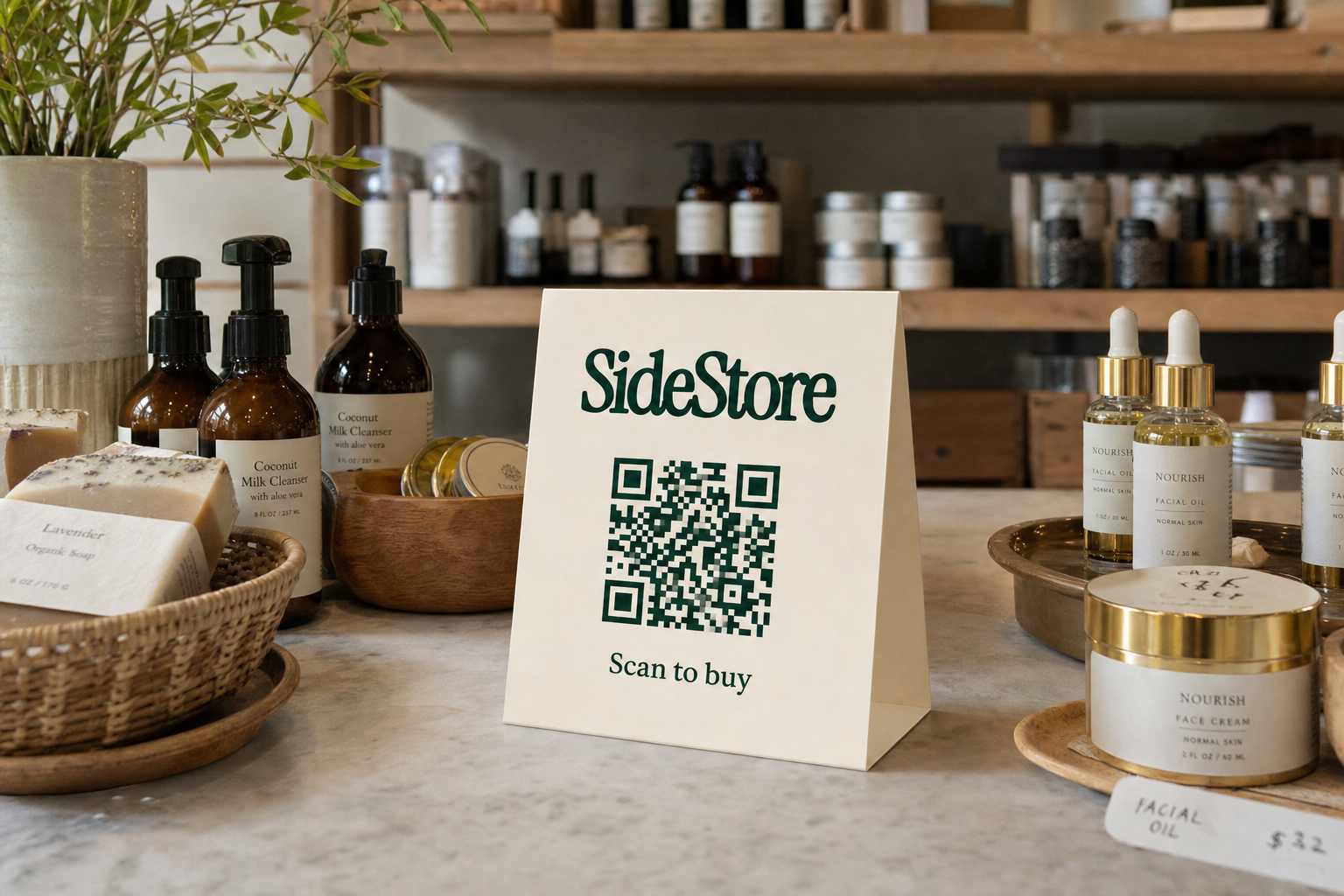
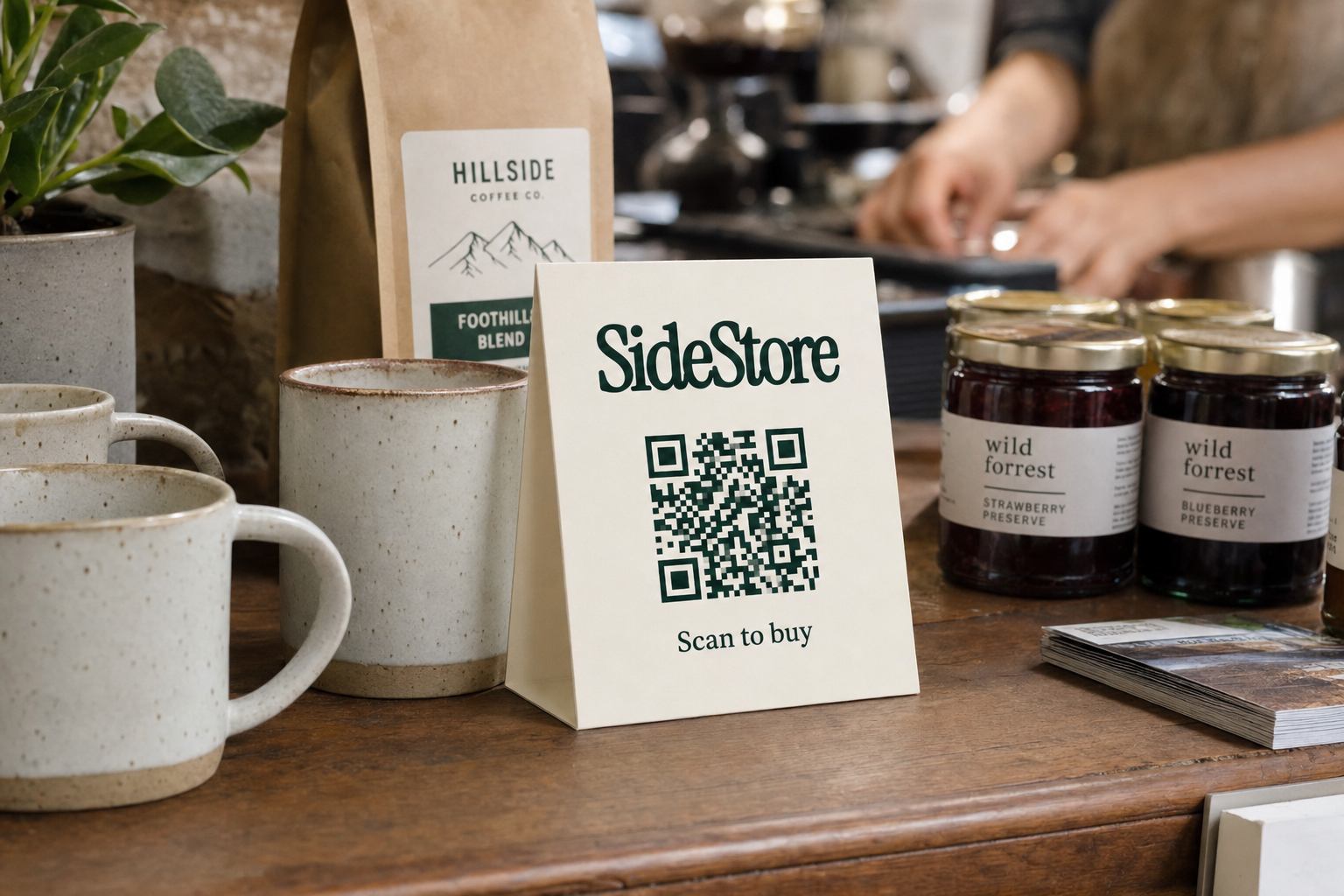
This is where the Retail Widget solves a real operational problem. The Widget handles live stock tracking, automatic split payouts, placement attribution, and scan-to-pay checkout at each placement location. The scan-to-pay QR code is one function within the Widget; the Widget itself manages the full consignment placement end to end. It means both parties can see stock levels and settlement figures in real time, which removes the main source of friction in informal arrangements.
A written agreement, however simple, signals that you are running a real operation. It protects both parties and sets the tone for a professional working relationship. Explore consignment inventory software options and the practical side of consignment agreements for handmade products for further detail.
After the Meeting: What Should You Do Next?
After a pitch meeting, send a short follow-up within 48 hours. That is all. Not a chaser email every other day, one clear message that thanks them for their time, restates your offer in a sentence, and confirms what the next step is.
If they said yes, your follow-up should confirm the agreed start date, the number of units you will bring in, and the consignment terms. Get the written agreement signed before stock goes on the shelf.
If they said they would think about it, your follow-up might read: "Thanks for the conversation on Tuesday. I'll leave it with you, happy to answer any questions if they come up. I'll check in briefly next week if that works for you." That is not pestering; that is professional.
If the answer is no, do not treat it as a door closing. Ask one question: "Is there a particular reason it's not the right fit right now?" The answer tells you something useful. Too many suppliers already? Wrong product category? Not enough footfall to move slow-turn stock? Each answer either helps you refine your approach or helps you rule out a shop type that was never going to work for you.
The yes-to-go-live sequence should move quickly. Agree the placement details, sign the agreement, deliver the stock, set up your tracking method, and confirm the settlement schedule. A maker who gets from handshake to live placement in under a week looks organised. That impression carries forward into the whole working relationship.
If a shop pitch does not convert and you need to think about alternative routes, the pop-up retail guide covers options worth considering.
Beyond One Shop: How Do You Expand Without Losing Control?
Once you are in one shop, the question is how to expand to more locations without losing track of stock, splits, and settlements across each one. The operational problem appears at placement two or three: you are now managing stock across multiple sites, each with its own owner, its own counting method, and its own payment timeline.
This is where informal systems stop working. A shared spreadsheet between you and one shop owner is manageable. The same spreadsheet across five shops is a source of errors and missed payments.
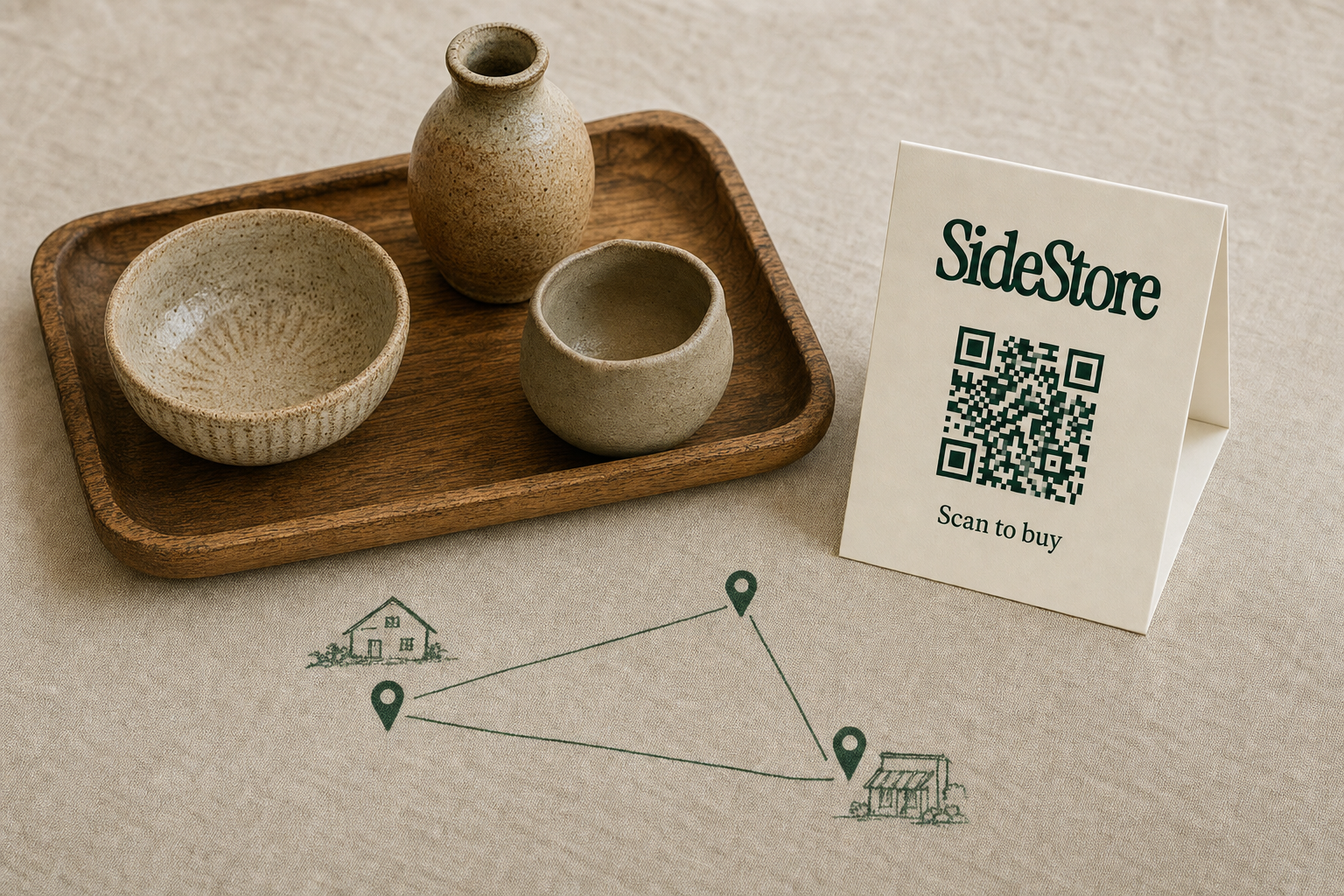
The distributed consignment network model solves this by treating each placement as a node in a single system, rather than a separate relationship managed individually. Instead of five separate spreadsheets and five separate settlement conversations, you run everything from one place.
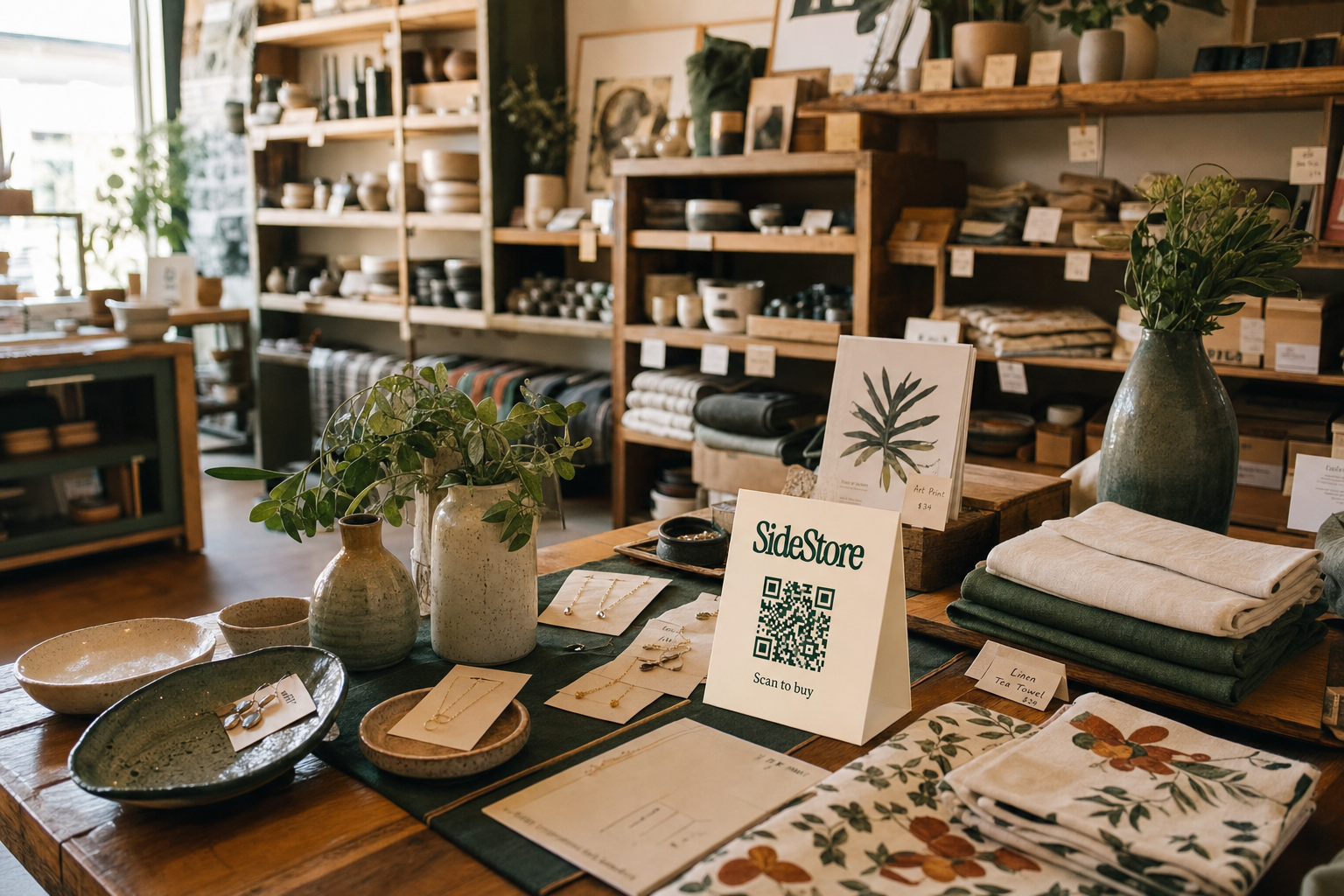
SideStore's Retail Widget is built for exactly this. One dashboard shows live stock across all your placements, handles automatic split settlement at each location, and provides each placement with scan-to-pay checkout via a QR code. The QR is one function of the Retail Widget; the Widget itself manages the full consignment placement end to end, from stock tracking to payout. You place your product in a new shop, go live in the Retail Widget, and that placement is immediately part of your network.
Think of this as a distribution strategy, not just a sales tactic. Each new placement extends your reach without adding the cost of a new storefront. That is the logic of consignment commerce: you build a presence across multiple real-world locations while running the operation from one place. See managing consignment inventory across locations and the guide on placing products across multiple local shops for practical next steps.
Frequently Asked Questions
Most makers approaching shops for the first time worry about the same things: who to talk to, what to do when they get rejected, and whether they need their product to be perfectly packaged before they start. The honest answer is that the conversation is more forgiving than it looks, and the preparation required is less than most people assume.
How do I find out who to talk to at a local shop?
For small independents, the person on the floor is usually the owner or a decision-maker. You can ask directly: "Are you the person to speak to about stocking products?" For slightly larger shops with staff, call ahead and ask who handles supplier or product inquiries. Getting the right person's name before you arrive saves you from pitching to someone who has no authority to say yes.
What should I do if the shop owner says they already have too many suppliers?
Ask whether that is likely to change in the next few months, and whether you can leave your line sheet in case a space opens up. Then ask whether they know of any similar shops in the area that might be looking for new products. A no from one shop owner is often a door to the next.
Is a verbal agreement enough for consignment?
No. A verbal agreement gives you no recourse if stock goes missing, payment is delayed, or the shop closes. A short written agreement, even a plain-language one-page document, protects both parties. It also signals professionalism, which makes the shop owner more likely to take the arrangement seriously.
What is a fair consignment split?
Splits commonly range from 50/50 to 70/30 in the maker's favour, though it varies considerably depending on the shop's footfall, the category of product, and your margin. There is no universal standard. What matters is that the split leaves you a workable margin after your cost of goods, and that it is attractive enough that the shop owner feels fairly compensated for the shelf space. See consignment vs wholesale explained for more context on how to think through the numbers.
Do I need a barcode or professional packaging before I approach a shop?
Not necessarily, particularly for handmade or artisan products where the handcrafted quality is part of the appeal. Clean, consistent presentation matters more than a barcode. A price tag, your maker name, and a brief materials or origin note are enough to get started. If the shop scales up your order, you can formalise packaging then. Do not let the absence of a barcode stop you from having the conversation.