Coffee Shop Retail Ideas: 10 Products That Sell Well on a Café Counter
Introduction: Why Your Café Counter Is a Retail Opportunity You're Probably Leaving Empty
Your café counter is already working for you. It has foot traffic, dwell time, and customers in a relaxed, receptive mood. That is a retail opportunity.
Coffee shop retail means selling physical products alongside drinks and food, and most independent café owners leave it completely untapped. A well-placed display of retail products converts that ambient attention into additional revenue. You do not need new marketing spend. You do not need to change your core operation. Many café owners report that a thoughtfully curated retail selection generates consistent supplementary income from customers who would never seek out a standalone gift shop.
The real barrier to starting is not whether you should do it, but what to sell and how to source it without tying up cash in stock. Consignment solves that problem entirely.
If you want context on whether your café qualifies as a retail business, Is a coffee shop considered retail? covers it. And if you want to understand how retail products fit into the bigger financial picture, boost coffee shop profit margins is worth reviewing before you start.
What Makes a Coffee Shop Counter a Strong Retail Environment
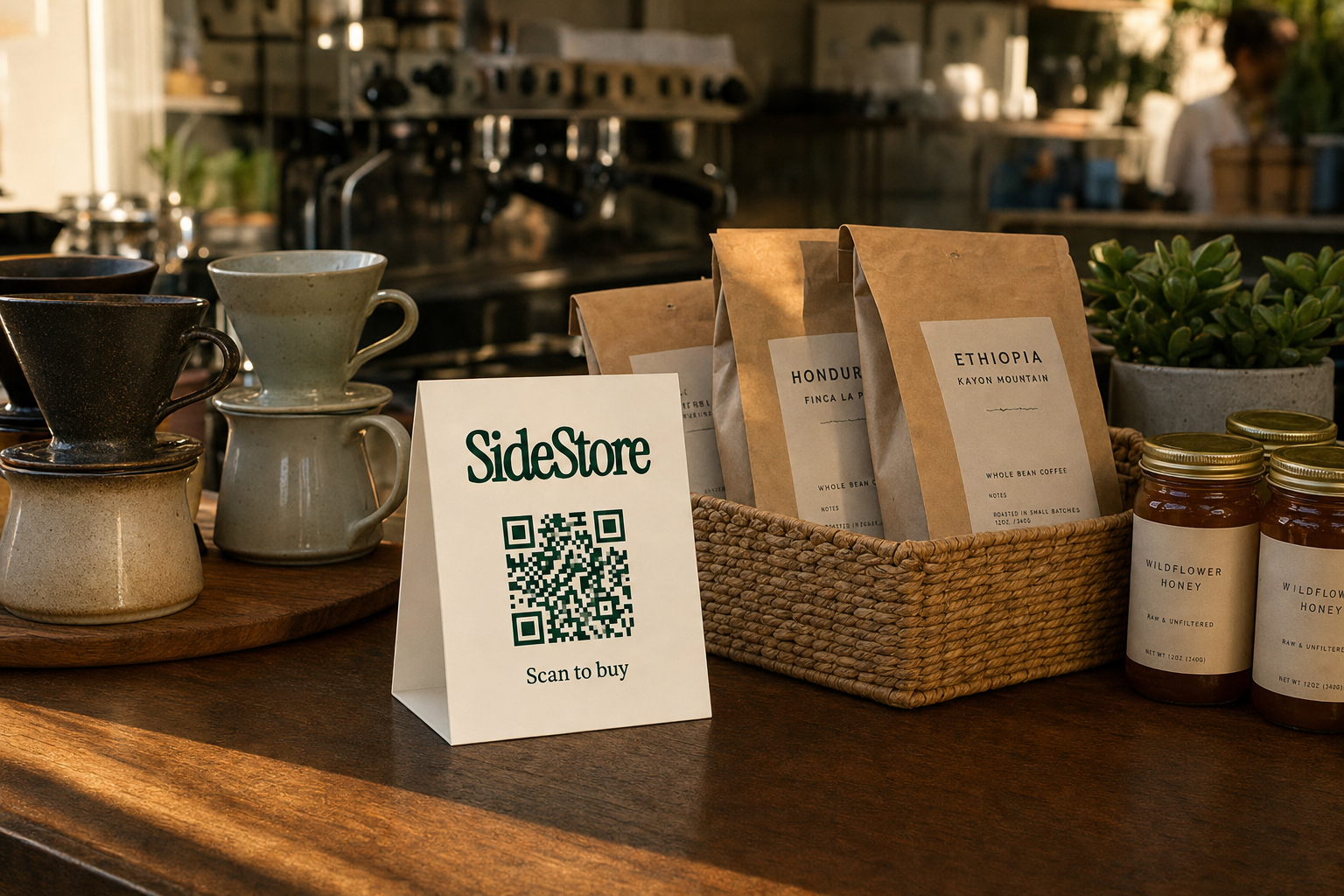
A café counter works for retail because it combines three things that most retail stores spend years building: high repeat footfall, emotional warmth, and extended dwell time. Customers are relaxed. They return regularly. They trust the space. That trust transfers to the products displayed in it.
The objection café owners most often raise is that retail margins are too thin to justify the work. That makes sense if you assume you have to buy stock upfront. You do not. Consignment removes that risk entirely. A maker places products in your café and gets paid only when those products sell. You carry no inventory cost, face no dead stock, and risk nothing if a product fails to move.
This distinction matters because many café operators fall into the trap of treating a coffee shop as a retail business that must purchase and hold inventory. It is not. Your café is a food service business with a retail opportunity layered on top. Consignment keeps those two things in their correct relationship: your core operation stays intact, and retail products earn you a split of each sale with zero upfront cost.
For realistic numbers on what a café can earn, see how much profit a coffee shop makes and average revenue of a coffee shop.
10 Coffee Shop Retail Ideas That Sell Well on a Café Counter
The retail items that actually move at a café counter share one characteristic: they feel native to the environment. Customers are not browsing a shop; they are waiting for a coffee. The best café retail items are small, visually clear, and priced for an impulsive, feel-good decision rather than a considered purchase.
Here are ten categories, ordered from highest typical sell-through to most niche.
1. Locally Roasted Coffee Beans
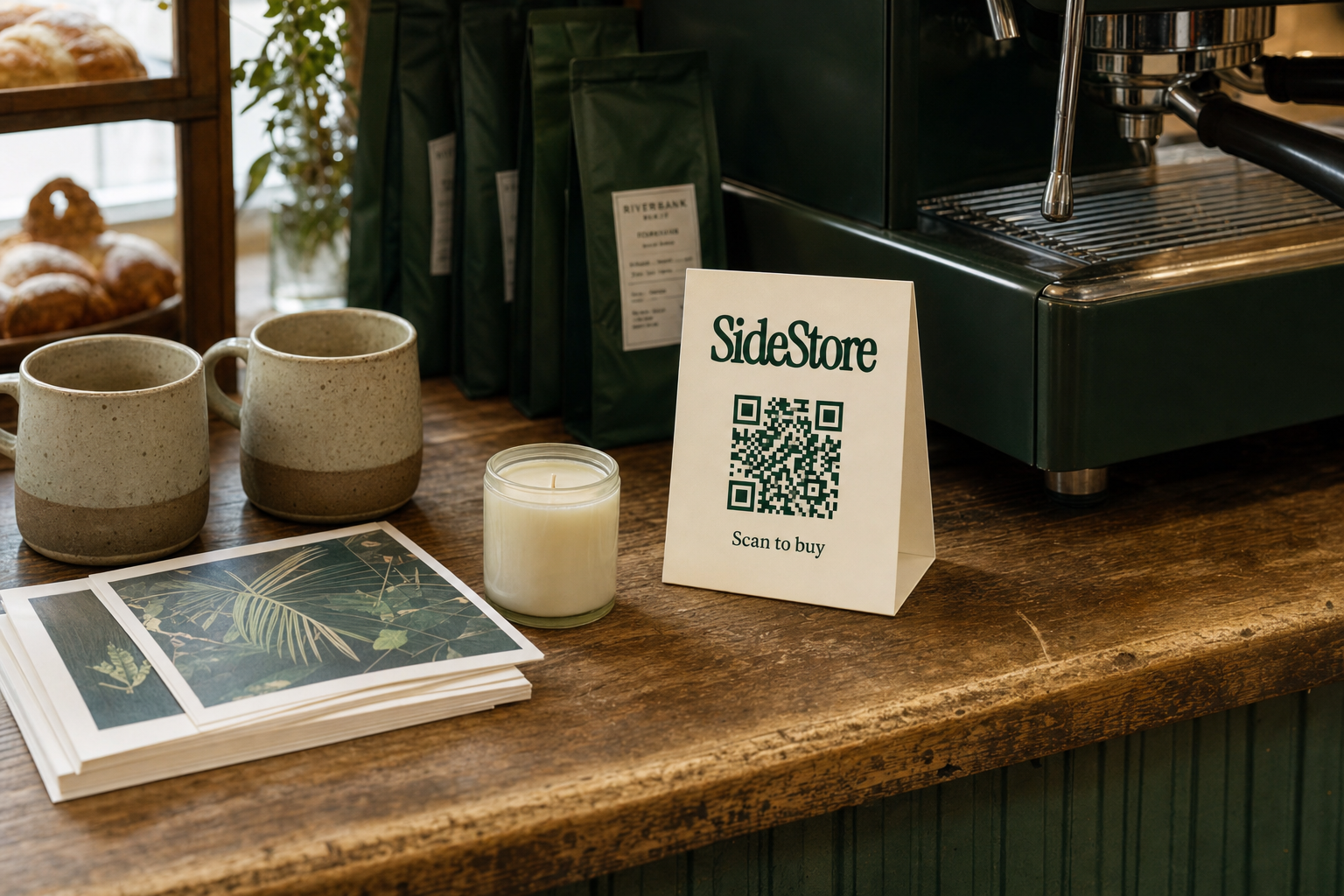
Whole-bean or ground coffee from a local roaster is a natural extension of what you are already serving. Customers who enjoy their cup often want to recreate it at home. This is one of the easiest retail conversions at the counter. Typical retail price: £8 to £18 per 250g bag. Display tip: stack bags in a small open crate beside the espresso machine, with the roast origin clearly labelled.
2. Artisan Chocolate and Confectionery
Small-batch chocolate bars, locally made truffles, and flavoured caramels convert well because they are affordable, gift-ready, and visually striking. Place them at eye level near the till and owners report strong impulse sales. Typical retail price: £3.50 to £12. Display tip: use a small tiered stand or a shallow wooden tray to keep products visible without cluttering the counter.
3. Hand-Poured Candles
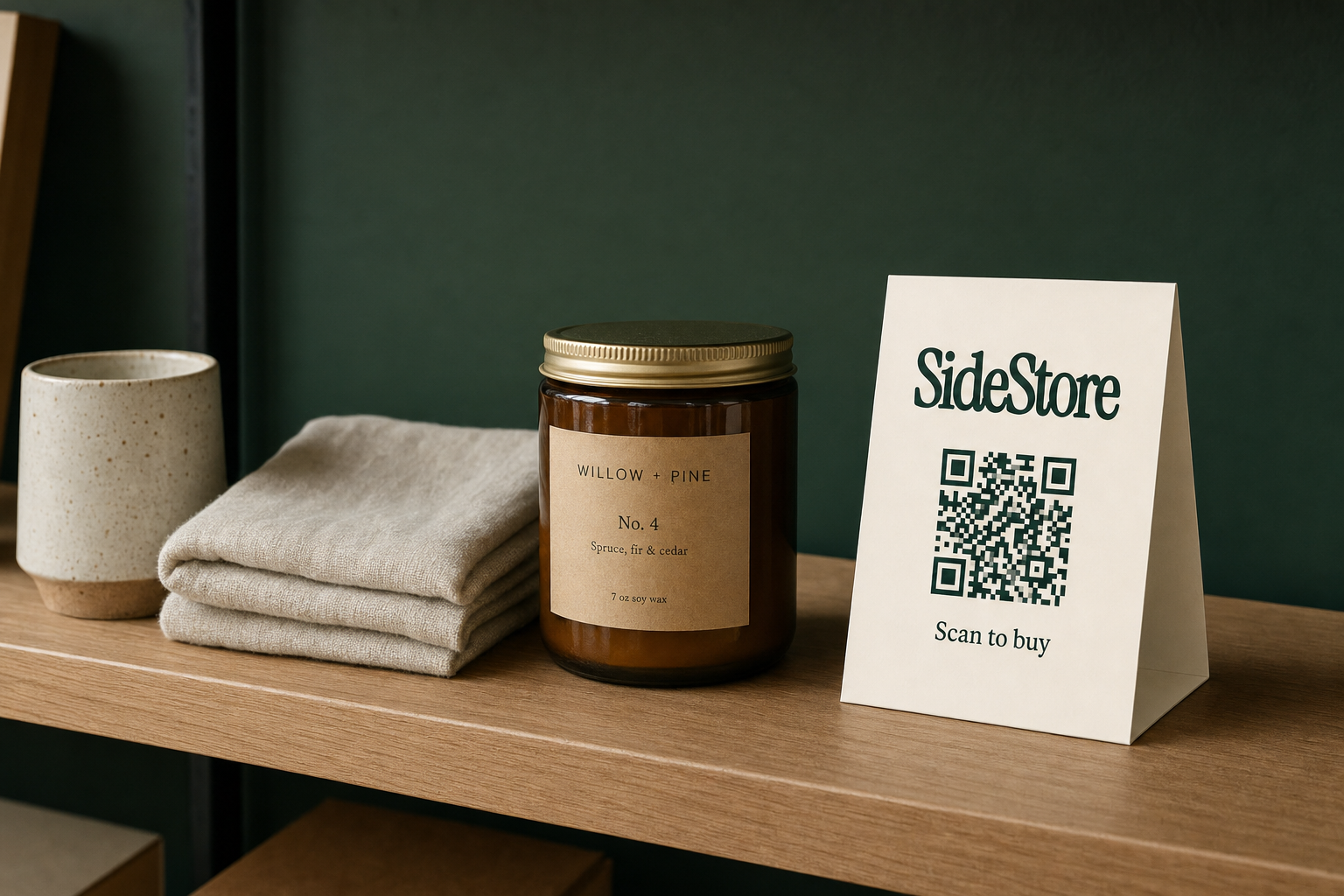
Scented candles from independent makers are consistently strong performers in cafés. The warm, ambient environment amplifies the association between scent and comfort. They photograph well, which supports any social content your café produces. Typical retail price: £10 to £28. Display tip: group two or three together near the window so natural light catches the texture of the wax.
4. Art Prints and Illustrated Cards
Locally produced art prints and illustrated greeting cards occupy minimal counter space and carry strong margins for the maker. Customers browsing while waiting for their order often pick up a card they would not have sought out elsewhere. Read more about how to sell art prints in cafés if you are considering this category. Typical retail price: £2.50 to £25. Display tip: a small A5 acrylic stand or a wire rack keeps prints upright and browsable.
5. Handmade Jewellery and Small Accessories
Delicate, handcrafted jewellery pieces work particularly well in cafés with a design-conscious customer base. Match the maker's aesthetic to your café's existing interior, not your personal taste. For placement detail, see selling handmade jewellery in retail spaces. Typical retail price: £12 to £65. Display tip: a small velvet tray or a bust form placed near the window creates a jewellery-counter effect without requiring significant space.
6. Specialty Hot Sauces and Food Condiments
Independent hot sauces, flavoured honeys, and artisan jams translate well in cafés that serve food or have a kitchen identity. They feel curated rather than commercial, and customers who enjoy them on their food are natural buyers. Typical retail price: £5 to £14. Display tip: line three or four bottles on a small shelf directly beside the food counter or under the menu board.
7. Reusable Coffee Cups and Accessories
Branded or locally designed reusable cups, lids, and stirrers are a logical upsell in a café context. Customers already think about their takeaway cup habit here. This category works best when the products feel considered and specific to your café rather than generic. Typical retail price: £12 to £30. Display tip: hang reusable cups by their handles from a short pegboard strip, or stack them inverted beside the till.
8. Zines, Books, and Local Publications
Small-run zines, poetry pamphlets, and locally published books suit cafés that already attract a creative or literary crowd. They sell slowly but create strong atmosphere, and their presence signals the kind of space you are. Owners report that customers who buy this category tend to return. Typical retail price: £3 to £18. Display tip: face a small rotating selection outward in a wall-mounted magazine rack or a freestanding slim shelf.
9. Body Care and Apothecary Products
Handmade lip balms, solid shampoo bars, and small-batch hand creams perform well in cafés with a wellness or slow-living aesthetic. They occupy very little space and attract customers already predisposed to independent, natural brands. Typical retail price: £5 to £22. Display tip: group in a small basket or on a slim tray with the ingredients list visible. Transparency is a selling point for this category.
10. Enamel Pins, Patches, and Small Collectibles
Low-price-point accessories like enamel pins and embroidered patches attract impulse purchases at the till and work particularly well in cafés near universities, independent cinemas, or creative districts. They are easy to display in quantity and require almost no counter space. See sell-through rate benchmarks for retail if you want to set realistic expectations before you commit. Typical retail price: £3 to £10. Display tip: mount pins on a small foam board or hang a filled pin display card from a hook near the register.
How to Source Café Retail Products Without Buying Any Stock
The simplest way to get retail products into your café without purchasing inventory is consignment. A maker places their products in your space and you earn a percentage of each sale, with nothing owed until something sells. No purchase orders. No minimum quantities. No dead stock.
Here is how it works in practice with SideStore's Retail Widget.
Step 1: Agree the split with a maker. Before any product arrives, you and the maker agree on a consignment percentage. Typically the host takes between 20 and 40 percent of each sale. The Retail Widget models this in advance so both parties can see their expected return before committing. You can review what percentage consignment shops typically take and consignment agreement clauses to know before you start to approach this conversation with confidence.
Step 2: Place the product. The maker uses the Retail Widget, the interface that places and manages a product on consignment end to end, to register the product in your location. The Widget handles live stock tracking and placement attribution from the moment the product goes live.
Step 3: Enable scan-to-pay checkout. The maker prints a SideStore QR code card and attaches it to each product, or you display a single card for all SideStore products in your placement. A customer scans, pays, and the transaction completes. The scan-to-pay QR is one function of the Retail Widget; the Widget also handles stock levels and settlement in the background.
Step 4: Automatic split settlement. When a sale registers, the Retail Widget automatically routes the maker's share and your host share to their respective accounts. Your staff do not need to track anything, reconcile anything, or handle any separate payment. The objection that retail will burden your team is the one consignment genuinely dissolves.
For the software side of managing multiple maker placements, consignment inventory software is worth reading.
Café Retail Product Comparison: Key Factors at a Glance
Choosing the right product category for your café comes down to three things: how much counter space you can spare, what your specific customer base will actually buy, and how clean the consignment relationship is to manage. The table below gives you a fast comparison across the ten categories.
| Product Category | Typical Price Range | Display Footprint | Consignment Suitability | Best Café Profile |
|---|---|---|---|---|
| Locally roasted coffee beans | £8 to £18 | Small shelf or crate | High | Any café with strong coffee identity |
| Artisan chocolate and confectionery | £3.50 to £12 | Tray or tiered stand | High | Any café; especially gift-focused |
| Hand-poured candles | £10 to £28 | Window ledge, grouped | High | Slow-living, brunch, wellness cafés |
| Art prints and illustrated cards | £2.50 to £25 | Acrylic stand or wire rack | High | Design-conscious, neighbourhood cafés |
| Handmade jewellery | £12 to £65 | Velvet tray or bust form | High | Boutique cafés, younger audience |
| Specialty condiments | £5 to £14 | Shelf near food counter | Medium | Food-forward cafés and brunch spots |
| Reusable cups and accessories | £12 to £30 | Pegboard or till-side stack | Medium | Takeaway-heavy, eco-conscious cafés |
| Zines, books, publications | £3 to £18 | Magazine rack or slim shelf | Medium | Literary, creative, community cafés |
| Body care and apothecary | £5 to £22 | Basket or slim tray | High | Wellness cafés, slow-living spaces |
| Enamel pins and small collectibles | £3 to £10 | Pin board or hook card | High | University-adjacent, creative districts |
Low-footprint, high-consignment-suitability categories, particularly cards, pins, confectionery, and body care, require the least operational change and carry the lowest risk for a café hosting retail for the first time. Categories like jewellery and candles suit cafés with a strong aesthetic identity, where the product feels like a natural extension of the space rather than an add-on.
For a structured approach to tracking what you stock and what moves, track your retail inventory by category provides a useful starting framework.
Display and Pricing Tips That Move Products Off the Counter
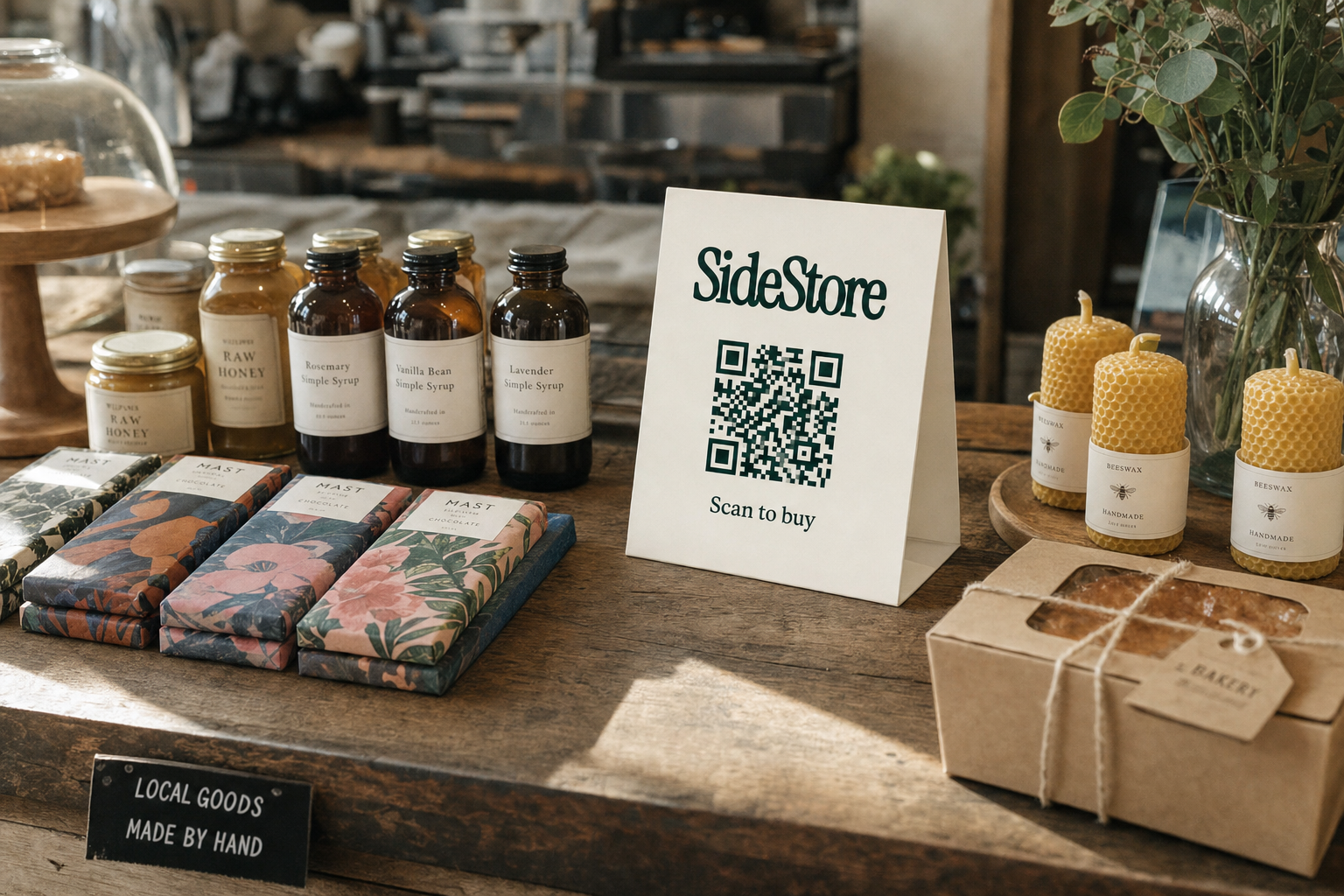
Display and pricing determine whether retail products sell or simply occupy space. The most common mistake café owners make is treating retail items as decoration, placing them attractively but not merchandising them actively. A product that blends into the background does not sell; a product that stops a customer mid-step does.
Five principles that owners report make a meaningful difference:
Eye level is buy level. Place your highest-margin or fastest-moving products at natural eye level when a customer is standing at the counter. Reserve low shelves for larger or heavier items.
Group by occasion, not by category. "Perfect for a gift" clusters convert better than arbitrary arrangements. Pair a candle, a card, and a small confectionery item as a visible set.
Price tags must be immediate. A customer who has to ask the price will rarely ask. Every item needs a visible, legible price. The Retail Widget's scan-to-pay card handles this for products in your SideStore placement, but for any product without it, handwritten tags work fine.
Rotate the display regularly. Owners report that even a small rearrangement every two weeks gives regulars the impression of freshness and new stock, driving repeat purchases.
A curated retail corner signals identity. For a new café drawing in customers, a small, well-chosen retail display communicates taste and community investment in a way a blank wall cannot. It gives first-time visitors a reason to linger and a reason to return.
When a product stops selling, act on it quickly. What to do with slow-moving retail stock covers your options. If you operate more than one location, managing a multi-location retail inventory is relevant as you grow.
Frequently Asked Questions About Coffee Shop Retail
Retail products are worth adding to a café when the sourcing model removes the financial risk. Consignment does exactly that: you earn from each sale without holding stock. The questions below address the broader viability picture that café owners typically want answered before committing.
Is operating a coffee shop financially viable?
Operating a coffee shop is financially viable for owners who manage their cost base carefully, but it is not a high-margin business by default. Industry norms suggest net margins typically fall between 2.5 and 6.5 percent for independent cafés, which means supplementary revenue streams like retail matter. Retail on consignment adds revenue without adding fixed costs, which makes it one of the more accessible ways to improve viability at the margin. For a full breakdown, see coffee shop profit margins explained.
What products can be sold alongside coffee?
Cafés can sell a wide range of physical products alongside coffee, including locally roasted beans, artisan confectionery, hand-poured candles, art prints, handmade jewellery, specialty condiments, reusable cups, zines, body care products, and small collectibles like enamel pins. The ten categories listed above cover the strongest performers. The critical filter is customer-profile fit: choose products your specific customers would buy, not products you personally like.
How should a new coffee shop draw in customers?
A new café draws customers through quality product, a clear aesthetic identity, and genuine community presence. A curated retail display contributes to all three: it signals taste, supports local makers, and gives customers a reason to engage beyond the drink. Owners report that a thoughtfully chosen retail corner generates conversation and social sharing that no paid advertising matches at the same cost.
What strategies improve coffee shop profitability?
The most reliable strategies for improving café profitability are increasing average transaction value, reducing waste, and adding low-cost revenue streams. Retail on consignment addresses the third lever directly: it adds revenue without increasing your fixed cost base. Merchants find that even a small selection of consignment products, six to ten items, contributes meaningfully to monthly totals when the products are well chosen and actively displayed. See what profit a coffee shop can realistically expect for context.
What are typical profit margins in this sector?
Industry norms suggest gross margins for beverages in a café range from 65 to 75 percent, but operating expenses, rent, staff, and utilities compress net margins significantly. Independent café owners typically see net margins in the low single digits. Retail products sourced on consignment operate at a different margin structure: you receive a percentage of each sale with zero cost of goods, which means every consignment sale is close to pure profit for the host. Consignment retail can therefore carry a disproportionately positive effect on net margin relative to its contribution to total revenue.
What makes a coffee shop concept stand out?
A café concept stands out when it has a clear, consistent point of view across everything a customer encounters, from the coffee itself to the music to what sits on the counter. Curated retail reinforces that identity. A café known for stocking local makers, independent publications, or a particular aesthetic builds a community around it that purely food-and-drink operations do not. You can read more about how shared retail networks support local economies for the broader picture.
Start Small, Track What Sells, Scale What Works
The practical next step is straightforward: pick one or two product categories from this list that match your customer base, find a local maker to work with on consignment, and go live with a small display before committing to anything larger. You do not need a full retail strategy on day one.
Here is a simple four-step sequence to begin:
- Choose one product category that fits your café's customer profile, not your personal preference. Refer to the comparison table above.
- Find a local maker through a market, a local craft network, or by approaching someone whose work you already stock or admire. Learn how to approach a local shop about stocking your products if you want a maker's perspective on what that conversation looks like from the other side.
- Set up a consignment placement using SideStore's Retail Widget. The Widget handles the checkout via scan-to-pay QR, tracks stock live, and settles your host split automatically after each sale.
- Review sell-through at 30 days. If a product sells, restock and expand the range. If it does not, rotate it out and try a different category.
Some café operators explore pop-up retail space as an alternative or look at pop-up retail options for independent makers as a lower-overhead starting point. Those formats have their place. But a pop-up is a one-time event; consignment is a durable, ongoing revenue stream that runs quietly in the background while you focus on coffee.
Build a consignment network without opening a store of your own. Your café is already the store. You can read more about how to sell through someone else's store to understand how that relationship works from both sides. Start with one shelf. Track what sells. Scale what works.