How to Sell Local Products to Hotels: A Maker's Guide to Hospitality Retail Placement
Selling local products to hotels means placing your handmade or locally made goods into a hotel's retail space on consignment. Guests browse and buy. You get paid when they do. The hotel earns a percentage of each sale. No lease, no sales staff on your payroll, no upfront cost to the hotel. That last part is important: it removes the biggest objection a hotel manager will raise.
Here is the direct answer: approach the general manager or front-of-house manager with a sample, a clear product story, and a consignment offer that gives them 20 to 40 percent of the retail price. You take nothing until something sells. That framing handles most of the risk objections.
The mechanics are straightforward. You place your products under a consignment agreement. The hotel displays them. Guests buy. You split the revenue at an agreed percentage. Selling through someone else's store follows this same logic whether the host is a boutique, a cafe, or a four-star lobby. The key difference with hotels is placement context: guests are in a discovery mindset, often looking for a local memento or gift.
Before you walk in, understand consignment vs wholesale. Wholesale means the hotel buys stock upfront. Consignment means they don't. Hotels almost always prefer consignment for unproven local products.
Why Hotels Want Local Products (and What They Won't Tell You Upfront)
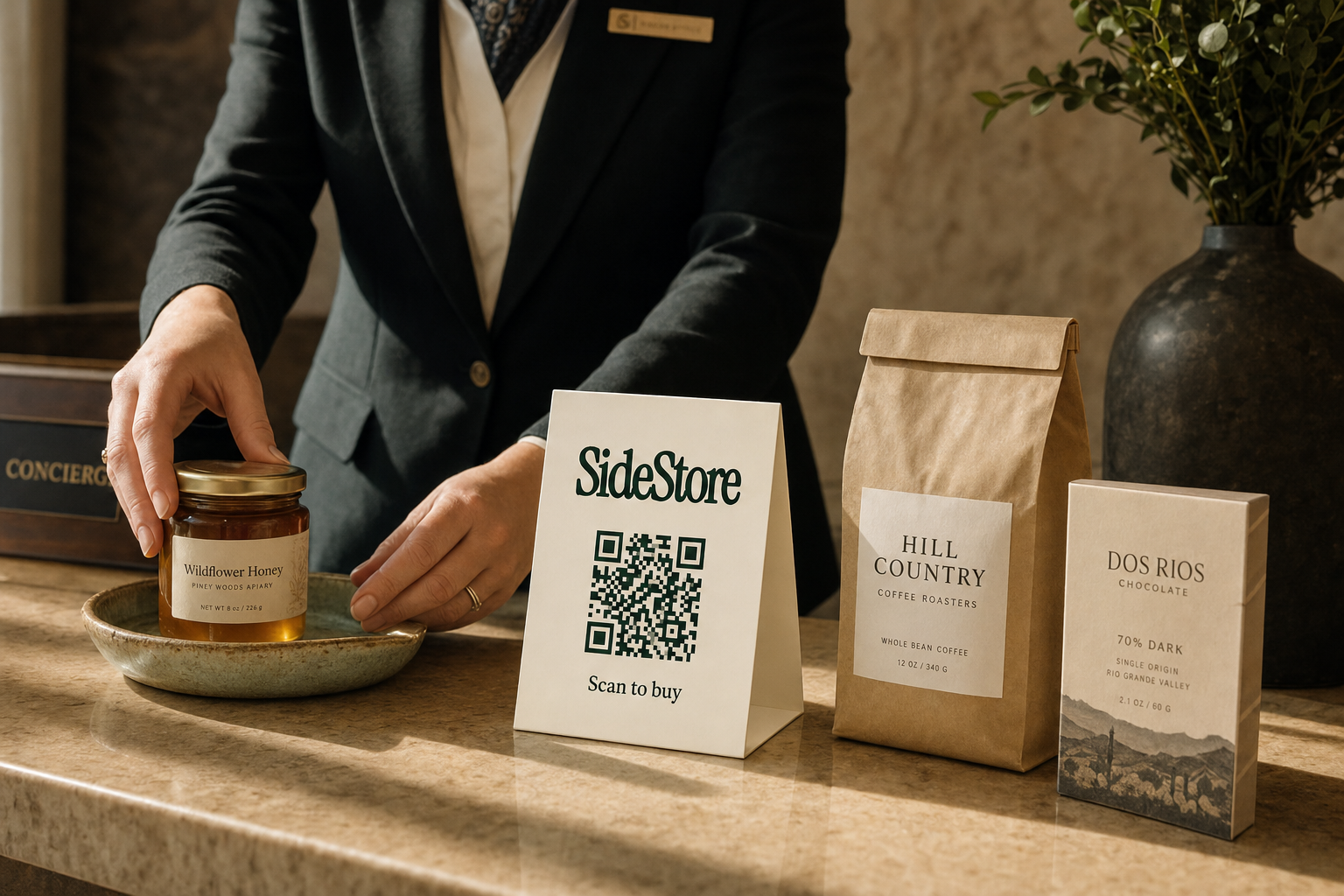
Hotels stock local products because guests ask for them. Guests increasingly want something that reflects where they actually are, not a generic minibar item or a branded pen. Hotel managers know this. Many are actively looking for makers who can fill that gap, provided the product is right and the arrangement is low-effort for them.
What hotels rarely say explicitly is that they have three distinct placement zones, and each has different requirements.
Lobby retail is the most visible zone. Products here need to hold up to casual browsing, carry clear pricing, and look good without a sales pitch. Candles, ceramics, small prints, leather goods, and locally made pantry items work here. Turnover is moderate; restocking happens every few weeks.
In-room gifting is smaller and more curated. Hotels place two or three items in each room as a purchasable amenity: a locally made soap, a scented sachet, or a small textile. The product needs to feel considered, not cluttered. This zone requires tight stock management because the hotel is effectively your warehouse.
F&B-adjacent placement sits near the bar, the breakfast counter, or the hotel café. Locally produced preserves, honey, coffee, or chocolate fit here. Footfall is high and purchase intent is casual, which means pricing and packaging need to carry the sale without explanation.
Identify your zone before you pitch. It saves time and saves face. A hand-thrown ceramic mug belongs in the lobby retail zone, not in-room. A batch of locally made granola belongs near the breakfast counter, not in a glass cabinet by the elevator. For more on consignment placement in local shops, the same placement logic applies across venue types.
What Products Hotels Actually Stock (and What Gets Turned Down)
Hotels are selective. Here is the rule: if a product can tell a local story in under five seconds of looking at it, it has a strong chance. If it needs explanation, it is a harder sell.
Products that tend to get accepted:
- Locally made candles and diffusers (especially with regional scent references)
- Hand-thrown or locally produced ceramics (mugs, bowls, small vessels)
- Artisan food and pantry goods (honey, jam, chocolate, coffee, tea)
- Small-batch textiles (scarves, pouches, locally dyed goods)
- Art prints or postcards with a strong regional identity
- Handmade soap and bath goods with natural ingredients
- Jewellery with a clear maker story and clean packaging
Products that typically get turned down:
- Anything requiring refrigeration or special storage
- Products with very short shelf lives that create waste risk
- Items with no clear price point visible to the guest
- Products that look similar to what the hotel already stocks from a distributor
- Anything fragile without protective packaging
- Categories that feel mismatched to the hotel's positioning (a budget hotel will not stock a CHF 180 ceramic piece)
Packaging matters more than most makers expect. Hotels will not hang a handwritten tag on your product. It needs to arrive shelf-ready: priced, labelled, and clean. If your product requires assembly or special display fixtures, expect friction.
For makers working in jewellery and small accessories, how to sell handmade jewellery in boutiques covers the packaging and presentation standards that apply equally in a hotel lobby setting.
How to Pitch a Hotel: Who to Approach and What to Say
The right person to approach depends on the hotel's size. In a smaller or independently owned hotel, the general manager makes buying decisions. In a larger property, you want the front-of-house manager, the guest experience manager, or whoever runs the lobby retail area. Skip procurement or purchasing departments; they handle contracted suppliers, not local placements.
Here is a reliable first-contact process:
Research the hotel before you go. Know its positioning, its guest profile, and whether it already stocks local products. A boutique design hotel and a chain business hotel need completely different pitches.
Bring a physical sample. Do not send a PDF or an email as your first move. Walk in with the product. Managers make decisions faster when they can hold the thing.
Ask for five minutes, not a meeting. Request a brief conversation with whoever handles retail or the lobby. Lower the commitment threshold.
State your pitch in 30 seconds. Keep it factual and frictionless.
Leave a one-page document. Include a product photo, a short maker story (two or three sentences), your proposed retail price, and the consignment split you are offering. No jargon, no lengthy bio.
Follow up once, in writing, within five days. A single polite follow-up is professional. More than that becomes pressure.
Your 30-second pitch script:
"I make [product] locally in [place]. I'm offering it on consignment, which means there is no upfront cost to you. You display it, guests buy it, and we split the sale at [X]% for you and [X]% for me. I handle restocking. Would you be open to a small trial placement?"
That script works because it answers the manager's three unspoken questions in order: what is it, what does it cost me, and what do I have to do. The answer to all three is favourable.
Approaching hotels is similar in structure to pitching cafes for consignment placement, with the added consideration that hotels have more defined zones and more formal gatekeeping. If you are still building confidence in direct pitching, pop-up retail alternatives can give you proof of sales to show during a hotel conversation.
Consignment Percentage for Hotels: What Split to Offer and Why
The average consignment percentage in hospitality retail typically falls between 20 and 40 percent for the host. A common benchmark for lobby retail and in-room placements is 25 to 30 percent to the hotel. This is not a universal rule; the right number depends on your margin, the hotel's footfall, and what the product is.
Here is a worked example so the arithmetic is clear.
Say your product retails at £40. You offer the hotel a 30 percent consignment split.
- Hotel's share per unit: £40 × 30% = £12.00
- Your revenue per unit: £40 × 70% = £28.00
From your £28.00, you still need to cover your cost of goods, packaging, and any delivery or restocking time. If your cost of goods is £10, your net margin per unit is £18.00. That is a workable number for most handmade products. If the cost of goods is £20 and the retail price is £40, a 30 percent hotel split leaves you £8 per unit, which may not be viable. The honest response is to raise the retail price or renegotiate the split before agreeing.
The reason hotels in the 25 to 35 percent range accept consignment more readily than higher splits is simple: the lower the percentage, the less the hotel feels they are "running a retail business." At 20 percent, many hotels will agree quickly because the effort of displaying your product is worth it. At 40 percent, you should expect more scrutiny and a stronger performance expectation.
For premium placements, such as a luxury hotel lobby with high footfall and a wealthy guest demographic, some makers offer a higher split, sometimes up to 40 percent, because the ticket prices and conversion rates justify it. Always model the numbers before you agree.
The detailed comparison of consignment vs wholesale for independent makers is worth reading before you negotiate, especially if a hotel comes back and asks about wholesale instead. Once you have a placement live, consignment inventory software is how you track what sold and what you are owed without relying on the hotel to report it accurately.
Consignment vs Wholesale vs Sale-or-Return: A Side-by-Side Comparison
Three models come up when you approach hotels: consignment, wholesale, and sale-or-return. They are not the same thing, and knowing the difference protects your cash flow.
| Model | Who buys stock upfront | Inventory risk | Maker gets paid when | Typical hotel acceptance | Best for |
|---|---|---|---|---|---|
| Consignment | Nobody. Stock stays yours until sold. | Maker holds risk | A sale is made | High for unproven local makers | Early placements, new products |
| Wholesale | Hotel buys stock upfront | Hotel holds risk | Order is placed | Low. Hotels rarely buy local stock upfront | Proven products with a track record |
| Sale-or-return | Hotel takes stock, returns unsold | Split between both | Stock sells or is returned unsold | Moderate | Mid-stage makers with some trade history |
Consignment is the lowest-friction entry point for most makers approaching hotels for the first time. Wholesale gives you cash faster but requires a hotel willing to invest. Sale-or-return sits between the two and can work once you have an established relationship with a hotel that trusts your product will move.
Managing Your Hotel Placement: Restocking, Payouts, and Staying Organised
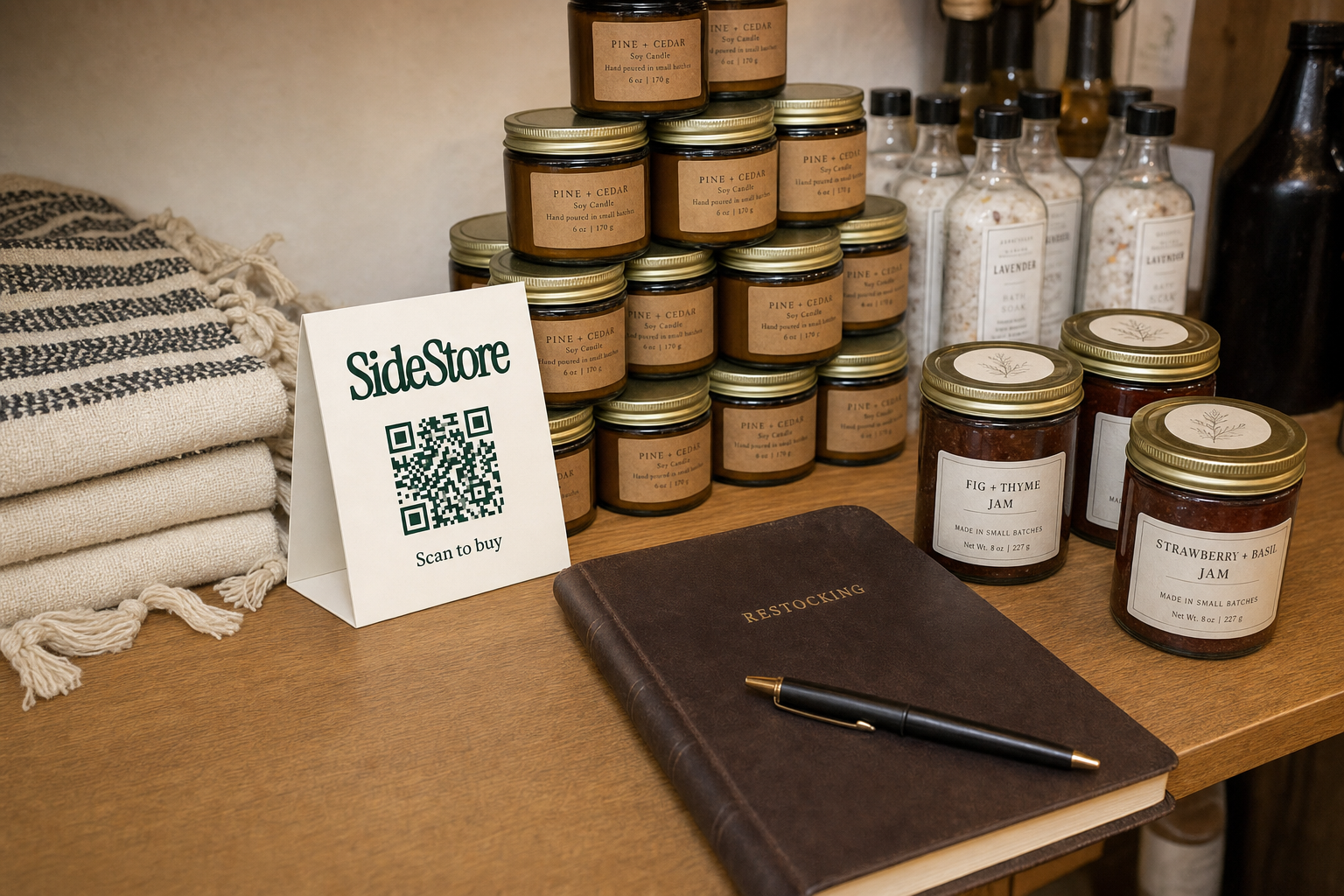
Once a hotel agrees to stock your product, the work shifts from pitching to managing. This is where many makers lose control: stock runs out without them knowing, payouts are informal and delayed, and there is no clear record of what sold when.
The Retail Widget is built for exactly this situation. Here is how it handles a hotel placement end to end.
Model the placement first. Before anything goes on a shelf, use the Retail Widget to set up the placement: product, retail price, consignment split, and location. This creates a record that both you and the hotel can reference.
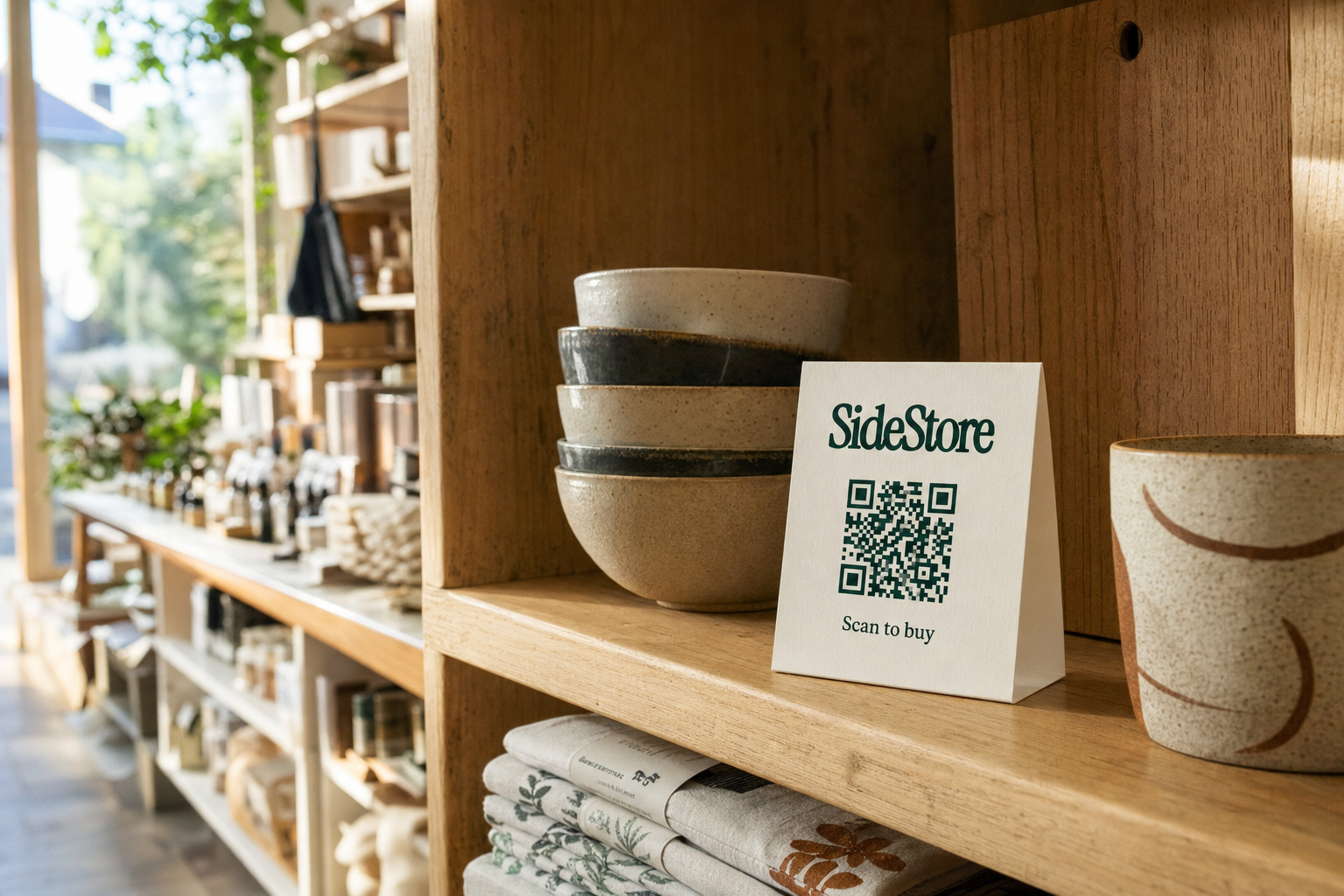
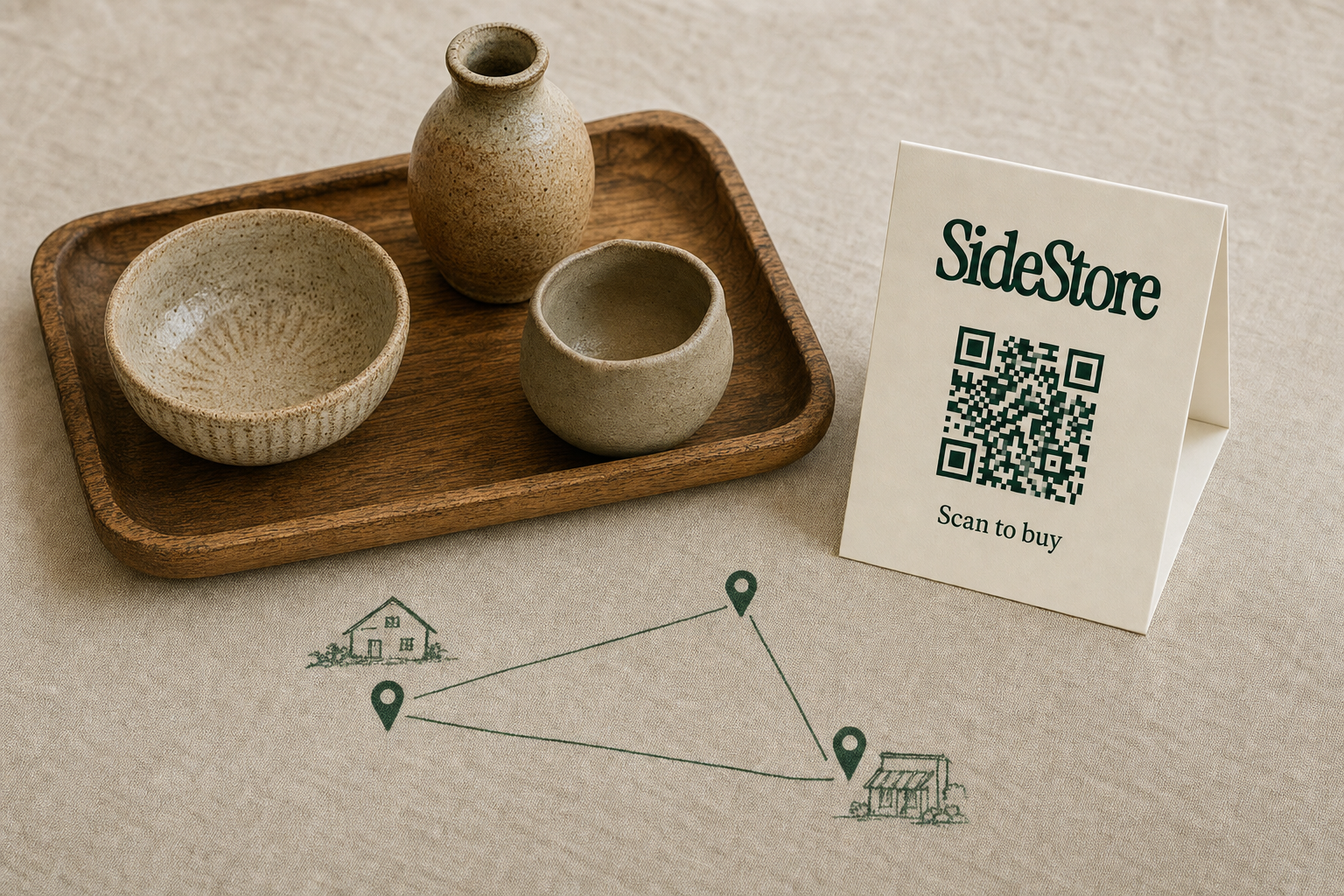
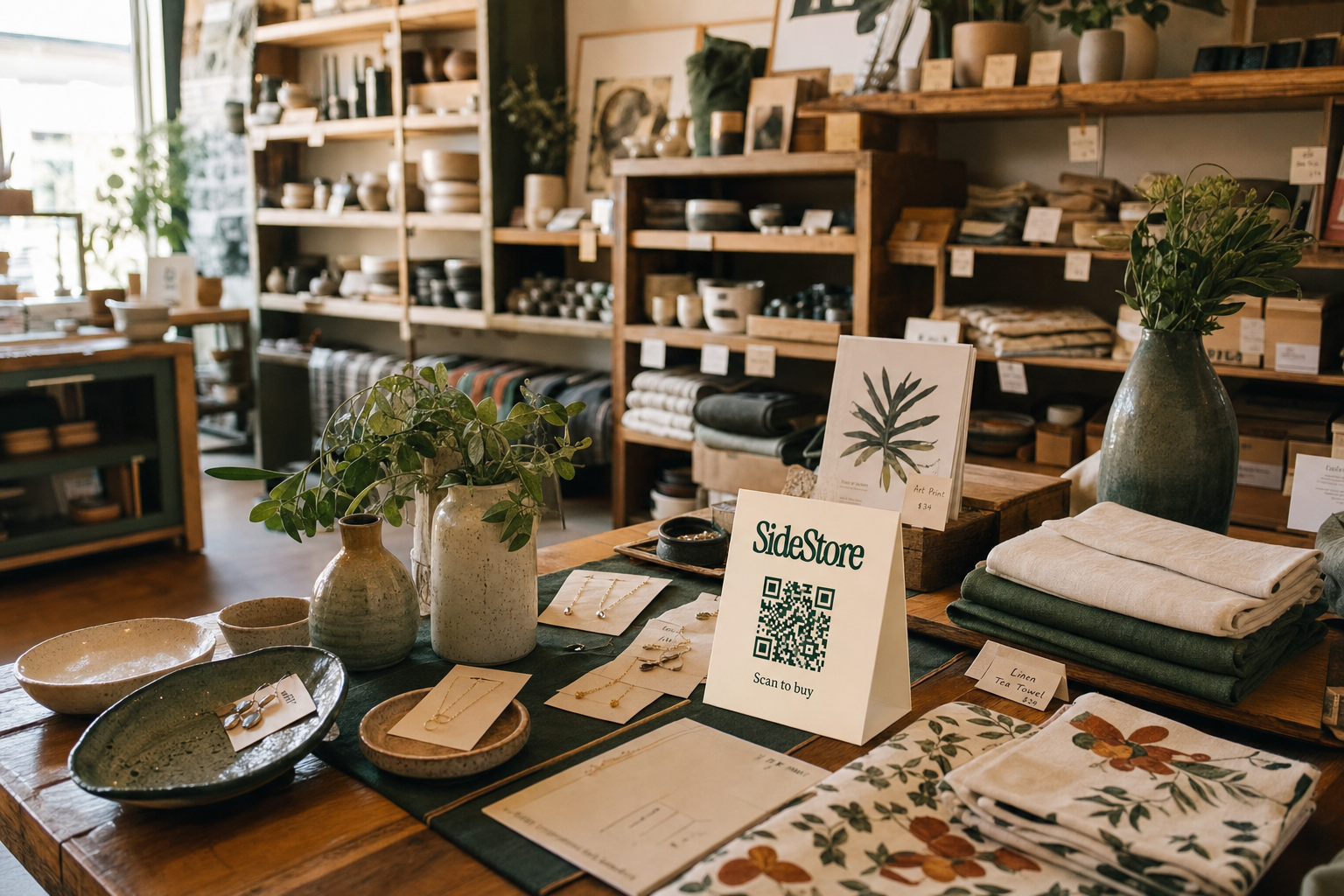
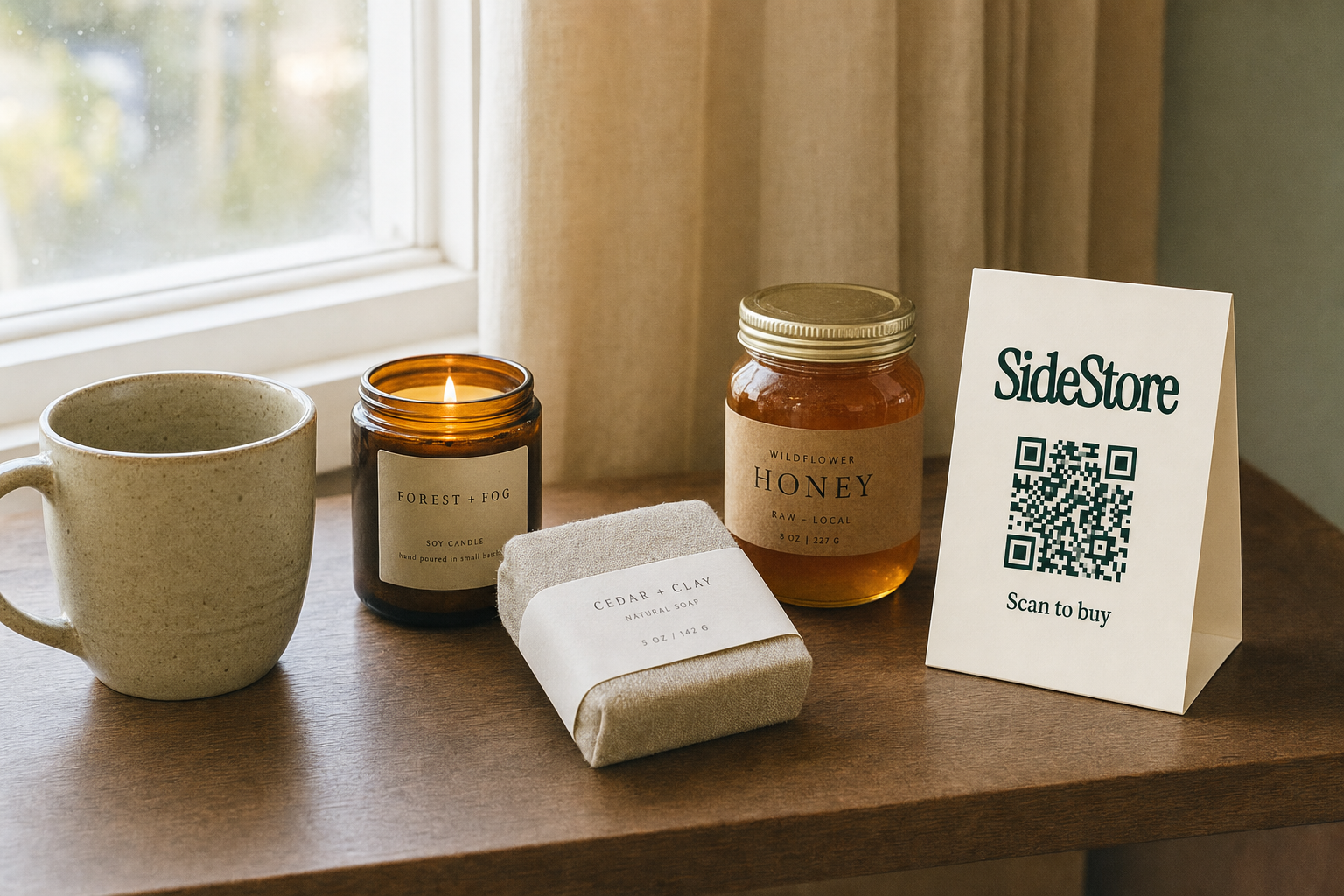
Go live with a scannable checkout. The Retail Widget generates a printable QR code card that you or the hotel attaches to the display. When a guest scans it, they can complete the purchase directly. This removes the need for a member of staff to process the transaction and means sales are logged in real time. The QR checkout is one function of the Retail Widget; the interface also handles everything else described here.
Track stock in real time. The Retail Widget shows you live stock levels for each placement. You can see when a hotel location is running low without waiting for the hotel to email you. That visibility means you restock proactively, not reactively.
Settle split payouts automatically. When a sale is made, the Retail Widget calculates and records the split. The hotel's share and your share are logged automatically. You are not chasing a manager for a monthly tally.
Stay organised across placements. If you have three hotel placements and a cafe, each one appears in the same dashboard. You can see total sales, per-placement performance, and pending payouts in one place.
For makers managing more than one placement, consignment inventory software is the category this falls into, and the Retail Widget handles it natively. More on the overall model is covered in selling through someone else's store.
How to Get Products into More Stores: Scaling from One Hotel to a Network
Getting your product into one hotel proves the model. Scaling it means repeating that placement across multiple venues without adding proportional effort to your week.
The concept behind a distributed consignment network is straightforward: instead of opening a shop, you place products in many venues that already have foot traffic. Each placement is small. Together, they add up to meaningful distribution. This is how to sell local products to hotels, cafes, boutiques, and guesthouses simultaneously without a lease, a sales team, or a stockroom.
The practical steps look like this. Once your first hotel placement is live and generating sales, use that data as your proof point for the next approach. A manager who can see that a similar hotel sold twelve units in six weeks will respond differently to your pitch than one who has only your word for it.
From one placement, you can move to three. From three to ten. Each new placement is modelled in the Retail Widget and managed from the same dashboard, so your administrative load stays flat even as your distribution grows.
For makers considering how consignment placement compares to other offline distribution formats, pop-up retail alternatives for makers and placing products in cafes are both worth reading as you build out your placement mix.
Frequently Asked Questions
What is a fair consignment percentage for hotel placements?
A fair consignment percentage for hotel placements is typically 25 to 30 percent for the hotel and 70 to 75 percent for the maker, as a starting benchmark. The right split depends on your margin, the hotel's footfall, and the product category. Always model the numbers before agreeing: work backwards from your cost of goods to confirm the arrangement is viable.
How do I get my products into stores if I have no retail experience?
Start with consignment, which requires no retail experience from you and no upfront purchase from the host. Walk in with a sample, a short product story, and a clear split offer. The low-friction nature of consignment means most independent venues will at least consider a trial placement. For a full walkthrough of getting handmade products into boutiques, the same principles apply to hotels.
What is the average consignment percentage across retail?
Across retail more broadly, host splits of 20 to 40 percent are commonly cited as a general range, with the average often landing around 30 percent. This varies significantly by product category, venue type, and how much floor or display space the host is providing. See consignment vs wholesale for how these terms compare in practice.
Do hotels pay upfront for local products?
In most cases, no. Hotels typically prefer consignment or sale-or-return arrangements for local or unproven products because it removes their inventory risk. Wholesale, where the hotel pays upfront, is usually reserved for established brands with a track record. If a hotel asks about wholesale, treat it as a positive signal that they are serious, but be ready to discuss minimum order quantities and payment terms.
How do I track stock and get paid from a hotel placement?
Manual arrangements, where the hotel emails you a monthly sales report, are unreliable. The Retail Widget tracks live stock levels and logs each sale automatically, so you know what has sold without depending on the hotel to report accurately. Split payouts are calculated and recorded in the same interface, giving you a clear, auditable record of what you are owed.
Start with One Hotel. Build from There.
Selling local products to hotels is a placement decision, not a retail strategy that requires premises of your own. Find one hotel, make a clean consignment offer, and get a product on a shelf. That first placement teaches you the zone, the split, the restock rhythm, and the guest response.
SideStore's Retail Widget handles the mechanics: checkout, stock tracking, and automatic split settlement from one dashboard. From one hotel, you can build a distributed consignment network across as many venues as makes sense for your product.
Start with your first placement and build outward from there.