How to Create a Line Sheet for Wholesale (and When Consignment Is a Better First Step)
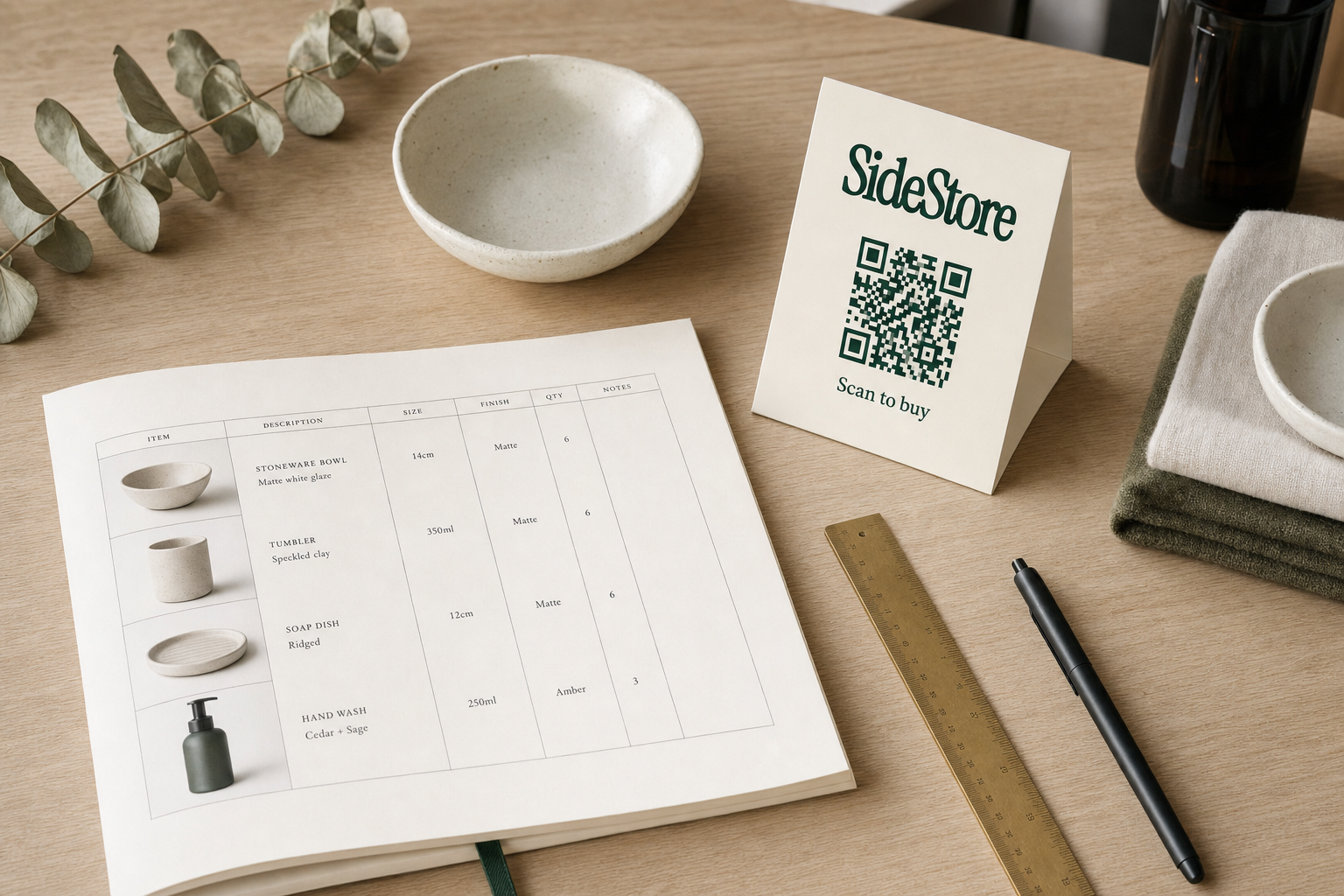
A wholesale line sheet is a one-to-four page document you send to retail buyers that lists your products, images, pricing tiers, minimum order quantities, and ordering terms. It lets them make a stocking decision without speaking to you first.
Here's what most guides skip, though: before you build one, ask yourself whether you're actually ready to wholesale. If you don't yet have proof that your product sells through in a physical retail setting, a line sheet can close doors rather than open them. Buyers want to see sell-through confidence, not just attractive packaging.
For many early-stage makers, selling through someone else's store on consignment first gives you the sales data and placement history that makes a wholesale pitch credible. This article walks you through both paths.
What Goes on a Wholesale Line Sheet
A wholesale line sheet needs six core fields: a product image, a product name and SKU, your retail price, your wholesale price, the minimum order quantity, and your lead time. Without all six, a buyer cannot place an order, and most won't ask you to fill in the blanks.
Here's the complete field list:
- Brand header, your logo, website, and wholesale contact email
- Product image, clean, white or neutral background; one image per product
- Product name and SKU, the exact name and a unique code the buyer can reference on a purchase order
- Retail price (RRP), what the end customer will pay; this protects the buyer's margin
- Wholesale price, your price to the buyer, typically 40, 55% of RRP
- Minimum order quantity (MOQ), the minimum number of units per order, or per SKU
- Lead time, how many days from order to shipment
- Payment terms, net-30, prepay, or deposit requirements
- Shipping and returns policy, one or two sentences; buyers expect this
- Season or collection name, helps buyers file your sheet and know when it's current
On pricing: start with 2x your total landed cost (materials, labour, packaging, and a proportion of overheads) for your wholesale price, then 2x wholesale for your retail price. If your candle costs CHF 8 to make and pack, your wholesale price is CHF 16 and your suggested retail is CHF 32. That 50% wholesale margin is what boutique buyers typically expect. For a detailed breakdown of how to build your cost structure before you land on that figure, see how to price your products for boutique retail.
Keep this in mind: your wholesale price must cover your full cost of goods, including any fees or platform costs you incur to manage orders. A line sheet that looks healthy on paper but doesn't account for fulfilment costs will erode your margin fast.
How to Build a Wholesale Line Sheet: A Template Walkthrough
Building a line sheet takes two to four hours if your product photography and pricing are locked in. The output should be a PDF, one to four pages, portrait orientation, and sized for A4 or US Letter so buyers can print it without reformatting.
Work through these steps in order:
Confirm your product range. Decide which SKUs are wholesale-ready. Don't include products you can't reliably fulfil at scale or restock within your stated lead time.
Lock your pricing. Run the cost-plus formula (see above) for every SKU before you open any design tool. Changing pricing after design wastes time and introduces errors.
Prepare your images. One product image per SKU, minimum 1200px wide, white or neutral background. If you have lifestyle shots, include one brand-level image at the top of the sheet, not one per product.
Choose your build tool. Good options:
- Canva, easiest starting point; use their "Business Proposal" or "Media Kit" templates as a base
- Adobe InDesign, professional output; steeper learning curve
- Figma, good if you already use it for branding work
- Google Slides or Keynote, acceptable for a first draft; export as PDF
Build the layout. Brand header on page one. Product grid from page two onward: two or three products per row, image above, fields below. Keep fonts to two: one for headings, one for body.
Add your ordering terms. A short block at the end covering MOQ, lead time, payment terms, and shipping. Three to six lines is enough.
Export and name the file correctly. Use this naming convention:
[BrandName]_LineSheet_[Season]_[Year].pdf, for example,VilaStudio_LineSheet_AW_2026.pdf. This matters because buyers file dozens of line sheets and organize them by name.Link to a current boutique inventory system so the stock levels you quote in your ordering terms are accurate when the buyer places an order.
Save a working version in your design tool and update it each season. The PDF buyers receive should always reflect current pricing and availability.
Wholesale vs Consignment: Which Model Fits Where You Are Right Now
"Wholesale or consignment?" comes down to one thing: whether you already have proof that your product sells through at retail. Here's how the two models compare across what matters most to an early-stage maker.
| Dimension | Wholesale | Consignment |
|---|---|---|
| Upfront risk to maker | Low (buyer pays on PO or net terms) | Low (no sale, no payment) |
| Upfront risk to buyer/host | High (they must buy stock) | Low (no inventory cost) |
| Cash flow for maker | Immediate on payment terms | Delayed until sale occurs |
| Who holds unsold stock | The buyer | You, the maker |
| Entry barrier | High (buyer wants proven sell-through) | Low (host takes no inventory risk) |
| Margin for maker | Lower (wholesale discount applies) | Higher per unit sold |
| Control over retail price | Limited (buyer sets final price) | Greater (you set RRP) |
| Proof required | Sales history, line sheet, minimum order | Product + agreement |
| Relationship complexity | Formal; purchase orders and terms | Lighter; placement agreement |
The real reason wholesale sounds appealing but can be hard to access early on: buyers commit cash and shelf space, so they want evidence. Consignment is the lower-friction entry because the host takes zero inventory risk. The trade-off is real, though. On consignment, you carry the unsold stock, you wait for payment until a sale happens, and the per-unit margin you keep depends on what a fair consignment percentage looks like in your category. It's not a free pass. It's a lower-risk proof-of-concept that, if it produces clean sell-through data, gives you exactly what a wholesale buyer wants to see.
For a fuller picture of how to structure either arrangement when selling through someone else's store, see the linked guide.
When Consignment Is the Smarter First Step
Consignment is the smarter first step when you don't yet have the track record, the production capacity, or the pricing confidence that wholesale buyers require. These conditions are more common than most makers admit, and there's nothing wrong with being in them.
Start with consignment if three conditions apply to you:
You have no retail sell-through history. Wholesale buyers ask where your product already sells and how it performs. If you can't answer that, your pitch starts from zero. Consignment gives you real placements in real venues with real sales data.
Your production volume isn't yet wholesale-stable. Wholesale minimum order quantities typically start at 6 to 24 units per SKU. If a buyer doubles or triples that on reorder, can you fulfil it within your stated lead time? If the answer is uncertain, consignment lets you build production confidence in parallel with sales.
You haven't confirmed your retail price holds at the margin. If you're not sure whether customers will pay your RRP in a physical setting, a consignment placement tells you that quickly and cheaply.
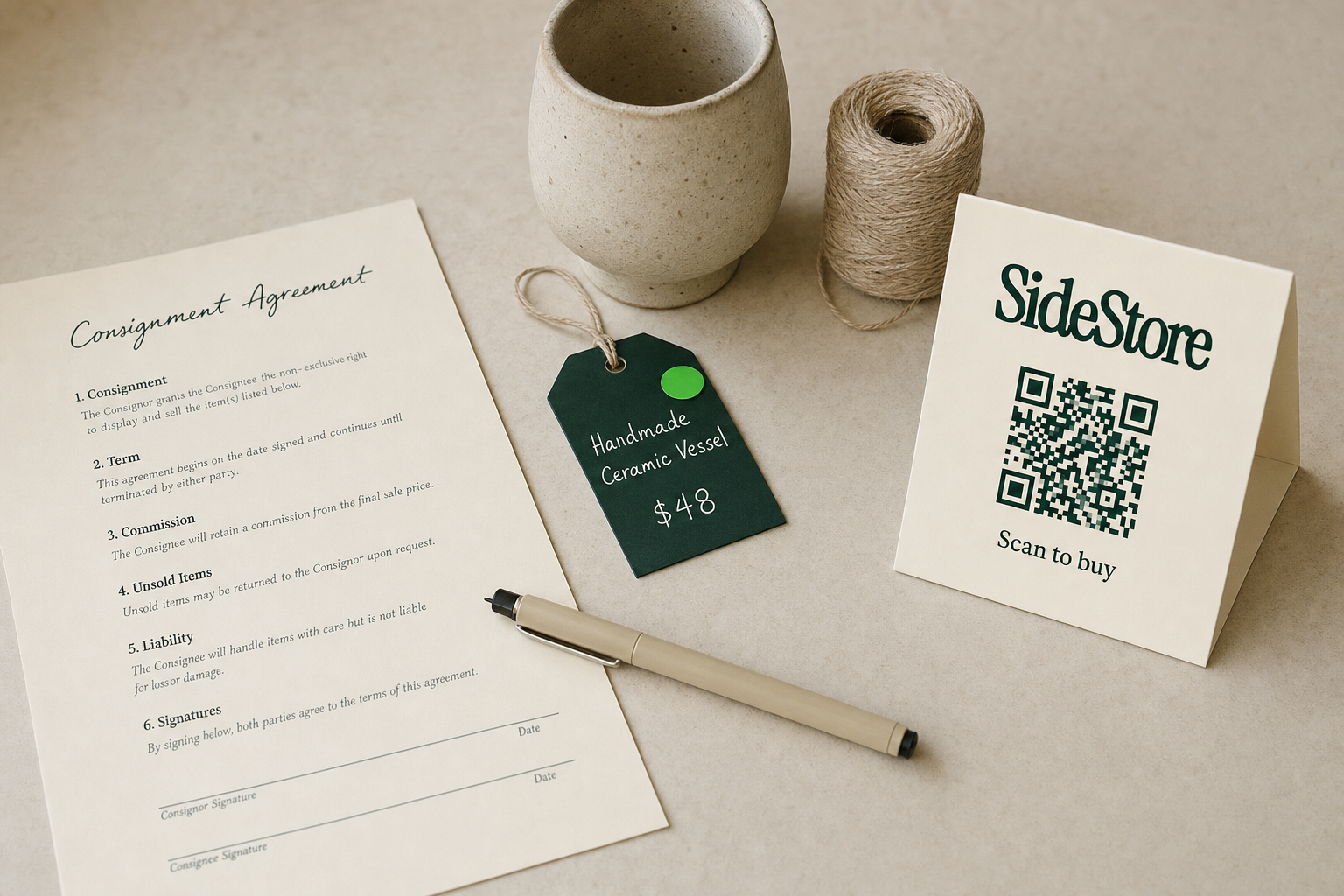
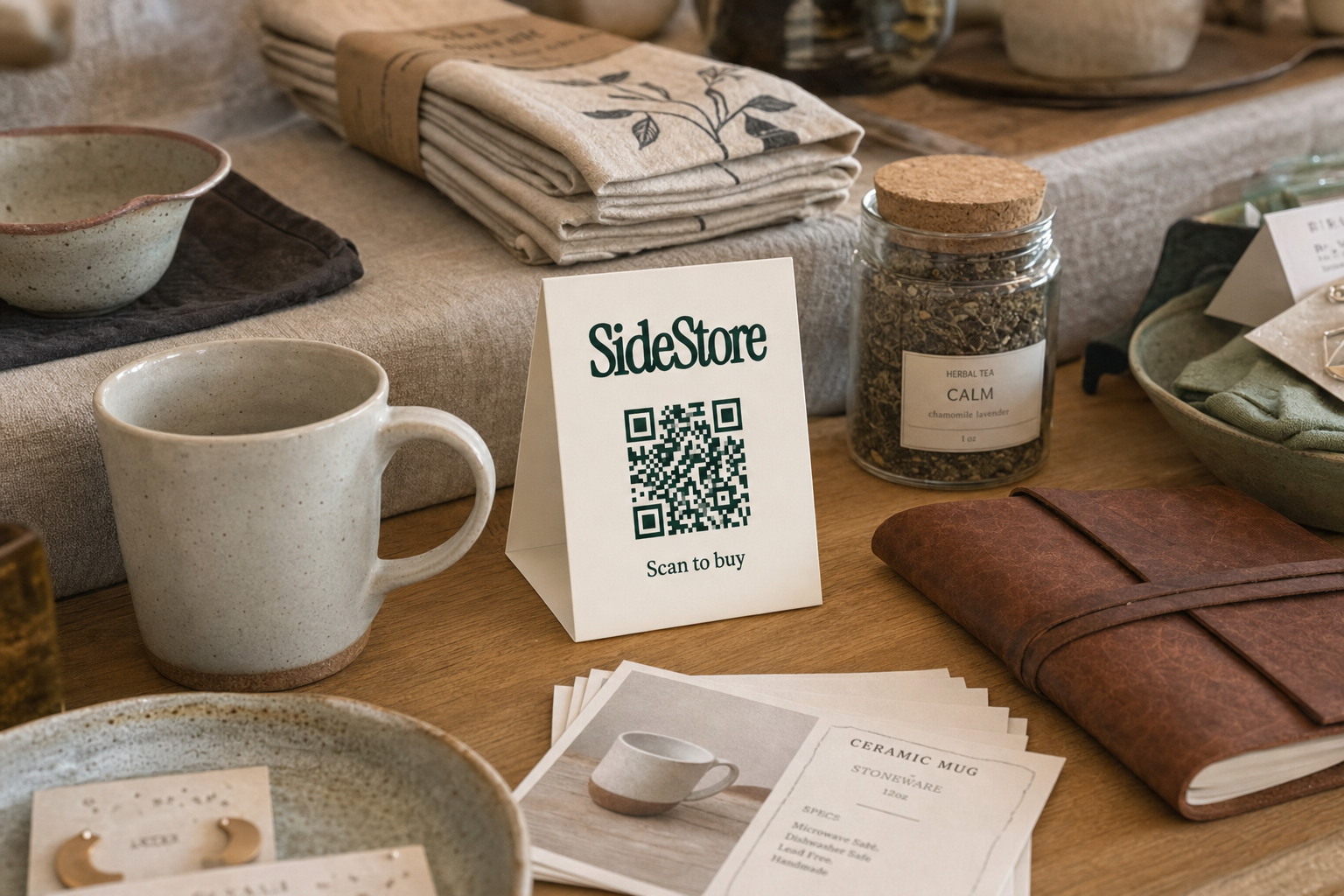
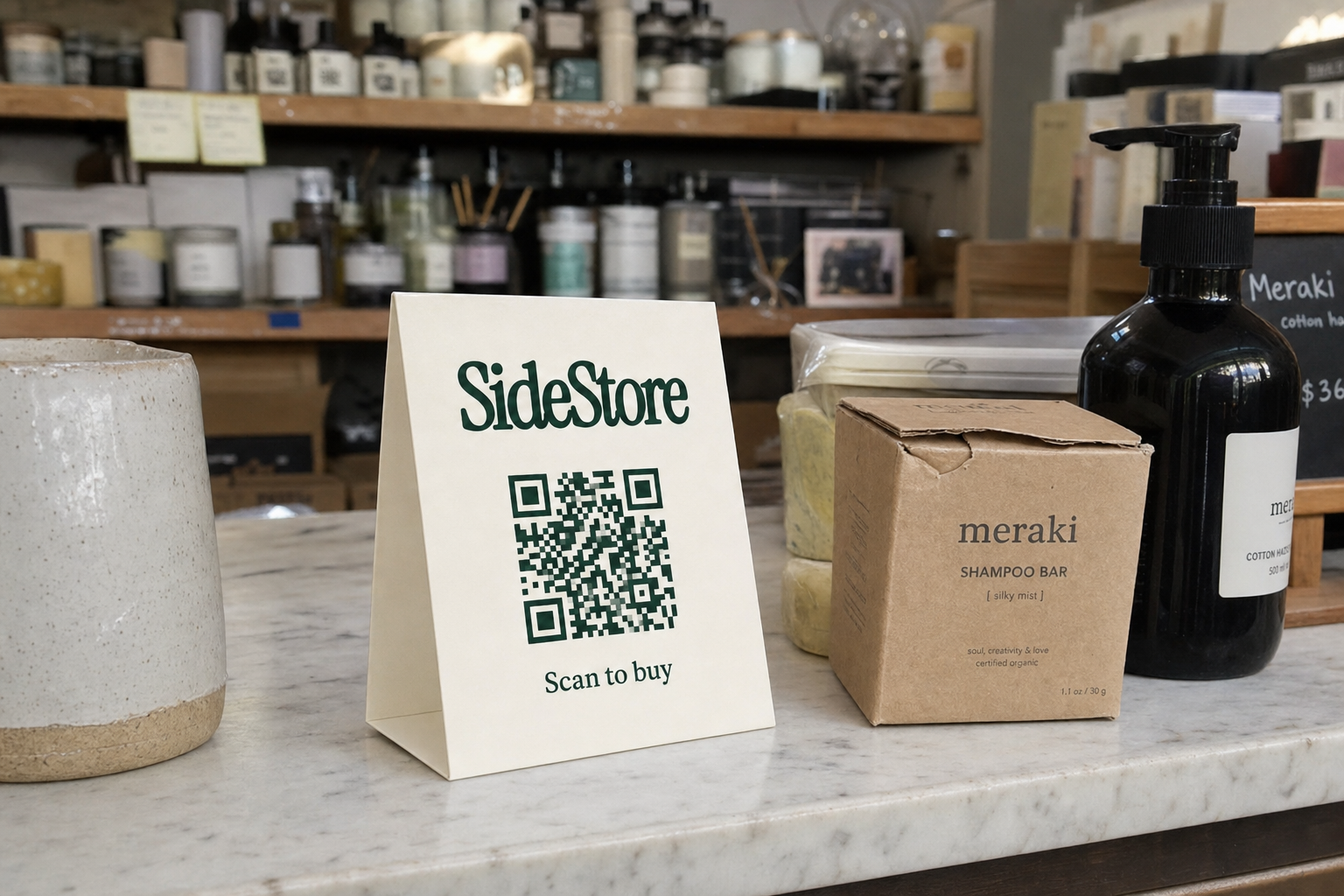
SideStore is built for exactly this situation. The Retail Widget lets you place and manage products on consignment in any merchant space. It handles checkout (including a printable scan-to-pay QR code card that attaches to your product or sits alongside your placement), live stock tracking, placement attribution, and automatic split payouts to you and the host. The QR checkout is one function of the Retail Widget, not the whole product.
If you're weighing formats for getting product in front of customers before committing to wholesale, pop-up retail is worth considering alongside consignment placement. For the mechanics of keeping tabs on what you have out in the field, see the guide to tracking your boutique inventory.
Are You Ready to Wholesale? A Pre-Line-Sheet Checklist
Before you spend time building a line sheet for wholesale, work through this checklist. If you can't check every item, a line sheet is premature. That's not a failure; it's a decision gate.
Product and production:
- Every SKU has a confirmed, repeatable cost of goods (materials, labour, packaging)
- You can fulfil your planned MOQ within your stated lead time, reliably
- You have consistent product photography on a neutral background for every SKU
- Your product has sold to at least one real customer who didn't know you personally
Pricing:
- Your wholesale price is set at cost x 2 (or higher) and your RRP is set at wholesale x 2 (or higher)
- You have verified that your RRP is competitive in the retail settings you're targeting
Operations:
- You have a system for tracking stock levels across any existing placements, see managing boutique inventory for what this involves
- You have a plan for managing returns and defective items
- You have payment terms defined (net-30, prepay, or a deposit model)
Evidence:
- You have at least one retail sell-through data point (consignment, pop-up, or market) you can reference in a buyer conversation
If you check every item: build the line sheet. If two or more items are unchecked: start with a consignment placement, collect the data, and return to this checklist in 60 to 90 days.
Five Wholesale Line Sheet Mistakes That Cost You the Account
Most line sheet rejections aren't about the product. They're about the document. Buyers see dozens of line sheets a month, and a single avoidable error signals inexperience faster than any price point.
Missing or inconsistent pricing. The maker hasn't locked final costs before designing. Freeze your pricing in a spreadsheet before you open any design tool. Never send a PDF with placeholders or manually crossed-out numbers.
No minimum order quantity stated. The maker assumes the buyer will ask. State your MOQ clearly on every product and again in your terms block. Buyers won't chase unclear information.
Low-resolution or styled product images. Using lifestyle photography instead of clean product shots. Every line sheet image should be on a neutral background at a minimum of 1200px wide. Buyers need to see the product, not the mood.
Retail and wholesale prices that don't support the buyer's margin. The maker set pricing without accounting for the buyer's expected 50% margin. Verify that your wholesale-to-RRP ratio gives the buyer at least 40% gross margin before the sheet goes out.
No lead time or shipping information. The maker treats ordering terms as a conversation topic rather than a document field. Include lead time, shipping method, and returns policy in a dedicated block on the final page. A buyer who can't find this will move on.
How to Use Consignment Data in a Wholesale Pitch
If you've run consignment placements before approaching wholesale buyers, that data is your strongest pitch asset. It replaces the sell-through history a buyer would otherwise have to assume or doubt.
SideStore's Retail Widget captures placement attribution (which venue sold which units) and live stock tracking (units remaining at each placement). That gives you a clean record of where your product sold, at what rate, and over what period. Buyers can see that you know your numbers.
Structure your pitch like this:
"Over the past [X months], this product has been placed on consignment in [N] venues. Sell-through across placements averaged [X units per month per location]. The product has never been discounted to move. Current stock sits at [X units], available for a wholesale order with a [Y-week] lead time. I can provide placement attribution reports on request."
You don't need dozens of venues or months of data. Two or three well-documented placements with honest numbers are more credible than a large claim with no evidence. For context on what hosts typically expect in return, the guide on industry-standard consignment splits is worth reading before you negotiate placement terms.
Frequently Asked Questions
What is a wholesale line sheet?
A wholesale line sheet is a concise sales document, typically one to four pages, that makers send to retail buyers. It lists product images, SKUs, retail prices, wholesale prices, minimum order quantities, lead times, and ordering terms so a buyer can make a stocking decision without a meeting.
What is the difference between wholesale and consignment?
In wholesale, a retailer buys your stock upfront and owns the risk of unsold units. In consignment, you place your products in a venue and get paid only when they sell, so the host carries no inventory cost and you carry the unsold stock. See the comparison table above for a full breakdown.
Do I need a line sheet to sell on consignment?
No. Consignment placements are typically arranged through a placement agreement rather than a line sheet. A line sheet is a wholesale tool. That said, having a line sheet or at least a clean product overview makes you look professional in any retail conversation, whether it leads to wholesale or consignment.
What should a wholesale line sheet look like?
Clean, minimal, and branded. One to four pages in portrait PDF format, white or neutral background product images, consistent fonts, and a visible terms block at the end. Every SKU should show its image, name, SKU code, retail price, wholesale price, and MOQ. For retail partnerships for makers, presentation signals professionalism before price does.
Next Steps: Build the Line Sheet, or Start the Placement
The right next step depends entirely on where you are right now. If you checked every item on the pre-line-sheet checklist above, build your line sheet for wholesale and start approaching buyers. If two or more items were unchecked, skip the line sheet for now.
Instead, place your product on consignment in one or two merchant spaces. Collect real sell-through data using the Retail Widget. Return to the checklist in 60 to 90 days with numbers in hand.
Both paths lead to the same place. The difference is sequence. For makers not yet at wholesale scale, pop-up retail and consignment placements build the proof you need. Once you have it, boutique inventory management keeps your operations clean enough to handle wholesale volume.
Build a consignment network without opening a store of your own.