How to Sell Furniture on Consignment: What Makers and Vintage Sellers Need to Know
Selling furniture on consignment means placing your pieces in a shop, the shop takes a percentage when something sells, and you get the rest. No upfront fees, no inventory risk for either side, and no payment until the piece moves.
It's one of the most accessible ways into physical retail if you're a furniture maker or vintage seller. You set the pieces, agree on a split and a price floor, the shop sells them. If nothing moves, you get the piece back. The risk stays shared.
Before you walk into any shop, you need to understand the mechanics: what percentage splits actually look like, which contract terms protect you, and how to prepare each piece so a shop says yes. This guide covers all of that. It also addresses something most guides miss entirely: what happens when you're running placements across several shops at once. If you're weighing consignment against wholesale, the consignment vs. wholesale comparison is worth reading alongside this one.
How Furniture Consignment Actually Works
You place your pieces in a shop without transferring ownership. The shop displays them, handles enquiries, processes the sale. When a piece sells, the shop pays you your agreed share. Until it sells, the furniture is yours.
Here's the step by step:
- Approach a shop with photos, dimensions, and a proposed price range. Some shops want you to bring the piece in; others will review photos first.
- Negotiate a split and a minimum price. The shop sets (or you agree on) a retail price. You agree on what percentage each of you gets from that sale.
- Deliver the piece. The shop tags it, records it in their system, places it on the floor.
- The shop sells it. Payment timelines vary. Some shops pay within a week of a sale; others pay monthly. Ask before you commit to anything.
- If it doesn't sell, the shop may discount it after 30, 60, or 90 days, or you reclaim it. The contract determines which.
The key thing: the shop carries zero financial risk on your inventory. That's the core trade-off. In exchange for no upfront cost to them, they take a percentage that can feel steep, especially on lower-margin vintage pieces. Understanding that trade-off clearly makes every negotiation more productive.
For more on what selling through someone else's store actually involves operationally, that article goes deeper into the host relationship and what you'll handle day to day.
What Percentage Do Consignment Shops Take for Furniture?

Most consignment shops take between 40% and 60% of the final sale price. A 50/50 split is common for furniture, but the range is real. What you'll actually get depends on several factors.
What moves the split in your direction:
- Piece type. Handmade, signed, or artist-made furniture often commands a better maker share, sometimes 55% to 60% to you, because the shop benefits from the provenance story. Production furniture or unbranded vintage typically settles at 50/50 or less.
- Price point. High-ticket pieces (statement dining tables, designer chairs) sometimes attract a more favorable split because the shop's absolute dollar take is large even at 40%.
- Shop location and foot traffic. A well-positioned boutique in a high-footfall area may hold firm at 50% or 60% to themselves, arguing their traffic justifies it. A smaller local shop may be more flexible.
- Exclusivity or sale effort. If the shop is actively promoting your pieces on social media or in their editorial, they have grounds to ask for more.
- Duration of the placement. Longer consignment windows sometimes come with better splits for you, because the shop is committing floor space over more time.
There's no universal standard. Splits vary enough that you should look at what a fair consignment percentage looks like across categories before you walk in. Going in with realistic expectations and a clear floor price is far more useful than chasing a single "right" number.
Consignment Split Scenarios: A Quick Reference
Where you place your furniture matters as much as what you're selling. Different venue types carry different expectations, and knowing the typical range before you negotiate puts you in a stronger position.
| Placement Type | Typical Maker Share | Typical Shop Share | Best For |
|---|---|---|---|
| Specialist furniture consignment shop | 40, 50% | 50, 60% | High-volume vintage sellers with multiple pieces |
| Independent lifestyle boutique | 50, 60% | 40, 50% | Handmade or designer furniture with a story |
| Antique market or collective | 55, 65% | 35, 45% | Vintage and restored pieces; booth rental may apply instead |
| Hotel or hospitality venue | 50, 60% | 40, 50% | Statement pieces that benefit from long dwell time |
| Café or workspace with retail display | 55, 65% | 35, 45% | Smaller decorative furniture or occasional pieces |
These are typical ranges drawn from common practice. Individual agreements vary based on the shop, the piece, the relationship, and the local market. Treat this table as a starting point for your conversation, not a guaranteed offer.
How to Prepare Your Furniture Before Approaching a Shop
Preparation determines whether a shop says yes and whether you make money if they do. Walk in with a piece that's clean, priced correctly, and documented, and you remove most of the friction.
Follow this checklist before you contact any shop:
- Clean and repair the piece. Fix loose joints, touch up scratches, tighten hardware. A piece that needs work looks like a risk to the shop, and they'll decline or price it low.
- Photograph it properly. Front, sides, top, detail shots, and any maker's marks or provenance labels. Shops want to list it digitally, and buyers increasingly research online before visiting.
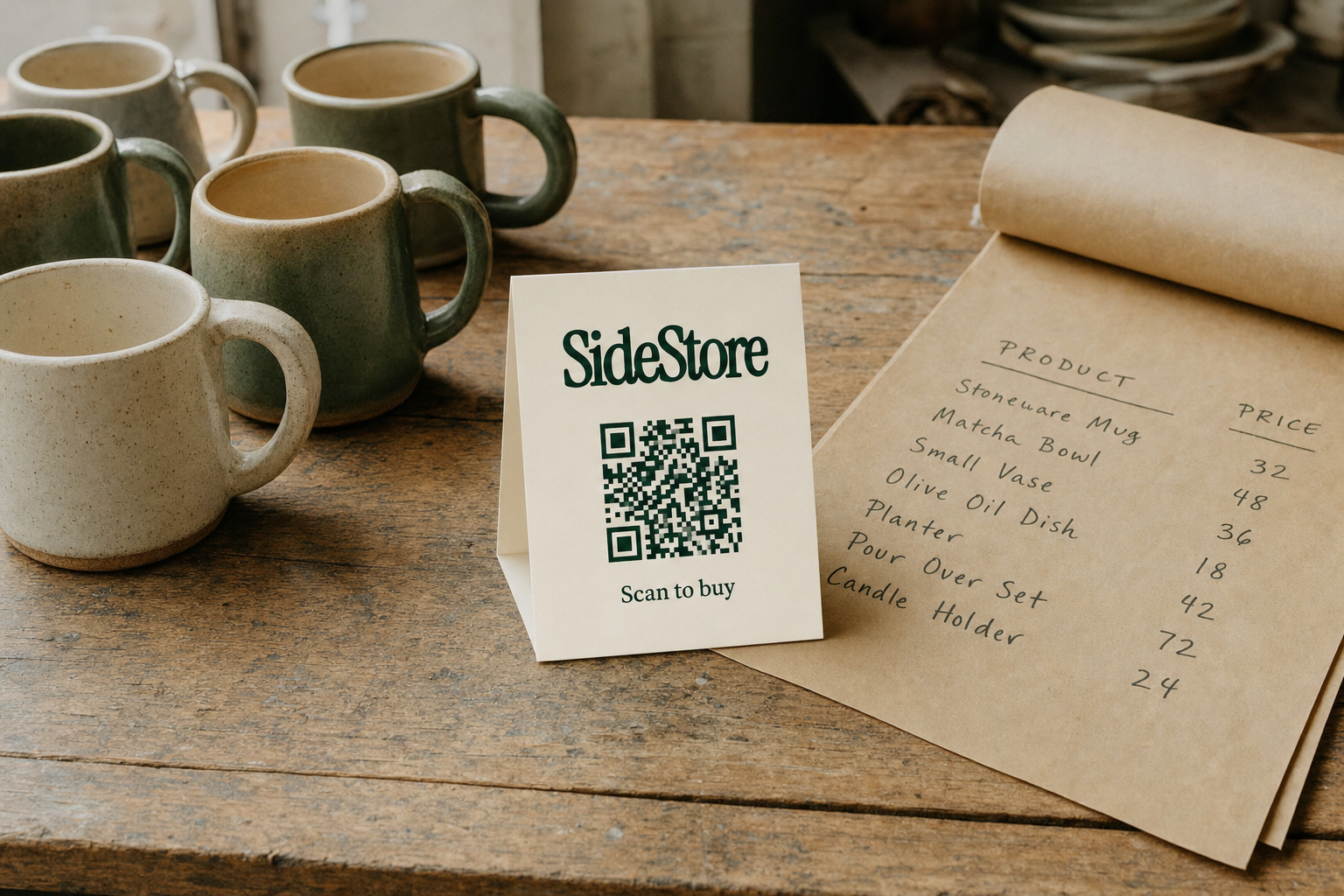
- Establish your floor price. This is the minimum you'll accept after the shop takes its cut. If materials and labor on a piece total $200, and the shop takes 50%, the retail price must be at least $400. That's not a negotiable preference; it's the arithmetic. Pricing below your floor means losing money on a sale.
- Write a short description. Materials, construction method, dimensions, any provenance. One paragraph is enough. It helps the shop sell the piece without calling you.
- Know your withdrawal policy. Decide in advance how long you're willing to leave the piece before pulling it. This affects which contract terms you'll accept.
- Track it from day one. Whether you use a spreadsheet or consignment inventory software, record placement date, agreed price, split, and shop contact. If you're placing across multiple venues, a proper system will save you significant time and prevent errors that cost money.
How to Find Consignment Shops That Take Furniture Near You
Finding shops that accept furniture on consignment takes methodical searching. There's no single directory that covers every market. Four approaches work consistently:
- Search with specific terms. Try "furniture consignment shop [your city]", "vintage furniture consignment near me", and "antique consignment [neighbourhood]". Google Maps is often more useful than web search because you can see proximity, reviews, and opening hours in one view.
- Visit in person before pitching. Walk in as a customer. Look at what's on the floor, the price points, the condition of pieces they accept, how they display and tag items. A shop whose existing stock is significantly above or below your price range is a poor fit.
- Ask in local maker and vintage seller communities. Facebook groups, local craft markets, and antique fairs are full of sellers who've already done this legwork. First-hand referrals save time and surface shops that don't advertise online.
- Contact local interior designers and stylists. They often know which consignment and vintage shops in your area are actively seeking quality pieces. They may also be buyers themselves.
For placing more unusual or artisan pieces, the guide on how to place products in local shops covers the approach mechanics in detail. If traditional consignment doesn't feel right yet, pop-up retail as an alternative channel is worth considering.
Once you have placements in more than one location, SideStore can help you manage stock, payouts, and placement attribution across all of them from a single dashboard.
Contract Terms You Must Understand Before You Sign
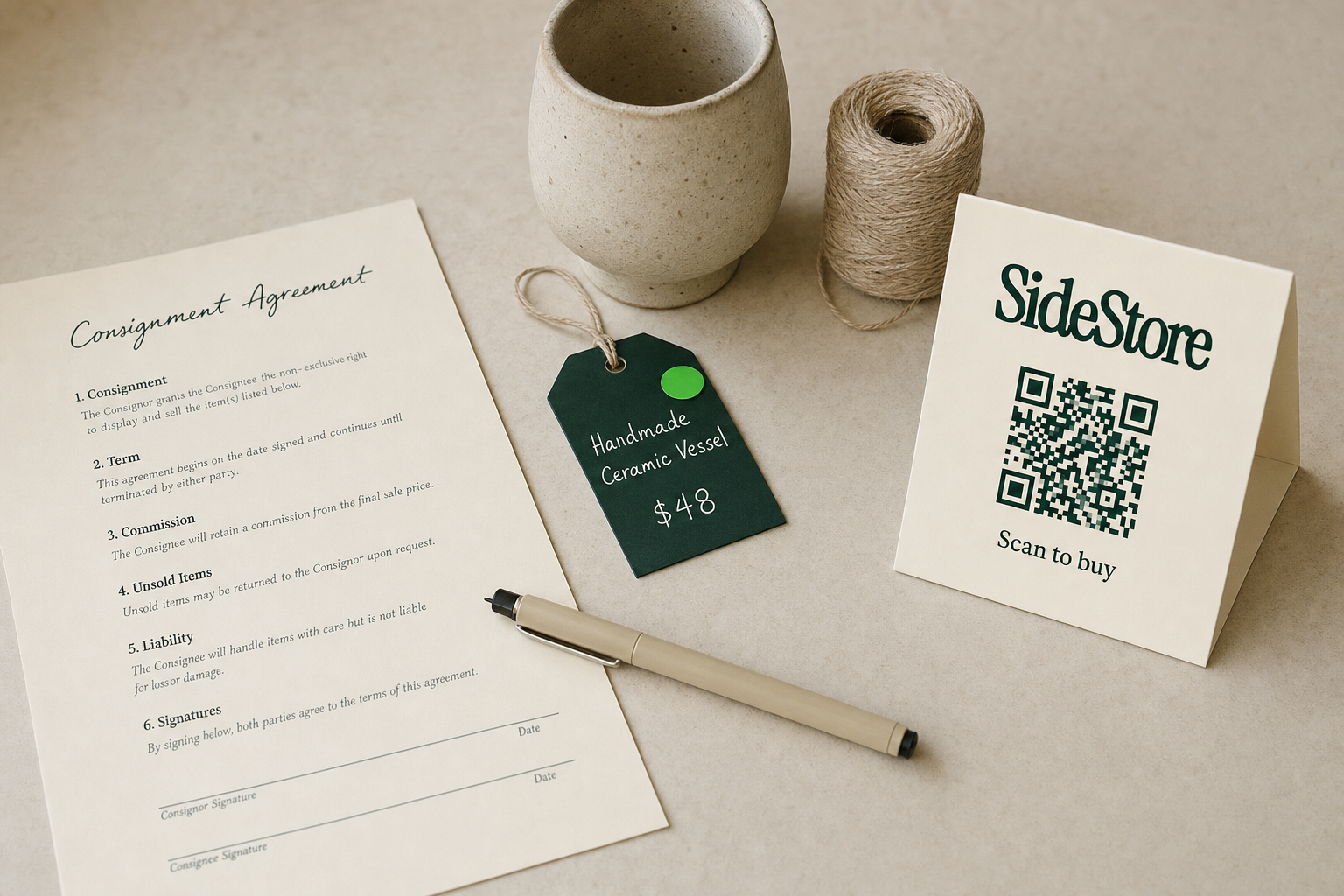
The consignment contract is the document that protects you when things go wrong. Read it before you sign it, and negotiate any term you're not comfortable with. Most shops use standard agreements, but standard doesn't mean non-negotiable.
Six terms to examine closely:
- Commission split. The percentage each party receives. Confirm this matches what was agreed verbally. Check whether the split applies to the listed price or the actual sale price (relevant if the shop discounts).
- Pricing and discount authority. Does the shop have the right to reduce your price without asking? Many contracts allow automatic markdowns after 30, 60, or 90 days. If that clause exists, make sure any discount floor is specified and protects your margin.
- Payment schedule. When you get paid after a sale: weekly, monthly, or on a different cycle. Waiting 45 days for payment on a sold piece is a cash flow issue. Understand this clearly upfront.
- Consignment period. How long the shop will display the piece before either returning it or asking you to collect it. Shorter periods suit high-turnover vintage; longer periods suit statement furniture that takes time to find the right buyer.
- Loss and damage liability. Who is responsible if the piece is damaged, stolen, or lost while in the shop's care? Some contracts place full liability on you. You may want to insure valuable pieces independently.
- Reclaim and abandonment clause. What happens if you don't collect an unsold piece by a certain date. Some contracts allow the shop to dispose of or donate uncollected items. Know the deadline and set a reminder.
For context on how consignment agreements compare structurally to wholesale terms, see how consignment compares to wholesale agreements and the guide on line sheets and wholesale documentation.
Pros and Cons of Selling Furniture on Consignment
Consignment suits some sellers and situations well, and genuinely doesn't suit others. The trade-offs are real.
| Dimension | Pro | Con |
|---|---|---|
| Upfront cost | No shelf fees; shop carries no stock cost | You bear the cost of making or acquiring the piece before any sale |
| Cash flow | Payment only when the piece sells | Can wait weeks or months for a return on any single piece |
| Risk | Unsold pieces return to you | Floor space is occupied by your capital while it waits |
| Reach | Access to the shop's existing customer base | You rely entirely on the shop's foot traffic and sales effort |
| Pricing control | You set the floor price | Shop may have markdown authority after a set period |
| Margin | Split means lower net than direct sale | Better than no sale at all; worse than direct buyers |
| Fit and presentation | Shop staff can answer questions in person | Your piece may not be displayed the way you'd prefer |
Consignment is the right call when you have pieces ready to move, you want physical retail presence without fixed overheads, and you can afford to wait for payment. It works particularly well for selling handmade goods in boutiques and for vintage sellers who rotate stock regularly.
It's the wrong call when your cash flow is tight and you need quick returns, when a piece is fragile or high-value enough to carry serious loss risk, or when the local consignment market is saturated with similar pieces and turnover is slow.
Going Beyond One Shop: Managing Multiple Consignment Placements
Running a single consignment placement is straightforward. Running three, five, or ten simultaneously is a different operational challenge entirely, and one that traditional paper-ledger shops are not designed to help you solve.
When you have pieces across multiple locations, you're manually tracking which piece is where, what it's priced at, whether it's sold, whether you've been paid, and when each consignment period ends. A spreadsheet can handle two or three placements. Beyond that, it becomes a real administrative load, and errors start to cost you money.
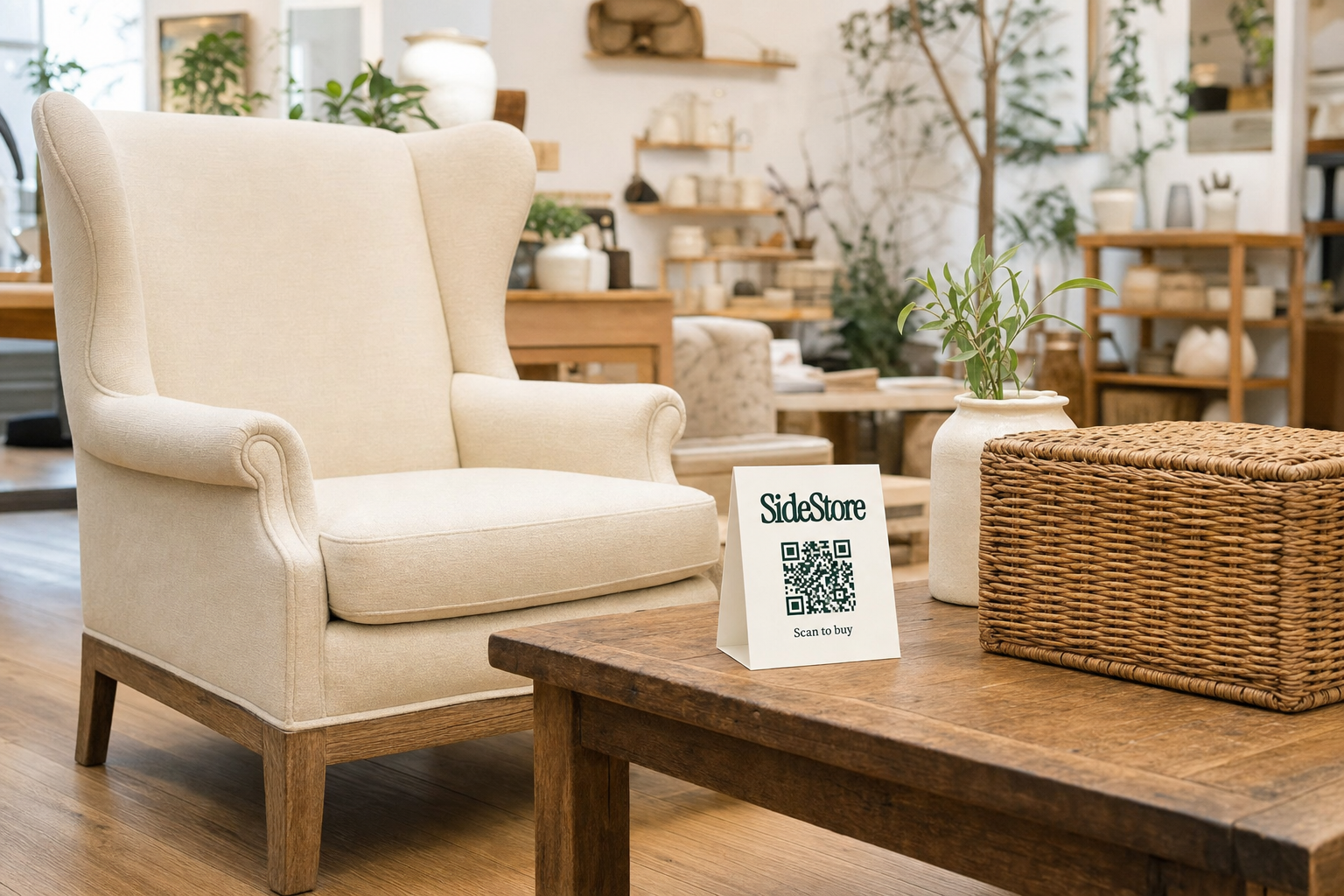
This is where consignment inventory software becomes practical rather than optional. SideStore's Retail Widget is built specifically for this model. It gives you live stock tracking across placements, placement attribution so you know which location is performing, and automatic split payouts so you're not chasing payment from each shop individually. The scan-to-pay QR is one function of the Retail Widget. The Widget is the broader interface for placing and managing products on consignment end to end, from placement modeling through stock tracking to automatic settlement.
For makers already placing products in cafes on consignment or similar venues, the transition to managing multiple placements through a single dashboard makes the difference between a manageable side channel and a genuine consignment network.
Frequently Asked Questions
What percentage do consignment shops take for furniture?
Most consignment shops take between 40% and 60% of the sale price, leaving you with 40% to 60% depending on the agreement. A 50/50 split is common for furniture, but the range is genuine. Handmade or designer pieces may attract a better maker share; unbranded vintage tends to settle at 50/50 or less. See industry-standard consignment percentages for a fuller breakdown by category.
How long does furniture take to sell on consignment?
There's no reliable average that applies across all markets and piece types. Smaller decorative furniture in a high-footfall boutique might sell within weeks. A large dining table in a slower market could sit for three to six months or longer. Your consignment contract will specify when the shop can discount or ask you to reclaim the piece. Set your own internal deadline and plan for the possibility that the piece comes back.
Can I sell vintage furniture at consignment shops?
Yes. Vintage furniture is one of the most common categories in consignment shops, and many shops actively seek it. Quality, condition, and price point matter. Shops in markets with strong vintage buyer appetite may scrutinize provenance and restoration quality more carefully. Walk in as a customer first to gauge whether your pieces fit what they already stock.
What happens if my furniture doesn't sell on consignment?
The standard outcome is that the shop notifies you and you arrange to collect the piece. Some shops discount first and notify you; others return the piece at the end of the agreed consignment period without discounting. Check the contract for the exact process, the timeline, and any abandonment clause that allows the shop to dispose of unclaimed pieces after a set date.
Is Furniture Consignment the Right Move for You?
Furniture consignment is worth pursuing if you have finished pieces, want physical retail presence without fixed costs, and can sustain the cash flow gap between placement and payment. It's a practical model, not a passive one. The sellers who do well tend to be prepared, selective about which shops they approach, and active about rotating unsold stock.
The concrete next step is simple. Identify two or three shops in your area that stock furniture at a similar price point and aesthetic to yours. Visit them as a customer. Look at how they display, tag, and price pieces. Then approach with one well-prepared piece, a clear pricing sheet that shows your floor price and proposed split, and a short written description.
If you're ready to move beyond a single placement and want to run a distributed consignment network across multiple venues, SideStore is built for exactly that. The Retail Widget handles live stock tracking, split payouts, and placement attribution across every location from one dashboard. Build a consignment network without opening a store of your own.
For the full mechanics of selling through someone else's store, or to work out whether consignment or wholesale fits your model better, those articles are the logical next read.