How to Sell Clothing on Consignment: A Guide for Fashion Makers and Independent Designers
Selling clothing on consignment means placing your garments in a shop or venue and getting paid only when they sell. The host carries no upfront cost. You retain the inventory until it moves. Neither party risks capital on the other's behalf.
For independent designers, this is one of the most practical routes to offline distribution available. You get real shelf space, real foot traffic, and real sales data without absorbing the fixed costs of a retail lease or the bulk minimums that wholesale demands.
Here is how it works. You deliver an agreed quantity of garments to a boutique. They display and sell them. When a piece sells, revenue splits between you and the host at a percentage you both agree on beforehand. If it does not sell within the consignment term, you collect it back. Neither of you pays the other upfront.
This structure suits emerging designers particularly well, especially those who are not yet ready to meet wholesale minimums or who want to test how their pieces perform in a real retail environment before committing to larger production runs. For a broader look at consignment versus wholesale, see the full comparison and how to sell through someone else's store.
How Consignment Works for Clothing Makers
Consignment for clothing follows the same core mechanics as consignment for any product, but fashion adds a few details that matter before you walk into your first boutique.
In a standard arrangement, you bring a curated selection to a merchant, sign a written agreement, and your items go on the floor at an agreed retail price. The shop tracks sales and reports to you, typically weekly or monthly. When something sells, the host keeps their share and pays you yours. No money changes hands upfront. The merchant takes on no purchasing risk.
Clothing-specific details to understand:
Sizing. You will typically need to supply a range across sizes rather than single units. That means more inventory committed per placement.
Seasonality. A boutique that takes your linen dresses in June may not want them in October. Most agreements include a return clause tied to season changes. Read this term carefully.
Condition on return. Clothing that sits on a rack, gets tried on, and comes back to you may not arrive in the same condition it left. Clarify in writing who covers items that return damaged or soiled.
Once you are running more than two or three placements, tracking which sizes sold at which location and when gets complicated fast. This is where consignment inventory software begins to pay for itself, particularly when you are juggling multiple venues simultaneously.
What Consignment Percentage Should You Expect for Clothing?
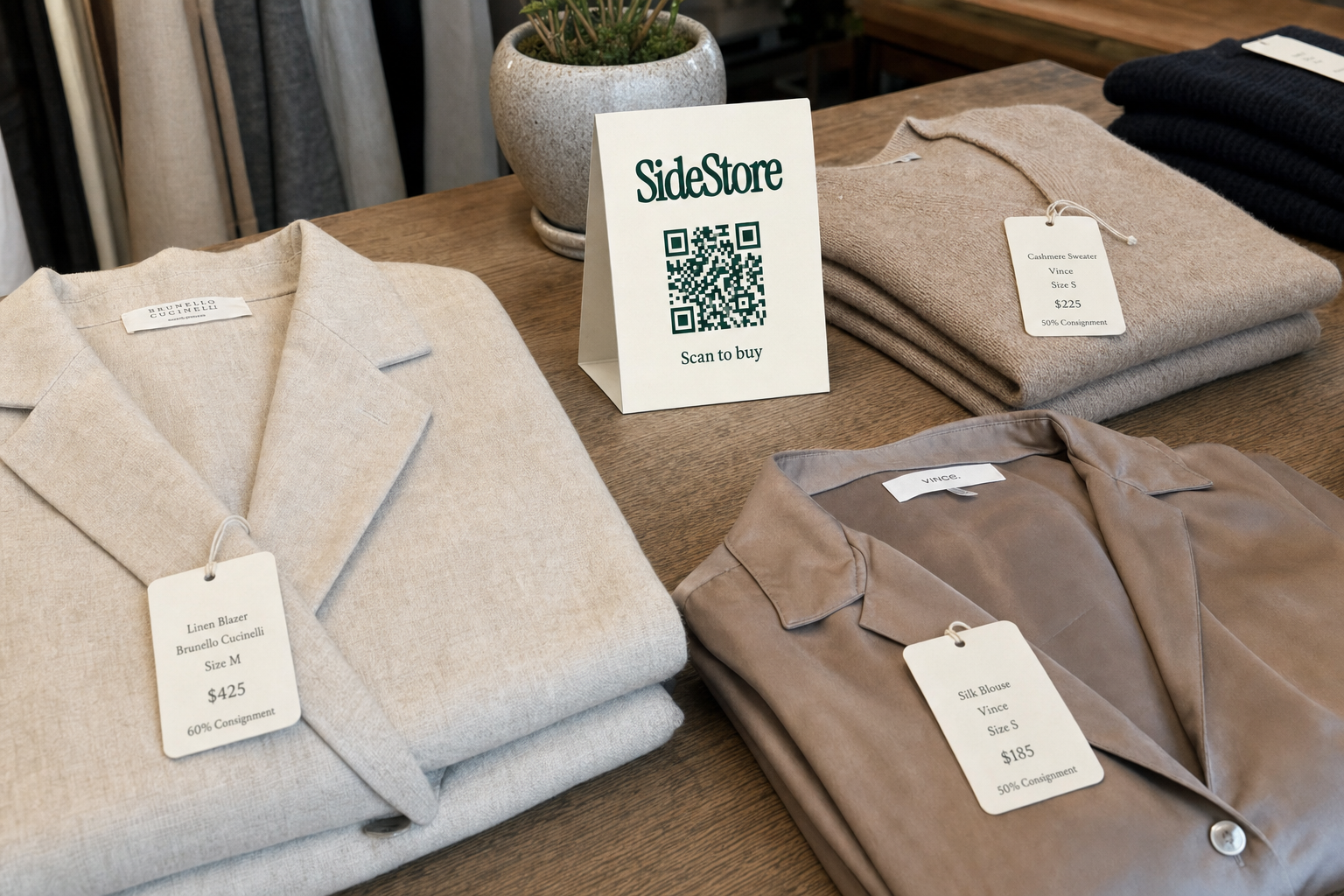
In most clothing consignment arrangements, the split falls somewhere between 40/60 and 60/40 in the maker's favour. A 50/50 split is common as a starting point.
Boutiques in high-rent urban locations typically ask for a larger host share to cover their floor costs. Smaller independent shops in lower-overhead locations may accept 60/40 in your favour. These ranges vary by local market, venue type, and how established your label is. Check what is standard in your area before you negotiate.
Here is a worked example with real numbers.
Say you have a structured jacket with a retail price of £100. The agreed split is 50/50. Your cost of goods to make that jacket, including materials and labour, is £30.
- Retail price: £100
- Host share (50%): £50
- Your gross receipt: £50
- Cost of goods: £30
- Your net margin per sale: £20 (20% of retail)
That 20% margin is tight. It is the core trade-off of consignment: you get distribution without upfront cost, but your per-unit margin is lower than direct sales. If your cost of goods were £45, you would net only £5 per sale at the same split, which rarely sustains a business.
This is why pricing correctly before you agree a split matters. Review the fair consignment percentage guidance to understand what you can push back on and what the market typically supports. The example above also shows why making your clothing at a lower cost of goods gives you far more room to negotiate a fair split without eroding your margin.
Consignment vs Wholesale for Clothing: A Side-by-Side Comparison
Consignment and wholesale are the two dominant routes for placing clothing in physical retail. They suit different makers at different stages. Consignment carries no inventory risk for the host; wholesale transfers ownership at point of purchase. Which serves you better depends on your production volume, cash flow position, and how much distribution risk you can absorb.
| Dimension | Consignment | Wholesale |
|---|---|---|
| Payment timing | After each sale, per split | Upfront, on purchase order |
| Inventory risk | Maker retains until sold | Transferred to retailer at purchase |
| Minimum quantities | Typically flexible, agreed per placement | Usually requires minimum order quantities |
| Margin per unit | Lower (split with host) | Higher (retailer buys at trade price) |
| Host relationship | Ongoing, collaborative | Transactional, order-based |
| Admin burden | Higher (tracking, reconciliation) | Lower once order is placed |
| Best for | Early-stage makers, market testing, limited production | Established labels with proven demand and production capacity |
For the full breakdown, see the complete consignment vs wholesale comparison. When you reach the point where consignment no longer makes sense and wholesale conversations begin, creating a line sheet for wholesale is your next practical step.
How to Price Your Clothing for Consignment
Price your clothing for consignment by working backwards from your required net margin, not forwards from what you think the market will bear. Most makers skip this step and end up with splits that eat into viability.
The formula is:
Retail Price = Cost of Goods / (Your percentage share as a decimal × target margin multiplier)
Your retail price must be high enough that your share of it, after the split, covers your cost of goods and leaves you a workable margin.
Here is a worked example. A garment costs £40 to make. You negotiate a 50/50 split. You want a net margin of 30% of your receipt.
- Cost of goods: £40
- Your share of retail: 50%
- Target: your share covers cost plus 30% net margin
- Required receipt per unit: £40 / 0.70 = £57.14
- Required retail price: £57.14 / 0.50 = £114.28, round to £115
At £115 retail with a 50/50 split, you receive £57.50. After your £40 cost of goods, you net £17.50 per sale, which is roughly 30% of your receipt. That is a workable margin for most makers.
The practical takeaway: your retail price in a consignment placement will typically need to be higher than your direct-to-consumer price to preserve your margin. Communicate this to boutiques clearly. In most cases, a well-made, well-presented garment at £115 is entirely defensible in an independent boutique.
How to Approach Boutiques and Shops About Consignment
Approach boutiques by leading with fit, not with your story. They care first about whether your pieces suit their customer and floor aesthetic. Research before you reach out, prepare something concrete to show, and make the ask easy to say yes to.
Follow these four steps.
1. Research and shortlist the right venues. Walk the shop, study their aesthetic, and check their price points. Your pieces need to sit naturally alongside what they already stock. Pitching a minimalist geometric knitwear label to a maximalist bohemian boutique wastes everyone's time. Identify three to five shops where your work genuinely belongs.
2. Prepare a compact physical lookbook or sample kit. Boutiques make visual decisions. A folded A5 lookbook with four to six pieces, photographed on model and flat lay, with your retail prices and a short bio, is typically more persuasive than a lengthy email. Include a note that you are proposing consignment terms, meaning no upfront cost to them.
3. Make first contact in person when possible. Cold emails are easy to ignore. Visit during a quiet trading period, introduce yourself briefly, leave your lookbook, and ask for a follow-up meeting with the buyer or owner rather than trying to close on the spot.
4. Present a simple, written consignment proposal. When you meet, have a one-page proposal ready: the pieces you are proposing, quantity per size, retail price, your suggested split, and the initial term. Make it easy for them to understand the arrangement at a glance.
For more detail, see how to sell through someone else's store, pitching boutiques as a maker, and where to sell besides Etsy.
What Your Consignment Agreement Should Cover
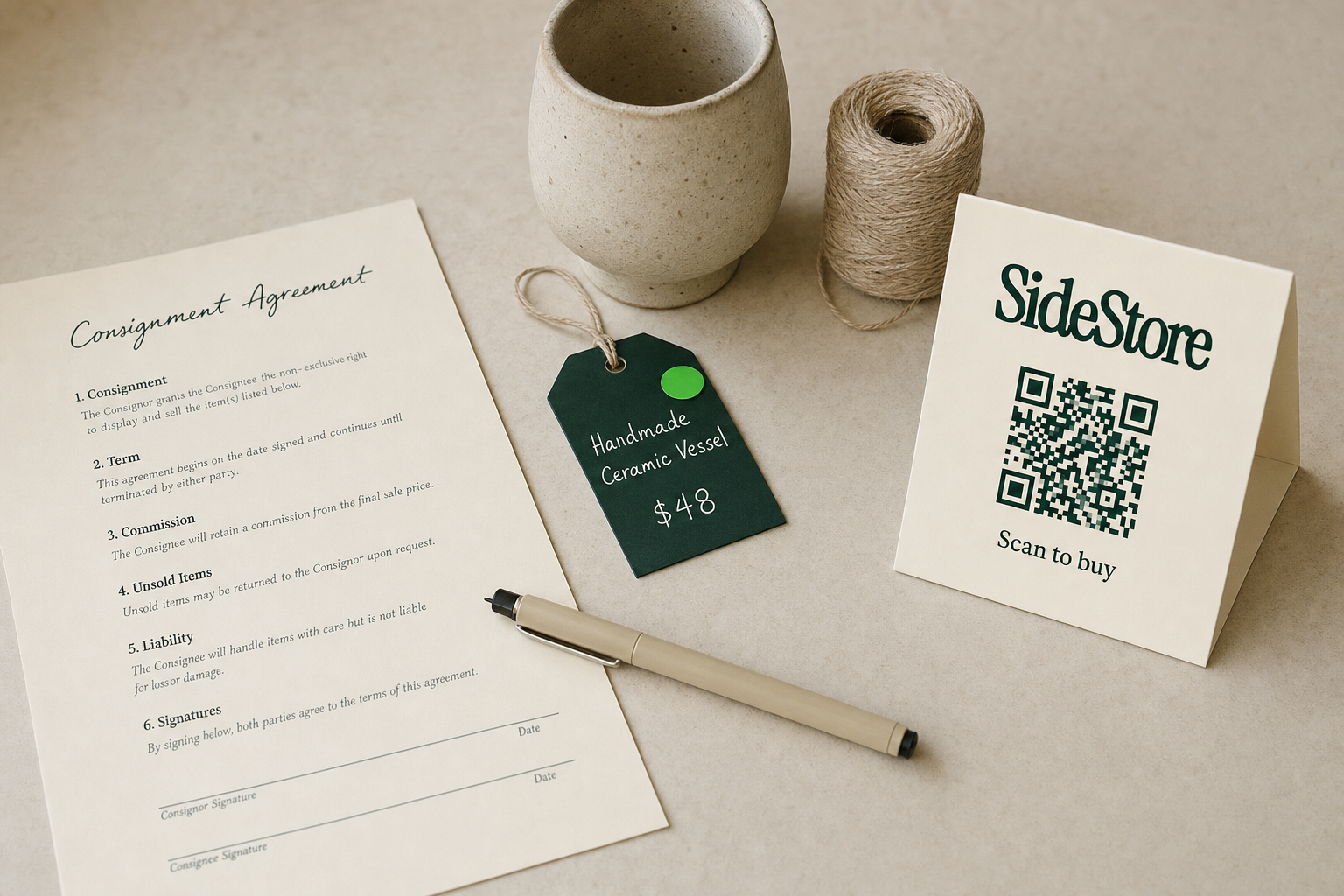
A written consignment agreement is not optional once you are placing clothing of real value in a third-party space. Verbal arrangements leave both parties exposed, and fashion-specific issues including sizing, seasonal rotation, and condition on return make clarity essential from the start.
Your agreement should cover, at minimum, these six elements.
Inventory list and description. A precise itemised list of every garment handed over: style name, size, colour, quantity, and agreed retail price. This is your baseline for reconciliation.
The split percentage and payment schedule. State exactly how revenue is divided and when you get paid. Monthly is common; confirm whether payment is triggered by sale date or payout date.
The consignment term and renewal terms. Specify how long the arrangement runs, what happens at the end of the term, and whether it rolls over automatically or requires active renewal.
Unsold goods and collection process. Define what happens to items that do not sell: who initiates notification, how much notice is required for collection, and what happens if you miss the collection window.
Damage, loss, and liability. Clarify who bears the cost if garments are damaged, lost, or stolen while on the shop floor. The host typically carries some responsibility for in-store damage, but this must be explicit.
Pricing and markdown authority. State whether the host may discount your garments for sales events, and if so, whether that affects your split or requires your prior consent.
This is not legal advice. For higher-value placements or complex arrangements, have a local solicitor or legal advisor review your agreement before you sign.
Managing Clothing Across Multiple Consignment Venues

Once you have clothing placed in more than two or three venues, manual tracking becomes a real burden. You need four things working reliably at every location: accurate stock counts, confirmed sales records, timely split payments, and placement attribution so you know which venue is performing.
Without a system, you rely on spreadsheets, email check-ins, and memory. That works for one placement. It does not scale.
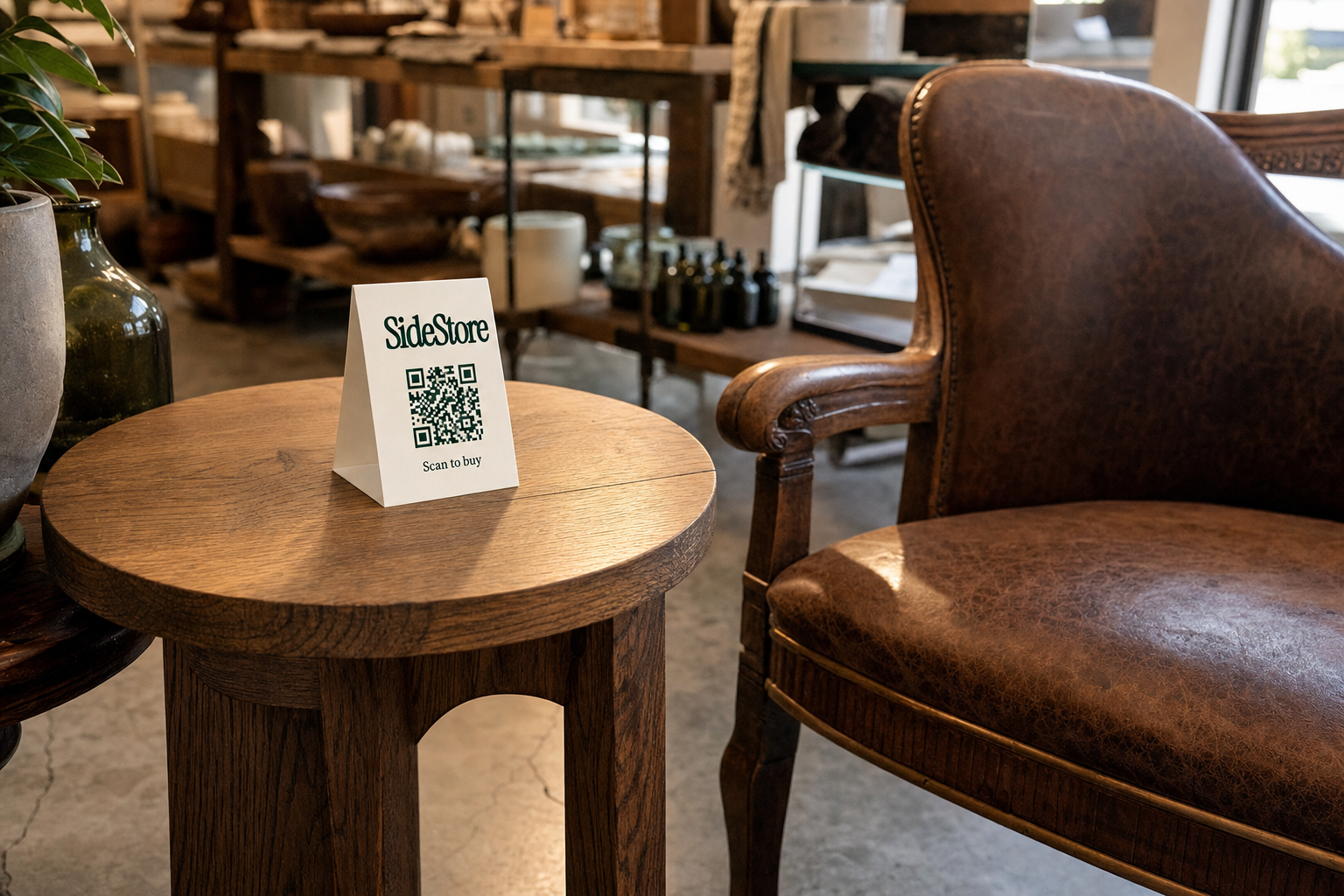
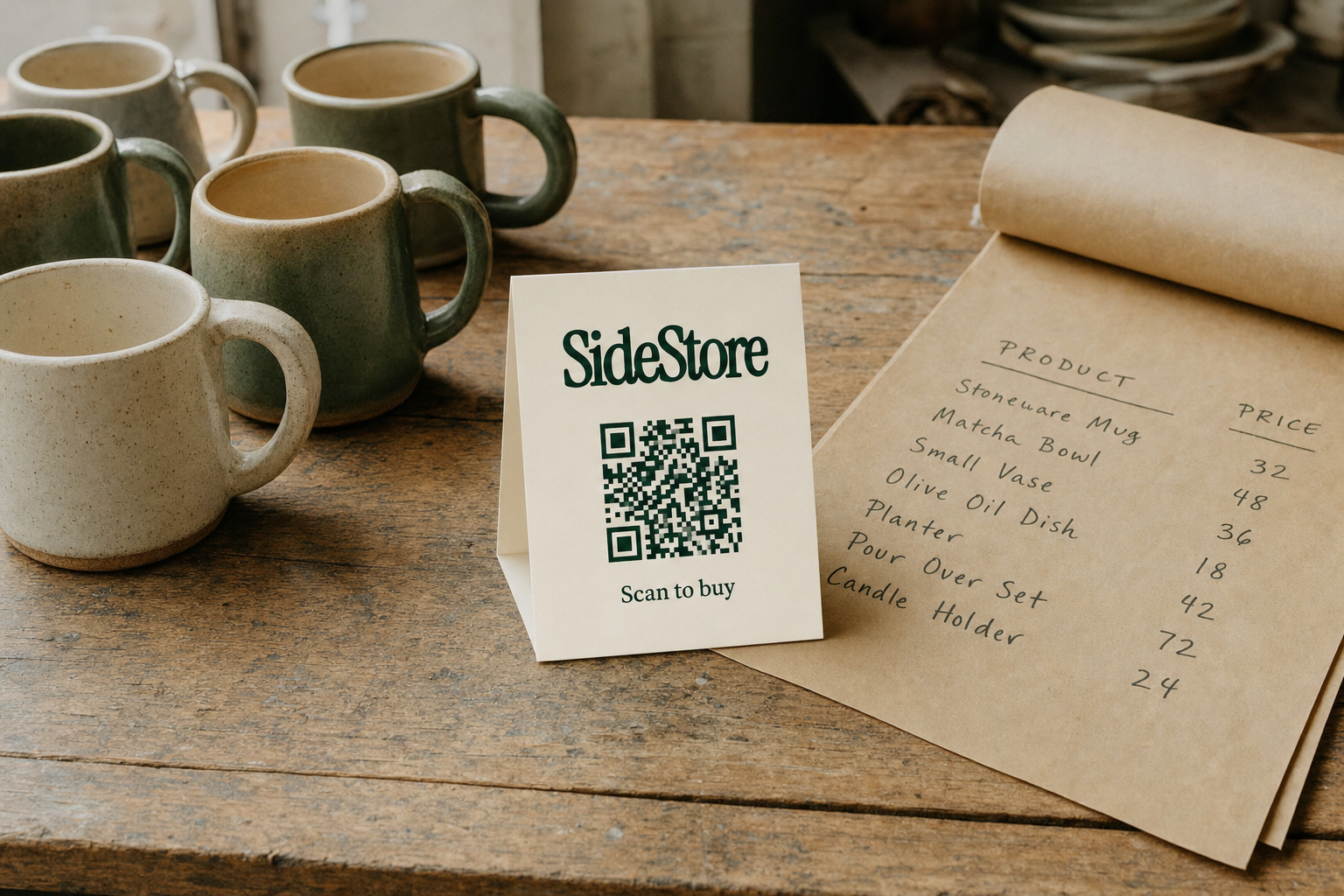
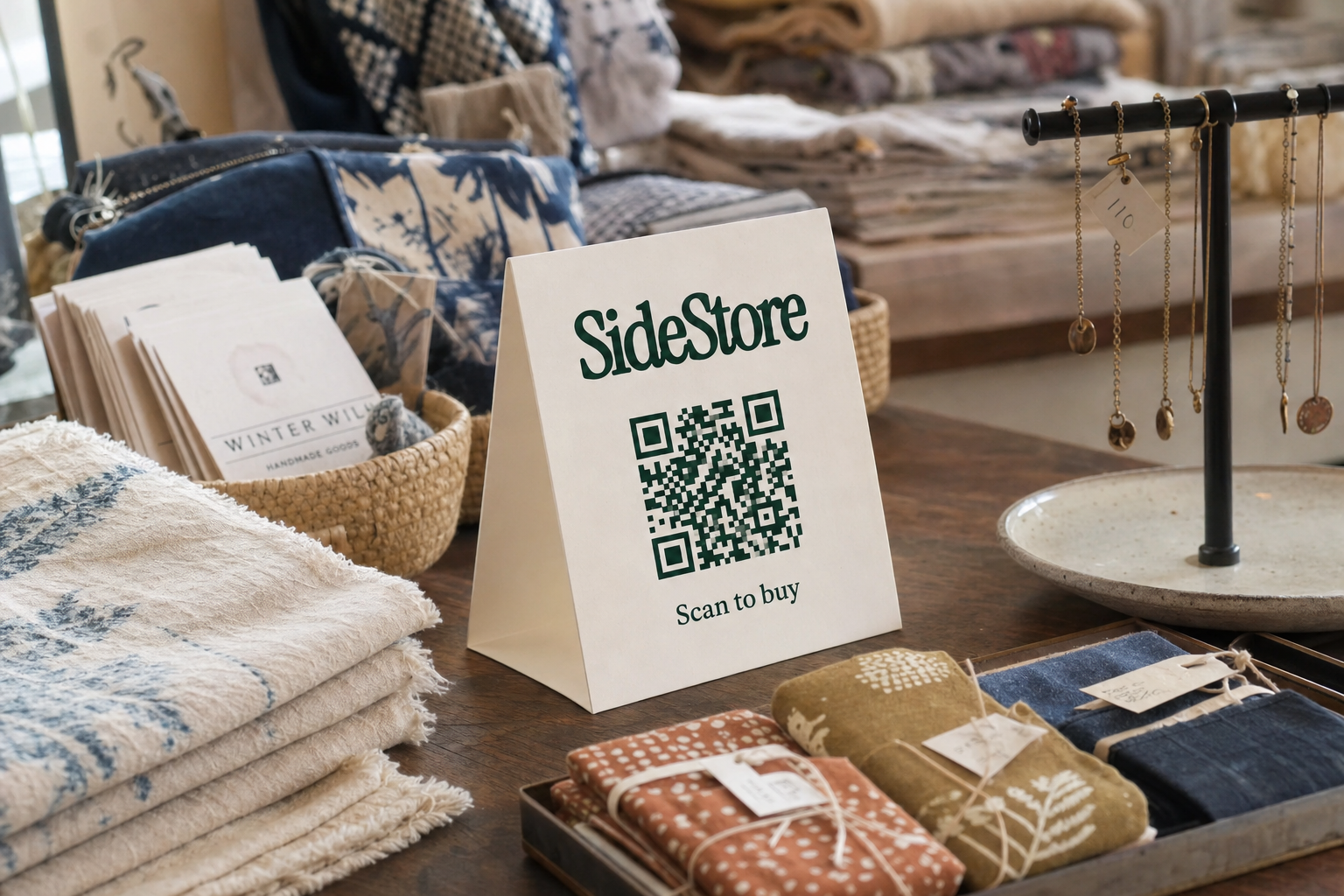
The Retail Widget is built for this problem. It is the interface that lets you place and manage a garment on consignment across multiple merchant spaces from a single dashboard. Live stock tracking tells you exactly what is on each rack without calling the shop. Scan-to-pay checkout lets a merchant display a SideStore QR card for all products in a placement, so customers pay directly and automatic split settlement processes to both parties without manual reconciliation. Placement attribution shows you which venue is moving your pieces and which is not, so you make informed restocking and withdrawal decisions.
For clothing makers, this means you can see in one view that your size 10 linen dress sold at the east-side boutique last Tuesday, your stock is down to two units there, and your split payment has already been processed.
For a broader look at tools available, see consignment inventory software. If you are considering expanding beyond boutiques, placing products in hotels and consignment in cafes show where the same distributed model applies.
When to Move From Consignment to Wholesale
Consignment is the right starting point for most independent clothing makers, but it is not permanent. The signal to consider wholesale typically comes when consignment placements consistently sell through and the administrative overhead outpaces the margin benefit of the no-upfront-cost structure.
Watch for these three trigger signals.
Consistent sell-through above roughly 70% per term, across multiple venues. When you regularly run close to or at full sell-through at several locations, you have demand evidence. Wholesale buyers respect sell-through data. That evidence makes a wholesale pitch credible rather than aspirational.
Boutiques are reordering at the end of each consignment term. If a host asks you to replenish stock every season rather than returning unsold items, that signals they trust your pieces to sell. At that point, the conversation about converting to a purchase-order relationship becomes natural.
Your production capacity can absorb minimum order quantities without cash-flow strain. Wholesale requires you to produce to order, often with payment on delivery. Do not pitch wholesale until you can fulfil a minimum order without stretching your working capital to breaking point.
See the whether consignment or wholesale suits you comparison to inform that decision. When you are ready to approach wholesale, creating a line sheet when you're ready to pitch wholesale walks through what that document needs to contain.
Frequently Asked Questions
Is consignment worth it for clothing?
Consignment is typically worth it for clothing makers at the early and mid stages of building distribution, especially when wholesale minimums are out of reach or when you want to test demand in a real retail environment before scaling production. The trade-off is a lower per-unit margin than direct sales or wholesale, and more administrative work per sale. See how consignment works for other physical goods for context.
What happens to clothing that doesn't sell on consignment?
Unsold garments are typically returned to the maker at the end of the agreed consignment term. Your written agreement should specify who initiates the return, how much notice is required, and who covers any collection or shipping costs.
Do consignment shops wash or care for clothing?
In most arrangements, consignment shops do not launder or dry-clean garments. They handle display and general in-store care, but laundering is typically your responsibility before handover. Confirm condition expectations in your agreement.
Can I sell clothing on consignment online and in-store at the same time?
Yes, and many makers do. Running both channels simultaneously requires careful stock management so you do not oversell. Pop-up retail as an alternative is also worth considering as a complementary channel.
How long do consignment terms typically last for clothing?
Consignment terms for clothing typically run between one and three months, often aligned to seasonal retail cycles. Some boutiques operate on rolling monthly terms; others prefer fixed season-length arrangements. Agree the term before handover and build in a clear renewal or collection process at the end.
Start With One Placement, Then Build
The most practical way to start is to secure one placement, run it properly, and use what you learn to inform the next. A single well-managed placement gives you sell-through data, a working agreement template, and a reference you can show the next boutique.
Your three concrete next actions:
- Identify two or three boutiques where your garments genuinely fit the shop's aesthetic and customer profile.
- Prepare a one-page proposal with your pieces, retail prices, proposed split, and a clear consignment term.
- Set up a tracking system before your first garments leave your studio, whether that is a spreadsheet or a dedicated tool like the Retail Widget.
See how other makers approach consignment placement for real examples. If consignment is not the right fit, pop-up retail as an alternative route to market is worth exploring alongside it.
Build a consignment network without opening a store of your own.