How to Get Your Products into Stores: A Step-by-Step Guide for Independent Makers
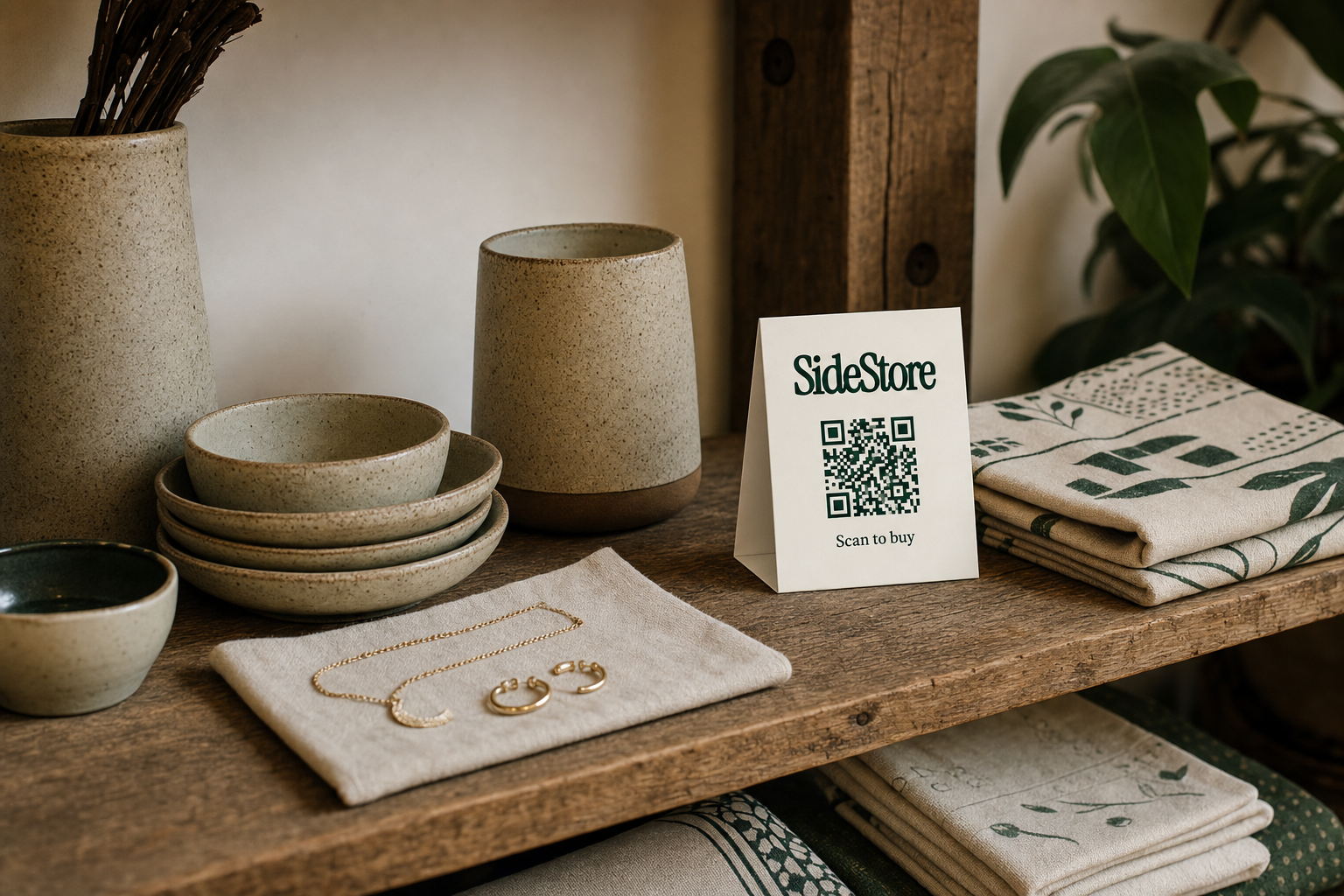
Getting your products into stores means securing shelf space in a real location, a boutique, a cafe, a hotel lobby, anywhere with foot traffic and customers ready to discover what you make. For an independent maker, that usually means pitching a store owner, agreeing on terms, delivering your work, and building the relationship from there.
The honest version: it is not complicated, but most makers get the sequence wrong. They refine their pitch before the product is ready for retail. They chase big retailers before proving the concept in a single location. This guide puts the steps in the right order.
You have two main routes into stores: wholesale (the store buys your stock upfront) and consignment (your products sit on the shelf and you get paid when they sell, with no upfront cost to the host). For most emerging makers, selling on consignment is the lower-barrier entry point. You avoid invoicing large quantities upfront. You test whether a location actually moves your work before committing more product.
If you want to reach multiple locations without opening a physical store, you should also understand selling without holding inventory, the principles transfer directly to building a consignment network.
Work through these steps in order. Each one has a clear owner, a clear action, and a clear signal that you are ready to move forward.
Step 1: Prepare Your Product Before You Walk Into Any Store

Preparation is what separates makers who get a callback from those who do not. Before you approach a single store owner, your product needs to be shelf-ready: properly packaged, clearly priced, and financially viable for a retail relationship, whether wholesale or consignment.
Start with packaging. Retail packaging does two things: it communicates your brand instantly and it protects the product during handling. A piece that looks hand-finished but arrives in a flimsy bag sends a confused signal. Think about how your product will sit on a shelf next to other items, not just how it looks on your own table at a market.
Next, know your numbers. Most independent retailers expect a gross margin of at least 40 to 50 percent after cost of goods, though this varies by category and region. If your product retails at $40 and costs you $25 to make, that margin leaves very little room for a store to earn a worthwhile split. Work backwards from your retail price and make sure the economics work before you pitch. Review what boutiques look for in new inventory to understand how buyers think about margin and fit.
Check these boxes before any outreach:
- Packaging is retail-ready. Labels include product name, materials or ingredients if relevant, your brand name, and a price point or SKU.
- You have a clear retail price and a stated cost. You know your margin and you can discuss it plainly.
- You can fulfill a small restock. If a placement sells through in three weeks, can you deliver more product quickly? Know your production lead time.
- You have basic brand assets. A logo, a short brand description (two to three sentences), and at least one clean product photograph.
- You have considered your entry model. Consignment lets you place products without the store buying upfront, which lowers the barrier to entry significantly. Know whether you are proposing consignment, wholesale, or both.
One thing many makers miss: the product itself needs a reason to exist on that particular shelf. Generic homeware in a ceramics-focused boutique is harder to place than one distinctive piece that fits the store's existing aesthetic. Edit your line before you pitch, not after.
Step 2: Identify the Right Stores for Your Product
The right store for your product is where your target customer already shops, where the existing product mix is compatible with yours, and where the owner has both shelf space and appetite for new placements.
Identifying the right stores saves you time and protects your reputation. A failed placement, where your product sits untouched for months, signals to a store owner that your work does not sell. That is a harder position to recover from than simply not approaching them.
Start local. Walk into stores you already know and shop in. Look at what they stock, how they display it, and what price range their customers clearly accept. A boutique that sells $15 candles is unlikely to be the right home for a $120 handmade ceramic piece, even if both are "lifestyle" products.
Consider non-obvious placements. For most independent makers, the highest-converting consignment placements are not boutiques at all. Cafes, hotel lobbies, wellness studios, and co-working spaces carry natural dwell time, curious visitors, and no sales pressure. A coffee shop with a display shelf near the counter can move small, giftable products steadily throughout the week. Understanding how coffee shops make money and the additional revenue streams cafes actively seek will help you frame your pitch as a benefit to them, not just a request.
When evaluating a potential location, ask yourself:
- Does this store's existing customer base look like my customer?
- Is there visible, accessible shelf space that is not already overcrowded?
- Does the store owner seem engaged and present, or is this a high-turnover operation where consignment products can go unnoticed?
- Is the location on a busy street or in a building with consistent foot traffic, or does it rely on destination visits?
- Has this store stocked handmade or independent products before?
Keep a simple list of target locations ranked by fit. Aim for five to ten realistic targets before you start outreach. This gives you options if your first two or three conversations do not progress, and it means you are not betting everything on a single placement.
Step 3: How to Approach a Store Owner and Make Your Pitch
A good pitch leads with the merchant's benefit, not your need. The best ones are short, specific, and easy for a busy owner to say yes to.
Start with timing. Do not walk in on a Saturday afternoon when it is slammed, or right at opening when the owner is setting up. Mid-week mornings, roughly an hour after opening, tend to be quiet. If you can, call or send a short email first to introduce yourself and ask for five minutes at a convenient time. This signals that you respect how they run the business.
When you meet, bring:
- Two to three physical product samples (not your full range)
- A one-page sell sheet with your retail price, a brief product description, and your contact details
- A clear proposal: consignment, wholesale, or both?
Keep the verbal pitch under two minutes. Something like: "I make [product type] and I think they would sell well in your space because [specific reason related to their store]. I am proposing a consignment arrangement, so there is no upfront cost to you. You pay me only when something sells, and we split the revenue. I use SideStore's Retail Widget to manage the placement, which means you get live stock tracking and automatic split payouts without any extra admin on your end."
That framing addresses the merchant's two core concerns: financial risk and operational effort. Consignment removes the first. The Retail Widget removes the second.
Expect objections. Common ones and how to handle them:
"We do not usually do consignment." Ask what arrangement they do use, and whether they would consider a small trial consignment placement for sixty days. A trial framing lowers the perceived commitment.
"We do not have the space right now." This may be genuine or a soft no. Ask if there is a good time to check back, or whether a very small footprint (a single shelf or a countertop display) might work.
"I am not sure it will sell." This is a legitimate concern. Explain plainly that consignment means they carry no inventory risk. If it does not sell, you take the stock back. You might also want to know what merchants do with slow-moving stock so you can address that scenario honestly if it comes up.
Follow up within a week of your meeting if you have not heard back. A single polite message is appropriate. More than two follow-ups in a short window tends to backfire.
Consignment vs Wholesale vs Pop-Up: Which Route Fits Your Stage?
Choose the right distribution route based on where you are in your business, not which option sounds most appealing in theory. Here is a plain comparison.
| Route | Upfront Cost to Maker | Inventory Risk | Cash Flow | Best Fit Stage | Typical Margin Split |
|---|---|---|---|---|---|
| Consignment | None | Maker retains unsold stock | Paid on sale, no advance | Early stage, testing new locations | Typically 60/40 to 70/30 in maker's favour, varies by category |
| Wholesale | Production cost to fulfill the order | Store owns the stock after purchase | Paid upfront (net 30/60 terms common) | Proven product, consistent demand | Maker sets wholesale price, store marks up; margins vary widely |
| Pop-up / market | Stall fee, travel, display costs | Maker holds all stock | Direct sale, immediate cash | Brand building, customer feedback stage | Maker keeps 100% minus fees |
How consignment selling works in practice is worth reading before you commit to a route, especially if you have not run a placement before.
A few honest caveats. Wholesale sounds better on paper because you get paid immediately, but it requires a store to take on stock risk, which makes it a harder ask for an unknown maker. Many stores that would refuse wholesale will say yes to a consignment trial. Pop-ups give you direct customer feedback and full margin, but they cost time and do not build a passive distribution network.
For most makers at the start of their retail journey, consignment is the practical entry point. It is not the only route, and it is not always the most profitable per unit in the long run. But it gets your products onto shelves with the lowest barrier, and that is where proof of concept lives.
Step 4: Go Live, Setting Up Your First Consignment Placement
Once a store owner agrees to take your products on consignment, the next step is to set it up properly. A clean setup means the merchant knows what they are selling, customers can buy without friction, and you can track stock and payouts without chasing anyone for information.
Agree on the terms in writing before you deliver anything. Your consignment agreement should cover: which products are included, the retail price for each, the revenue split, how often payouts happen, how long the initial placement runs, and what happens to unsold stock at the end of the term. One page is fine.
Deliver your products in retail-ready condition. Each item should be labelled with a price and, where relevant, a product name or short description. If you are placing multiples of the same item, include a count so the merchant can verify receipt.
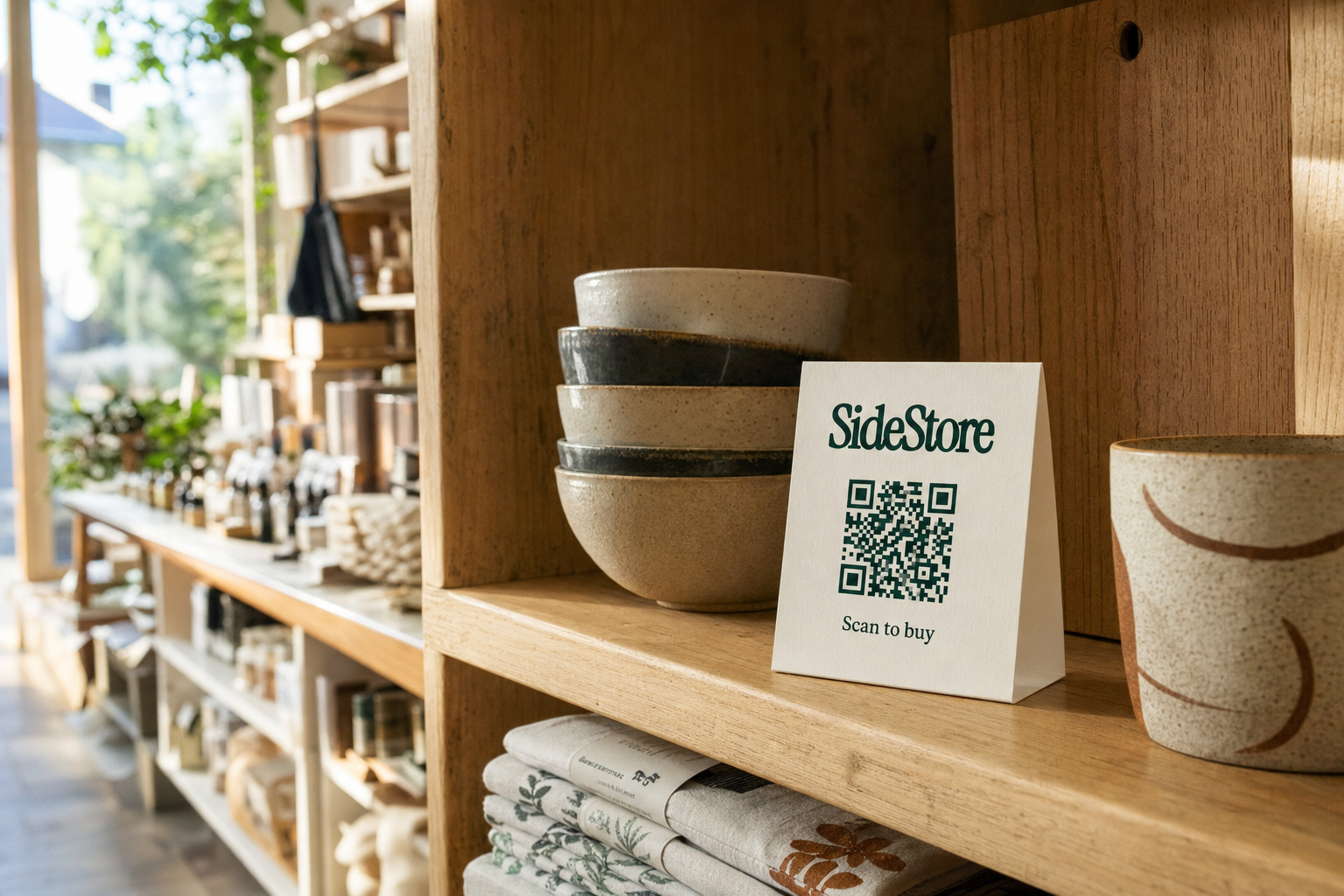
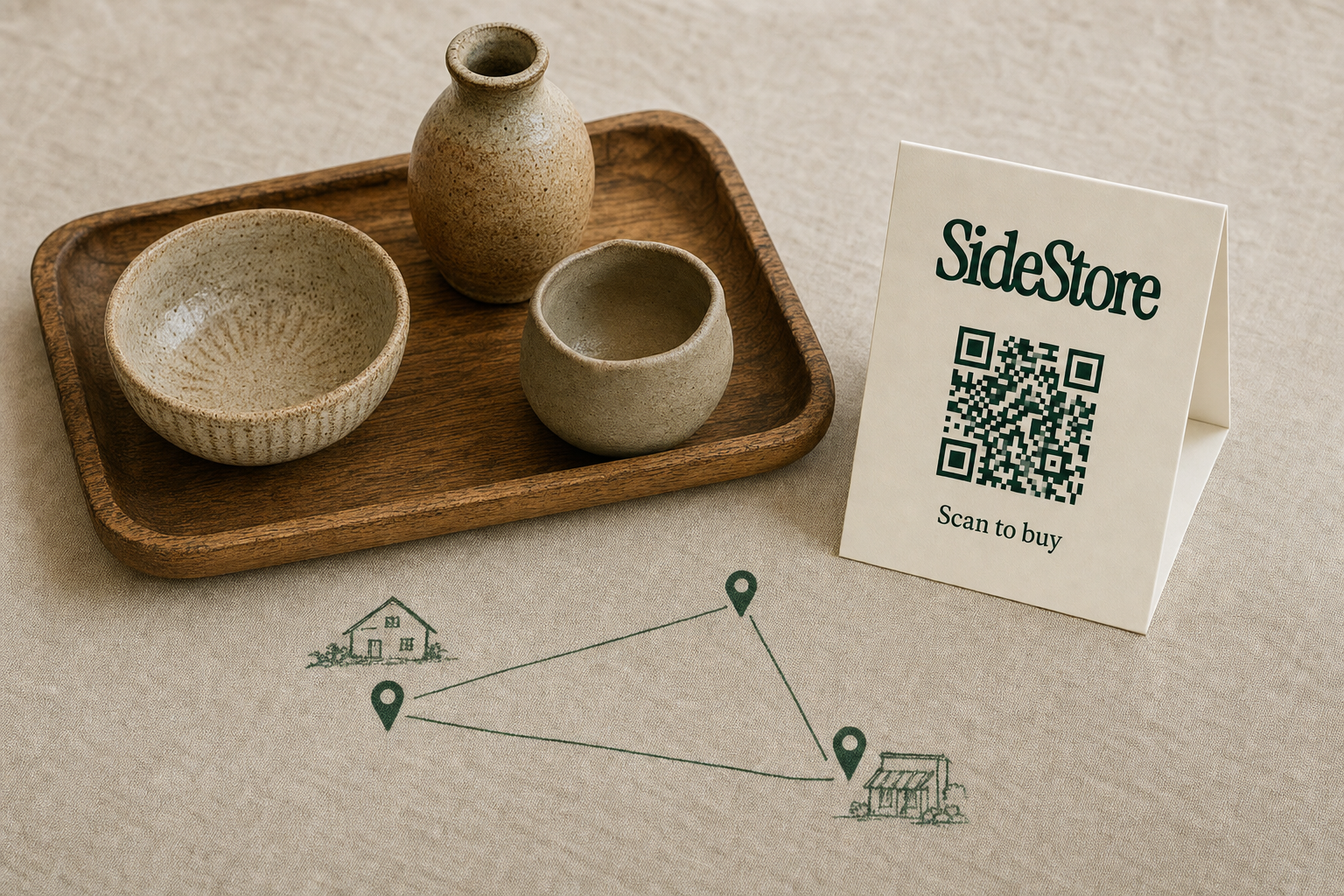
Configure your placement in SideStore's Retail Widget. The Retail Widget is the broader consignment-management interface: it handles placement setup, live stock tracking, placement attribution, and automatic split settlement. Once your products are live in the system, generate the scan-to-pay QR. This is one function of the Retail Widget, not the whole product. You can print the QR code card and attach it to individual products, or the merchant can display a single card for all the products in the placement.
Check your stock levels regularly, especially in the first two to four weeks. A new placement often moves faster or slower than expected. If a product is selling quickly, restock before it runs out completely. A gap on the shelf breaks the merchandising and can cool a merchant's enthusiasm. Review managing boutique shelf space effectively for practical guidance on how merchants think about display, and how cafes use shelf placement to improve margins if your first placement is a hospitality venue.
When the first payout period arrives, the Retail Widget handles split settlement automatically. You and the merchant each receive your agreed share without either of you having to calculate or chase it manually.
Step 5: Manage the Relationship and Scale to More Stores
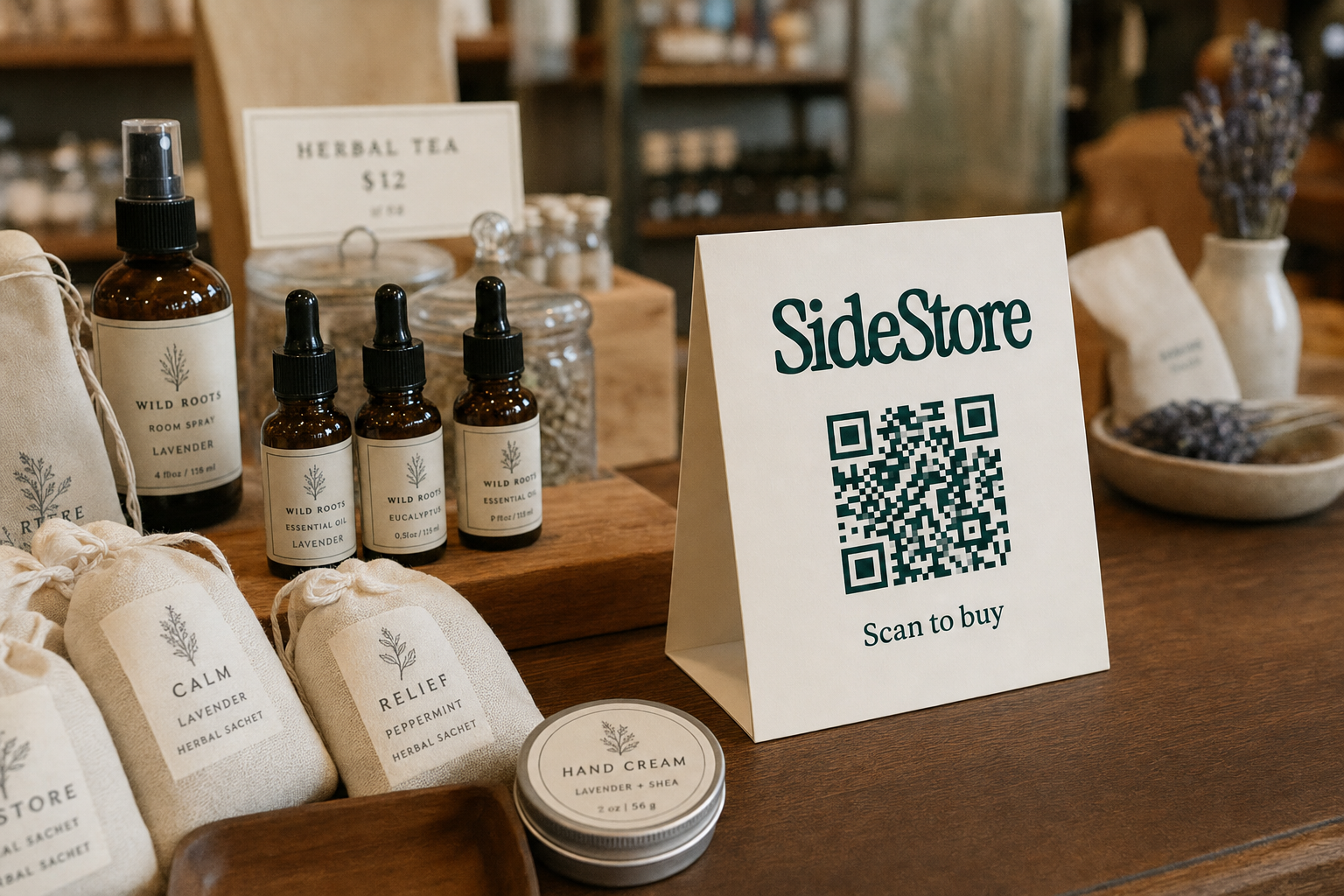
Getting into a store is the beginning, not the finish line. Makers who build lasting retail relationships treat the merchant as a partner, not just a distribution channel.
Check in regularly, but not obsessively. A brief message or visit every three to four weeks is enough in the early months. Use these touchpoints to restock, swap out any slow-moving products, and ask the merchant what customers have said about the display. Their floor-level feedback is genuinely useful.
Use placement attribution data from the Retail Widget to understand which locations are performing. Not every placement will be a strong one, and that is normal. Some stores generate consistent sales; others see very little movement despite looking like a good fit on paper. Track the data over at least sixty to ninety days before drawing conclusions. Growth in a consignment network happens over months, not weeks, and that is realistic.
Once you have one placement running well, you have proof of concept to take to the next store. Bring your sales data. "This product sold fourteen units in sixty days at a cafe in [your city]" is far more persuasive than describing your product's features. Real placement data, including split payouts received and stock turnover, tells a merchant that your work actually moves.
Scale by adding one or two new placements at a time. Running multiple consignment locations from a single dashboard is how selling through multiple consignment placements becomes manageable rather than chaotic. Each new placement adds to your distributed consignment network without requiring you to open premises of your own. For a deeper look at building a distribution model without fixed costs, the logic applies equally to physical consignment as to inventory-light online models.
Relationships matter as much as systems. A merchant who likes working with you will recommend you to other shop owners, give your products better shelf position, and tolerate the occasional restock delay. Treat that goodwill as a real asset.
What Merchants Actually Need from a Maker (Before They Say Yes)
To understand what makes a merchant say yes, think from their side of the counter. A store owner is not evaluating your product the way a customer does. They are evaluating whether stocking it is worth their shelf space, their time, and their trust.
The merchant's primary concern is risk. Every product on their shelf occupies space that could hold something else. If your product does not sell, they have lost that opportunity cost. Consignment reduces the financial risk, but it does not eliminate the operational one. A maker who is hard to reach, slow to restock, or unreliable with labelling creates work. That is the risk a good pitch has to address.
What merchants typically want to see before saying yes:
- Product fit. Does this look like something my customers will buy? First impressions count here.
- Professionalism. Is the packaging retail-ready? Is the maker someone I want to contact again?
- Low operational overhead. Will this placement require a lot of my time to manage? With the Retail Widget, you can honestly answer no: live stock tracking means the merchant always knows what is on the shelf, and automatic split payouts mean neither party has to chase a manual settlement.
- Clear terms. What is the split? When does it get reviewed? What happens to unsold stock? Merchants who have been burned by vague consignment arrangements are cautious.
Understanding how merchants think about slow-moving stock is worth doing before your pitch. A merchant who has been left with dead inventory from a previous maker will ask hard questions. Having a clear return policy for unsold goods is a real reassurance. Similarly, knowing what margins look like for independent cafe operators helps you calibrate your proposed split to something that is genuinely attractive, not just technically acceptable.
Frequently Asked Questions
These questions come up regularly for independent makers navigating retail outreach for the first time.
How do I get my products into stores with no track record?
Start with consignment at a local venue that already trusts you in some way: a cafe you frequent, a market you have sold at, or a boutique whose owner you have met. Consignment removes the need for a proven sales record because the merchant carries no inventory risk. Your pitch is not "I have a track record" but "there is no risk for you to try this." See how consignment works for independent makers for a full walkthrough.
How do I approach a local shop about stocking my products?
Visit during a quiet period, typically mid-week morning, with two or three physical samples and a one-page sell sheet. Introduce yourself briefly and ask for five minutes of the owner's time. Lead with what is in it for them: a low-effort, no-upfront-cost placement that earns them a share of every sale. If the timing is not right, ask when it would be better to return.
Do I need a minimum number of products to approach a store?
No fixed minimum applies universally, but having fewer than three to five distinct products or variants can make a placement feel thin. A single hero product with two or three colourways or sizes is a reasonable starting point. The more important question is whether you can reliably restock. A small, consistent range is better than a large range you cannot fulfill on repeat.
What is the difference between consignment and wholesale for a maker?
The comparison table above covers this in full. The short version: wholesale means the store buys your products upfront, pays you before they sell, and takes on the inventory risk. Consignment means your products sit in the store and you are paid only when they sell, with no upfront cost to the merchant. Wholesale typically delivers cash sooner but is a harder ask for an unknown maker. Consignment is lower barrier to entry and is the route most independent makers start with. You can also explore community-focused retail spaces that welcome makers as an entry point where the bar for first placements is often lower.
Your First Placement Is Closer Than It Feels
Getting your products into stores is a process with clear, repeatable steps. You prepare your product, identify the right locations, make a well-framed pitch, set up the placement properly, and manage the relationship from there.
None of those steps require a large budget, a sales team, or a track record most emerging makers do not yet have. Consignment, in particular, is designed for exactly this situation: a maker with good products and no premises, and a merchant with shelf space and no inventory risk. The Retail Widget handles the operational layer, which means your placements run on live stock data and automatic split payouts rather than spreadsheets and payment conversations.
Your first placement will teach you more than any guide can. The goal is to have one, learn from it, and use that proof to secure the next one.
Start your first consignment placement and go from there.
Build a consignment network without opening a store of your own.