Revenue for a coffee shop is straightforward in theory: total income from beverages, food, retail, events, and any other service you monetise inside the venue. In practice, most independent cafes lean heavily on drink sales, which makes sense, and leave several revenue streams untouched.
This guide covers the four core revenue streams available to you, honest benchmarks for what each typically contributes, and how to compare them by cost, effort, and margin. We also point you toward resources on coffee shop retail as a standalone opportunity and coffee shop profit margins in plain numbers.
The biggest missed opportunity for most cafes is not a new menu item or longer trading hours. It is the idle shelf space already inside your venue. Most coffee shops have surfaces, ledges, or display areas that sit empty or underused. Monetising that space through consignment retail costs nothing upfront and requires no inventory purchase. That is the stream this guide pays closest attention to.
The Core Revenue Streams in a Coffee Shop
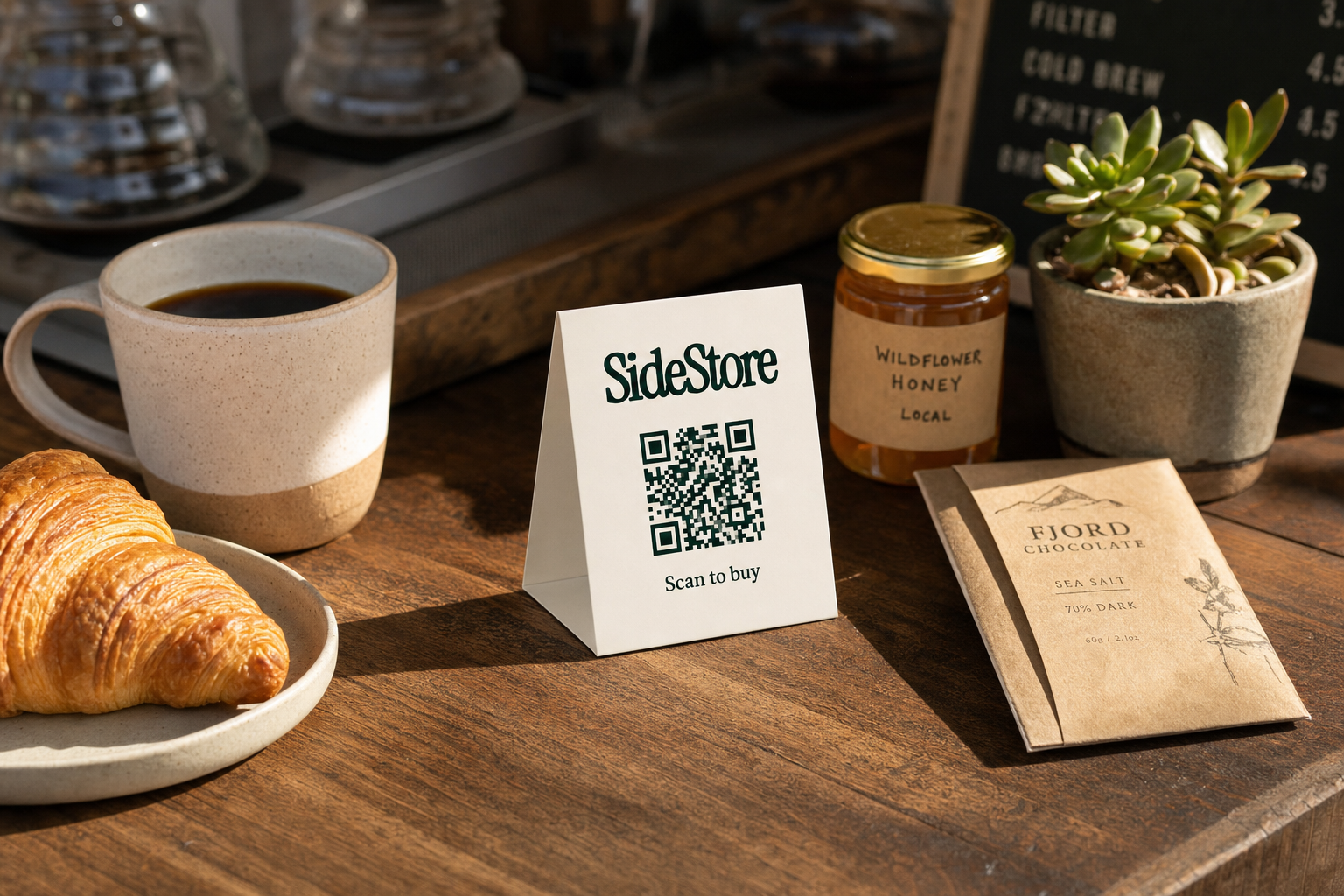
A coffee shop typically earns from four distinct sources: beverage sales, food sales, retail merchandise, and space monetisation. Each has a different margin profile, operational demand, and risk level. Understanding the trade-offs helps you decide where to invest effort and where to let the system do the work.
1. Beverage Sales
This is your foundation. Espresso drinks, filter coffee, tea, cold beverages, they carry the highest gross margins of anything you sell. Labour and cost of goods are the pressures. To scale beverage revenue, you need higher volume, longer trading hours, or a higher average transaction value. All three require operational investment.
2. Food Sales
Food adds to ticket size but typically at a lower margin than beverages in independent cafes. Waste, storage, food safety compliance, and the labour to prep and serve all compress what you keep. Pastries and grab-and-go items tend to outperform made-to-order food in net margin terms for smaller operations.
3. Retail Merchandise
Branded mugs, bags of beans, and take-home products let loyal customers extend their relationship with you. The margin on retail is solid when you buy wholesale and price well. The risk is capital tied up in unsold stock. If that bag of beans sits on the shelf for six months, you have already paid for it. See how much profit does a coffee shop make for a fuller breakdown of where retail typically sits in your revenue mix.
4. Shelf Space and Consignment
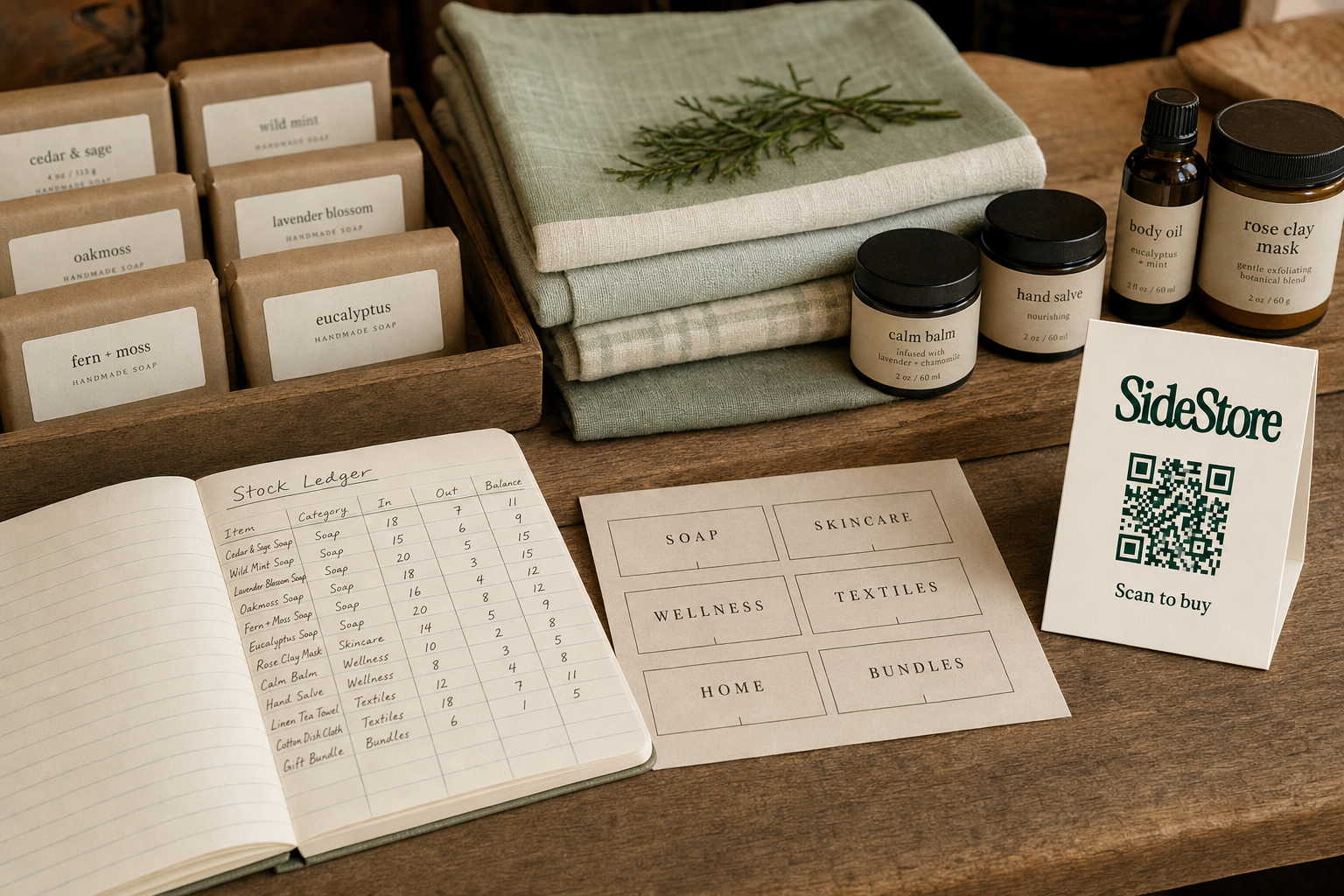
This is the stream most cafes have not yet activated. Rather than buying retail stock yourself, you host independent makers' products on consignment. You earn a percentage of each sale without purchasing anything upfront. There is no inventory risk, no capital tied up, no waste. The how cafes can make money from unused shelf space guide covers this in full, but the core mechanic is simple: the product sits in your space, a customer scans to buy, and you receive your share automatically.
What Revenue Numbers Look Like for an Independent Coffee Shop
Independent coffee shops vary enormously by location, size, and trading hours, so any single figure flattens a wide range. That said, some honest benchmarks are worth naming.
Small independent cafes in urban locations typically report annual revenues anywhere from £80,000 to £300,000, depending on footfall, average spend, and seat count. Net profit margins, after rent, wages, cost of goods, and all overheads, tend to sit in the 5 to 15 percent range for well-run independents. Some operators do better; many do worse, particularly in the first few trading years or in high-rent locations.
Beverage sales typically account for the bulk of gross revenue in a straightforward cafe format. Food adds meaningful turnover but often at a lower net contribution. Retail and merchandise typically represent a smaller share for most independent operators, though specialty coffee shops with a strong bean-retail offer can push this higher.
The honest conclusion: most independent cafes operate on tight margins, and incremental revenue from low-effort streams makes a real difference. Adding £200 to £600 per month from consignment placements on otherwise idle shelving does not sound dramatic, but against a 5 to 10 percent net margin, it is genuinely material. Check the average profit coffee shop and profit from coffee shop guides for further context on where the numbers tend to land.
Revenue Streams Compared: Cost, Effort, and Margin at a Glance
Not every revenue stream suits every cafe. The right choice depends on your current setup, available space, and how much operational complexity you want to add. The table below compares the four main streams on the dimensions that matter most.
| Revenue Stream | Upfront Cost | Inventory Risk | Effort to Manage | Margin Profile | Best For |
|---|---|---|---|---|---|
| Beverage Sales | Medium (equipment, beans, supplies) | Low (perishables, short cycle) | High (daily labour, waste management) | High gross, moderate net | All cafes, core business |
| Food Sales | Medium (ingredients, compliance) | Medium (perishables, waste) | High (prep, safety, stock rotation) | Lower than beverages, variable | Cafes with kitchen capacity |
| Retail Merchandise (owned stock) | Medium-High (wholesale purchase) | Medium-High (unsold stock) | Medium (ordering, display, stock count) | Good when stock moves | Cafes with loyal repeat customers |
| Consignment Retail | None | None (maker holds stock risk) | Low (display space, QR checkout) | Moderate (host percentage of each sale) | Any cafe with spare shelf space |
The trade-off is clear. Consignment retail is the only stream with zero upfront cost and zero inventory risk. The margin per unit is lower than owning the stock outright, but you are earning from space that was previously generating nothing. For a coffee retail shop looking to extend its product range without tying up capital, consignment is the pragmatic starting point. It is also worth reading the non-profit coffee shop framing for operators who want to understand how margin allocation affects overall revenue strategy.
How Consignment Retail Adds Revenue Without Adding Inventory Risk
Consignment retail is the cleanest incremental revenue stream available to you: a maker places their products in your space, customers buy them, and you receive a percentage of each sale automatically. You never purchase the stock, never manage returns, and never absorb the cost of unsold items.
The mechanics work through SideStore's Retail Widget. This is the interface a maker uses to place and manage a product in your venue on consignment. From your side as a cafe host, the Retail Widget handles several things you would otherwise need to manage manually:
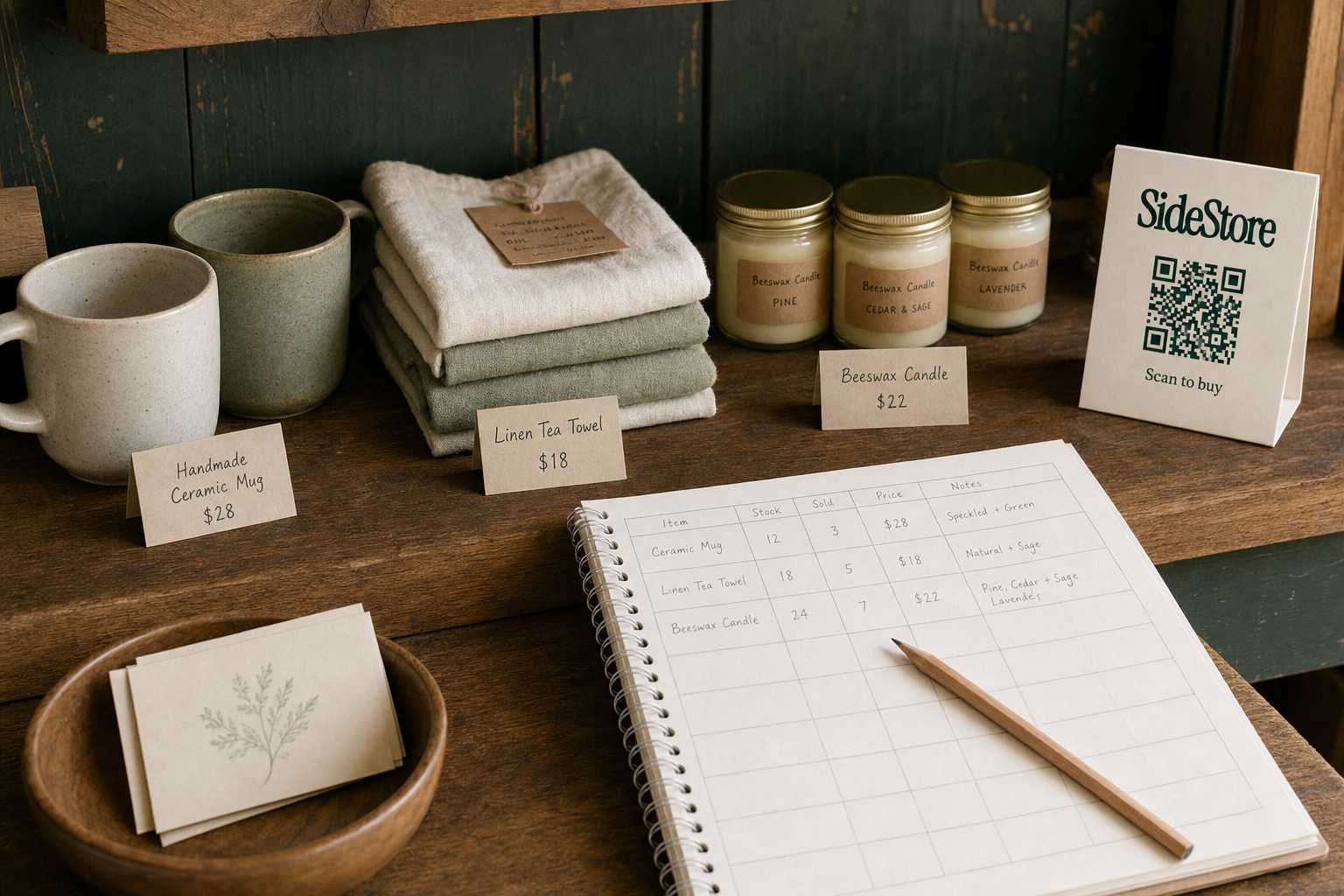
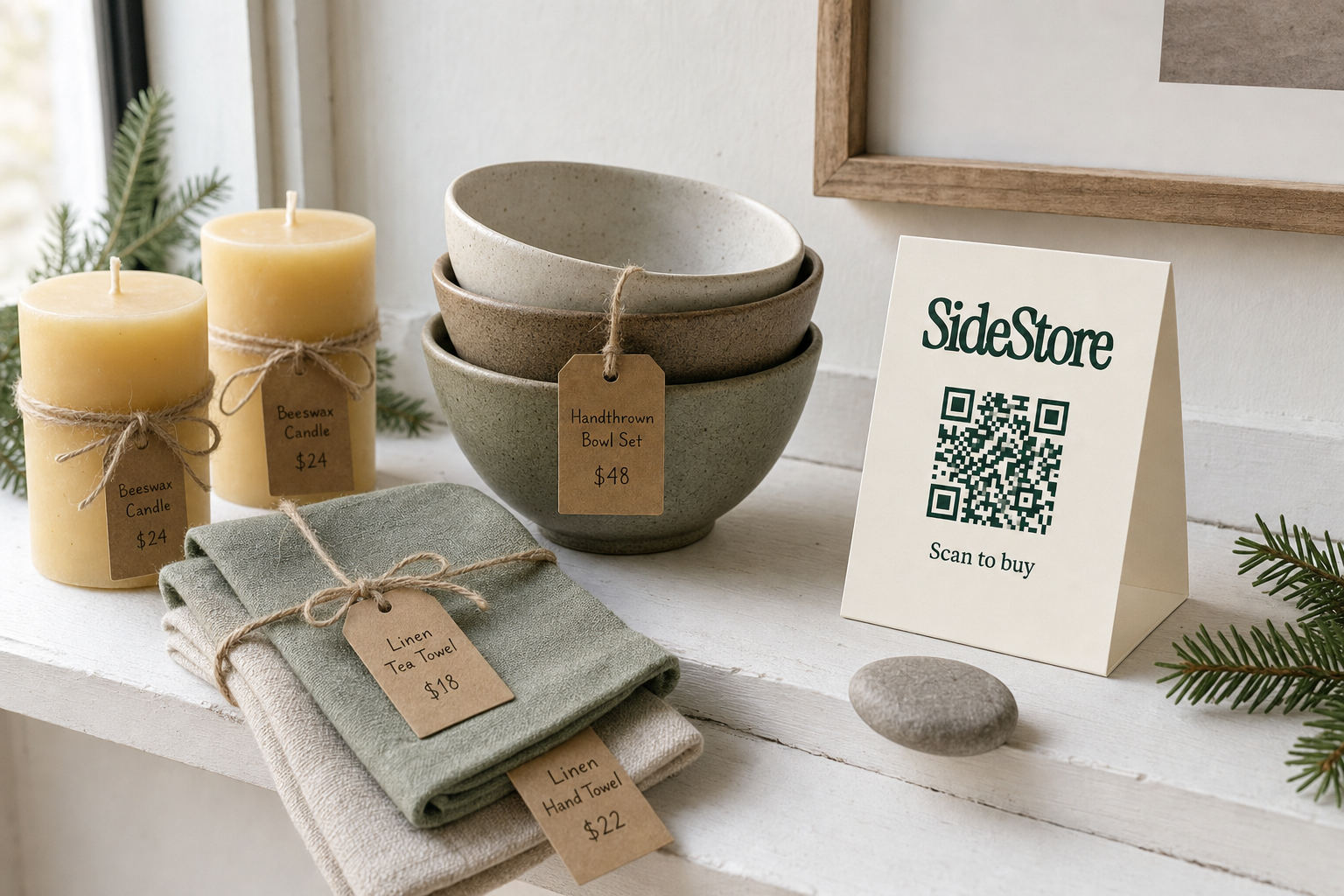
- Scan-to-pay checkout. A SideStore QR card is displayed at the product or placement. A customer scans, pays on their phone, and the transaction completes without any input from your staff. The QR checkout is one function of the Retail Widget, not the whole system.
- Live stock tracking. The Retail Widget monitors stock levels in real time, so you can see at a glance how many units remain in a placement without counting by hand.
- Placement attribution. Each placement in your specific venue is tracked separately, so payouts are correctly attributed to your location.
- Automatic split payouts. When a sale completes, the maker receives their share and you receive your host percentage automatically. No invoicing, no chasing, no manual reconciliation.
For context on how the QR side works in practice, see how the SideStore QR card works. For a broader view of the consignment model, selling consignment covers the maker's perspective, which helps you understand what to expect when approaching a maker about a placement.
The honest caveat: consignment revenue depends on footfall and product fit. A product that suits your customer base will sell; one that does not will sit. Curating which makers you host matters as much as having the space.
Which Shelf Space in Your Cafe Should You Monetise First?
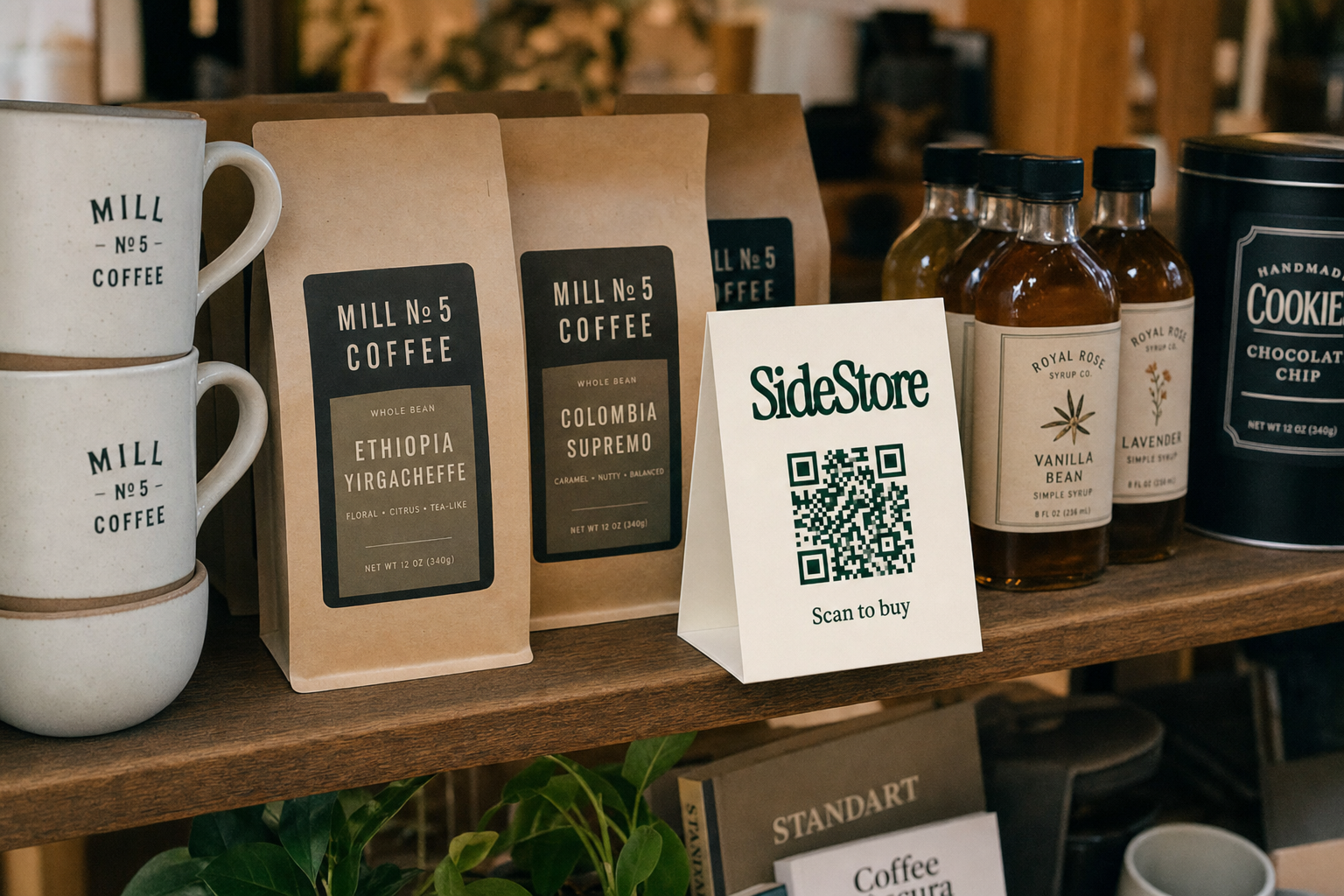
Start with the three locations in your cafe that already attract the most sustained customer attention: the counter area, the window display, and the waiting or queue zone. These positions capture dwell time and curiosity without requiring customers to seek anything out.
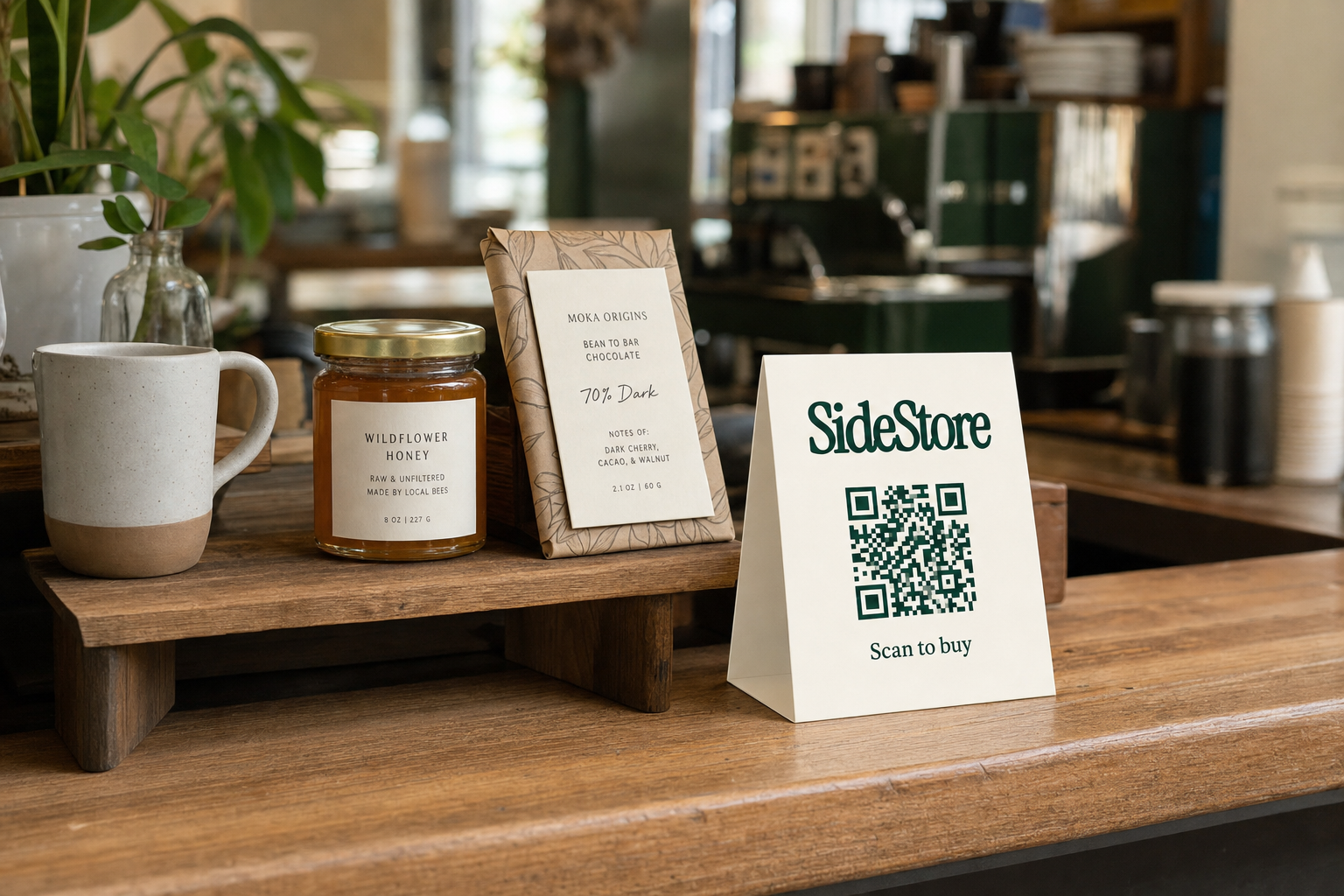
The counter area. The space beside or behind your till is the highest-attention real estate in any cafe. Customers are already pausing here, often for 30 to 60 seconds while orders are taken or drinks are prepared. Small, clearly priced products from a maker, displayed with a SideStore QR card, can convert that idle attention into a purchase with no staff involvement.
The window display. A well-arranged window placement serves double duty: it draws in passing foot traffic and gives seated customers something to notice. Products with visual appeal, ceramics, illustrated prints, handmade goods, typically perform well here. The placement is visible from outside, which extends your effective sales surface beyond the people already inside.
The waiting or queue zone. In cafes with a consistent queue or a waiting area for takeaway orders, this is a natural browsing moment. Customers have their phones out and time to spare. A consignment display in this zone, with a QR card they can scan immediately, meets them at the right moment.
The principle applies across hospitality. See how hotels turn lobby space into retail revenue for a comparable approach in a different venue type. For selling through consignment from the host perspective, start with your highest-dwell-time spot and add further placements once you have seen what moves.
How to Set Up a Consignment Placement in Your Coffee Shop
Setting up a consignment placement through SideStore is straightforward from a cafe's perspective. The maker does most of the configuration work; you provide the space and display the product. Here is the sequence from your side:
Identify the space. Choose one of the high-attention locations described above. Measure the surface area so you can communicate it clearly to a maker.
Connect with a maker. Approach a local maker, artisan, or designer whose products suit your customer base. Explain that you host consignment placements through SideStore and that they can list their products and configure the placement in the Retail Widget. For context on what selling on consignment means, share that link with makers who are new to the model.
Agree on the host percentage. You and the maker agree on the split. The Retail Widget applies this split automatically to every sale, so there is no manual calculation involved.
Display the product and the QR card. Once the maker has set up the placement, they will bring the products and a SideStore QR card for the display. The QR card enables scan-to-pay checkout, one function of the Retail Widget. Place the card clearly beside the product.
The Retail Widget handles the rest. Live stock tracking, checkout, payout attribution, and split settlement all run automatically. Your staff do not need to process sales, count stock, or issue invoices.
This model also opens your cafe to makers who are looking for alternatives to weekend markets for artists and small brands and want a permanent, unmanned presence in a quality venue.
Frequently Asked Questions: Coffee Shop Revenue
What is a good revenue for a small coffee shop?
Revenue benchmarks vary significantly by location, size, and trading hours. A small independent cafe in a reasonably busy urban location might typically generate anywhere from £80,000 to £200,000 annually, though both lower and higher figures are common. Net profit after all costs is a more meaningful measure. See average profit for a coffee shop for a fuller breakdown.
Can a coffee shop make money from selling products?
Yes, and many do. Branded merchandise, bags of coffee beans, and curated retail items all add to revenue. The margin depends on whether you own the stock outright or host it on consignment. Owned stock carries higher per-unit margin but also inventory risk; consignment carries no upfront cost and no stock risk, making it the lower-friction starting point for cafes without a dedicated retail operation.
How does consignment work in a cafe?
A maker places their products in your cafe and retains ownership of the stock until it sells. You earn a percentage of each sale, agreed in advance. The Retail Widget handles checkout via scan-to-pay QR, tracks stock live, and distributes payouts automatically. You carry no inventory risk and make no upfront purchase. For operational detail, the boutique inventory management guide covers similar principles in a retail context.
Do I need special equipment to take consignment payments?
No. SideStore's scan-to-pay QR checkout means customers pay on their own phones. There is no additional terminal, no card reader, and no software to install on your till. The QR card is displayed at the product or placement; the Retail Widget processes the transaction and handles the payout split automatically.
The Practical Path to More Revenue in Your Coffee Shop
The clearest path to incremental revenue most cafe owners overlook is the shelf space already inside the venue. Beverages and food are your core, but they require labour, stock, and ongoing operational management. Consignment retail requires none of those things. It converts idle surface area into a revenue stream that runs without staff involvement.
The concrete action is simple. Identify your highest-dwell-time surface, approach one local maker whose products fit your customer base, and set up a single consignment placement through SideStore. One placement, one spot, one maker. See how it performs before scaling to additional surfaces.
You can sell without holding inventory and you do not need to buy boutique inventory for sale to get started. The products belong to the maker until a customer scans and pays. Your role is the space. SideStore handles the rest.
Build a consignment network without opening a store of your own.