How to Sell Souvenirs Through Local Retailers: A Maker's Guide to Consignment Placement
Consignment souvenir retail is straightforward: you place products in a local shop, hotel, or cafe. They display them. You get paid only when those products sell. Zero upfront cost to the host, zero inventory risk on their side.
If you want to know how to sell souvenirs through local retailers, here's the direct answer: identify venues where tourists already spend time, approach them with a consignment proposal, agree on a margin split, and place your products. You don't need a wholesale account, a minimum order quantity, or a large production run. You need samples, a clear price structure, and a simple way to handle checkout and stock tracking.
Two things stop most makers. Capital: buying stock for wholesale. Relationships: knowing how to approach buyers without that capital. Consignment removes the capital barrier entirely. The relationship side is learnable, and this guide walks you through both.
If you're new to selling through someone else's store, or you've been considering alternatives to Etsy for independent makers, consignment placement is worth understanding before you commit to any other channel. The SideStore Retail Widget is the tool that manages this end to end: placement modelling, scan-to-pay checkout, live stock tracking, and automatic split payouts, all from one dashboard.
Why Local Retailers Beat Online Channels for Souvenir Sales
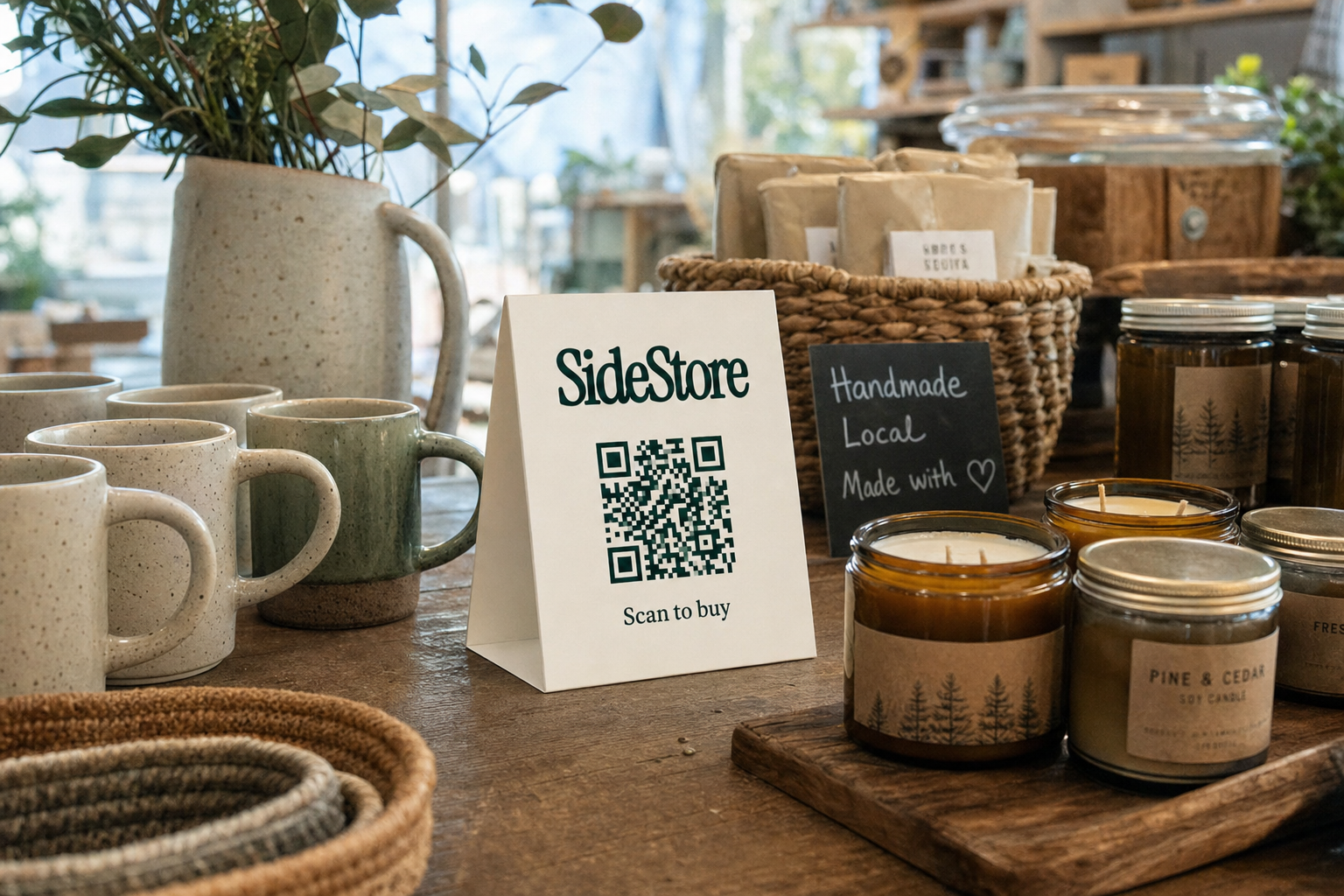
For souvenir makers, physical retail outperforms online channels in one critical way: tourists buy on impulse, in the moment, in the place they're visiting. They're not searching Google for "handmade ceramic mug from the Bernese Oberland." They walk past a shelf, pick something up, and buy it.
That's the core advantage of local retail placement. Online channels give you reach but remove the physical context that makes a souvenir meaningful. A hand-thrown mug sells differently at the potter's local cafe than it does as a thumbnail on a marketplace listing.
Boutiques are your highest-margin venue for souvenirs. They attract buyers who've already decided to spend on something local and craft-made. Product curation is tighter, which means your work sits alongside things that reinforce its value rather than competing with mass-produced alternatives.
Hotel lobbies and B&Bs capture a different buyer: someone in the last 48 hours of their trip, looking for something to bring home. The purchase decision is fast. Hotels benefit because a curated maker display elevates their guest experience at no stock cost to them.
Cafes offer volume. Footfall is daily and repeat, and a well-placed product near a counter can move steadily without any active selling by the host.
The honest trade-off: local retail costs you margin (the consignment split) and gives you less buyer data than an online sale would. You won't know your buyer's email address. What you gain is context, impulse purchasing, and the credibility of being stocked somewhere real.
For makers weighing physical placement against temporary retail formats, it's worth reading about pop-up retail costs and alternatives and what pop-up retail space actually costs. Consignment placement requires no up-front rental and no event logistics.
Choosing the Right Venues: Boutiques, Hotels, and Cafes
The right venue for your souvenir is the one where your target buyer already goes. Before you approach anyone, shortlist venues the way a tourist would: walk the area, look for visible shelf space, and note which spots already carry local or handmade products.
That walk is your research. If a cafe has a small shelf of locally made jams and postcards near the register, they understand maker products and have a customer who buys them. If a boutique stocks ceramics, textiles, and jewellery from independent designers, your souvenir fits. If neither exists in a venue, you may spend more time educating the host than selling to their customers.
Boutiques are the highest-effort, highest-return venue. Buyers browse deliberately and often return. The shortlisting filter here is product fit: your souvenir must sit naturally next to what they already carry. Walk in as a customer first, note the price range of existing products, and only approach if your work belongs there.
Hotels and B&Bs vary widely. A boutique hotel with a strong local identity is a natural fit for a consignment shelf. A chain property with a gift shop run by a central buyer is a harder pitch. Start with independently owned properties. Read the dedicated guide on how to sell local products to hotels before you approach.
Cafes are the easiest first placement. The ask is small (a few products, a small footprint), the host relationship is often informal, and cafe owners tend to be community-minded. If you make prints, cards, or small objects, a cafe counter or windowsill can move product steadily. See how other makers approach this in the guide on selling art prints in cafes.
Aim for three to five shortlisted venues before you pitch anyone. Rejected pitches are more useful when you have alternatives lined up.
How to Pitch a Local Retailer: What to Say and What to Bring
A successful pitch to a local retailer takes about five minutes and leads with the host's benefit, not yours. The merchant doesn't care that you need distribution. They care that you're offering them passive revenue from space they already have, with no stock to buy and no risk if it doesn't sell.
Here's the pitch sequence, embedded in how a real conversation unfolds:
1. Walk in with samples, not a catalogue. Physical products in hand change the conversation immediately. The host can touch, price-check, and picture the product on their shelf. A brochure or PDF achieves none of that.
2. Introduce the consignment model in one sentence. "I place my products here on consignment: you display them, I manage stock, and we split the sale price when something sells. You pay nothing upfront and keep nothing unsold." That's the whole pitch. Lead with it.
3. Name the split clearly. Have a number ready. A vague "we can negotiate" makes hosts uneasy. Something like "I typically work on a 70/30 split, you keep 30% of each sale" is concrete and shows you've done this before. See the pricing section below for how to set this number.
4. Address the logistics question before they ask. Hosts will wonder how checkout works, how they know when stock runs low, and how they get paid. Tell them: "SideStore handles all of that. There's a QR on each product, stock updates live, and you receive your share automatically." You can share your SideStore placement link on the spot so they can see the setup.
5. Leave something physical behind. A sample on consignment, or at minimum a card with your contact and the product details. If they say yes two weeks later, you want to be easy to reach.
What to avoid: overselling the product's artistic merit to someone who is thinking about shelf space and margin. Keep the pitch functional. If they want to know the story behind the work, they will ask.
For makers approaching boutiques with handmade goods, the guide on pitching boutiques with handmade products covers the buyer relationship in more depth. For print-based souvenirs, see getting art prints into local shops.
Consignment Percentage: How to Price Your Souvenirs So Everyone Wins
The consignment percentage is the share of each sale price the host venue retains. Typical ranges vary by venue type: cafes tend to take 20 to 30%, boutiques 30 to 40%, and hotel gift shops 35 to 50%. These are common ranges, not fixed rules, and your negotiation will depend on your product's margin and the venue's footfall.
Here's a worked example in CHF:
- Retail price of souvenir: CHF 28
- Host split (30%): CHF 8.40
- Your share (70%): CHF 19.60
- Your cost of goods: CHF 8.00
- Your gross margin per unit: CHF 11.60
Three variables move this calculation significantly:
1. Your cost of goods. If your materials and production cost CHF 14 per unit on a CHF 28 product, a 40% host split leaves you with CHF 2.80 gross margin. That isn't viable. Price your product first to cover costs at a 50% host split, then negotiate up from there.
2. The venue's footfall and conversion. A hotel lobby that moves 20 units a month at a 40% split may outperform a boutique that sells 4 units at a 25% split. Volume matters as much as the percentage.
3. The product category. Low-price items (cards, prints under CHF 15) typically need a lower host split to remain viable for you. Higher-price items (ceramics, jewellery above CHF 60) can accommodate a larger split because the gross margin is bigger in absolute terms.
The most common pricing mistake is setting the retail price based on what feels fair, then discovering the consignment split makes the unit unviable. Work backwards from the split first, then set your retail price. Read more about how these terms are structured in the retail partnership terms explained guide.
Consignment vs Wholesale: Which Model Fits Souvenir Makers?
For most independent souvenir makers, consignment is the right starting model. Wholesale requires the merchant to pay upfront for stock, which means they take the inventory risk and are far more selective about what they buy. Consignment removes that barrier entirely.
Here's how the three common models compare:
| Model | Upfront cash from merchant | Inventory risk | Maker gets paid | Best for |
|---|---|---|---|---|
| Consignment | None | Maker holds risk | When products sell | Early-stage makers, new venues, unproven products |
| Wholesale | Yes, on delivery | Merchant holds risk | Upfront, per order | Established makers with proven sell-through |
| Sale or Return | None | Split: unsold returns to maker | When products sell | Makers testing a new venue or product line |
Wholesale becomes attractive once you've demonstrated sell-through in consignment placements: you have data showing your products move, and a merchant is willing to commit cash because the risk feels lower to them. Sale or Return sits between the two models and is common with boutiques that want the optionality of returning unsold stock.
Start with consignment. Move toward wholesale once you have the sell-through record to justify it.
Managing Multiple Placements: How the SideStore Retail Widget Works
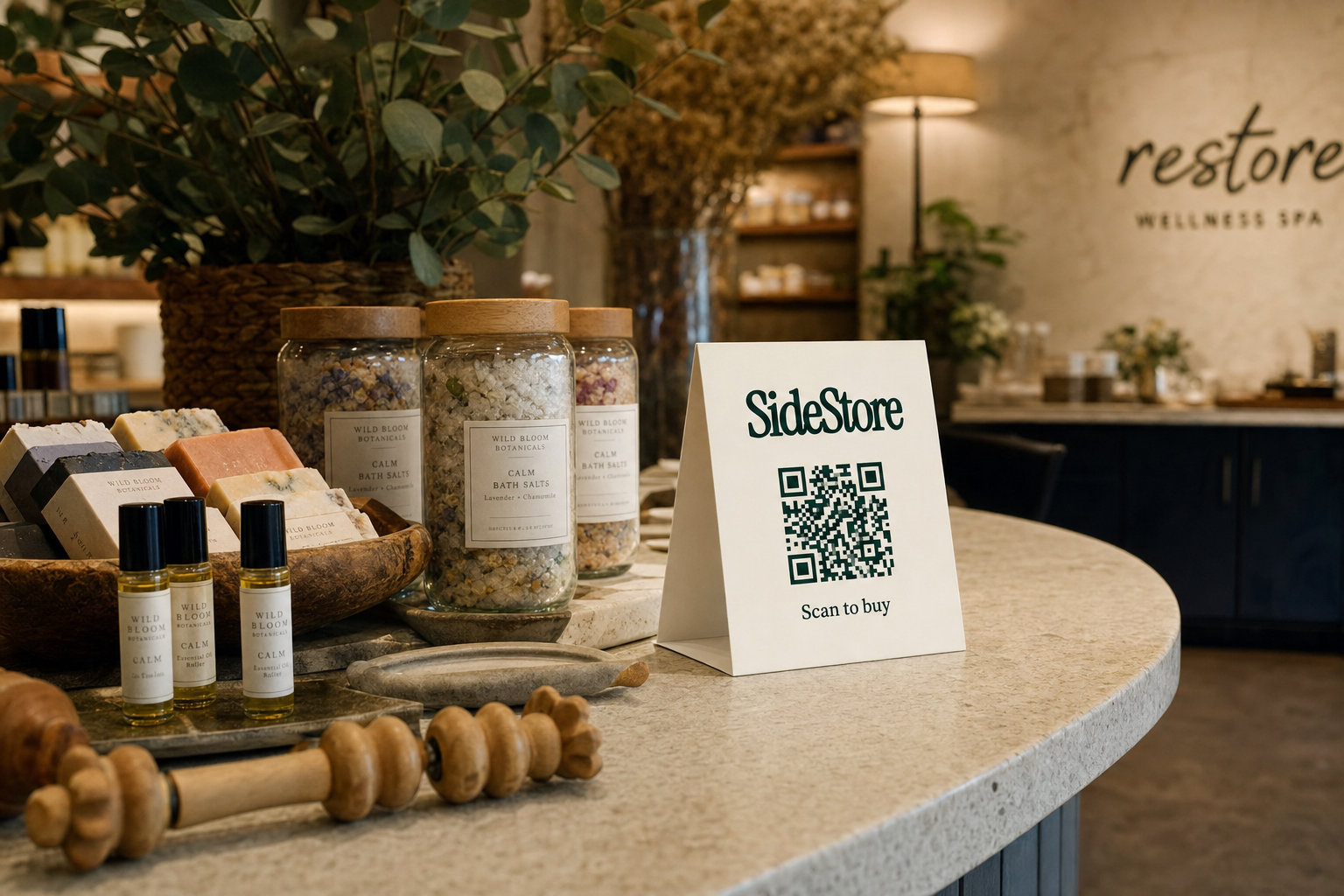
Managing one consignment placement is straightforward. Managing six across three venue types, in different towns, each with different split agreements, is where makers run into trouble without a proper system.
The SideStore Retail Widget is the interface that solves this. It's not just a checkout tool. It handles the full lifecycle of a consignment placement: modelling the terms, activating the placement, tracking stock in real time, attributing sales to the correct venue, and splitting payouts automatically to both the maker and the host.
In concrete terms, here's what the Retail Widget does at each stage:
Placement modelling. Before you go live, you set the product details, retail price, and split percentage for each venue. Each placement has its own attribution so you can see which locations sell and which don't.
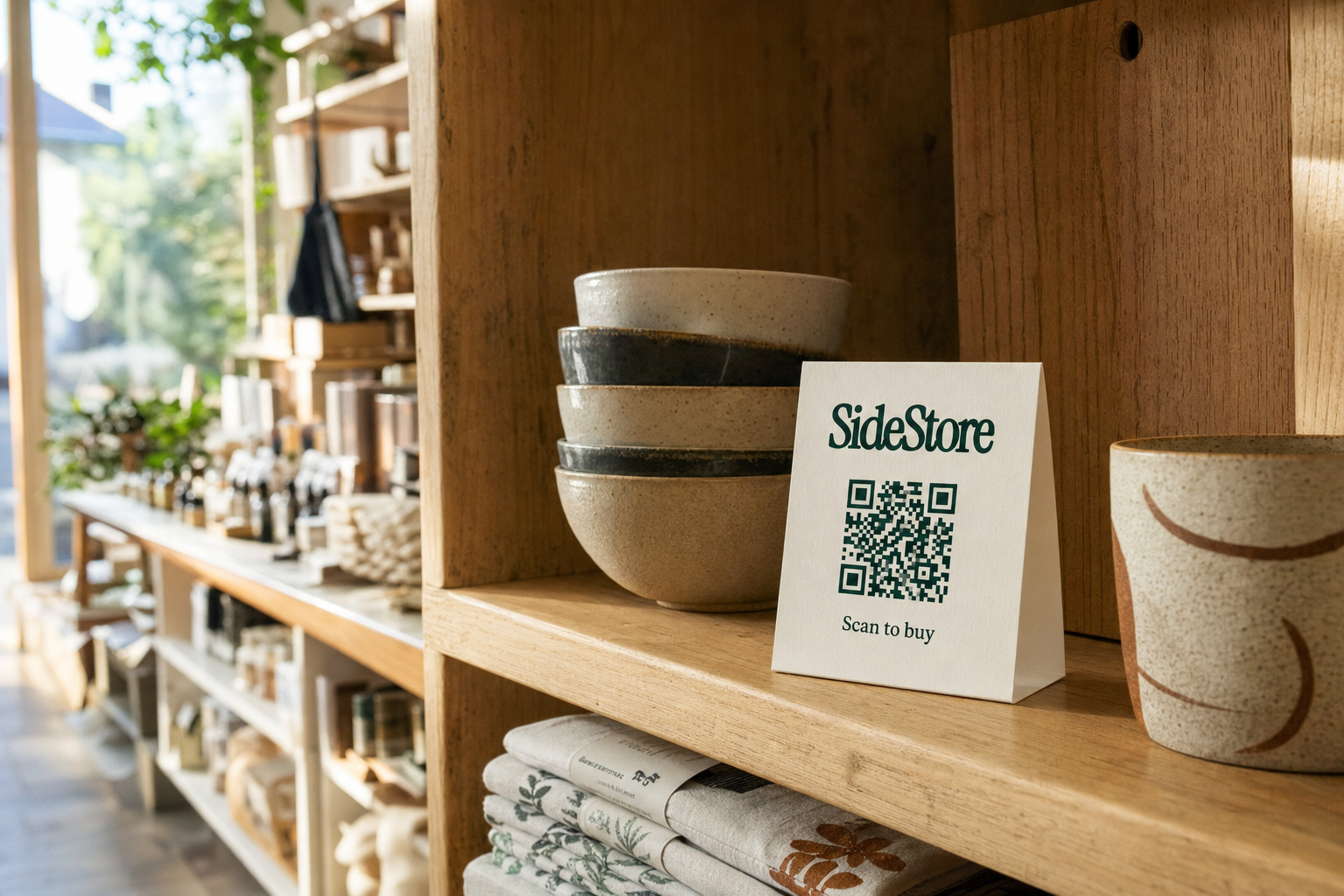
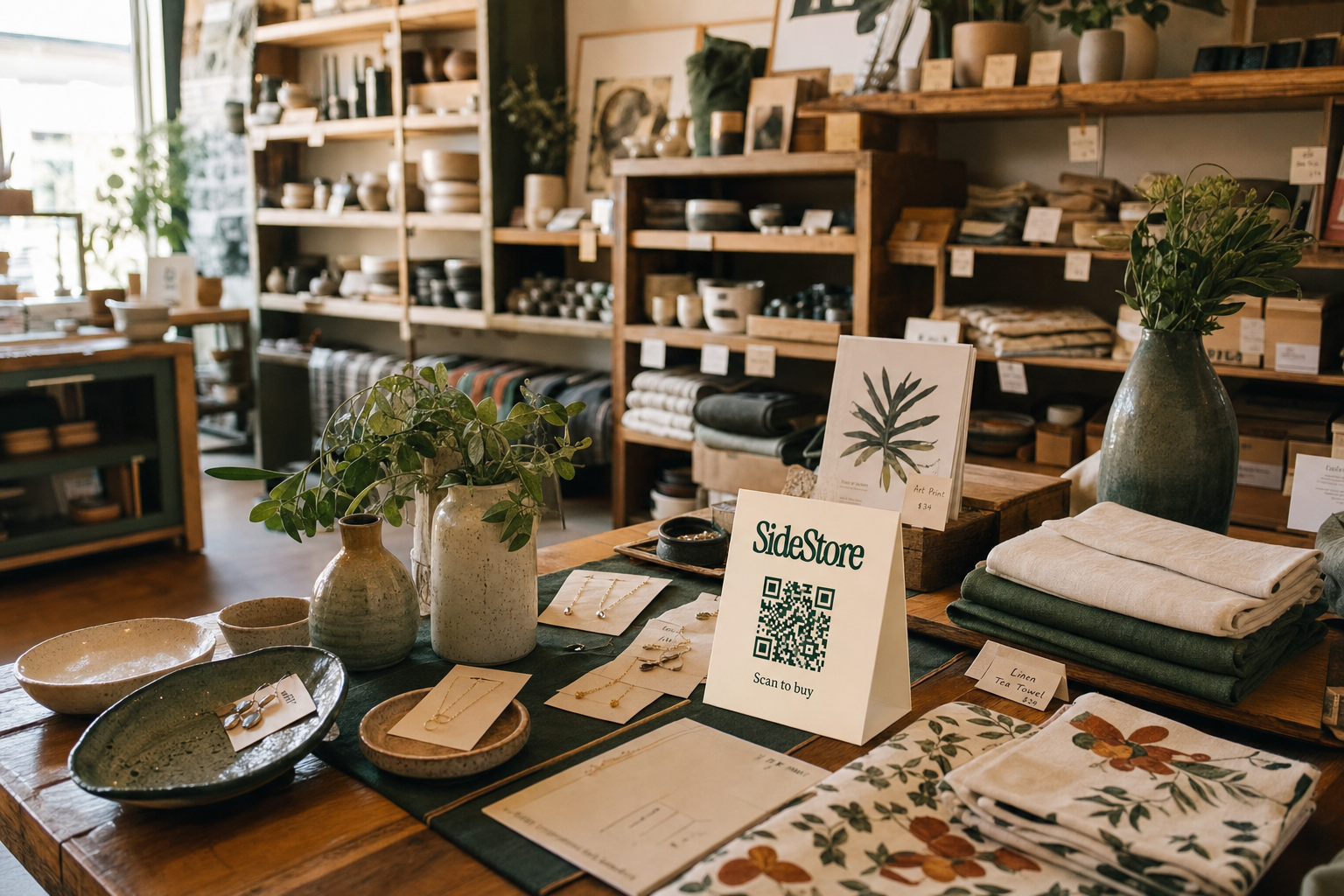
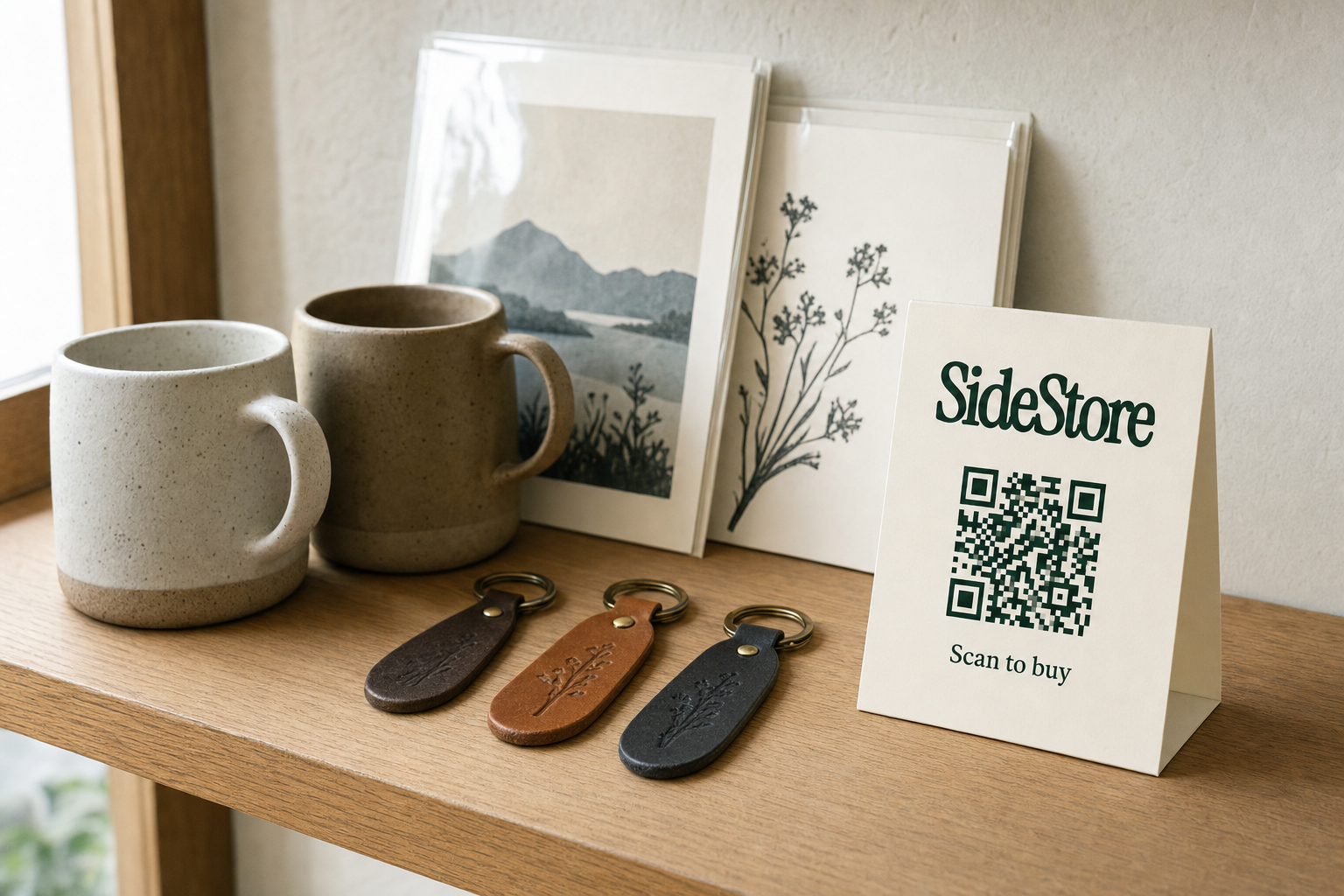
Scan-to-pay QR checkout. This is one function of the Retail Widget, not the whole product. You can print a SideStore QR card and attach it directly to each product. Alternatively, a merchant can display a single SideStore card that covers all the products in their placement. Either way, the buyer scans, pays, and the transaction is recorded instantly.
Live stock tracking. Every scan-to-pay transaction updates inventory in real time. You don't need to visit the venue to know you're running low on stock. The dashboard shows you what is live, what has sold, and what needs restocking across every placement.
Automatic split payouts. When a product sells, the maker's share and the host's share are calculated and settled automatically. No manual invoicing, no end-of-month reconciliation with each venue.
For makers considering how to manage this without building spreadsheets, the guide on consignment inventory software covers the landscape of tools available.
Your First Placement: A Step-by-Step Checklist
Getting your first consignment placement live is simpler than most makers expect. The process from first contact to first sale can happen within a week if you move deliberately.
Here's the five-step sequence:
Shortlist three venues using the tourist-walk method. Visit each as a customer, confirm they have visible shelf space and carry other local or handmade products, and note the contact name of whoever runs the floor.
Set your retail price using the backwards method. Start with your cost of goods, apply a 50% host split as your worst-case scenario, and ensure your gross margin is viable at that number. This is the pricing model from the consignment percentage section above.
Walk in with samples and pitch the consignment model in one sentence. Lead with zero stock risk for the host. Have your split percentage ready. Share your SideStore placement link so they can see how the checkout and tracking work.
Set up the placement in the SideStore Retail Widget. Enter the product details, retail price, and agreed split. The system generates the QR card for print or display. This is what "going live" means in SideStore terms: the placement is active, the QR checkout is live, and stock is being tracked from the first scan.
Check your dashboard at the end of the first week. Note which products are moving and whether the host needs a stock top-up. Early data is more useful than waiting a month for patterns to appear.
Frequently Asked Questions
These questions cover the most common points makers raise when researching how to sell souvenirs through local retailers via consignment.
What percentage do retailers take on consignment? Typical consignment splits range from 20% to 50% for the host venue, depending on venue type and product category. Cafes tend toward the lower end (20 to 30%), boutiques in the middle (30 to 40%), and hotel gift shops at the higher end (35 to 50%). These are common ranges; your actual split will depend on your product's margin and the volume the venue can deliver.
How do I get my products into local stores? Walk in with physical samples, lead with the host benefit (zero inventory risk, passive revenue from existing space), and propose a consignment arrangement with a specific split percentage. A SideStore placement link lets you show the host exactly how checkout and stock tracking will work before they commit. For makers approaching boutiques specifically, the guide on consignment in boutiques covers the pitch in detail.
Do I need a wholesale account to sell to hotels? No. Most independent hotels and B&Bs will consider a consignment arrangement without requiring a formal wholesale account or minimum order. You place products, they display them, and you split revenue when something sells. For the full mechanics of hotel placement, see the guide on selling local products to hotels.
How do I track stock across multiple consignment locations? Manually tracking stock across several venues via spreadsheet works for one or two placements. Beyond that, you need a system with live inventory updates per location. The SideStore Retail Widget tracks stock in real time across all placements from a single dashboard, with each sale attributed to the correct venue automatically.
Start Small, Place Deliberately, Scale What Works
The most effective way to sell souvenirs through local retailers is to start with one well-chosen placement, prove the sell-through, and expand from there. Consignment gives you a low-risk way to do this: no upfront stock cost for the host, no minimum commitment for you, and clear data on what moves and what doesn't.
Place your products in venues where the buyer already exists. Agree a split that works at your cost of goods. Use the consignment inventory tools available to manage stock and payouts without manual overhead. If you're still weighing up channels, review other channels beyond Etsy before committing to any single route.
This week: identify one venue, walk in with samples, and make the ask.