Pop-Up Shop Ideas That Work—and One Permanent Alternative That Doesn't Need a Weekend
8 proven pop-up shop ideas with honest trade-offs, setup steps, permit reality checks, and a permanent alternative: consignment placement through SideStore.
What Is a Pop-Up Shop, and Which Idea Fits You?
A pop-up shop is a temporary retail operation, lasting anywhere from a few hours to several weeks, set up in a location where the seller does not hold a permanent lease. The terms pop-up shop, pop-up store, and pop-up boutique are used interchangeably, though boutique tends to imply a curated, single-brand setup while store can describe anything from a table at a market to a fully fitted temporary space. The distinction rarely matters in practice.
For anyone searching what a pop-up store actually is, the short answer is: a deliberately short-lived retail moment, chosen for its urgency and location. The fuller picture, including pop-up retail: what it is and what it costs, involves real logistics, permits, display fixtures, transportation, setup and teardown time, and venue fees.
This article does two things: it gives you eight pop-up shop ideas worth actually running, with honest trade-offs attached to each, and it introduces a permanent alternative, consignment placement, for makers who want physical retail presence without recurring weekend effort.
8 Pop-Up Shop Ideas Worth Actually Running
The eight formats below cover the most practical pop-up shop ideas across product types and budgets. Each comes with a best-fit category, one honest trade-off, and at least one concrete setup detail so you know what you're actually committing to.
1. Café Corner Pop-Up
You negotiate a weekend slot inside an existing café, using one counter edge, a windowsill, or a small table to display your products alongside the café's own offer. Best for art prints, candles, ceramics, small-batch food products, and handmade accessories. The honest trade-off: you are dependent on the café's footfall and opening hours, and you will need to be physically present or trust a staff member to handle sales.
Concrete setup: a folding table, a small A-frame sign, and a card reader is enough to go live in most café spaces. For pop-up retail design principles, keeping your display compact and self-explanatory matters most in this environment.
Worth noting: if you want the café presence without the weekend commitment, permanent consignment in cafés is the always-on version of this concept. See how makers sell art prints in cafés for how that works in practice.
2. Farmers' Market Booth
A pitch at a weekly or monthly market, typically outdoors, in a grid of similar vendors. Best for food products, plants, handmade goods, and seasonal items. Trade-off: outdoor markets require weather resilience, both you and your display. Permit reality: most markets require vendors to hold their own public liability insurance and may require a food hygiene certificate for anything edible. Check requirements with the market organiser before you book.
Concrete setup: a 3m x 3m gazebo, weighted at all four legs, with a folding trestle table and a branded tablecloth. See display fixtures that work in pop-up retail for fixture options that pack flat.
3. Vacant Retail Unit (Short-Term Licence)
You take a short-term licence on an empty shop unit, typically one to four weeks. Best for clothing, homewares, furniture, or any brand wanting to present a full visual identity. Trade-off: this is the most expensive and logistically complex format, fit-out, insurance, utilities, and a proper lease-equivalent document are all in play.
Concrete setup: hire modular shelving, gridwall panels, and clothing rails from a visual merchandising supplier rather than buying outright.
4. Gallery or Studio Pop-Up
You partner with an artist-run gallery or maker studio to run a pop-up during their existing open hours or as a standalone event. Best for art, photography prints, ceramics, jewellery. Trade-off: audience reach is limited to existing gallery visitors unless you actively promote the event yourself.
5. Hotel Lobby Concession
You set up a small display in a hotel lobby, typically in partnership with the hotel's events or F&B team. Best for travel-relevant products: local artisan goods, skincare, accessories. Permit risk is low, you are on private property with the hotel's consent. Trade-off: negotiating access can be slow, and hotel procurement teams are not always responsive to small-batch makers.
6. Pop-Up at a Trade or Lifestyle Event
You book a stand at a consumer trade show, design fair, or lifestyle festival. Best for brand-building and volume sales over a concentrated two- to three-day period. Trade-off: stand fees at mid-tier events can be substantial, and the return depends heavily on the event's footfall quality, not just numbers.
Whether a coffee shop counts as a retail space for the purposes of event licensing is a question worth checking with your local authority if your pop-up combines café and retail elements.
7. Collaboration Pop-Up with Another Brand
You share a space and setup costs with one or two complementary makers. Best for reducing cost per head while reaching each other's audiences. Trade-off: logistics coordination doubles when two or three people are involved, agree in advance who handles setup, who handles payments, and how shared costs are split.
8. Online-to-Offline Flash Sale
You communicate a one-day physical location to your existing online audience and open for a single session, often in a rented room or community space. Best for makers with an established following who want to offer a physical experience to customers who have only ever bought digitally. Trade-off: success depends entirely on whether your existing audience will travel.
How Do You Set Up a Pop-Up Shop?
Setting up a pop-up shop involves eight distinct steps, each of which needs to be confirmed before you announce a date publicly. Skipping any one of them tends to create problems on the day itself.
Choose your format and product mix. Decide which of the eight concepts above fits your product category, budget, and available time. Not every product suits every format.
Find and book your venue. Options include market pitch bookings (usually via the market organiser's website), short-term retail licences through commercial property agents, shared event spaces on hourly or daily hire, and partnerships with existing businesses. For detail on what pop-up retail space costs to rent, rates vary significantly by city, format, and duration. Hourly hire is possible at some shared and co-working retail spaces, but it is not standard for market pitches, which are typically booked by the day or the event.
Check permit requirements. This is the step most first-time operators underestimate. Requirements vary by location, venue type, and what you are selling. Outdoor public space typically requires a street trading licence from your local authority. Food and drink products require hygiene certification. Private venues (hotels, galleries, cafés) require the venue's own consent but may not require an additional trading permit. Always contact your local authority directly before confirming a date, the rules are not uniform.
Arrange insurance. Public liability insurance is required by most market organisers and many venue operators. It is also sensible regardless of whether it is mandated.
Plan your display. Measure the space, design your layout, and confirm you have the right fixtures for your product type. Folding tables, gridwall panels, pegboards, and clothing rails are the workhorse fixtures of pop-up retail.
Set up your payment system. A mobile card reader paired with a cash float covers most situations. Confirm whether the venue has reliable mobile signal if you are relying on a card reader.
Promote the event. A pop-up with no promotion is a table in a room. Email your existing customers, post to social channels at least one week before, and confirm whether the venue or event organiser will also promote your presence.
Plan teardown and stock management. Know in advance what happens to unsold stock, how you are transporting everything, and how long teardown is permitted to take.
Pop-Up Format Comparison: Which Concept Fits Your Situation?
The right pop-up format depends on your product category, budget, and how much recurring effort you can sustain. The table below gives you a direct comparison across the eight formats so you can match your situation to the right concept without wading through each description again.
| Format | Best for | Setup effort | Permit risk | Typical cost range | Reusable display? |
|---|---|---|---|---|---|
| Café corner | Art, candles, accessories | Low | Low | Low | Yes |
| Farmers' market booth | Food, plants, handmade goods | Medium | Medium (outdoor licence, food cert) | Low, Medium | Yes |
| Vacant retail unit | Clothing, homewares, full brand experience | High | Low, Medium (short-term licence) | Medium, High | Partially |
| Gallery / studio | Art, ceramics, jewellery | Low, Medium | Low | Low | Yes |
| Hotel lobby concession | Local artisan goods, accessories, skincare | Low | Low (private venue) | Low, Medium | Yes |
| Trade or lifestyle event | Brand-building, volume sales | Medium, High | Low, Medium (event rules vary) | Medium, High | Yes |
| Collaboration pop-up | Any category, cost-sharing | Medium | As above by venue type | Low, Medium (shared) | Yes |
| Online-to-offline flash sale | Products with existing online following | Low, Medium | Low, Medium (venue-dependent) | Low | Yes |
Permit risk in this table is relative, not absolute. "Low" means fewer regulatory touchpoints are typical, not that no permit is ever required. Always verify with your local authority for your specific location, venue type, and product category before confirming your date.
One Alternative That Doesn't Need a Weekend: Consignment Placement
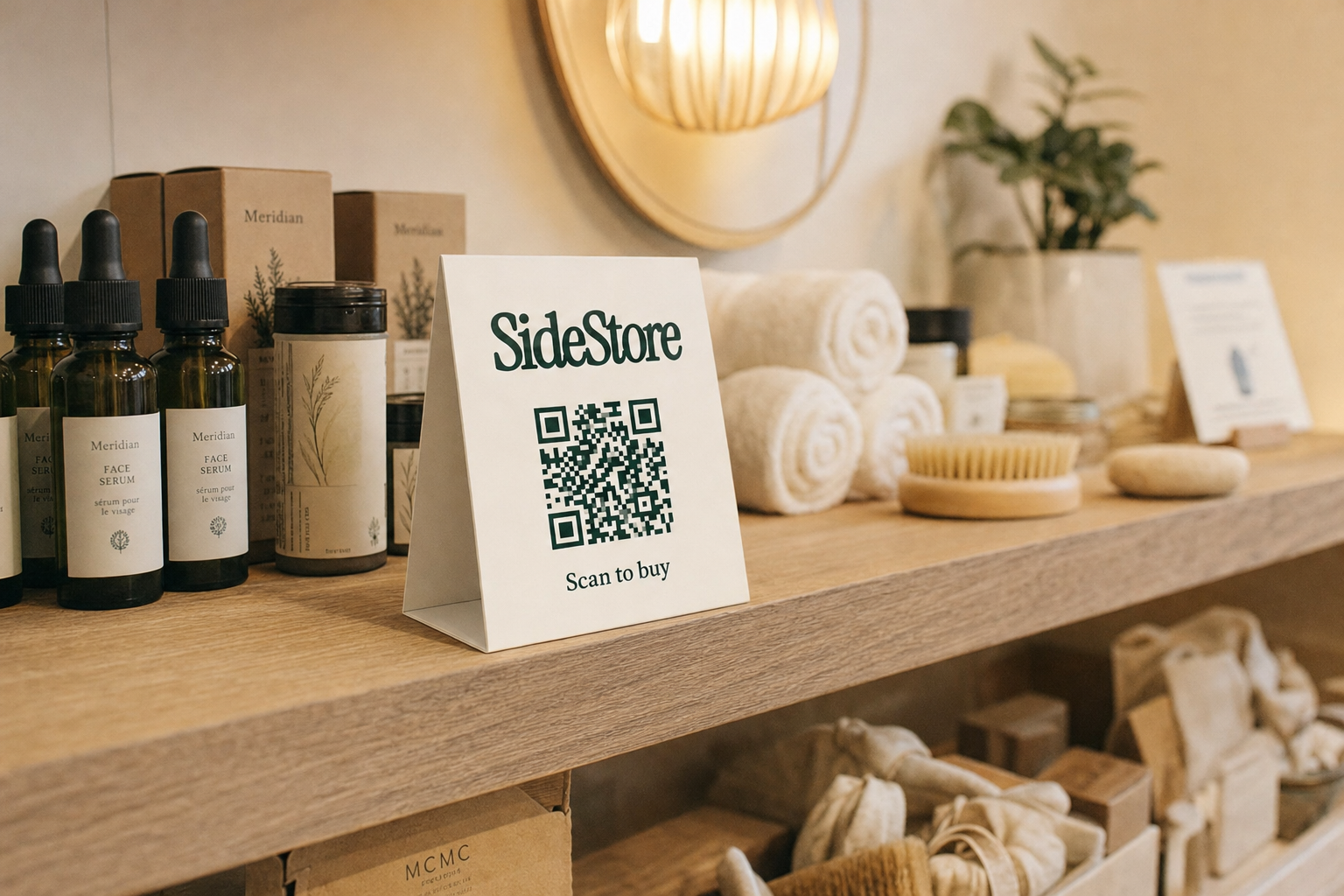
If you want physical retail presence without the recurring setup, teardown, and time commitment of a pop-up, consignment placement is the direct alternative. The model is straightforward: you place your products in a merchant's space, a café, boutique, hotel, or any retailer with available shelf space, and get paid when those products sell. The merchant earns a revenue split without buying any stock upfront, which means no inventory risk on their side.
This is not the same as a pop-up. A pop-up gives you event energy, direct customer interaction, and a concentrated sales window. Consignment gives you permanent presence without being present. Both are legitimate strategies; they serve different needs.
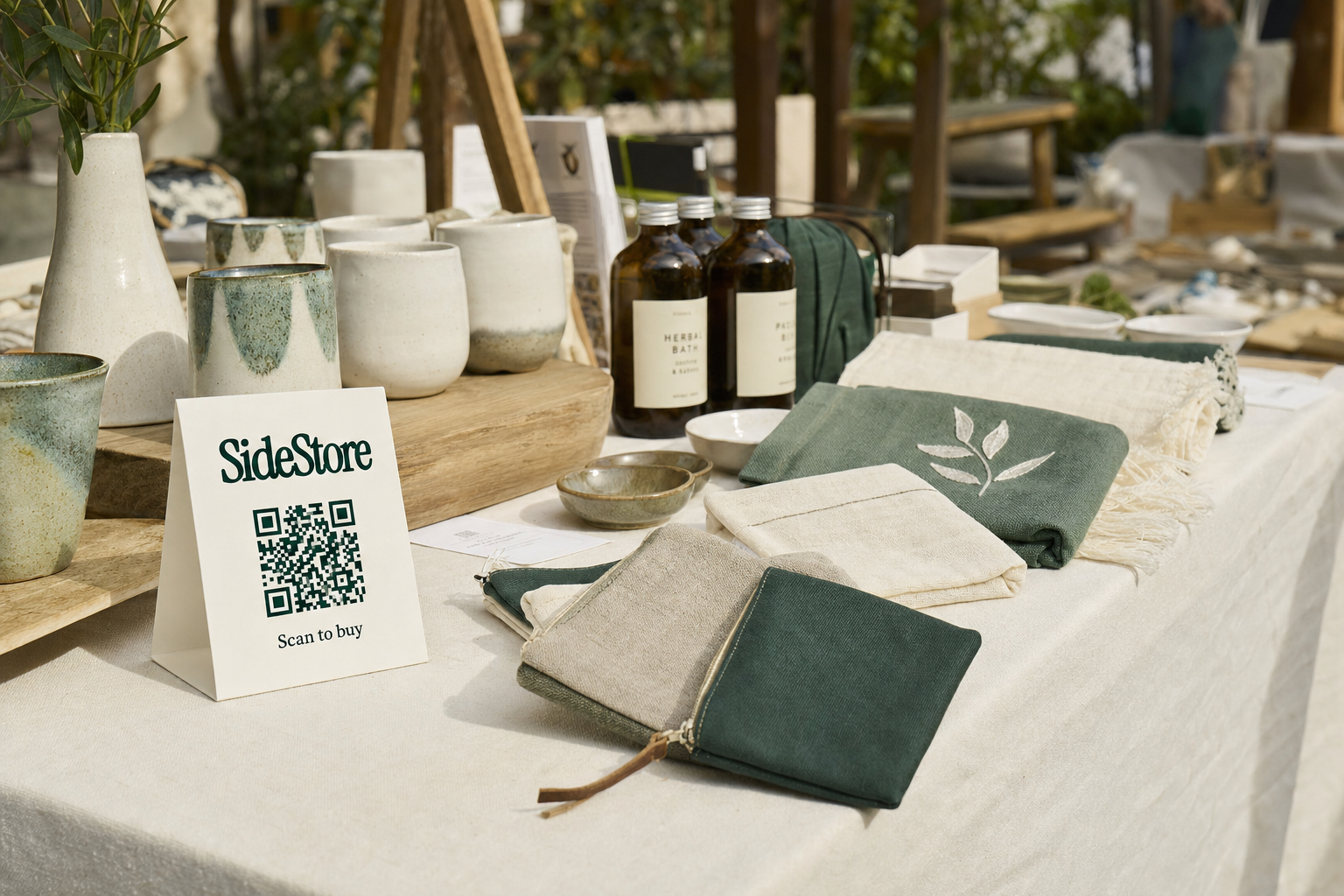
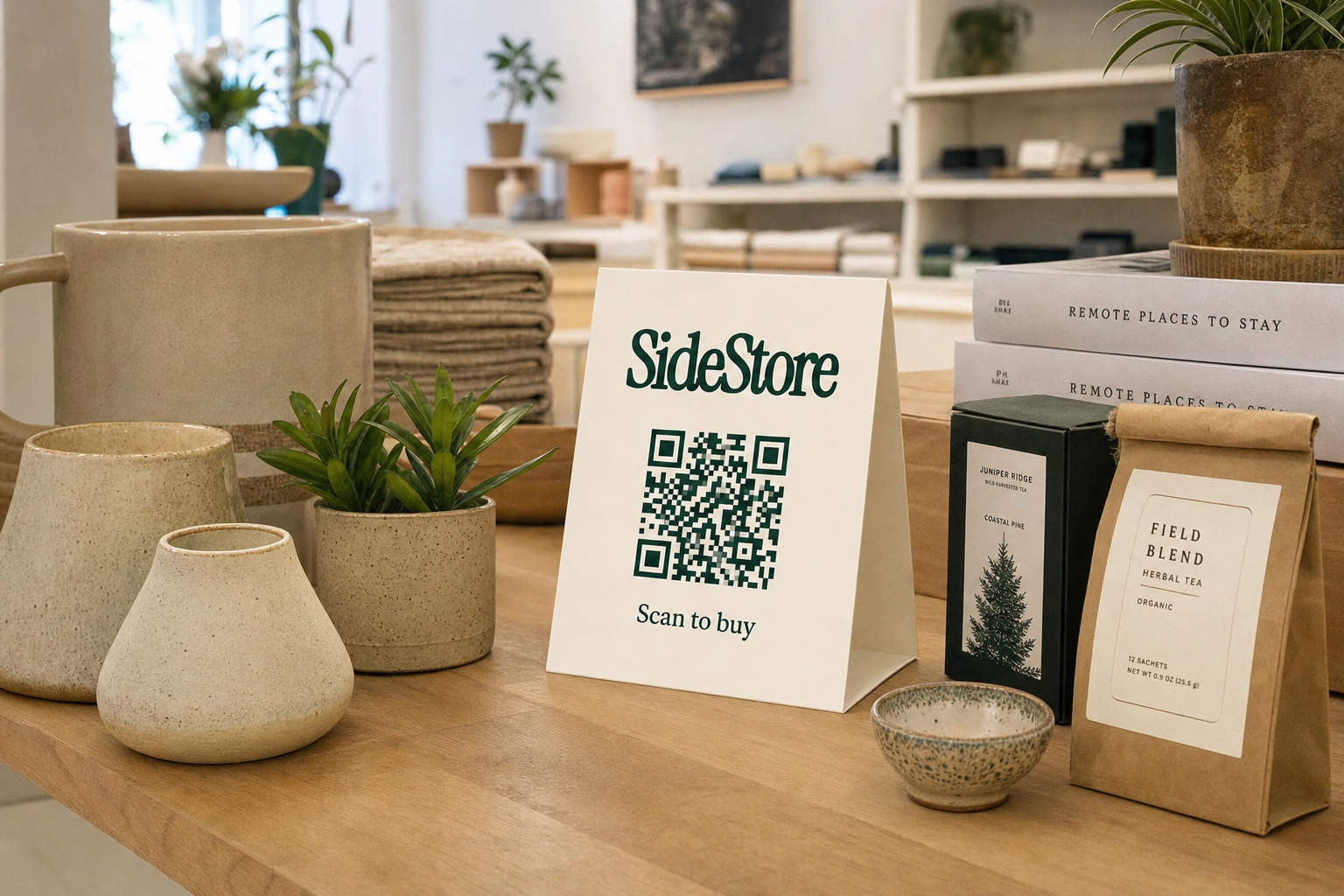
SideStore is built specifically for this model. The Retail Widget is the operational layer that makes consignment placements run without manual effort: it handles scan-to-pay checkout via a printable QR card (one function of the Widget, not the whole product), live stock tracking so you always know what's left on each shelf, placement attribution so you can see which merchant location is performing, and automatic split payouts to both you and the merchant when a sale completes. You manage everything from one dashboard, across as many placements as you have running.
For makers asking where to find suitable merchant locations, SideStore connects makers to merchants who have available shelf space and are open to hosting products on consignment. You do not need to cold-approach every café individually.
If you are considering adding a physical retail channel to an existing operation, start with how to sell through someone else's store and consignment stock terms and conditions to understand the commercial mechanics before you go live. For the broader case that physical retail and community commerce are worth building, how shared retail networks support local economies makes the argument plainly. And if you are currently selling only online, adding a physical channel alongside your online listings covers how the two work together.
Frequently Asked Questions About Pop-Up Shops
The questions below address the most common points of confusion that earlier sections have not fully resolved.
What is another term for a pop-up shop?
Pop-up shop, pop-up store, pop-up boutique, and pop-up retail are all used interchangeably in common usage. The slight distinctions, boutique implies a curated single-brand experience, store can be any scale, are real but rarely enforced. Temporary retail, flash retail, and short-term retail are also used in commercial property contexts. For practical purposes, the terms mean the same thing: a temporary physical selling operation with no permanent lease.
What permits are required to operate a pop-up shop?
Permit requirements depend on your location, what you are selling, and whether you are on public or private land. Outdoor trading in public spaces typically requires a street trading licence from your local authority. Food and drink products require a food hygiene certificate and sometimes separate licensing. On private premises, inside a café, hotel, or gallery, you generally need only the venue's permission, but local rules can vary. There is no single national standard. Contact your local authority before you confirm a date, not after.
What are examples of successful pop-up shop concepts?
The formats that consistently perform include farmers' market booths (high footfall, proven audience intent), café corner placements (low cost, embedded into daily customer behaviour), and trade event stands (concentrated exposure to buyers). Collaboration pop-ups also work well for cost-sharing among complementary makers. The concept matters less than the match between format and product category.
What are popular pop-up concepts for clothing retail?
For clothing, the vacant retail unit and trade or lifestyle event formats give the most useful display environment, clothing needs rails, space to browse, and ideally a mirror. A collaboration pop-up with a jewellery or accessories maker is also a natural fit. For effective display fixtures for pop-up stores, clothing rails, gridwall panels, and simple hanging systems pack flat and assemble quickly.
How do you design a coffee shop pop-up?
Keep it compact and visually self-contained. A café's primary function is serving drinks; your display should not interrupt customer flow or staff movement. A single shelf unit, a corner table, or a wall-mounted pegboard all work well. Use clear pricing, minimal text, and products that are relevant to the café's existing customer, makers who sell through café spaces consistently report that products aligned with the café's aesthetic and price point outsell those that feel incongruous. For more on selling in a café space, that article covers the product and display specifics.
Where can you find available pop-up shop locations?
Options include market pitch directories, commercial property agents specialising in short-term licences, local authority meanwhile-use schemes, and platforms that connect sellers to available retail space. For a consignment placement rather than a pop-up, SideStore connects makers directly to merchants with available shelf space. If a more managed approach is what you need, when a pop-up retail agency makes sense covers what agencies offer and when their fee is worth it.
Which Path Fits You?
If you want event energy and direct customer interaction, run a pop-up; if you want permanent shelf presence without recurring setup, start a consignment placement. The next concrete step for the second path is how to approach a local shop about stocking your products.