Pop-Up Retail Agency: What They Do, What They Cost, and When You Don't Need One
A pop-up retail agency is a specialist firm that plans, sources, and activates temporary retail spaces on behalf of brands. They handle location scouting, permits, fixture installation, and post-activation reporting, the logistics most people cannot or will not manage alone.
Whether you need one depends entirely on your budget and your goal. Agencies suit funded brands running time-limited campaigns. Independent makers and small merchants have a faster, lower-cost alternative: consignment placement. Read on to understand what pop-up retail is and what it costs, then decide which route fits your actual situation.
Here is what matters upfront: a full-service agency will handle the complexity you cannot manage yourself, licensing, logistics, staffing. But expect fees that only justify themselves above a certain activation budget. If you want shelf presence in the real world without a fixed lease or agency fees, consignment commerce gets you there without the event overhead.
What Does a Pop-Up Retail Agency Actually Do?
A pop-up retail agency manages end-to-end execution of temporary retail activations: finding the space, negotiating terms, designing the environment, coordinating logistics, and often staffing the activation itself. That is the core offering. Beyond that, what you get varies considerably by agency type.
Full-service agencies handle every layer. They scout and license pop-up retail space, produce the build-out, supply fixtures and signage, recruit temporary staff, and deliver post-event analytics. Think of them as a campaign production house for physical retail.
Location brokers do one thing: connect brands to available short-term retail space. They charge a finder's fee or a percentage of the rent. Everything else is your problem.
People use "pop-up shop" and "pop-up store" interchangeably, but agency clients often distinguish scope. A pop-up shop typically refers to a single stall or concession-style activation, a market booth, a corner in a café. A pop-up store implies a fully branded, standalone temporary retail environment with its own entrance, layout, and identity. Agencies typically specialise in the latter.
Typical agency clients are funded consumer brands, fashion labels, and product-launch campaigns with five-figure activation budgets. That does not mean independent makers cannot run a pop-up. Self-managed stall bookings and full-service agency activations are different products at very different price points. If you are looking for pop-up retail ideas that work for small businesses or thinking through how to design a pop-up retail space, both resources will help you calibrate scope before you talk to any agency.
What Does a Pop-Up Retail Agency Cost?
Agency fees for a pop-up retail activation typically start in the low five figures and scale upward from there, depending on duration, location, and the scope of services included. That range reflects genuine industry variation, not padding.
Here are the named line items you should expect:
Space rental. Short-term pop-up retail space is priced by day, week, or sometimes by the hour in high-traffic venues. Costs vary significantly by city and footfall. See what pop-up retail space costs to rent for a detailed breakdown.
Agency retainer or project fee. Full-service agencies typically charge a project management fee on top of all hard costs. This covers planning, coordination, and reporting. Industry practice varies, but expect this to represent a meaningful share of total spend.
Build-out and fixtures. Display tables, rails, shelving, branded signage, lighting, these are either hired or purchased. Bespoke builds cost considerably more than modular hired furniture.
Permits and licensing. Many jurisdictions require a temporary trading licence, a public liability certificate, or both. Costs and processing times vary by location and authority. An agency will typically handle applications, but permit fees pass through to the client.
Insurance. Public liability insurance is usually mandatory for any staffed retail activation. If the space owner requires it, budget for it separately.
Point-of-sale equipment. A card reader, tablet, and basic POS software are often not included in an agency quote. Confirm before signing.
Staffing. If the agency sources temporary sales staff, expect that cost on the invoice.
Can pop-up shops be rented on an hourly basis? Yes, in some venues, particularly shared market spaces, event halls, and some shopping centres. Hourly rates make sense for very short activations or product demos; they are less practical for brand-building pop-up stores that need setup and breakdown time.
How to Set Up and Stage a Pop-Up Retail Space
Setting up a pop-up retail space well starts with a single constraint: everything must be portable, modular, and fast to assemble. That principle drives every good fixture and layout decision.
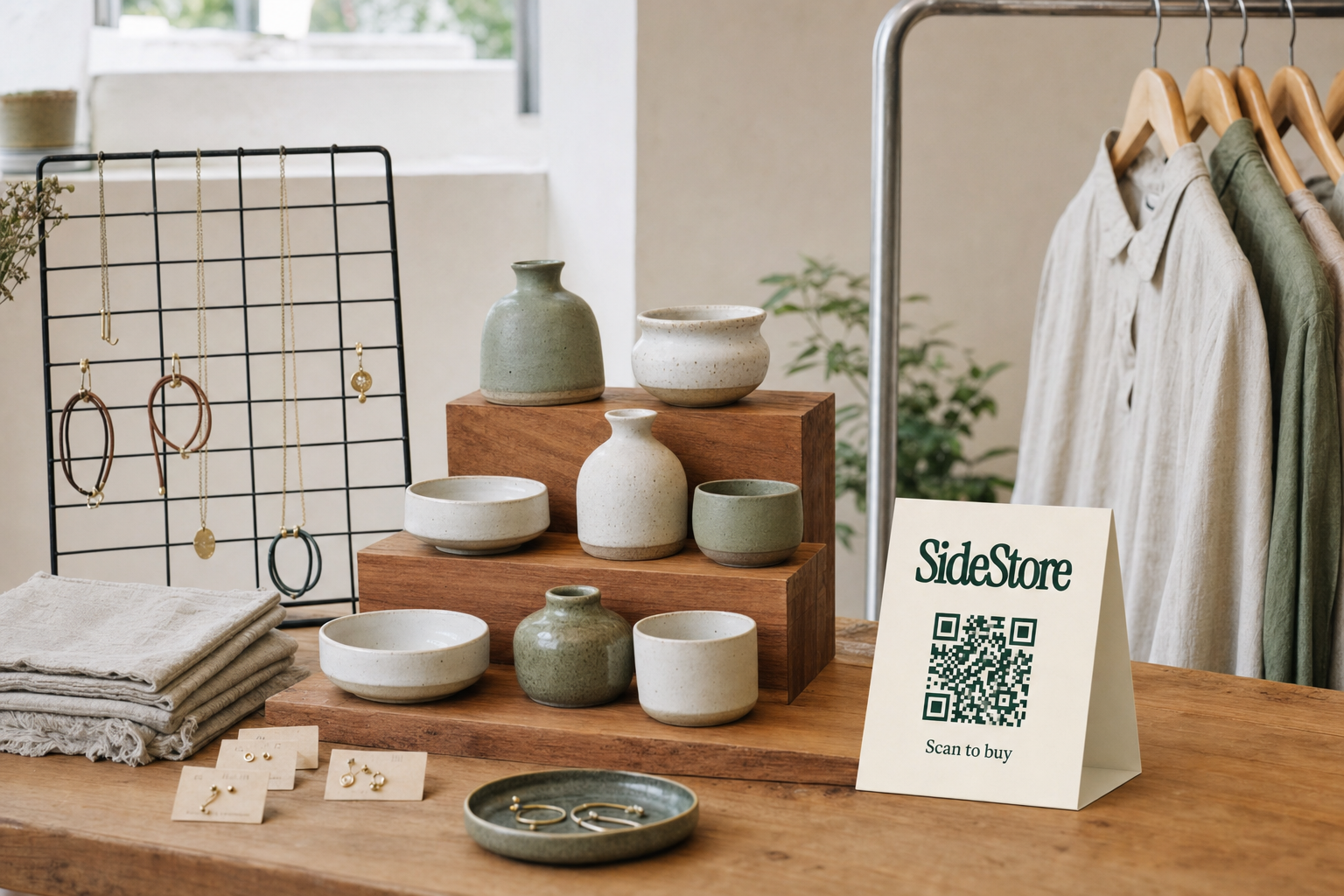
Choose modular fixtures. Grid-wall panels, folding tables, portable clothing rails, and stackable display cubes all pack flat and rebuild quickly. Avoid anything that requires permanent fixing to a wall or floor without explicit venue permission.
Work with the footprint, not against it. Map your floor plan before you arrive. Know where power points are. Mark a clear customer flow from entrance to hero product to checkout.
Light it deliberately. Natural light is ideal; bring clip-on or standing LED spots where the venue falls short. Poor lighting is the fastest way to make products look forgettable.
Create a clear focal point. One strong hero display draws the eye and anchors the space. Everything else supports it.
For detailed fixture and display options, see pop-up retail display ideas and fixture choices and how to design a pop-up retail space.
How do I become a pop-up vendor? Self-managed stall bookings through markets, craft fairs, and event organisers are the most accessible entry point. You book a pitch, supply your own display, and run the transaction yourself. That is a different proposition from an agency activation, smaller scale, lower cost, more hands-on. If you want shelf presence in a permanent retail environment without managing the event yourself, consignment placement is the alternative worth knowing.
On successful pop-up retail formats: beauty sampling activations in high-footfall shopping centres, fashion labels in short-term standalone stores, and artisan-market concessions in cafés and boutiques are format types that consistently perform well. The mechanics that make these work are the same regardless of the agency behind them: clear product focus, strong visual display, and simple checkout.
Agency, DIY Pop-Up, or Consignment Placement: A Side-by-Side Comparison
The honest question is not "should I do a pop-up?" but "which route to physical retail presence fits my actual situation?" The table below makes the trade-offs visible.
| Route | Upfront Cost | Time to Go Live | Inventory Risk | Ongoing Effort | Best For |
|---|---|---|---|---|---|
| Full-service agency pop-up | High | Weeks to months | Full (you own unsold stock) | Low (agency manages) | Funded brands, campaign launches |
| DIY pop-up (self-managed) | Moderate | Days to weeks | Full (you own unsold stock) | High (you manage everything) | Makers testing a market, craft vendors |
| Consignment placement (SideStore) | None | Days | None (host takes no inventory risk) | Low (Retail Widget handles checkout and payouts) | Independent makers wanting permanent shelf presence |
Pop-up retail profitability is not directly comparable to permanent retail profitability, a common mistake. Pop-ups carry setup costs, teardown costs, and no repeat customer base at that location. A well-run consignment placement in the right merchant space can outperform a one-week pop-up at lower cost, because it compounds over time rather than resetting after each activation.
How to sell through someone else's store explains the placement mechanics in detail. If you are thinking about tracking stock across multiple locations, consignment inventory software covers the tools available.
When You Don't Need a Pop-Up Retail Agency
If your budget does not comfortably cover a five-figure activation, you do not need a pop-up retail agency. That is not a failure of ambition, it is a clear signal to choose a different route.
Independent makers face a real distribution problem. Good products sit in studios because access to shelf space in real-world venues is expensive, opaque, and usually structured for bigger brands. An agency only widens that gap. What closes it is a model that puts your products in front of customers without requiring you to pay for the space upfront.
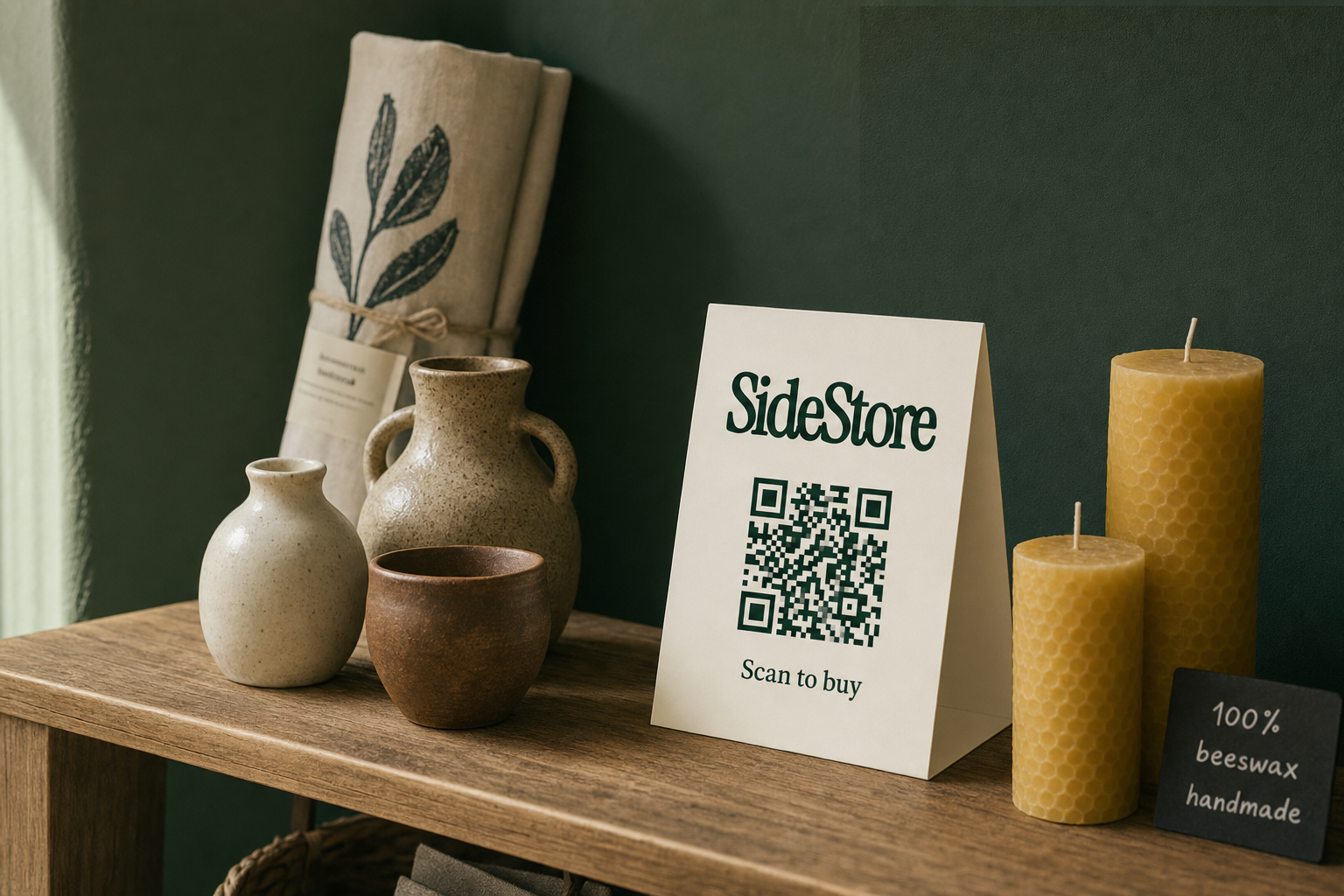
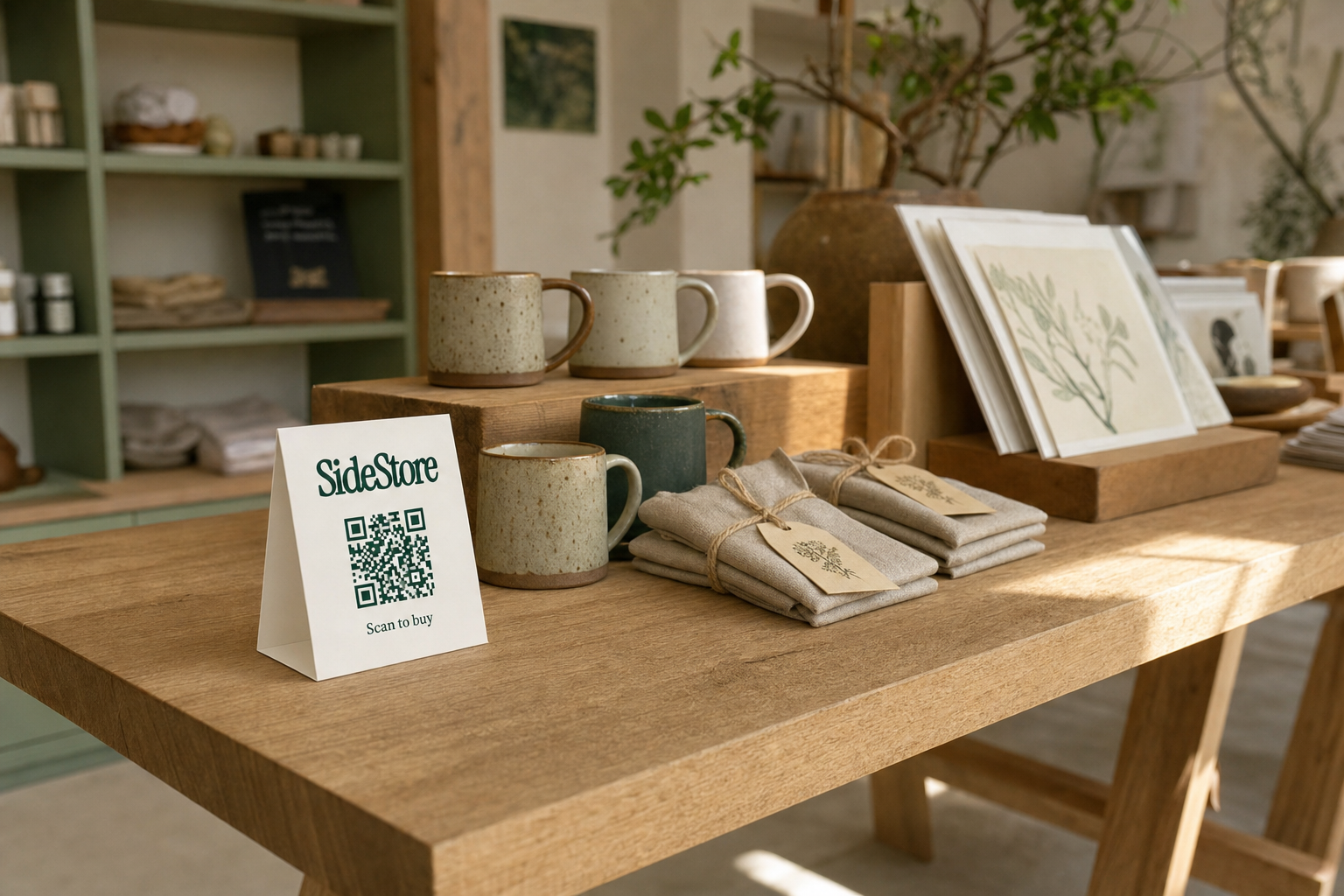
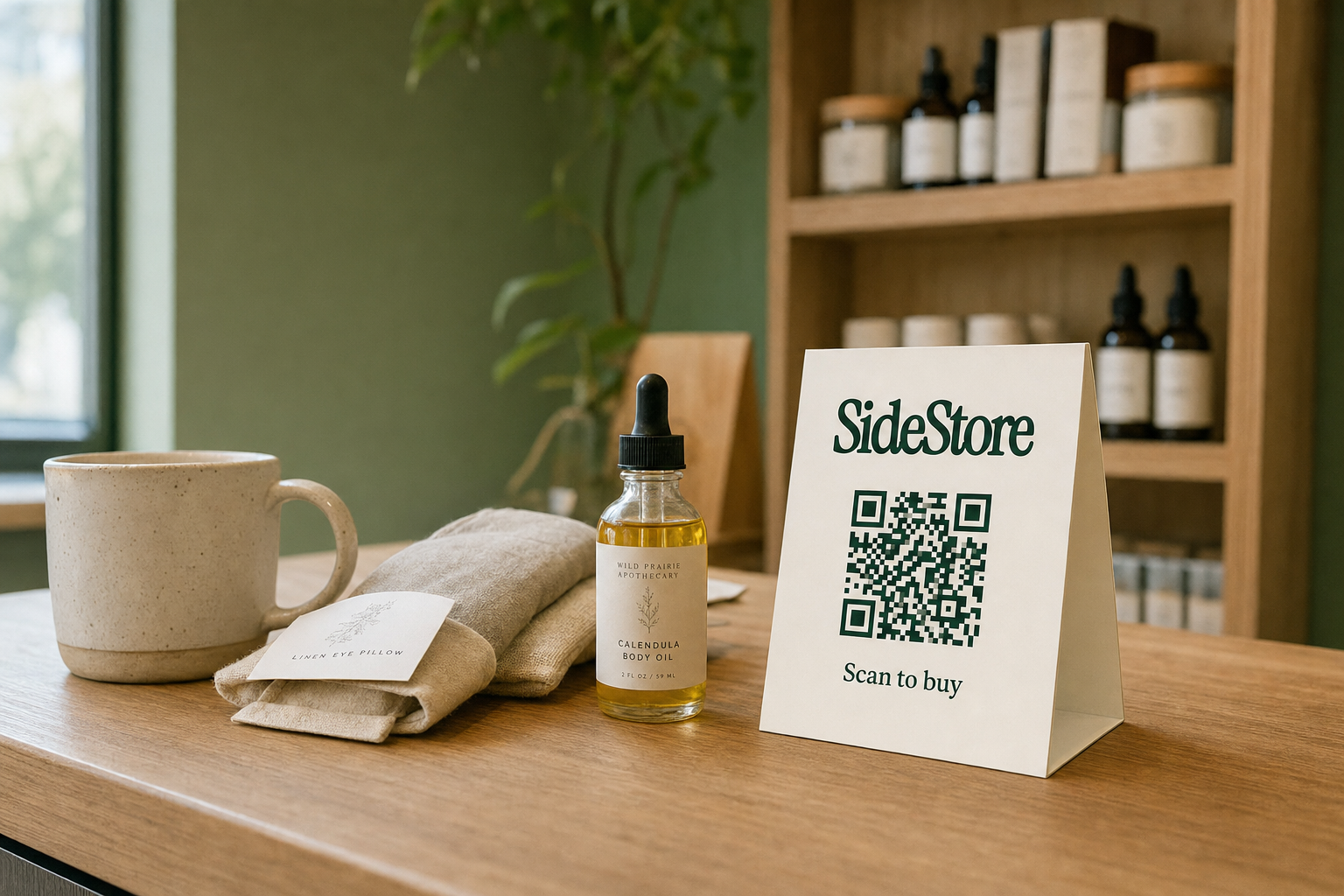
Consignment placement through SideStore is built for exactly that situation. You place your products in a merchant space, a café, boutique, or hotel, on consignment. The merchant earns a split on every sale. You pay nothing upfront. The Retail Widget handles checkout through scan-to-pay, tracks stock in real time, and settles the split automatically. No event logistics. No teardown. No permit applications.
The key distinction: consignment placements are permanent shelf presence, not event-based. Your product is available every day the merchant is open, not just during a two-week activation window.
That permanence matters for makers who want to build a distributed consignment network rather than run a campaign. Start with one placement, learn what sells, and expand from there.
To open that conversation with a local merchant, how to approach a local shop about stocking your products walks through the practical steps. Before that conversation, know what a consignment agreement should include so the terms are clear from the start. For broader context on why this model matters, how shared retail networks support local economies is worth reading.
Where to Find Pop-Up Retail Space (Without an Agency)
Finding pop-up retail space independently starts with a direct approach: contact venues that already have foot traffic and underused floor space. Cafés, independent boutiques, hotel lobbies, bookshops, and co-working spaces are all realistic targets.
Beyond direct outreach, consider these channels:
Short-term space marketplaces. Several platforms list available retail space by day or week, covering empty shops, shared market stalls, and event halls. Search for short-term or temporary retail listings in your target city. See pop-up retail space for rent for a fuller guide to sourcing options.
Market and event organisers. Craft markets, food markets, and seasonal retail events sell pitch space directly. These are self-managed and lower-cost than agency-led activations.
Local business improvement districts. Some towns and city authorities actively connect brands with empty high-street units for short-term use to reduce vacancy rates.
Licence versus lease. Most short-term pop-up retail arrangements use a licence rather than a lease. A licence grants permission to occupy a space without creating a tenancy, it is easier to end and carries fewer legal obligations. Always confirm which instrument applies before you trade.
What is a pop-up event? A pop-up event is a time-limited brand activation, a temporary retail or brand experience that runs for hours, days, or weeks before closing. That is distinct from a consignment placement, which is permanent and ongoing. If the space-sourcing complexity of a pop-up event is the barrier, consignment removes it: you place the product, and the merchant provides the space, the footfall, and the audience. For ideas on which products suit this format, retail products that sell well in cafés is a practical starting point.
Frequently Asked Questions
These questions come directly from what real makers, merchants, and small business owners ask when researching pop-up retail.
How do I open a pop-up store?
Choose a format (market stall, licensed empty unit, or concession within an existing venue), find a suitable space through direct outreach or a short-term space platform, confirm the licence terms and any permit requirements, and build out with modular fixtures. Budget for insurance, POS equipment, and permits before you sign anything. For maker-specific pop-up retail ideas for small businesses, the linked guide covers practical formats.
What is the most profitable retail store format?
Pop-up and permanent retail are not directly comparable on profitability. Permanent retail builds a returning customer base; pop-ups generate concentrated short-term revenue but carry setup and teardown costs that reduce net margin. The most profitable format is the one that fits your cost base and customer acquisition reality. A consignment placement in the right venue can outperform a pop-up over time because it runs continuously at near-zero ongoing cost.
Do I need a licence to operate a pop-up shop?
Licence requirements vary by jurisdiction, venue type, and what you are selling. In many places, you need a temporary trading licence, public liability insurance, and (depending on your product category) food handling or other sector-specific permits. Check with your local authority or business licensing office before trading. Venue managers will often tell you what they require as a condition of the space.
How do I become a pop-up vendor?
Register with craft market and event organisers in your area, or book pitch space directly through short-term retail space platforms. As a vendor you supply your own display, manage your own transactions, and handle your own stock. It is the most accessible and lowest-cost entry into pop-up retail. If you want shelf presence that runs between events, consider consignment placement as a complementary or alternative route.
What is a pop-up event?
A pop-up event is a time-limited retail or brand activation, it opens, runs for a defined period (hours, days, or weeks), then closes. It differs from a permanent shop in that the space, fixtures, and staffing are temporary. It differs from a consignment placement in that it requires active setup and management and ends at a fixed point rather than running continuously.
Where can I find available pop-up retail space to rent?
Short-term space marketplaces list available units, concessions, and market pitches by day or week. Direct outreach to cafés, boutiques, and hotels with underused floor space is often more effective and faster. Local business improvement districts sometimes facilitate short-term placements in vacant high-street units. The pop-up retail space for rent guide covers sourcing channels in detail.
Can pop-up shops be rented on an hourly basis?
Yes, in some venues. Shared market spaces, shopping centre event halls, and some co-working venues offer hourly rates. These are practical for short product demos or single-day activations rather than full pop-up store builds, where setup and breakdown time alone may exceed the trading period.
What are common pop-up shop ideas for small businesses?
Format ideas that suit small businesses include a concession within a café or bookshop, a pitch at a craft or artisan market, a seasonal stall in a shopping centre, or a consignment display in a boutique. Whether a coffee shop counts as a retail space is worth reading if a café is your target venue. For product-specific angles, how to sell handmade products in boutiques and how to sell art prints in cafés both offer practical starting points.
What fixtures and displays work best for pop-up retail?
Modular, portable fixtures are the default choice: grid-wall panels, folding tables, portable rails, and stackable display units. They pack flat, assemble without tools, and adapt to different floor plans. Avoid anything that requires permanent fixing. A single strong hero display with deliberate lighting does more work than a cluttered arrangement of merchandise.
What are examples of successful pop-up retail formats and brands?
Beauty sampling activations in high-footfall shopping centre concessions, fashion labels in short-term standalone stores, and artisan makers in café concessions and market stalls are format types that consistently work. The mechanics that make these succeed, clear product focus, strong visual display, and a simple checkout experience, are the same regardless of the agency behind them.
The Clearer Path to Physical Retail Presence
The answer to "do I need a pop-up retail agency?" is usually no, unless you have the budget and the campaign logic to justify one. Most independent makers do not. Funded brands running time-limited activations do.
For everyone else, the practical routes are a self-managed pop-up (lower cost, higher effort) or consignment placement (no upfront cost, permanent shelf presence, handled automatically by the Retail Widget). Both are real options. Consignment placement through SideStore is the one that builds a distributed consignment network without opening a store of your own.
Start with one placement. Place your product in a merchant space that already has your customers. Let what hosts earn from retail placements in a café show you what the host side looks like, and build from there.