Pop-Up Retail Ideas That Actually Work (and One Model That Skips the Setup Entirely)
A pop-up retail idea is a short-term, location-specific selling concept that lets you test a product, a market, or a format without committing to a permanent lease. The best ones are specific, low-overhead, and tied to a clear customer moment.
Pop-up retail spans far beyond fashion markets. Food, art, ceramics, skincare, books, plants, candles, and locally made goods all sell well through temporary retail formats. The core variables are the same regardless of category: venue, footfall, setup cost, and how efficiently you convert browsers into buyers.
You have more format options than most guides acknowledge. Outdoor markets, in-store concessions, hotel lobby placements, café integrations, and consignment arrangements all qualify as pop-up retail. Some require a full setup-and-teardown cycle every weekend. Others, like consignment placements managed through the SideStore Retail Widget, run continuously in a host venue without you being physically present.
If you are weighing your options, ask yourself this: do you want to be there, or do you want your products to be there? Your answer determines which format fits.
What Products and Merchandise Actually Sell in Pop-Up Shops?
Almost any physical product can sell through a pop-up format, provided the price point, presentation, and venue footfall align. Clothing is the most visible category, but it is far from the only one that performs.
The assumption that pop-ups are clothing-only is one of the most common mistakes prospective operators make. The format is not product-specific. What matters is whether the product is portable, presentable, and priced for an impulse or considered in-person purchase.
Categories that consistently perform well in pop-up retail include:
- Artisan food and drink (preserves, hot sauces, small-batch coffee, chocolate)
- Skincare and beauty (handmade soaps, balms, scented candles)
- Stationery and paper goods (greeting cards, art prints, journals)
- Ceramics and homewares
- Jewellery and accessories
- Plants and botanicals
- Books and zines, especially from independent authors
Many makers find that mid-range price points (roughly £15 to £80) move fastest in pop-up settings, because buyers have enough cash-on-hand intent to decide quickly without deliberating for days. Very low price points can work at high volume; higher price points benefit from slower, more curated formats.
If you make art prints, the same logic that applies to a pop-up stall applies to selling art prints on consignment in local shops. Similarly, jewellery designed for a market table translates cleanly to placing handmade jewellery in boutiques. The product is the same; the placement model changes.
10 Pop-Up Retail Ideas That Have Real-World Track Records
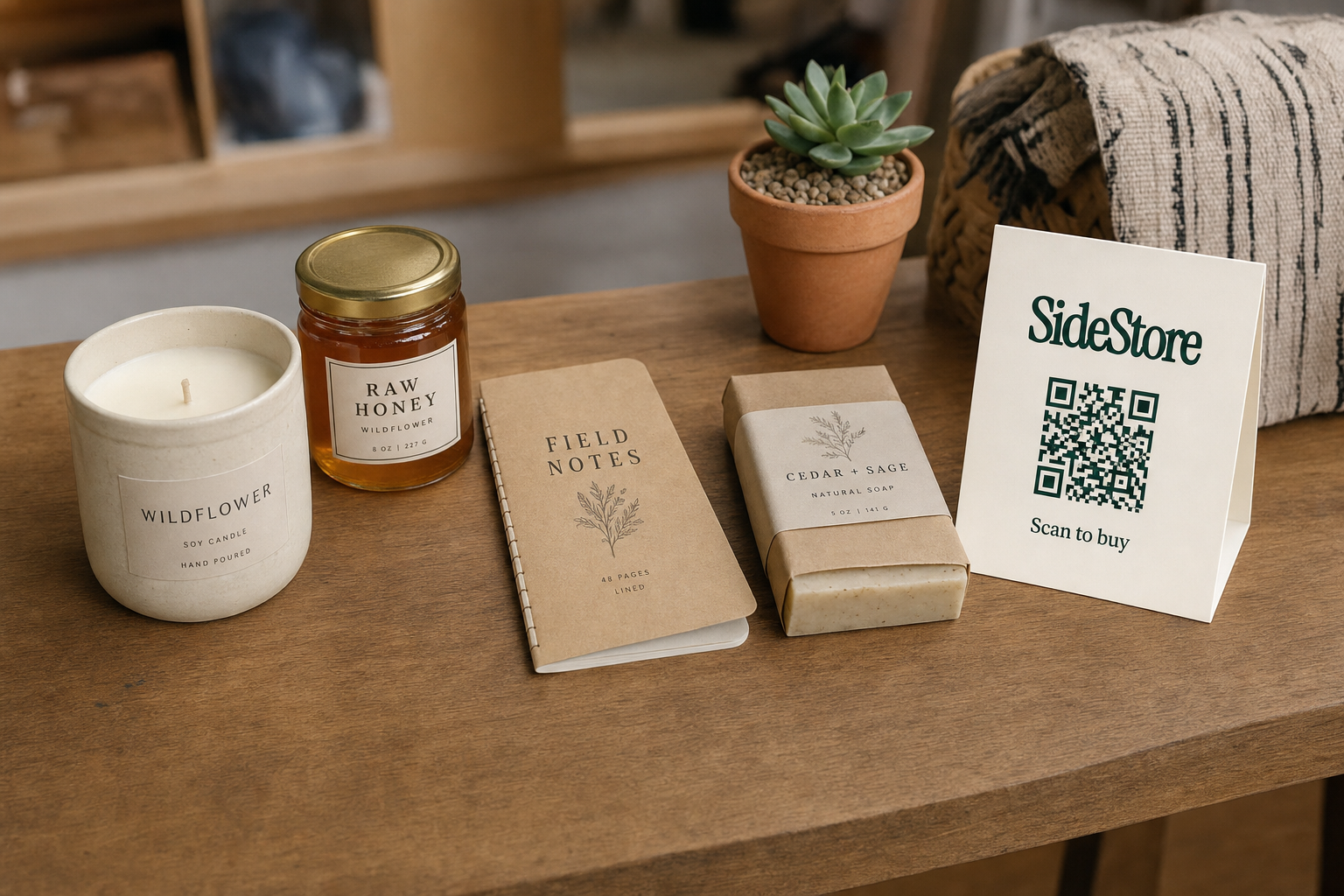
The pop-up retail formats with the strongest track records meet customers where curiosity is already high, whether at a weekend market, inside a host business, or in a curated event space. Here are ten formats worth considering seriously.
1. Outdoor Market Stall The outdoor market stall is the most accessible entry point for new makers. Pitches at farmers markets, craft fairs, and street markets typically require only a table, a gazebo, and a permit from the event organiser. Setup costs are low and the customer base is self-selecting: people already intending to browse and buy. Makers who run this format report that consistent presence at the same market builds repeat customer relationships over time. The limitation is weather dependency and the physical toll of repeated setup and teardown every weekend. For a realistic look at what pop-up retail involves and costs, it is worth reading beyond the surface appeal.
2. In-Store Concession or Shop-Within-a-Shop Renting a dedicated section inside an existing retailer gives you footfall without finding your own venue. You negotiate a fixed pitch fee or revenue share with the host store, set up a branded display, and sell alongside their permanent inventory. Many operators find this format suits higher-ticket products that benefit from a calm, sheltered environment. The key variable is how well your product aligns with the host store's existing customer base. If you are exploring renting pop-up retail space, in-store concessions are often more affordable than standalone kiosks.
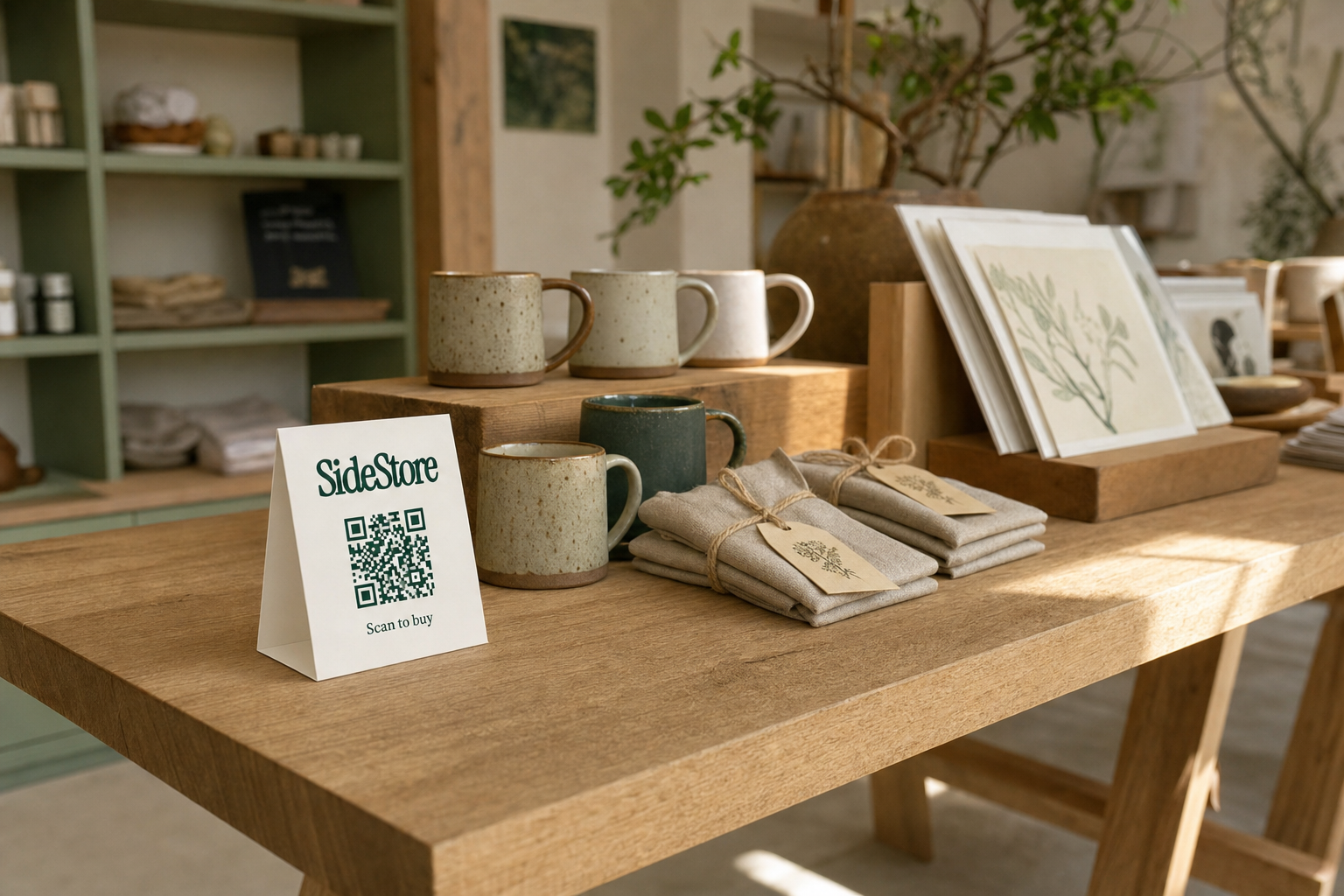
3. Café or Coffee Shop Integration Placing products inside a working café gives you access to dwell time: customers who sit for twenty minutes are far more likely to notice a well-displayed product than a commuter rushing past a market stall. Ceramics, candles, cards, and small art prints perform particularly well in this setting. The host café benefits from an enriched atmosphere and, under a consignment or revenue-share arrangement, a share of each sale. If you are considering selling products inside a café, the arrangement typically requires a small branded display stand and a clear pricing mechanism.
4. Hotel Lobby Placement Hotel lobbies attract guests who are actively looking to take something local home. Locally made goods, artisan food items, and distinctive handcrafted pieces fit the gift-buying mindset that characterises hotel guests. Many makers who have tried this format report that average transaction values are higher than at street markets, because the customer context is leisure rather than commute. A modest display near reception or in a lounge area is often enough. The guide to placing products in hotel lobbies covers how to approach and structure these arrangements.
5. Pop-Up Retail Cart or Kiosk A freestanding retail cart or kiosk, typically in a shopping centre corridor or transport hub, is a step up in visibility and cost from a market stall. Carts are mobile, reusable, and can be branded consistently across multiple locations. They suit accessories, beauty products, and small electronics well. Many operators find that shopping centre management companies have structured short-term licence agreements specifically for pop-up carts, making the commercial arrangement more straightforward than negotiating one-off venue rentals.
6. Pop-Up Clothing Rail or Fashion Showroom For clothing makers and independent designers, the pop-up showroom model, where you rent a space for one to three days and invite customers to a curated showing, generates focused sales energy without a permanent shop commitment. Pairing this with a small editorial moment (a lookbook, a short run of invitations) lifts conversion. Many makers who run this format find that the event framing shifts customer behaviour: people come with buying intent, not just curiosity.
7. Outdoor Food and Drink Stall A temporary food stall or street food operation shares the structural logic of a market stall but has its own regulatory layer: food hygiene certification, council trading licences, and sometimes insurance specific to food service. Bakers, preserves makers, and small-batch drinks producers operate successfully this way. The profitability is strongly tied to pitch cost, ingredient margins, and footfall volume. Many operators in this category treat outdoor events as a marketing channel as much as a sales channel, using them to build name recognition.
8. Temporary Bakery or Baked Goods Table A pop-up bakery, whether a table at an existing market, a one-day takeover of a café's counter space, or a standalone event in a hired venue, suits makers who produce in small batches and need immediate customer feedback. The format works best when produce is visually arresting (presented in open trays or tiered displays) and when stock quantities are deliberately limited to create a sense of scarcity. Many bakers who run this concept find that pre-order lists, collected via a simple sign-up sheet at the pop-up, give them a demand signal for the next event.
9. Event-Embedded Retail Placing a retail element inside another event, such as a wellness workshop, a plant sale, or a community fair, means you inherit footfall from an organiser who has already done the marketing. The host event draws the audience; your table or display converts some of that audience into buyers. Makers who embed retail into events this way often report lower pitch costs and stronger community alignment than standalone pop-ups.
10. Consignment Placement in a Permanent Venue This is the format that functions like a pop-up but without the repeated setup. You place your products in a merchant space (a café, boutique, or hotel) on consignment: you are paid when products sell, with no upfront cost to the host and no inventory risk on their side. The SideStore Retail Widget manages the placement end to end: checkout, stock tracking, placement attribution, and automatic split payouts. Your products are present and selling even when you are not in the room.
Comparing Pop-Up Formats: Setup, Cost, and Fit at a Glance
Choosing between pop-up retail formats is easier with a side-by-side view. Setup cost, permit requirements, and product fit vary significantly across formats.
| Format | Typical Setup Cost | Permit Needed? | Best Product Types | Teardown Required? | Profitability Potential |
|---|---|---|---|---|---|
| Outdoor Market Stall | £50, £250 per event | Usually via event organiser | Food, crafts, clothing, plants | Yes, every event | Moderate |
| In-Store Concession | £200, £800/month | Rarely (host holds licence) | Homewares, beauty, accessories | No (semi-permanent) | Moderate to high |
| Café Integration | Low (display stand cost) | No | Art prints, ceramics, cards | No | Low to moderate |
| Hotel Lobby Placement | Low to nil | No | Local goods, artisan gifts | No | Moderate to high |
| Retail Cart / Kiosk | £500, £2,000 setup + licence | Yes (shopping centre or council) | Accessories, beauty, small gifts | Yes (relocatable) | Moderate to high |
| Pop-Up Showroom (clothing) | £300, £1,500 venue hire | Sometimes (short-term licence) | Clothing, accessories | Yes | High (if curated) |
| Food Stall / Bakery Table | £100, £400 per event | Yes (food hygiene + trading) | Food, baked goods, drinks | Yes, every event | Moderate |
| Consignment Placement | Near zero (Retail Widget) | No (host venue covers trading) | Almost any physical product | No | Ongoing, passive |
One pattern stands out: formats requiring repeated teardown also tend to carry repeated costs. Consignment placements and in-store concessions stand apart because the placement is continuous. For typical costs for renting a pop-up retail space, expect the figures above to vary by city, venue type, and season.
Do You Need to Register a Business to Run a Pop-Up Shop?
In most jurisdictions, you do not need to formally register a company to test a pop-up retail concept. Sole trader or self-employed status is sufficient for most early-stage operators, and registration requirements typically hinge on your trading structure and revenue, not the format of your selling.
Many people assume that operating a pop-up shop triggers the same registration requirements as opening a permanent retail business. It does not. The format of selling (temporary versus permanent) is largely irrelevant to the underlying legal question, which is whether you are trading commercially and, if so, in what legal capacity.
That said, a few practical points apply across most markets:
- Tax registration: Most jurisdictions require you to declare income from trading, even casual or seasonal trading. Registering as a sole trader (or your local equivalent) is straightforward and protects you.
- Trading permits: Outdoor markets and council-managed spaces almost always require a pitch licence or temporary trading permit. Event organisers typically handle this collectively, but confirm before you pay a deposit.
- Food hygiene: If you are selling food or drink, separate regulatory requirements apply in nearly every jurisdiction, independent of business registration.
- Insurance: Public liability insurance is not always legally mandatory but is expected by most event organisers and host venues. It is inexpensive relative to the risk it covers.
Many operators find that the administrative requirements for a pop-up are lighter than they feared, particularly at the testing stage. If you are exploring shared retail models where a host holds the trading licence, the arrangement can simplify your own obligations further. The guide to how shared retail models handle legal and trading arrangements covers that in more detail.
This section is general guidance only, not legal advice. Requirements vary by country, region, and trading structure. Consult a local accountant or business adviser before you trade.
Can Pop-Up Shops Actually Turn a Profit?
Yes, pop-up retail can generate meaningful profit, but profitability depends on managing the gap between venue cost and product margin, not on footfall alone. Many operators who struggle to break even are underpricing their products or overestimating how much a busy market translates into sales.
Consider a straightforward example. If your market pitch costs £120 for the day and you sell handmade candles at £18 each with a materials cost of £5, your gross margin per candle is £13. To cover the pitch fee alone, you need to sell roughly 10 candles. To take home £150 for the day after pitch costs, you need to sell approximately 21 units. That is achievable at a well-attended market with strong product presentation, but it is not guaranteed.
Variables that most affect pop-up profitability:
- Pitch or venue cost: This is the biggest single lever. A £50 pitch at a community market is far easier to cover than a £400 shopping centre kiosk licence.
- Product margin: Handmade products with high material costs need higher price points or volume to generate meaningful net return.
- Conversion rate: Not every browser buys. Operators who track this honestly often find conversion rates between 5% and 20%, depending heavily on product type and presentation.
- Repeat events: One-off pop-ups rarely recoup setup costs fully. Operators who commit to a regular schedule report that the second and third events at the same venue outperform the first, as word of mouth and recognition build.
Good display design makes a measurable difference to conversion. The guide to how to display products in a pop-up space covers the principles that move product off a table. For merchants hosting maker products, the reference on what café operators realistically earn from retail partnerships gives useful benchmarks for the host side of the arrangement.
How to Display Merchandise in a Pop-Up Space So It Actually Sells
Effective pop-up display is built on one principle: a customer who cannot quickly understand what you sell and at what price will not buy. Every display decision should reduce friction between noticing and purchasing.
Specific principles that experienced operators apply:
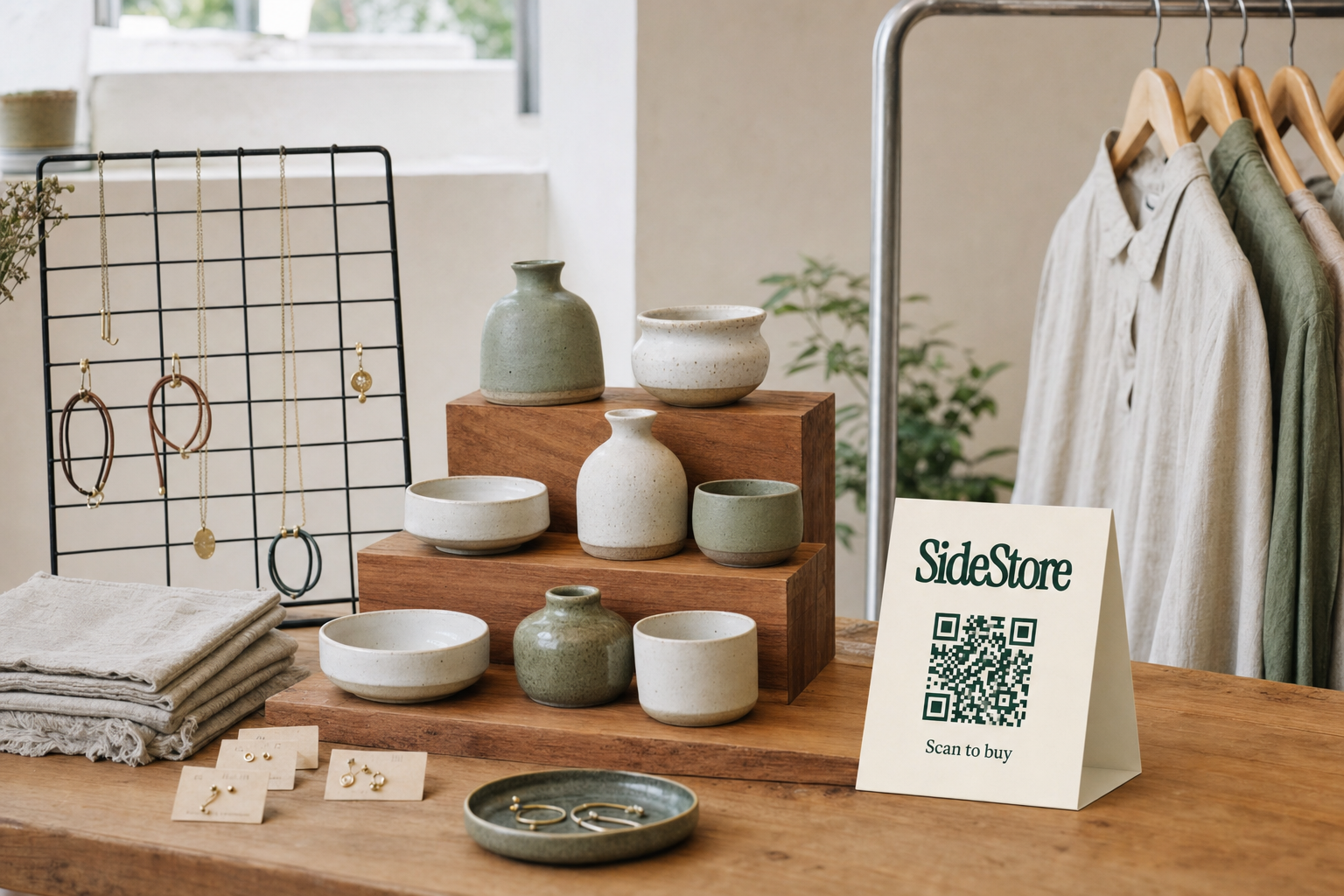
Vertical lift. Flat tables at waist height are easy to ignore. Adding tiered risers, wire grids, wooden crates, or a rail for hanging clothing lifts products into sightlines and creates depth that draws people closer.
Clear, visible pricing. Unlabelled products signal a negotiation that most casual shoppers do not want to have. Price every item. Use large enough text to read from a step away. Many makers find that handwritten tags in a consistent style feel approachable without looking amateur.
A focal hero product. Place one strong visual anchor at eye level or at the front of your display. It should represent your range without overwhelming it. Customers navigate toward a point of interest; give them one.
Grouped storytelling. Organise products by use case or complementary pairing rather than by category alone. A candle beside a matchbox beside a small ceramic dish tells a story and often produces multi-unit purchases.
Minimal clutter. Slightly less stock on display tends to sell more than an overstuffed table. Scarcity is a cue that something is worth having.
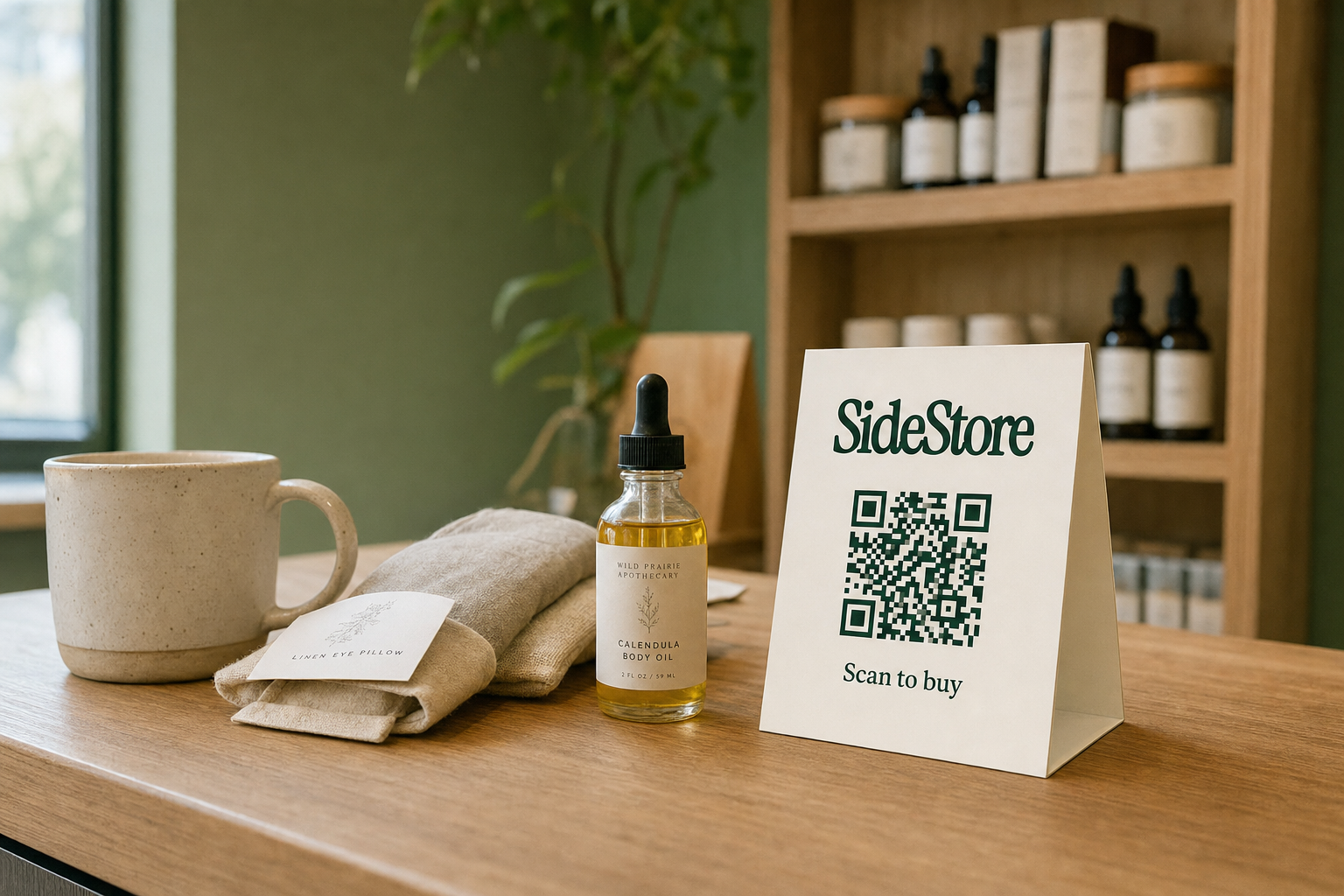
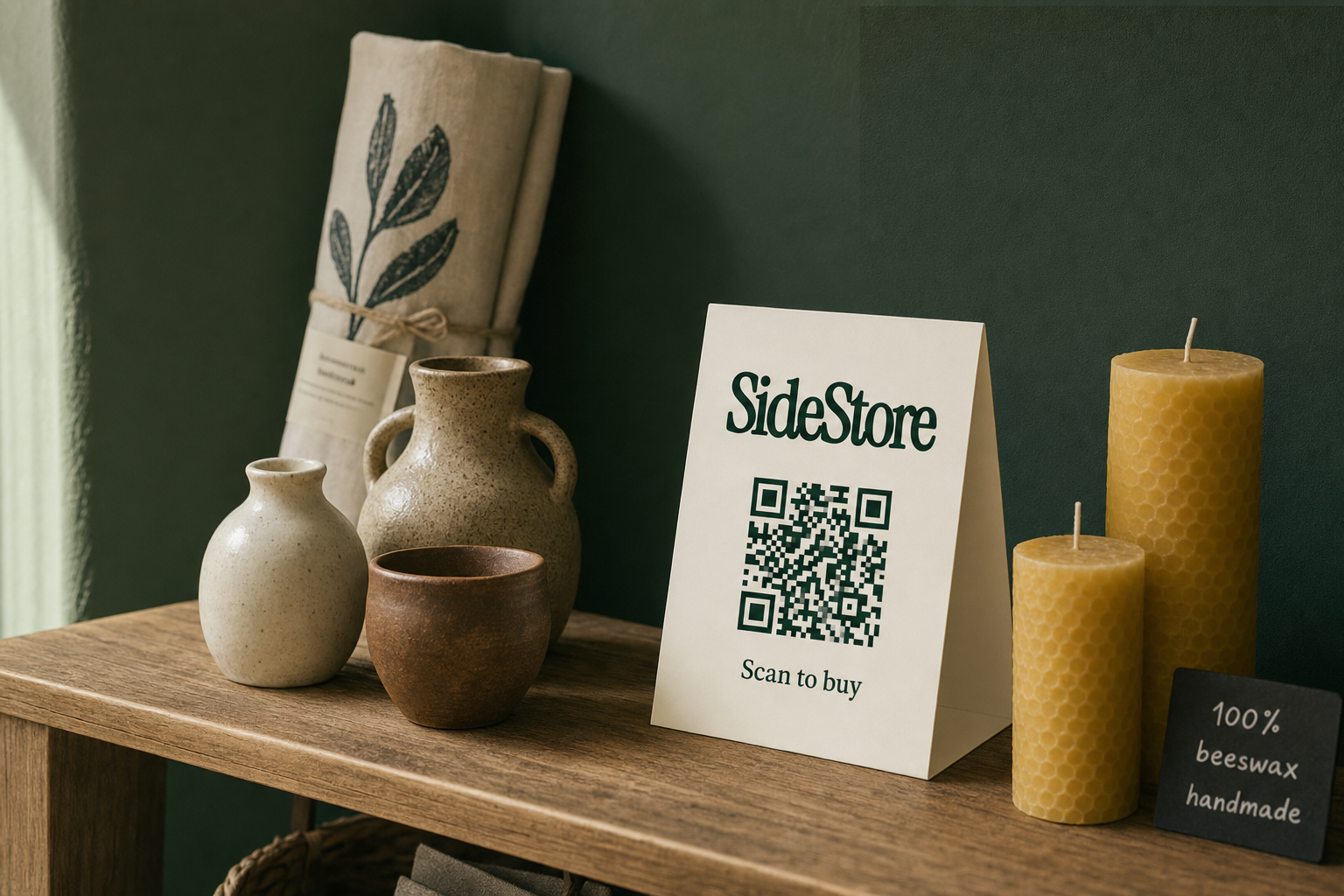
Scan-to-pay checkout via the Retail Widget. For consignment placements inside a permanent venue, the SideStore Retail Widget handles the full checkout process. One function of the Widget is a printable scan-to-pay QR card that customers use to purchase directly. The Widget also handles stock tracking, placement attribution, and automatic split payouts between maker and host. The QR card is the visible customer-facing element; the Widget is the complete management system running underneath it.
For a deeper treatment of display strategy, the guide to pop-up retail design and display techniques covers layout, signage, and conversion-focused merchandising in detail.
The One Model That Skips the Setup: Consignment Placement via SideStore
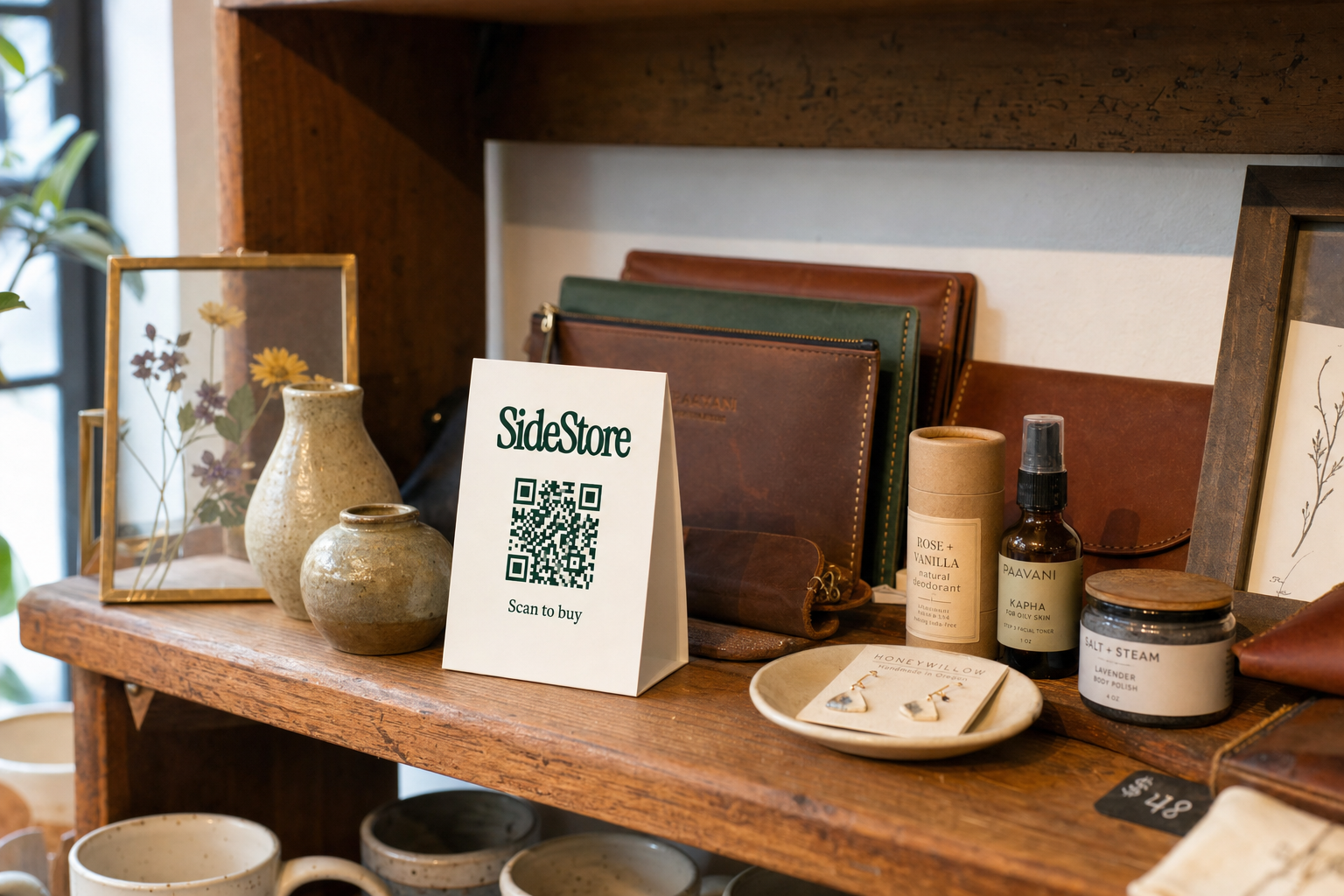
If you have run a pop-up market stall, you know the cycle. Pack everything the night before. Travel to the venue. Set up in the cold. Stand for six hours. Pack down again. Drive home. Repeat every weekend. For many makers, the physical and time cost of that cycle quietly eats the margin that made it feel worthwhile.
Consignment placement via SideStore is a different model entirely. You place your products in a merchant's space (a café, boutique, hotel, or any retailer with available shelf space) and get paid when those products sell. There is no upfront cost to the host and no inventory risk on their side. You are not physically present. Your products are.
The SideStore Retail Widget is the interface that makes this work end to end. Its functions include:
- Checkout: customers can purchase directly in the host venue
- Scan-to-pay QR: a printable card (attached to the product or displayed for the full placement) that handles payment; this is one function of the Widget, not the whole product
- Stock tracking: live inventory counts so you know when to restock without visiting every placement
- Placement attribution: each placement is tracked separately, so you know which venue is performing
- Automatic split payouts: the host's share and your share are calculated and settled automatically
For makers who find the repeated setup of traditional pop-up retail genuinely exhausting, this model is worth considering seriously. It does not replace the community energy of a good market day, but it does give your products a continuous presence across multiple venues simultaneously, without the teardown.
If you want to understand what software sits behind this kind of operation, the guide to consignment inventory software for managing placements is a practical starting point. When you are ready to place your first products, how to approach a local shop about stocking your products covers the conversation. And for a fuller picture of the model itself, selling through someone else's store on consignment explains the mechanics clearly.
How Consignment Placements Fit Into the Wider Shared Retail Picture
Consignment placement is one format within a broader ecosystem of shared retail, where makers and merchants collaborate rather than compete for space and customers. Understanding where it fits helps you decide how to combine formats.
A solo maker might run a weekend market stall for community engagement and brand building, while simultaneously holding two or three permanent consignment placements in local cafés and boutiques. The stall generates conversation and new contacts; the placements generate ongoing revenue between events. The two formats reinforce each other.
Independent merchants who host consignment placements often report that the arrangement enriches their venue without adding operational complexity. A café that displays a local ceramicist's work becomes a more interesting destination. A boutique that carries a rotating selection of independent makers signals curation and community investment. For a broader look at how these arrangements connect to local economies, the guide on how shared retail networks support local economies and the explainer on what a collective store is and how it works both provide useful context.
Frequently Asked Questions About Pop-Up Retail
What products or merchandise are typically sold in pop-up shops?
Pop-up shops sell almost any physical product: clothing, jewellery, art prints, ceramics, skincare, candles, food, baked goods, plants, books, and locally made gifts are all common. The format is not product-specific. What determines suitability is whether the product is portable, presentable, and priced for an in-person purchase decision. Many operators are surprised to find that food, homewares, and personal care products often outperform clothing in terms of unit volume and repeat purchasing.
Is formal business registration required to operate a pop-up shop?
In most cases, no formal company registration is required to operate a pop-up shop. Sole trader status or self-employed registration is usually sufficient, and the temporary nature of a pop-up does not trigger different legal requirements from other forms of trading. You will typically need a pitch licence from the event organiser for outdoor markets, and food hygiene certification if you are selling anything edible. Many operators find the administrative side lighter than expected, but requirements vary by jurisdiction, so verify with a local adviser before you trade.
Can pop-up shops generate meaningful profit?
Yes, pop-up shops can generate meaningful profit, but profitability is not automatic. It depends on the gap between venue cost and product margin. Many operators find that committing to a regular schedule at the same venue outperforms one-off appearances, because repeat customers and word of mouth build over time. A market pitch that costs £120 requires roughly 10 sales of an £18 product at £13 margin just to break even on the venue fee. Price your products with that arithmetic in mind. See the full guide to pop-up retail costs and setup for a more detailed treatment.
What are creative concepts for designing pop-up retail events?
Strong pop-up retail event concepts pair a clear theme with a specific customer moment. A seasonal gifting market, a maker showcase tied to a local festival, a one-day product launch inside a partner venue, or an invitation-only showroom for a new collection all work well because the framing gives customers a reason to attend beyond general browsing. Many operators find that a time-limited event with a defined concept converts better than an open-ended stall, because the scarcity and specificity sharpen buying intent.
What types of pop-up concepts work well for clothing sales?
Clothing pop-ups work best when they create a context for trying and discovering: a curated rail of a specific aesthetic, a seasonal wardrobe edit, or a designer's first physical showing of a new collection. Many makers who sell clothing find that a pop-up showroom format (a hired space for one to three days, with editorial presentation) outperforms a market stall, because the environment signals value and intentionality. Pairing a lookbook or printed price card with a scan-to-pay option reduces purchase friction at checkout.
How can pop-up retail be adapted for outdoor locations?
Outdoor pop-up retail works best when you plan for weather, visibility, and logistics rather than treating them as afterthoughts. A weighted gazebo with sides, a portable card reader with offline backup, and clear signage visible from ten metres away are practical essentials. Many operators running outdoor formats use a single-product focus or strong visual anchor to cut through the visual noise of a busy market. Event organisers typically supply pitch licences collectively, but confirm food hygiene permits separately if you are serving or selling anything edible.
What makes an effective pop-up coffee shop setup?
The question of running a pop-up coffee operation is outside the scope of this guide, which focuses on product-based retail for makers and merchants. If you are a maker whose products could be stocked inside an existing café, the relevant angle is a consignment placement: your ceramics, cards, prints, or food products placed in a working coffee shop on revenue-share terms, with the SideStore Retail Widget managing checkout and split payouts. That model gives you café footfall without building a coffee operation yourself.
How should merchandise be displayed in a pop-up space?
Effective pop-up display starts with vertical lift (risers, rails, grids), clear visible pricing on every item, and a single strong visual anchor at eye level. Group products by story or use case rather than category alone. Keep the table or display slightly under-stocked rather than crowded: perceived scarcity encourages decisions. Many makers find that consistent branding across tags, packaging, and signage builds trust with customers who do not know the product yet. A scan-to-pay QR card (one function of the SideStore Retail Widget) removes the friction of asking the seller for a price or a card reader.
What promotional materials work best for pop-up retail events?
The most effective pop-up promotional materials are those that work before, during, and after the event. Before: a shareable social post with location, date, and a clear product image. During: a bold banner or sign visible from a distance, a price card on every item, and a QR code for contactless payment. After: a way to capture repeat customer interest, such as a sign-up sheet, a simple card with your online presence, or a follow-up post showing what sold out. Many operators find that word of mouth from a well-attended first event is the most cost-effective promotion for the second.
What are viable concepts for a temporary bakery operation?
A temporary bakery works best as a single-day or recurring weekly presence at an established market or inside a host venue such as a café or community space. Keep the product range tight (three to five items at most) and let visual presentation carry the selling: open trays, tiered stands, and clear labelling by flavour and price. Many bakers running this format find that a pre-order list, collected at the event, gives them a demand signal that reduces waste and improves margins at the next appearance. Food hygiene certification and a temporary trading permit are typically required regardless of the event's size.
Which Pop-Up Format Is Right for You?
The right pop-up retail format depends on one honest question: how much time and physical effort can you sustain per sale? If the answer is a lot, outdoor markets and pop-up events give you community presence and direct customer relationships. If the answer is less, consignment placements give your products ongoing reach without the weekly setup cycle.
Most experienced makers end up running both: a periodic market presence for brand building and new customer discovery, and a network of permanent consignment placements generating revenue between events. The two formats are not in competition.
If you are starting out, the lowest-cost path to your first sale is usually a single consignment placement in a venue whose customers already match your product. From there, you build.
The practical next steps are straightforward: read through how to approach a local shop about stocking your products, understand what consignment inventory software for managing your placements can handle for you, and choose the format that matches your available time, not just your ambition.
Build a consignment network without opening a store of your own.