Can Independent Makers Share Retail Infrastructure? How Shared Placement Models Work
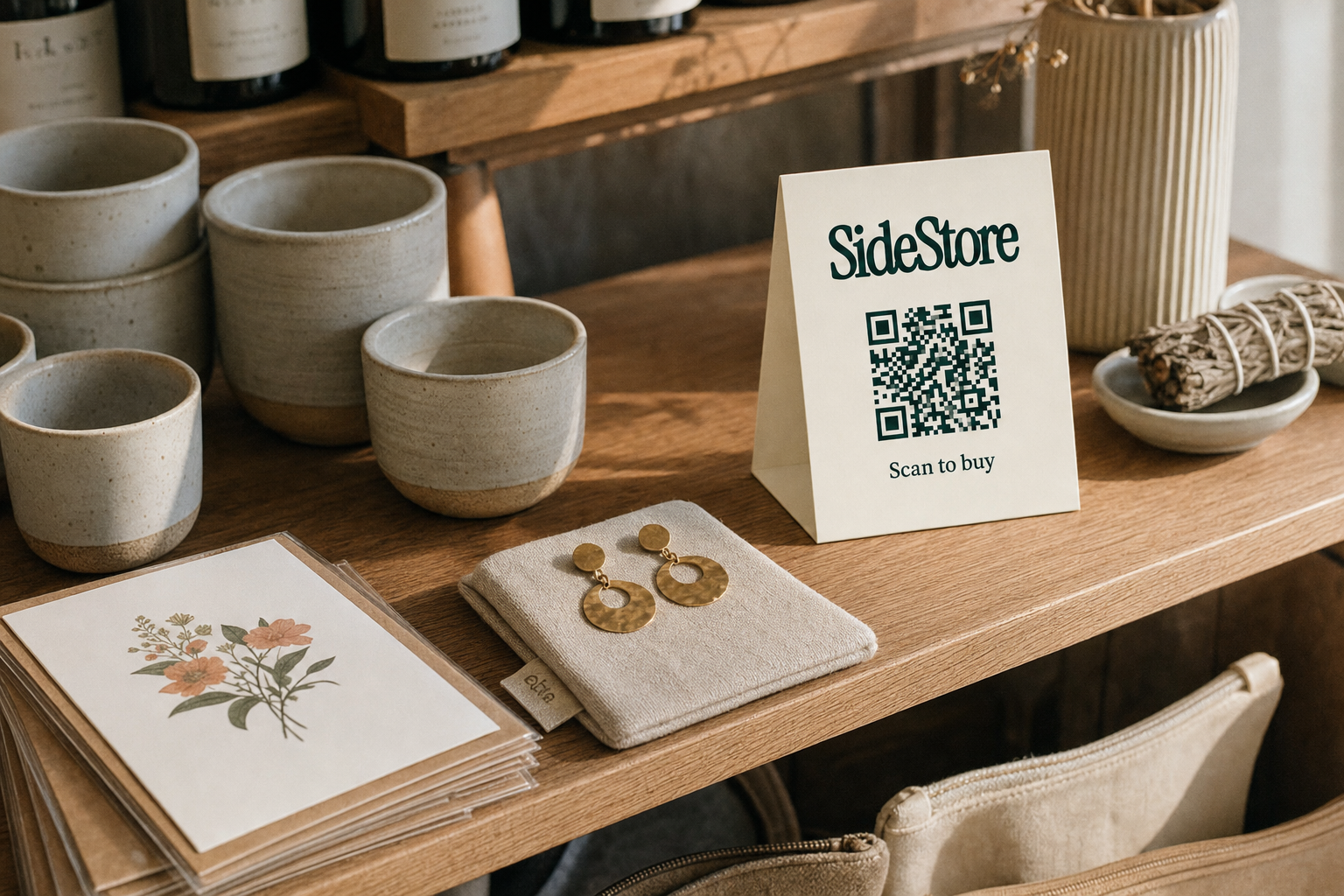
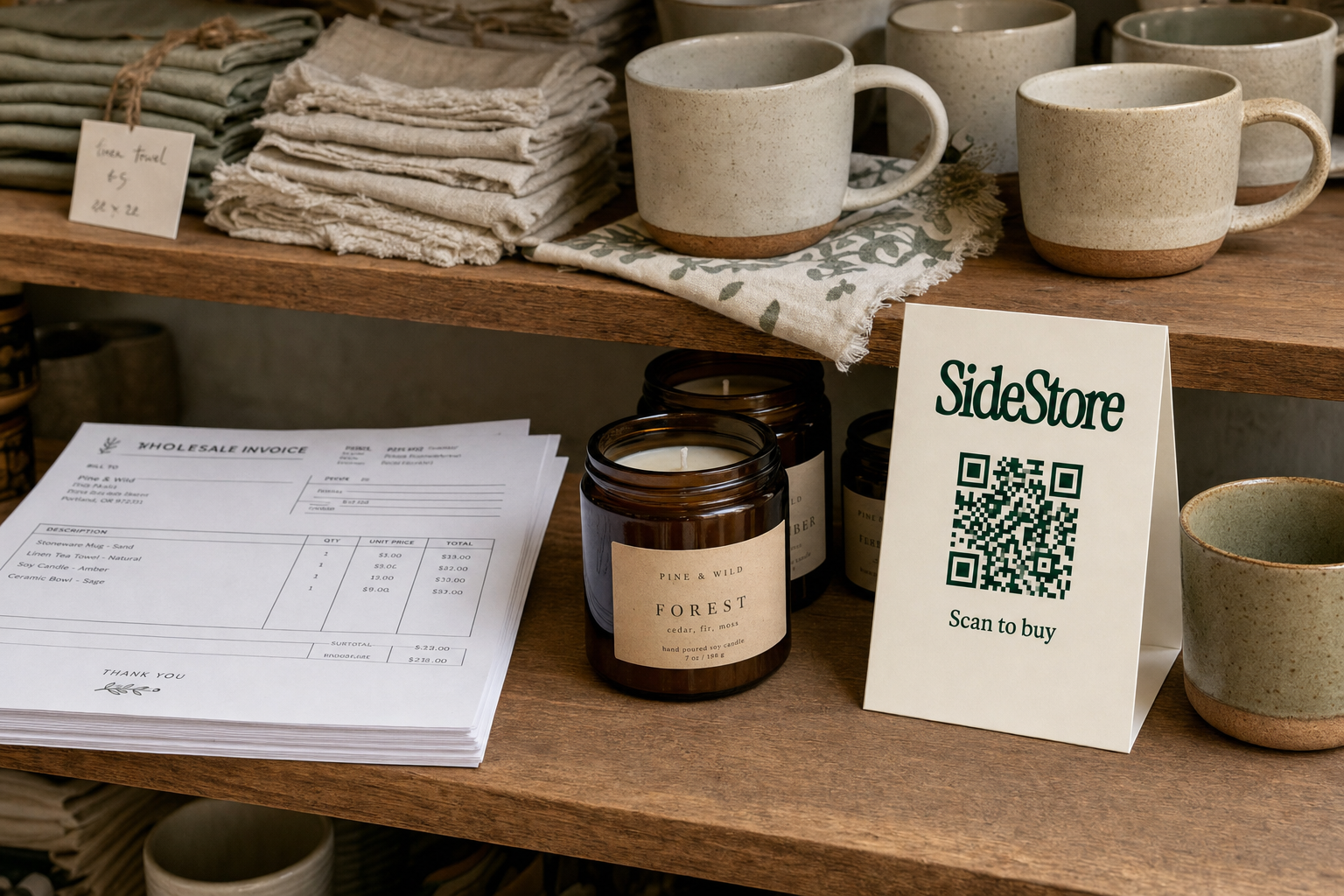
Shared retail infrastructure is the physical and operational layer of a retail environment, shelf space, checkout systems, stock tracking, and settlement, that more than one seller uses without any single seller owning it outright.
Yes, independent makers can share retail infrastructure, and many already do through consignment placement. The key is understanding what actually gets shared. Physical space and checkout tools can sit inside one merchant environment and serve multiple makers at once. But each maker's product pricing, branding, and revenue stays entirely separate. Nothing pools. The shelf is shared; the business is not.
The most practical entry point is selling through someone else's store on consignment terms. A merchant hosts your products and takes an agreed percentage of each sale. Platforms like SideStore make this precise: the Retail Widget handles placement attribution so that one café counter can carry three independent makers' products, and each maker's split payout flows to them alone.
If you're wondering whether sharing infrastructure means surrendering control, the answer is no. The two things operate at completely different layers. What follows explains the mechanics clearly, including the honest trade-offs.
What Independent Retail Ownership Actually Means (and What It Does Not)
Independent retail ownership means you control your brand, pricing, and customer relationship. It does not mean you must own or exclusively control every piece of infrastructure you use.
This distinction matters enormously, and it's the source of a persistent mistake. Many people assume that being independent requires doing everything alone: your own storefront, your own payment terminal, your own stock system. That assumption rules out a lot of useful infrastructure that independent operators can and do share.
Think of it in layers. The infrastructure layer covers the physical shelf, the checkout interface, the stock-tracking software, and the settlement mechanism. The brand layer covers your product name, your pricing decisions, your packaging, and the relationship you build with customers who buy your work. These two layers are separable. Sharing the first does not compromise the second.
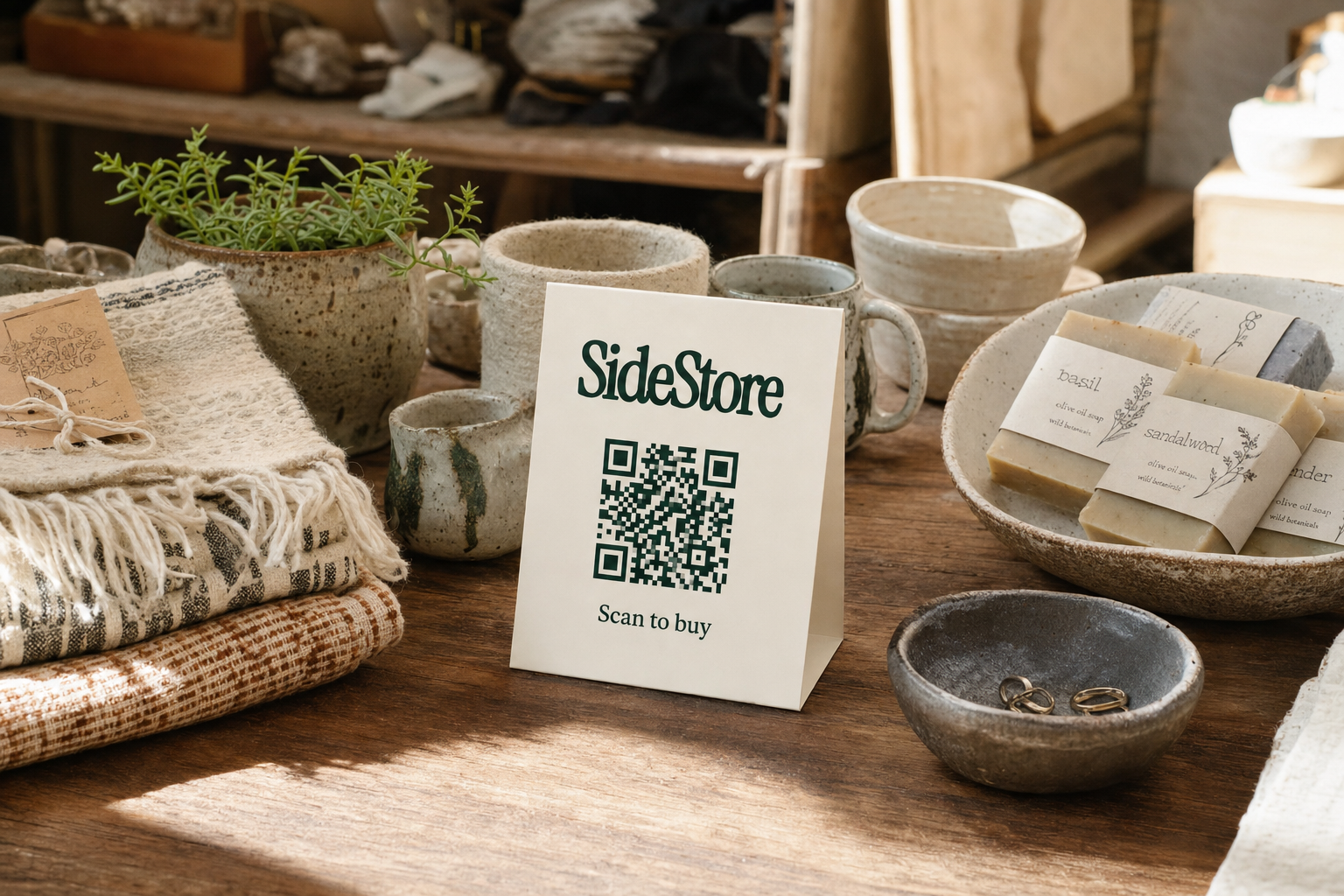
A boutique café hosting three makers' ceramics, textiles, and prints operates what counts as a retail space for all three simultaneously. Each maker retains full control of what they charge, how their product is presented, and whether they continue or exit the arrangement. The checkout and the shelf are shared; the businesses are not.
On legal structure: independent retail does not require a specific corporate form. A consignment agreement is a two-party contract between a maker and a merchant, and its legal weight depends on your jurisdiction and the terms written into it. Many makers operate as sole traders under these arrangements. If you're uncertain about the implications for your own legal or tax situation, verify with a qualified adviser in your region. General knowledge about consignment commerce cannot substitute for jurisdiction-specific legal guidance.
Being independent means control, not isolation. Shared infrastructure, used on your own terms, is entirely consistent with that control.
How Shared Placement Models Work in Practice
A shared placement model works by placing multiple makers' products inside a single merchant space, where each product is tracked and settled separately through a common operational layer, with no revenue pooling between makers.
Here's how the process runs in practice, step by step:
1. A maker identifies a suitable merchant space. A café, boutique, hotel lobby, or any high-foot-traffic retailer with unused shelf space becomes a potential host. You approach the merchant and agree consignment terms: the merchant takes an agreed percentage of each sale; you retain the rest. No upfront purchase of stock by the merchant.
2. The placement is configured in the Retail Widget. The Retail Widget is the interface that places and manages a product on consignment. It handles the full lifecycle: stock levels, placement attribution, checkout, and automatic split payouts. Setting up a placement means entering the product, the agreed split, and the merchant location. This takes minutes, not days. For context on the software side, see consignment inventory software.
3. Products are physically delivered to the merchant space. You deliver stock. The merchant displays it. From this point, the Retail Widget tracks what is live, what sells, and what needs restocking.
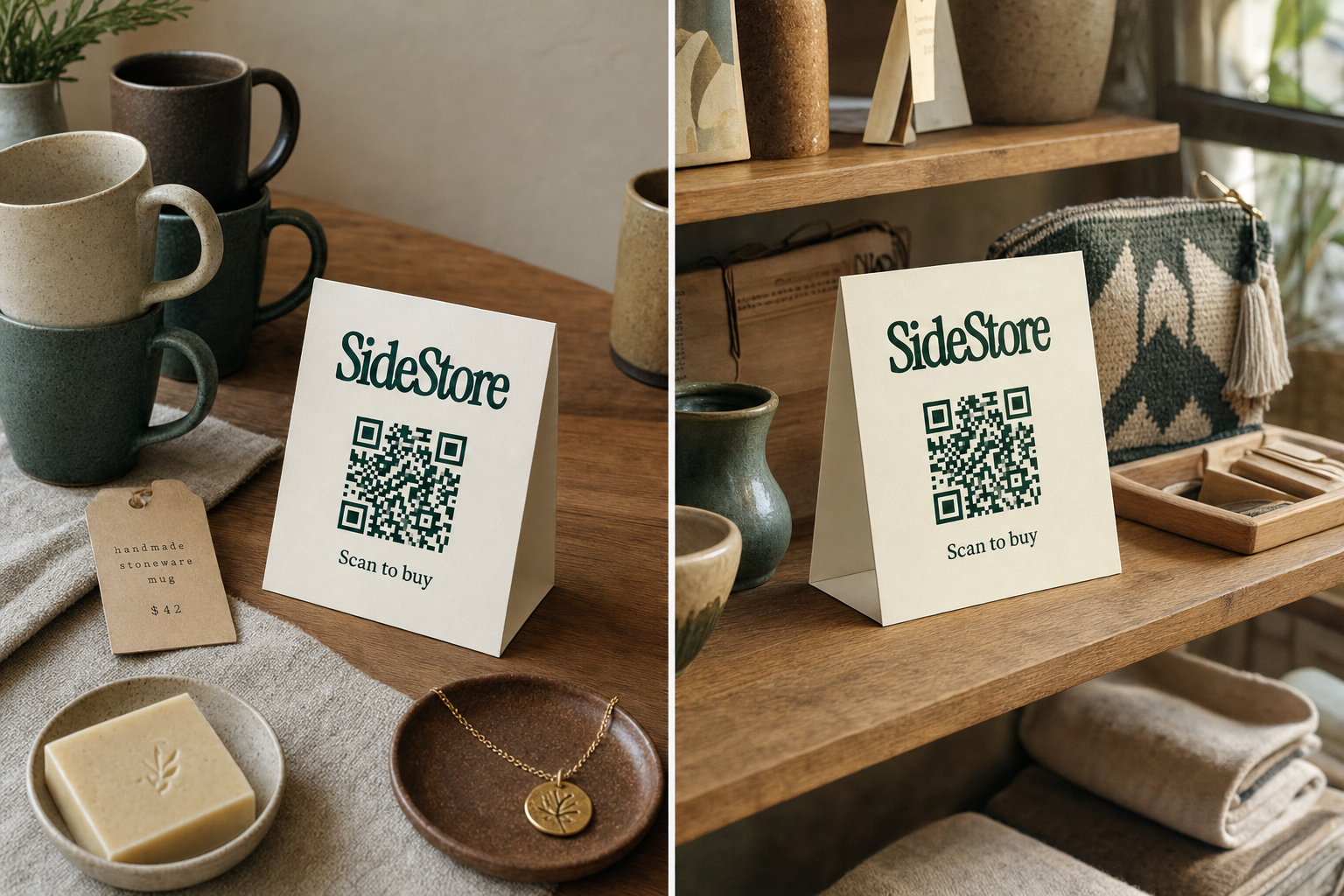
4. Customers scan to pay, or the merchant checks out via the Widget. One function of the Retail Widget is a printable QR code card. You can attach a QR card to your own product, or the merchant can display a single card for all SideStore placements in their space. The QR checkout is one tool within the Widget, not the whole system. Don't mistake it for the full product.
5. Sales trigger automatic split settlement. Each sale routes your share directly to you and the merchant's share to them. Placement attribution ensures that a sale of your product has no effect on another maker's balance. Revenues stay completely separate, even when products share the same shelf.
On legal liability: when multiple makers share a merchant space, each consignment agreement is a separate two-party arrangement with that merchant. Liability for product defects typically rests with the maker who produced and placed that product. Consignment terms often reflect this, but specifics depend on the agreement you sign and your jurisdiction. Verify the liability terms in any consignment agreement with your own legal counsel before going live. Knowing what percentage consignment shops take is part of the commercial picture, but the legal terms matter just as much.
What Is a Distributed Retail Network and How Do Makers Fit In?
A distributed retail network is a collection of physical selling locations that you activate independently, without owning any of the host spaces, allowing your products to sell across multiple venues simultaneously under a single management layer.
It's worth contrasting this with two models people often confuse it with.
A retail chain owns its locations outright. It controls the premises, the staff, and the merchandising in every site. The capital requirement is substantial and the risk is concentrated in the operator.
A shop-in-shop arrangement (a recognised model in traditional retail) places one branded operation inside another retailer's space, often under a formal lease or licensing agreement. It usually involves dedicated, branded floor space and sometimes dedicated staff. It's closer to a mini-tenancy than a consignment relationship.
A distributed consignment network is different from both. You never lease space. Each host merchant controls their own premises and has their own reasons for hosting, typically earning a split payout from sales with no inventory risk. You place products, track stock, and collect your share, all from a single dashboard. Scale comes from adding more placements, not from opening more stores.
This is what open infrastructure for independent commerce looks like in practice. You build distribution without fixed costs. How shared retail networks support local economies is one dimension of why merchants participate. Another is that it gives them a reason for customers to browse longer.
For makers who want to test physical retail before committing, pop-up retail space offers a short-term version of the same logic. A distributed consignment model extends that logic indefinitely across multiple permanent hosts.
What Makers Share and What Stays Separate: A Side-by-Side Breakdown
In a shared placement model, infrastructure components are shared while all commercial and brand elements remain yours alone. The table below shows exactly where the line falls.
| Component | Shared or Separate | Who Controls It | Notes |
|---|---|---|---|
| Physical shelf space | Shared | Merchant | Multiple makers occupy the same counter or display area |
| Checkout infrastructure | Shared | Platform (Retail Widget) | One system handles all placements in a merchant space |
| Stock tracking | Separate per maker | Maker (via Retail Widget) | Each maker sees only their own inventory levels |
| Split settlement | Separate per maker | Platform routes automatically | No revenue pools between makers; each split is independent |
| Product pricing | Separate | Maker | Each maker sets their own price; the merchant does not control it |
| Product branding | Separate | Maker | Packaging, name, and presentation are entirely the maker's decision |
| Customer relationship | Separate | Maker | Purchase data and customer contact belong to the maker's placement |
| Maker's revenue | Separate | Maker (paid via platform) | Only the maker's products trigger the maker's payout |
The parts that benefit from being shared (space, checkout tooling) are shared. The parts that define your business (pricing, branding, revenue) remain yours. Approaching a local shop about stocking your products is simpler when you can point to this structure clearly. Merchants are often reassured that hosting multiple makers doesn't create complicated revenue entanglement on their end either.
How Independent Makers Can Access Shared Retail Infrastructure Today
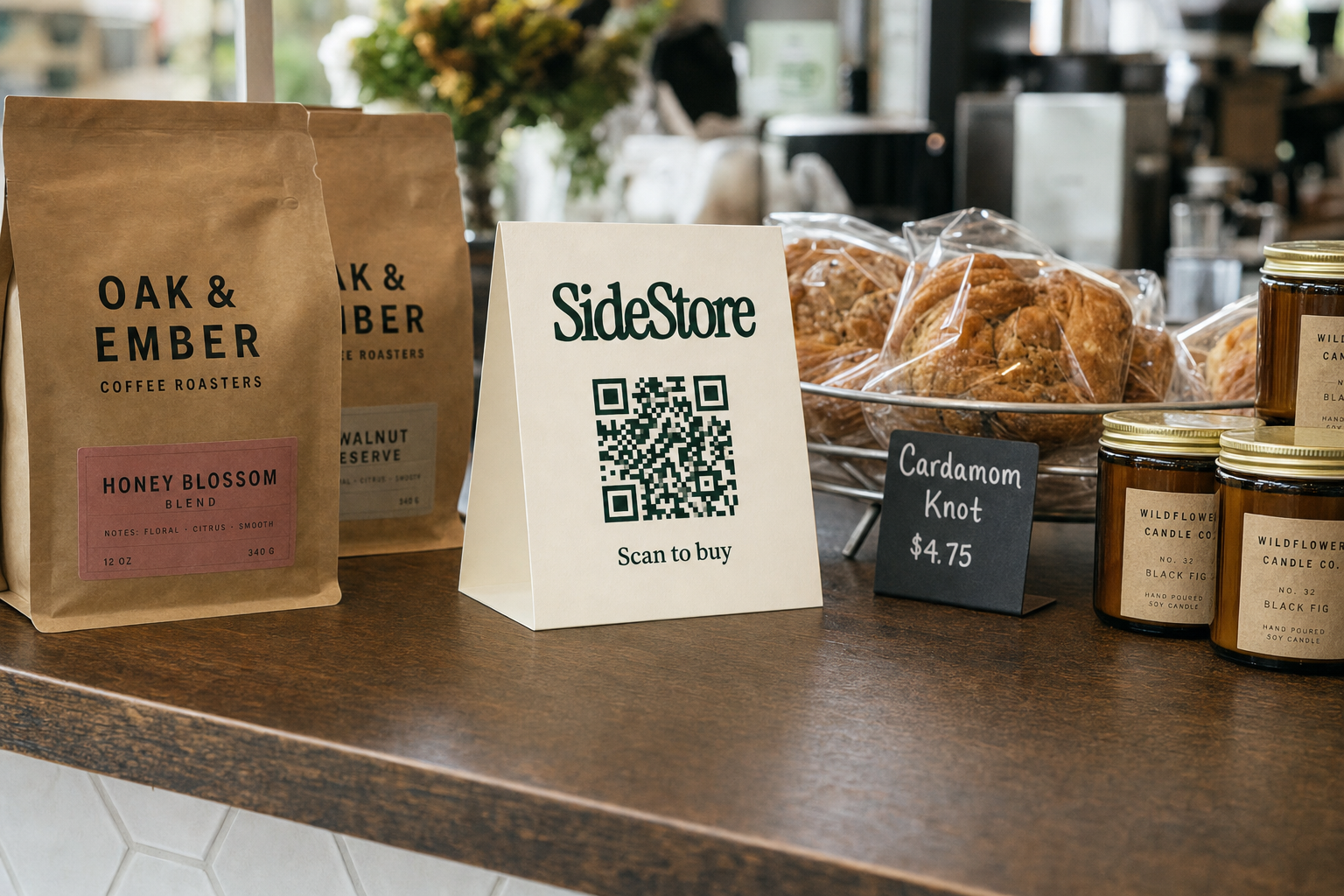
Independent makers can access shared retail infrastructure right now, without forming a collective entity or a joint venture, by entering individual consignment agreements with merchants and managing placements through a platform like SideStore.
Here's the practical entry path:
Step 1: Choose your merchant space type. Start with cafés and coffee shops (consistent daily footfall, customers with time to browse), independent boutiques (strong alignment for handmade or design-led products), and hotel lobbies or bed and breakfasts (captive audience, longer dwell time). Each is a proven merchant type for consignment placement because the host already benefits from the atmosphere that well-chosen maker products reinforce.
Step 2: Make your approach. Go in person where possible. Bring a physical sample and a short, plain explanation of consignment terms: no upfront cost to them, a percentage split on each sale, stock tracked automatically, and payouts handled by the platform. How to approach a local shop about stocking your products covers this in detail.
Step 3: Agree the split and go live in the Retail Widget. Once a merchant says yes, configure the placement. Set the product, the agreed percentage, and the location. The Retail Widget then handles checkout, stock tracking, and settlement from that point.
Step 4: Deliver stock and let the placement run. You remain responsible for restocking when inventory runs low. The dashboard shows you live stock levels across all your placements, so you know when to act.
On legal structure: you don't need to form a collective legal entity to share retail infrastructure with other makers. A consignment agreement is a two-party arrangement between you and the merchant, mediated by the platform. It's not a joint venture and doesn't create shared liability between you and other makers in the same space. That said, if you sell products with specific compliance requirements (food, cosmetics, children's goods), the legal obligations are yours alone. Verify specifics with a qualified legal or financial adviser.
Specific placement types, from selling handmade jewellery in boutiques to selling art prints in cafes, follow the same underlying mechanics. The product category shapes which merchant type fits best, not the fundamentals of the model.
What Shared Placement Models Cannot Do: Honest Trade-offs
Shared placement through consignment is a real, practical distribution model. It's not a solution to every problem a maker faces. Naming the limits plainly is more useful than pretending they don't exist.
No guaranteed footfall. Placing your product in a merchant space doesn't guarantee anyone will see it, let alone buy it. Footfall depends on the merchant's own traffic, location, and marketing. You can choose higher-traffic locations, but you can't control what happens inside them.
No exclusive shelf rights. Unless you negotiate specific terms with the merchant and get them in writing, another maker can occupy the same shelf. Consignment placement doesn't typically come with exclusivity as a default.
No merchandising control. Where exactly on the shelf your product sits, how it's displayed, and what sits next to it are decisions the merchant makes. You can suggest; you can't mandate.
Logistics remain your responsibility. Restocking, packaging, and physical delivery to the merchant space are always your task. The platform handles the financial layer; the physical layer stays with you.
On investor funding: consignment placement is not a financing instrument. It doesn't attract investment capital, and it doesn't replace the need for working capital to produce stock in the first place. If you're asking whether private equity or retail investors can fund a shared placement operation, consignment is a distribution model, not a capital structure. For funding questions, speak to a specialist financial adviser. Understanding what margins a host merchant is working with is useful context, but it won't resolve a capital shortfall on your end.
Frequently Asked Questions
These five questions come up consistently for makers and merchants exploring shared retail models.
What defines independent retail ownership compared to other retail models? Independent retail ownership means you control your brand, pricing, and commercial decisions without being part of a franchise or corporate chain. It doesn't mean operating in isolation. Independent retailers regularly use shared infrastructure, from payment processors to consignment platforms, while remaining fully independent at the brand level.
How can independent retailers access shared infrastructure or resources? The most direct route is a consignment agreement with a merchant who has available shelf space. Platforms like SideStore provide the operational layer: checkout, stock tracking, and automatic split settlement. You access the infrastructure through the platform without needing to own or build it yourself. See also how to sell through someone else's store for the practical steps.
What are the key components of retail operations that could potentially be shared? Physical shelf space, checkout systems, stock-tracking software, and settlement infrastructure can all be shared between makers in one merchant environment. Product pricing, branding, customer relationships, and individual revenue streams stay separate. The what percentage consignment shops take question is part of the shared settlement picture.
Can retail businesses partner with private equity to fund shared infrastructure? Consignment placement is a distribution model, not a financing vehicle. It doesn't attract investment capital in the conventional sense. If you're asking whether private equity can fund a maker's operations, that's a capital structure question entirely separate from how consignment works. Speak to a qualified financial adviser for investment and funding questions specific to your situation.
What legal structures allow independent contractors to participate in retail ownership? Consignment agreements are typically two-party contracts between a maker and a merchant, and many makers operate as sole traders or small companies under these terms. Legal requirements vary by jurisdiction, product category, and what the agreement stipulates. There's no single required legal structure. Verify the specifics with a qualified legal adviser in your region before signing.
The Short Answer: Yes, and Here Is Where to Start
Independent makers can share retail infrastructure without losing control of their brand, pricing, or revenue. The infrastructure layer (shelf space, checkout tooling, stock tracking, split settlement) is designed to be shared. The commercial layer (your product, your price, your margin) stays yours alone.
The distinction is structural, not rhetorical. When you place a product on consignment in a merchant space through the Retail Widget, you're using shared physical and operational infrastructure in precisely the way it was built to be used. You're not entering a joint venture. You're not pooling revenue with other makers. You're not surrendering any part of your brand. You're accessing distribution at a cost that only triggers when a sale happens.
The concrete next action is straightforward. Identify one merchant space with consistent footfall where your product would sit naturally, make your approach, configure the placement in SideStore, and go live. That single placement is your first node in a distributed consignment network.
Once it's running, you'll understand how shared retail networks support local economies not as a principle but as something you're actively part of. And if you want to manage that network with precision as it grows, consignment inventory software for managing placements covers the tools that make it practical at scale.
Build a consignment network without opening a store of your own.