Selling Clothes on Consignment: What Fashion Makers Need to Know Before Approaching Shops
Selling clothes on consignment means you place garments in a shop and get paid only when they sell. No upfront fee for the host. No guaranteed income for you until a sale happens. If you're looking to stock your clothing through shops without buying shelf space outright, consignment is the model you're exploring.
Here's the distinction that matters: consignment is not the same as selling clothes for cash. Cash sales mean payment at handover. With consignment, you keep ownership until a customer buys the item. The shop hosts your stock and takes a cut of the sale price; you get the remainder after the transaction. No advance payment.
This matters because many makers walk into shops expecting a buy-out when the shop actually wants consignment. Understanding the difference before that conversation saves time for both of you.
Whether you're exploring selling to consignment shops for a handmade line or looking for a way to sell through someone else's store without the overhead of your own premises, this guide covers the mechanics, the numbers, and the steps to get your garments placed and moving.
What does selling on consignment actually mean?
Selling on consignment means you supply a shop with stock, and the shop pays you a percentage of the sale price each time one of your items sells. No money upfront. The shop earns its cut by providing the space, the foot traffic, and the sales environment.
This is fundamentally different from a direct cash sale. In a direct sale, a shop buys your garments outright and owns them the moment the money changes hands. Risk transfers to the shop: if items don't sell, that's the shop's problem. In consignment, ownership stays with you until a customer completes a purchase. If garments don't sell, you retrieve them. The shop carries zero inventory cost, which is exactly why many independent retailers prefer consignment when considering new or untested makers.
Consignment applies to far more than clothing. Books, ceramics, jewellery, art, and homeware all move this way. Anywhere a maker has stock to place but no storefront of their own, consignment works.
One term worth clarifying: "sale or return" is the retail industry's name for the same structure. You supply, they sell, unsold stock comes back to you. Consignment is the broader term covering that model plus the formal agreement, split terms, and stock-tracking obligations that come with it.
Before placing any garments, understand what belongs in a consignment agreement. The agreement defines who owns the stock, what the split is, and how unsold items are handled. Without one, you're relying on goodwill rather than contract.
How the consignment process works for clothing, step by step
The consignment process for clothing follows a clear sequence. Once you know the steps, logistics become manageable, even across multiple shops.
Step 1: Prepare your stock and pricing. Before approaching any shop, know your wholesale-equivalent floor price: the minimum you need per garment to cover materials, labour, and margin. This number drives every split negotiation. Arrive with garments that are finished, clean, pressed, labelled, and priced.
Step 2: Approach the shop and agree terms. Shops want to see the garments, understand your pricing, and agree on a split before anything is signed. Many makers report that arriving with a small sample collection rather than a lookbook alone significantly improves acceptance rates. Once the shop is interested, negotiate the consignment split and the placement period length.
Step 3: Sign a consignment agreement. This is non-negotiable. The agreement specifies the split, the placement period, what happens to unsold stock, and who is responsible for damage or loss. See the consignment stock terms and conditions guide for what to include. Never hand over garments on a handshake.
Step 4: Deliver and record the stock. Document every item placed: style name, colour, size, quantity, and agreed retail price. You and the shop should each hold a copy of this inventory list. This record is your proof of what was placed and the baseline for any stock reconciliation later.
Step 5: Track stock through the placement period. You retain ownership, so you're responsible for knowing how many units remain in the shop. This is where consignment inventory software earns its value. Tools like SideStore's Retail Widget handle stock tracking per placement automatically, letting you see live inventory levels across every shop without calling in.
Step 6: Settle and retrieve. At the end of the agreed period, the shop pays you your share of every unit sold. The Retail Widget handles split settlement automatically, attributing each sale to the correct placement and calculating your payout. Any unsold garments must be collected. This step is the one many makers overlook: check your agreement's retrieval window and act within it, or some shops will treat uncollected stock as abandoned.
What percentage do consignment shops typically pay clothing sellers?
Consignment shops typically pay clothing sellers between 40 and 60 percent of the retail sale price. The exact split varies by shop, location, and garment type. A 50/50 split is the most commonly reported starting point, though independent boutiques and high-end shops sometimes offer makers up to 60 percent for strong-selling lines.
Here are worked examples at three common price points to make this concrete:
At a £40 retail price (50/50 split): You receive £20. The shop retains £20.
At a £60 retail price (60/40 split in your favour): You receive £36. The shop retains £24.
At a £120 retail price (50/50 split): You receive £60. The shop retains £60.
These numbers show why your pricing floor matters before any split is agreed. If your materials and labour cost £30 per garment, a 50/50 split at a £40 retail price leaves you with a £10 margin before your time. Price accordingly.
On the cash-versus-consignment question: consignment shops don't pay cash at handover. Payment triggers only when a sale occurs. Shops commonly settle monthly or at the end of a defined placement period, not immediately after each individual sale. This is the core difference between consignment and a buy-out: buy-out means the shop pays you upfront and owns the stock. Consignment means your money arrives later and only if items sell.
For guidance on setting garment prices that work within consignment, see how to price inventory for a boutique.
Is consignment a worthwhile sales method for clothing? Pros, cons, and trade-offs
Consignment is worthwhile for many independent clothing makers, particularly those without an existing customer base or retail premises. The honest answer depends on your pricing, your production costs, and your ability to manage stock across multiple locations.
| Factor | Consignment | Direct cash sale | Wholesale |
|---|---|---|---|
| Upfront payment | None; paid on sale | Yes; paid at handover | Yes; paid at handover |
| Inventory risk | Stays with maker | Transfers to buyer | Transfers to buyer |
| Revenue per item | Typically 40-60% of retail | Full retail minus discount | Lower fixed price, higher volume |
| Admin burden | Moderate; stock tracking required | Low after handover | Low after handover |
| Speed to first sale | Slower; depends on foot traffic | Immediate | Immediate (if stock is wanted) |
| Pricing control | Retained by maker | Lost after sale | Lost after sale |
| Suitability for new makers | High; no upfront cost to host | Harder; buyer risk is higher | Harder; buyers need proven volume |
The two biggest trade-offs are cash flow and effort. Consignment delays income. You won't receive payment until garments sell, which could be weeks or months. If your production costs are high and your cash reserves are thin, that gap is real strain. Add in the admin overhead of tracking stock across multiple shops, and consignment can feel slow relative to the effort involved.
The second trade-off is control versus reach. You retain ownership and pricing control, which sounds appealing. But if a shop under-promotes your garments, displays them poorly, or tucks them in a low-traffic corner, your sales suffer and you have limited leverage. Monitoring placement quality is ongoing responsibility, not a one-time task.
For makers building distribution through shared retail networks without fixed costs, consignment remains one of the most accessible routes into physical retail.
How to approach consignment shops about stocking your clothing
Approaching a consignment shop effectively comes down to preparation, targeting, and professionalism. Shops receive unsolicited pitches regularly; the ones that succeed arrive with the right garments for that specific shop, a clear price point, and a straightforward proposition.
Find the right shops first. Search locally for independent boutiques, lifestyle stores, and concept cafes that already carry makers' goods. Check their current stock. If they carry handmade or artisanal products at a price point comparable to yours, they're more likely to be open to a consignment conversation. Shops that only stock branded wholesale lines are a harder sell.
Prepare a small sample selection. Many makers report a noticeably higher acceptance rate when they arrive with two or three physical samples rather than just a catalogue or lookbook. Shops need to assess quality, finish, and feel in person. Digital images don't answer questions about hand, weight, or construction.
Know your terms before you walk in. Have your retail prices, your minimum acceptable split, and your preferred placement period ready before any conversation starts. Shops commonly ask these questions on the spot. Hesitating signals you haven't thought through the commercial side.
Make the approach professionally. Call ahead or email to request a short meeting with the buyer or owner. Walk-in cold pitches during busy retail hours rarely work. A brief, focused email with two or three product images and a proposed retail price range is a solid opener.
Cover physical placement first; consider online consignment later. Online consignment platforms exist and are worth exploring for secondary distribution, but physical placement in the right shop builds local brand presence in a way online cannot.
For a full walkthrough of the approach process, see how to approach a local shop about stocking your products. If you're considering non-traditional spaces, coffee shop retail ideas covers how cafes and similar venues work as placement hosts.
What to put in a consignment agreement before you hand over any garments
Never hand over garments without a written consignment agreement. A handshake arrangement leaves you with no enforceable record of what was placed, what the split is, or what happens when something goes wrong. This is one of the most commonly reported mistakes among makers new to physical placement, and it's entirely avoidable.
A sound consignment agreement for artists should include at minimum these five elements:
Stock inventory clause. A complete list of garments placed, including style, colour, size, quantity, and agreed retail price. This is your legal record of what you handed over.
Split and payment terms. The exact percentage each party receives, how and when payment is made (monthly settlement, for example), and whether VAT or sales tax applies.
Placement period. The start and end date of the consignment term, and whether it renews automatically or requires a new agreement.
Unsold stock retrieval. What happens to garments that don't sell by the end of the period. Specify the retrieval window: a clause that gives the shop discretion over uncollected stock after 14 days, for example, protects you from losing garments through inaction.
Damage and loss liability. Who is responsible if garments are damaged, stolen, or lost while in the shop's care. Many shops expect makers to carry their own stock insurance; check before you agree.
The full breakdown of what belongs in your agreement is covered in the consignment stock terms and conditions guide.
Running multiple consignment placements without losing track of your stock
Once you place garments in more than one shop, manual stock tracking becomes a liability. A spreadsheet updated by phone call isn't a system; it's a source of errors, missed retrievals, and disputed payouts. The answer is a consignment management interface that tracks stock and settles payments per placement automatically.
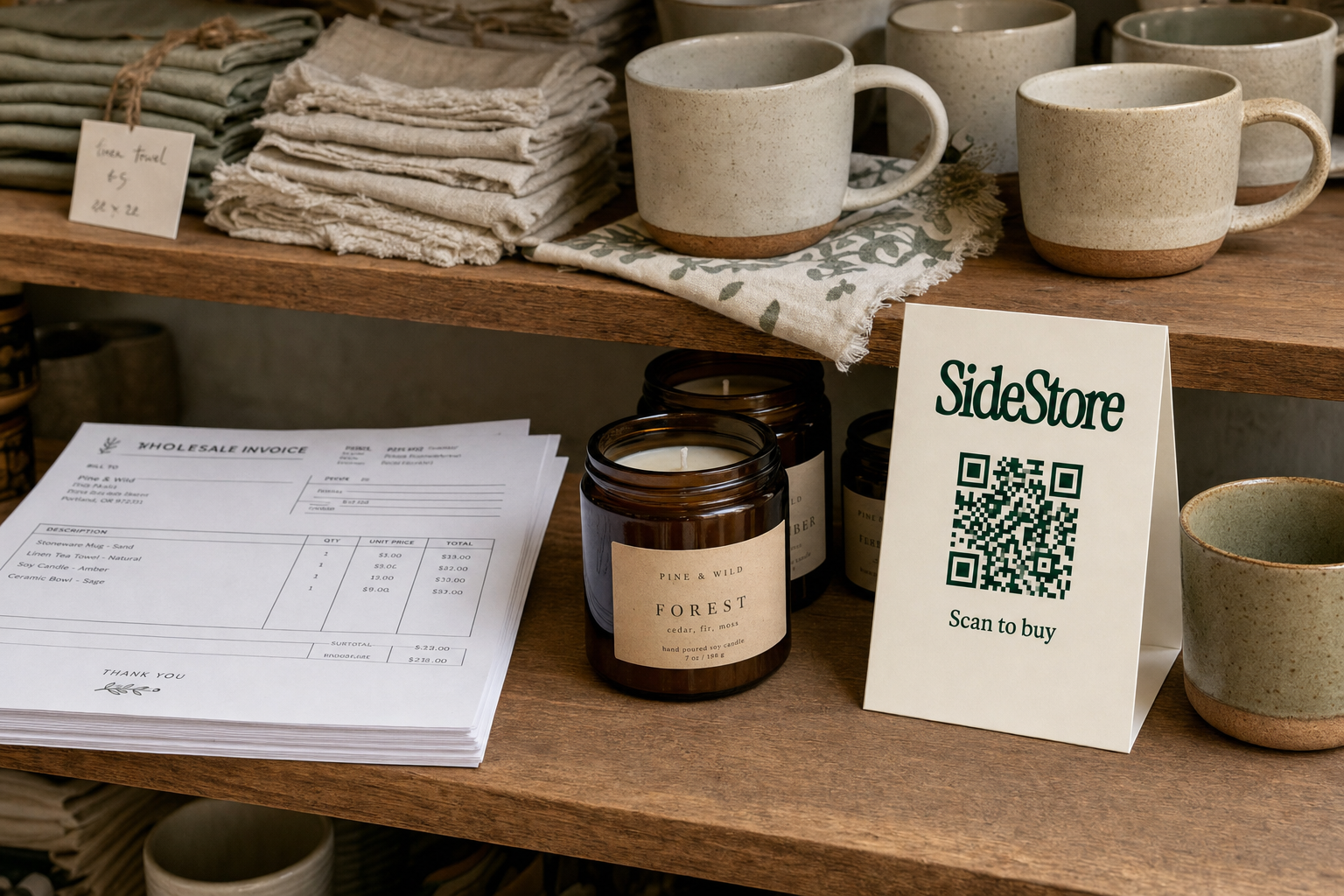
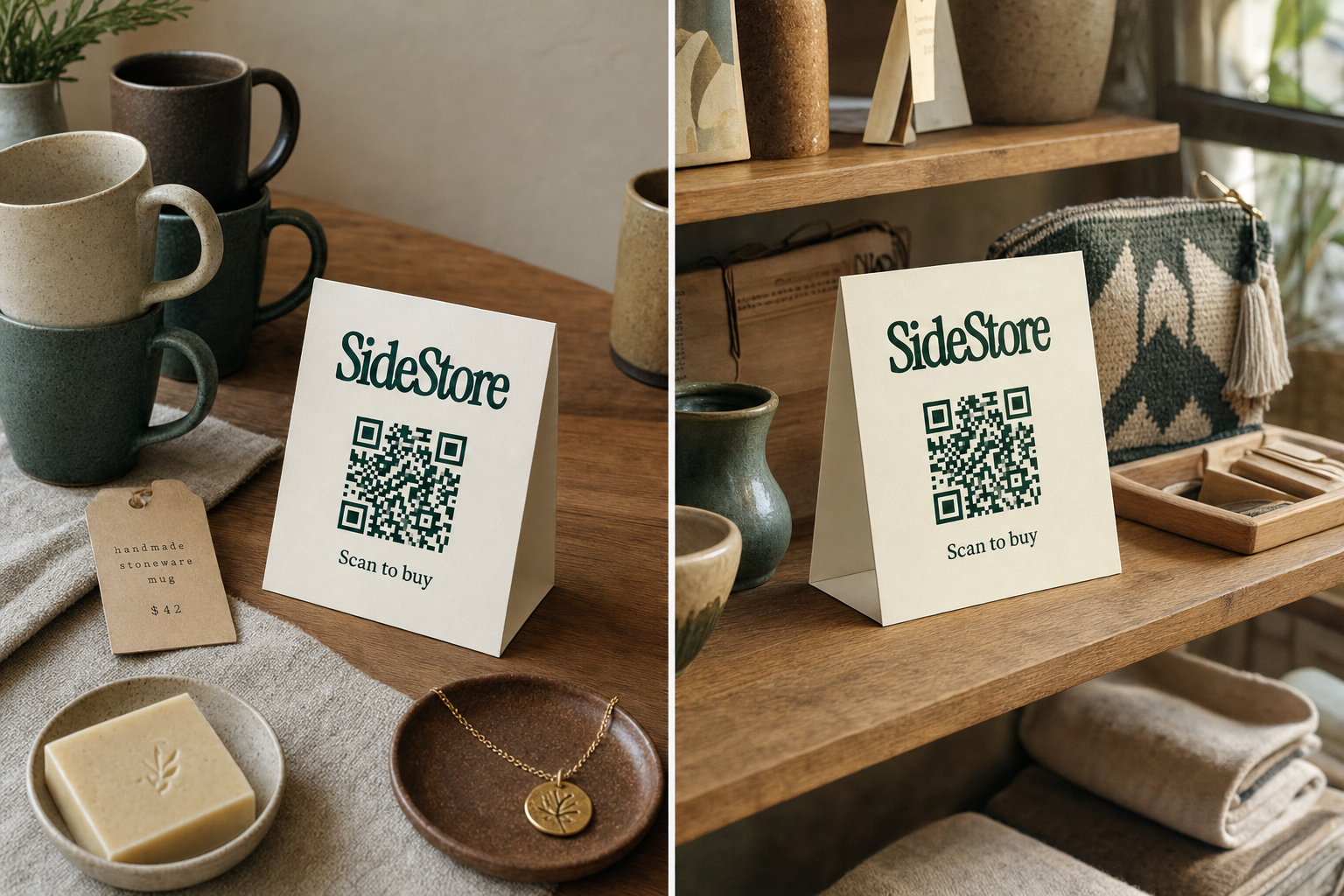
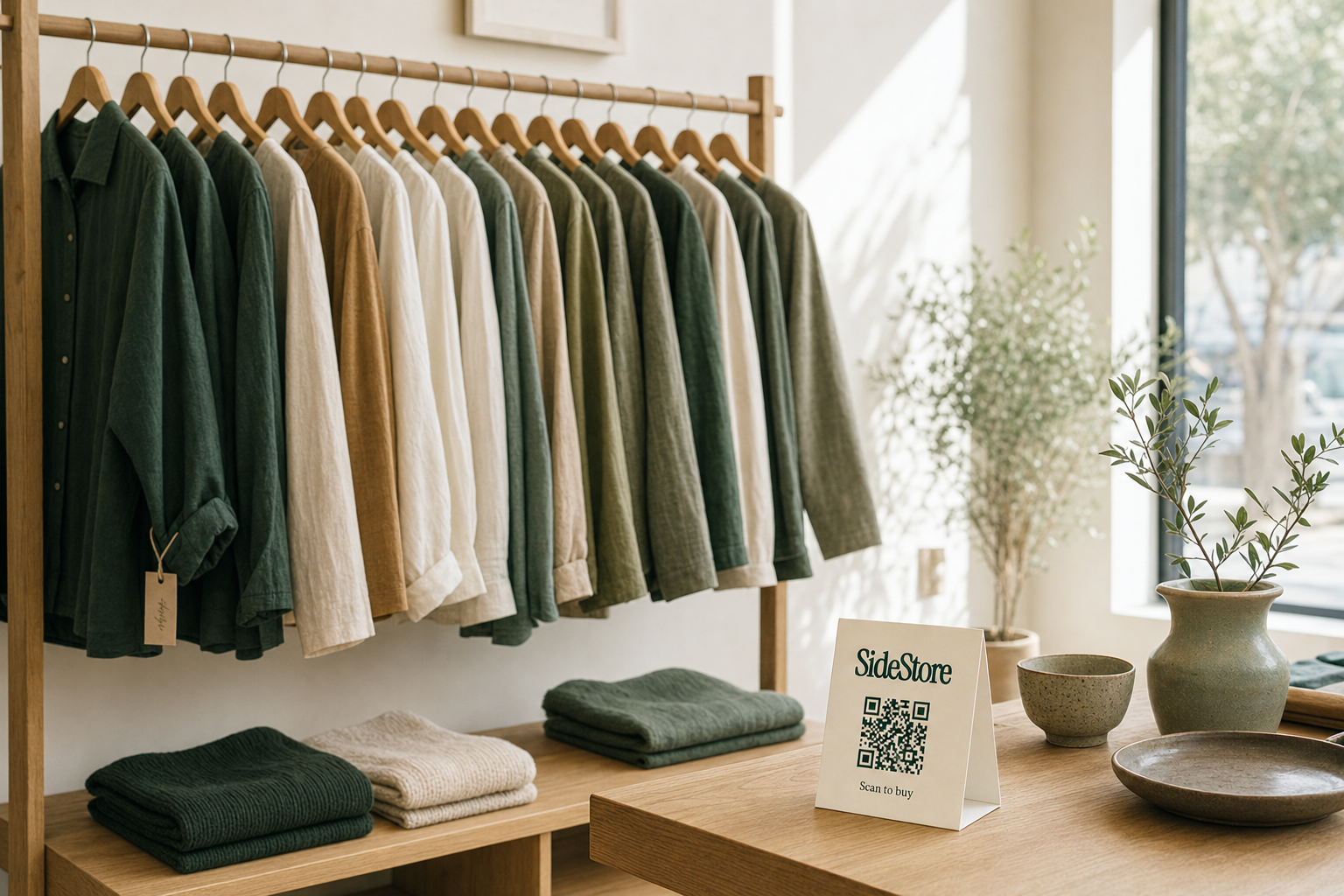
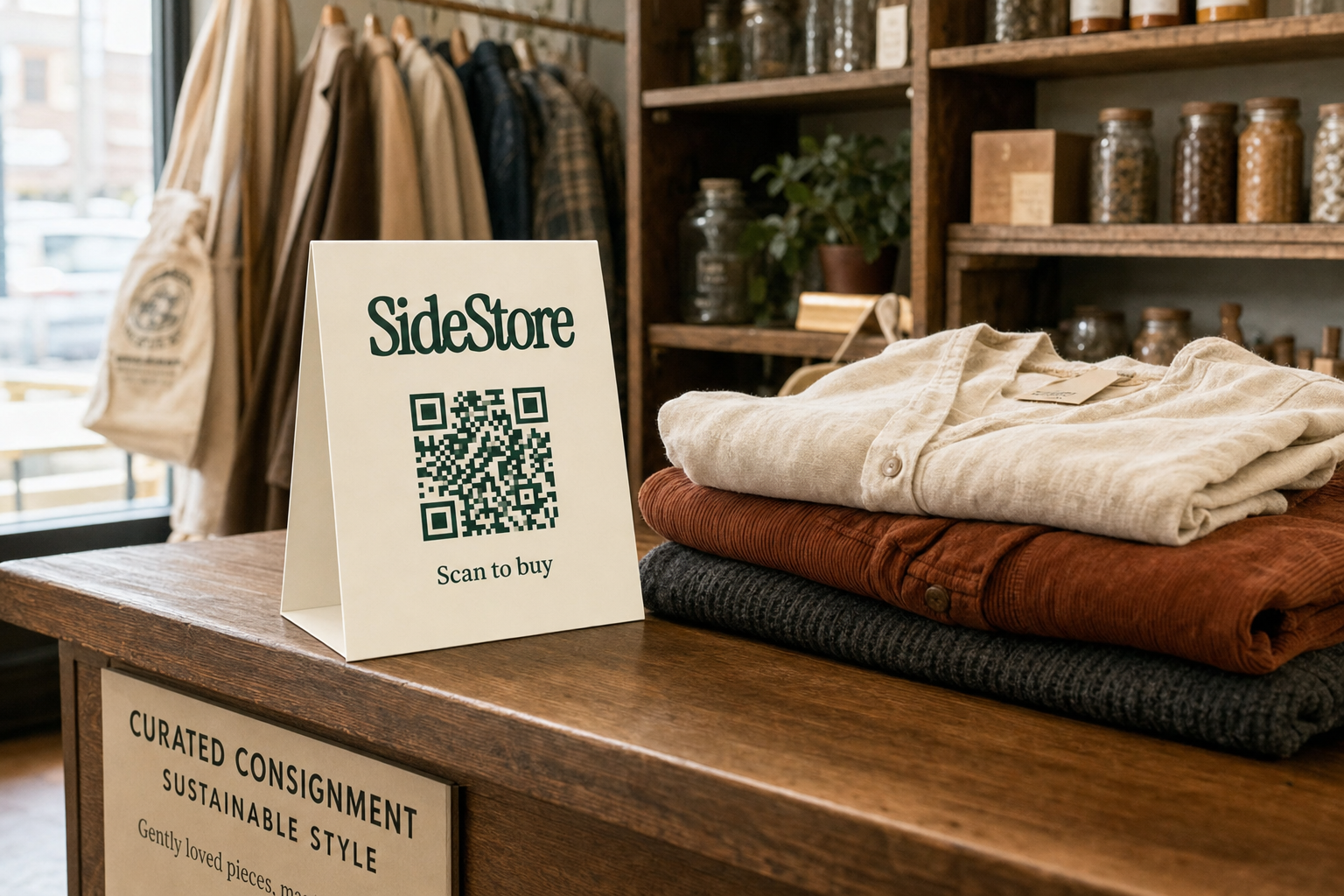
SideStore's Retail Widget is built for this. It's the full consignment-management interface: you use it to model a placement, set your split terms, track live stock levels per location, and receive automatic split settlement when sales occur. The scan-to-pay QR code is one function within the Retail Widget, not the whole product. A maker can attach a printed QR card to individual garments, or a merchant can display a single card covering all products in a placement.
Placement attribution is one of the Retail Widget's core features. Every sale is recorded against the specific placement where it happened, so you know which shop is performing, which isn't, and where to concentrate your next restocking effort. That data is available from your dashboard without requiring you to call each shop individually.
As your distribution grows into a distributed consignment network, the operational load stays low because the software handles the admin. For a broader comparison of tools, see consignment inventory software and boutique inventory system.
Frequently asked questions about selling clothes on consignment
Is consignment a worthwhile sales method for clothing? Consignment is worthwhile for makers who want physical retail presence without upfront shelf costs. You place stock, the shop earns from foot traffic it already has, and you receive payment when items sell. The trade-off is delayed income and the need to track stock actively. For new makers with limited capital, it's typically the most accessible route into physical retail.
What percentage or amount do consignment shops typically pay sellers? Consignment shops typically pay sellers 40 to 60 percent of the retail sale price. A 50/50 split is the most commonly reported starting point. Higher-end boutiques sometimes offer 60 percent to makers with strong-selling lines. Always calculate your minimum acceptable payment per garment before agreeing to any split.
Which sales method generates the most profit for used clothes? Direct cash sales or reselling through your own channel typically yield the highest revenue per item because you keep 100 percent of the sale price. Consignment reduces your take to 40 to 60 percent but removes the need for your own storefront or buyer. Wholesale generates volume but at the lowest per-unit return. The best method depends on your goals, capacity, and costs.
What drawbacks come with selling through consignment? The main drawbacks are delayed payment (you're paid only when items sell, not at handover), reduced revenue per item (the shop takes its cut), ongoing stock-tracking responsibility, and dependence on the shop's foot traffic and display quality. Unsold stock must also be retrieved, which requires active management.
How does the consignment process work for clothing? You agree terms with a shop, sign a consignment agreement, deliver stock with a full inventory record, and the shop displays and sells your garments. You receive your share of each sale, typically via monthly settlement. Unsold garments are returned to you at the end of the placement period. You retain ownership throughout until a customer completes a purchase.
What does selling on consignment mean? Selling on consignment means you place stock in a shop and receive payment only when that stock sells. The shop earns a percentage of each sale as its hosting fee. You receive no advance payment, and you retain legal ownership of the garments until a customer buys them. It's not the same as a cash sale or a buy-out.
How to find consignment retailers in a specific location? Search locally for independent boutiques, concept stores, lifestyle shops, and cafes that already carry makers' products. Check their current stock for price point and aesthetic fit before making contact. You can also explore selling to consignment directories or ask in local maker communities for shop recommendations. Platforms like SideStore list merchant spaces actively seeking consignment placements.
Can clothing be sold on consignment online? Yes. Several online consignment platforms accept clothing and handle the logistics of listing, shipping, and payment. Physical consignment in bricks-and-mortar shops and online consignment aren't mutually exclusive; many makers run both in parallel. Physical placement builds local brand presence; online consignment extends geographic reach. If you're also considering temporary physical locations, pop-up retail space is worth exploring.
Do consignment shops pay cash immediately upon sale? No. Consignment shops don't pay cash at handover. Payment is made after items sell, typically on a monthly settlement cycle or at the end of the placement period. This is the fundamental difference between consignment and a direct buy-out, where you receive payment when you hand over the stock.
Can designer clothing be sold through consignment? Yes. Designer and luxury clothing is commonly sold on consignment, and specialist consignment shops in this category often have established authentication processes and well-targeted clientele. Condition, authenticity documentation, and original packaging significantly affect a shop's willingness to take a designer piece on consignment.
Is consignment a viable option for wedding dresses? Yes. Wedding dresses are a strong consignment category because of their high retail price, low purchase frequency for individuals, and the value buyers see in buying a quality gown at a reduced price. Bridal consignment shops are a well-established format. Condition is paramount: shops typically only accept dresses in excellent or near-new condition.
Before you approach your first shop
Three things need to be in place before you approach any shop about stocking your clothing on consignment: a clear pricing floor (the minimum you need per garment after the shop's cut), a finished sample selection to show in person, and a draft consignment agreement ready to present.
With those three prepared, the conversation with a shop owner is practical rather than exploratory. You know your numbers, you have garments to show, and you have a contract ready when they say yes.
Start with approaching a local shop about stocking your products for the full pitch walkthrough. If you're thinking beyond clothing into adjacent product categories, how to sell art prints in cafes shows how the same consignment model applies across different maker products.