The Shop-in-Shop Business Model: How Makers and Retailers Split Space (and Revenue)
A shop-in-shop is a retail arrangement where an independent maker places their products inside a host merchant's existing space, selling on consignment or another agreed split, without the host buying stock upfront and without the maker leasing a standalone premises.
Here's how it works: the maker supplies products, the host provides shelf space and foot traffic, and when a sale happens, revenue is split automatically according to a pre-agreed percentage. The host carries no inventory risk. The maker pays no fixed rent. The split happens at the transaction level.
Many people searching for "shop-in-shop" are actually thinking about general retail business models, how to run a shop, what profit margins to expect, whether to open a standalone store. That's a different question. Shop-in-shop is specifically about one business operating a named, bounded section within another business's premises. It sits inside a broader family that includes distributed retail networks and the collective store format, but it has its own mechanics and its own logic.
This guide covers what the model entails, how revenue splits are structured, real examples, design principles, day-to-day operations, and how a single placement scales into something larger.
What Does the Shop-in-Shop Model Actually Entail?
A shop-in-shop arrangement has three core components: a defined physical placement inside the host's space, a revenue-split agreement that determines what each party earns per sale, and a checkout or attribution mechanism that tracks which venue sold what. Get all three right and the arrangement runs with minimal overhead on both sides.
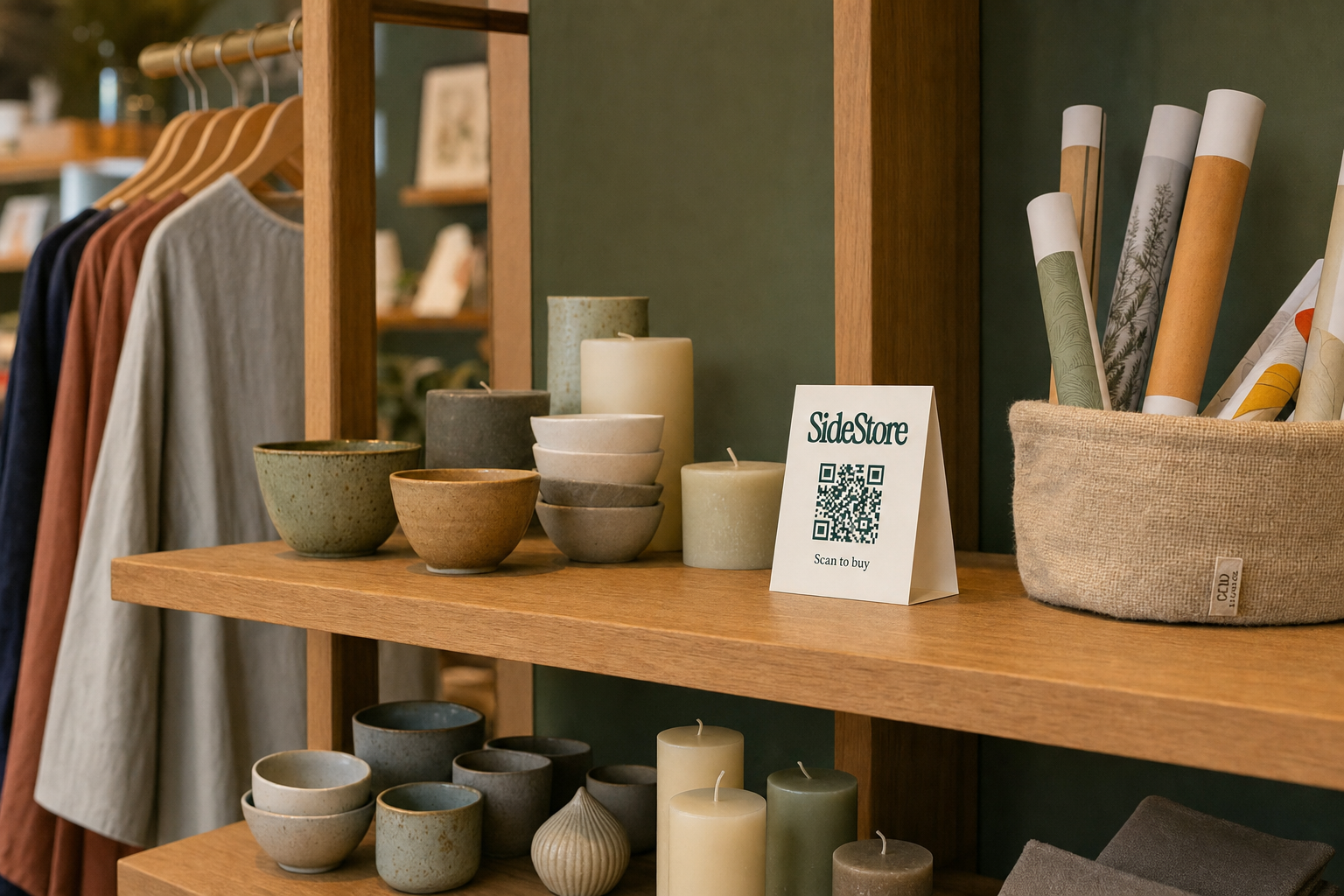
Start with the physical placement. The maker's products occupy a bounded section of the host's floor, wall, shelf, or display unit. That boundary matters. It signals to customers that this is a distinct offering, and it gives the host a clear line between their own products and the maker's.
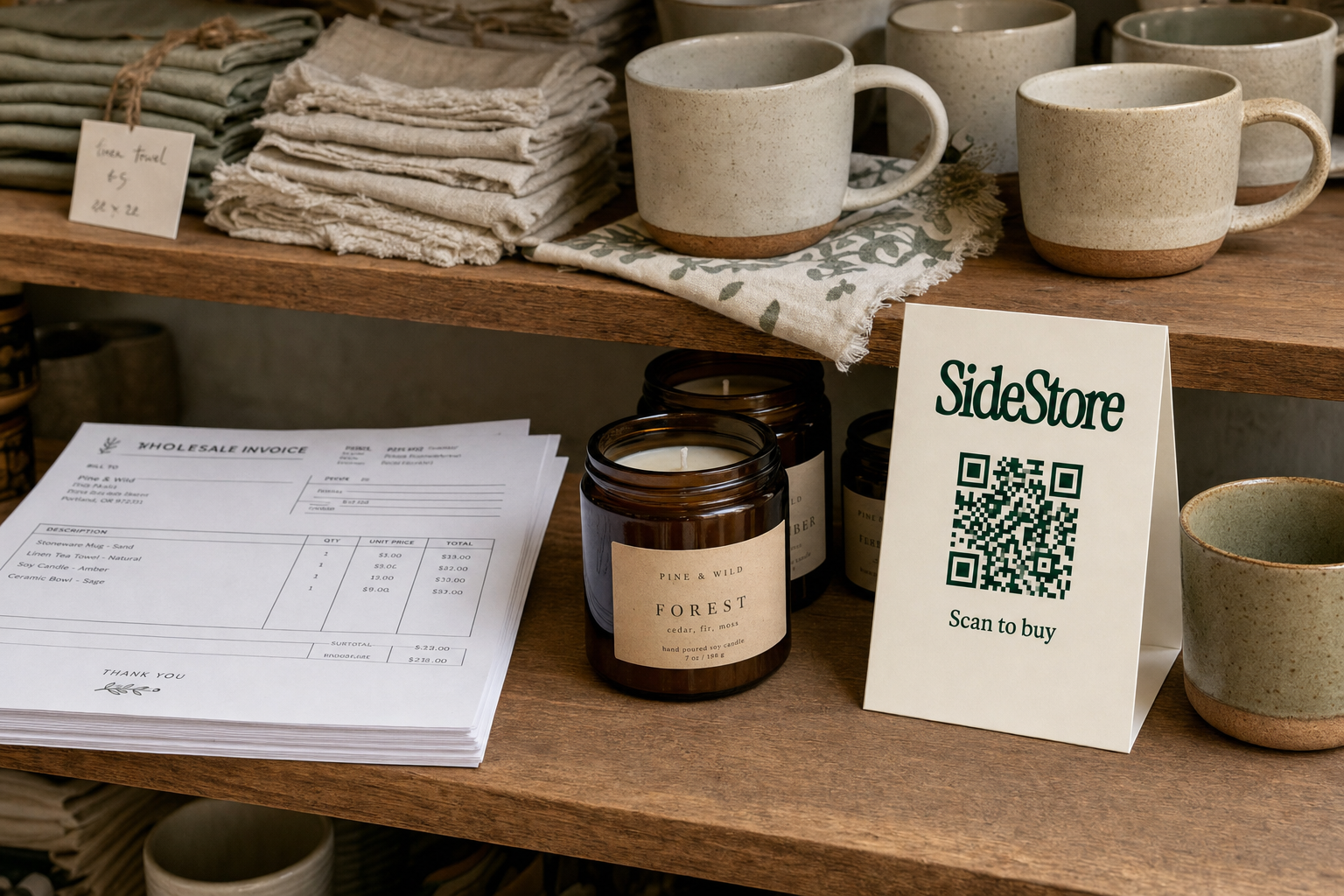
The revenue-split agreement sets the terms before any stock moves. This is not wholesale. In wholesale, the retailer buys the maker's stock outright, takes on the inventory risk, and sets their own resale price. In a staffed concession, the brand typically provides its own sales representative and pays the host a space fee or percentage. Shop-in-shop on a consignment basis sits between these models: the host never buys the stock, so there is no upfront capital tied up in inventory. Products remain the maker's property until they sell.
The third component, checkout attribution, is what makes modern consignment commercially clean. Each placement has its own identifier. When a customer scans a QR code or completes a purchase, the system records which venue generated the sale, calculates the split, and routes payment accordingly. Neither party needs to reconcile a spreadsheet at the end of the month.
This is not the same as opening a shop. It is also not the same as a market stall or a pop-up. The distinction matters because the ongoing relationship, restocking, display maintenance, earnings, is managed remotely and continuously, not event by event.
If you are thinking about selling through someone else's store for the first time, the shop-in-shop model is one concrete structure to negotiate. If you are already in multiple placements, consignment inventory software is what keeps it manageable at scale.
The model proves simpler in practice than many hosts expect. The maker handles product quality and restocking. The host earns from traffic they were already generating.
How Do Makers and Retailers Split Revenue?
Revenue in a shop-in-shop arrangement is typically split as a percentage of each sale, settled automatically at the transaction level. The host receives a commission for providing space and foot traffic; the maker receives the remainder after that commission and any platform fees.
The exact split depends on which model you are using. There are four common structures:
| Model | Who carries stock risk | Host earns | Maker earns | Best for |
|---|---|---|---|---|
| Consignment | Maker | Typically 20, 35% of sale price | Remainder after host commission | Hosts who want zero inventory exposure; makers testing a new venue |
| Wholesale resale | Host/retailer | Margin between buy and sell price | Fixed wholesale price per unit | Makers with high volume and consistent pricing; hosts who prefer certainty |
| Staffed concession | Brand/maker | Space fee or % of takings | Revenue minus space fee and staff costs | Brands with high-value products needing active selling (jewellery, cosmetics) |
| Hybrid (consignment + minimum) | Shared | Guaranteed minimum plus % of sales above it | Sale price minus host guarantee and fees | Hosts who need predictable income; makers confident in sell-through |
All percentage figures above are indicative. Actual splits vary by product category, venue type, and negotiation. Consignment rates in the 25, 30% range feel fair to most hosts when the maker handles their own restocking, because the host's operational contribution is limited to floor space and foot traffic.
Automatic split settlement is the mechanism that makes consignment commercially viable without a bookkeeper. Instead of the host collecting all revenue and invoicing the maker at month end, each transaction triggers an automatic calculation and payout. The maker sees their balance update in real time. The host earns without chasing invoices.
If you are a cafe or hospitality operator weighing whether consignment is worth the shelf space, consider the baseline: you are already generating foot traffic. A consignment placement monetises attention you were giving away. For a grounded view of what average coffee shop profit margins look like on core trade, consignment income sits on top of that without adding to your cost base.
These arrangements do something structurally useful: they keep revenue circulating between independent makers and independent hosts rather than centralising it. That is one reason shared retail networks support local economies more effectively than individual standalone stores.
What Are Some Real Examples of Shop-in-Shop Arrangements?
Shop-in-shop arrangements appear in nearly any retail host that has a free shelf, a waiting area, or a display surface. The model works across sectors because the core logic, placement plus split, does not depend on product type or venue category.
Here are four concrete formats, each with distinct host and maker dynamics:
Ceramic maker in a cafe. A maker places a small collection of handmade mugs, bowls, and plates on a dedicated shelf near the counter. The cafe host earns a percentage of each piece sold without buying or managing any stock. The maker reaches customers who are already in a relaxed, discovery-friendly state of mind. Cafe operators find this adds visible design character to their space while generating passive income alongside their core trade. Note that whether a coffee shop qualifies as a retail host is a more nuanced question than it appears.
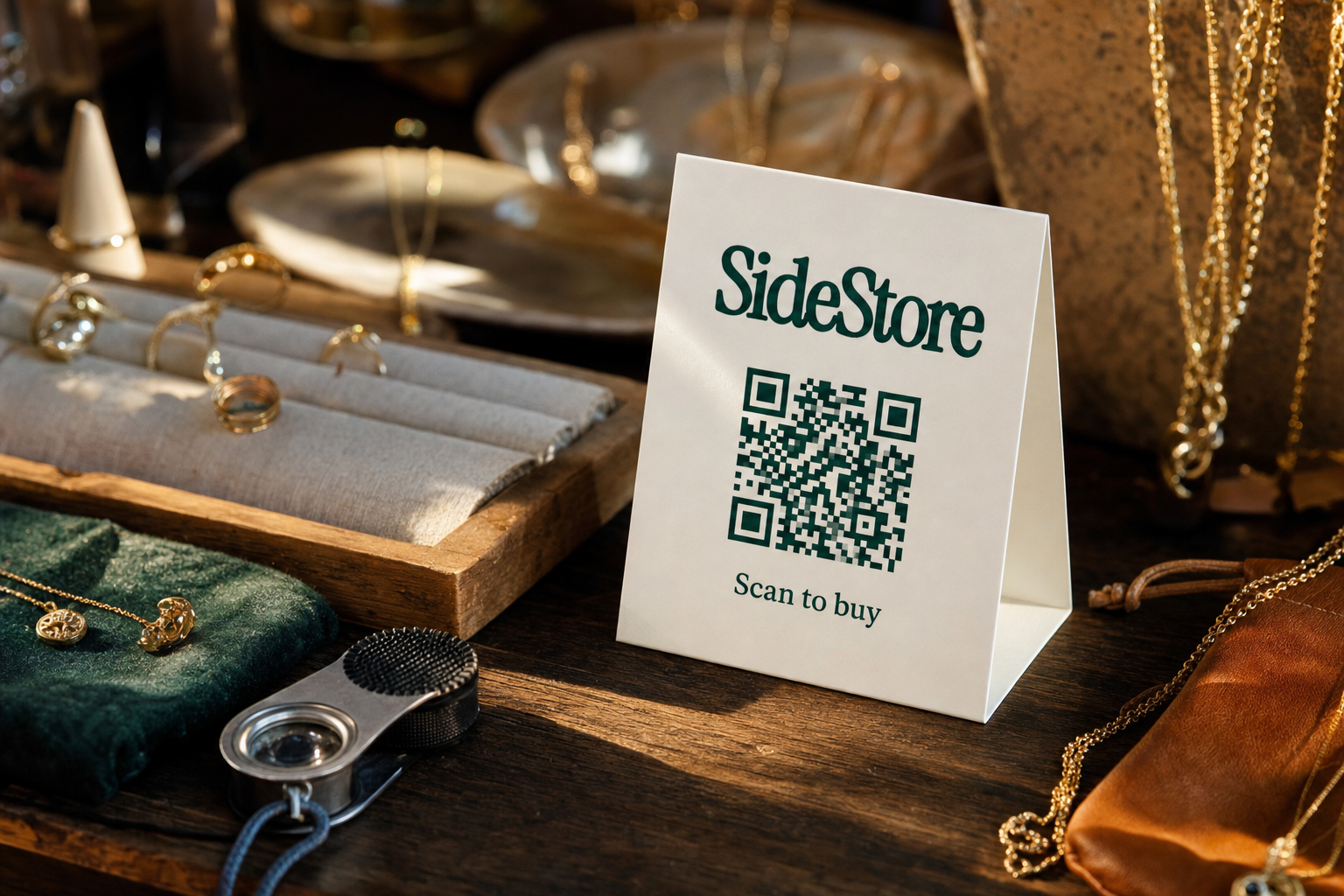
Jewellery in a hotel lobby. A designer places a curated set of pieces in a display case near reception. The hotel earns a commission on every sale. The maker reaches guests who are actively looking for local gifts and souvenirs, often with a higher spending disposition than a typical high-street browser. For makers considering this route, the practical guidance in selling local products to hotels is a useful starting point.
Artisan food producer in a deli. A maker of preserves, sauces, or cured goods places a shelf section within an independent deli. The host earns per jar sold without committing to a wholesale purchase order. The maker gets fridge or ambient space in a venue where the customer base is already primed for premium food.
Print rack in a co-working space. A printmaker or illustrator places a small rack of art prints in a co-working lobby or breakout area. The host earns a split on each print. The maker captures a weekday professional audience with regular dwell time.
What distinguishes a shop-in-shop from a collective store is governance and permanence. A collective store is typically a shared space co-managed by multiple makers with a collective identity. A shop-in-shop is a bilateral arrangement: one maker, one host, one section of space.
How Should a Shop-in-Shop Space Be Designed?
A shop-in-shop space should be immediately legible to a passing customer: they should be able to tell who makes the products, understand the price, and know how to buy, without needing to ask a member of staff. That legibility is the design brief.
Five elements, in order of priority:
1. Spatial boundary. The placement needs a physical edge. A dedicated shelf unit, a clearly framed wall section, or a display table works. The boundary does not need to be elaborate, but it must be unambiguous. Customers should not have to guess where the host's products end and the maker's begin.
2. Maker identity. A small card, label, or print with the maker's name and a one-line description of what they make. This is not branding for its own sake. It gives customers a reason to engage and gives the placement a sense of provenance. Makers placing prints should look at how others handle this in placing art prints in local shops and displaying prints in cafes.
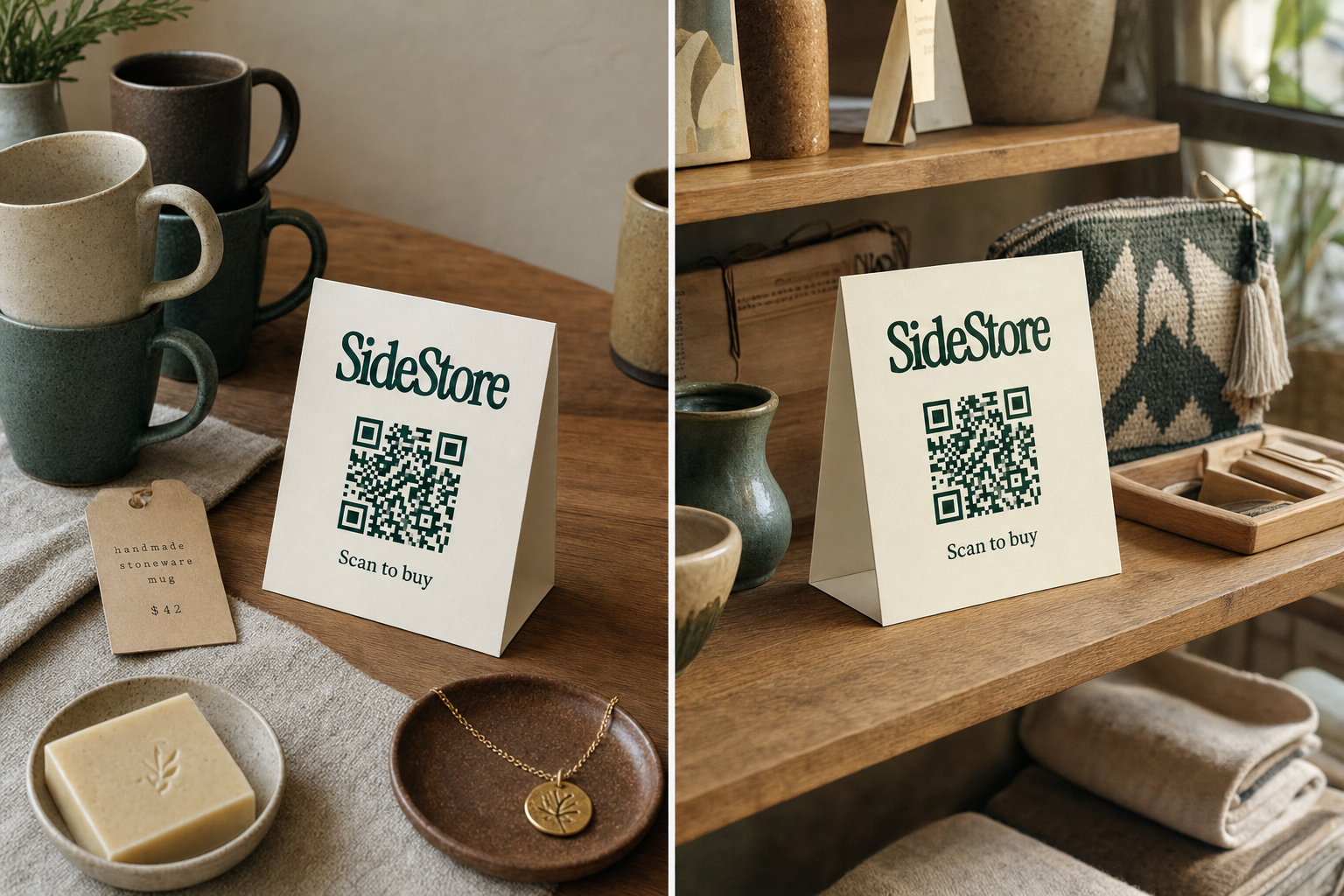
3. Checkout signal. For unstaffed consignment placements, the QR card is the sales mechanism. A customer sees a product they want, scans the code, and completes the purchase on their phone. This scan-to-pay function is one feature of the Retail Widget, the broader interface that manages the whole consignment placement. Make the QR card visible and physically close to the products; do not tuck it behind the display.
4. Stock density. A half-empty display reads as neglected, not curated. You want enough product to look intentional but not so much that it becomes cluttered. A practical heuristic: if a staff member has to explain how to buy from the display more than occasionally, the checkout signal is not prominent enough.
5. Aesthetic alignment. The maker's display should sit naturally within the host's existing visual environment. A rustic ceramic placement looks at home in a muted, natural-toned cafe; it looks incongruous next to a high-gloss hotel lobby fit-out. Agree on aesthetic parameters before the first delivery.
How Do You Operate a Shop-in-Shop Day to Day?
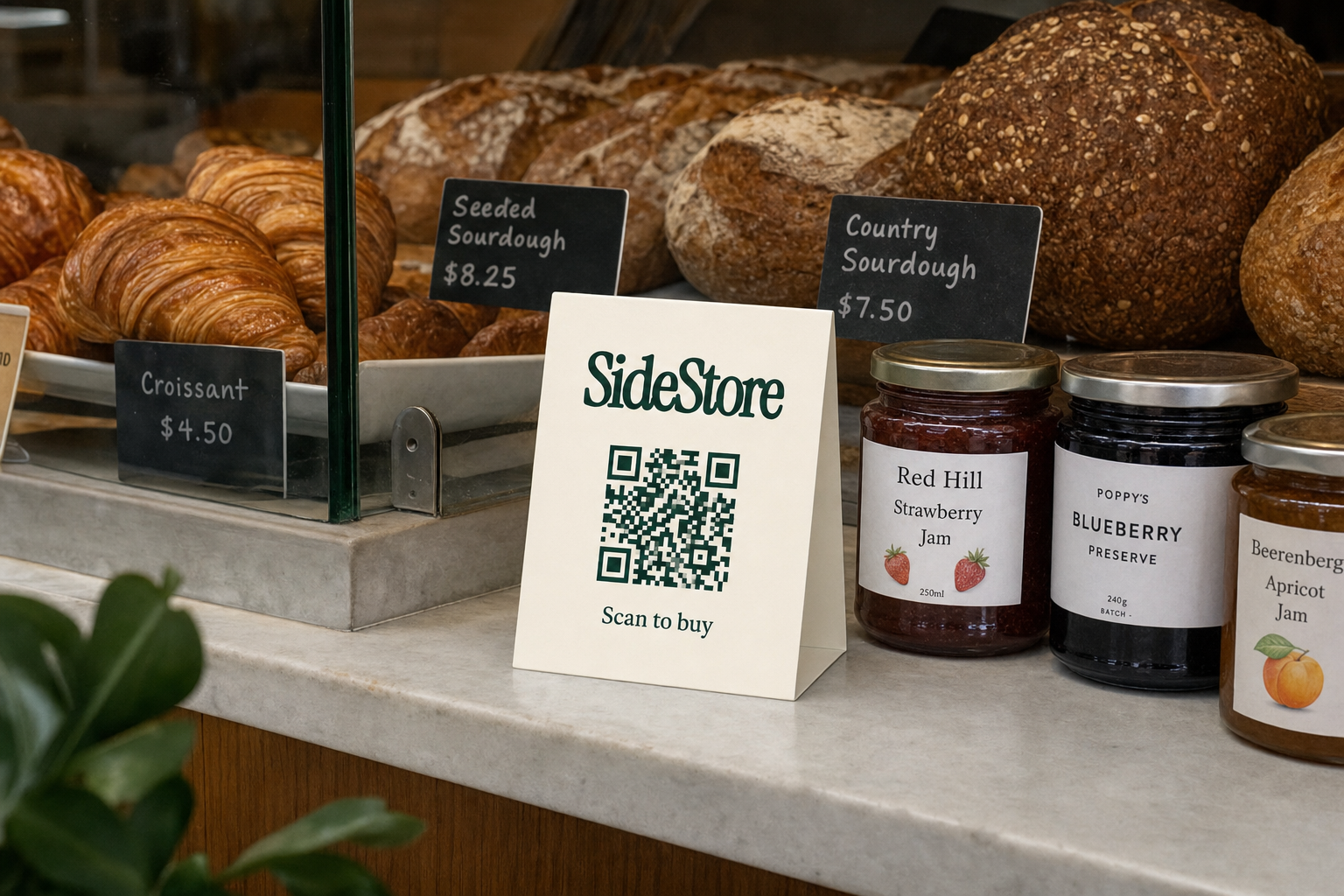
Day-to-day, a consignment shop-in-shop runs on a clear division of responsibility: the host maintains the display and the space; the maker monitors stock levels and handles replenishment. Neither party needs to be present in the other's business for this to work.
Host tasks:
- Keep the display area clean and positioned correctly within the space
- Flag any damaged or missing products to the maker promptly
- Ensure the QR card or scan-to-pay prompt remains visible and accessible
- Receive automatic split payouts without manual invoicing
Maker tasks:
- Monitor live stock levels through the placement dashboard
- Respond to low-stock alerts and restock before sellout
- Review placement attribution data to understand which venues perform best
- Adjust pricing or product selection based on per-venue performance
Placement attribution is what makes multi-venue operation tractable. Each placement has its own identifier in the system. When a sale occurs, it is recorded against that specific venue. You see not just total sales but which location sold what, when. That data drives restocking decisions and informs which placements are worth expanding.
The single biggest operational failure in consignment is stockout. A product that sells out and is not replenished within a day or two generates no revenue and signals to the host that you are unreliable. Automatic low-stock alerts, triggered when inventory at a given placement falls below a threshold you set, are the fix. Set them early.
Managing one placement by hand is possible. Managing six or twelve requires consignment inventory software and a clear restocking rhythm. As you add venues, the model starts to behave like a distributed retail network: multiple points of presence, one management layer, no additional fixed cost per location.
If you are not yet in a placement, approaching a local shop about stocking your products is the practical next step.
From One Placement to a Distributed Consignment Network
A single shop-in-shop placement proves the model. Multiple placements, run from one dashboard, build something structurally different: a distributed consignment network, where a maker has revenue coming in from several venues simultaneously, and a host has several passive income lines from makers whose products attract different customer segments.
The logic for makers is straightforward. Each new placement adds a revenue stream without adding a fixed cost. You are not paying rent at each location. You are not hiring staff. You are supplying stock and managing replenishment remotely. Most makers find that their cost per additional placement drops sharply after the first two or three, because the operational patterns are already established.
For hosts, the same logic applies in reverse. Each additional maker you host adds a passive income line from a different product category, without requiring you to buy any of it. A cafe with three consignment makers, one ceramicist, one print-maker, one preserves producer, earns from all three without managing any of their stock.
This is not franchising. There are no territory fees, no licensing agreements, no staffing requirements imposed by a franchisor. The arrangement is bilateral and flexible. Either party can adjust or end it without penalties tied to a franchise model.
The framing that makes this coherent is software logic applied to physical retail. Deploy a placement. Manage it through the dashboard. Scale by repeating the deployment. The physical product sits in a real shop, but the operations run like a software subscription: measurable, adjustable, and not dependent on being present.
For a fuller picture of what a distributed retail network looks like in practice, and for the broader case for why shared retail networks support local economies, those articles build directly on the model described here.
Frequently Asked Questions
These answers cover the most common questions about the shop-in-shop business model, from mechanics to profitability. Each is written to stand on its own if quoted out of context.
What does the shop-in-shop model entail?
A shop-in-shop is a bilateral arrangement where a maker places products in a defined section of a host merchant's space, sells on consignment or a revenue-split basis, and neither party needs to operate the other's business. The host provides space; the maker provides products; revenue splits automatically at each sale.
What are some examples of shop-in-shop arrangements?
Common examples include ceramic makers in cafes, jewellery designers in hotel lobbies, artisan food producers in delis, and printmakers placing work in co-working spaces or boutiques. In each case, the host earns a percentage commission and the maker earns the remainder without paying fixed rent.
How should a shop-in-shop space be designed?
Prioritise legibility: spatial boundary, maker identity card, visible scan-to-pay prompt, appropriate stock density, and aesthetic alignment with the host's environment. For unstaffed placements, the QR checkout card must be prominent enough that customers can buy without asking staff.
What business model works best for a retail shop?
For hosts with idle shelf space, consignment is typically the lowest-risk model: no upfront stock purchase, no inventory exposure, and passive income from the maker's products. For makers, consignment placement into an existing host's space avoids fixed costs entirely. Wholesale suits makers with high volume; staffed concessions suit high-value brands that need active selling.
How do you operate a shop day-to-day?
The host maintains the display and flags issues; the maker monitors stock remotely and handles replenishment. Placement attribution in the dashboard shows which venue sold what. The primary operational risk is stockout, managed through automatic low-stock alerts and a reliable restocking rhythm.
How profitable are coffee shops as a business?
Coffee shop profitability varies considerably by location, size, and operating model. For context on what those baseline margins look like and how consignment income can sit on top of them, see our breakdown of average coffee shop profit margins.
What profit margins do coffee shops typically achieve?
Margins vary widely and depend on rent, staffing, and average spend. Rather than cite a figure that may not apply to your market, the honest answer is: core cafe margins are often tighter than they appear, which is one reason consignment income from a shop-in-shop arrangement is worth considering. Check whether your coffee shop qualifies as a retail host for the operational framing.