What Is a Selling Point? How Makers Can Use Theirs to Get into More Shops
A selling point is the specific reason a buyer chooses your product over every alternative available to them. For independent makers trying to get into shops, it's also the reason a shop owner says yes to stocking you.
Knowing your selling point is not optional. It shapes every conversation you have with a retailer, every email you send, and every placement you secure. Without it, you're asking a shop owner to do the guesswork you should have already done.
This guide walks you through what a selling point is, how to find yours, how to separate your consumer-facing pitch from your merchant-facing one, and how to turn both into real retail placements. If you're starting from scratch on getting your products into retail stores, defining your selling point is the right first step.
What Does a Unique Selling Point Mean?
A unique selling point (USP) is the one thing your product does, represents, or offers that no direct competitor matches, stated clearly enough that a buyer can repeat it to someone else. It's sometimes called a value proposition, differentiator, or competitive advantage. These terms mean roughly the same thing: the specific edge that makes choosing you logical rather than arbitrary.
The word "unique" trips many makers up. It doesn't mean your product must be invented from nothing. It means the combination of qualities you offer is distinct enough to be worth naming. Local provenance plus handmade production plus a price point that fits a boutique margin can be a USP, even if each element exists elsewhere.
The most common mistake is staying too vague. "High quality" is not a selling point. Every maker says that. "Hand-thrown in Bristol, fired at stoneware temperature, dishwasher-safe, and priced under £40" is a selling point. The difference is specificity: a shop owner can visualise the product, the customer, and the conversation.
Synonyms you'll encounter: value proposition, differentiator, competitive advantage, key benefit, unique value. They all describe the same thing. Pick the one that feels least like jargon and use it consistently.
If you're exploring what it means to sell through a third-party space, the mechanics of selling through someone else's store start to matter as soon as your USP is clear.
What Are Examples of Selling Points for Independent Makers?
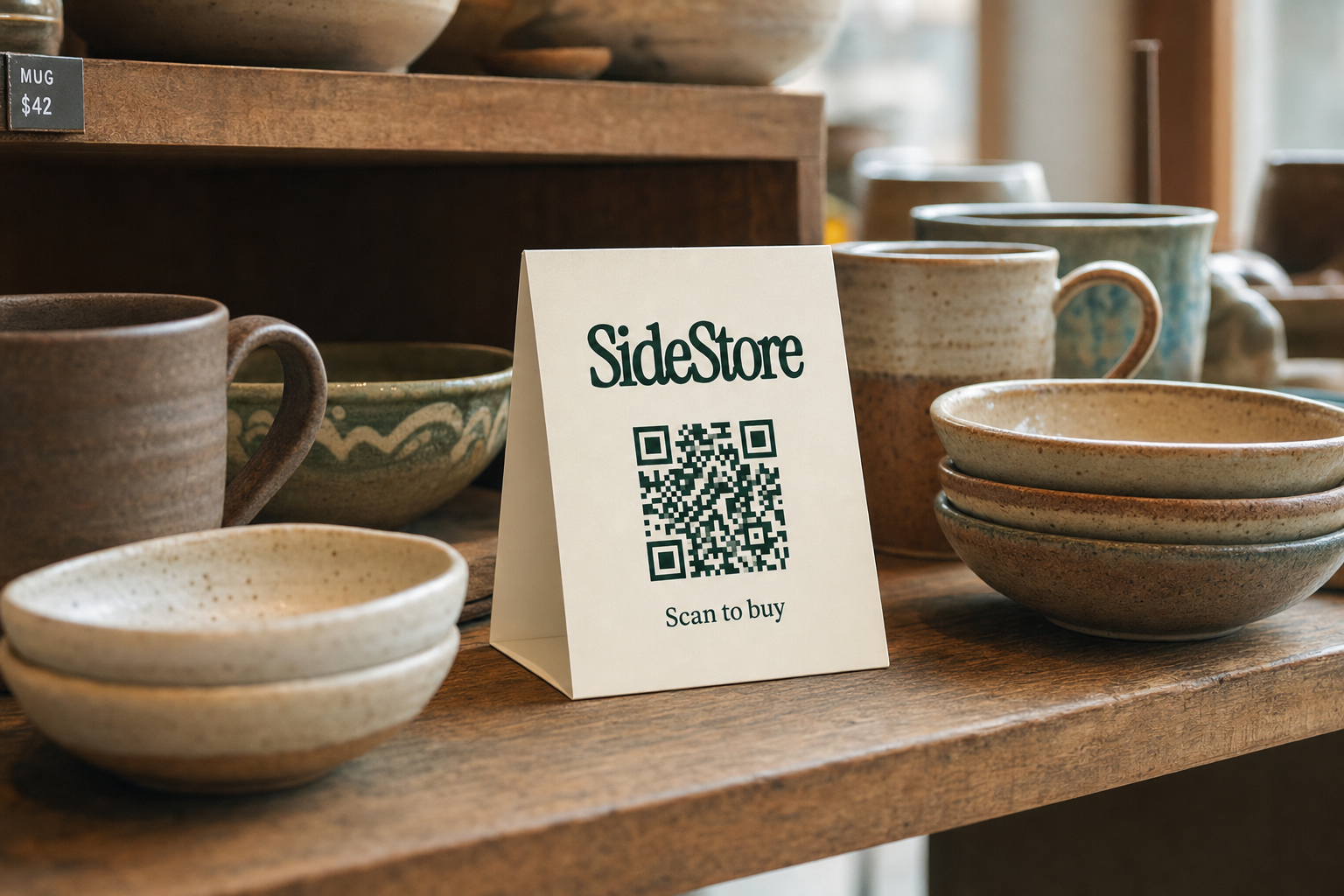
For independent makers, strong selling points fall into five categories: provenance, materials, purpose, community, and economics. Each gives a shop owner something concrete to tell their customers.
1. Provenance
Where something is made carries meaning. "Hand-screen-printed in Glasgow using water-based inks" gives a boutique a story. Sample phrase: "Every piece is made within ten miles of where you're selling it." See how local provenance supports retail networks for more on this angle.
2. Materials
Specific materials communicate care. "Cold-process soap with no synthetic fragrance, palm-oil-free" is citable by a shop owner at the counter. Sample phrase: "The ingredients list has six items. Customers can pronounce all of them."
3. Purpose or function
Some products solve a problem no competing product addresses cleanly. Sample phrase: "It is the only candle holder in this size range that fits a standard taper without an adaptor."
4. Community or cause
A percentage of revenue to a named cause, or a product that employs a specific group. Sample phrase: "Ten percent of every sale goes to the trust printed on the tag."
5. Economics for the host
This is the selling point most makers forget. Sample phrase: "The margin is 40 percent and the minimum is six units, so you recover your shelf cost on two sales."
On the Coca-Cola question that often comes up: Coca-Cola's traditional USP is emotional refreshment and consistency of taste across the world, reinforced by over a century of brand equity. That matters to a global marketing team. For an independent maker, what matters is that your USP is specific enough to be said in one sentence, by a shop owner, to a customer.
If you make art prints, the guide on placing art prints in cafes shows how provenance and aesthetic fit combine into a placement-ready pitch.
How to Find Your Own Selling Point (Before You Pitch Anyone)
Finding your selling point starts with one honest question: why would a shop owner's customer choose this over everything else already on the shelf? Answer that before you email a single retailer.
Here are four steps to work through it:
1. List what is objectively different about your product.
Not "better", different. Different materials, different origin, different process, different size, different price. Write these down without editing.
2. Filter by what buyers actually notice.
Cross off anything a customer would need specialist knowledge to appreciate. What remains is your candidate USP pool.
3. Ask the one-sentence test.
Can you state your selling point in a single sentence that a shop owner could repeat to a customer during a 30-second transaction? If not, it's too complex. Simplify.
4. Check it against the shop you are pitching.
A USP that lands in a natural food store may fall flat in a hotel gift shop. Adapt the framing, not the fact. "Locally foraged, wildcrafted ingredients" plays differently in a spa boutique versus a garden centre, even if the product is identical.
Self-test: Say your selling point out loud to someone who has never heard of your product. If they ask a follow-up question that shows genuine curiosity, you're close. If they nod politely and say nothing, go back to step one.
The basic principle of selling is relevance: the right product, presented to the right buyer, with a reason that matters to them. Your selling point is how you prove relevance before anyone has touched the product.
Before you approach anyone, the guide on approaching a local shop about stocking your products gives you the full context.
Two Audiences, Two Selling Points: Consumers vs. Shop Owners
Your selling point has two audiences: the customer who buys the product, and the shop owner who decides whether to stock it. These are different people with different concerns, and your pitch must speak to each separately.
| Audience | What They Care About | Selling Point Framing | Example Phrase |
|---|---|---|---|
| Consumer | Does this suit me? Is it worth the price? | Product story, quality, identity | "Hand-dyed with natural indigo, no two are the same." |
| Boutique owner | Will it sell? What's my margin? Does it fit my brand? | Sellability, margin, shelf fit | "It retails at £38, your margin is 45%, and it fits a quarter-shelf display." |
| Cafe owner | Does it complement what I already do? Low effort? | Ambient fit, low management overhead | "It sits at the counter, needs no explanation, and customers ask about it unprompted." |
| Hotel gift shop | Does it feel local? Is restocking simple? | Provenance, logistics ease | "Made in the region, QR scan to reorder, no minimum on top-ups." |
After the table, one more thing to understand: when you pitch on consignment, the merchant's financial risk drops to zero. They pay nothing upfront. They earn a split only when items sell. That changes the conversation entirely. Your selling point carries the full weight of the yes, because the no has no financial cost behind it.
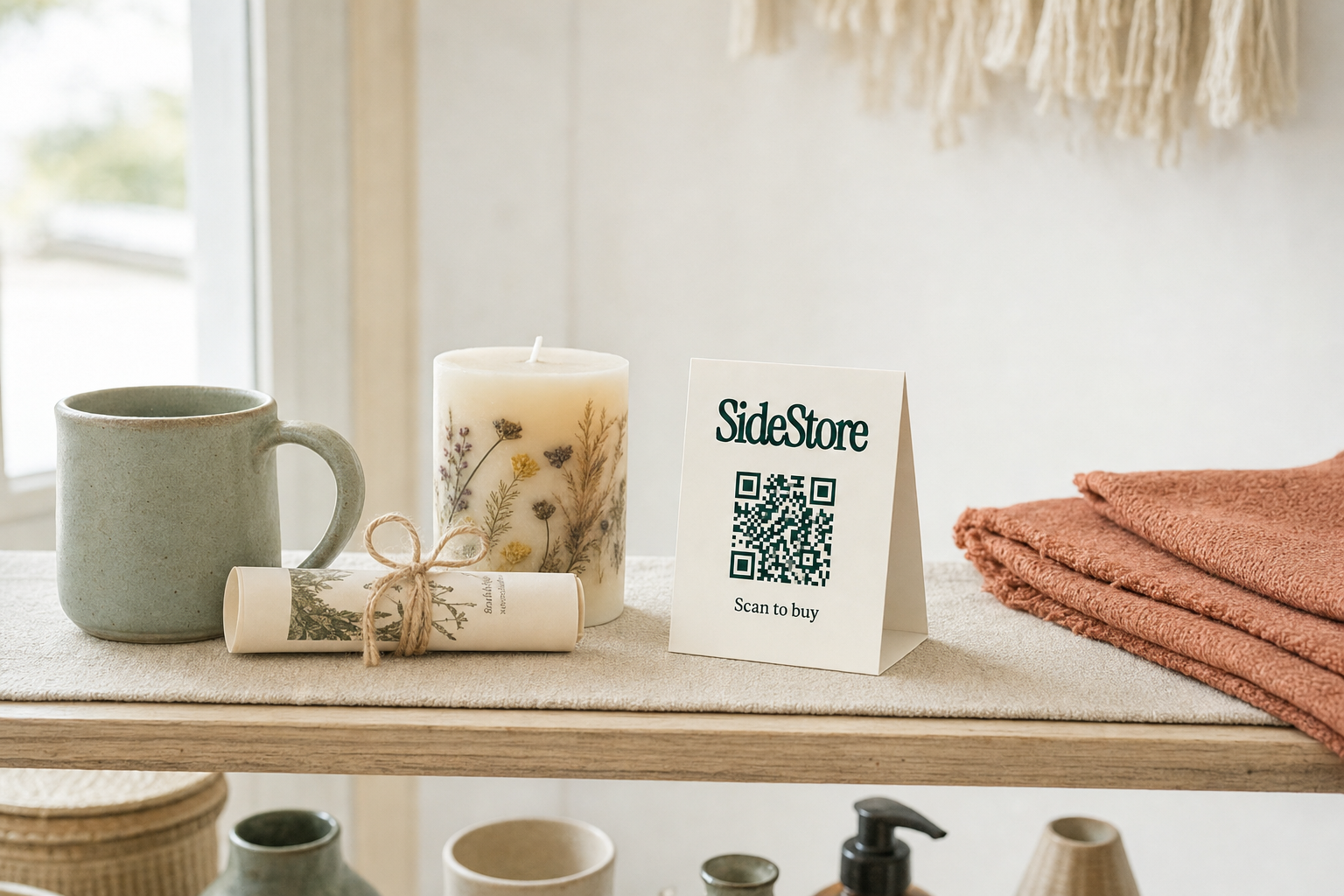
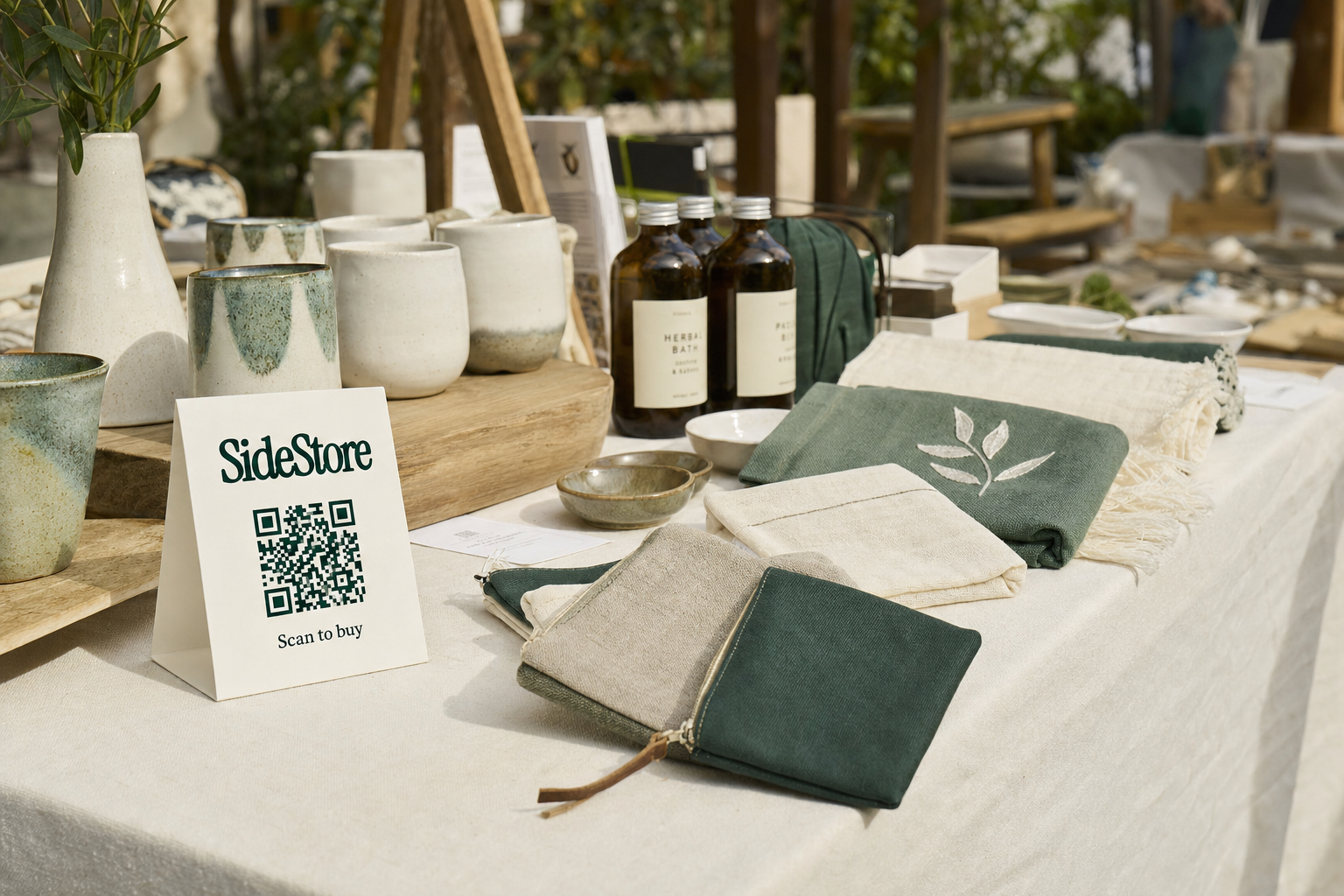
SideStore's Retail Widget handles the operational side of that arrangement: scan-to-pay checkout, live stock tracking, and automatic split payouts between you and the host. You bring the selling point. SideStore handles the settlement.
Review consignment stock terms and conditions before your first placement, and understand why coffee shops as retail spaces are increasingly viable for makers who pitch well.
How to Put Your Selling Point into a Pitch (Email and In-Person)
A pitch works when it answers the shop owner's unspoken question, "why should this be on my shelf?", in the first few sentences. Your selling point is the answer. Lead with it.
Email pitch template:
Subject: [Your product category] made in [location], fits well with [shop name]
Opening, name the selling point immediately:
Hi [Name], I make [product] in [location] using [specific materials or process]. They sell at [retail price], with a [X]% margin for the host, and they fit a [size] display.
Middle, relevance to their specific shop:
I noticed your shop carries [adjacent product category]. My [product] sits naturally next to that audience. I've kept the range tight, [number] SKUs, so there's no complexity for you to manage.
Consignment offer, remove the risk:
I work on consignment, so there's nothing to buy upfront. You earn your split automatically when items sell. I can send a small starter set and handle restocking.
Close, single next step:
Would a sample make sense? I can drop one off or post it this week.
[Your name]
In-person approach:
State your selling point before you show the product. Walk in knowing your one sentence. "I make ceramic mugs in [town], fired at stoneware temperature, dishwasher-safe, under £35" tells the owner everything before they've picked one up.
Common mistakes to avoid:
- Leading with your story instead of their benefit
- Listing features without naming the margin
- Forgetting to mention consignment as a risk-free option
- Sending a generic email with no reference to their specific shop
The step-by-step guide for independent makers getting into stores covers the full approach sequence, and the guide on pitching retail products to salon spaces shows how the same framework adapts across venue types. For the initial outreach, how to approach a local shop without getting ignored is worth reading first.
How Your Selling Point Powers a Consignment Placement
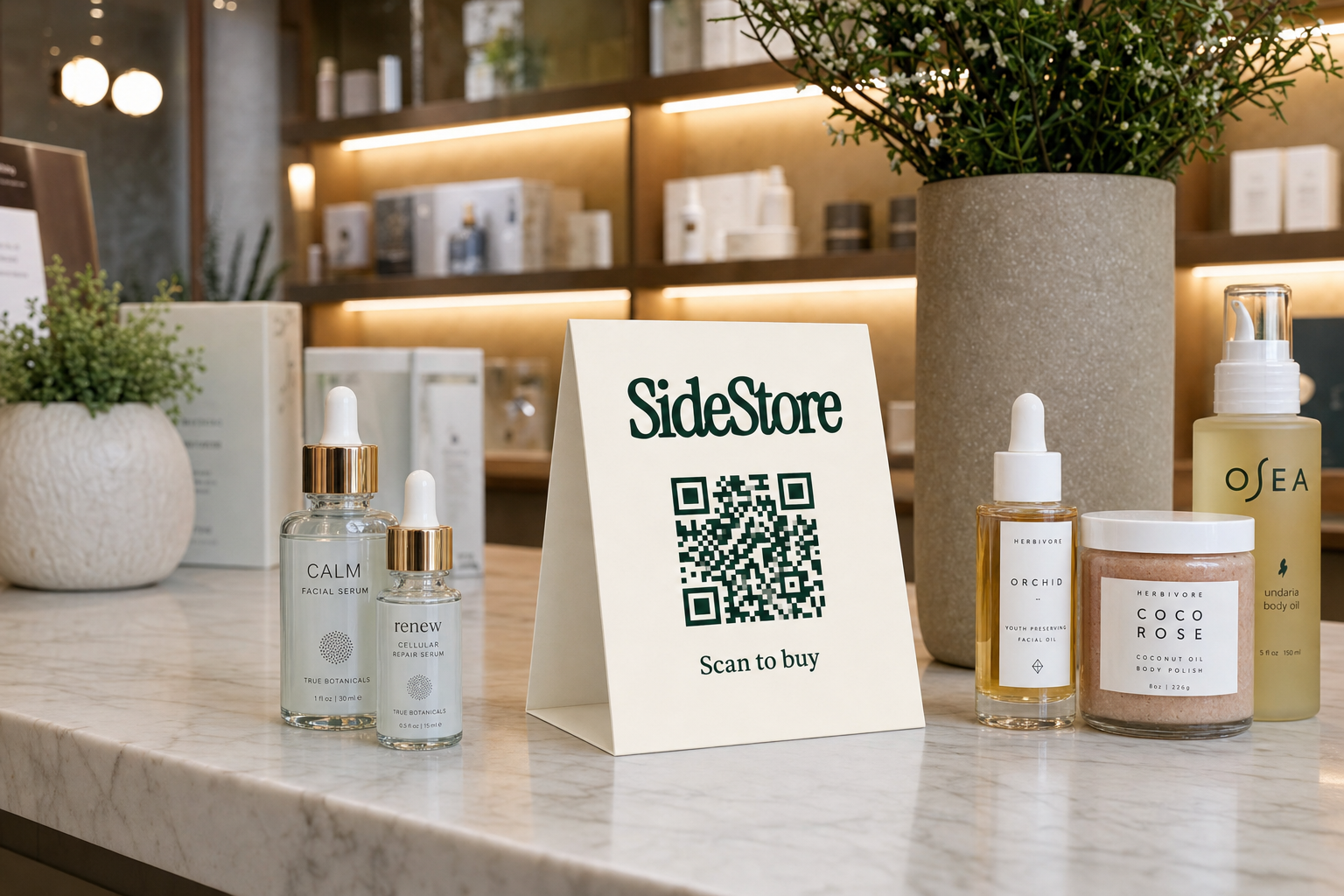
Your selling point doesn't stop working once a shop says yes. In a consignment arrangement, it keeps working every day on the shelf.
Consignment means you place your products in a merchant's space, they pay nothing upfront, and they earn a percentage when items sell. No inventory risk for the host. No fixed cost for you beyond producing the product. When a customer picks up your product and the shop owner is nearby, your selling point is what they reach for.
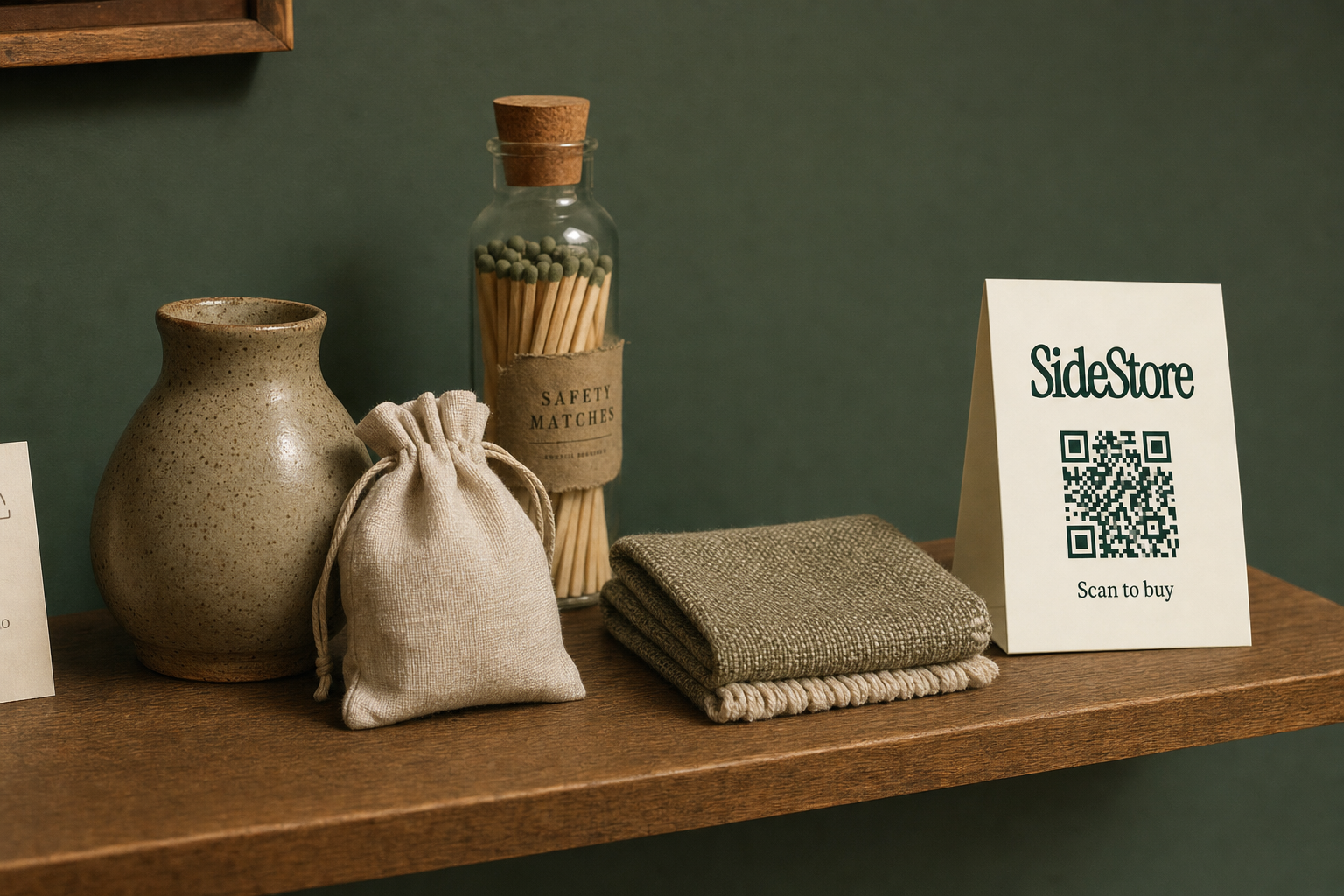
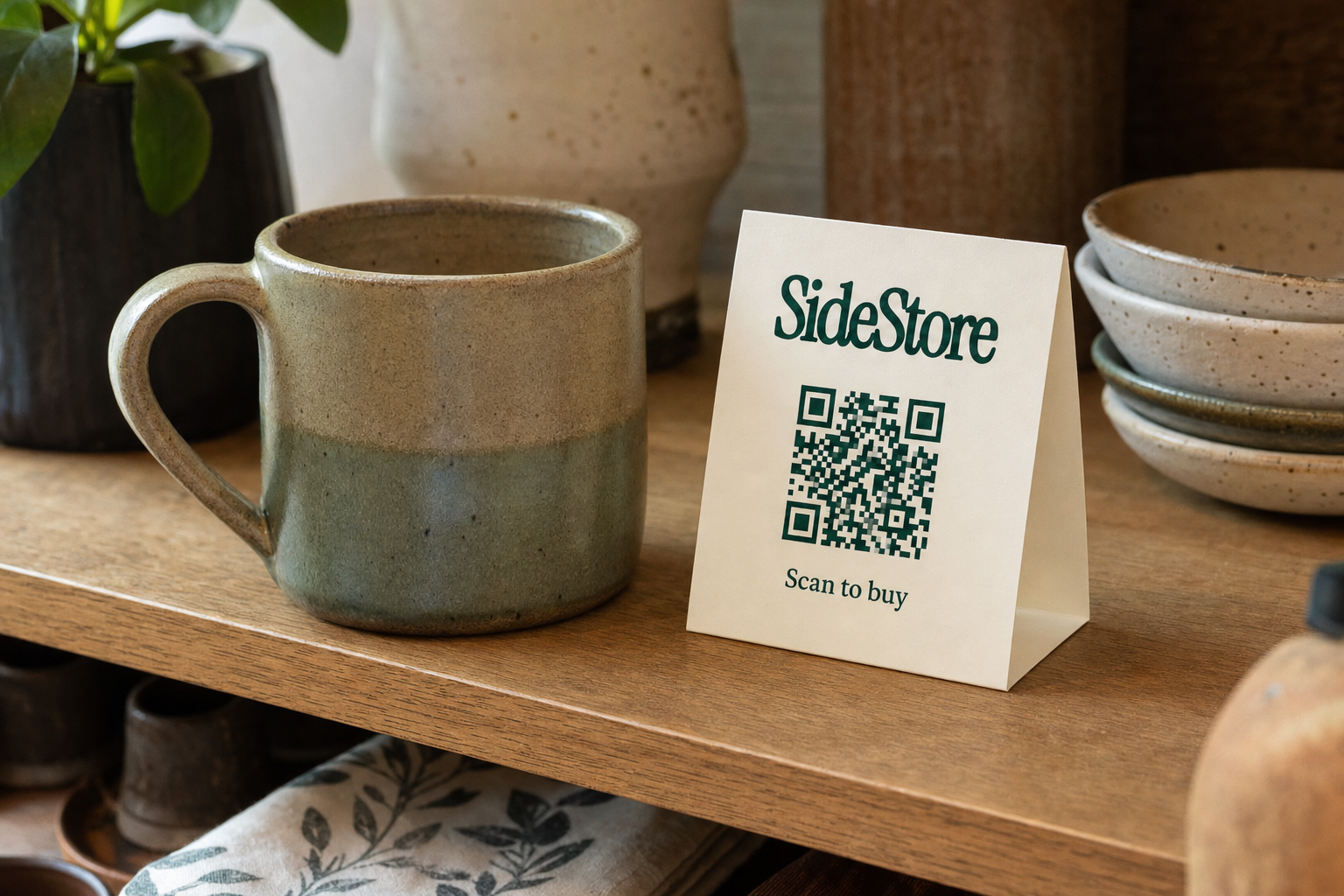
SideStore manages the operational layer of that arrangement through the Retail Widget. It handles scan-to-pay checkout via a printable QR card, live stock tracking so you know when to restock, placement attribution so you can see which locations perform, and automatic split payouts so neither you nor the host has to chase a settlement.
Your selling point gets you the placement. The Retail Widget keeps it running cleanly.
For context on when consignment makes more sense than a fixed retail event, see why consignment is often smarter than a pop-up, and the real cost of pop-up retail space for a comparison of fixed costs.
Frequently Asked Questions
The five questions makers ask most often about selling points, answered directly.
What does a unique selling point mean?
A unique selling point is the specific quality that makes your product worth choosing over alternatives, stated clearly enough that a shop owner or customer can repeat it. "Unique" means distinct and nameable, not invented from nothing. The combination of your process, origin, price, and audience can be your USP.
What are examples of unique selling points?
For independent makers, strong examples include: hand-produced in a named location, made with a specific traceable material, priced to give stockists a 40%+ margin, designed for a gap in the market, or tied to a named cause. The best USPs are specific enough to survive a 30-second counter conversation.
What is a synonym for selling point?
Common synonyms include: unique selling proposition, value proposition, competitive advantage, key differentiator, and core benefit. All describe the same idea, the reason a buyer chooses you. For retail pitches, "value proposition" and "key benefit" are the most neutral and widely understood.
What are the basic principles of selling?
The basic principles of selling are relevance, trust, and timing. Your product must be relevant to the buyer's context, you must demonstrate that you are reliable to work with, and you must approach the right buyer at the right moment. For makers, relevance starts with knowing your selling point before the conversation begins.
What is Coca-Cola's unique selling point?
Coca-Cola's USP is emotional: consistent refreshment, universal availability, and over a century of brand recognition. For an independent maker, the lesson isn't the size of the brand, it's the clarity. Coca-Cola's pitch is repeatable in one sentence. Yours should be too. See the maker's step-by-step playbook for retail for how to build from there.
Your Selling Point Is the Door Opener, Everything Else Follows
Your selling point is the reason a shop says yes. Get that right first, and every other part of retail placement becomes simpler.
The pattern is straightforward: define your selling point with enough specificity that a shop owner can use it at the counter, adapt it for each venue type, and lead with it in every pitch. Then offer consignment, so the financial risk for the host is zero. SideStore's Retail Widget handles what comes after the yes: checkout, stock tracking, and automatic split payouts.
Start with the step-by-step guide to getting your products into stores and use the approach guide when you're ready to walk in.